
If Historical Figures Had Instagram: The Histagrams Project
Designers Gusto NYC and Gavin Alaoen’s Histagrams imagines landmark moments as Instagram posts—slang captions, selfie energy, and a sharp joke about how we perform history.
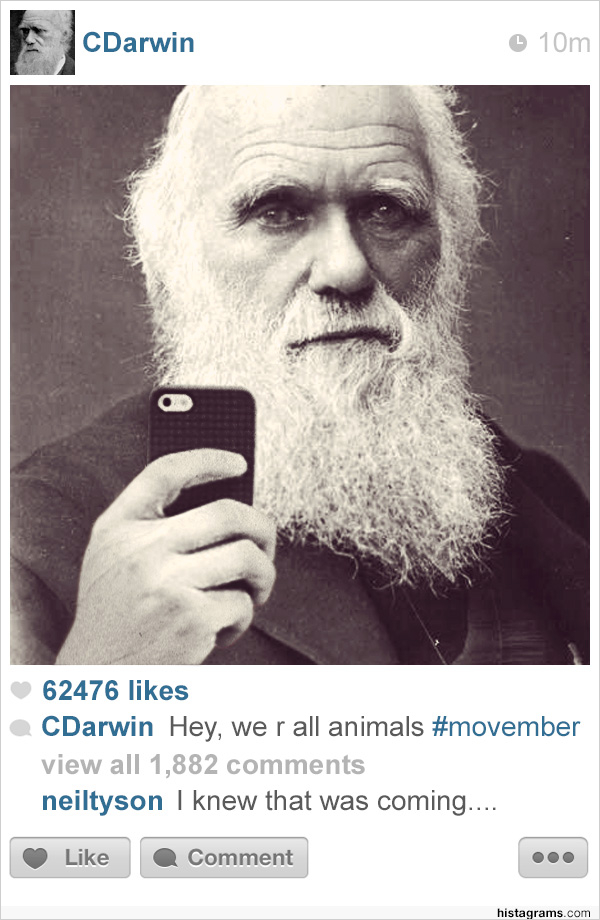
History usually arrives late: in textbooks, museum labels, anniversary essays, and the careful voice of a teacher. Instagram arrives instantly. The gap between those tempos is where Histagrams lives—a project by interactive designers Gusto NYC and Gavin Alaoen that asks a simple, mischievous question: what if the people who shaped eras had posted the moments as they happened?
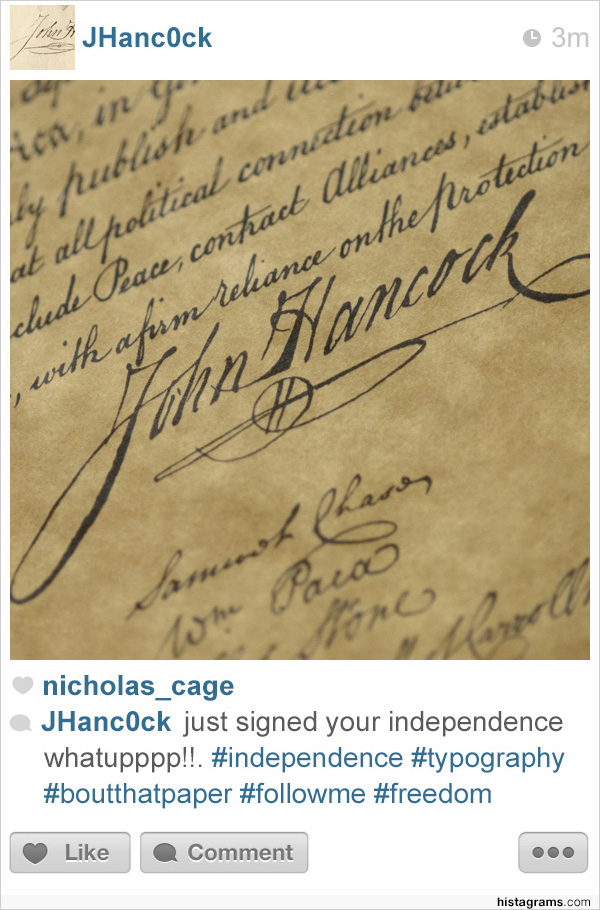
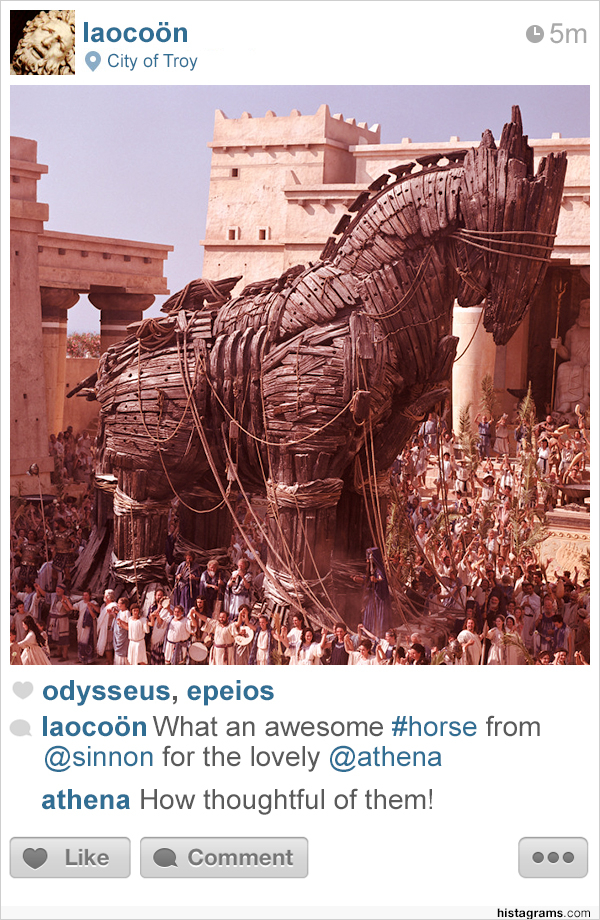
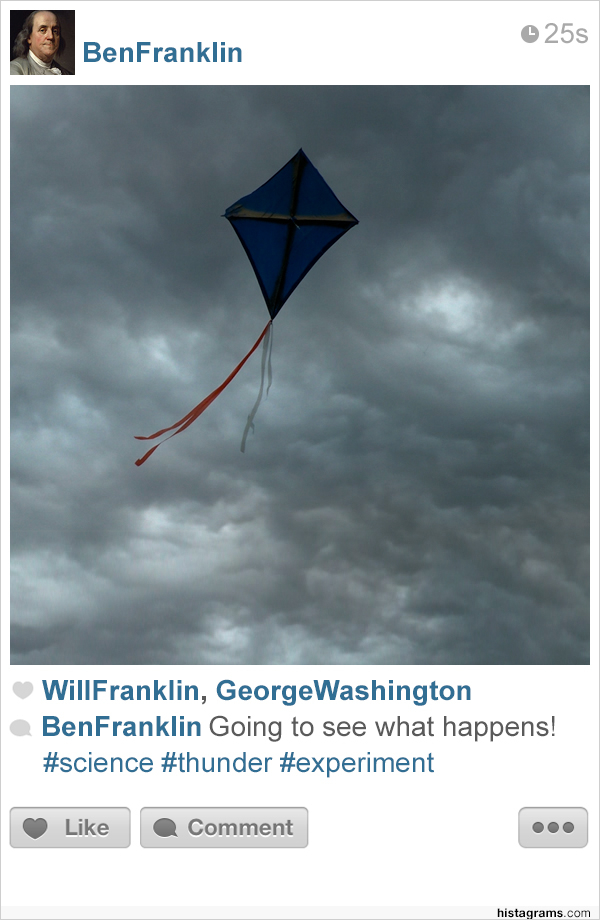
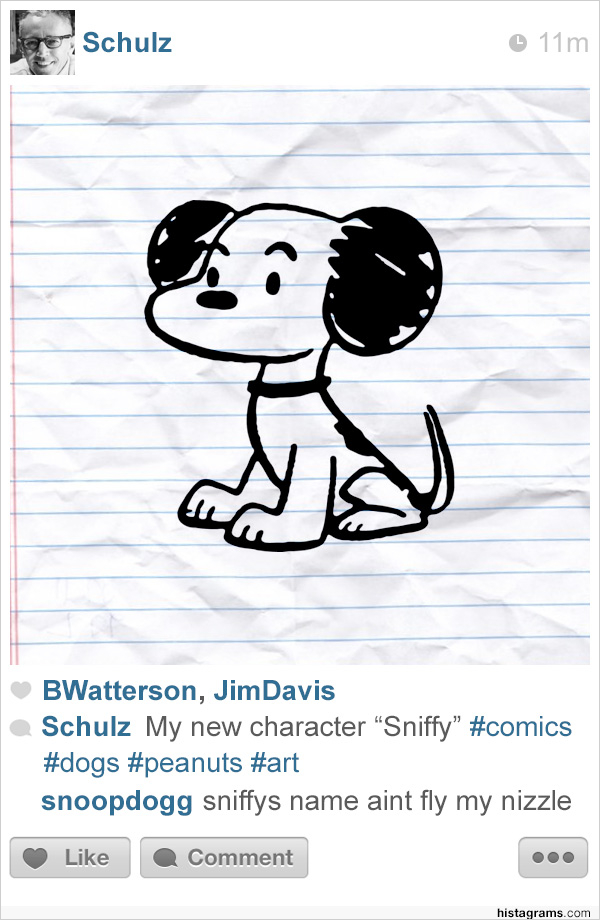
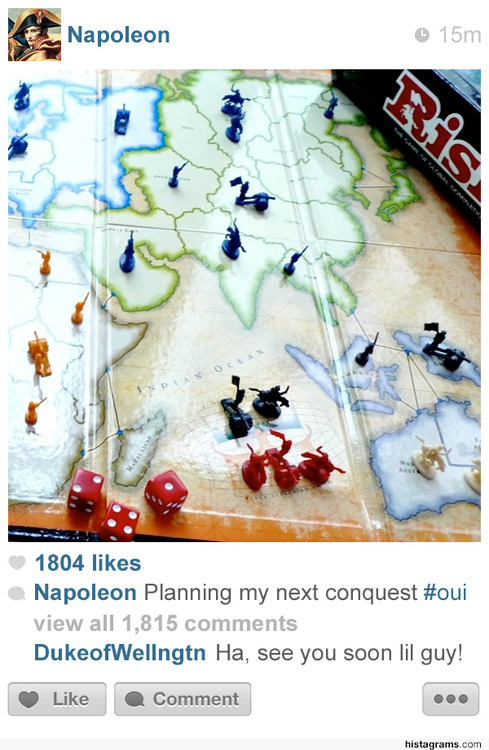
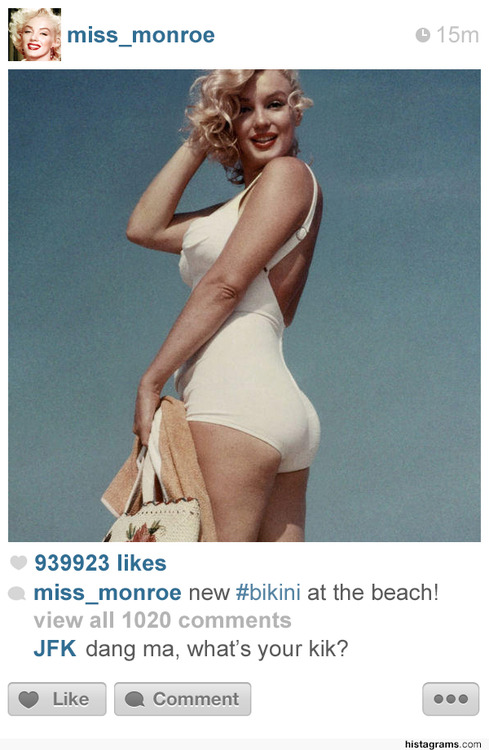
The premise is not a history lecture with hashtags glued on. It is a visual joke with teeth. Famous scenes—political, scientific, cultural—are staged as phone-era posts: captions in contemporary slang, filters implied by framing, selfies where solemnity once lived. The humor works because we recognize both halves. We know the event. We also know the grammar of social media. When those grammars collide, the past feels newly readable, and the present looks newly ridiculous.
How the joke was built
According to interviews from the project’s breakout moment in 2013, the idea began close to home. Gusto NYC was scrolling Instagram and wondering what the feed might have looked like only a few years earlier. Then the thought stretched: ten years, twenty, then centuries. Why stop? He bought a domain, sketched a logo, and designed a site quickly enough that when Gavin Alaoen arrived at the office, the concept was already walkable. From there the pair posted frequently, packing historical detail into short copy while keeping the tone light.
That production rhythm mattered. Histagrams thrived as a stream, not a single punchline. Each new mock post refreshed the same contract with the audience: respect the landmark enough to get the facts right, then twist the delivery until it sounds like someone filming from the balcony. The Webby Awards later named the site a 2014 Honoree in the cultural blog/website category—proof that a joke format can still be treated as cultural commentary.
The creators have described the purpose as a lighthearted spin on history that also comments on past and present pop-cultural behavior. That dual aim is the project’s real intelligence. You laugh at Lincoln’s mirror selfie or a moon-landing latergram, then notice how easily solemnity becomes content. The satire cuts both directions: toward the myth of the past as eternally serious, and toward our habit of turning everything into a shareable performance.
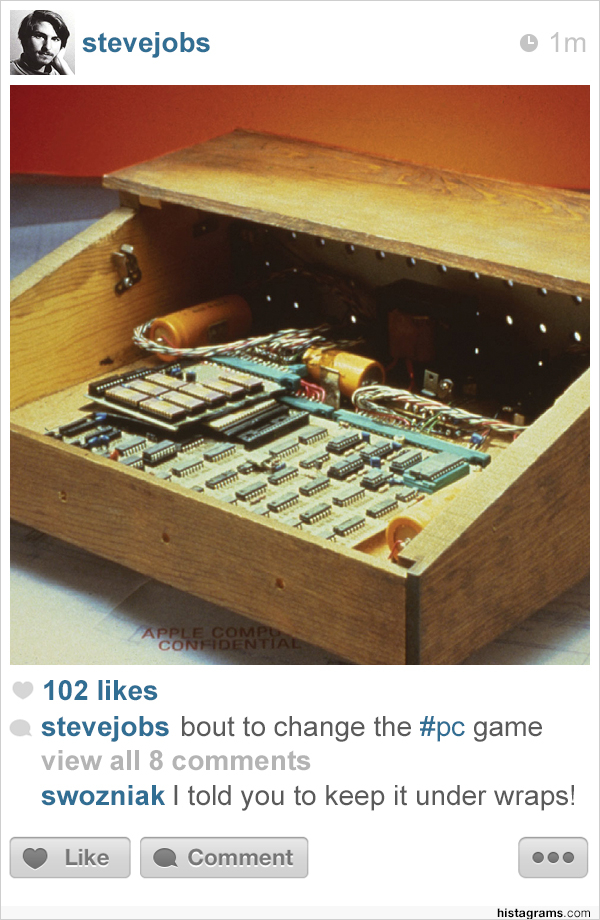
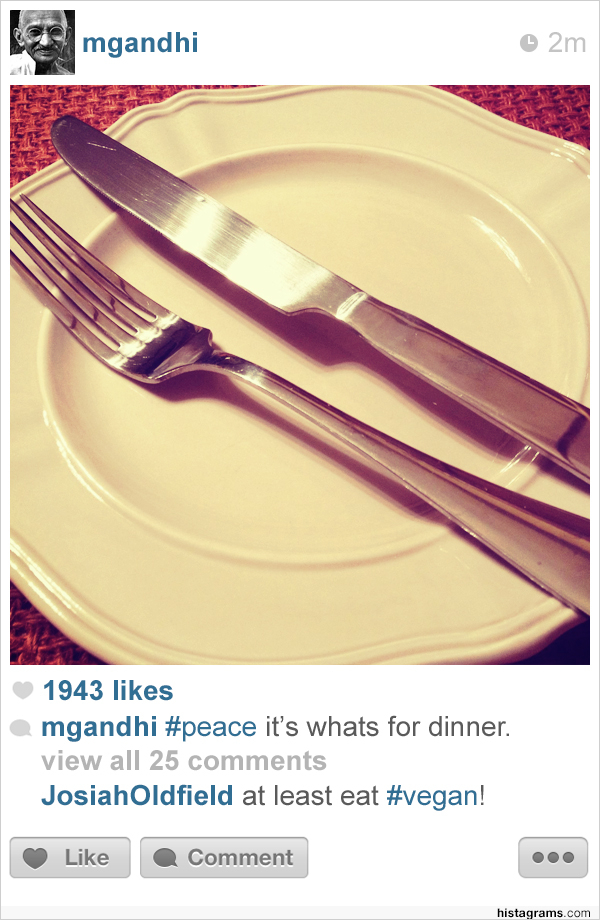
Why Instagram is the right stage
Other platforms could host the same idea. Twitter/X would emphasize proclamation. TikTok would emphasize performance. Instagram fits because it is a theater of presence: I was here, this is how it looked, this is how I want you to feel about me being here. Historical “icons” already live in our heads as images—paintings, news photos, stock engravings. Translating them into the square frame makes the continuity obvious. The medium of fame has changed; the hunger for witnessed significance has not.
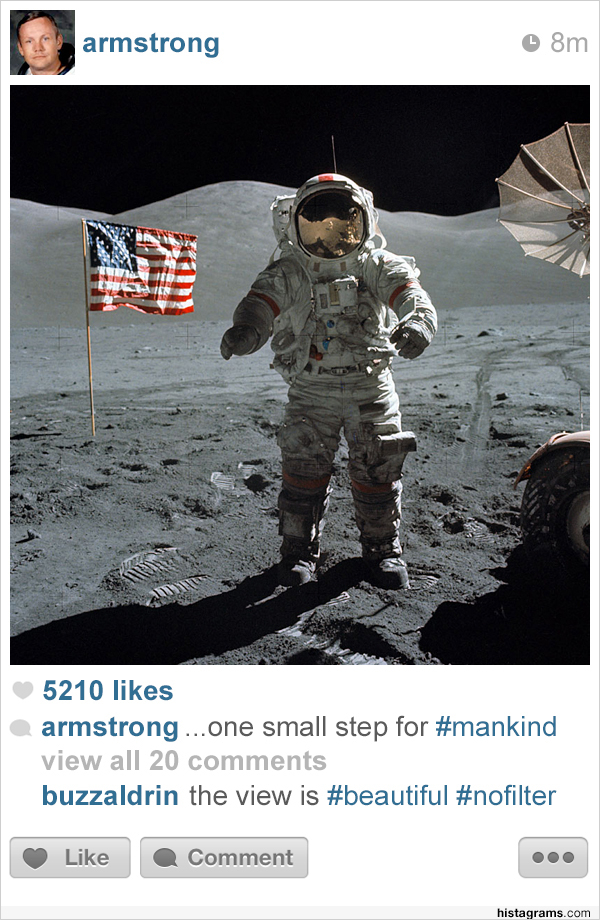
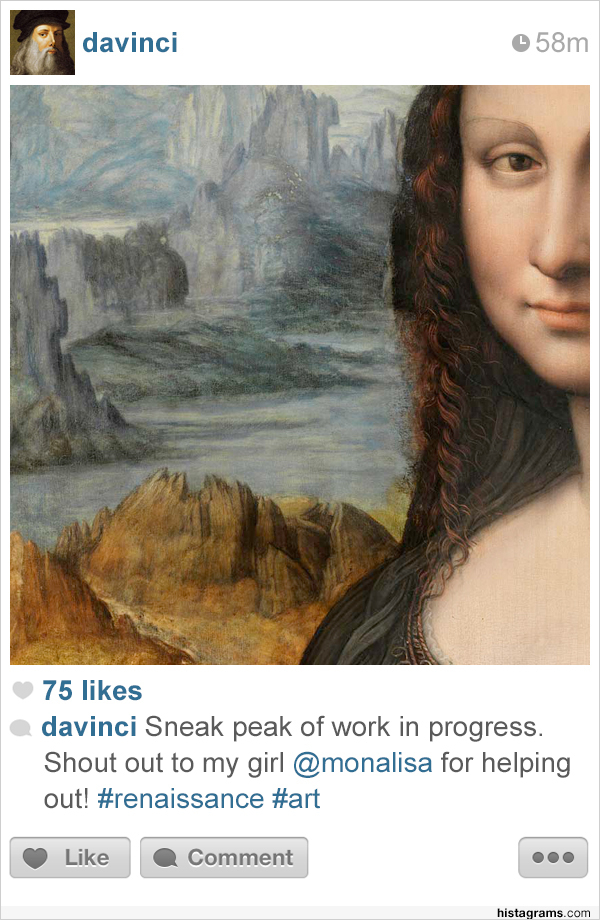
Captions do a lot of the work. Period figures speak in teenage slang, emoji logic, and influencer cadence. That anachronism is the spark. A Renaissance painter teasing a Mona Lisa sneak peek, a president catching his own reflection, an astronaut posting from the lunar surface—these are funny because they feel plausible under the rules of Instagram, even when they are absurd under the rules of chronology. Plausibility inside the wrong system is comedy’s favorite fuel.
There is also a quieter educational side effect. To enjoy the gag, you still need a baseline sense of who is posting and what happened. A reader who only half-remembers an event may look it up after laughing. Humor becomes a hook for curiosity without pretending to replace a syllabus. Histagrams never claimed to be a museum; it claimed to be a sideways glance that makes the museum’s subjects feel alive again.
Reading the gallery
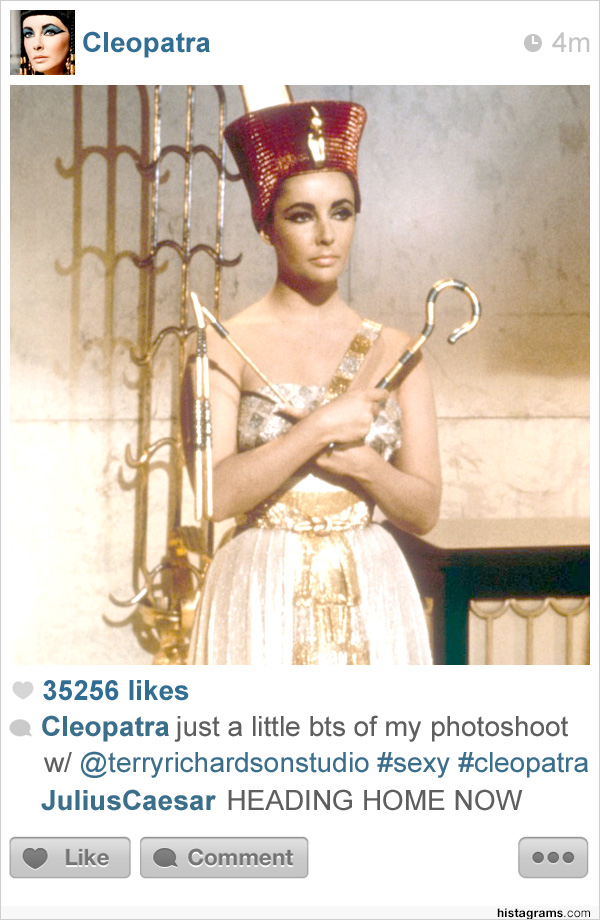
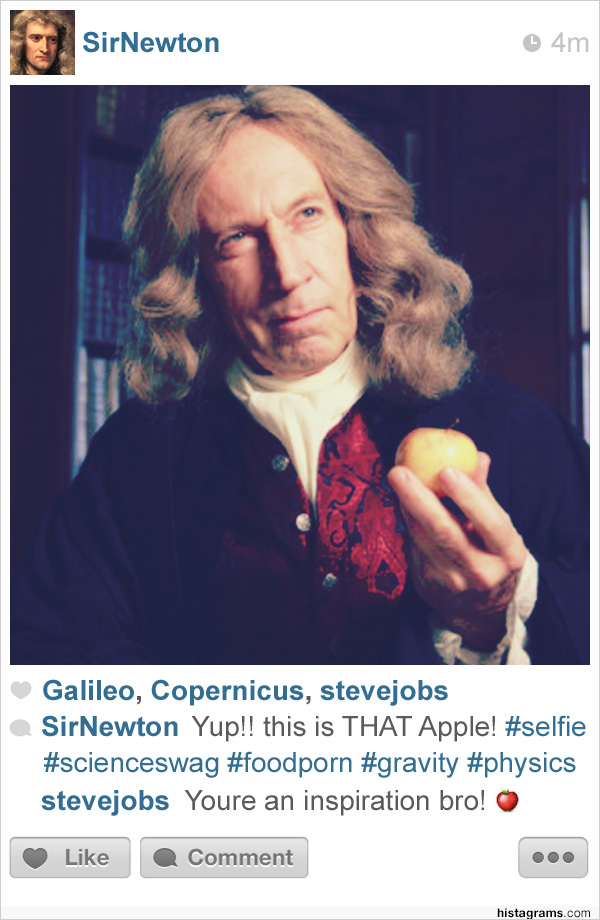
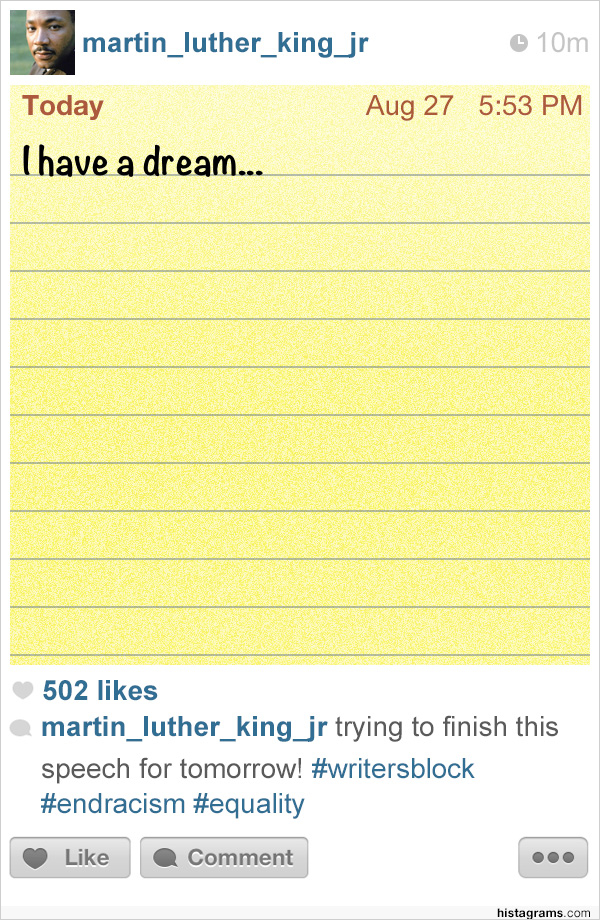
The images collected on this page work best if you slow down for a beat between laughs. Ask what the historical source image would have meant in its own time—victory, invention, scandal, first performance, scientific breakthrough. Then ask what Instagram would demand of the same moment: a face, a brandable angle, a caption that flatters the poster. The friction between those answers is the art.
Notice how often the posts imply an audience already waiting. Social media assumes a crowd. History’s great turns often happened before crowds could reply in real time. Histagrams collapses that delay. The Beatles’ first gig, a technological first, a political hinge—each becomes content the second it occurs. That compression is funny, and it is also a critique of how we experience news now: as a continuous feed of “I was there” claims, whether or not presence equals understanding.
Design craft carries the illusion. The mock interface has to feel close enough to Instagram’s visual language that your brain accepts the fiction. Typography, framing, and the relationship between picture and caption all matter. Gusto NYC and Alaoen came from entertainment and interactive design backgrounds; the polish is not accidental. A half-finished meme would get a chuckle. A finished fake post gets a double take.
History, memes, and the classroom problem
Teachers have long used anachronism on purpose—modern maps over ancient routes, contemporary metaphors for old politics—because analogy can unlock memory. Histagrams is analogy as entertainment. It will not teach causation, primary-source literacy, or the ethics of empire. It can, however, puncture the idea that the past was inhabited by statues. People posed. People performed. People wanted witnesses. The tools change; the vanity and the need to mark a life do not entirely disappear.
There is a risk, of course: flattening trauma into a punchline, or turning every crisis into content. The best entries in this genre stay on the side of wit rather than cruelty. They pick moments already thick with public myth—firsts, crowning achievements, cultural debuts—and let the platform’s vanity do the roasting. When the joke depends on knowing something real, it nudges attention back toward the record instead of replacing it.
In that sense Histagrams sits beside other early-2010s internet projects that mixed design craft with viral comedy. The creators were already known for playful side projects; Histagrams simply found a sharper historical hinge. Coverage from outlets that covered culture and tech treated it as both diversion and mild sociology: look how quickly we project our posting habits backward onto people who never held a phone.

What to notice in each frame
If you are flipping through the gallery below (and above), try a small checklist:
- Who is the implied poster? Hero, bystander, inventor, performer?
- What would the “like” economy reward? Bravery, beauty, novelty, status?
- What detail is historically grounded? Costume, setting, famous object, known date?
- Where does slang do the satire? Often in one line of caption.
- Would the joke work offline? If not, the platform itself is part of the subject.
That last question separates Histagrams from generic “funny history” art. The platform is not a sticker; it is the punchline’s architecture. Remove Instagram’s habits—self-documentation, soft branding of the self, the performance of authenticity—and the series loses half its meaning.
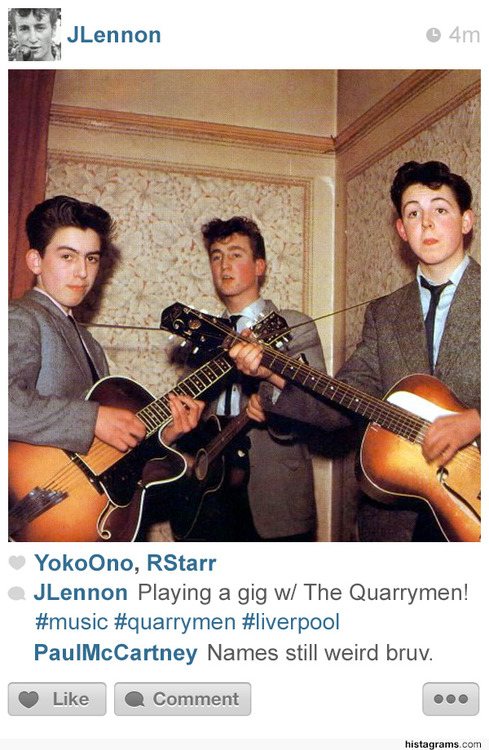
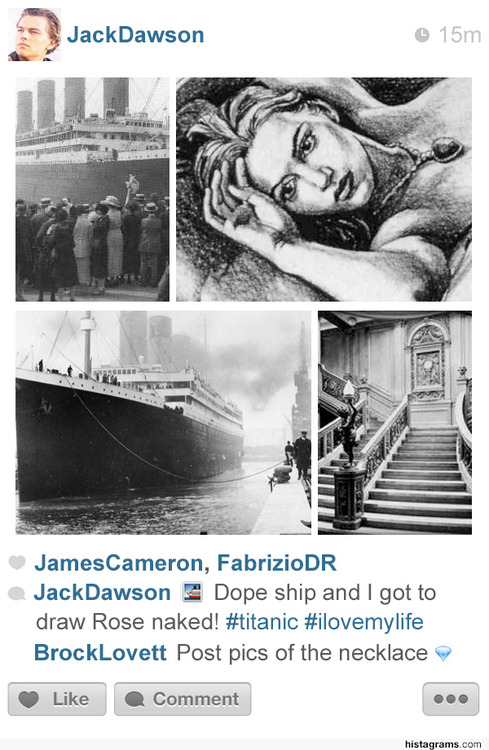
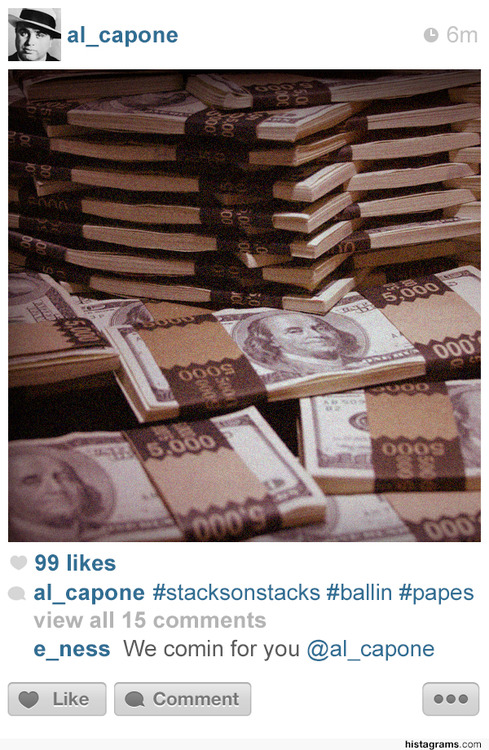

Scroll the set once for the laughs, then again for the pattern: every era, in this fiction, learns the same modern skill—turning a lived instant into a public image. Histagrams does not ask whether that skill makes us wiser. It only asks whether we can still recognize ourselves when Napoleon, Lincoln, or Armstrong speaks in our accent.

Comments
Continue reading
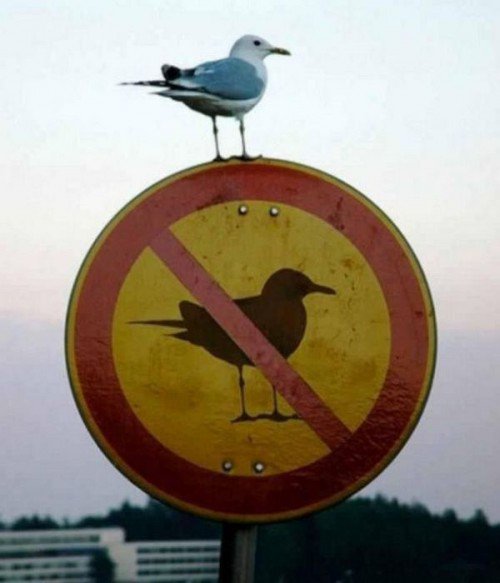
Funny Animal Signs That Warn People (While Animals Ignore Them)
From a seagull on a no-birds disc to classic zoo and park ironies—why animal warning signs get funny, and what the rules are still for.
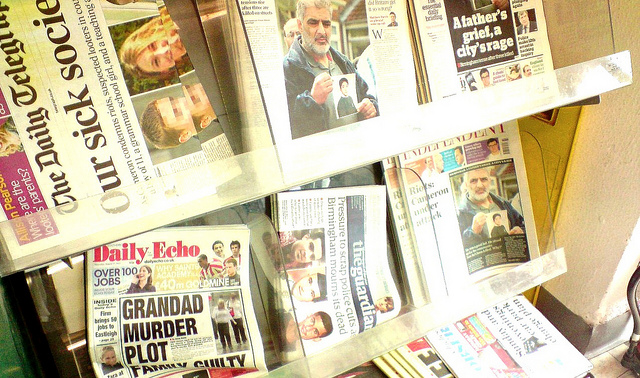
How to Find Local Amenities on Vacation: Mechanics, Haircuts & More
Locate trustworthy local services and everyday spots while traveling or settling in—using publications, reviews, map apps, neighbor tips, and low-pressure exploration.
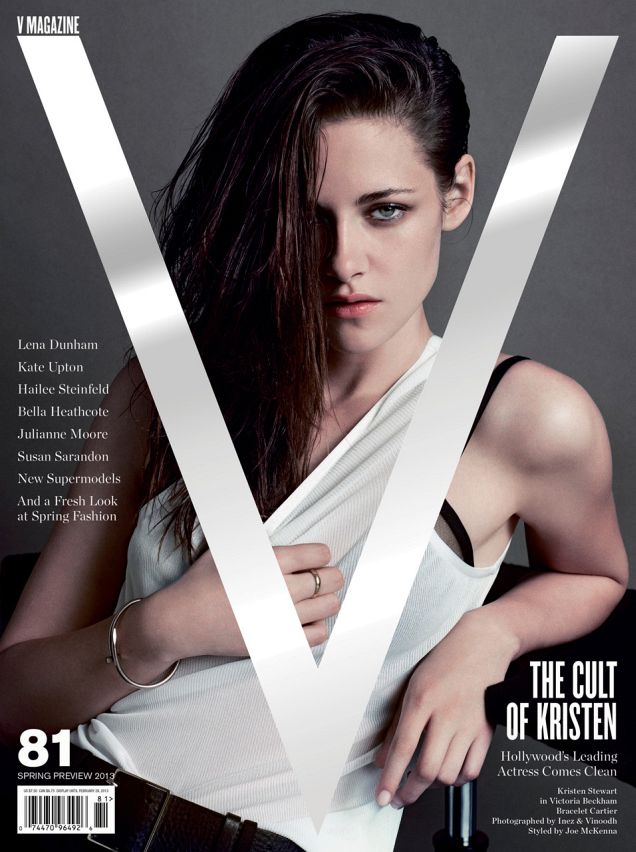
Kristen Stewart for V Magazine, Spring Preview 2013
V81’s Wild at Heart cover story—Kristen Stewart shot by Inez & Vinoodh, styled by Joe McKenna, in pale minimal spring glamour.