
Dave Engledow’s Hilarious Father-and-Daughter Portraits
World’s Best Father with Alice Bee: how Engledow turned a mug gag into a carefully staged, safety-first photo series that went global in 2012.
When Maryland photographer Dave Engledow began making portraits with his daughter Alice Bee after her birth in 2010, he wanted a creative scrapbook she might one day treasure. What he got—somewhat to his surprise—was an internet-famous series nicknamed for a coffee mug: World’s Best Father. The pictures look like parenting disasters staged as fine-art jokes. The mug appears again and again, a deadpan award for a dad who seems distracted, clumsy, or gloriously unhelpful while Alice somehow remains the calm center of the frame.
By 2012 the series had jumped from Facebook shares among friends to features on BuzzFeed, HuffPost, ABC, and other outlets. Engledow launched a Kickstarter for a 2013 calendar so fans could keep a year of the gags on the wall. The portraits still reward a slower look than a scroll: they are slapstick on the surface and carefully built underneath.
The joke is a character, not a confession
Engledow has been clear about the premise. The man in the photos is a parody of the father he hopes never to become—self-absorbed, neglectful, clueless, occasionally overbearing. The mug seals the irony. “World’s Best Father” is the title the character awards himself while the scene quietly argues otherwise. Viewers laugh because they recognize the gap between parental branding and parental reality. New parents know the sleep-deprived fog. Everyone else knows the cultural script that fathers either heroically “help” or comedically fail.
The first image, Engledow has said, was meant as a one-off: a dazed new dad with a mug, poking fun at himself. Then the mug became a recurring prop, and the series found its grammar. Recurring props matter in comedy photography the way catchphrases matter in sitcoms. Once you see the mug, you start hunting for it. Once you understand the character, every new peril reads as another episode.
Importantly, the series is affectionate rather than cruel. Alice is never the butt of a mean joke. She is the scene partner—curious, stoic, delighted, or simply present—while the adult performs incompetence. That distribution of dignity is why the portraits land as heartwarming and hilarious at once. Parents see themselves; non-parents see a crafted sketch about responsibility.
How the pictures are actually made
Many of the most dramatic setups look dangerous at a glance: a child seemingly strapped to a car, used as a step stool, parked in an absurd kitchen scenario, or left in the middle of a household mishap while Dad focuses on coffee, chili, pizza, or his own reflection. Engledow’s working rule, reported across interviews, is that Alice is never actually in danger. Poses are typically shot separately and composited. Safety first, spectacle second.
That technical choice is not a spoiler that ruins the fun. It is part of the craft. Composite photography lets a parent invent cinema-level mishaps without treating a toddler like a stunt performer. Lighting has to match. Shadows have to agree. Scale and eyelines have to convince. When the composite works, your brain accepts the impossible scene long enough for the joke to land—then you notice the mug and laugh again.
Domestic spaces do heavy lifting. Kitchens, bathrooms, cars, yards, and living rooms are universal stages. A ceiling lamp that needs changing, a haircut that goes wrong, a “future Olympian” training montage, a bedtime routine gone sideways—these are recognizable life fragments amplified into one-frame stories. The more ordinary the room, the sharper the absurdity of the father’s choices.
Why the series spread in the early 2010s
Timing mattered. Social feeds were filling with baby photos, and Engledow himself noted that friends sometimes complained about endless ordinary snapshots. His answer was to make images worth stopping for: polished, narrative, and funny. They were still family documents, just edited through a comic persona.
The Kickstarter calendar moment in September 2012 turned private project into public merchandise without changing the emotional core. Fans who had followed Alice’s growth online could take the humor home in print form. Press coverage framed Engledow as both photographer and dad—someone using professional skill on the most personal subject. That combination travels well: craft plus tenderness plus a running gag.
There is also a broader photography tradition at work. Staged family humor sits near fine-art tableau and advertising parody. Engledow’s frames often look “finished” enough for a gallery wall while remaining readable as internet comedy. High production value is not decoration here; it is what makes the fake disasters feel cinematic instead of chaotic.
Reading a few classic beats
Across widely circulated images, certain beats repeat with variations:
- Sleep-deprived obliviousness — Dad stares into caffeine while the household quietly rearranges itself around Alice.
- Misguided helpfulness — cooking, grooming, or “training” scenes where Dad’s method is the hazard.
- Priority inversion — the adult’s snack, phone, trophy, or vanity outranks obvious childcare needs.
- Over-the-top logistics — transporting, elevating, or positioning Alice with comic inefficiency.
- Holiday and milestone spoofs — Father’s Day breakfasts, turkey time, bedtime, late-for-work chaos.
In each case, the composition usually gives Alice a stable role—seated, held, or placed with visual clarity—while Dad’s body language sells the parody. The mug is the title card. Once you know to look for it, the series becomes a scavenger hunt as much as a slideshow.
What parents (and non-parents) take from it
For parents, the portraits can feel like permission to admit imperfection without collapsing into shame. The character is a warning label, not a how-to. Laughing at the fake bad dad is a way of valuing the real work of attention. For non-parents, the series still works as visual comedy: precise setups, facial timing, and prop logic.
There is an ethical conversation around posting children online that has grown louder since 2012. Engledow’s stated aim—images Alice might treasure—frames the project as a gift with an audience that expanded beyond the living room. Viewers can appreciate the craft while still recognizing that every family negotiates privacy differently. The portraits do not settle that debate; they simply show one carefully managed approach from a photographer who made safety and consent within the household part of the method.
Artistically, the series proves that “funny family photos” need not mean candid blur and forced grins. Planning, lighting, and a coherent persona can turn household life into a long-form comic essay. Alice’s growth across the years adds a documentary layer: the same gag grammar applied to a changing child becomes a timeline of both humor and childhood.
If you borrow the spirit (not the stunts)
Anyone inspired by these portraits should steal the principles, not the riskiest illusions:
- Invent a gentle comic premise and stick to it across multiple frames.
- Use a recurring prop as a series signature.
- Prioritize the child’s comfort; stop when the session stops being play.
- Prefer separate poses and careful editing over real hazards.
- Keep the adult as the fool whenever the joke needs a target.
- Print a few favorites. Screens forget; paper remembers.
You do not need a Kickstarter or a viral mug. You need patience, a sense of timing, and enough self-mockery to cast yourself as the punchline.
Somewhere in the archive, that first sleep-fogged portrait with the “World’s Best Father” mug still explains the whole project: a dad documenting love by pretending, for one carefully lit second, to be spectacularly bad at the job—and a daughter growing up inside a story built to make her laugh later. Would Alice Bee, years on, flip through those pages and see danger, or devotion wearing a silly award? The photos bet on the second answer every time.

Comments
Continue reading

Dramatic Photo Art by Sukron Ma’mun (Ipoenk Graphic)
Cirebon, Indonesia photographer Sukron Ma’mun uses theatrical natural light to frame village life, play, and place in lyrical photo art.
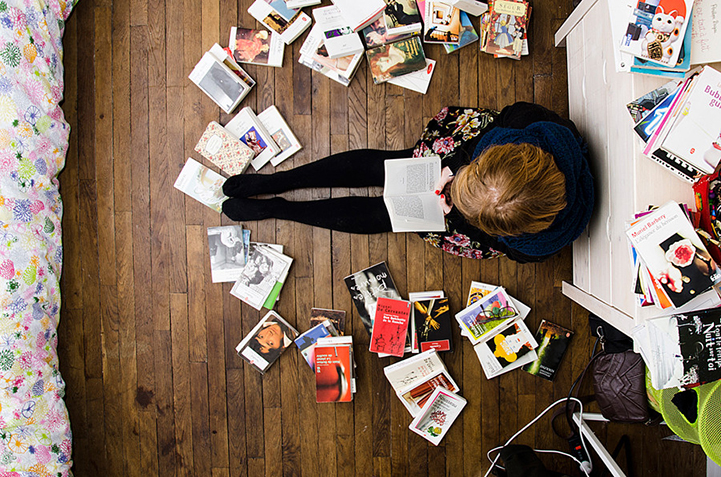
Bird’s-Eye Views: Florian Beaudenon’s Instant Life
Paris photographer Florian Beaudenon’s Instant Life series captures people in their rooms from above—intimate, collaborative overhead portraits of everyday joy.
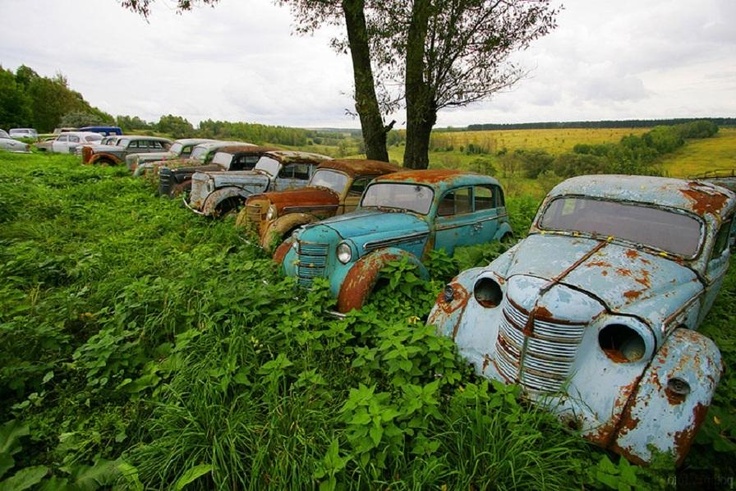
Abandoned Cars Reclaimed by Nature: Rust, Growth, and Quiet Ruin
When neglected vehicles are left outdoors long enough, rust, moss, and trees rewrite them into strange still lifes—sad, photogenic, and slowly returning to the ground.