
Grumpy Disney by TsaoShin
Digital painter TsaoShin (Eric Proctor) drops Grumpy Cat into classic Disney scenes—beautiful frames built so one scowl can derail the whole fairy tale.
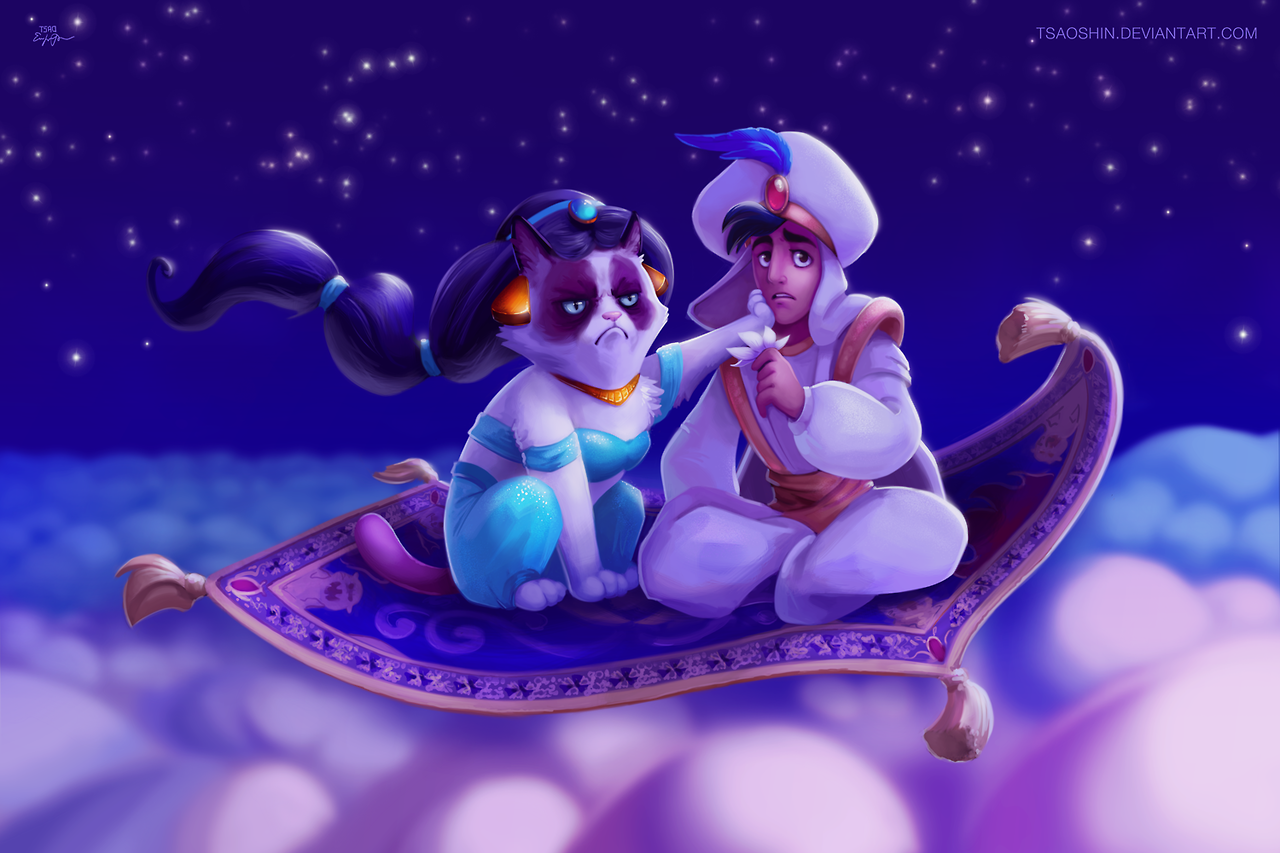
Digital painter TsaoShin—also known as Eric Proctor—moves easily among fantasy creatures, nerd-culture mashups, and polished fan art. In the early 2010s, one of his most shareable projects was Grumpy Disney: classic Disney moments rebuilt so that the internet’s most famous scowling cat steals a lead role and, by design, wrecks the plot.
The joke is clean enough to explain in a sentence and rich enough to reward a longer look. Disney staging, lighting, and costume language stay lovingly intact. The emotional center does not. Wherever a heroine might sing hope into the frame, Grumpy Cat’s flat refusal sits instead—an immovable “no” painted with ceremony.
Who TsaoShin is in this series
On DeviantArt and across fan communities, TsaoShin built a reputation for clean digital painting: readable forms, controlled color, and a finish that looks closer to illustration for print than to hasty meme collage. Fantasy work and creature design sit beside pop-culture commissions in his broader gallery. Grumpy Disney sits at the intersection—technical care applied to a viral mascot that usually lived in captioned photographs, not narrative tableaux.
That skill gap is why the series landed. Anyone can paste a cat face onto a princess. Fewer artists can make the cat feel lit by the same imaginary key light as the castle stones, the ocean spray, or the ballroom glow around her. Fur reads as fur; satin reads as satin; the joke rides on craft instead of replacing it.
Proctor’s wider interests—fantasy worldbuilding, creature invention, games and animation fandom—also show through. Even when the subject is a meme, the painterly habits of a fantasy illustrator remain: clear silhouettes, hierarchical detail, and backgrounds that feel inhabited rather than pasted from a screenshot.
The rule that makes the mashup work
TsaoShin’s own framing for the collection is delightfully strict. Well-known Disney films remain recognizable. Grumpy Cat replaces one character. The cat’s appearance must be capable of derailing the story. In other words, this is not random cosplay; it is alternate-plot engineering.
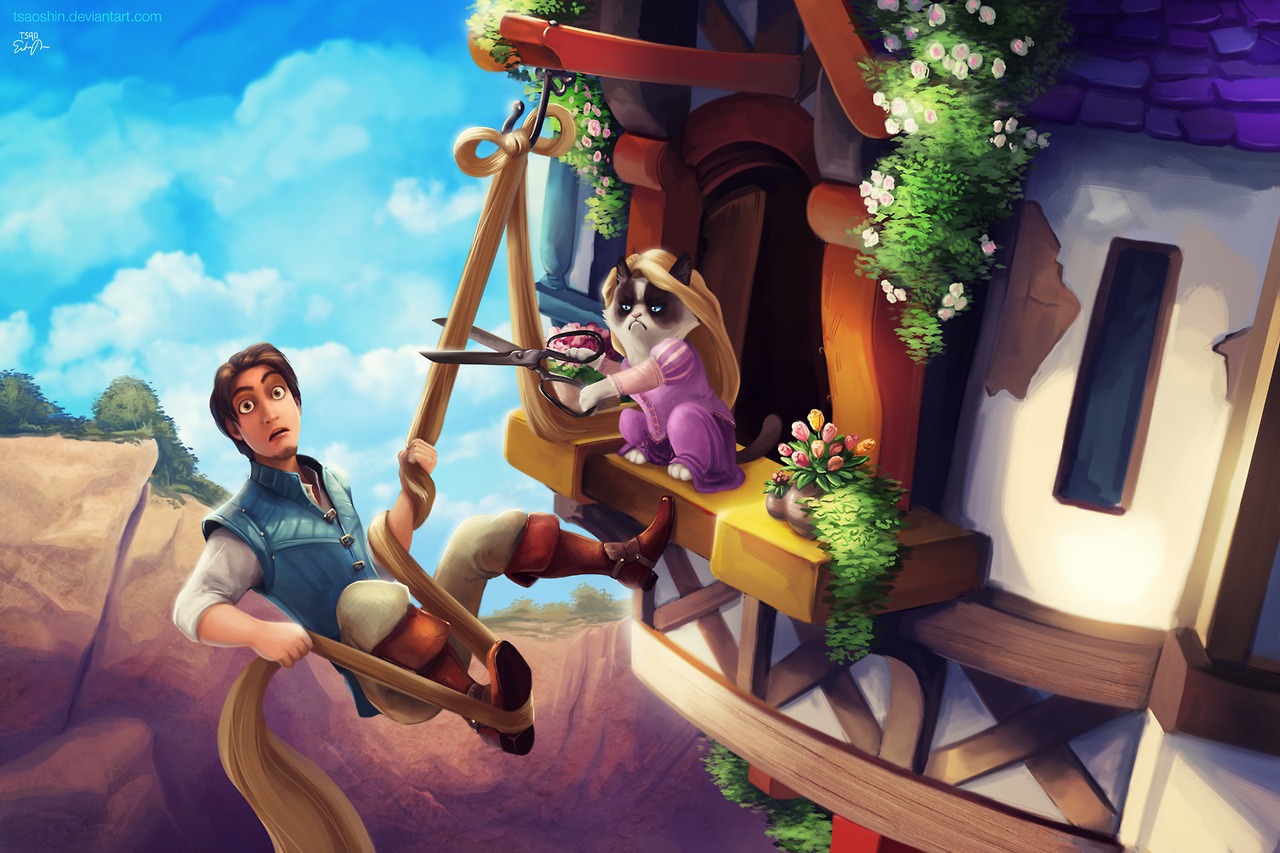
Once you know the rule, each image becomes a logic puzzle. If the cat is in the tower, does the rescue adventure ever start? If the cat refuses the romantic duet, does the curse break? If the cat answers a wish with disdain, does the fairy-tale machinery jam? Humor comes from imagining the runtime collapsing into a shrug.
Titles circulating with the wider set often lean into that gag by swapping “No” into famous lyric fragments—signals that the soundtrack itself has been vetoed. Even without hearing a note, you can feel the missing swell of strings. The naming scheme teaches viewers how to watch: look for the blocked emotional climax, not only for the celebrity feline.
Why Grumpy Cat fit Disney so well
Grumpy Cat’s fame, peaking in the same years this fan art circulated, depended on a face that looked permanently unimpressed. Disney animated classics—especially princess stories and coming-of-age musicals—depend on open-hearted yearning. Put those forces in one composition and contrast does the comedy writing for you.
There is also a soft critique inside the fun. Fairy-tale optimism can feel mandatory in pop culture; the cat’s expression grants permission to opt out. Viewers who love Disney still get the pleasure of recognition—the gown, the setting, the iconic pose—while enjoying a temporary rebellion against obligatory enchantment. Affection and refusal share the frame without canceling each other.
Importantly, TsaoShin’s paintings do not sneer at the source films. The environments are rendered with care. Parody works best when the artist understands the grammar being bent: heroic thirds, glowing atmospheres, sidekicks arranged like punctuation around a lead. The cat occupies the lead’s compositional throne, which is funnier than sticking her in a corner as graffiti.
How to read the paintings
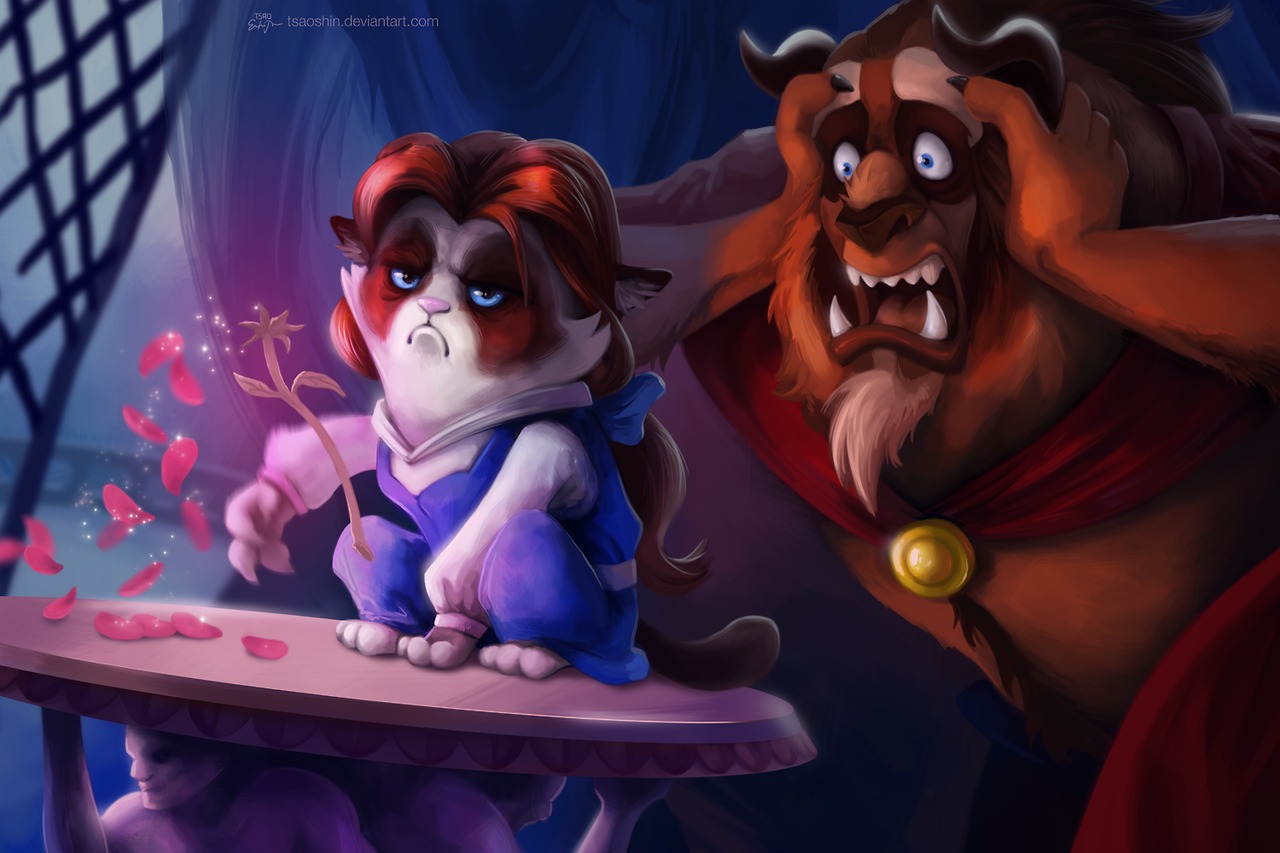
Begin with silhouette and costume. Which Disney role has been occupied? Then check the supporting cast and props: do side characters still expect a song, a kiss, a transformation? Their body language often continues the original beat while the cat refuses to play along. That mismatch is the comic engine.
Next, study the paint handling. Soft gradients in skies, careful rim light on fur, fabric folds that obey gravity—these choices keep the image inside Disney’s visual grammar even when the emotional grammar is inverted. The series is fan art as craft demonstration, not only as punchline delivery. Zoom in on edges where fur meets velvet or water; those seams are where the illusion either sells or collapses, and TsaoShin usually sells it.
Finally, invent the ruined synopsis. The best pieces leave you drafting a two-sentence alternate ending in your head. If you cannot imagine how the plot dies, look again; the derailment is usually sitting in the cat’s eyes or in a posture that rejects the required gesture of hope.
Fan art, memes, and lasting shareability
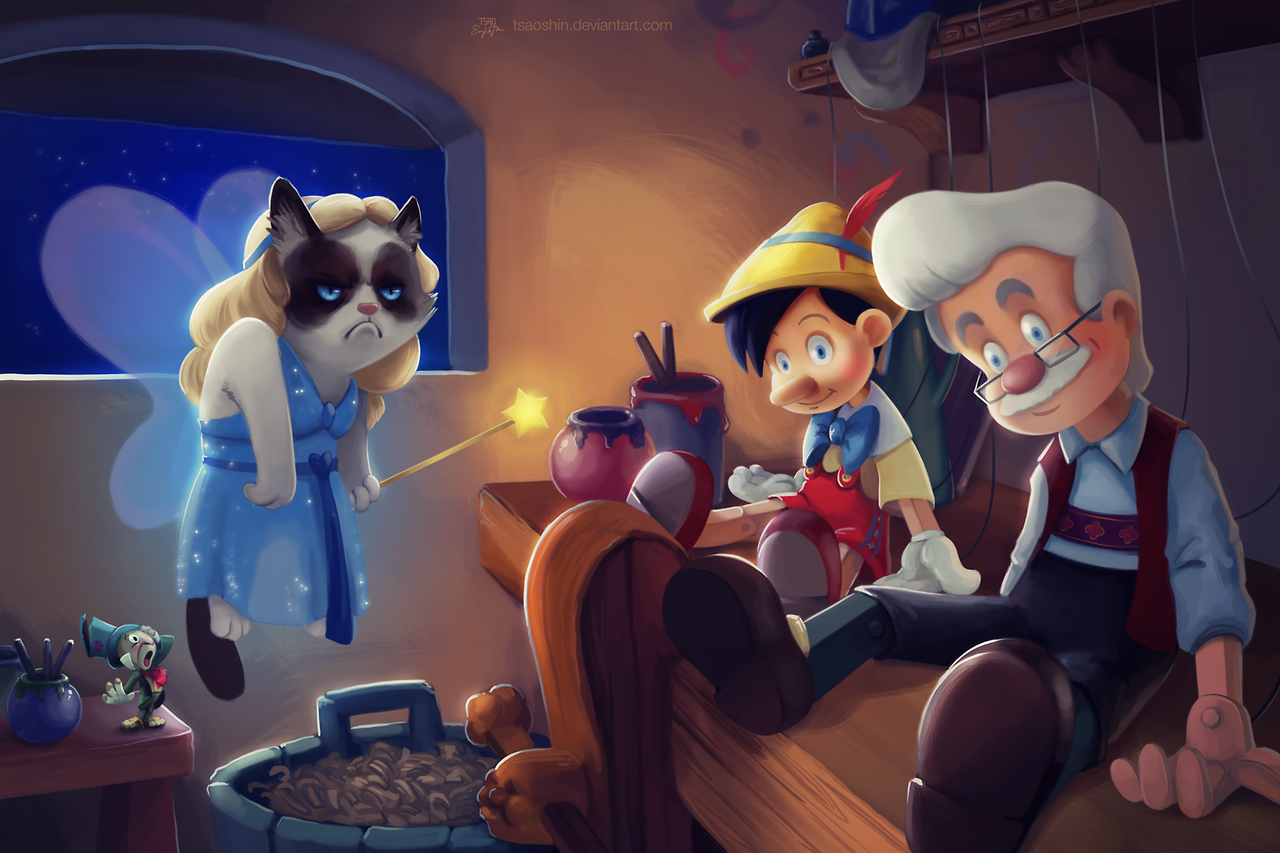
Internet humor in that period often degraded images on purpose—harsh compression, crude cutouts, caption stacking. Grumpy Disney went the other direction: high finish, low patience for destiny. That combination helped the set travel from DeviantArt galleries onto fan blogs and image roundups. People could admire the illustration even if they were only half-following the meme, and meme fans could enjoy the joke even if they rarely sought digital painters by name.
For artists, the series remains a useful case study in constraint. One substitution rule plus one emotional inversion plus faithful worldbuilding outperforms a pile of unrelated gags. For Disney lovers, it is proof that reverence can survive irreverence when the paint still loves the world it teases.
It also captures a specific crossover moment: Grumpy Cat as a mass-culture face meeting Disney as a mass-culture myth system, mediated by DeviantArt-era digital painting at a professional level. Later meme cycles would move faster and look rougher. This set looks almost classical by comparison—which is part of why the images still read clearly years later.
A short checklist if you revisit the set
- Name the film from costume and setting alone.
- Locate the precise story beat being blocked.
- Notice where TsaoShin’s lighting sells the impossible casting.
- Ask what the “official” song would be—and what single word the cat replaces it with.
- Imagine the runtime if the heroine never softens her scowl.
Try that checklist on the frames above, then pick a favorite derailment. Somewhere between a ballgown and a deadpan stare, TsaoShin’s Grumpy Disney proves a viral cat can occupy a fairy-tale throne—so long as the painter keeps the kingdom beautiful while the heroine refuses, on principle, to believe in happily ever after.

Comments
Continue reading
Extraordinary Disney Illustrations by Pez: Distroy in Graphite
French artist Pez (Pierre-Yves Riveau) peels Mickey and other icons in his graphite Distroy series—cute silhouettes rendered as decaying, fibrous, sketchbook monuments.
20 Heartwarming Disney Quotes That Still Stick
Twenty heartwarming Disney movie lines—from Rafiki, Dory, Lilo, Olaf, and more—plus why Walt’s four C’s of happiness still echo through them.
Still-Life Photography by Margareth Perfoncio
São Paulo photographer Margareth Perfoncio’s still lifes of food and flowers—Old Master light, dark wood, and tables that feel inevitable.