
From Old to New: Upcycling Ideas That Keep Stuff Out of Landfill
Turn old CDs into jewellery, wine corks into a pinboard, tired chairs into fresh seats, and boxes into storage—practical reuse beside the usual home-efficiency habits.
Protecting the planet often starts with familiar household upgrades: a lower thermostat setting, a water-efficient showerhead, or a heating system that wastes less fuel. Upcycling sits beside those habits rather than replacing them. Instead of sending worn goods straight to landfill, you remake them into something you will actually use—jewelry, a corkboard, refreshed furniture, or smarter storage. The environmental gain is modest per project and meaningful when it becomes a habit: fewer new purchases, less waste, and materials kept in circulation a little longer.
The ideas below favor materials many homes already accumulate—old CDs and DVDs, wine corks, tired chairs, shoeboxes, bottles, and egg cartons. None of them require a full workshop. They do require patience, basic tools, and honesty about whether the finished object will earn space in your life. Upcycling that creates clutter is only delayed disposal.
Why upcycling belongs next to efficiency habits
Efficiency reduces ongoing energy and water use. Upcycling reduces demand for new goods and keeps durable waste out of the bin. Optical discs are a clear example: they are not biodegradable, and incineration can release unpleasant emissions. Turning a stack of obsolete CDs into pendants or earrings is not a global climate strategy on its own, but it is a concrete refusal to treat non-degradable plastic as single-use packaging for music you now stream.
Corks, cardboard, fabric scraps, and solid wood furniture share a different virtue: they are easy to rework with glue, paint, staples, and scissors. Charity shops and secondhand stores remain useful sources when your own leftovers run short—an old frame for a corkboard, a sturdy chair worth reupholstering, a wooden tray that becomes a jewelry catchall. Buying secondhand to upcycle still beats buying new decorative objects manufactured for a single season.
Judge projects by three criteria before you start: Do I have the material already? Will I use the result weekly? Can I finish it with tools I own or can borrow? If the answer to any question is no, skip to a smaller project. Ambition without follow-through fills garages with half-sanded chairs.
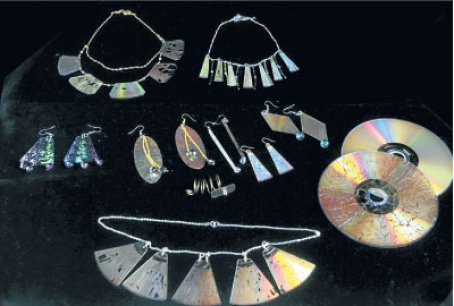
Turn old CDs into jewellery
Discs offer reflective color, light weight, and shapes you can cut into circles, shards, or stacked layers. Safety comes first: wear eye protection when cutting, sand sharp edges smooth, and work in a ventilated space if you use adhesives with strong fumes. Avoid breathing plastic dust; wet-sanding or cutting outdoors helps.
Simple pendant method: mark a circle or irregular shape on the disc, cut with sturdy shears or a jeweler’s saw if you have one, drill a small hole near the top, sand the rim, and hang on a jump ring and chain. Layering two shards with a thin adhesive can create depth. Earrings follow the same logic at smaller scale—keep them light so they do not tug on earlobes.
Surface treatments change the mood. Leave the holographic side visible for a futuristic flash. Paint the reverse matte black or soft gold for contrast. Decoupage a scrap of paper or fabric onto part of the disc if you want pattern without buying new charms. Homemade pairs make thoughtful gifts when finished neatly; unfinished sharp edges do not.
Not every disc belongs in jewelry. Scratched data sides can still look interesting as mosaic tiles on a small box lid or as light-catching pieces in a garden mobile. The goal is reuse that matches the material’s strengths—shine and durability—without pretending plastic discs are precious metal.
Make a corkboard from wine corks
If you keep corks from dinners and celebrations, they multiply quietly in drawers. A corkboard turns that collection into a useful wall surface for notes, photos, and invitations. You need a frame (upcycled or found secondhand), a plywood or stiff cardboard backing cut to fit, strong wood glue, and enough corks to fill the opening without large gaps.
Attach the backing to the frame so it sits firm. Arrange corks before gluing—whole corks on end for a dense pin surface, or sliced coins for a flatter mosaic. Patterns can be herringbone, stripes by cork color, or a random scatter that still looks intentional because gaps are minimized. Glue in sections and weight the board while it dries so corks do not tilt.
Natural cork grips pushpins well; synthetic stoppers vary. Test a pin in a spare cork. If you lack corks, ask restaurants politely or collect over months rather than buying bags of new corks that defeat the reuse ethic. Hang the finished board with hardware rated for its weight—cork plus wood is heavier than it looks.
A corkboard is only as good as what you pin to it. Use it for active papers, not as a museum of expired coupons. Editing the board monthly keeps the upcycle useful rather than decorative clutter.
Transform furniture you already own
New furniture is expensive and resource-intensive. Sanding, painting, and reupholstering can reset a sound piece for a fraction of that cost. Start by checking structure: wobbly joints need glue and clamps before cosmetics. Loose veneer, deep water damage, or particleboard crumbling at screw holes may not be worth the hours—donate or dispose responsibly and choose a better candidate.
Paint and finish change character quickly. Clean thoroughly, sand to give new paint a grip, prime when needed, and use finishes suited to wear—tabletops need tougher coatings than a rarely touched shelf. Gloss can modernize dated wood; matte chalky finishes soften cottage pieces. Always work with ventilation and protect floors.
Reupholstering a chair seat is a classic beginner upcycle. Unscrew the seat, remove old fabric and staples carefully, and use the old cover as a pattern if it still holds shape. Lay new fabric wrong-side up, place the seat face-down, cut with generous margin, and pull fabric taut as you staple from the center of each side toward the corners. Pleat corners neatly, trim excess, and reattach the seat. Choose fabric durable enough for actual sitting—decorator weight beats thin craft cotton for dining chairs.
Small upgrades count: new knobs on a dresser, a lined drawer, felt pads under legs. Upcycling is not only dramatic before-and-after photos; it is maintenance that extends life.
Creative storage from boxes, bottles, and cartons
Storage furniture can be costly. Cardboard shoeboxes covered in leftover wallpaper or wrapping paper become drawer organizers. Stand toilet-paper tubes inside a box to create compartments for cables, pens, or craft tools. Decoupage old jewelry boxes with paper scraps and seal them so they wipe clean. Empty bottles—washed and dried—hold bracelets on the neck; egg cartons sorted earrings or rings in a drawer.
Decoration matters because plain cardboard often gets discarded again out of embarrassment. A wrapped box that matches your room is more likely to stay in use. Keep labels honest: write contents on the short end so stacks remain searchable. Transparent jars for dry goods follow the same reuse logic without craft glue.
Think in systems. One pretty box that hides chaos is a start; a labeled set that lives where you actually drop mail and keys is better. Measure the shelf or drawer first so upcycled containers fit rather than teeter.
Practical limits and better habits
Not everything should be upcycled. Soft plastics with food residue, broken electronics with hazardous parts, and moldy textiles may belong in proper disposal streams. Lead paint on old furniture needs careful handling. When in doubt, research local recycling rules before cutting or burning anything.
Combine upcycling with refuse and reduce: do not collect corks and discs forever “for a project.” Cap the stash. Finish one board or one jewelry set, then stop acquiring. Share surplus materials with schools or makerspaces if your storage is full.
Time is a resource too. A weekend spent refreshing a chair you sit in daily beats a month of unfinished mosaics. Choose projects that match your hours and skill, then enjoy the double return: something useful in the house, and one less object on its way to landfill.
If you try only one idea from this set, make the corkboard or the chair seat—both repay the effort every week you use them. Jewelry from discs is the playful option; storage upgrades are the quiet workhorses. Either way, the planet-friendly move is the object you keep in service, not the one you only photograph.

Comments
Continue reading
DIY Ideas for Old Socks: Rugs, Puppets, Mittens, and More
Sort leftover socks by fiber, then turn them into braided rugs, hand puppets, soft toys, mittens, and pin cushions with practical cutting and sewing tips.
DIY Ideas with Lace Doilies
Upcycle heirloom lace doilies into framed art, runners, pillows, lamps, and more—practical craft projects that keep the crochet visible.
Toilet Paper Roll Crafts: Organizers, Toys, and Ornaments
Cardboard tubes become pencil holders, wreaths, cord cubbies, monsters, race cars, ornaments, and more—structural DIY distinct from magazine-page crafts.