
DIY Ideas with Lace Doilies
Upcycle heirloom lace doilies into framed art, runners, pillows, lamps, and more—practical craft projects that keep the crochet visible.
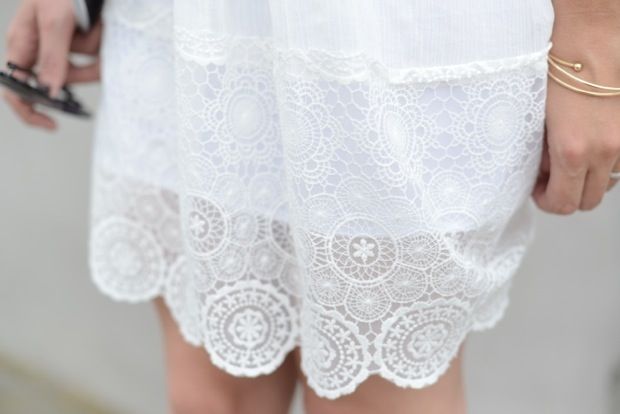
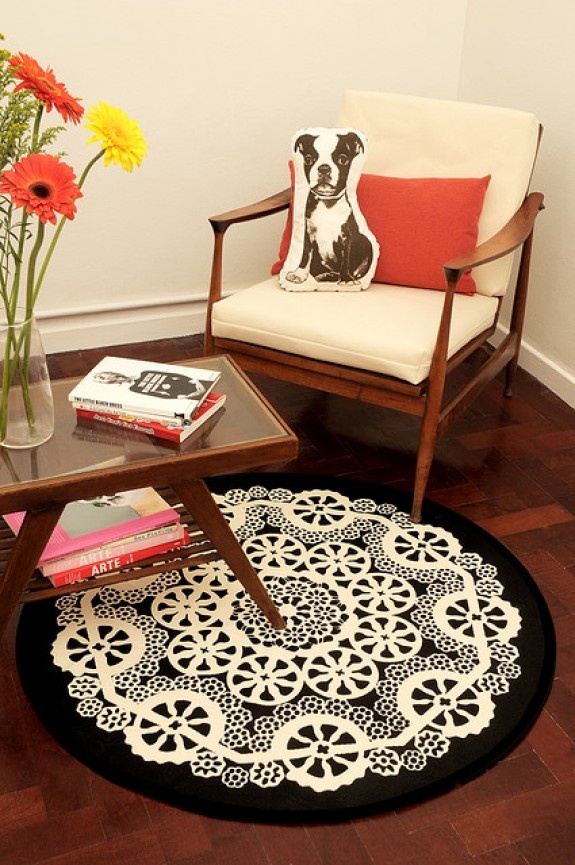
Somewhere in a drawer, crate, or linen closet, many households keep lace doilies that feel too meaningful to throw away and too old-fashioned to leave on the coffee table. They are often gifts from mothers or grandmothers—hours of crochet turned into round, oval, or rectangular webs of cotton thread. Upcycling those pieces into runners, framed wall art, pillows, lamp overlays, and table accents does not erase that history. It gives the lace a job again in rooms that no longer want formal lace under every vase.
The projects and photographs below treat doilies as craft material with pattern already built in. You do not need expert textile skills. You need patience with delicate openwork, a few basic tools, and the discipline to practice on thrift lace before touching the most precious heirloom in the box.
Sort, wash, and choose your risk level
Separate doilies by condition before you dream up projects. Sturdy, evenly crocheted pieces can handle sewing, light stretching, or careful dyeing. Fragile, yellowed, or already torn lace belongs in gentler treatments—framing behind glass, layering under a clear tray, or displaying flat on a dark cloth. If a doily is irreplaceable, photograph it and rehearse techniques on inexpensive lace from a thrift store or craft bin.
Clean carefully. Many cotton doilies tolerate a gentle hand wash in cool water with mild soap; rinse thoroughly and dry flat on a towel, reshaping motifs while damp. Avoid aggressive wringing. If the original finish included starch, a light refresh can help the lace hold shape for framing or for use as a shaping template. Iron only with appropriate heat and a pressing cloth, and do not crush dimensional stitches if you want them to stay lively. Label bags by project type—frame, sew, stiffen—so the crate stops being a guilt pile and becomes a materials kit.
Frame first: honor without scissors
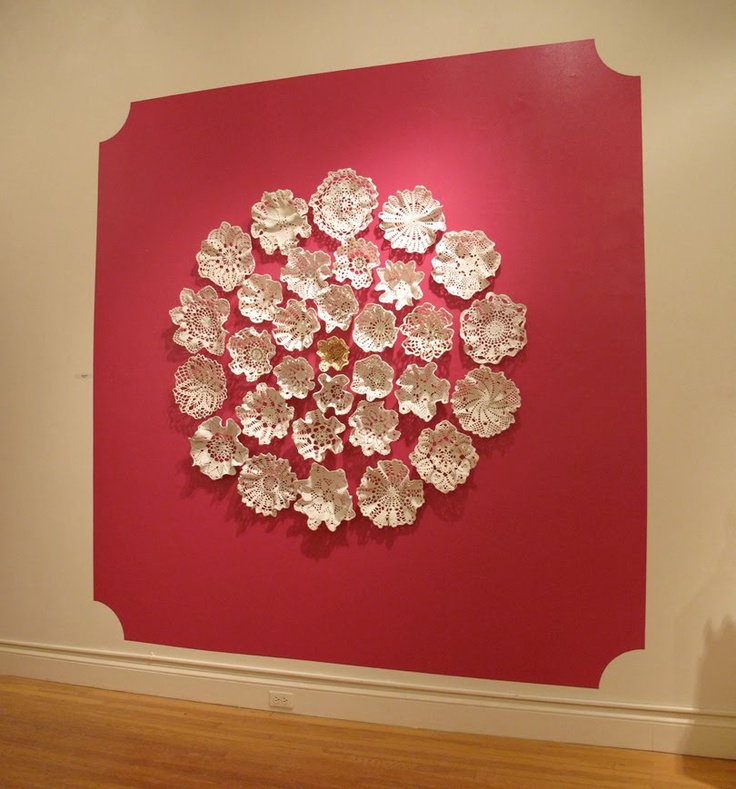
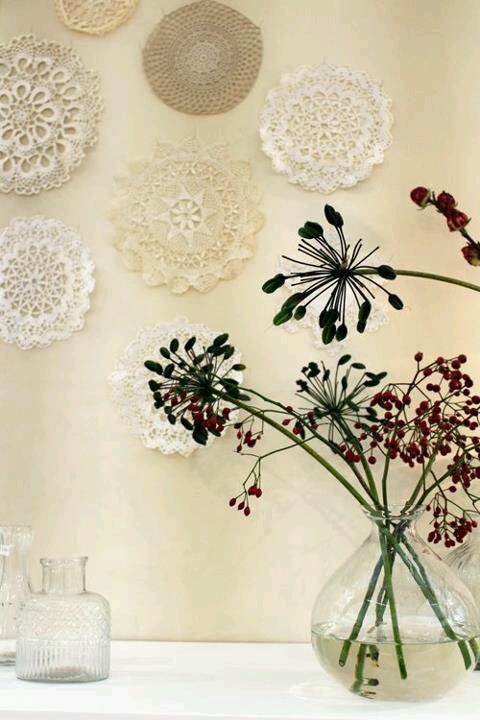
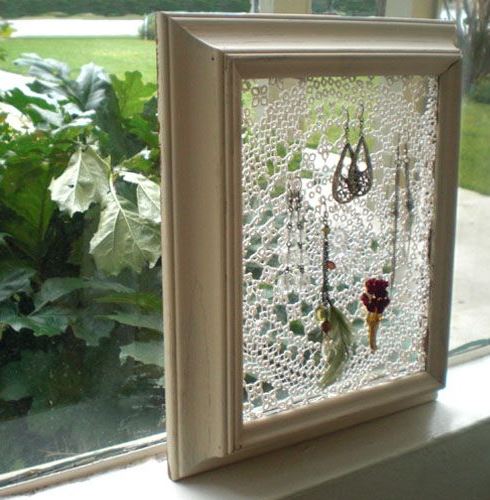
Framing one or more doilies turns keepsakes into wall art without destroying them. Float the lace on a contrasting mat—charcoal, navy, forest green, or soft blush—so openwork reads clearly. Shadow-box frames help when crochet has thickness. A grid of small matching frames can turn mismatched rounds into a curated set that looks intentional rather than scavenged. This is the right first project when sentiment is high and confidence is low.
Hang framed lace where raking daylight can reveal pattern, but avoid harsh sun that yellows cotton further. A hallway gallery or bedroom wall often works better than a steamy bathroom. If you know who made the piece, pencil that name on the reverse of the mat. Future owners will thank you.
Runners, placemats, and layered tables
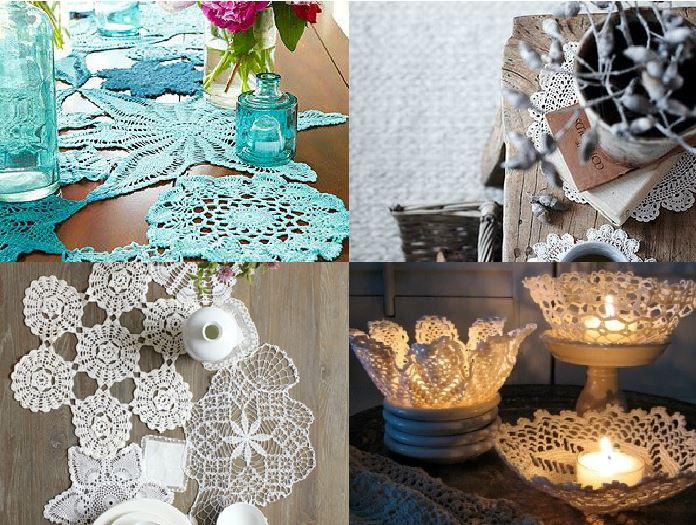
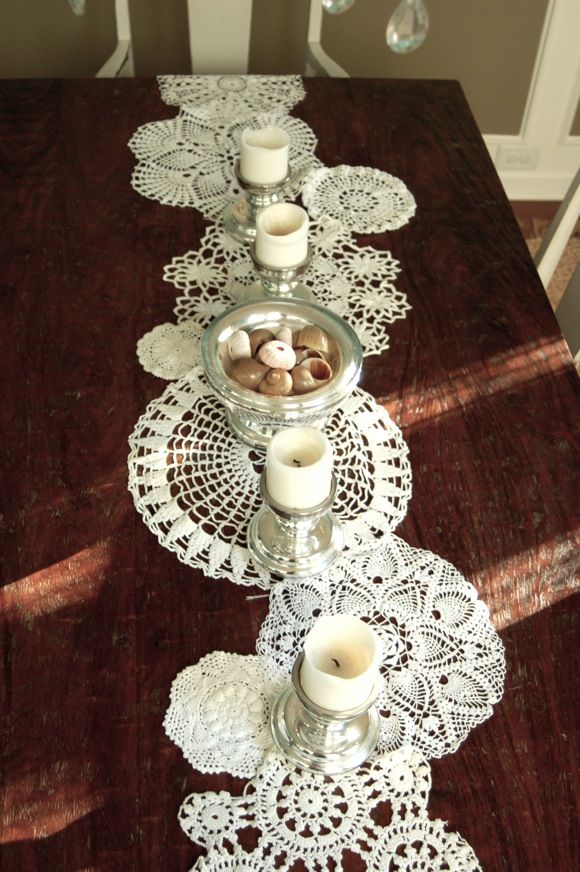
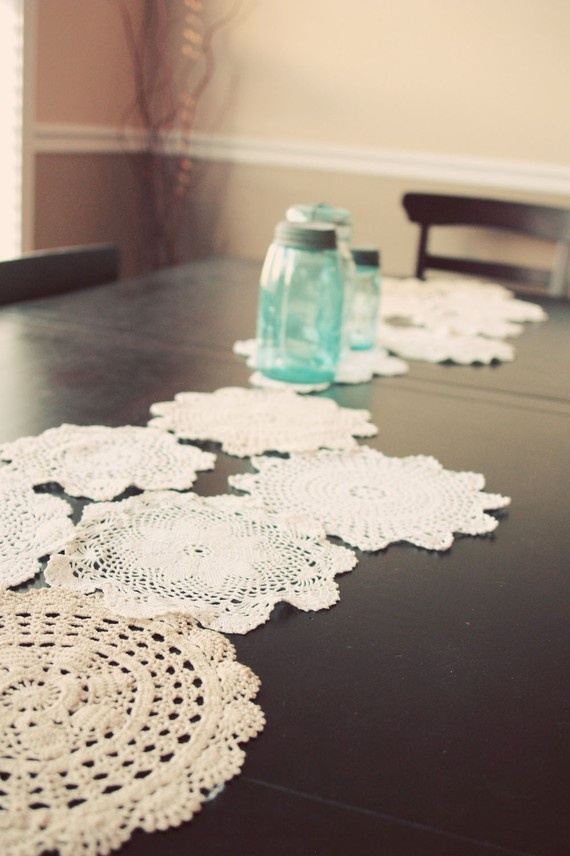
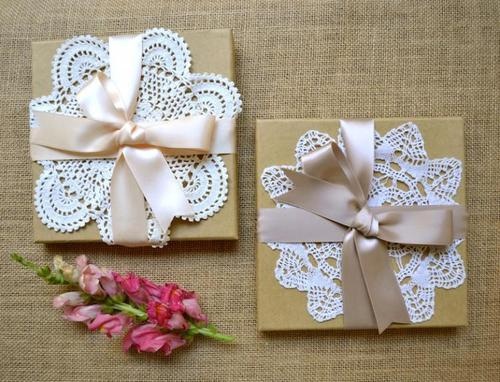
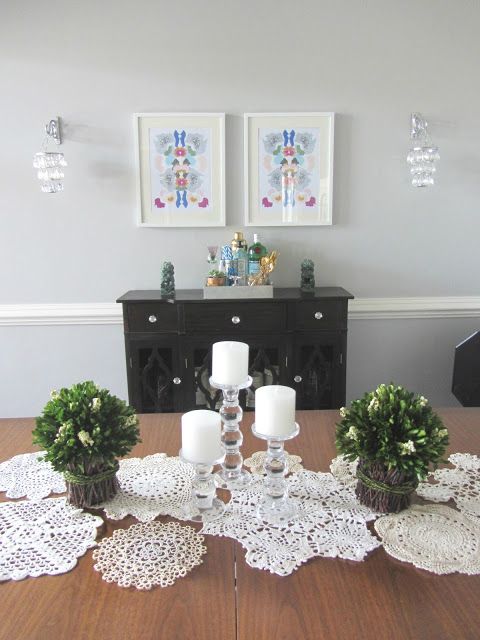
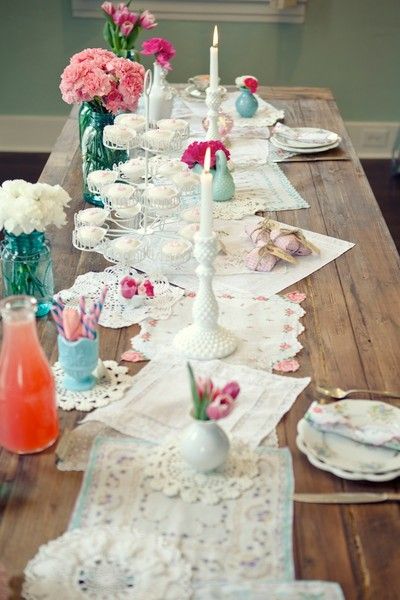
Joining several doilies edge to edge—by hand or with a fine machine zigzag—creates a runner that feels designed rather than leftover. Alternate sizes for rhythm, or keep rounds consistent for a formal look. Back the lace with solid fabric if you want opacity and durability for daily tables; leave it open as an overlay on a colored cloth for a lighter effect. Smaller doilies can become placemats or tray liners if stiffened slightly or backed. A single oversized oval can center a dining table under a vase without requiring a full formal set.
The goal is not automatically to recreate a grandmother’s Sunday table unless you want that mood. Many modern rooms look better with one strong lace gesture than with lace everywhere. Restraint keeps the crochet special.
Pillows, curtains, and clothing accents
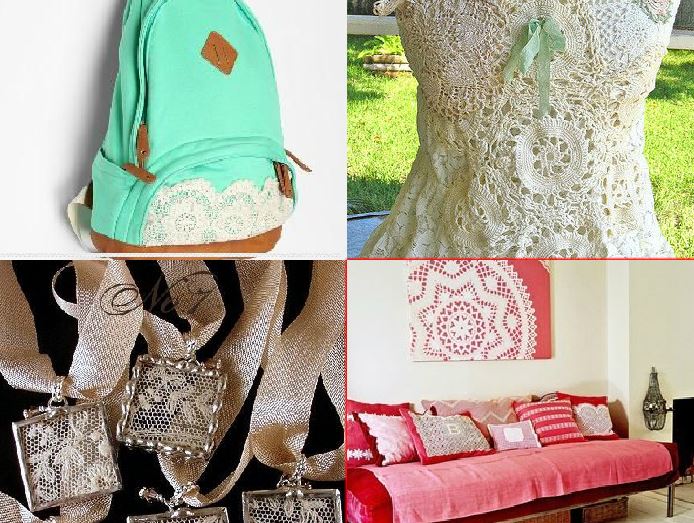
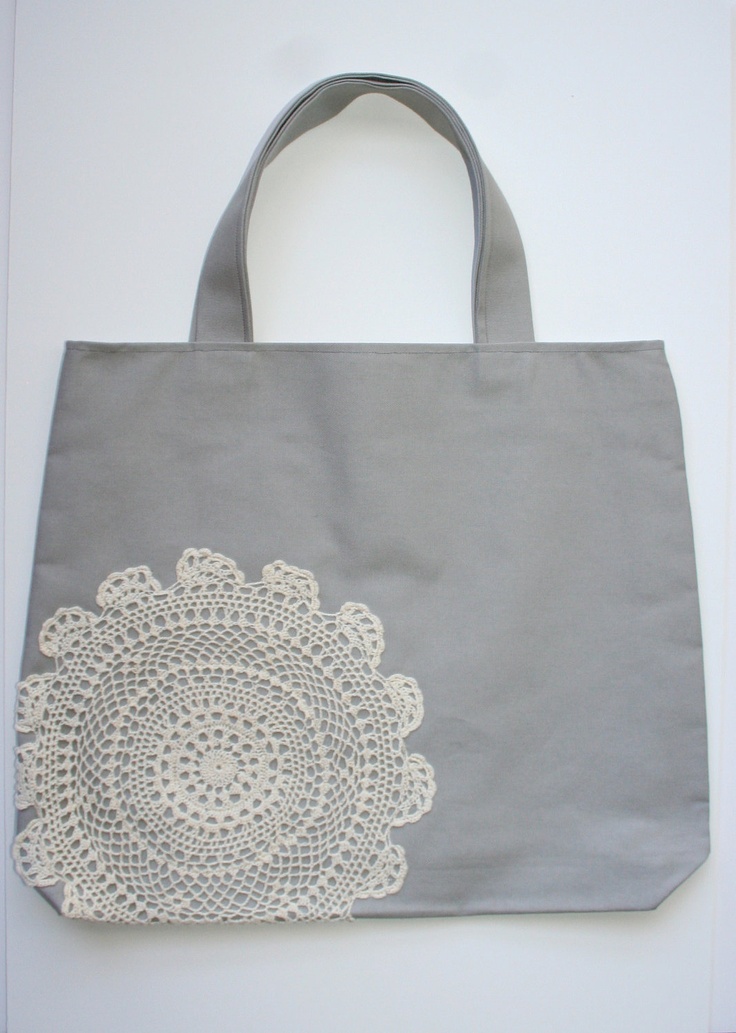
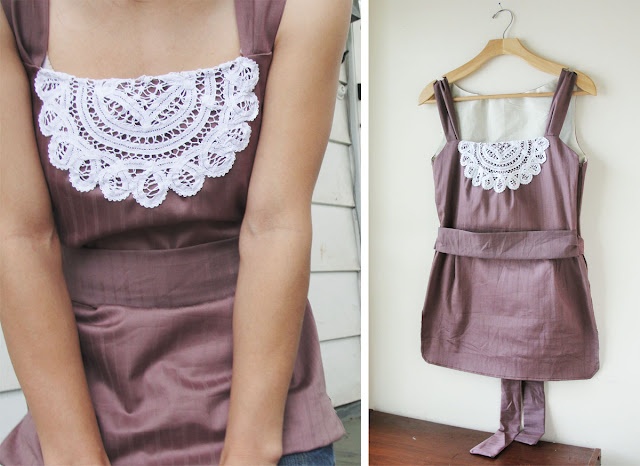
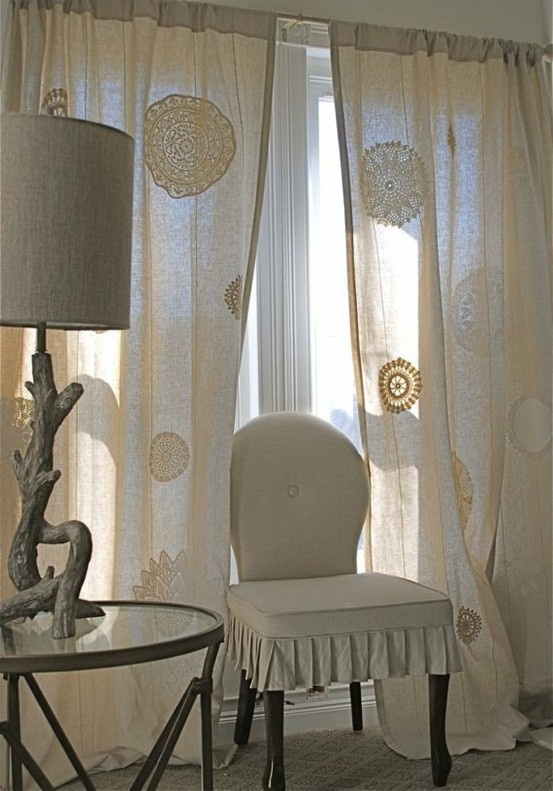
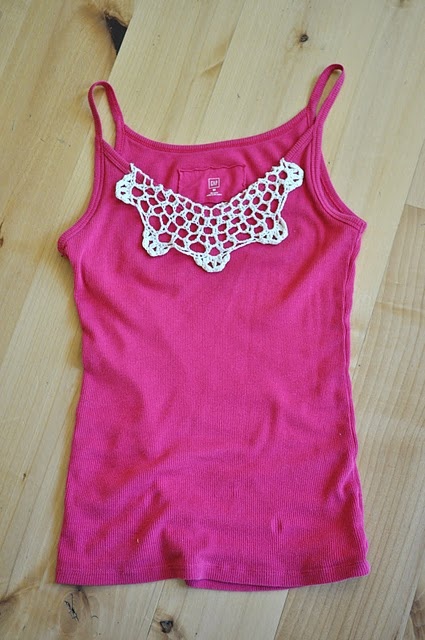
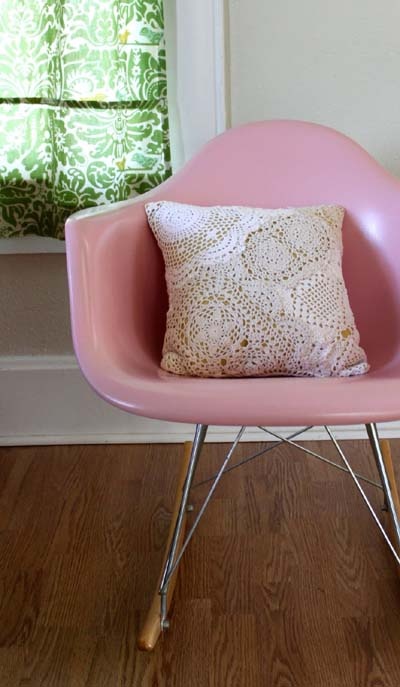
Appliqué a doily onto a plain pillow cover for instant texture. Stitch only at key points so the lace can lift slightly, or baste fully flat for a cleaner graphic. Curtain panels can host a vertical column of doilies as inserts or overlays near the hem. On clothing, use fragments as pocket covers, collar overlays, or jean-jacket patches—prefer thrift lace until your technique is steady. When sewing lace to fabric, use a fine needle, matching or near-invisible thread, and stabilizer if the machine wants to eat the openwork. Hand sewing is slower and often safer for heirlooms. Press from the wrong side when possible.
Think about washability before you commit. A pillow that must be spot-cleaned forever may annoy you; a removable cover with a replaceable lace panel is kinder to daily life.
Light, jars, and stiffened forms
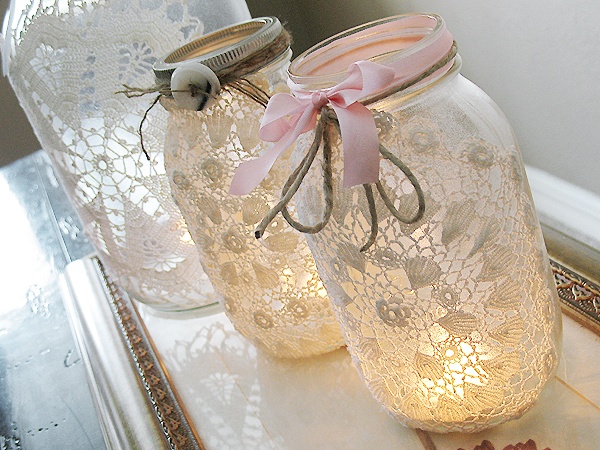
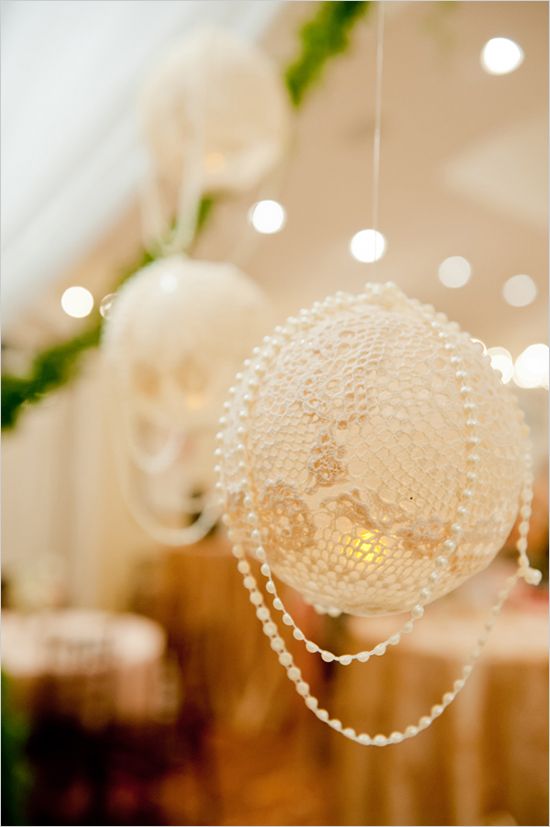
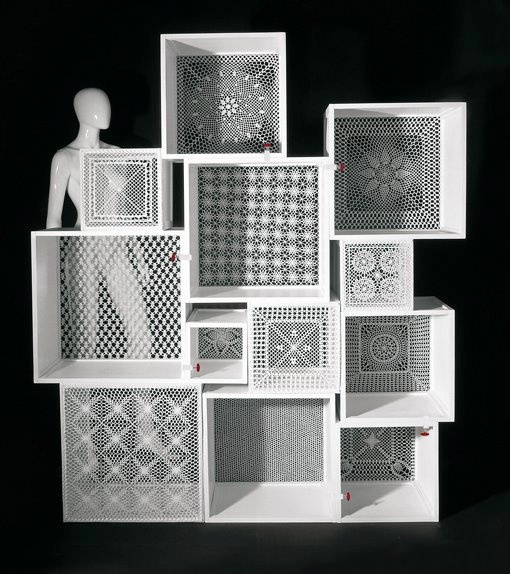
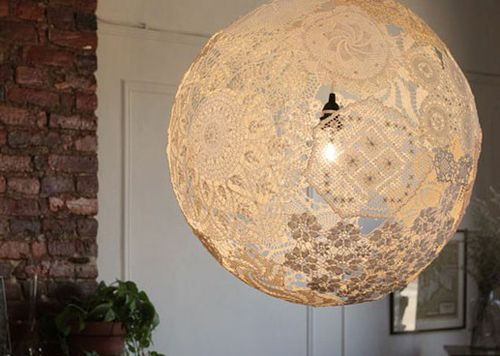
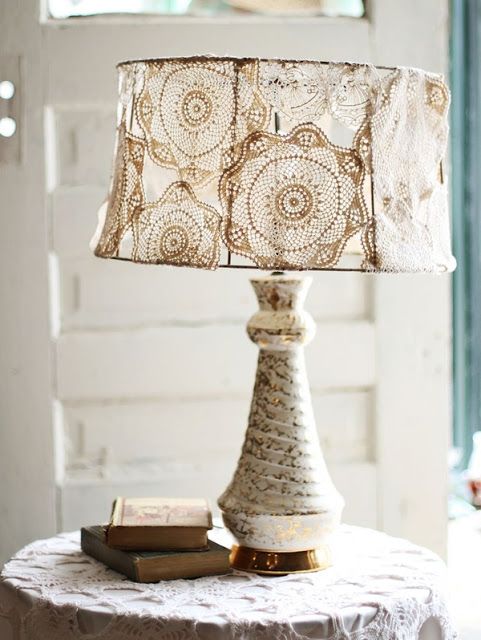
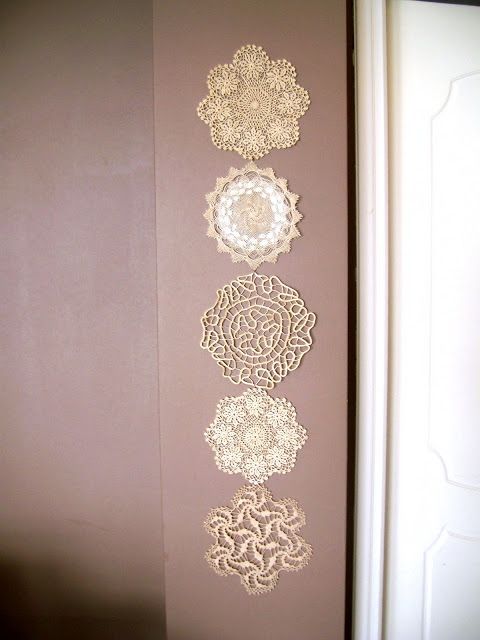
Stiffened doilies can become lampshade overlays, candle-jar wraps, or shallow bowl forms. Fabric stiffener or a diluted white-glue wash, applied evenly and shaped over a mold, turns soft lace into a shell. Treat open-flame projects with caution: prefer LED candles and keep fabric away from hot bulbs. For jars and vases, a wrap that ties or clips on stays reversible; a fully glued wrap is a commitment. Hanging doily mobiles and window hangings also appear often in craft galleries—they work best with consistent scale and enough negative space so the room does not fill with white lace noise.
Color, dye, and mixed media
Not every project must stay cream. Tea dyeing, fabric dye, or fabric paint can shift doilies toward blush, gray, indigo, or soft black for contemporary palettes. Always test on a scrap. Uneven dye can look intentional on lace because openwork already breaks color into pattern. Embroidery floss can add French knots or outline motifs; small beads can catch light at motif centers if you want mild sparkle without drowning the crochet. Paper crafters sometimes scan or trace motifs for cards when the physical lace should remain untouched—a hybrid approach that respects heirlooms while still feeding a creative streak.
A sensible project sequence
If you are staring at a crate of lace and do not know where to begin, try this order. First, frame one favorite intact doily so something beautiful leaves the box this week. Second, join three similar thrift or secondary pieces into a short runner sample. Third, appliqué one practice doily onto a pillow you already own. Only after those three should you stiffen lace for a lamp or cut motifs apart for collage. Confidence with handling beats ambition that ruins a keepsake.
Gather materials before you start each piece: fine needles, thread, fabric scissors reserved for textiles, a pressing cloth, measuring tape, and—if dyeing—gloves and a test scrap. Working in a clear patch of table, not on a crowded counter, prevents snags. When a project fails, salvage usable motifs rather than throwing the whole doily away; collage and appliqué forgive imperfect first attempts.
When the piece is finished, tuck a small note with it naming who made the lace if you know. Upcycling shows care; a label makes that care readable for whoever opens the drawer next.

Comments
Continue reading
DIY Ideas for Old Socks: Rugs, Puppets, Mittens, and More
Sort leftover socks by fiber, then turn them into braided rugs, hand puppets, soft toys, mittens, and pin cushions with practical cutting and sewing tips.
Toilet Paper Roll Crafts: Organizers, Toys, and Ornaments
Cardboard tubes become pencil holders, wreaths, cord cubbies, monsters, race cars, ornaments, and more—structural DIY distinct from magazine-page crafts.
Holiday Tie-Dye Projects: Tees, Shibori, Shoes, and Home Accents
Plan a dye day for spirals, shibori totes, kid-friendly marker crafts, powdered dyes, canvas shoes, lampshades, and hoop wall art—with rinse and wash tips that keep colors bright.