
Grace Ciao’s Flower-Petal Fashion Sketches
How Grace Ciao turns real petals into fashionary dress designs—Bloom Belles method, flower-as-fabric logic, and a desk exercise for illustrators.
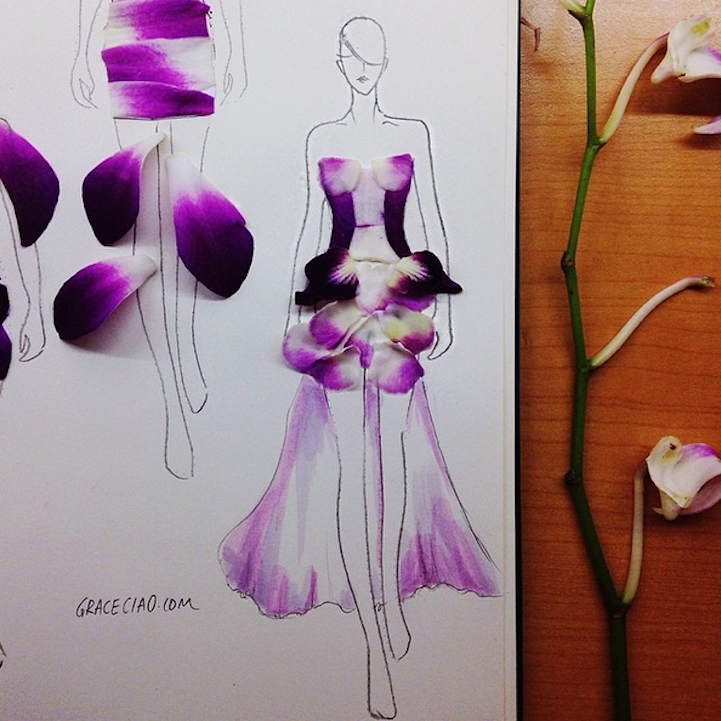
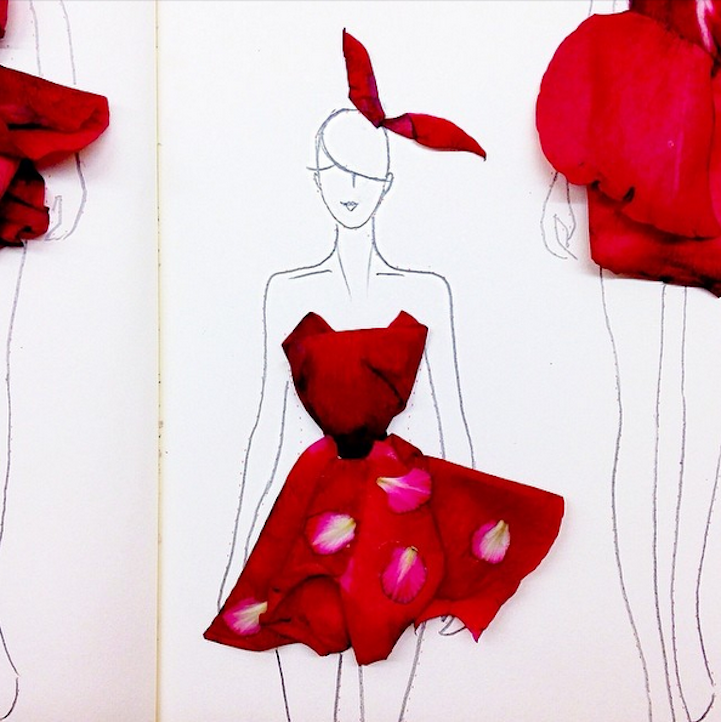
Most fashion sketches begin with pencil, marker, or watercolor washes. Grace Ciao’s begin with a flower laid on the page. The Singapore-based illustrator builds garments on drawn figures by arranging real petals so their curves read as silk, tulle, and couture volume. The results sit between fashion design and botanical collage: color-true, delicate, and stubbornly unlike a flat digital swatch book.
When the work first traveled widely online, Ciao was a young student. A wilting rose—kept instead of thrown away—became the first petal gown after she began placing petals on a drawing and simply continued. That accident grew into a signature series often known as Bloom Belles: hand-drawn lines and soft watercolor meeting three-dimensional blooms that behave like fabric. The figures feel chic; the dresses feel grown rather than inked.
Ciao has explained that petals help her invent prints and clothes she would not invent with pigment alone, and that their delicacy mimics soft fabric. That double claim—tool for invention and metaphor for cloth—is why the sketches matter beyond viral prettiness. They are a design method with botanical constraints.
Why petals outperform the paint box
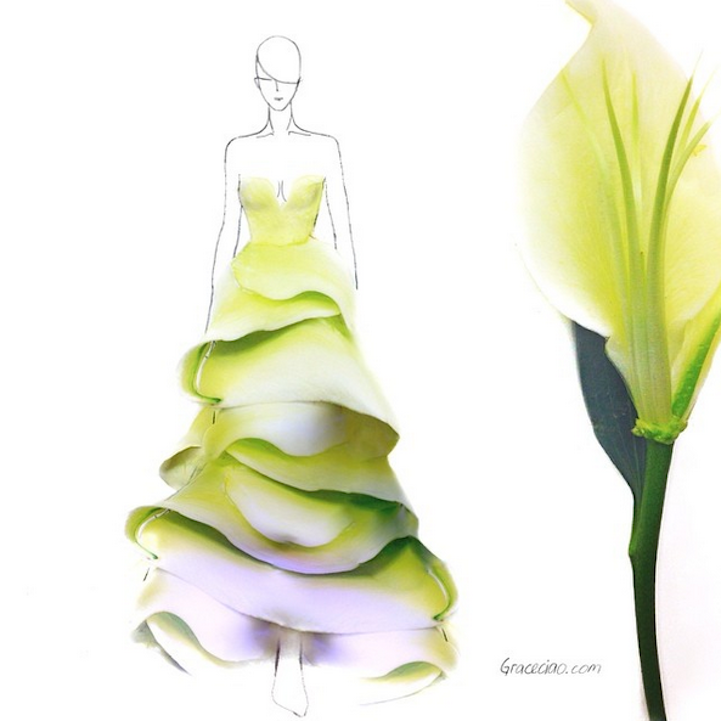
A rose holds several pinks in one bloom. An orchid offers veining brushes rarely match honestly. Peonies and callas suggest flounced hems and architectural curves before the illustrator finishes a seam line. Gradients arrive ready-made; edges arrive already “finished” by nature.
That is the method’s practical magic: nature supplies both color story and drapery logic. The artist’s job is to listen to the petal’s edge rather than force a predetermined dress onto unwilling plant matter. Ciao has noted that she does not fully know what outfit will emerge until the last petal sits in place—an admission that process, not mood-board control, leads the design.
For anyone stuck in safe marker renderings, the lesson is liberating. Unpredictable materials push silhouettes you would not sketch on purpose. The flower refuses certain necklines and insists on others. Negotiation with that refusal is the creative act.
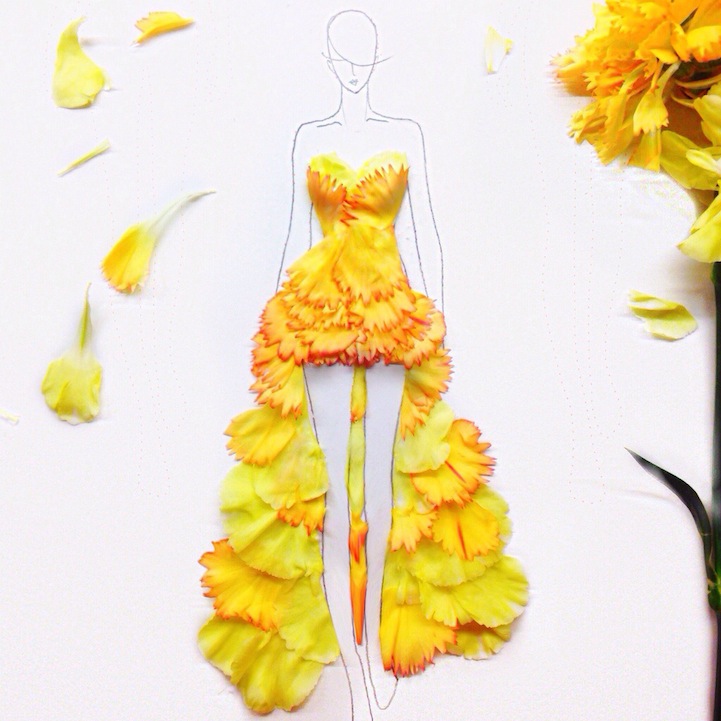
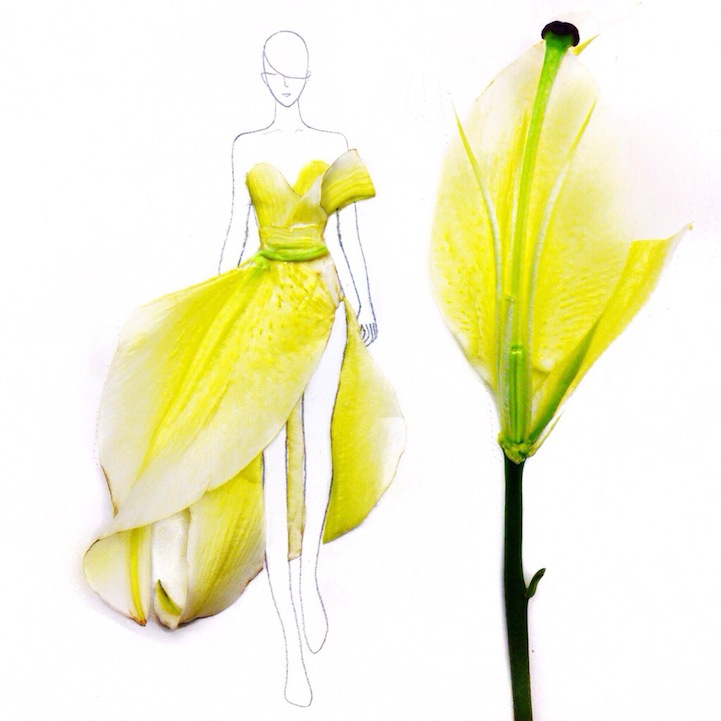
How a petal fashionary sketch comes together
Each piece varies, yet a recurring studio rhythm appears:
- Figure first. A drawn or lightly painted woman sets scale and pose—often elongated in classic fashion-illustration proportion so the dress can dominate the page.
- Flower choice. Blooms with multiple shades and lively edges outperform flat single-tone petals, which read less like cloth and more like stickers.
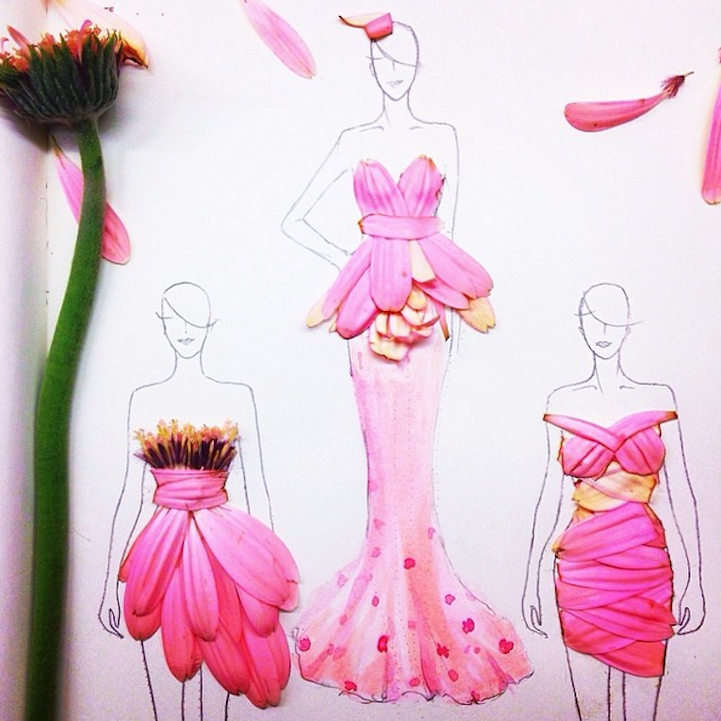
- Arrangement. Petals rotate, overlap, and stack until neckline, waist, and hem appear. Gaps become negative space as important as color.
- Integration. Line and watercolor connect petal to body—straps, movement marks, shoe hints—so the collage feels worn, not glued on as decoration.
- Capture. Because petals dry, curl, and shift, photography or careful mounting preserves the decisive arrangement before time undoes it.
The Fashionary spirit matters as much as the botanicals. These are not flower studies with a dress vaguely nearby. They are garment ideas discovered through plant structure—the kind of exploratory sketching designers use when paper alone feels too obedient and digital brushes feel too obedient in a different way.
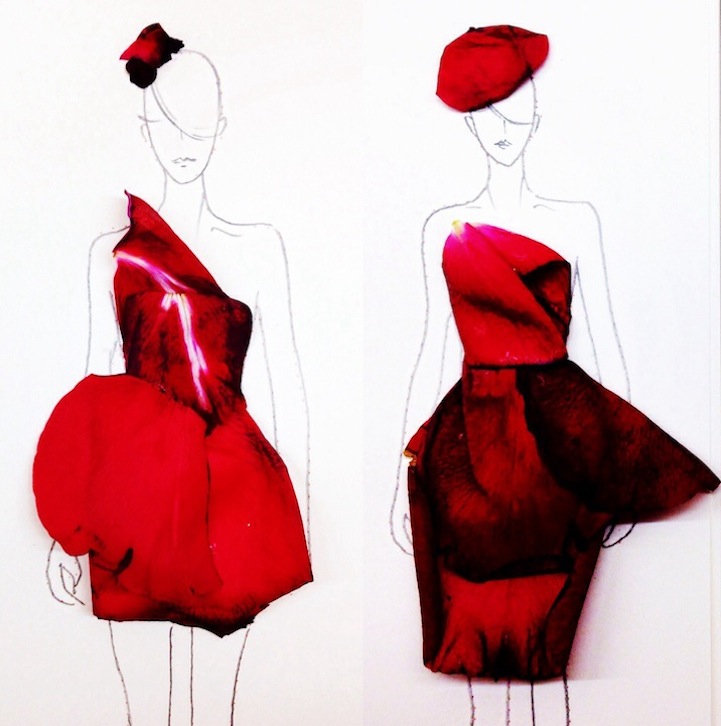
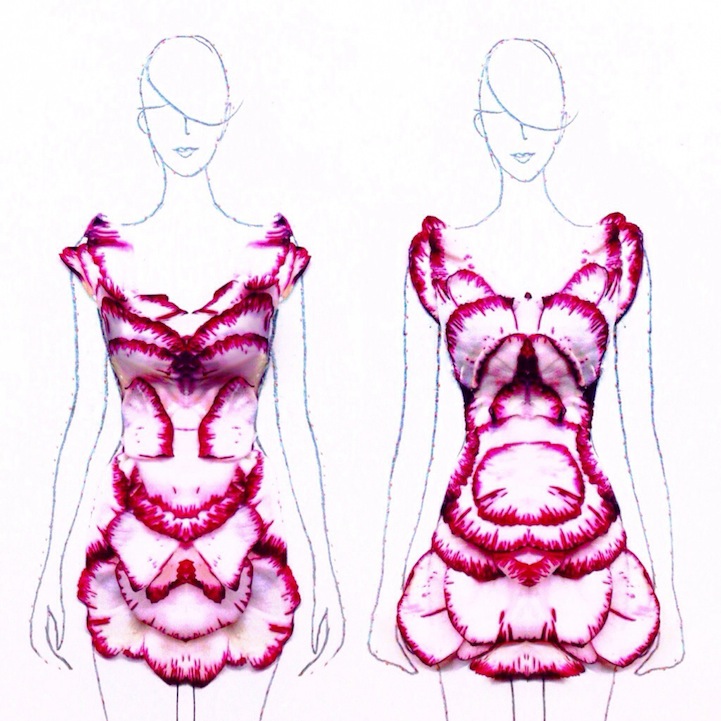
What different flowers cast as cloth
Across Ciao’s petal dresses, materials almost cast themselves:
- Roses: romantic volume, layered skirts, blush gradients for evening and bridal moods.
- Peonies: dense flounces, ballerina puff, soft weight gathering at the hem.
- Orchids: graphic panels, asymmetry, unexpected slit and sleeve ideas.
- Calla and related trumpet forms: clean architectural curves, culottes, sculptural midis.
- Mixed petals: print-like rhythm, as if fabric were woven from several gardens at once.
Designers can reverse-engineer real garments from these images: gather where petals cluster; leave air where a stem once divided color; let a natural torn edge become a raw hem or petal-point train. Textile students can press leftovers for print references after the illustration session ends. Pattern makers can study how volume sits without understructure because the petal itself is already three-dimensional.
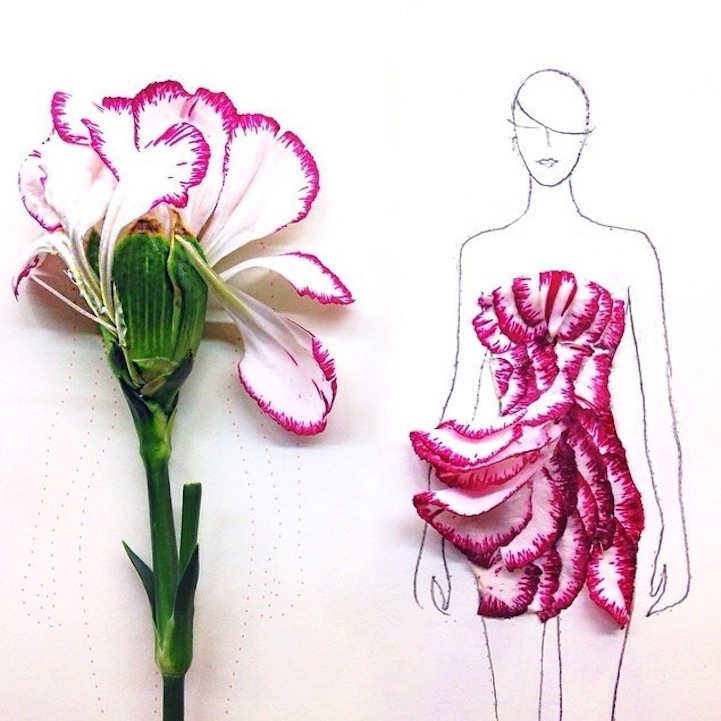
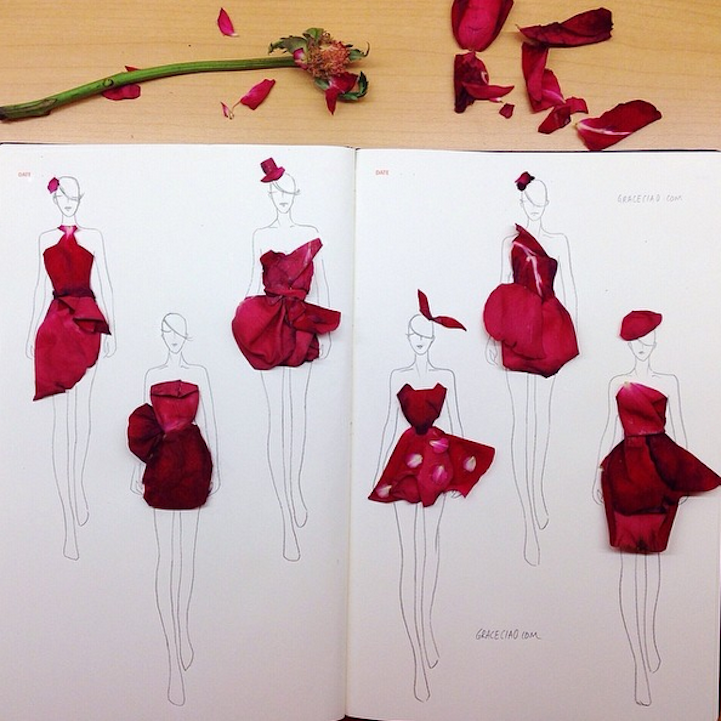
Illustration as design research
Fashion programs still teach marker and digital brush for good reason—those tools are controllable and deadline-friendly. Ciao’s petal work argues for another studio habit: bring unpredictable materials to the figure and let constraints invent silhouettes. The same habit appears when costume teams build boards from dried botanicals, or when print designers scan pressed flowers for motifs that feel less generic than stock florals.
Ephemerality is part of the pedagogy. Unlike a layered file you can undo forever, a flower arrangement ages in hours. Decisions must be decisive. That pressure frees people who over-render every seam allowance on paper and never risk a surprising hem. It also teaches documentation: photograph process states the way you would save file versions.
There is an ethical and practical note too. Market flowers and garden roses are enough. You do not need rare blooms to learn the method, and you should not strip protected plants for content. Ciao’s early story—one wilting rose already in the room—is a better model than a shopping spree of exotic stems.
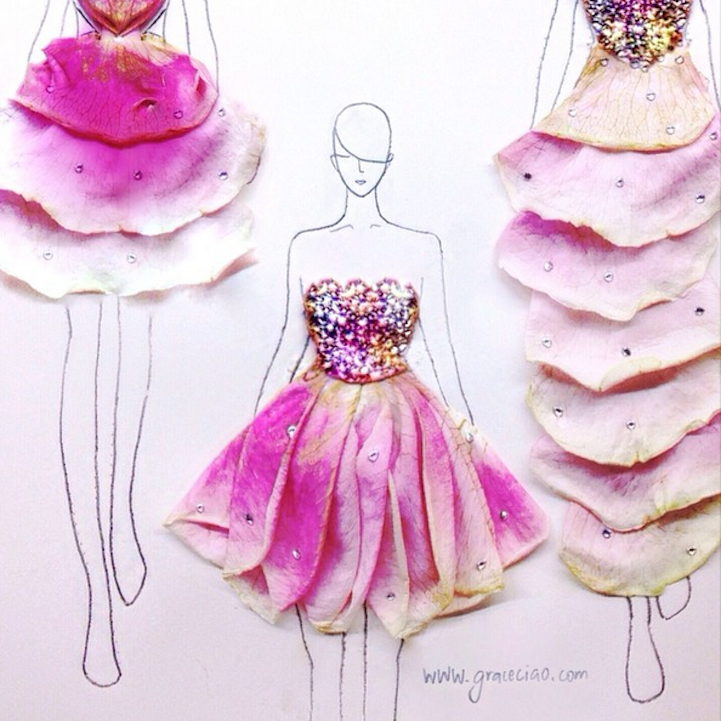
A respectful desk exercise
You do not need Ciao’s exact hand to learn from her method. Try this:
- Draw a simple standing figure on heavy paper or a fashion croquis sheet.
- Choose one flower with varied petal tones; market roses and peonies are enough.
- Decide only the neckline in advance; let the remaining silhouette follow petal edges.
- Photograph every strong arrangement before you move pieces again.
- Translate one favorite photo into a flat textile sketch, a fabric mockup, or a digital clean-up for a portfolio page.
- Write three notes: what the flower insisted on, what you overrode, and what you would sew in cloth.
Studio manners help: blot wet petals, keep glue minimal if you want to reuse blooms, and work quickly under good light so color stays true in photographs. If humidity wilts your materials mid-session, switch to slightly drier petals or work in shorter rounds. Keep a trash-to-treasure tray for petals that browned; sometimes a browned edge becomes a useful shadow in the collage.
From rescued rose to recognizable series
What began as a personal experiment became a recognizable illustration language. Ciao’s Bloom Belles traveled through exhibitions and later collaborations with fashion and beauty worlds, but the desk logic stayed constant: respect the flower’s structure, draw just enough body to hold it, and stop when the last petal makes the dress feel inevitable.
Look across the gallery and track one formal theme—volume at the hip, asymmetry at the shoulder, transparency suggested by overlapping thin petals. You will see a designer’s brain working even when the “fabric” was alive that morning. That is why these pages belong next to fashionary sketch practice, not only next to craft curiosities.
Return to that first wilting rose. In most rooms it would have been trash by morning. In Ciao’s hands it became a bodice curve, a sleeve flare, a hem only a plant could draft. That rescued bloom still explains the series better than any trend forecast. Fashion illustration gets freer when material is allowed to lead—and when “sketching” can mean arranging living color until a gown appears that no pencil would have planned alone.

Comments
Continue reading
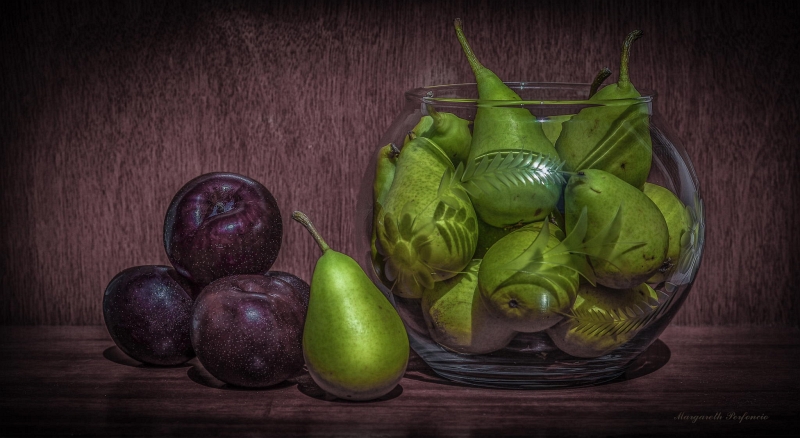
Still-Life Photography by Margareth Perfoncio
São Paulo photographer Margareth Perfoncio’s still lifes of food and flowers—Old Master light, dark wood, and tables that feel inevitable.
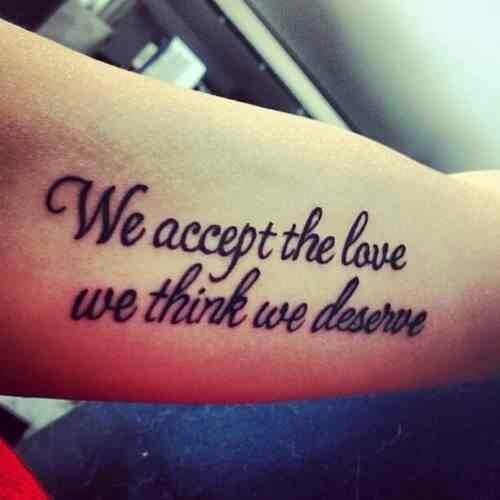
Meaningful Love Quotes for Inspiration (and Ink)
Meaningful love quotes that still feel true — short lines for tattoos, gifts, and everyday reminders, with placement and wording tips.
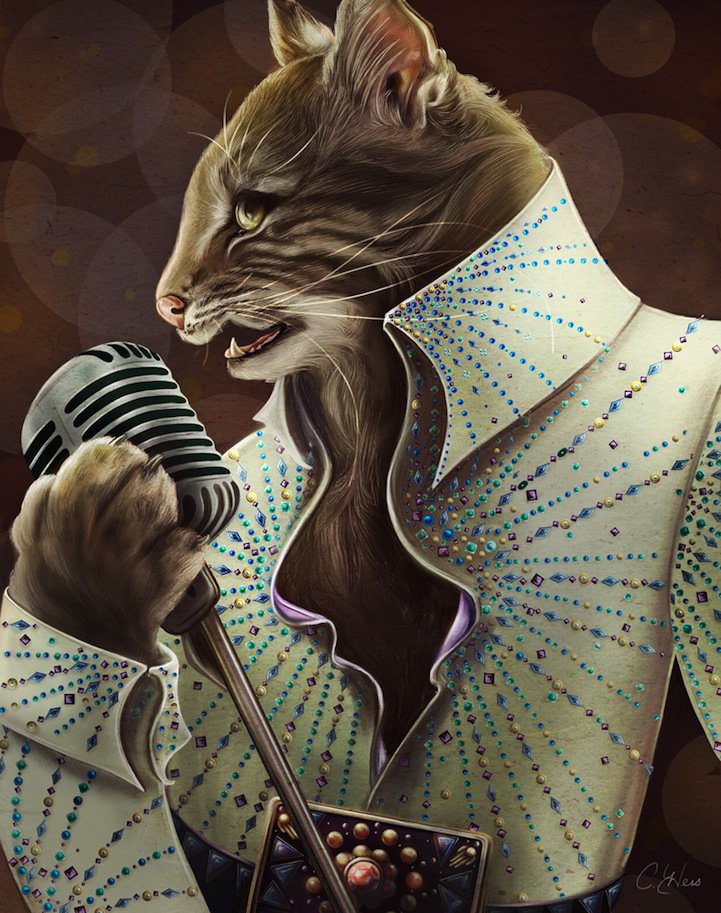
Christina Hess’s Animals From History: Costumed Pets as Playful Portraits
Illustrator Christina Hess reimagines historical icons as ornate animal portraits—Elvis Petme and friends—mixing puns, costume detail, and soft history lessons.