
Lilah Ramzi’s Part Nouveau: Fashion Past Beside Fashion Present
How Lilah Ramzi’s Part Nouveau pairs archival and contemporary fashion images to show creative recycling—and teach viewers to give credit to what came before.
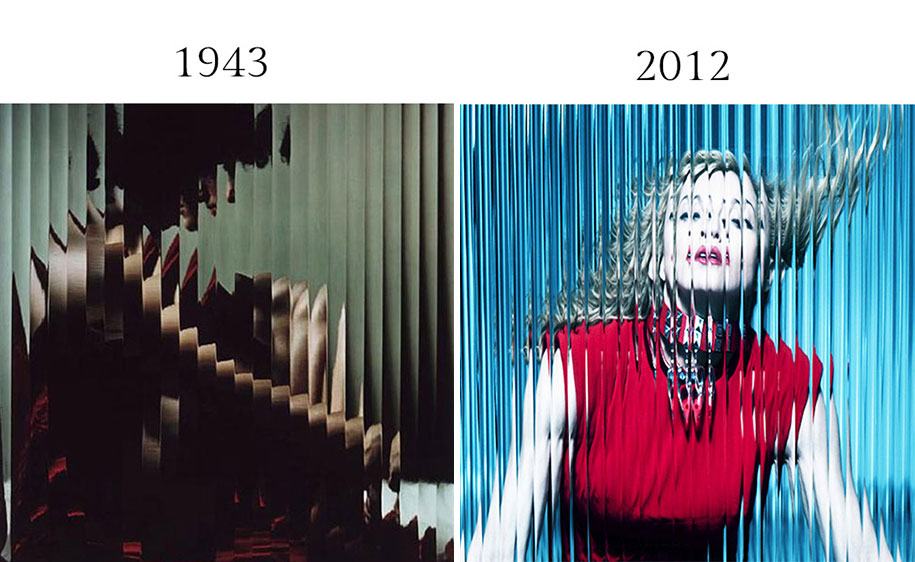
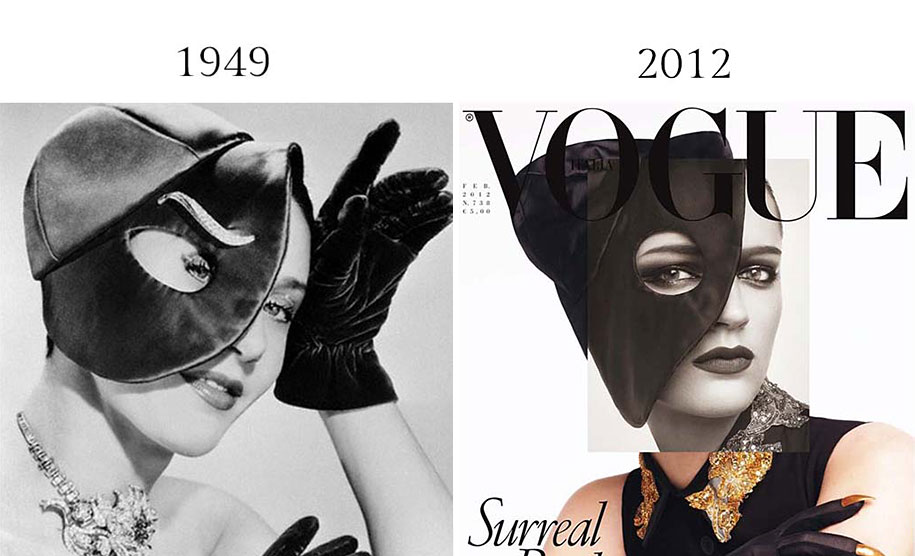
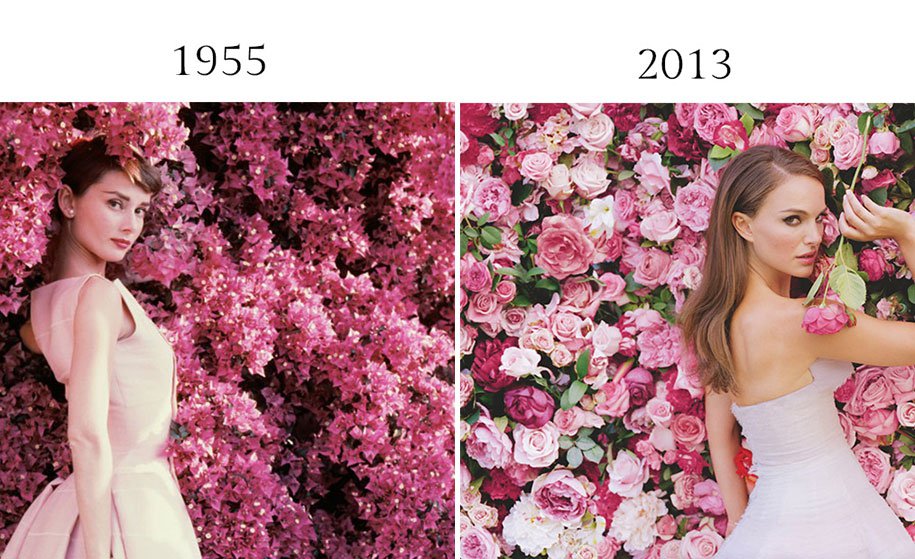
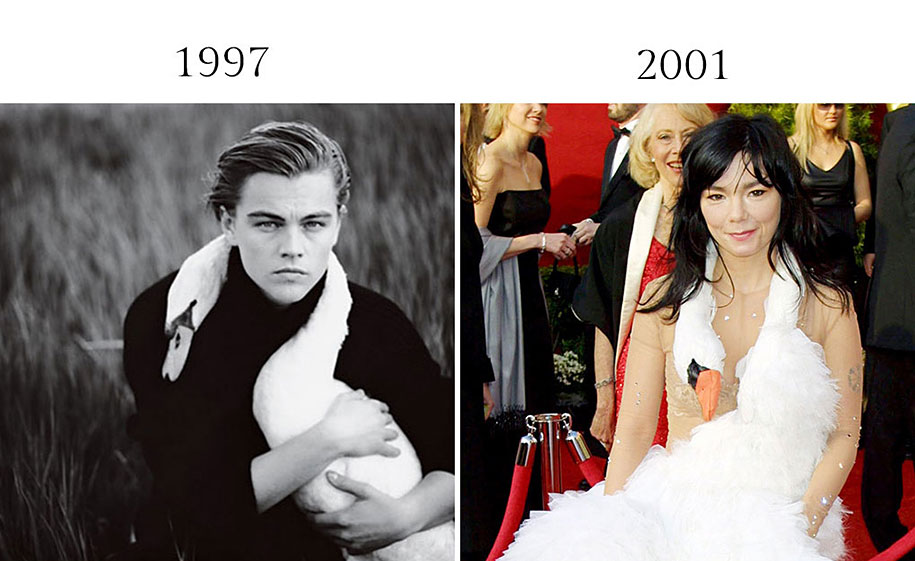
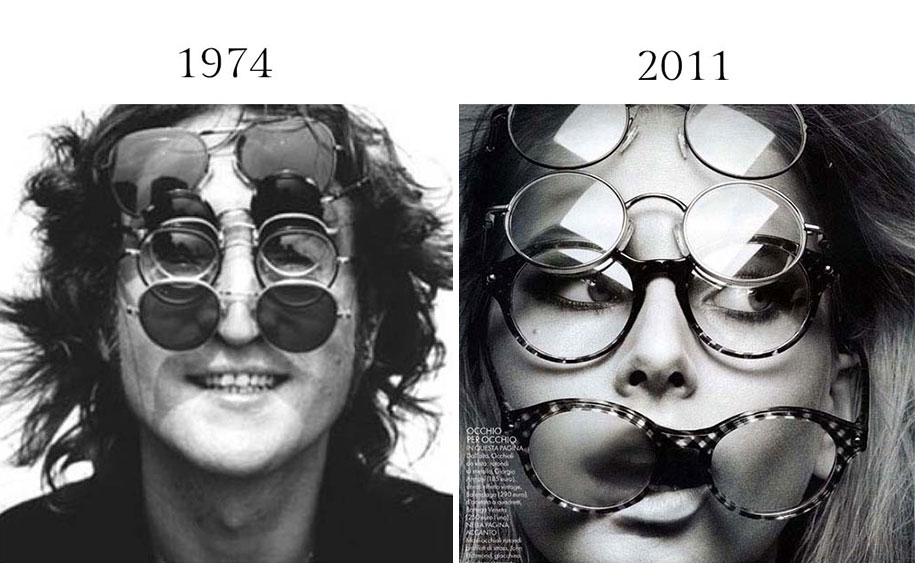
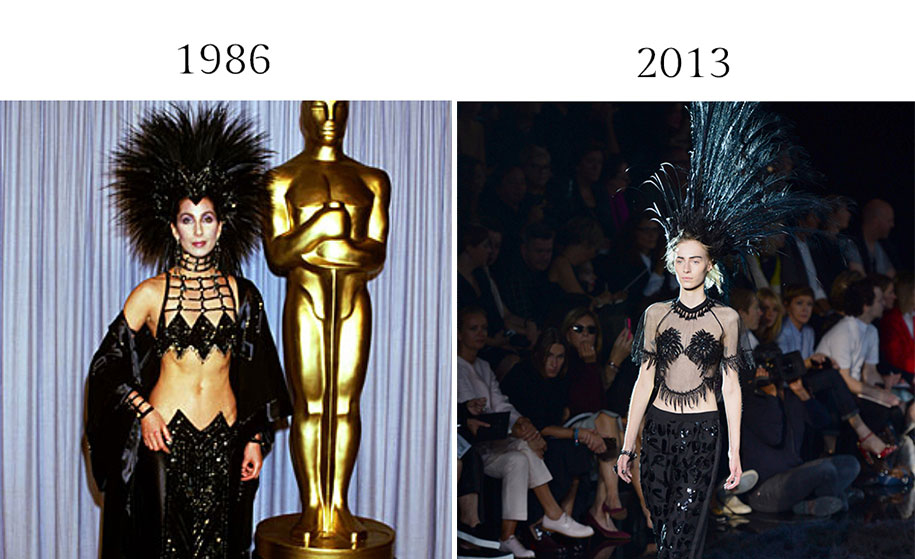
Fashion marketing speaks as if every season invents the wheel. Campaigns promise disruption; social feeds reward whatever looks newest for twelve hours. Lilah Ramzi’s Part Nouveau project answers that hurry with a slower device: place an image from fashion’s past beside a contemporary photograph or garment that echoes it, and let the resemblance do the teaching.
Ramzi is a fashion historian—later also known for magazine work—who treated comparison as a public literacy tool. Her phrase “part nouveau” names creative material that borrows, reappropriates, or is directly inspired by work that came before. The blog is not a courtroom for plagiarism charges. It is a gallery that restores credit to earlier makers whose ideas still travel through editorials, fragrance ads, runway stills, and celebrity sittings that pretend to arrive from nowhere.
In Ramzi’s framing, much of what creative industries present as brand-new is essentially part nouveau: a later incarnation of an earlier visual or material idea. Once you accept that premise, the question shifts. Instead of asking whether fashion invents, you ask how inventively it remembers—and whether it is honest about the memory.
Why paired images beat a lecture
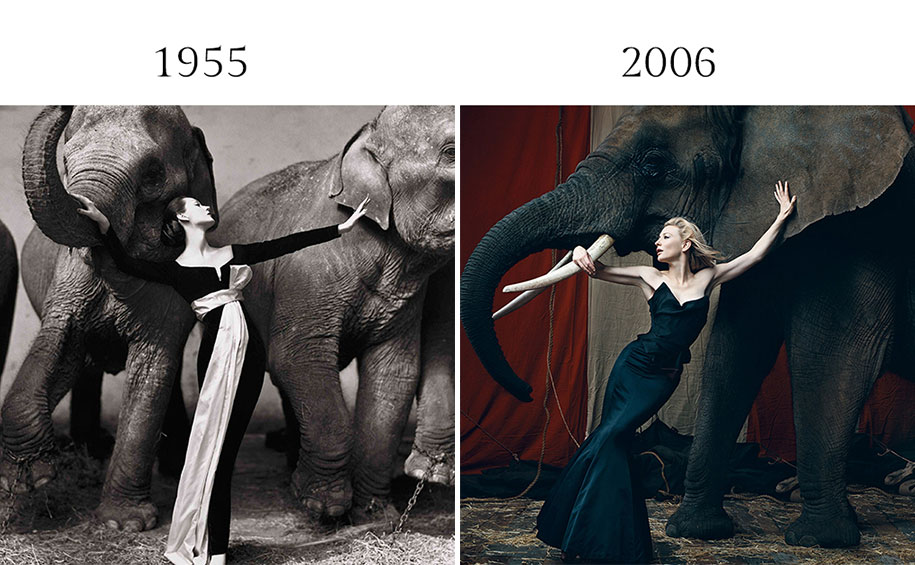
You can write a thesis about cyclical style and still lose a reader mid-paragraph. A side-by-side pair wins in a glance. When a modern sitting restages Audrey Hepburn’s composure, when a balloon prop returns from mid-century cinema into a perfume story, or when a hand-to-chin pose reappears under new lighting, the body recognizes the inheritance before the brain finds the caption.
That felt recognition is Ramzi’s method. She wrote that Part Nouveau seeks to aid contemporary eyes—so used to being shown the newest—to recognize and give credit to what has come before. In an industry that monetizes amnesia, credit is a radical courtesy. It does not stop designers from making clothes; it stops the false story that clothes and pictures have no parents.
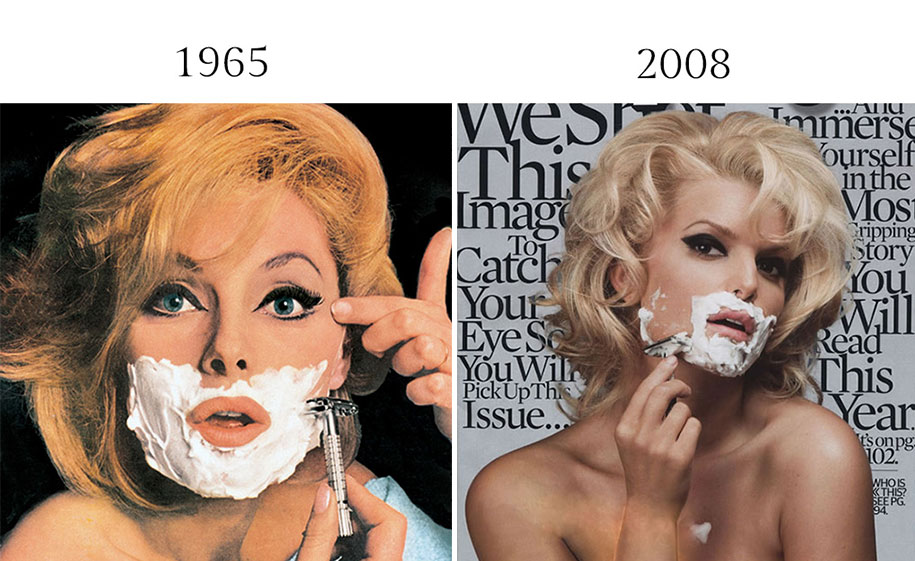
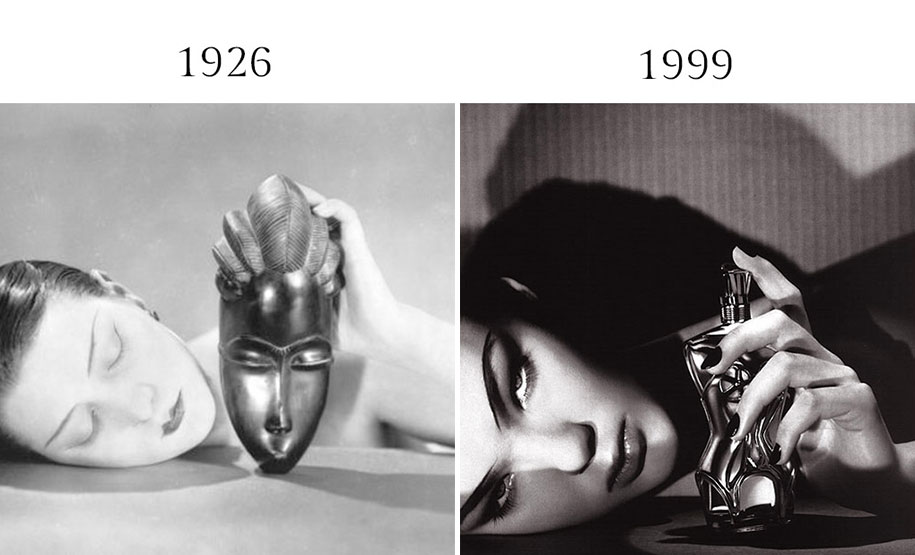
The pairs in her project range widely. Some are affectionate homages that almost wink at the archive. Some are near-direct restagings that only change casting, color grade, or product placement. Some share only a silhouette, a gesture, a wet street, or a prop. The educational force is the same: lineage made visible on a single screen.
What “part nouveau” covers
The idea stretches past dresses. Fashion photography, trend cycles, advertising, and almost any creative field that remakes an ancestor can sit under the same umbrella. Sometimes the newer work copies costume cut. Sometimes it copies only atmosphere: mist, studio glow, a red object against grey space. Sometimes the link is narrative—two women and a city, a solitary figure and a landmark—rather than fabric.
Useful categories when you read Ramzi’s pairs:
- Direct restaging: Nearly the same pose, crop, and prop language, updated for a new decade or client.
- Silhouette rhyme: Different clothes, same outline or gesture that the eye files as “the same picture.”
- Mood borrowing: Shared weather, light, or cinematic tone even when wardrobe differs.
- Intertextual wink: A clear homage intended for viewers who know the source and enjoy the citation.
- Quiet recycling: A resemblance that markets as pure invention until someone lines the images up.
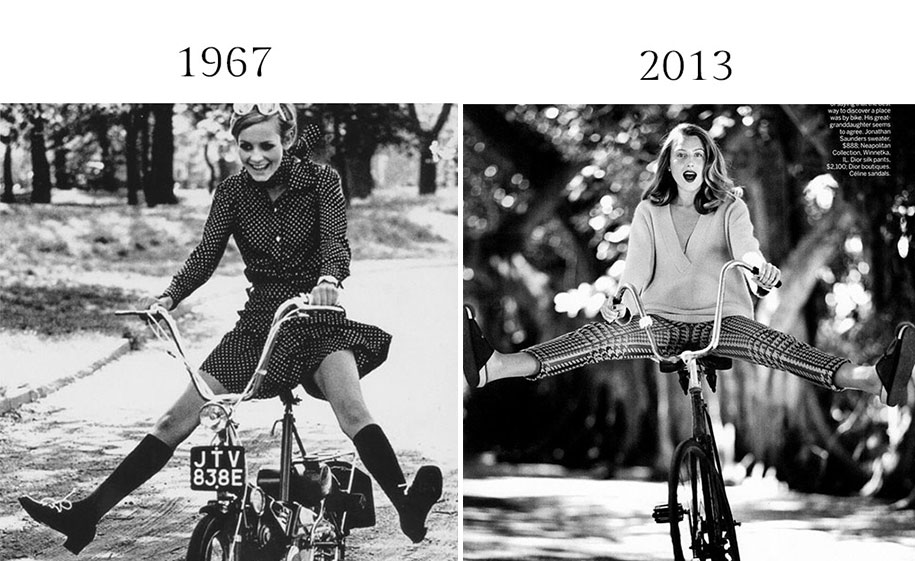
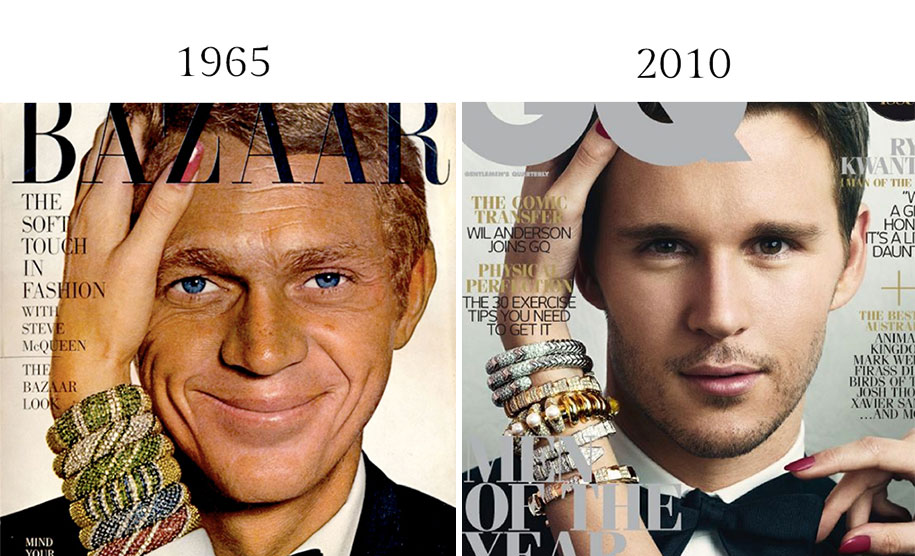
Homage and laziness can share a silhouette. Intention, craft, and whether the ancestor is acknowledged separate them. Part Nouveau helps viewers practice that distinction without needing a graduate seminar in visual culture.
How to read a comparison like a historian
Try this sequence with each pair:
- Cover the older image mentally and describe the newer one in three words.
- Uncover the older image and note what survives—gesture, hat, wet street, balloon, gaze, crop.
- Ask what changed: casting, color grade, product being sold, decade of hair and makeup, medium (film grain versus digital polish).
- Decide whether the update advances the idea or mainly reprints it in sharper resolution.
Questions that keep the exercise honest:
- Is the real inheritance the garment or the photograph of the garment?
- Does lighting travel more faithfully than fabric?
- Would the newer image still work if viewers knew the source, or does it rely on ignorance?
- Who benefits when history is unnamed—the brand, the photographer, the talent, or the scroll economy itself?
- If you removed the product logo, would the picture still feel “new”?
Those questions turn a pretty gallery into a portable critical method. Students can carry it into critiques. Professionals can carry it into pitch meetings where “fresh” is the only adjective on the brief and nobody has opened an archive folder.
Recycling is how fashion speaks
Designers return to the 1920s, the New Look, the 1970s, and early digital-era gloss because those periods solved visual problems—or because nostalgia sells. Photographers return to proven poses because they read instantly on a page or a phone. Stylists return to certain gloves, sunglasses, and umbrellas because those props telegraph mood faster than a paragraph of styling notes.
Ramzi’s project does not scold that recycling. It asks viewers to notice it, name it, and keep the earlier labor visible. That stance matters online, where images circulate stripped of context. A “fresh” editorial can be a quiet remake of a 1955 sitting. Part Nouveau slows the scroll long enough for memory to arrive.
For working art directors, the pairs also function as a warning system. Accidental clones happen when teams mood-board vaguely and shoot under deadline. Intentional reference happens when someone can point to the ancestor and explain the difference. Ramzi’s side-by-sides make the difference easier to see before a campaign goes live and the internet does the comparison for you.
Studio habits inspired by Part Nouveau
You can borrow Ramzi’s structure without running a blog:
- Keep two mood boards—archive and present—and a third board only for intentional pairings.
- Brief teams with dual references so “inspired by” is specific, not vibes.
- When a campaign feels oddly familiar, search the archive before release day.
- Credit publicly when a homage is part of the concept; secrecy around sources often signals anxiety, not mystique.
- Teach juniors to reverse-image-think: start from a beloved historic frame and ask what must change for today—casting, gender, setting, product, or medium.
- Build a personal index of gestures you overuse, then deliberately retire or reinvent them each season.
Those habits make fashion culture thicker. They also make your own work sharper, because constraint and lineage force invention inside a conversation rather than a vacuum. The vacuum is where unintentional copying thrives, and where “originality” becomes a marketing word instead of a craft practice.
Looking with Lilah Ramzi’s eyes
Spend time with the comparisons as if they were a short course. On a first pass, ignore names and dates; simply mark which half feels older and why. On a second pass, name the shared device—pose, prop, crop, weather. On a third pass, decide whether you prefer the ancestor, the remake, or the tension between them. Preference is allowed. Erasure is the problem Part Nouveau pushes against.
Collectors of fashion imagery can use the same method on their own walls and hard drives. Pair what you love with what it descends from. The collection becomes a conversation instead of a pile of isolated icons. Design students can print pairs for studio walls so history stays in peripheral vision while they sketch.
Part Nouveau never claims that nothing new exists. New fibers, new casting, new platforms, and new bodies of work appear constantly. Lilah Ramzi’s claim is quieter and harder to dismiss: newness is rarely orphaned. When she lines past against present, she restores a family tree that marketing language often cuts down for convenience.
After enough pairings, a habit forms mid-scroll. You pause on a hand position, a hat brim, a red prop, a wet reflection of a gown. You ask where you have seen it. That pause is the project’s real product—not cynicism about creativity, but attentiveness to lineage. Once ancestors become visible again, the present does not shrink; it gains depth, and the people who made the first version of the idea stop vanishing into anonymous inspiration boards.
Which echo catches you first in the images here—the shared pose, the shared light, or the shared story the clothes are trying to tell?

Comments
Continue reading
Funny Animal Signs That Warn People (While Animals Ignore Them)
From a seagull on a no-birds disc to classic zoo and park ironies—why animal warning signs get funny, and what the rules are still for.
How to Find Local Amenities on Vacation: Mechanics, Haircuts & More
Locate trustworthy local services and everyday spots while traveling or settling in—using publications, reviews, map apps, neighbor tips, and low-pressure exploration.
Kristen Stewart for V Magazine, Spring Preview 2013
V81’s Wild at Heart cover story—Kristen Stewart shot by Inez & Vinoodh, styled by Joe McKenna, in pale minimal spring glamour.