
FanWagen: When Facebook Fans Voted Beetle vs Transporter
A period look at Volkswagen Netherlands’ 2011 FanWagen campaign—Beetle versus T1 Transporter, likes as ballots, and the social-feature one-off that followed.
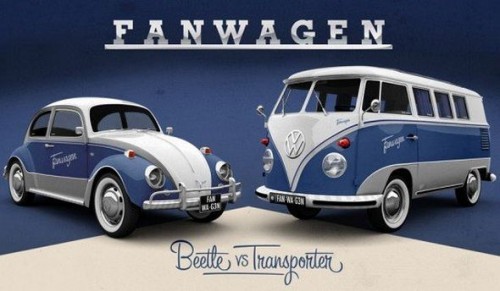
In late 2011, Volkswagen Netherlands and agency Achtung turned a simple brand question into a public spectacle: if Facebook fans could rebuild one classic VW as the ultimate “social” car, should it be the Beetle or the Transporter? The project was called FanWagen — a portmanteau of fan culture and Volkswagen — and it treated likes, pokes, and status updates as if they were chassis parts.
The campaign image still reads like a period poster. Two heritage Volkswagens sit side by side in matching blue-and-white paint: a curved Beetle on the left, a split-window T1 Transporter on the right. Both wear plates that play on the name — FAN WA G3N — and both carry “Fanwagen” script on the flanks. Above them, metallic block letters announce the brand of the stunt; below, cursive type stages the fight as Beetle vs Transporter. It is not a dealer flyer. It is a ballot.
Made by fans, built on likes
The slogan that traveled with the activation — “made by fans, built on likes” — captured an early-2010s optimism about social platforms as co-design studios. Volkswagen Netherlands asked Facebook users to vote for which icon deserved a one-off rebuild packed with tongue-in-cheek Facebook features. The vote was not abstract brand love. It was a deadline race toward a like threshold, after which the winning body style would be constructed and claimed.
Contemporary coverage put the choice in blunt numbers. Tens of thousands of votes arrived within days. The T1 Transporter pulled ahead of the Beetle and ultimately won the right to become the FanWagen, with reporting around the campaign citing roughly thirty-three thousand fans favoring the bus over the Bug. The Beetle never looked weak in the artwork; it simply lost a popularity contest that the Microbus was born to win.
That outcome makes cultural sense. The Beetle is intimate, personal, and almost private in silhouette. The Transporter is already a social machine: more seats, more windows, more room for friends, stickers, and shared travel myths. Asking Facebook which car feels more “social” was almost a leading question dressed as democracy.
What “Facebook features” meant on a car
The charm of FanWagen was not horsepower. It was the user’s manual humor — physical metaphors for a platform that, in 2011, still felt playful rather than exhausted. Design and advertising press, including Designboom’s write-up of the Facebook car concept, catalogued the gags with the seriousness usually reserved for real option packages:
- Feed-o-Matic — a dashboard device that could print recent news-feed posts on demand.
- Poke horn — a horn reframed as a poke button for grabbing other drivers’ attention.
- Relationship-status plate — a rear panel under the license plate, rotatable to show status to the traffic behind you.
- Add Friends door handles — entry hardware labeled like a social action.
- Wall — side panels treated as a bulletin board for notes and instant photos.
- Inbox — the glove compartment rewritten as private-message storage.
- Chat mirror — the rearview mirror cast as a live chat with back-seat friends.
- Privacy curtains — window shades staged as All / Friends Only / Only Me settings.
Even the friend map in the glove-box mythology — a vehicle arriving with Facebook friends’ locations marked — belonged to a moment when location check-ins and social graphs still felt like novelty rather than surveillance anxiety. FanWagen froze that mood in chrome and paint.
Beetle and Transporter as opposing social theories
The versus framing mattered because each car already carried a different story about togetherness.
The Beetle, in fan imagination, is the companion car: two people, a weekend, a curved hood that looks like a smile. Social life happens around it more than inside it. Turning a Beetle into a FanWagen would have meant stuffing a highly personal icon with public-platform metaphors — a charming mismatch.
The Transporter, especially in T1 “splittie” form, is the companion room. It is the vehicle of bands, beach groups, and long shared miles. Its boxy sides are already walls waiting for posts. When the campaign artwork places both vehicles in identical FanWagen livery, you can see the thought experiment clearly: same paint, same plates, different social architecture.
Voters chose the architecture that already matched the metaphor. That does not make the Beetle less loved. It makes the Transporter the better host for a joke about feeds and friends.
Campaign craft, not dealership noise
Agency Achtung’s execution leaned on heritage styling rather than futuristic concept-car gloss. The blue-and-white two-tones, chrome bumpers, and period proportions kept the stunt inside Volkswagen’s emotional museum. Facebook language arrived as overlays and manual copy, not as a neon cyber dashboard. That restraint is why the key visual still works as editorial illustration years later: it looks like a custom show pair, not a pop-up ad.
There was also a game layer after the model vote. Once the Transporter won, Dutch residents could still compete to claim the finished one-off, with the campaign clock and Facebook page acting as the arena. The mechanics mattered less than the fantasy: that liking something hard enough might summon a physical object into the world. In 2011, that fantasy was advertising’s favorite daydream.
Why the matchup still reads
Strip away the platform brand for a moment and the editorial question remains durable. Which classic Volkswagen better expresses group life — the Bug or the Bus? Car culture has argued that for decades at meets, in magazines, and on garage walls. FanWagen simply gave the argument a Facebook ballot and a set of pun features.
Seen from today, the project is a time capsule of social-media optimism: feeds you could print, privacy you could curtain, friendship you could map on paper. It is also a reminder that heritage brands often win attention not by inventing a new shape, but by letting fans argue about old ones.
Stand the two painted icons next to each other again. Same livery, same joke plates, different silhouettes. The FanWagen campaign asked a crowd to pick a winner. The more interesting leftover is the tie the artwork stages first — Beetle and Transporter as equal candidates for the title of most social Volkswagen — before the likes broke the deadlock.

Comments
Continue reading
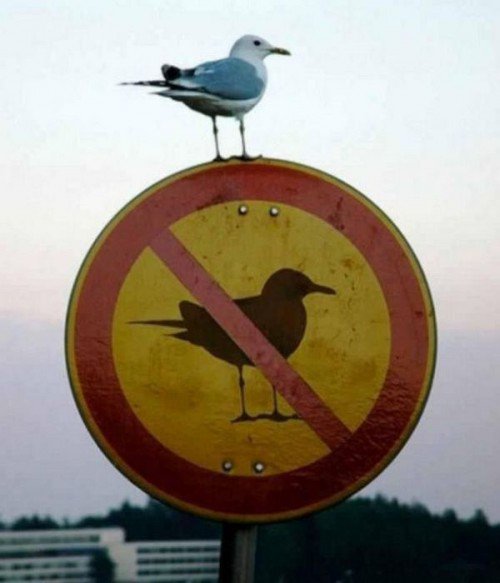
Funny Animal Signs That Warn People (While Animals Ignore Them)
From a seagull on a no-birds disc to classic zoo and park ironies—why animal warning signs get funny, and what the rules are still for.
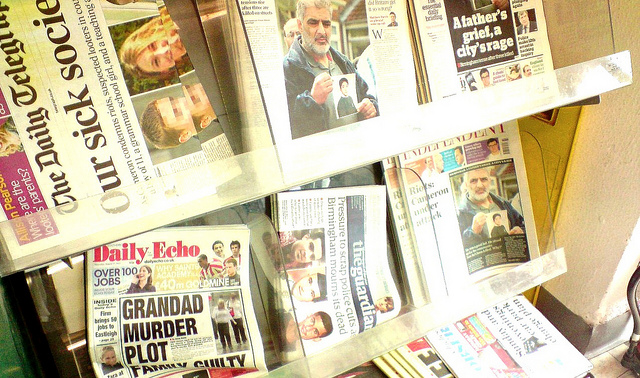
How to Find Local Amenities on Vacation: Mechanics, Haircuts & More
Locate trustworthy local services and everyday spots while traveling or settling in—using publications, reviews, map apps, neighbor tips, and low-pressure exploration.
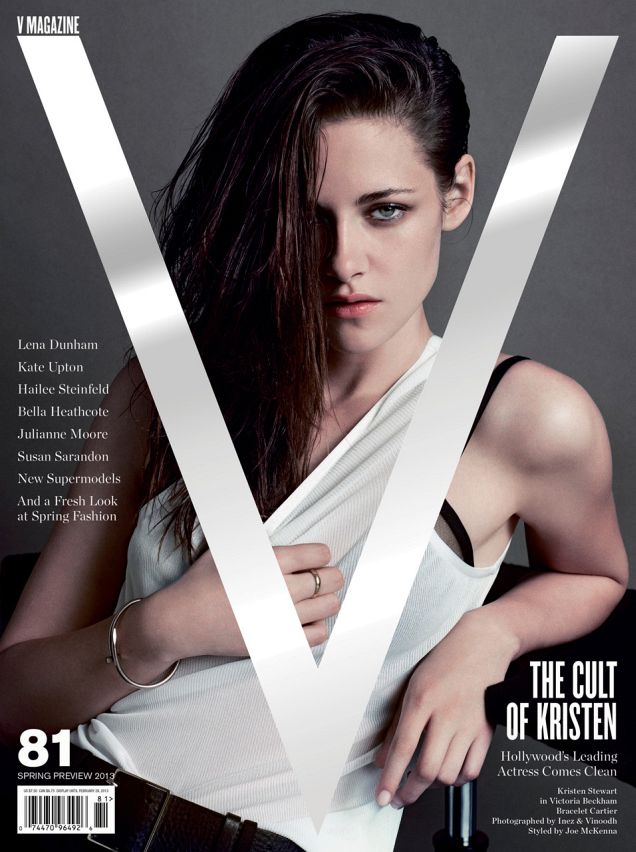
Kristen Stewart for V Magazine, Spring Preview 2013
V81’s Wild at Heart cover story—Kristen Stewart shot by Inez & Vinoodh, styled by Joe McKenna, in pale minimal spring glamour.