
Glenn Jones Glennz Tees, Part 4: Pop Mashups, Versus Graphics, and Gallery Collisions
A catalog pass through Glenn Jones’s mashup Glennz shirts—Star Wars football helmets, rocket popsicles, arcade loops, and how rivalry prints work on cotton.
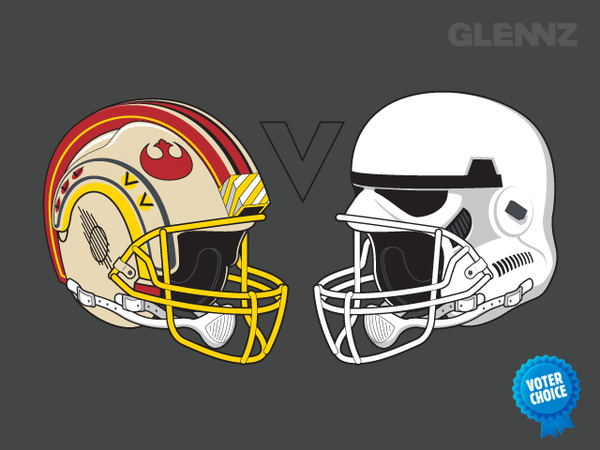
Glenn Jones’s Glennz shirts run on more than one joke engine. Object still-lifes mislabel everyday props. Character pieces force an archetype into the wrong hobby. This fourth installment stays with a third engine: pop-culture mashups and rivalry graphics — designs that ask two shared languages to share one chest. Think Star Wars remapped onto football helmets, snacks staged as aerospace diagrams, arcade cabinets that turn the player into the punchline. Browse them as a catalog of collision types, not as repeats of the same gag.
Two American football helmets face each other across a sharp V. One carries Rebel Alliance energy in cream, red, and yellow — X-wing pilot markings translated into sports armor. The other is a Stormtrooper faceplate remapped onto a white grid and vents. The composition borrows the grammar of a sports poster and rewrites it in franchise heraldry. A small “voter choice” badge in the corner nods to the community-voting culture that helped Glenn Jones’s online tee work travel when Glennz designs were circulating widely in the late 2000s and early 2010s.
Mashup logic: keep both sides legible
Mashups fail when one reference eats the other. Glenn Jones, the Auckland designer and illustrator behind the Glennz mark, usually avoids that trap by preserving silhouette grammar from both sources. Helmets stay helmets. Faction colors stay faction colors. The joke is the collision, not the erasure.
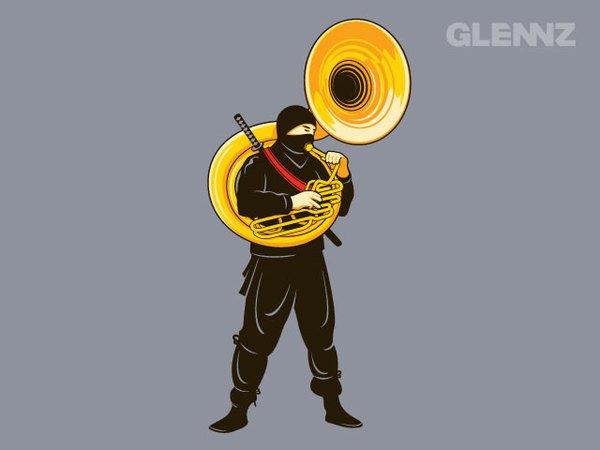
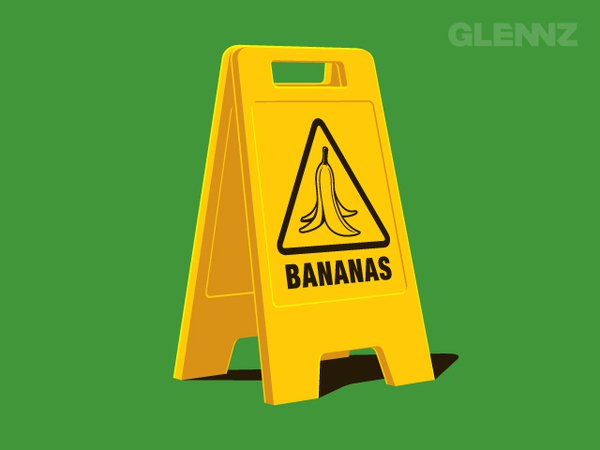
That is a different craft problem from a bananas caution stand (one object, one swap) or a ninja with a sousaphone (one archetype, one wrong action). Here the viewer must recognize two libraries at once. If either library goes blurry, the shirt becomes generic sci-fi sportswear. The Rebel starbird and the Stormtrooper vents are not decoration; they are identity proofs.
Franchise fluency without clutter is the other half of the skill. Too many logos and lore ornaments turn a tee into fan-art noise. Glennz mashups distill. A Stormtrooper becomes a handful of black shapes. A Rebel pilot becomes stripes and a crest. Distillation respects printing limits and viewer speed — and it shows the packaging-and-identity training underneath the comedy.
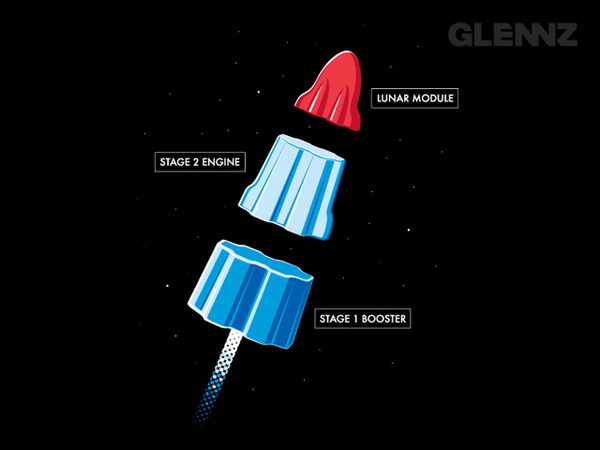
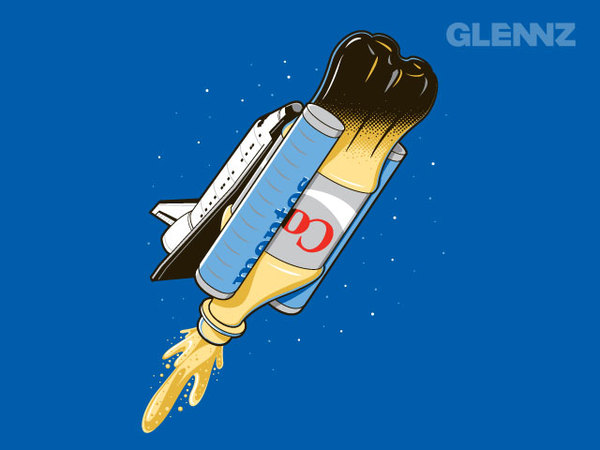
The rocket-popsicle graphic nearby shows a sibling technique: technical language applied to a snack. Stage 1 booster, stage 2 engine, lunar module — the labels are earnest, the vehicle is striped ice on a stick, and the black starfield sells the parody of aerospace cutaways. Mashup does not always mean franchise versus franchise. Sometimes it means bureaucracy versus dessert. The humor lands because both languages are already public: everyone knows rocket stages from textbooks and news, and everyone knows a red-white-blue popsicle from summer.
Why “versus” compositions feel natural on cotton
Chest prints love bilateral drama. Left and right sides of a shirt create a natural stage for confrontation. Glenn Jones uses that anatomy of the garment. Fans standing opposite each other on a design also mirror fans standing opposite each other in real life — at games, conventions, comment threads. The tee becomes a miniature stadium.
In the early online tee ecosystem, community voting rewarded concepts that sparked instant recognition and mild tribal delight. A Rebel helmet versus an Imperial helmet did not need a paragraph of lore. It needed two seconds and a grin. Geographic distance did not matter if the pop references were shared; an Auckland illustrator could speak fluently to international fandoms through reduced marks and clean vector color.
Versus layouts also photograph well for product pages. Symmetry reads as intentional. Negative space between the helmets becomes breathing room rather than emptiness. Soft shading on plastic shells keeps the pieces dimensional without turning them into photorealistic renders that fight screen printing.
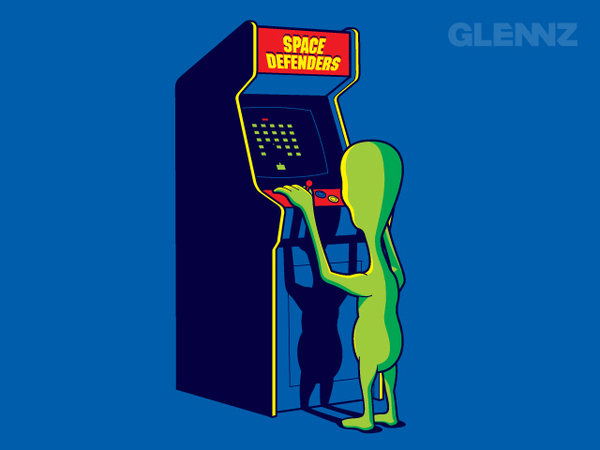
The arcade piece shifts from rivalry graphics to recursive irony: a green alien plays “Space Defenders,” a cabinet parody of classic invader games, shooting pixel icons that look like family. Mashup here is self-versus-self. The player and the enemy share a silhouette language. That is pop culture eating its own loop — perfect tee territory because gamers already live inside that loop. The cabinet’s yellow trim, red marquee type, and dual buttons are drawn with the same respect Glenn Jones gives real objects elsewhere in the catalog. The joke is conceptual; the props are earnest.
A gallery as a design system
Looking at several Glennz designs in one pass reveals recurring production choices that make mashups printable and readable:
- Flat fields behind complex subjects — dark gray, black, or saturated blue, so helmets and cabinets pop.
- Limited palettes with high contrast — cream against white, brass against black cloth, lime against navy.
- Labels and badges used sparingly — stage callouts or voter seals that feel like in-world paperwork, not ad copy.
- Center-weighted heroes — the print survives folding because the meaning sits in the middle third.
- Deadpan presentation — no laugh tracks, sweat drops, or caption boxes stealing the punchline.
Those habits are why a long Glennz gallery can feel coherent even when subjects jump from sports to snacks to arcades. The system is stable; the references rotate. That coherence is useful for anyone studying the work as a designer rather than as a shopper. You are not only collecting jokes. You are watching a visual operating system run different programs.
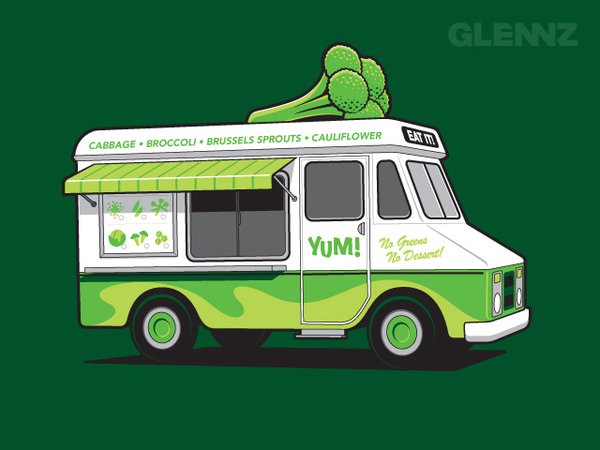
Three collision types worth naming
As you move through the rest of the images, it helps to sort mashups into types so they do not blur into “clever geek tee” mush.
Bilateral rivalry. Two factions, two teams, two icons facing across a divide. The football helmets are the textbook case. The shirt invites the wearer to stand inside an argument without picking a speech.
Hierarchical diagram parody. Technical labels applied to an unworthy or unexpected object. The staged popsicle rocket is the clearest example: earnest paperwork on absurd hardware.
Recursive loop. A character interacting with a media version of itself. The alien at the arcade cabinet belongs here. The joke is circular, and the circle is the point.
Naming the types keeps this installment distinct from the object-humor and character-contradiction lanes in the Glenn Jones series. Different questions produce different shirts. Mashup asks: which two shared languages can share one chest?
A short mashup checklist
When you browse the gallery above, try sorting each design with three quick marks:
- Do I recognize two source languages without a caption?
- Would either source still read if the other were removed?
- Is the collision bilateral, hierarchical, or recursive?
Helmet wars, popsicle rockets, and alien cabinets will land in different boxes — and that separation is the point. Glenn Jones’s fabulous tee work is not one joke repeated across four URLs. It is a set of collision types, and mashup is the loudest of them.

Comments
Continue reading
Fabulous T-Shirt Designs by Glenn Jones (Glennz) — First Gallery
Auckland illustrator Glenn Jones—Glennz—built a Threadless-to-tees career on sharp visual punchlines; a first gallery of his graphic shirt designs.
Glenn Jones Glennz Tees, Part 3: Character Contradiction and Loud Archetypes
How Glenn Jones builds Glennz character shirts—ninjas with sousaphones and other role-breaking jokes that work without a caption.
Glenn Jones Glennz Tees, Part 2: Everyday Objects as Wearable Punchlines
A craft look at Glenn Jones’s object-first Glennz shirts—caution signs, still-life humor, and why mundane props travel farther than catchphrases.