
Marty Cooper’s Transparency Doodles Drop Cartoons into Real Life
Storyboard artist Marty Cooper (Hombre McSteez) draws on clear sheets, lines them up with everyday props, and photographs cartoon chaos in the real world.
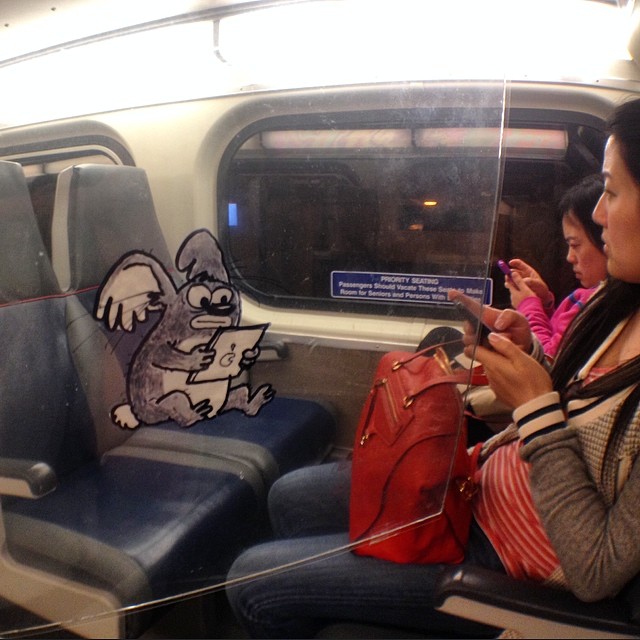
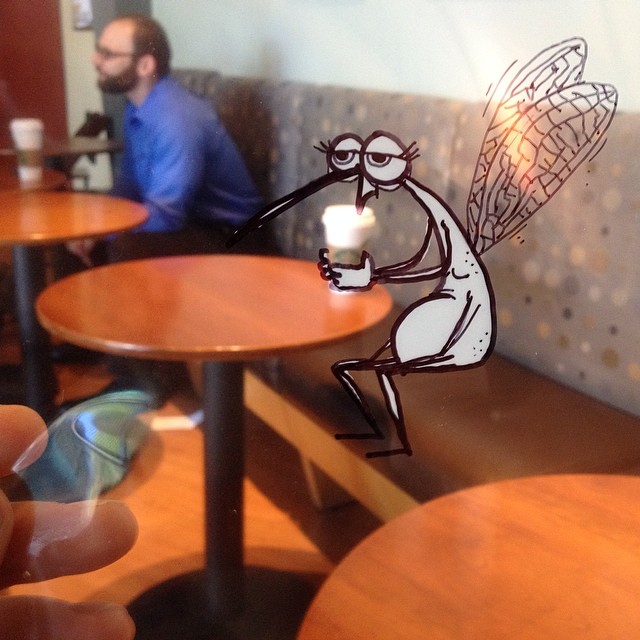
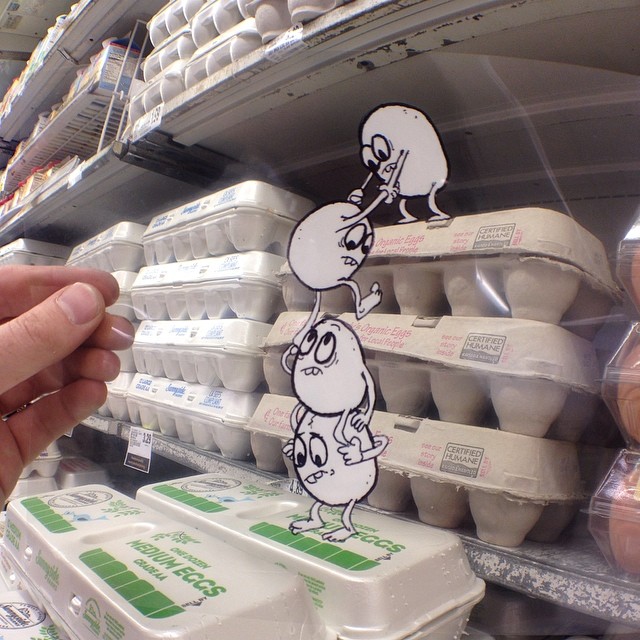
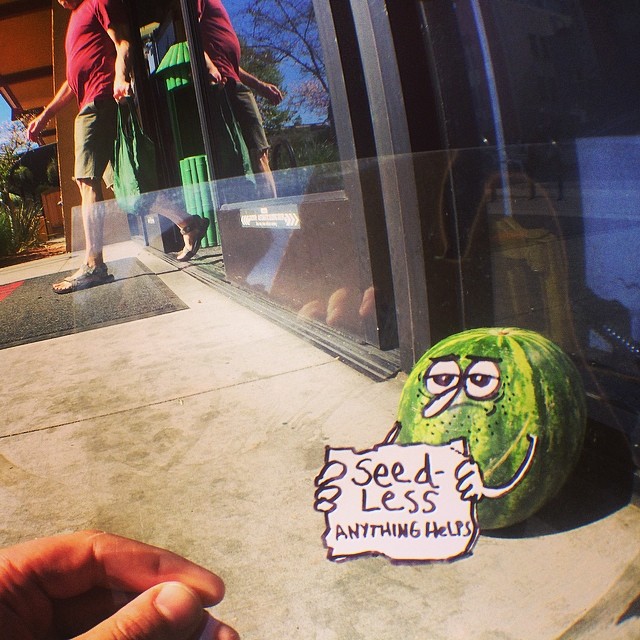
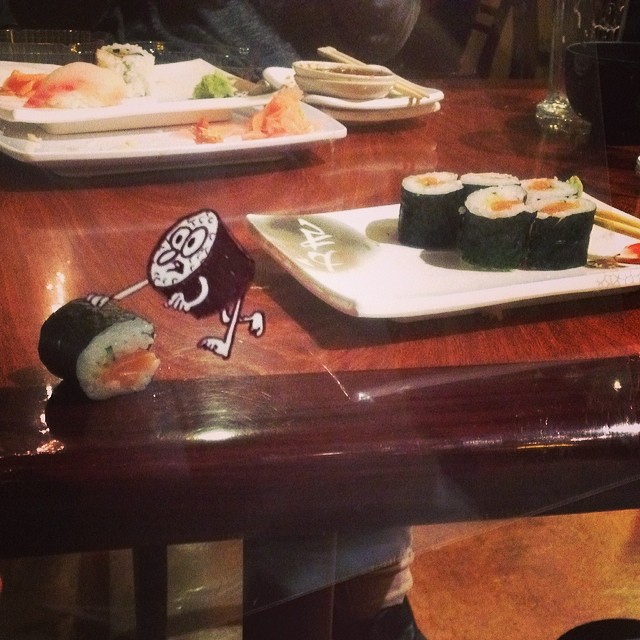
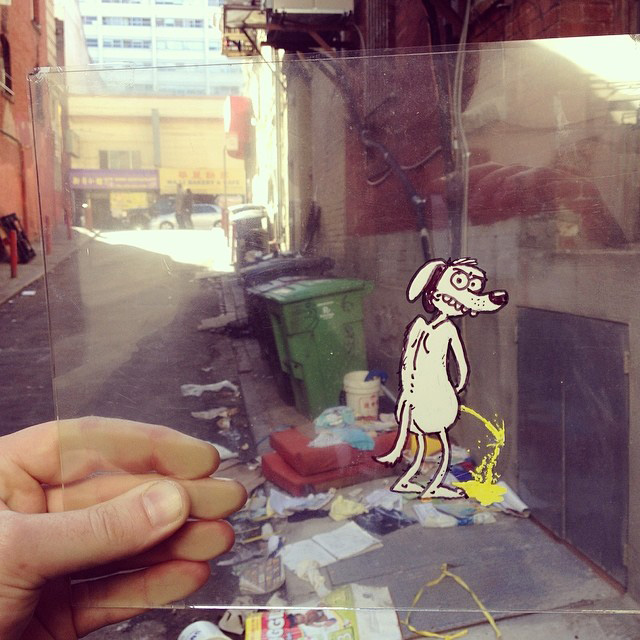
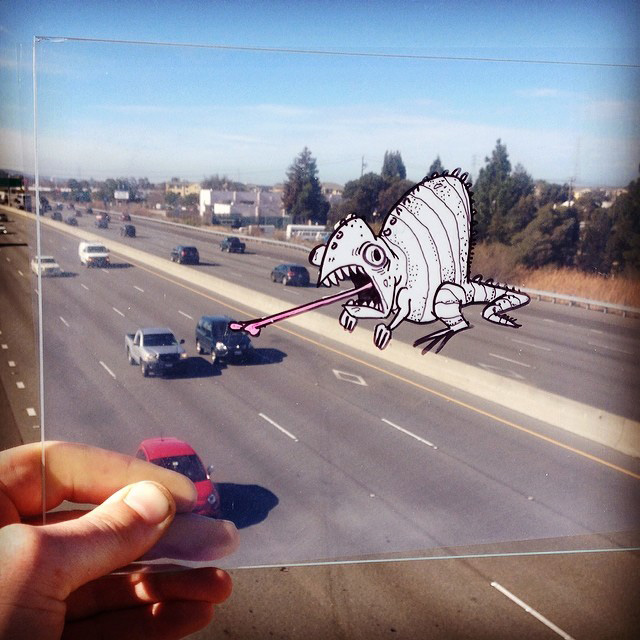
Storyboard artist Marty Cooper—better known online as Hombre McSteez—found a low-tech way to drop cartoon life into ordinary places. He draws characters on clear animation-style sheets, holds or positions those sheets in front of a real scene, and photographs (or stop-motion shoots) the result. The gag lands because the drawing and the world share one frame: a doodled creature seems to climb a curb, swallow a mailbox, or argue with a grocery-store balloon. Nothing in the toolkit is exotic. Sharpies, white-out, transparency film, and a phone camera do the work. Imagination supplies the rest.
Around 2013–2014, that mix traveled widely on Tumblr, Instagram, and design blogs. Coverage treated the series as a friendly cousin of augmented reality—an “aug(de)mented” approach that kept the illusion physical. Viewers did not need a headset. They needed a willingness to believe, for half a second, that ink could borrow a sidewalk.
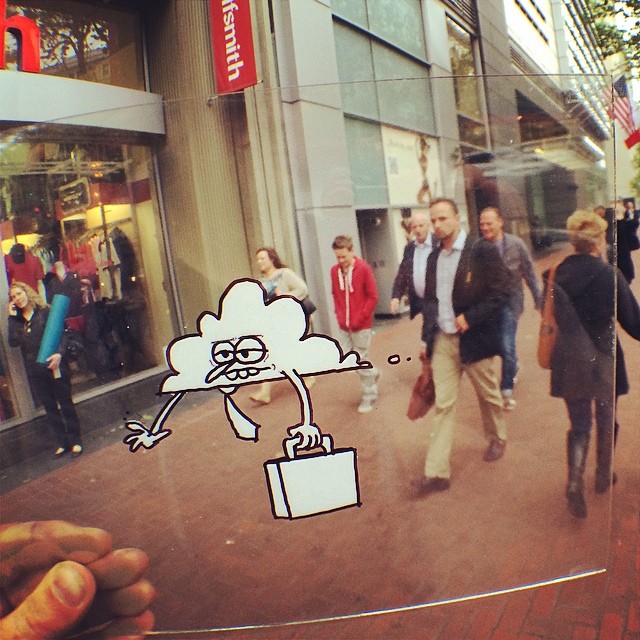
What the technique actually is
Cooper’s method sits halfway between classic cel animation and street photography. Transparent plastic acts like an animator’s cell: black marker for line, white-out for solids and highlights, empty areas left clear so the background shows through. He places the sheet so the drawn figure lines up with a prop or architecture—forced perspective that makes a tiny ink bird perch on a real railing or a monster loom over a parked car. Scale is negotiated in the moment. A drawing that looks huge on the desk may need to shrink when the camera stands farther back; a tiny scribble can dominate a close crop.
Some pieces begin as sketchbook jokes looking for a location. Others begin with a place that already suggests a punchline: a leaky faucet, a cut orange, a desk cluttered with tools, a gas pump, a stack of mail. Either way, the finished still depends on alignment. A few millimeters of shift and the illusion collapses into a cartoon stuck on plastic. When the alignment holds, the brain happily accepts the mash-up. That acceptance is the artwork’s real medium.
He also builds short stop-motion clips by shooting many frames with slightly adjusted drawings and camera positions. A character can cough up a real object, turn a static prop into a collaborator, or move through a space that never leaves the physical world. The craft is analog first; the phone is mainly capture and distribution. Earlier experiments with dry-erase boards reportedly proved less reliable—glare, smear, and weaker see-through backgrounds—so clear film became the durable choice.
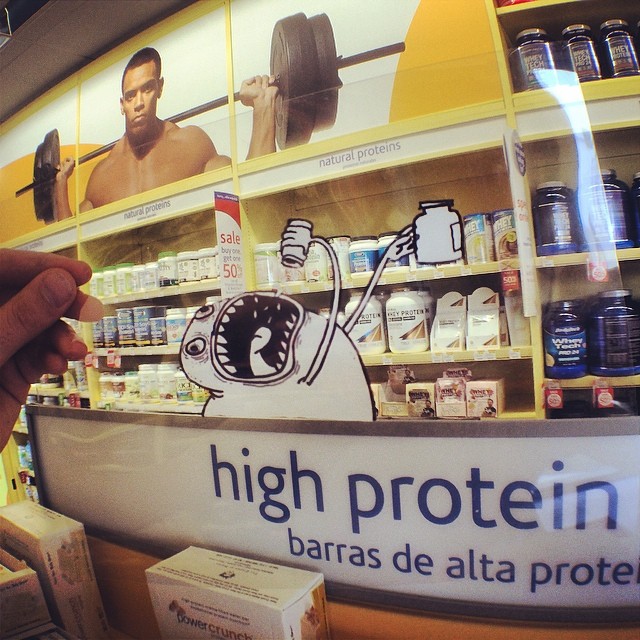
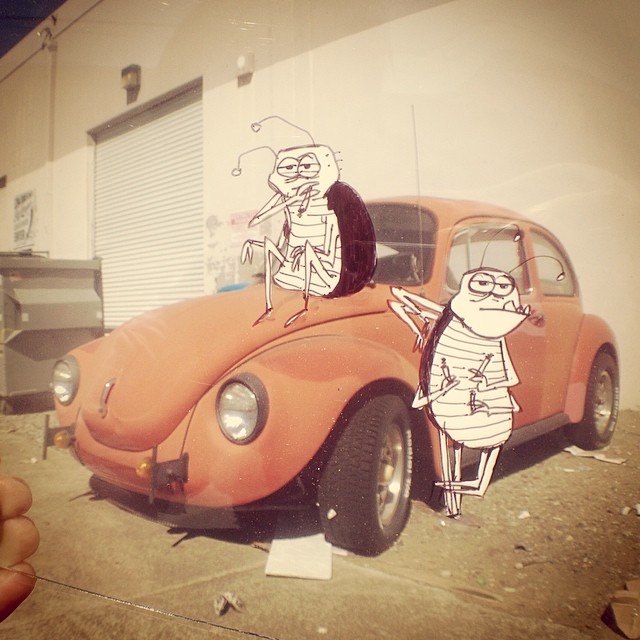
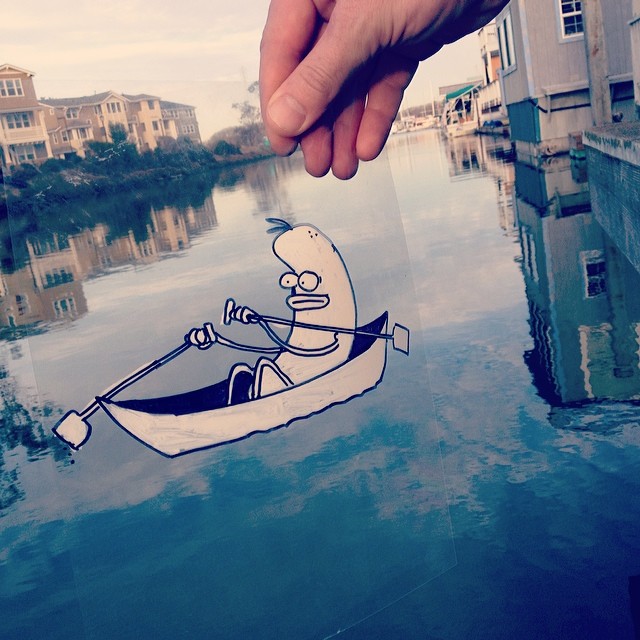
Why the jokes work
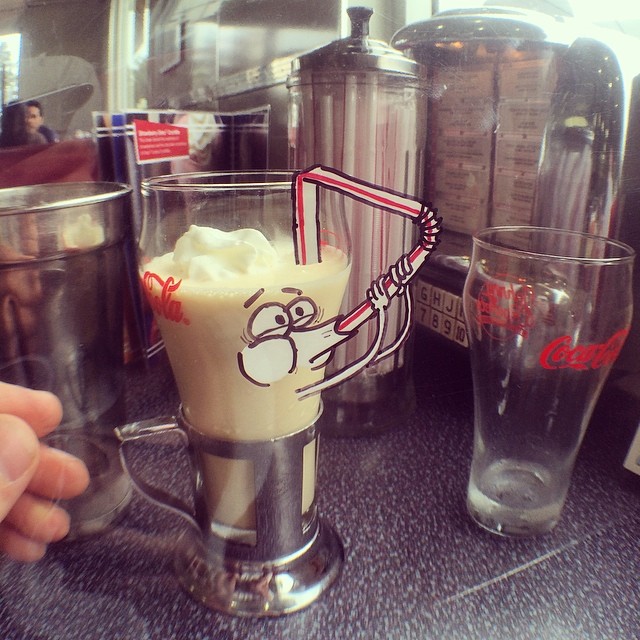
Cooper’s creatures are rarely polite. Dogs, birds, eggs, insects, oysters, elephants, and food-monsters behave like troublemakers who wandered out of a sketchbook and refused to leave. The settings stay stubbornly ordinary—commutes, kitchens, sidewalks, offices—so the clash feels funnier than a fully invented world would. You recognize the place; the doodle is the only stranger. That recognition is part of the series’ hospitality. You do not need a gallery wall text to get the gag.
Kids and design-school graduates both laugh at a mailbox that seems to eat its own mail. The work also flatters attention: once you notice how carefully the sheet is held, you start hunting for the edge of the plastic, the white-out thickness, the Sharpie wobble. The craft reveals itself without spoiling the joke. In an era already crowded with digital composites, the visible honesty of the sheet becomes a feature. The trick is not hidden; the pleasure is watching it succeed anyway.
Humor here often leans physical and slightly anarchic. Objects misbehave. Food grows teeth. Infrastructure becomes a playground. The tone stays playful rather than cruel, which helps the images travel as shareable brighteners rather than inside jokes for animators alone.
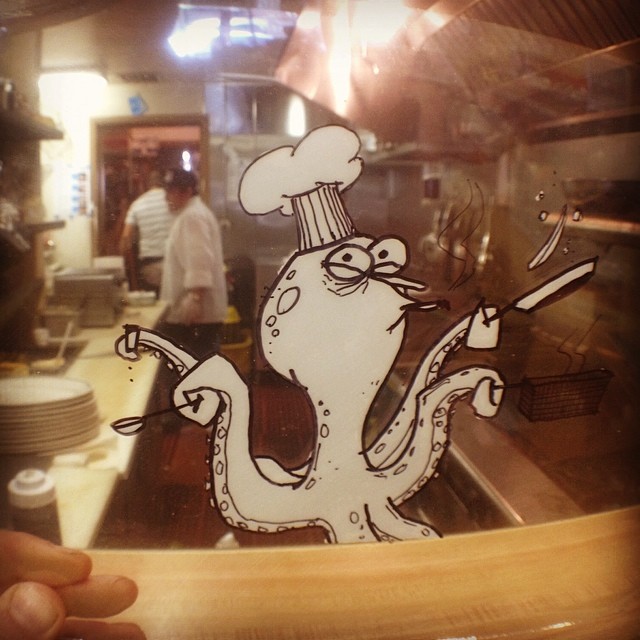
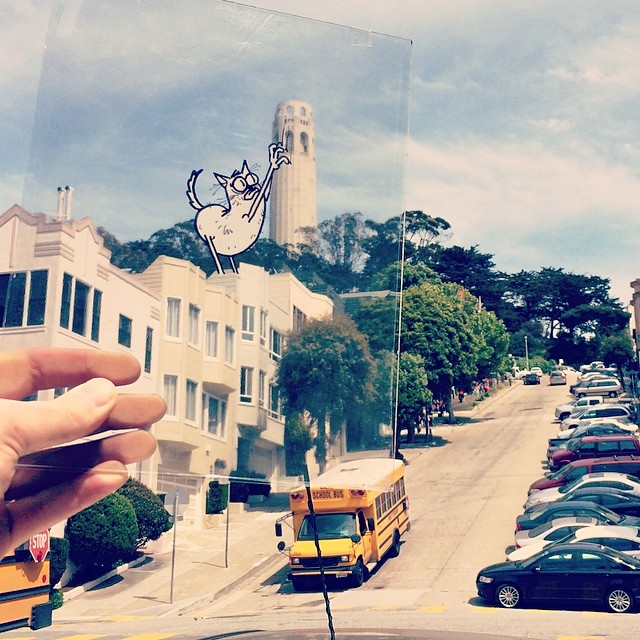
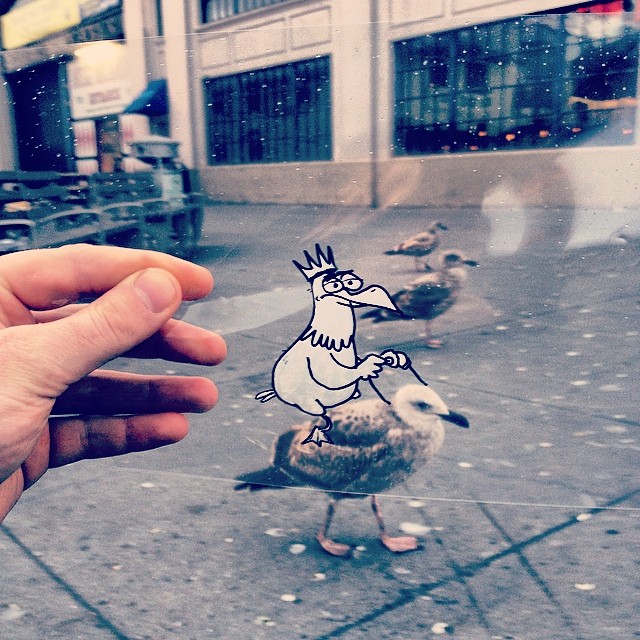
Storyboard habits in street form
Cooper’s day job as a storyboard artist shows in the staging. Each still reads like a single beat from a larger gag reel: clear silhouette, readable action, punchline in the relationship between figure and prop. He has described inventing cartoons in a sketchbook, then matching them to locations—or finding locations that fit drawings already waiting. That back-and-forth is storyboarding logic applied to the city. A board artist learns to sell a beat in one panel; these photographs are panels that escaped the office.
The scarce resource is patience. Redrawing for animation, waiting for light, holding a sheet steady enough that the composite looks accidental when it is anything but—those costs do not appear in the final jpeg. What appears is ease. That gap between labor and lightness is familiar to anyone who has timed a joke until it feels inevitable.
San Jose State roots and commercial storyboard work also help explain why the characters feel film-ready. Limbs are exaggerated for motion. Expressions read at thumbnail size. Backgrounds are chosen like locations on a shot list: something the camera can lock, something a drawing can invade.
A gallery of small invasions
Look through the set and patterns appear. Food becomes a character. Tools become limbs. Architecture becomes a playground. Soft marker lines sit against hard asphalt and chrome, which makes the drawings feel vulnerable and loud at once. Some frames are almost gentle; others tip into gleeful chaos. Together they form what Cooper and fans treated as “doodle ramblings”—a rolling sketchbook published in public space.
Because each piece is site-specific, the gallery also reads as a diary of noticing. A person who walks past the same corner for months may never see a punchline there. Cooper’s habit is to ask what the corner wants to host. That question alone is a useful creative prompt even if you never pick up a transparency sheet.
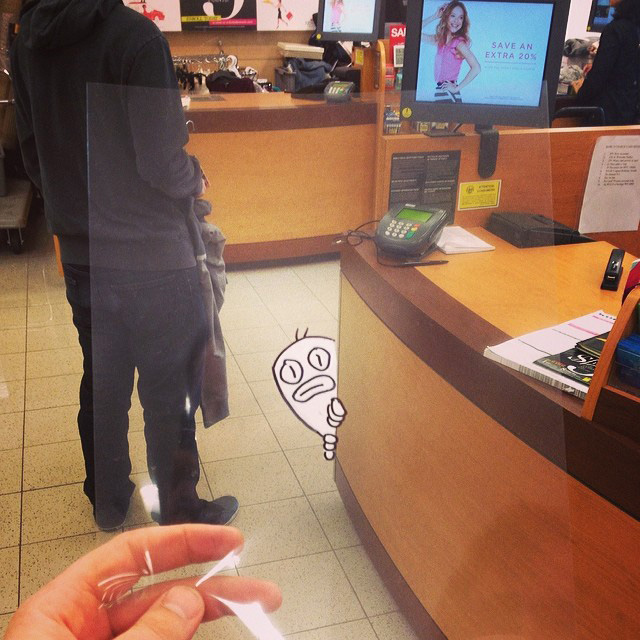
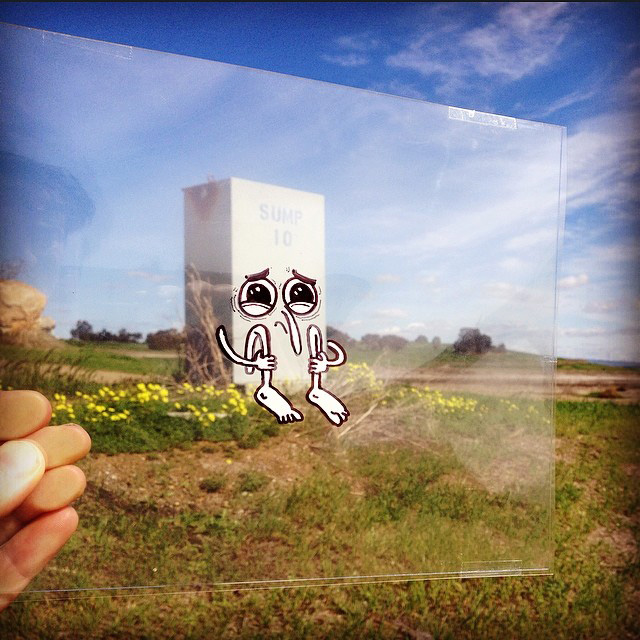
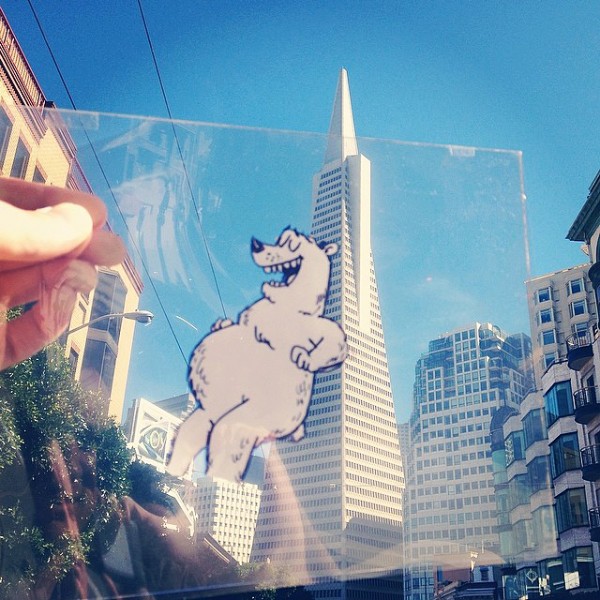
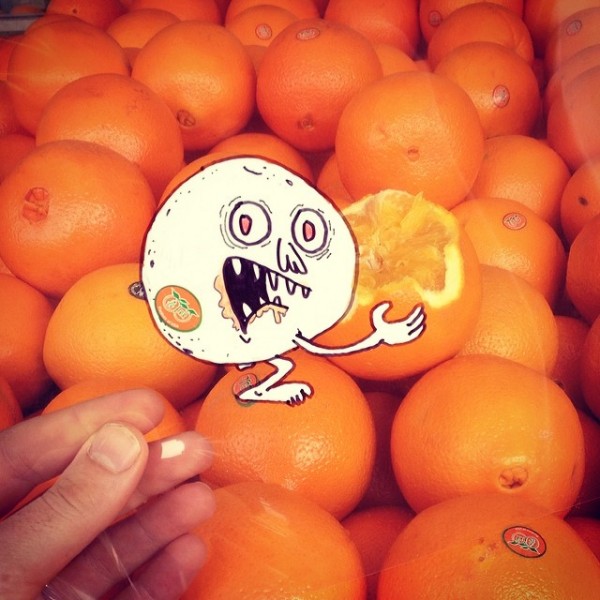
Try a small version yourself
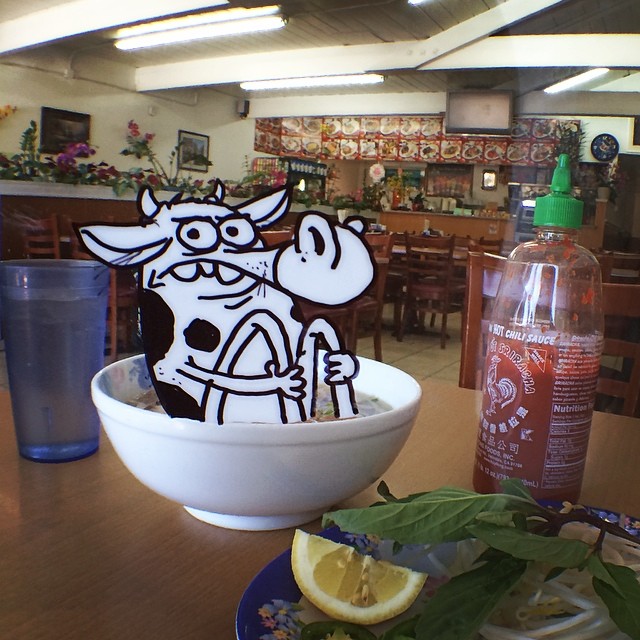
Spend a second finding the sheet’s edge in each photo. Then ignore it and watch the relationship between ink and object. Ask what the cartoon wants and what the real world refuses to give. That tiny conflict is the engine.
If you want to experiment, start smaller than Cooper’s wildest frames: one character, one prop, one clear joke. Use marker that will not smear, leave enough clear plastic for the background to breathe, and shoot in even light so glare on the film does not wipe out the drawing. Hold the sheet parallel to the lens plane when you can; tilt only when the gag needs it. Take three frames and pick the one where the join feels accidental.
The materials are humble on purpose. The imagination does the expensive work—turning a transparent rectangle into a door between doodle and street, and proving that cartoons do not need a separate universe when the one we already have is willing to play along.

Comments
Continue reading

Doodling a Smile: Lim Heng Swee’s ilovedoodle Illustrations
Kuala Lumpur illustrator Lim Heng Swee (ilovedoodle) builds gentle visual punchlines—clean doodles made to spark a daily smile, from prints to apparel.
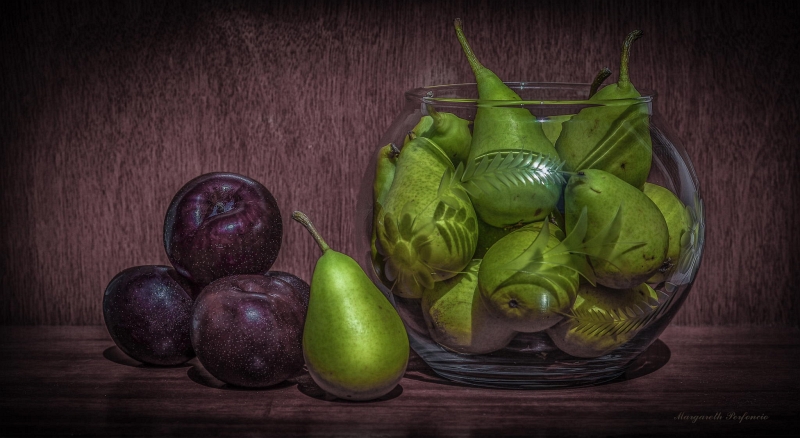
Still-Life Photography by Margareth Perfoncio
São Paulo photographer Margareth Perfoncio’s still lifes of food and flowers—Old Master light, dark wood, and tables that feel inevitable.
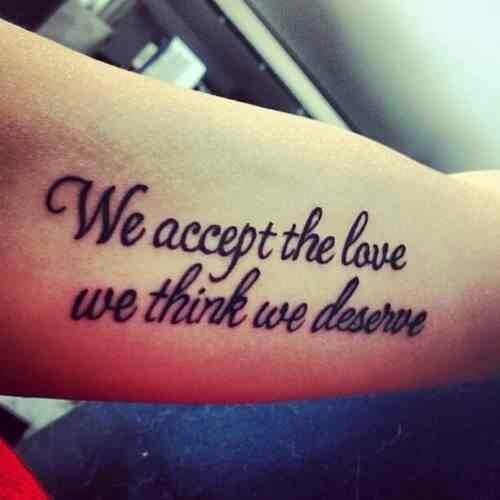
Meaningful Love Quotes for Inspiration (and Ink)
Meaningful love quotes that still feel true — short lines for tattoos, gifts, and everyday reminders, with placement and wording tips.