
Darkened Cities by Thierry Cohen: Starry Skies Restored to Megacities
Paris photographer Thierry Cohen composites daylit cityscapes with desert star fields from the same latitude—giving Hong Kong, New York, Tokyo and more the night skies light pollution hides.
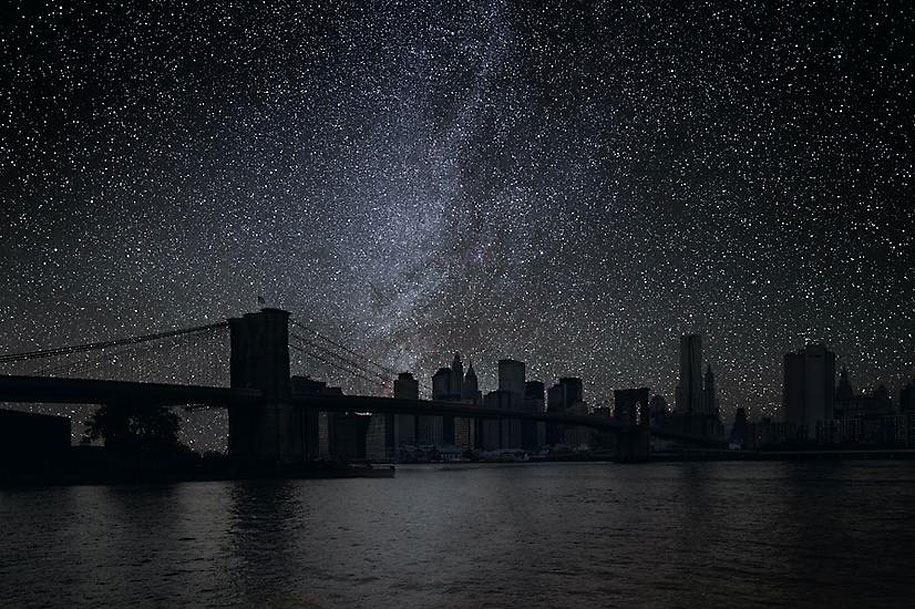
Look up from a busy street in New York, Hong Kong, or Tokyo and the night sky rarely answers back. Streetlamps, office towers, advertising boards, and haze flatten the dark into a pale lid. French photographer Thierry Cohen’s series Darkened Cities (also known as Villes Éteintes) imagines the opposite: familiar skylines standing under skies thick with stars—the skies those cities would reveal if light and atmospheric pollution were stripped away.
Born in 1963 and based in Paris, Cohen has worked as a professional photographer since 1985 and was among the early experimenters who treated digital tools as serious craft rather than novelty. From the late 1980s onward he pushed composite and post-production techniques when many still treated them as suspicious. Around 2006 he shifted more of his energy toward personal projects. By 2010 that focus narrowed into the long campaign that became Darkened Cities: travel between megacities and remote deserts, meticulous notes, and images built to give urban viewers their stars back while arguing, quietly and beautifully, that light pollution is not a small aesthetic complaint.
What you are actually seeing
The pictures look like night photographs taken from celebrated viewpoints. In practice they are carefully engineered composites. Cohen photographs a city by day, when car lights, neon, and glowing windows are not flooding the frame. He records the exact latitude, longitude, camera angle, and timing of each exposure. Then he travels to a dark site on the same latitude—places such as the Sahara, the Mojave, the Black Rock Desert, the Atacama, or open prairie—and photographs the star field that Earth’s rotation would have placed above that city at the corresponding moment. The urban architecture and the authentic sky are joined later with digital precision.
That method matters because the series is not fantasy wallpaper. The stars above a given New York view are not a generic Milky Way stock layer. They are the stars that would have been visible from that latitude and direction if the air were clear and the city lights were gone. Writers comparing Cohen’s process to nineteenth-century combination printing—Gustave Le Gray’s seas and skies, for example—are pointing at continuity: photography has long been willing to assemble truth from more than one plate when a single exposure cannot hold everything the eye needs.
The emotional effect is double. First comes wonder: bridges, towers, and waterfronts suddenly share the frame with constellations dense enough to feel almost tactile. Then comes recognition. If the image looks “wrong,” that wrongness is the point. We have normalized a sky that is not empty of stars—only emptied of them by our own glare.
Cities in the series
Cohen’s itinerary reads like a map of late-modern urban ambition. The set associated with early presentations of the work includes Hong Kong, Los Angeles, New York, Paris, Rio de Janeiro, San Francisco, São Paulo, Shanghai, and Tokyo—cities that sell themselves as bright, sleepless, and endlessly lit. Putting those places under true darkness is not nostalgia for a quieter century. It is a thought experiment about what continuous illumination costs.
In a Hong Kong or Shanghai frame, vertical density meets a sky that feels older than the skyline. In Los Angeles or San Francisco, the Pacific edge and hillside geography make the restored heavens feel close enough to lean into. Paris, Cohen’s home city, becomes especially pointed: a capital famous for monuments and night life rendered as a darkened stage under prairie stars. Rio and São Paulo, paired in some accounts with Atacama skies, turn coastal and metropolitan Brazil into dark silhouettes under southern star fields. Tokyo’s vertical night becomes a charcoal city under a clear astronomical dome.
You do not need to know every desert pairing to feel the logic. Each picture asks the same question in a different accent: what happens to a “city that never sleeps” when sleep returns to the sky?
Light pollution as subject, not backdrop
Darkened Cities works as environmental argument without becoming a poster. Light pollution washes out the Milky Way for a growing share of the world’s population. It disrupts wildlife, wastes energy, and, as Cohen has suggested in interviews around the project’s early exhibitions, can disconnect urban people from a sense of nature that used to be available every clear night. He has spoken of city dwellers who “forget and no longer understand nature,” and of wanting images that help people dream again.
That dream is not escapism alone. In later remarks Cohen pushed the metaphor further: the sky as a shared ceiling without borders. Once the pictures stop being only about glare and become about what humans share when they look up, the series sits between ecology, politics, and spiritual longing. A darkened city is still a city. The intervention is in the overhead—restoring a commons that electricity accidentally privatized with brightness.
Francis Hodgson and other critics noted that the beauty of the skies is also an indictment. We think we are looking at poetic nightscapes; we are looking at skies we do not get. The cleverness of the craft is inseparable from that moral charge. Without the labor of matching latitudes and angles, the indictment would float free as illustration. With it, the pictures behave like evidence dressed as wonder.
Digital craft with an old problem
Cohen’s reputation as a digital pioneer is not incidental biography here. Darkened Cities depends on a viewer’s trust that seams will not announce themselves. The city must feel solid. The sky must feel continuous. The join must not tip into postcard collage. Achieving that requires both technical control and editorial restraint: choosing viewpoints that already carry cultural weight, darkening urban surfaces so stars can dominate without cartoon blackness, and keeping the composite honest to the recorded geometry.
There is also a productive tension with documentary photography. These are not single-moment “decisive” night shots. They are constructed documents of a condition—the condition of absence. In that sense the series belongs to a family of contemporary projects that use digital assembly to make invisible systems visible: pollution, climate, data, borders. Cohen’s version remains unusually quiet. No graphs. No captions shouting statistics. Just architecture and stars, and the uneasy feeling that one of those things should not look surprising.
How to look at a Darkened City
A quick scroll rewards you with spectacle. A slower look rewards you with structure. Try this pass on the New York image above, then apply it mentally to the other cities in the series:
- First, ignore the sky. Read the city as silhouette and mass—bridges, towers, water, horizon line.
- Then ignore the city. Notice how dense the star field is compared with any night you have seen from a downtown sidewalk.
- Ask where the horizon “belongs.” Does the join feel natural because the geometry is right, or because your brain wants the romance?
- Imagine the same viewpoint under real urban night. What disappears first—the faint stars, the Milky Way, or the sense of depth overhead?
- Finally, hold both versions together. The series lives in that gap between the photograph’s night and the night you know.
That exercise turns the work from wallpaper into argument. It also explains why gallery prints matter. On a large print, the star fields keep revealing detail; on a phone screen, you get the concept faster than the slow grief of it.
Context around 2010–2013
Cohen’s concentrated work on the project from 2010 onward arrived as light-pollution awareness was moving from astronomy clubs into broader culture. Exhibitions and features in the early 2010s—including presentations associated with galleries such as Danziger in New York and later international venues—introduced the images to audiences who might never read a dark-sky ordinance. The timing also matched a wider appetite for photographic projects that marry technical ingenuity to ecological feeling.
His works entered private and public collections, which is another way of saying the series found a life beyond viral shares. Collectors and museums tend to keep images that can be revisited; Darkened Cities rewards revisiting because the first hit of beauty eventually gives way to the quieter question of what we accept as normal.
Paris remains a useful home base for understanding the project. Cohen lives and works there; the city’s own romance with night light makes his darkened Paris views especially double-edged. The same streets that tourists photograph for glow become, in his treatment, dark stages under Montana prairie stars—proof that even the City of Light can be imagined without its signature blaze.
If one city sticks with you after the rest blur, return to it and ask a practical question: what would it take, in lighting design and civic habit, for even a fraction of that sky to become visible again? Cohen’s photographs do not supply a policy memo. They supply the missing picture—the one that makes the policy feel urgent. Under those restored stars, the megacity looks less like destiny and more like a choice that can still be adjusted, one streetlamp and one skyline at a time.

Comments
Continue reading
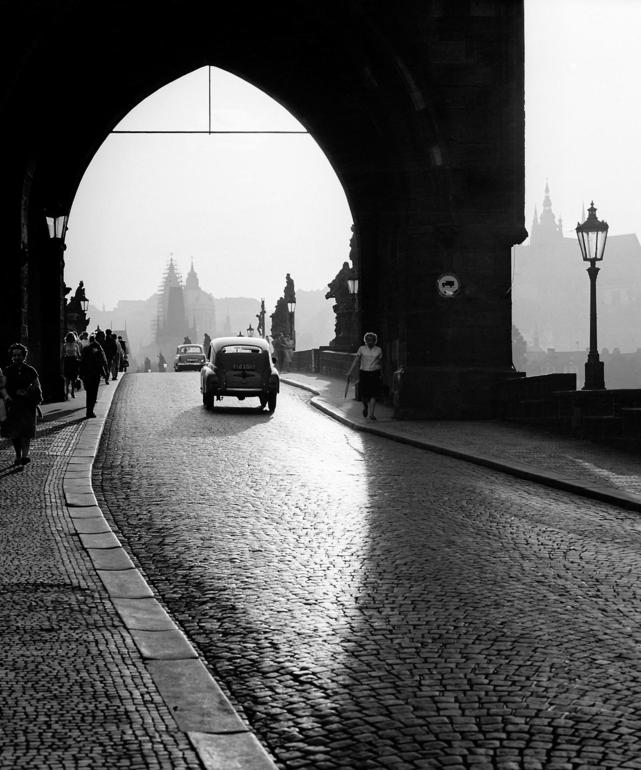
World’s Famous Cities in the Past
From Prague 1964 to Paris 1948 and Las Vegas 1959, a photo tour of well-known cities as they looked in earlier decades—streets, crowds, and transit before today’s skyline.
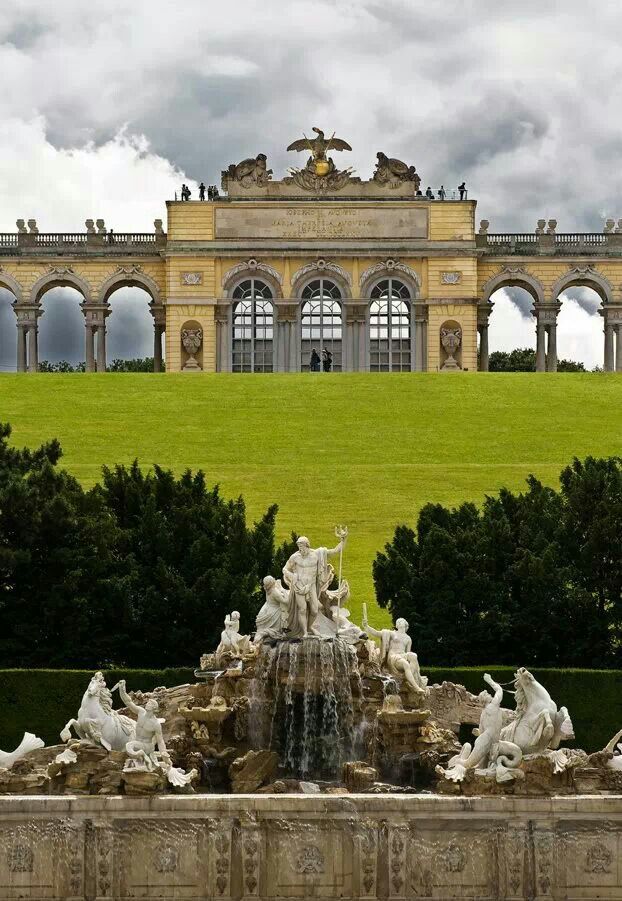
Travel Wish List: Austria’s Palaces, Lakes, and Alpine Valleys
Vienna’s Schönbrunn, Melk Abbey, Salzburg gardens, Hallstatt and Gosau lakes, Innsbruck, and Vorarlberg—Austria as imperial culture and alpine landscape in one passport.
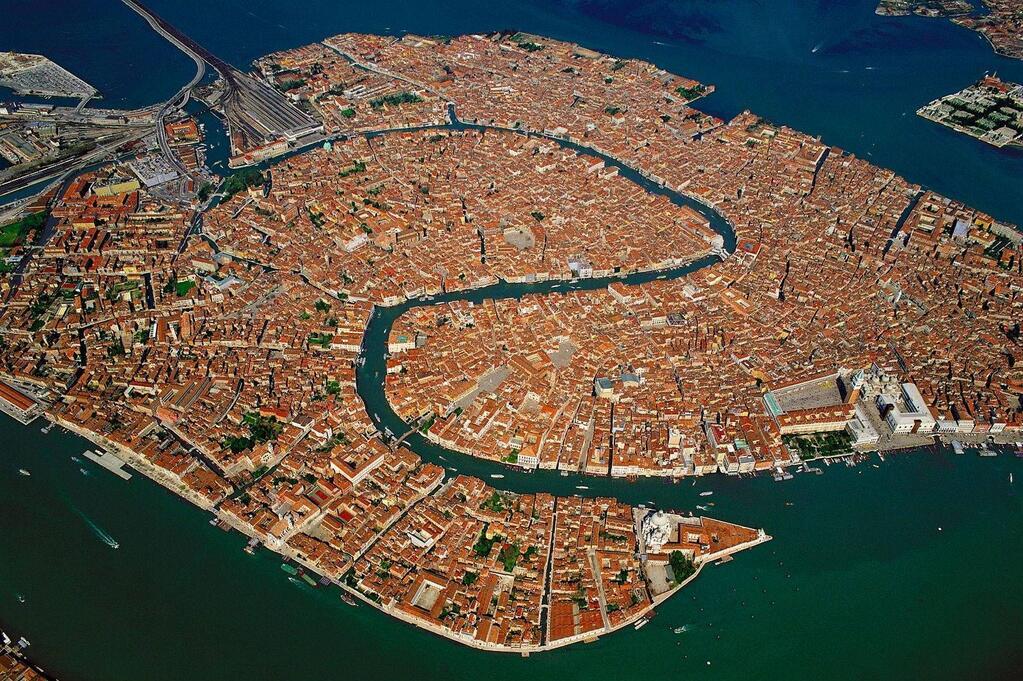
20 Amazing Photos Around the World: Cities, Coasts, and Wild Horizons
Twenty travel photographs—from Venice and Istanbul to Molokini, Palau, and Hayman Island—with notes on light, vantage points, and what makes each place photograph.