
Cute Illustrations with Nuts by Yaser Ahmad
Riyadh designer Yaser Ahmad’s Mokassar Art turns cashews, almonds, and peanuts into crabs, batteries, balloons, and zippers—mixed-media Instagram illustrations with almost no ink.
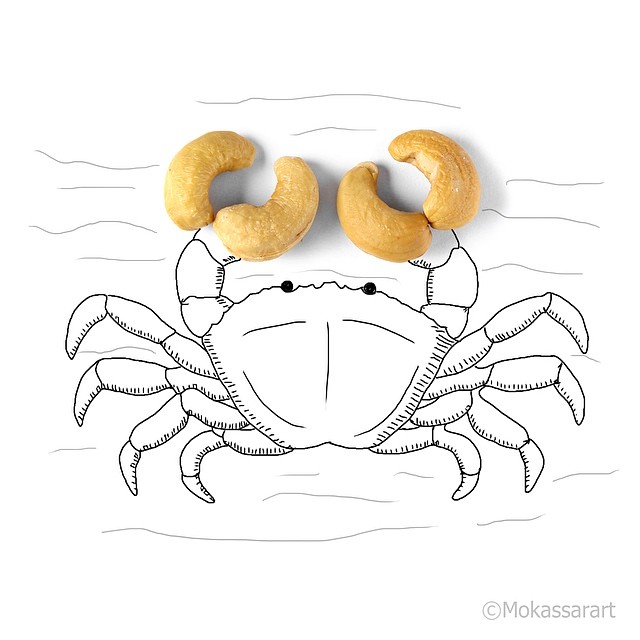
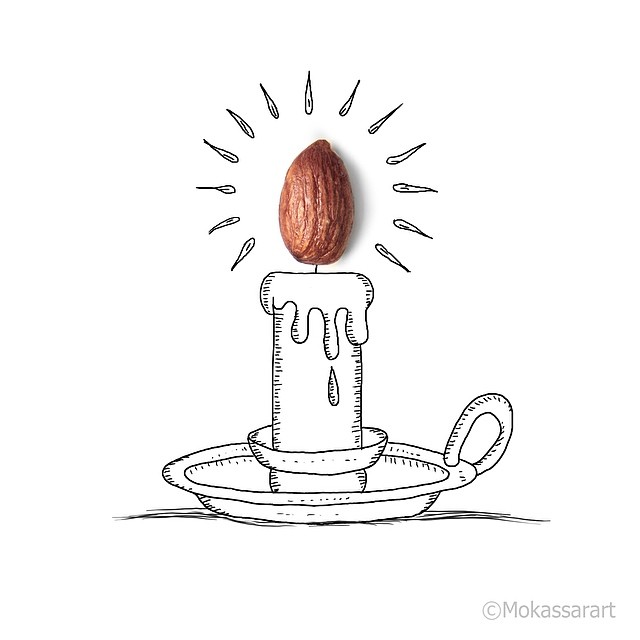
In Riyadh, creative director and designer Yaser Ahmad built a side project that treats the snack bowl as a casting call. Under the name Mokassar Art—a play on the Arabic for nuts—he photographs cashews, almonds, pistachios, peanuts, and hazelnuts on plain white paper, then finishes each scene with spare ink. The nut is never a garnish. It is the hero prop: a claw, a battery bar, a flower bud, a sailboat hull. The drawings stay thin enough that the snack’s texture does the heavy lifting.
The series traveled fast on Instagram in the mid-2010s because the joke is visual, not verbal. You recognize the object in under a second. Then you notice how little ink it took to sell the idea. That economy is advertising instinct turned playful—Ahmad’s day job shows in the clarity—even when the subject is a crab with cashew pincers or a prayer-bead loop made of hazelnuts.
When the nut does the acting
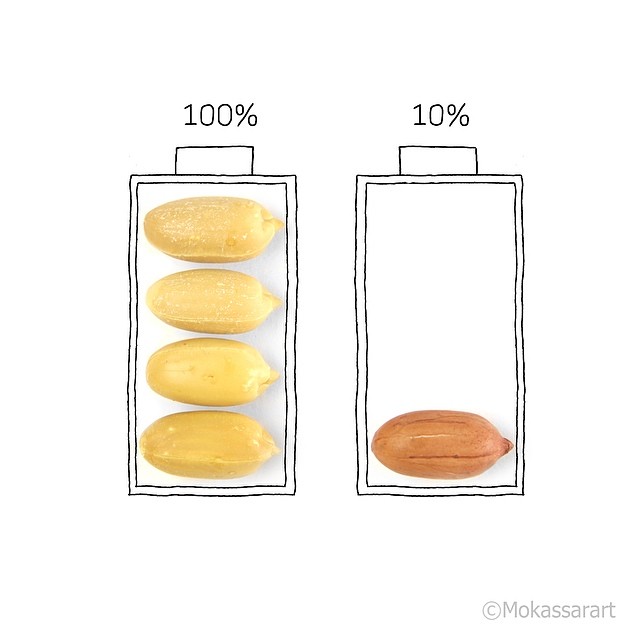
The peanut battery pair is pure interface comedy. Two hand-drawn battery outlines sit side by side. One is labeled 100% and packed with peeled peanuts stacked like charge bars. The other reads 10% and holds a single skin-on peanut at the bottom—duller, lonelier, almost sulking. No speech bubble is required. Anyone who has watched a phone icon collapse understands the gag before they finish reading the percentages.
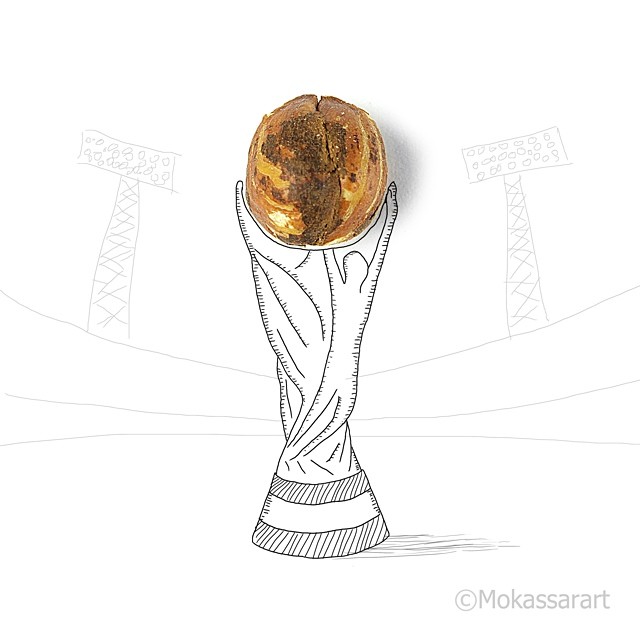
Elsewhere a round roasted nut becomes the globe atop a World Cup trophy. Thin stadium stands and floodlights sketch the backdrop; the trophy’s figures are pure line. The nut’s mottled shell reads as a tiny planet because Ahmad trusts silhouette over explanation. Sports iconography usually wants gold and fireworks. Here the only “precious” material is something you could eat after the photo.
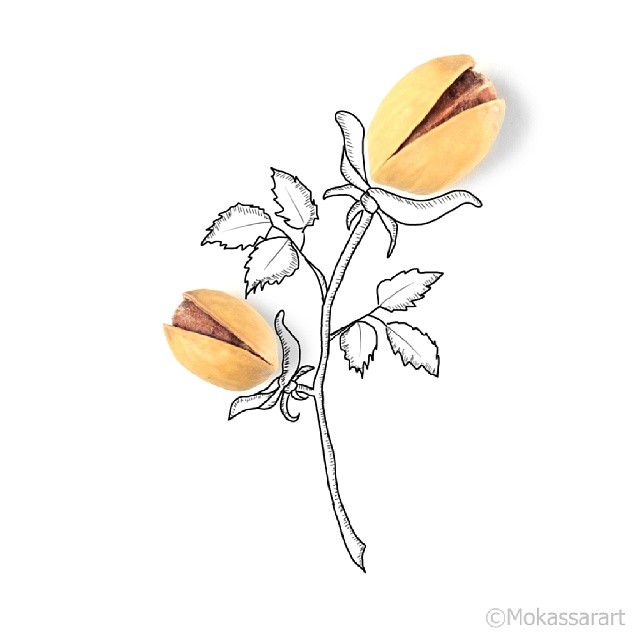
Pistachios stand in for rosebuds on a carefully hatched stem. The cracked shells open just enough to suggest petals; the leaves get all the pen work. It is a florist’s arrangement rebuilt from a pantry. The same logic returns in quieter botanical pieces later in the set: one real nut, one confident stem, white space holding the rest.
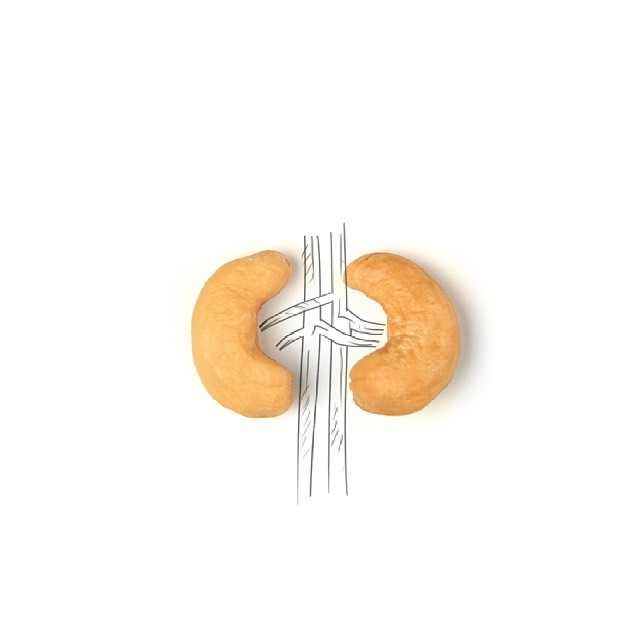
Two cashews become kidneys, with a few arterial lines drawn between them. The resemblance is almost rude—once you see it, grocery bags look anatomical. Humor and slightly clinical observation share the same frame, which is typical of Mokassar Art: cute at thumbnail size, sharper when you lean in.
Tiny worlds on white paper
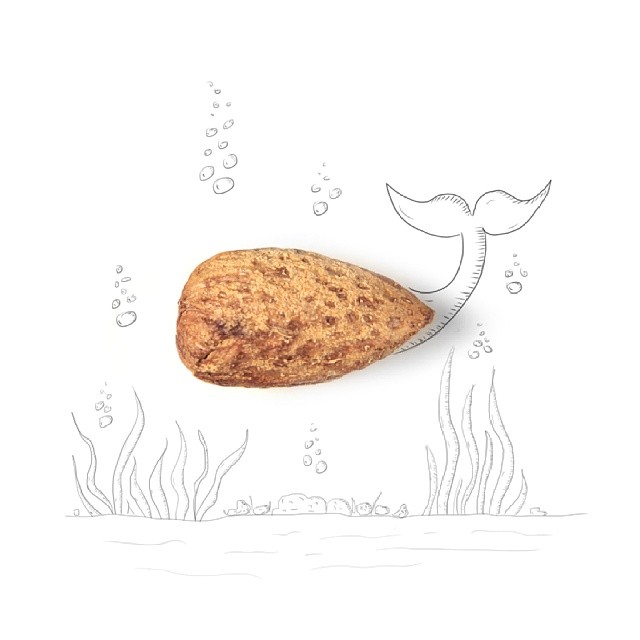
An almond stretches into a whale’s body; a drawn fluke finishes the rear, seaweed and bubbles fill the water column, and a blowhole cluster rises from the nut’s “head.” Scale flips instantly. What was snack-sized becomes a creature big enough for a seabed. Ahmad does not draw an ocean full of detail—he draws enough kelp that your brain supplies the rest.
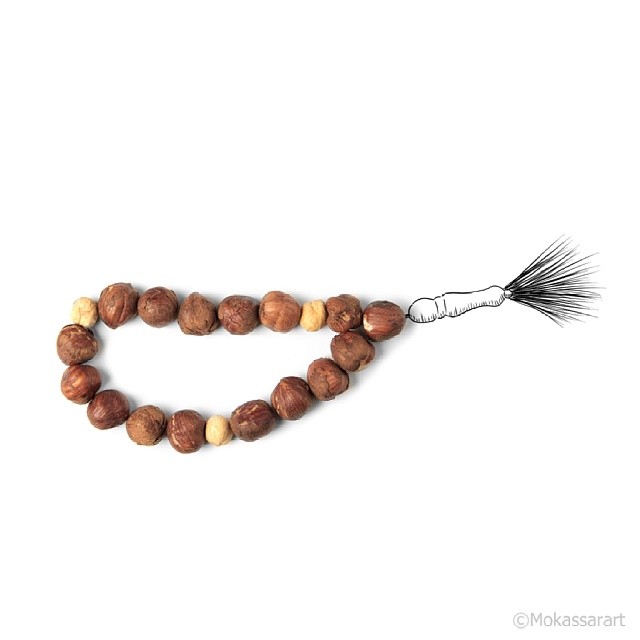
Hazelnuts circle into a misbaha, or prayer-bead strand, with the tassel and lead bead finished in ink. Cultural familiarity meets snack-food play without mocking either. The composition is almost documentary: the nuts are arranged with care, shadows intact, while the drawn finish announces that this is still illustration, not a still-life alone.
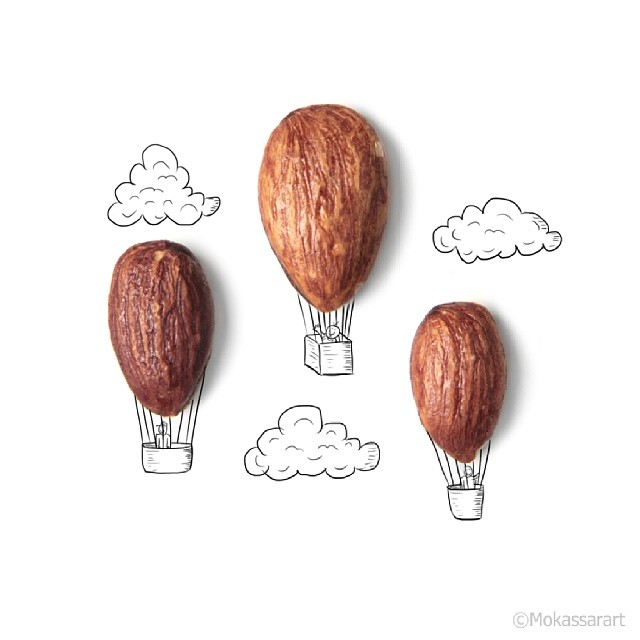
Three almonds float as hot-air balloon envelopes. Baskets hang below on thread-thin ropes; tiny passengers wave from the gondolas; clouds drift nearby. The staggered heights make the page feel breezy. You can almost hear the “lift” of the gag—the almonds were already oval and buoyant-looking; Ahmad only had to give them somewhere to go.
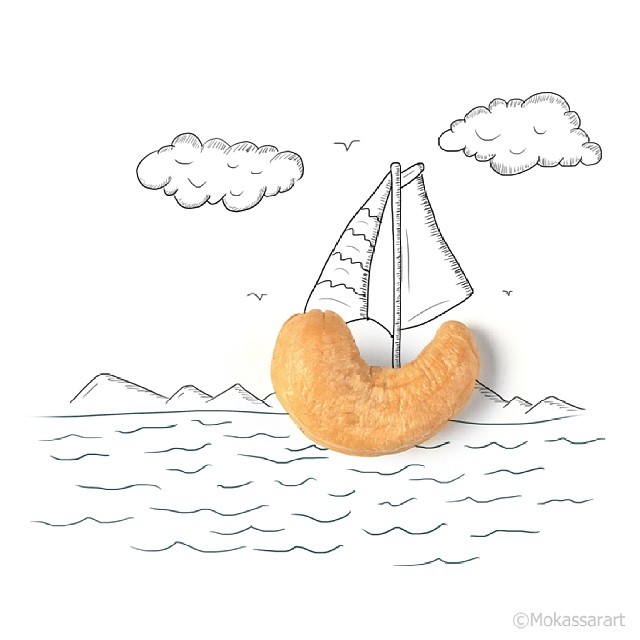
A single cashew becomes a boat hull with striped sails, mountain silhouette, smiling cloud, and seagull Vs. It is the series at its most storybook. The nut’s C-curve is the whole vessel; everything else is weather and mood. Pieces like this explain why design blogs filed Mokassar Art under “cute” even when the craft is closer to logo thinking than children’s doodling.
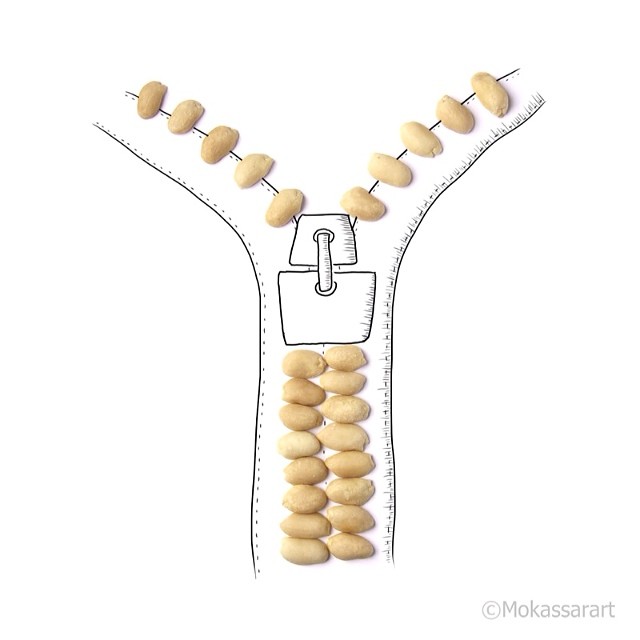
Peanut halves interlock as zipper teeth—closed ranks below the slider, opened tracks above. Dashed fabric edges and a drawn pull tab sell the hardware. It is the most product-design joke in the gallery: fasteners made of snacks. The patience of arranging each half is part of the punchline; the photograph has to be as precise as the ink.
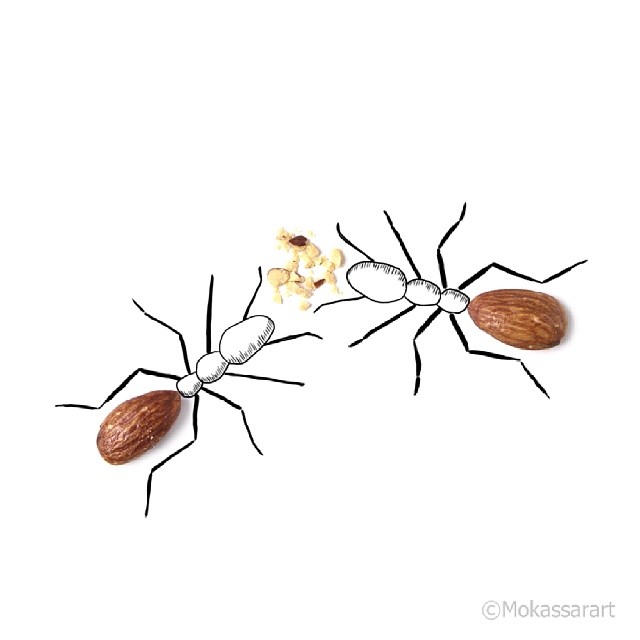
Two ants meet over a crumb pile, almond abdomens attached to drawn heads, legs, and antennae. The ants are eating what they are made of—a small circular gag that rewards a second look. Object art often stops at resemblance; Ahmad likes a little narrative friction.
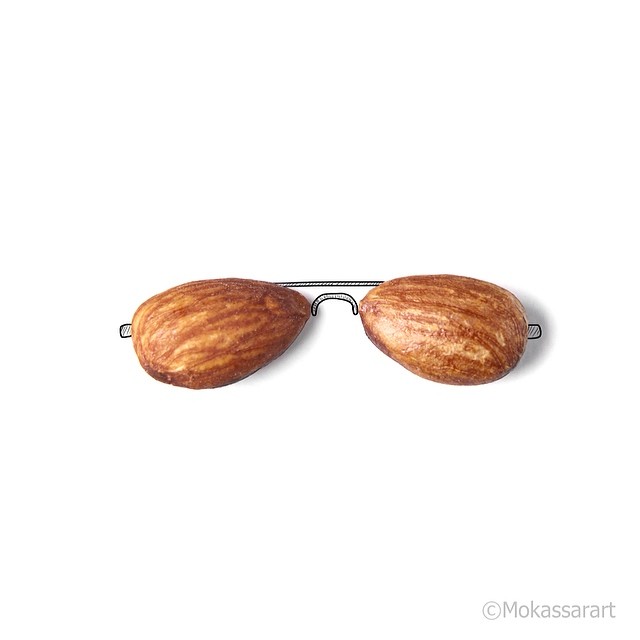
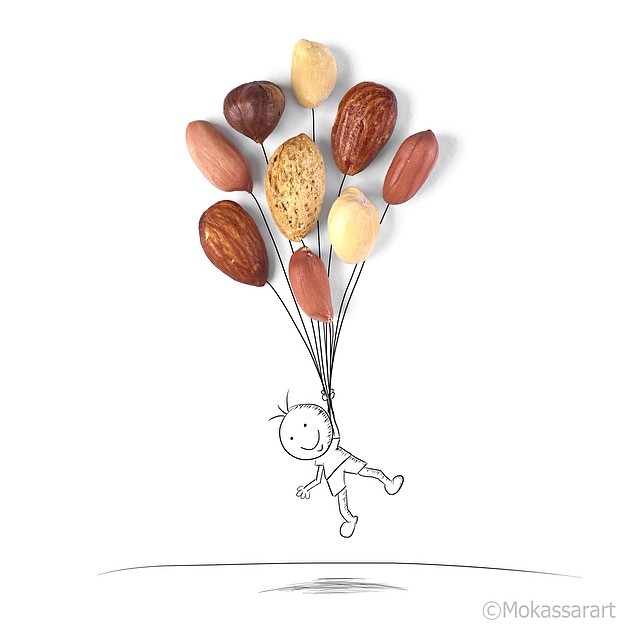
Further frames keep swapping roles: nuts as wings, clouds, sails, tents, or body parts depending on the curve available that day. The white field never changes much. Consistency of backdrop is what makes the series feel like a brand, not a one-off party trick. You could shuffle the order and still know you are looking at Mokassar Art within a glance—©Mokassarart tucked in the corner, nut as star, line as supporting cast.
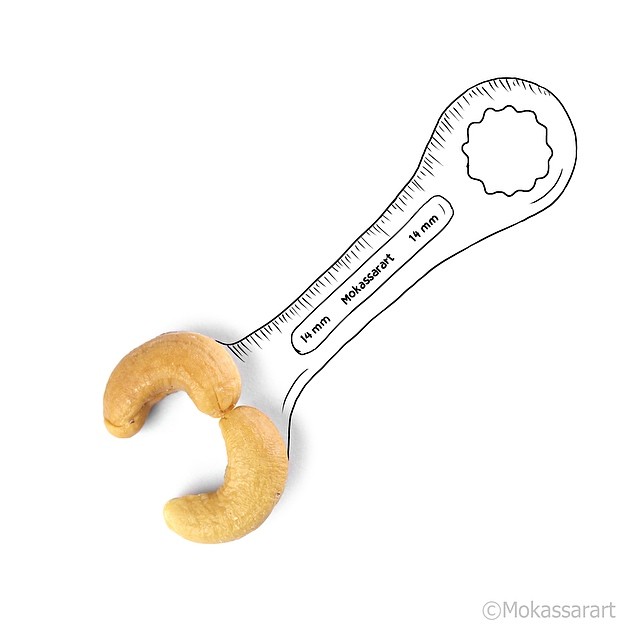
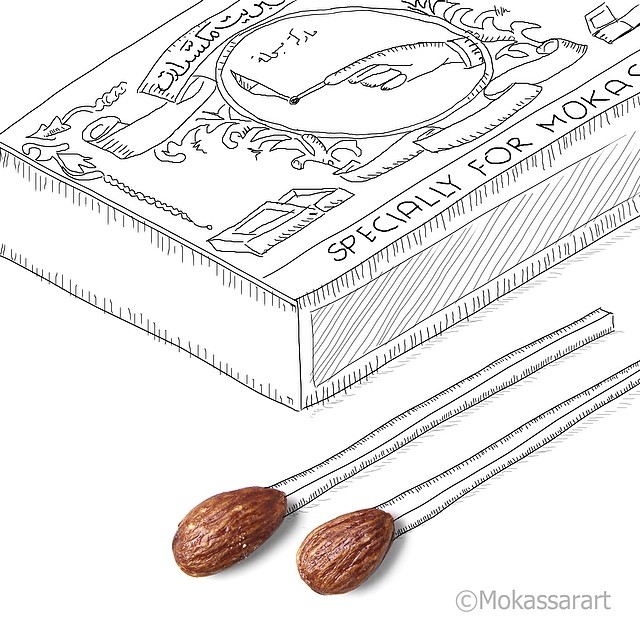
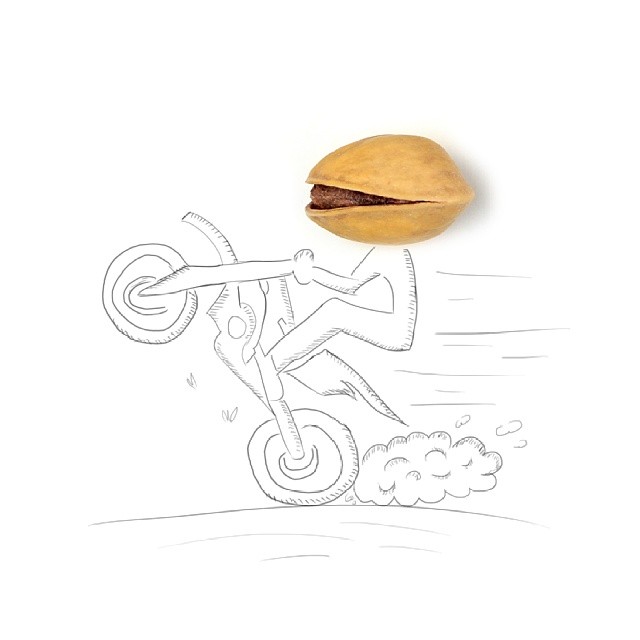
What holds the project together is constraint. Ahmad does not flood the page with color, props, or digital effects. He picks a nut whose silhouette already suggests a thing, places it where a photographer would place a product hero, and draws only what the nut cannot supply. That is why the crab claws work: cashews already look like pincers. That is why the zipper works: peanut halves already look like teeth. Discovery first, drafting second.
Why the series still reads clean
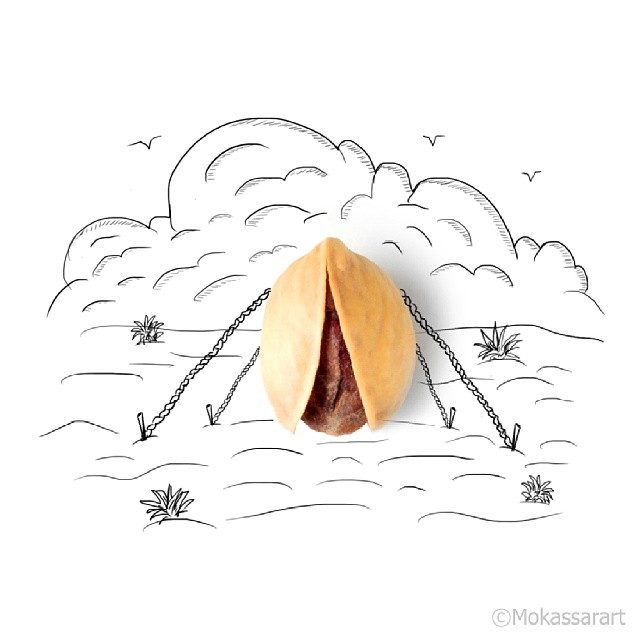
Mid-2010s Instagram rewarded exactly this format—square, bright, one idea. Mokassar Art arrived when design blogs were hungry for object play and food-adjacent cleverness. Fubiz and similar outlets treated the account as a portable portfolio: scroll, smile, save. The pieces still work off-platform because they do not depend on a caption thread or a trending audio. They are self-contained visual sentences.
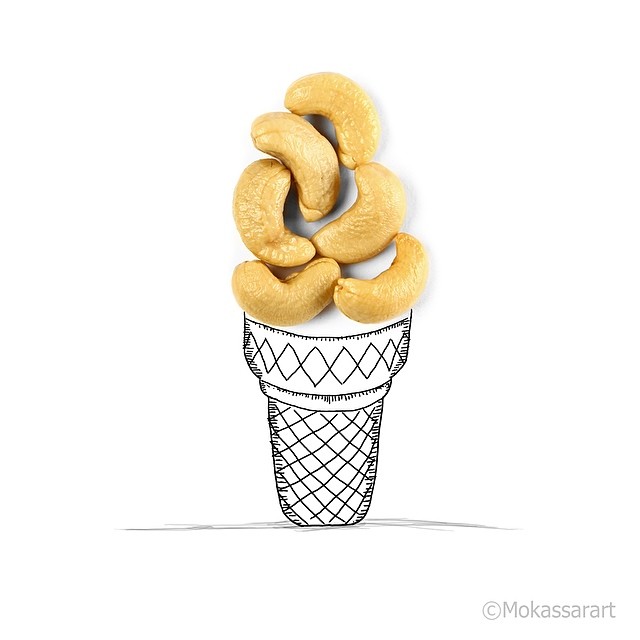
There is also a quiet craft lesson for illustrators who work digitally by default. Lighting on a real almond throws soft shadows that no flat fill can fake cheaply. Skin on a peanut changes the mood of a battery from “full” to “almost dead.” Texture is information. Ahmad’s white paper is a stage, not empty laziness; it keeps the eye on the hybrid joint where photo and pen meet.
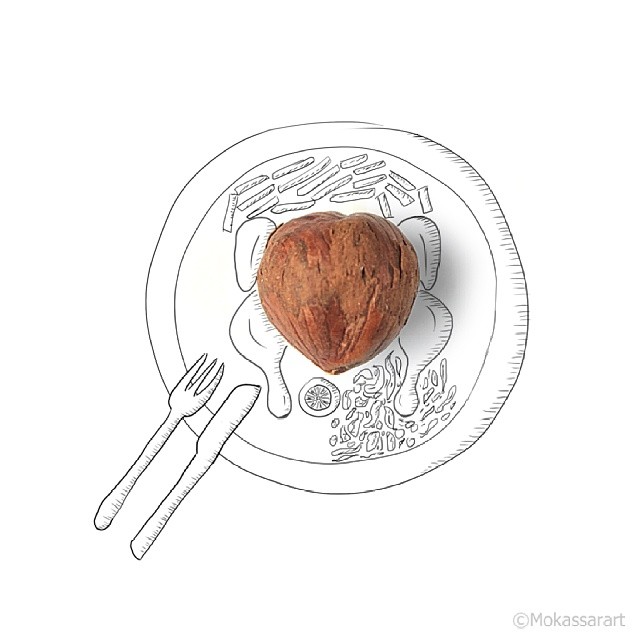
Behance still lists MokassarArt among Ahmad’s projects, alongside brand and heritage work from his Riyadh practice. That dual life matters. The nut illustrations are not a break from design so much as design with edible stock. A senior designer who can make a cashew read as a boat hull is practicing the same skill that makes a logo read at stamp size: reduce, emphasize, stop early.
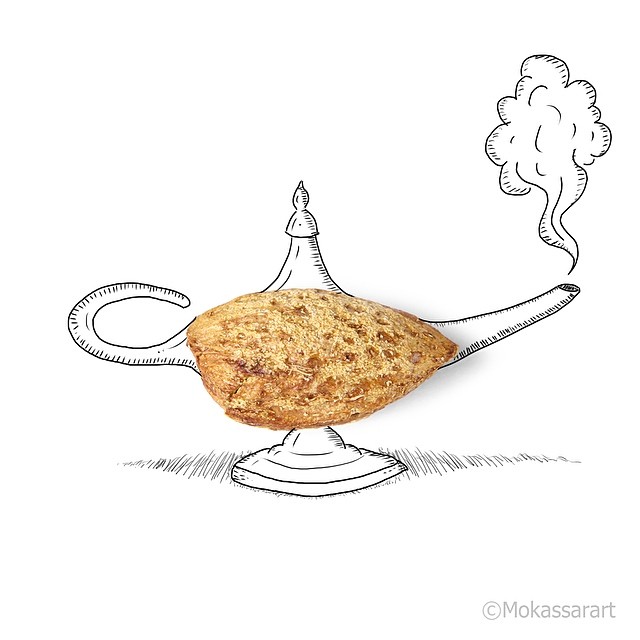
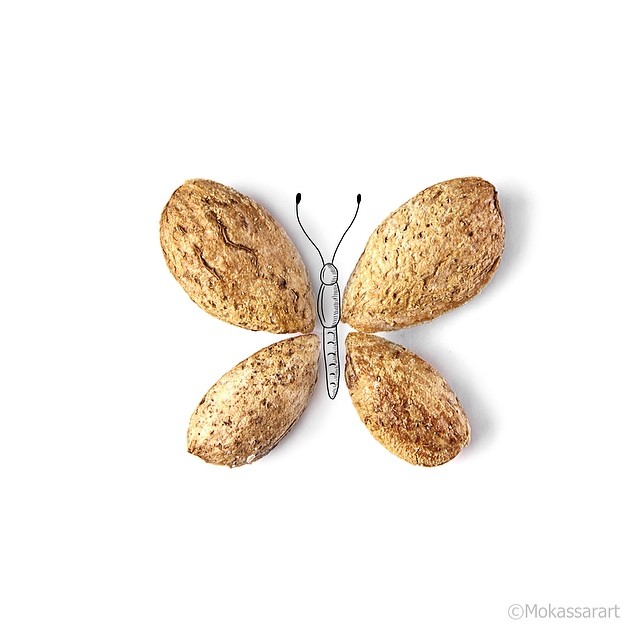
If you walk the gallery looking for a favorite, try sorting by job title instead of by nut type. Which piece is a logo? Which is a comic panel? Which is a tiny poster? The crab is branding. The batteries are UI parody. The balloon almonds are children’s-book spread. The zipper is industrial design satire. Same materials, different assignments—and that variety is what keeps a snack-based series from tasting the same twice.

Comments
Continue reading
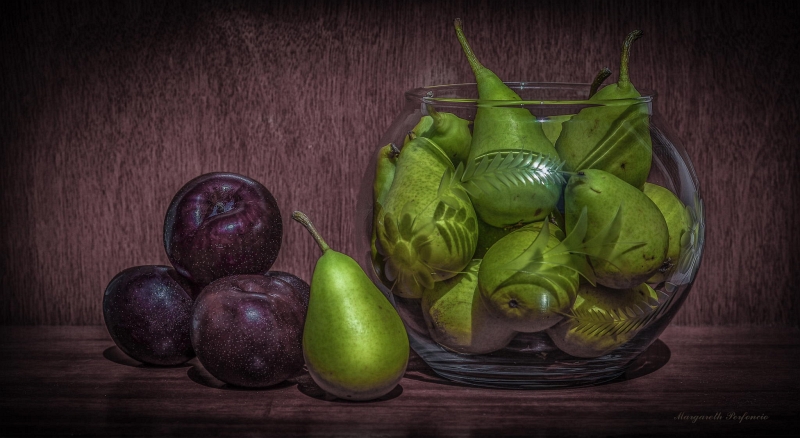
Still-Life Photography by Margareth Perfoncio
São Paulo photographer Margareth Perfoncio’s still lifes of food and flowers—Old Master light, dark wood, and tables that feel inevitable.
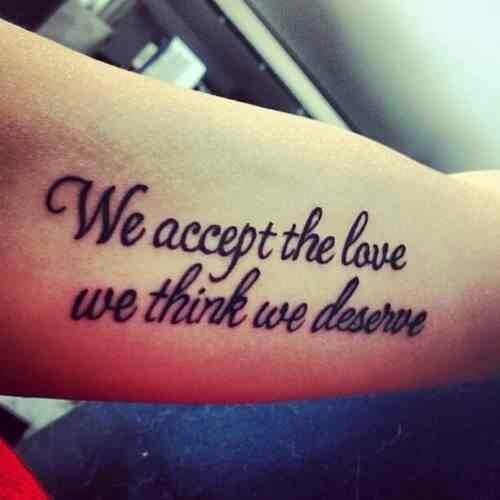
Meaningful Love Quotes for Inspiration (and Ink)
Meaningful love quotes that still feel true — short lines for tattoos, gifts, and everyday reminders, with placement and wording tips.
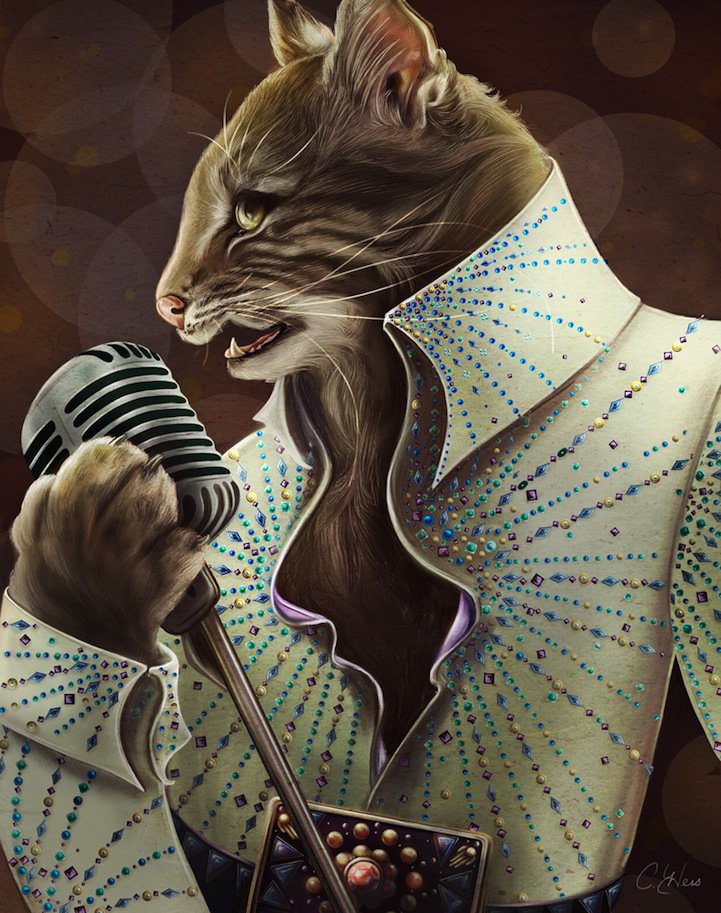
Christina Hess’s Animals From History: Costumed Pets as Playful Portraits
Illustrator Christina Hess reimagines historical icons as ornate animal portraits—Elvis Petme and friends—mixing puns, costume detail, and soft history lessons.