
Creative Ice Cube Trays: Ships, Brains, Snowflakes, and More
Novelty silicone molds that turn drinks into conversation pieces—from Titanic icebergs and LEGO bricks to vampire fangs, scream faces, and gemstone cubes—with practical freezing tips.
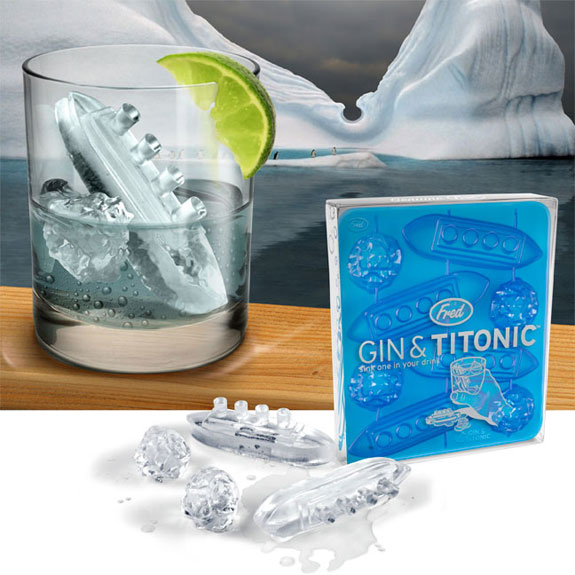
Ordinary ice cools a drink and then disappears. Shaped ice does the same job and also sets a mood: a skull in purple punch, citrus discs frozen onto a straw, a tiny ocean liner tipping beside an iceberg. Silicone trays made novelty freezing practical for home kitchens—flexible enough for undercuts and fine detail, durable enough to use again after every party. The designs below cover gag gifts, holiday hosting, kids’ birthdays, and quiet cocktail nights when you want the glass itself to carry a joke.
Clear ice still matters. Boil and cool the water once before filling molds if you want fewer cloudy centers, or freeze filtered water overnight. Fill cavities just shy of the rim so pieces release cleanly. A brief rinse under lukewarm water loosens stubborn edges without melting the sculpture into a blob. Store finished cubes in a sealed bag so they do not pick up freezer odors before guests arrive.
Ships, icebergs, and a slow sink
Ship-and-iceberg molds turn a gin and tonic into a miniature disaster movie. Drop the liner first, add the jagged berg, and give guests a moment to notice the tilt before the melt softens the joke. The tray usually yields several of each shape, which helps if you are pouring a full round at once. Clear spirits show the silhouette best; cloudy mixers hide the fun too quickly.
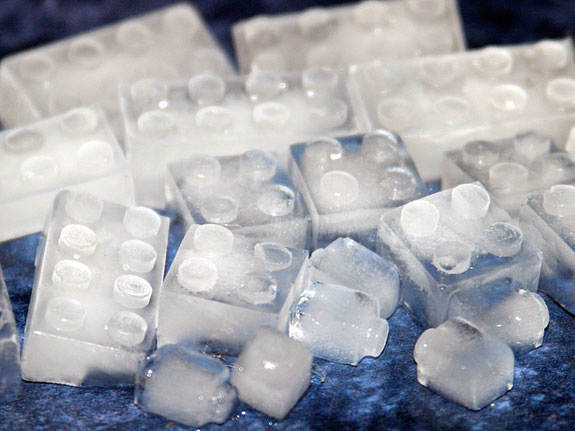
Building-block ice
Brick-shaped cubes with studs on top look like childhood toys that somehow ended up in the freezer. Stack a few beside a pitcher of lemonade for a kids’ table, or float them in soda where the cloudy centers read like frosted plastic. Because the forms are chunky, they melt slower than thin novelty pieces and keep drinks cold through a long afternoon outdoors.
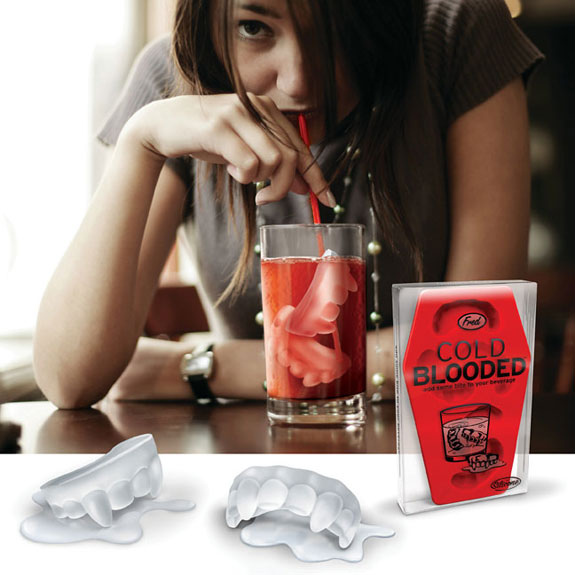
Fangs in a red glass
Upper and lower fang molds belong in tomato juice, cherry soda, or any deeply colored cocktail that makes the ice look faintly predatory. Serve them in tall glasses with a straw so the bite sits near eye level. For October parties, freeze a tray the night before; for quieter nights, one pair in a Bloody Mary is enough theater.
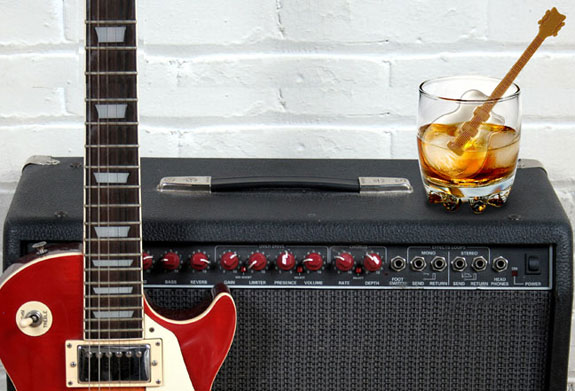
Ice that doubles as a stirrer
Some trays freeze a long neck and headstock that stick out of the glass while the body chills the drink. The piece works as both ice and stirrer until it thins. Amber spirits and iced tea show the outline clearly against a rock glass. Keep a spare tray freezing if you expect people to stir aggressively—thin necks snap once they soften.
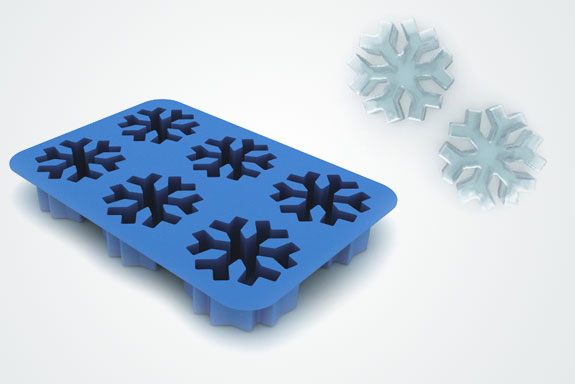
Snowflakes for winter drinks
Six-point snowflake molds are the elegant cousin of gag ice. They look sharp in sparkling water, white wine spritzers, and hot chocolate served with a cold garnish on the side. Intricate points chip if you pry too hard; flex the silicone from underneath instead of twisting. A light mist of water on the tray before filling can help release fine tips intact.
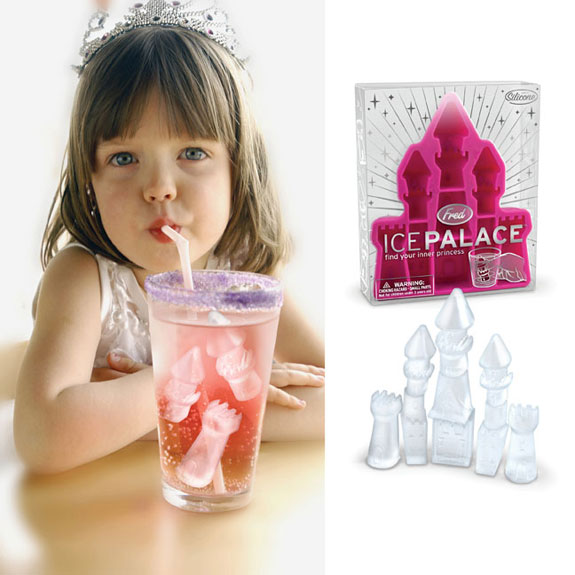
Castle towers in a pink glass
Tower and turret molds turn lemonade or berry punch into a fairy-tale skyline. Pair them with a sugared rim if you want the glass to match the ice. Opaque cubes read more like miniature buildings; clearer ones look like glass architecture. These trays often include several heights, so mix tall and short pieces in one pitcher for a skyline effect rather than a row of identical spikes.
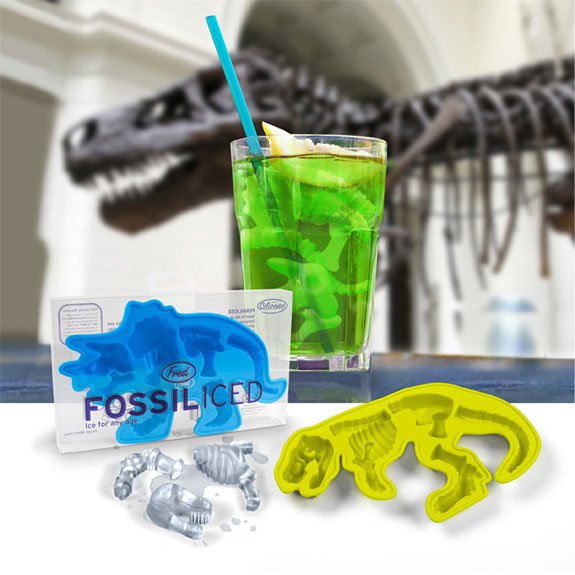
Fossil bones for museum-night drinks
Dinosaur bone trays—skulls, ribs, limb pieces—float beautifully in green punch or citrus soda. Serve them at birthday digs, classroom parties, or any gathering where kids will lean in to identify bones before they melt. Because the shapes are irregular, they clink differently in the glass; that small sound is part of the joke. Freeze juice instead of water if you want the “fossils” to tint as they thaw.
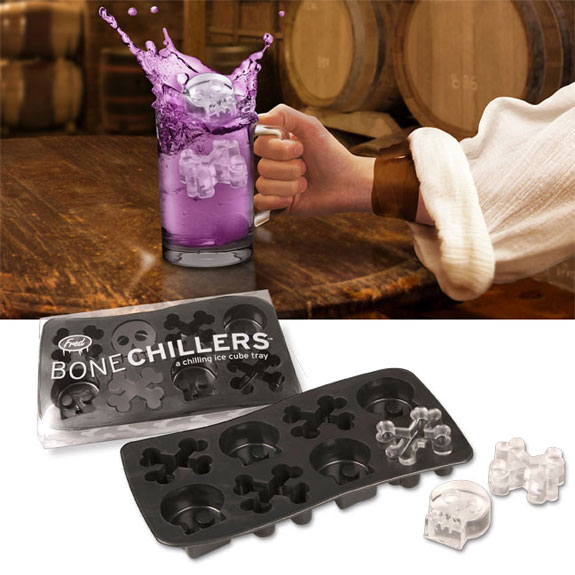
Skulls and crossbones
Classic skull-and-crossbones molds belong in Halloween punch bowls and pirate-themed weekends. Drop a skull from height for a splash photo, then refill quietly for guests who prefer a calmer glass. Dark grape, blackberry, or cola make the white ice look spectral. Keep trays labeled if you also freeze candy molds nearby—nobody wants a surprise chocolate skull in their whiskey.
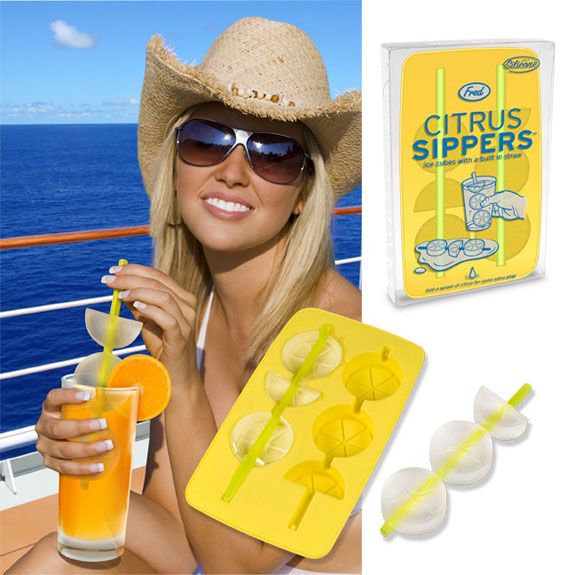
Ice frozen onto the straw
Citrus-slice molds that clamp around a reusable straw chill from the middle of the drink outward. Fill the tray, seat the straw, freeze flat, then twist gently. Lemonade, iced tea, and tropical mocktails look especially bright with half-moon and full-circle discs stacked along the tube. Warn guests the ice will slide as it melts so the straw does not become a projectile when someone laughs mid-sip.
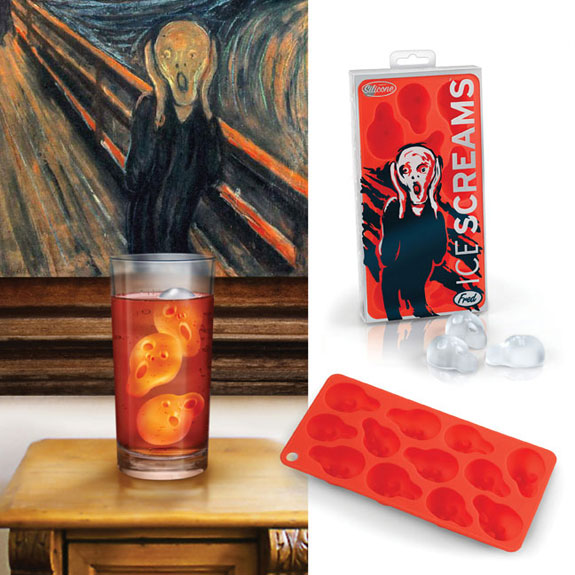
Expressionist faces in the glass
Trays inspired by Edvard Munch’s The Scream pack a dozen open-mouthed faces into one silicone sheet. They read as art-history humor more than horror, which makes them useful beyond October. A single face in iced coffee is enough for a desk joke; a cluster in cranberry punch works for gallery openings or movie nights. Detail in the hands-on-cheeks pose survives best when you demold slowly and keep cubes cold until serving.
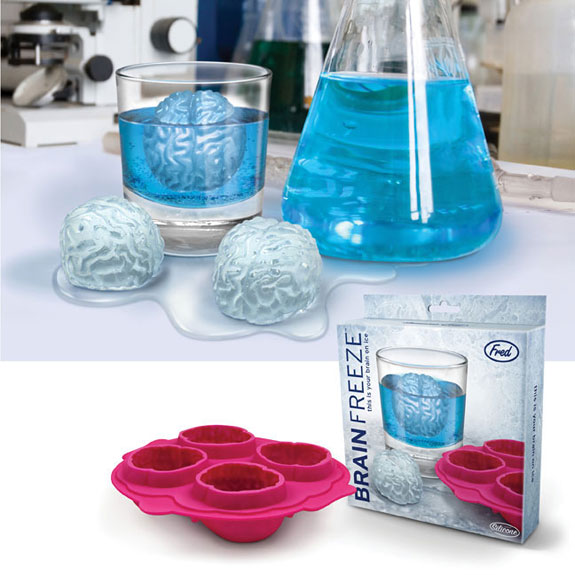
Anatomical brains
Four-cavity brain molds show cortical ridges clearly when the ice is cloudy-white against a blue or green drink. Science-fair parties, medical-student gatherings, and Halloween “lab” tables all benefit from one oversized brain per glass. Because the volume is large, these chill faster than thin novelty shapes—useful for strong cocktails that need temperature control, not just decoration.
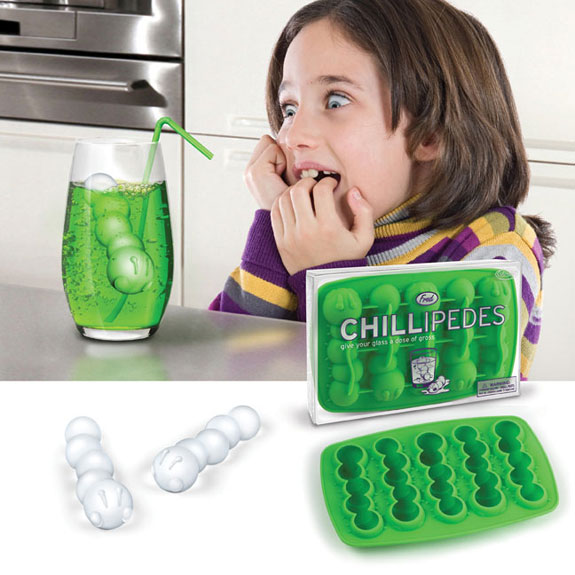
Segmented bugs
Centipede-style cubes with antennae and eye dents deliver the gross-out laugh without real insects. Bright green soda makes them look alive; clear sparkling water makes them look like pale larvae, which can be funnier. These trays often hold many small cavities, so freeze a full batch for a kids’ table where everyone wants their own “bug.”
Action-movie silhouettes
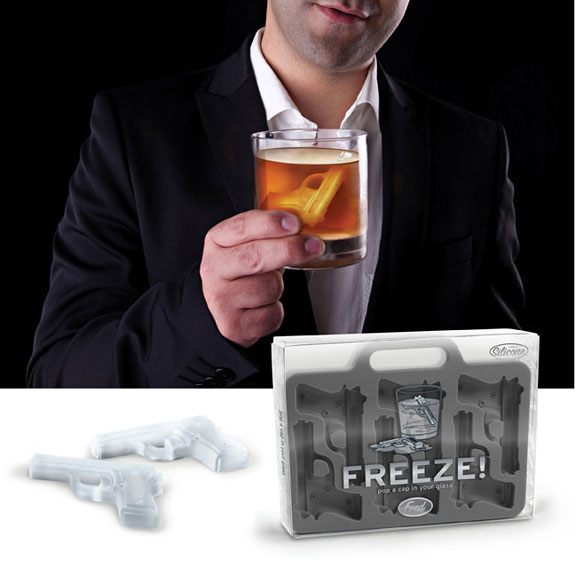
Pistol-shaped ice is pure pulp fiction for adult cocktail hours. Serve in short glasses with amber spirits so the outline stays readable. Know your audience: some guests love the noir gag, others prefer snowflakes. Keep this tray for private gatherings where the joke lands, and skip it at mixed family events where a gun silhouette in a child’s juice is the wrong kind of surprise.
Faceted jewels
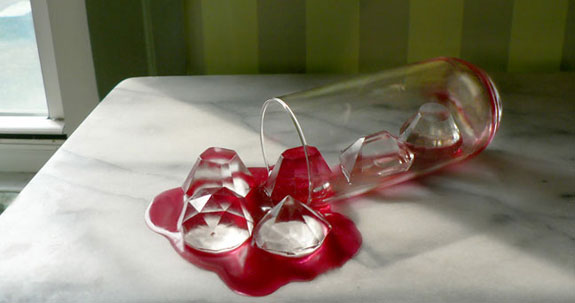
Gemstone molds catch light the way cut crystal does. Red wine, cranberry juice, or dark sodas turn them into temporary rubies and garnets as they melt. Use them when you want elegance without a gag: brunch mimosas, anniversary dinners, or a quiet Friday pour. Freeze a little diluted juice if you want tinted stones that deepen color as they dissolve.
Practical habits that keep novelty ice looking sharp
- Wash new silicone with hot soapy water before the first freeze; factory dust clings to fine detail.
- Level the tray on a flat freezer shelf so towers and necks freeze straight.
- Bag finished cubes overnight in a freezer bag labeled by shape if you rotate several themes.
- Match drink color to the joke: pale ice needs dark liquid; dark ice needs a pale pour.
- Never force a stuck piece with a knife—warm water under the tray preserves the edges.
Pick one tray for the next gathering instead of trying every shape at once. A single strong gag—brains in blue punch, snowflakes in sparkling wine, citrus ice riding a straw—reads cleaner than a mixed bowl of unrelated melting toys. When the last cube softens into a watery grin, refill the silicone, park it flat in the freezer, and let the next round freeze while the conversation catches up.

Comments
Continue reading
Brilliant Tattoo Ads: When Ink Becomes the Campaign
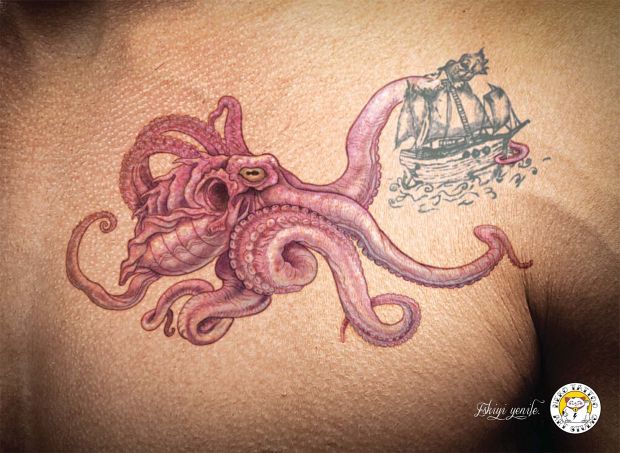
How creative tattoo advertising works—for studios and brands—using body art, flash-sheet design, and craft-first imagery that feels worth carrying.
Creative Cupcake Designs That Are Fun to Bake and Eat
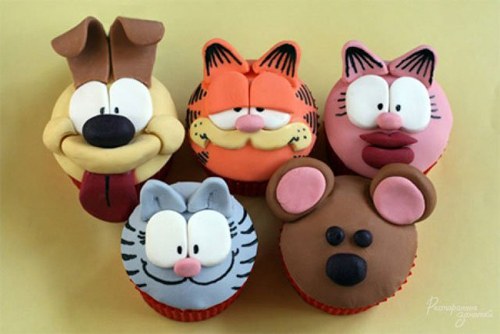
From fondant characters and pixel-game grids to cookie-faced animals, rainbow belts, and watermelon crumb—playful cupcake ideas with practical decorating tips.
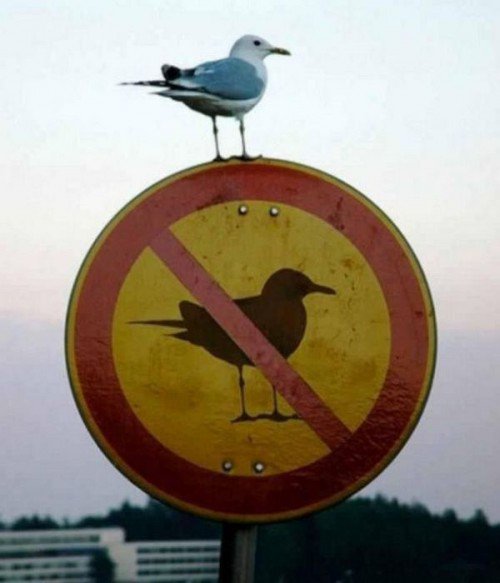
Funny Animal Signs That Warn People (While Animals Ignore Them)
From a seagull on a no-birds disc to classic zoo and park ironies—why animal warning signs get funny, and what the rules are still for.