
Brilliant Tattoo Ads: When Ink Becomes the Campaign
How creative tattoo advertising works—for studios and brands—using body art, flash-sheet design, and craft-first imagery that feels worth carrying.
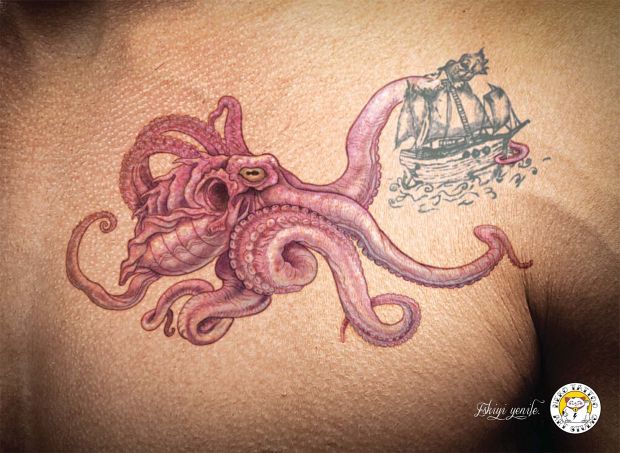
Tattoo advertising has always had an unfair advantage: the product is already a picture on skin. When studios, brands, and agencies lean into that fact, the ad stops looking like a flyer and starts behaving like a dare. Creative tattoo ads play with permanence, pain, identity, and craftsmanship—sometimes selling ink itself, sometimes borrowing tattoo language to sell something else entirely.
The strongest examples do not merely slap a logo on a sleeve. They treat the body as a layout surface, the needle as a production tool, and the studio wall as a media channel. Flash sheets become posters. A chest piece becomes a narrative panel. A temporary stamp becomes a coupon people want to keep. Whether the goal is bookings for a parlor or attention for a brand, the craft is the same: make the mark feel worth carrying.
Studio ads often succeed by showing finished work with enough personality that the artist’s voice is obvious before any slogan appears. In the piece above, a pink-red octopus wraps a line-drawn sailing ship across the chest—two styles colliding in one composition. The contrast itself is the pitch: this shop can handle realism and graphic flash, and it knows how to stage a story on the body. A studio mark in the corner closes the loop the way a signature closes a print ad.
Why tattoo language works in advertising
Tattoos signal commitment. Even when the ink is temporary, the metaphor of permanence still lands. Advertisers chase that seriousness because ordinary discounts feel disposable. A coupon on paper gets thrown away; a mark on skin—or an image that looks like one—suggests the offer matters enough to endure a little ritual.
Tattoo culture also brings visual density. Bold outlines, limited palettes, iconic motifs (anchors, roses, skulls, animals, lettering) read quickly at poster scale and on a phone screen. Those same motifs translate cleanly into packaging, murals, and social posts. When an ad borrows flash-sheet grammar, it inherits decades of visual shorthand without needing a long explanation.
There is also social proof built into the medium. Real tattoos on real people are testimonials you cannot fake easily. Campaigns that photograph clients, crowdsource fan ink, or invite walk-ins to show their marks turn customers into media. The body becomes both audience and billboard.
Studio advertising that feels like craft, not spam
Local tattoo shops compete on portfolio quality, hygiene, waitlists, and personality. Brilliant ads for studios tend to do three things well.
First, they lead with work, not with prices. A strong photo of healed or freshly finished ink sells more appointments than a banner shouting “cheap tattoos.” Detail shots of line weight, shading, and placement teach the viewer what to expect. Second, they name a style lane: fine line, traditional, neo-traditional, blackwork, realism, lettering. Ambiguous “we do everything” messaging dilutes trust. Third, they make the booking path obvious—hours, booking link, guest-artist calendar—without covering the art.
Print still matters for parlors. Window vinyl of flash sheets, postcard takeaways, and collaboration posters with nearby bars or music venues keep the shop visible between appointments. The best of those pieces look collectible. If someone wants to pin the flyer on a bedroom wall, the ad has already won half the battle.
When brands borrow the tattoo
Outside the industry, brands use tattoo imagery for different reasons: rebellion, craftsmanship, loyalty, or humor. A fashion campaign might photograph models with real ink to suggest lived-in cool. A food or beverage brand might design temporary flash inspired by packaging so fans can wear the product for a weekend. A game franchise might build an entire spot from fans’ existing tattoos, treating community devotion as the production budget.
The risk is tone-deafness. Permanent body art is intimate. Campaigns that treat tattoos as a joke about pain, or that push branded logos people would regret, age poorly. The smarter route is participation: temporary ink, artist collaborations, flash sheets people choose freely, or stories that celebrate existing tattoos rather than inventing fake ones in post-production.
Temporary and cosmetic tattoos sit in a useful middle ground for advertising. They keep the ritual—choosing a design, applying it, showing it off—without demanding lifelong brand loyalty. Instant tattoo printers, transfer sheets, and artist-designed stamps have all been used to turn street activations into walking media. The barcode-inside-a-design trick, when done carefully, even makes the mark functional: scan, redeem, share.
Design moves that separate clever from cliché
Several recurring ideas show up in creative tattoo ads. Knowing them helps you judge what is inventive and what is tired.
- Meta interaction: one tattoo appears to grab, cover, or complete another, as in the octopus-and-ship composition. The body becomes a comic panel.
- Flash as brand kit: a sheet of related motifs functions like a logo system—variations on a product, mascot, or slogan rendered as classic flash.
- Negative space reveals: lettering hidden in clouds, waves, or animal forms rewards a second look, the print-ad equivalent of discovering a hidden symbol in a sleeve.
- Process as proof: showing stencil, machine, and wipe-downs sells professionalism as much as the finished piece sells style.
- Placement humor: ads that play with where a mark sits (ribs, knuckles, ankle) use the audience’s knowledge of pain and visibility as comedy without mocking clients.
Color strategy matters too. Traditional flash loves limited, saturated inks. Modern studio ads often shoot in soft daylight so skin texture stays honest. Over-filtered images can make portfolio work look like clip art. Honest skin, honest ink, honest lighting usually outperform heavy effects.
Ethics and practical limits
Any discussion of tattoo advertising should keep consent and safety visible. Using a client’s body in an ad requires clear permission. Promoting walk-in specials should never pressure people into impulsive permanent decisions. Health claims about ink or aftercare need to stay accurate. For brands outside the industry, partnering with working artists—and paying them—beats inventing “tattoo-inspired” graphics that ignore the labor behind the craft.
There is also a cultural line between celebration and appropriation. Motifs with sacred or community-specific meanings do not belong in casual promo sheets. Good creative directors ask artists what should stay off the flash wall.
How to read a tattoo ad the way an artist would
When you encounter a tattoo-themed campaign or a studio poster, ask a short set of questions. Is the work shown healed or only freshly wiped and shiny? Does the composition respect anatomy, or does it warp limbs for the camera? Is the type doing real work, or covering weak artwork? Would you trust this shop—or this brand—after living with the image for a week?
Those questions separate decoration from persuasion. Brilliant tattoo ads survive that scrutiny because the visual idea is strong enough to carry the sell. The octopus catching the ship does not need a paragraph of copy to explain ambition; the picture already argues for skill, humor, and narrative control.
If you are designing for a studio, start with one undeniable photograph of finished work, add a clear style label, and leave room for the mark to breathe. If you are borrowing tattoo language for a brand, collaborate with artists, prefer temporary or opt-in formats, and let people choose the design rather than forcing a logo onto skin. The medium rewards respect. Treat ink like a serious craft, and the advertising starts to look as sharp as the best sleeves in the waiting-room books.

Comments
Continue reading
Creative Cupcake Designs That Are Fun to Bake and Eat
From fondant characters and pixel-game grids to cookie-faced animals, rainbow belts, and watermelon crumb—playful cupcake ideas with practical decorating tips.
Creative Ice Cube Trays: Ships, Brains, Snowflakes, and More
Novelty silicone molds that turn drinks into conversation pieces—from Titanic icebergs and LEGO bricks to vampire fangs, scream faces, and gemstone cubes—with practical freezing tips.
Funny Animal Signs That Warn People (While Animals Ignore Them)
From a seagull on a no-birds disc to classic zoo and park ironies—why animal warning signs get funny, and what the rules are still for.