
Comic Collage Art by Mike Alcantara: Heroes Built from Comics Only
Austin artist Mike Alcantara cuts comic books into portraits of Superman, Conan, and other pop icons—no paint, no marker, only printed paper.
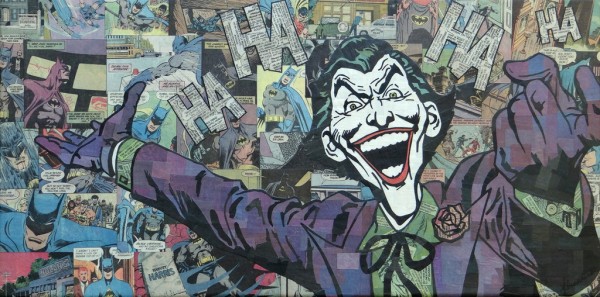
Mike Alcantara builds portraits out of other people’s panels. Based in Austin, Texas, he cuts and reassembles comic books into collage images of nostalgic pop-culture heroes—Superman, Conan, and a wider roster of cape-and-sword figures that already live in collectors’ muscle memory. Paint and marker stay off the table. The colour, line, and halftone already printed on the page become his only palette, which means every finished face is also a small archive of stories that once belonged to someone else’s Saturday afternoon.
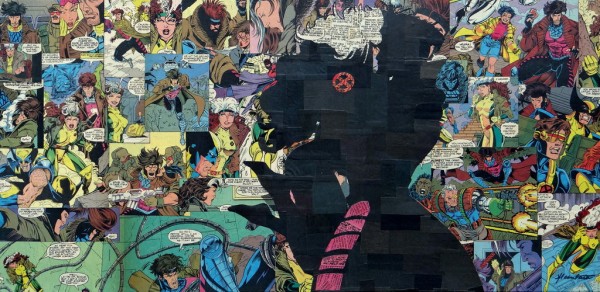
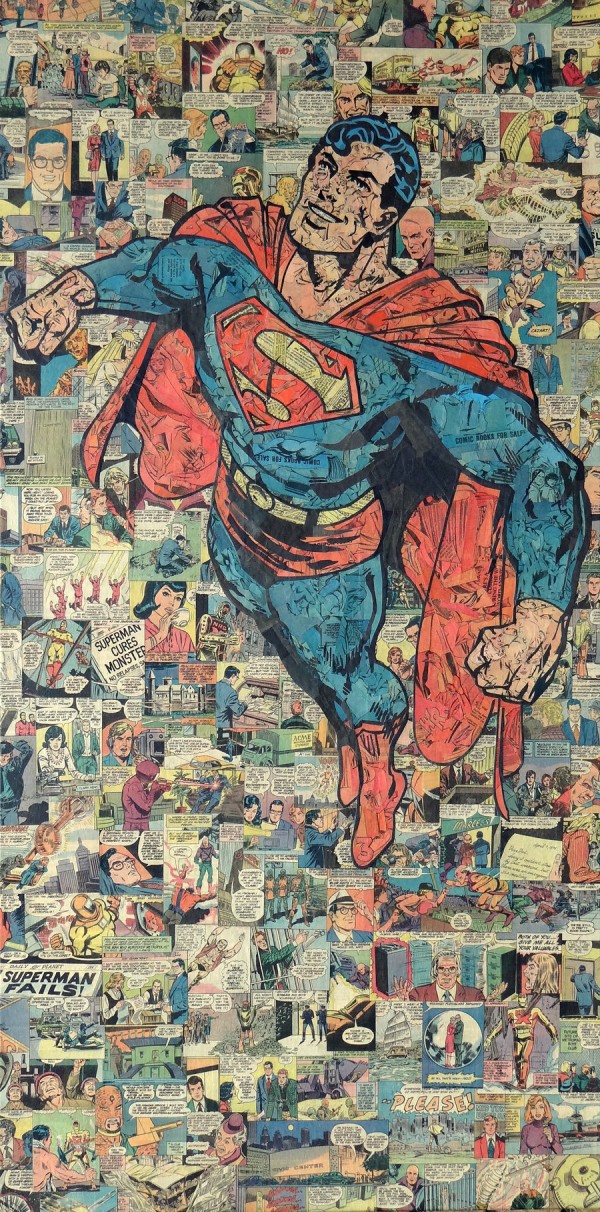
That constraint is the work’s signature. Up close, you read fragments of speech balloons, costume flats, and action speed lines. Step back, and those scraps lock into a single familiar silhouette. The hero is rebuilt from the medium that made the hero famous, and the rebuild never quite hides its origins—which is exactly why the pieces hold attention longer than a clean digital homage.
Comics as material, not reference
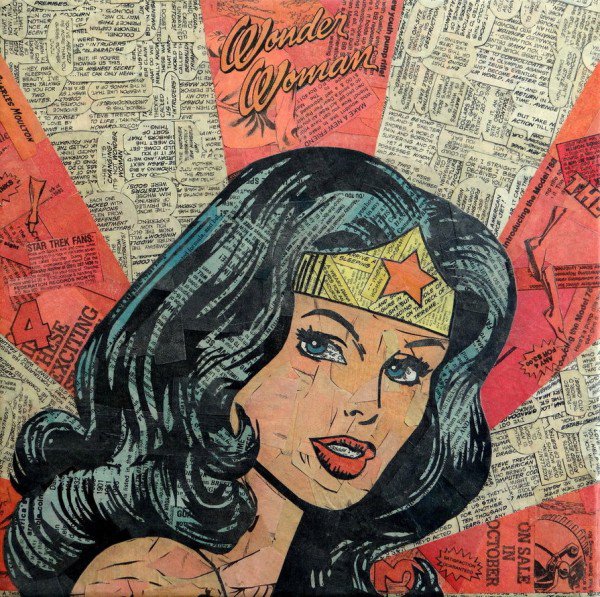
Many illustrators draw characters that look like comics. Alcantara uses comics as physical stuff—paper with ink already committed. The difference matters. A drawing can invent new colour relationships; a pure comic collage must hunt them inside existing issues. Blues for a cape may come from night skies, water panels, or another hero’s costume elsewhere in the stack. Skin tones may be sampled from dozens of faces that never belonged to the subject. Backgrounds can be built from cityscapes, explosions, and flat colour fields that once served completely different narrative beats.
The method rewards organization. Sorting pages by hue and value turns a pile of books into a usable library. Coverage from the period when these pieces circulated online described labor-intensive assembly and careful planning—less spontaneous scrapbooking, more mosaic discipline. Large canvases take time because each scrap has to serve both local texture and global likeness. A bright fragment that looks exciting in the hand can wreck a cheekbone when glued in the wrong value zone.
That hunting phase is part of the art even when viewers never see it. The finished collage is the visible tip of hours spent reading colour the way a painter reads tubes—except the tubes are already stories.
Nostalgia with sharp edges
Superman and Conan are not random picks. They carry decades of visual branding: the S-shield, the barbarian stare, the body language of pulp strength. Alcantara’s collages lean into that recognition while filling the forms with competing eras of comic printing—older newsprint greys beside glossier modern inks, classical anatomy beside later stylizations, quiet panel acting beside shouty cover energy.
Viewers who grew up with the characters feel a double hit: affection for the icon, and curiosity about which issues donated which fragment. The longer you look, the more the portrait becomes a scavenger hunt. Viewers new to the characters still get a graphic punch—dense pattern resolving into a face—because the compositions hold as design even before the name lands. Recognition is a bonus, not a gate.
Nostalgia here is not soft-focus. Cutting comics is slightly violent toward collector culture that prefers mint bags and boards. Alcantara’s work argues, without a manifesto, that some pages earn a second life as matter for art rather than as frozen assets.
No paint, no marker
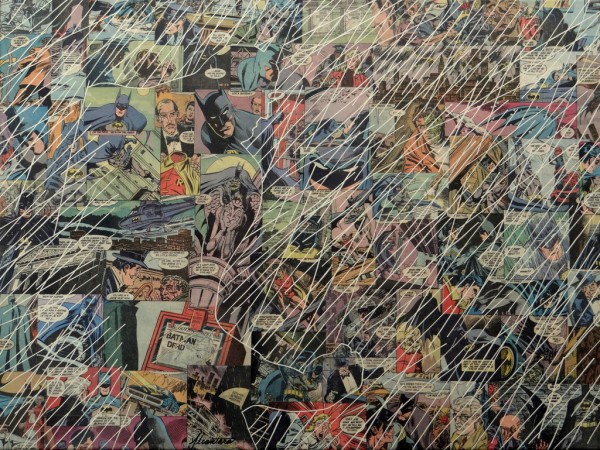
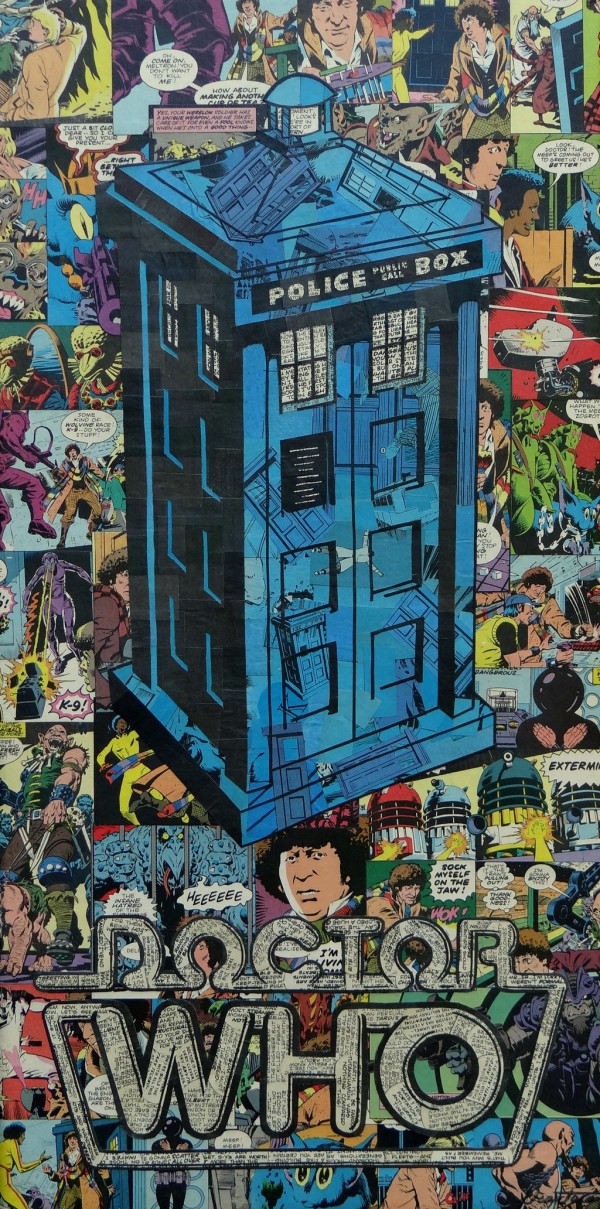
Alcantara’s own framing of the work has been blunt: comics only. That refusal keeps the pieces honest to pulp material culture. It also creates a visual hum—tiny letters, panel borders, and Ben-Day textures that no flat digital fill can fake. The surface stays restless. Even quiet areas of a portrait carry microscopic narrative leftovers from abandoned stories: a half letter, a glove, a shard of sky.
Working without paint forces edge craft. Seams must disappear at viewing distance without muddying into a brown mess of overlapping midtones. Value control—lights and darks placed where a face needs structure—becomes everything. A misplaced bright scrap on a cheek can break likeness as surely as a wrong pencil line. Colour harmony has to be negotiated from what the printed page already decided years earlier on a press.
The rule also keeps the work readable as collage rather than mixed-media illustration. You never wonder whether a shadow was brushed in. If a shadow exists, it was found, cut, and placed.
Scale and presence on a wall
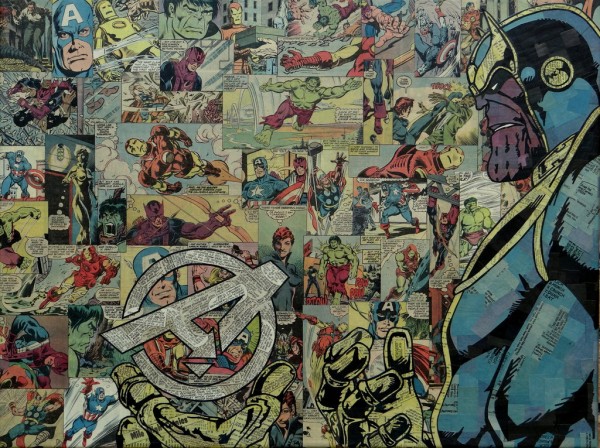
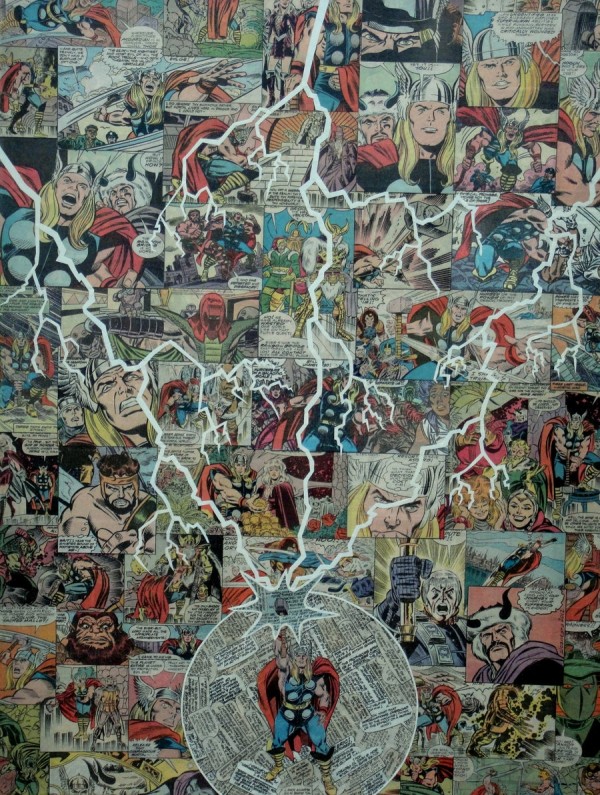
Some pieces stretch tall, almost architectural, so the figure reads like a stained-glass window made of pulp. Others sit wider, emphasizing shoulders, shields, or landscape-like fields of colour. Vertical formats suit iconic standing heroes; wider formats can feel like cinematic posters rebuilt from confetti. Scale changes how the constraint performs: on a small piece, each scrap is a major decision; on a large canvas, scraps can whisper until distance gathers them into a face.
On a wall, the works reward both distances. Across a room they advertise fandom cleanly enough for someone who only wants the icon. At arm’s length they become maps of reading history—proof that comics were held, cut, and loved rather than only archived. That dual address is rare. Plenty of fan art shouts from across the room and collapses up close; plenty of fine collage rewards inspection and disappears at ten feet. Alcantara’s stronger pieces do both.
Where the work circulated
In the early 2010s, Alcantara’s collages moved through DeviantArt galleries, social pages dedicated to the comic-collage project, and marketplace listings for prints and occasional original canvases. That split—affordable reproductions beside slower, expensive hand-cut originals—matched how fans already collect: some want the image on a dorm wall, some want the object that took the scissors and the hours.
Convention floors and online shares treated the work as crossover talk between fine-craft collage and mainstream comics culture. The pieces make sense to people who never visit galleries and to people who care about paper arts, because subject matter and technique meet in the middle. You can talk about Superman without apologizing, and you can talk about collage craft without needing a cape.
Availability shifted with time and platforms, as online shops and galleries always do. What remains steady in the record of that period is the proposition itself: heroes built only from comics, offered to a public that already knew those heroes by heart.
Why the constraint still feels fresh
Digital collage can approximate the look in hours. Physical comic collage cannot skip the hunt, the cut, the glue, or the risk of ruining a page that will not reprint itself from the same press run. That friction shows in the denser pieces as a kind of visual pressure—too much information held in elegant order. It also comments, gently, on comics as disposable and durable at once: issues meant to be read and discarded become permanent portrait matter.
There is an irony fans enjoy. Characters designed for mass reproduction are remade as singular objects built from mass-reproduced paper. The brand survives; the copy is sacrificed to make an original. In an era when images duplicate endlessly, that sacrifice has a quiet moral weight without turning preachy. You see the cost in the seams.
Looking through this gallery
Give each image two passes. First, name the figure if you can—costume cues usually arrive before facial detail finishes resolving. Second, scan for typography ghosts and panel corners; those leftovers are the medium speaking through the likeness. Notice how darks cluster to carve jawlines and how bright costume colours migrate into backgrounds when Alcantara needs chroma without breaking form. Watch for places where a scrap’s original narrative direction—a punch, a flight line—still points somewhere inside the new portrait.
Whether you meet these pieces as Superman nostalgia, Conan pulp energy, or pure pattern-making, the rule holds: every mark was already printed for someone else’s story. Alcantara’s art is the second story—the one that appears only after scissors, sorting, and patience rearrange the first into a face you thought you already knew.

Comments
Continue reading
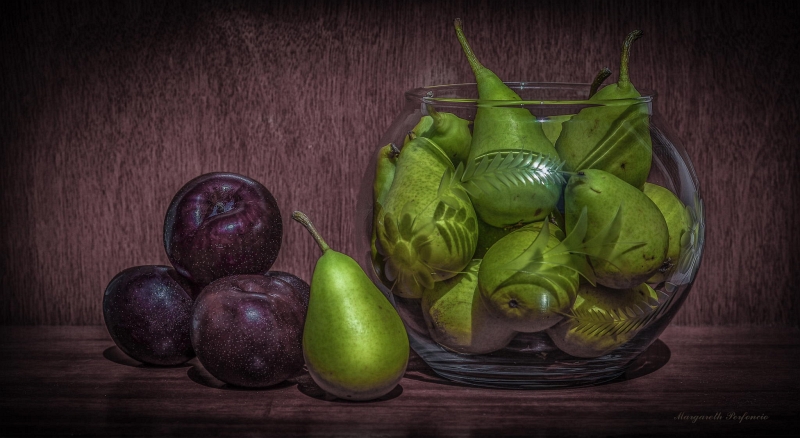
Still-Life Photography by Margareth Perfoncio
São Paulo photographer Margareth Perfoncio’s still lifes of food and flowers—Old Master light, dark wood, and tables that feel inevitable.

Meaningful Love Quotes for Inspiration (and Ink)
Meaningful love quotes that still feel true — short lines for tattoos, gifts, and everyday reminders, with placement and wording tips.
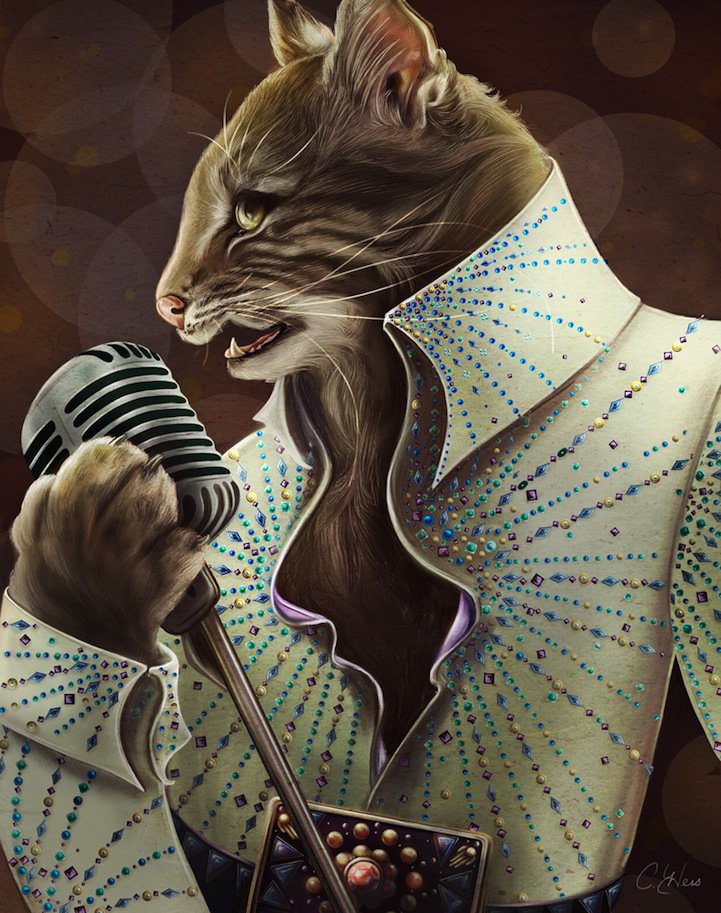
Christina Hess’s Animals From History: Costumed Pets as Playful Portraits
Illustrator Christina Hess reimagines historical icons as ornate animal portraits—Elvis Petme and friends—mixing puns, costume detail, and soft history lessons.