
A Charming Collection of Landscape Photography
Desert sunsets, silhouettes, aurora reflections, and classic water-and-mountain scenes—plus field habits for making landscapes feel like weather, not postcards.
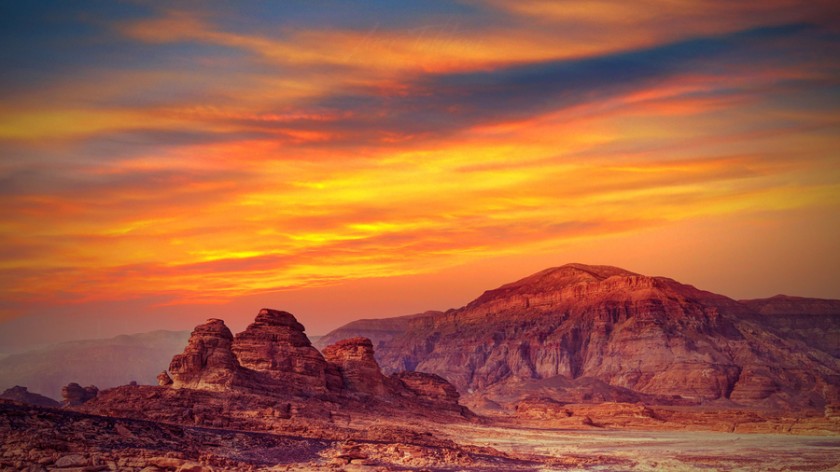
Landscape photography has shared the spotlight with portraiture for as long as cameras have been portable enough to leave the studio. The desire is durable: stand in front of water, rock, sky, or open ground and try to bring home a frame that still feels like weather when you see it later on a screen. This collection gathers that impulse—desert ranges under streaked sunset cloud, savanna silhouettes, aurora over still water, coastlines, mountains, and quiet horizons—without turning the pictures into a travel checklist or a list of must-see overlooks.
What follows is less a catalog of famous peaks than a way of looking. Each image asks a different craft question: how much sky, how much shadow, whether to chase color or accept graphic simplicity, and how to keep a wide scene from becoming empty postcard space. Charm, here, means attention that stays specific.
Light that rebuilds the land
Golden hour does not merely warm a scene; it reassigns hierarchy. In arid country, low sun pulls sedimentary layers into orange and umber while a cooler blue sits high in the frame. Horizontal cloud streaks become compositional beams. Craggy foreground pillars give the eye a place to enter before it travels across the basin to the main massif. Without that foreground, the mountain can float; with it, the desert becomes a stage with depth.
Photographers chase this light because mid-day sun flattens texture. Hard overhead glare fills every crack equally. Side light, by contrast, draws a pencil line of shadow under every ledge. If you only have harsh noon, look for open shade, dust in the air, or storm edges that act as natural softboxes. Weather is not an interruption to landscape work. Weather is often the subject.
Carry the habit of arriving before the color peaks. The minutes when the sky is still negotiating with the sun are frequently richer than the instant everyone else raises a phone. Bracket a few exposures when the ground goes dark while the sky still burns. A tripod is less about perfectionism than about giving yourself permission to wait.
Silhouette and the power of less detail
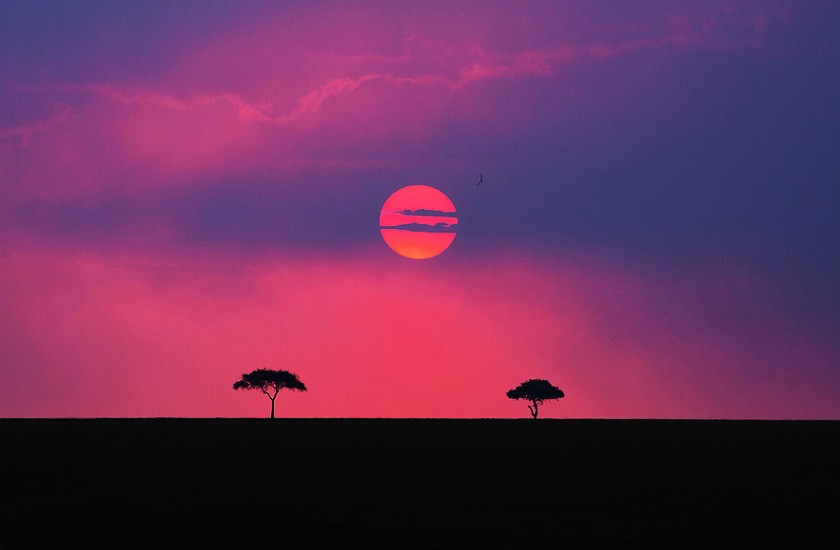
A flat black landline under a magenta-to-violet sky proves how little ground information you sometimes need. Two acacia-like trees and a sliced orange sun can carry an entire continent’s sense of space. Silhouette landscapes succeed when the outline is unmistakable and the sky is active—color gradient, cloud texture, or both. Expose for the brightest part of the sky if you want the land to fall to pure shape; raise shadows only if mid-tone ground details matter more than graphic punch.
This approach also travels well to coasts and lakes: a pier, a lone figure, a wind-bent tree. The rule is restraint. One or two dark shapes beat a cluttered horizon. Let negative space do work. Charming landscape photographs are often the ones that leave emptiness alone instead of filling every corner with “interest.”
When you edit silhouettes, resist the urge to recover every shadow. The power of the frame is the hard edge. Soften noise in the sky if you must, but keep the land simple. A silhouette that becomes a muddy gray compromise usually loses both drama and information.
Night landscapes and reflected sky
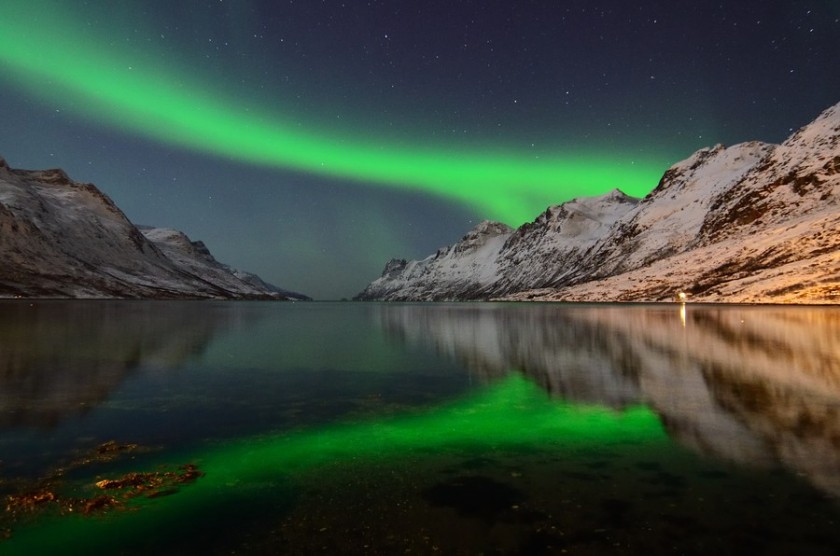
Aurora over a fjord-like corridor of snow peaks shows another kind of landscape patience. Long exposure turns moving light into ribbon. Still water doubles the green so the composition becomes nearly symmetrical—land, sky, and their mirror. A single warm point of artificial light on a shore gives scale without dominating. Night work rewards tripods, remote shutters, spare batteries kept warm, and the humility to wait when clouds close the show.
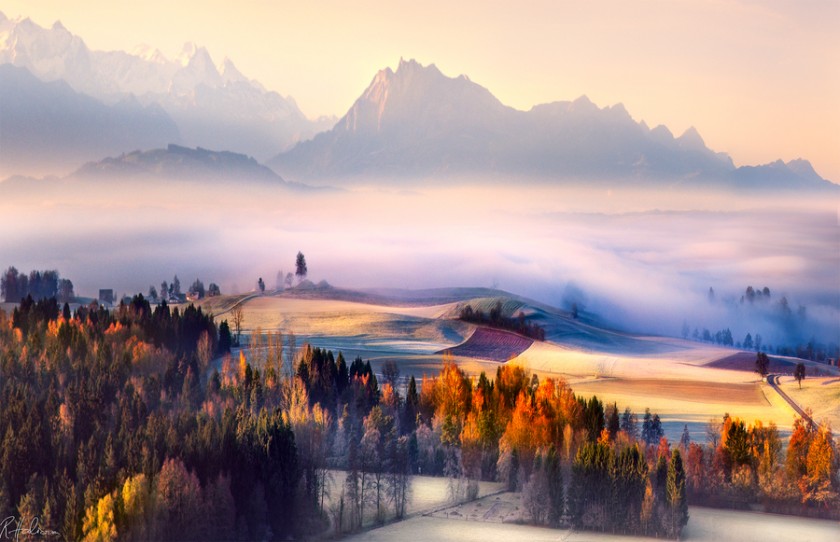
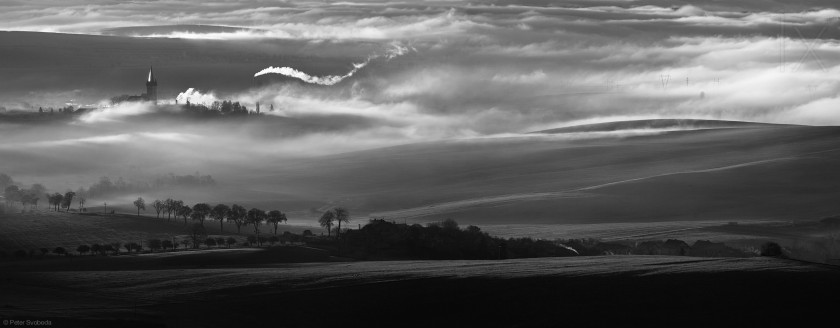
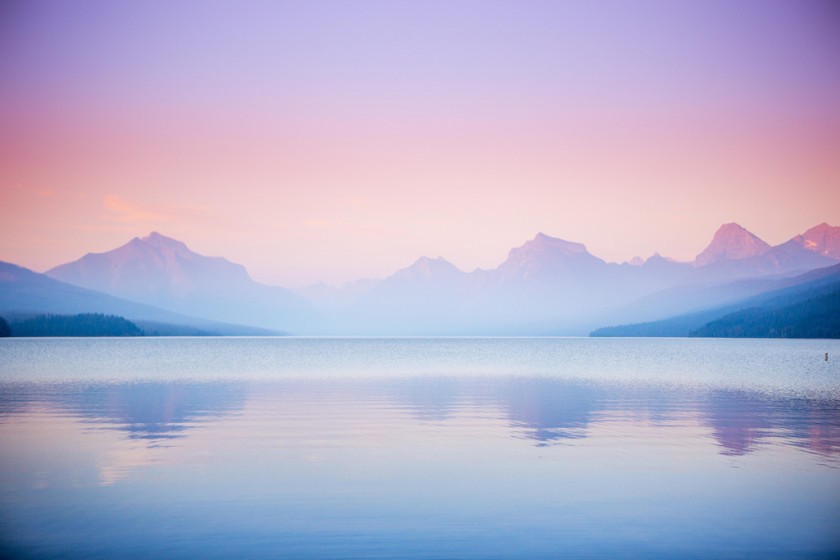
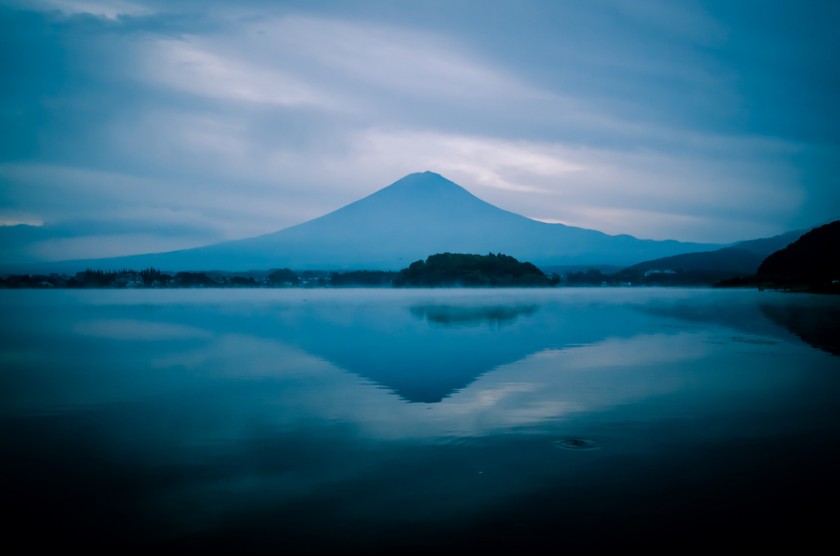
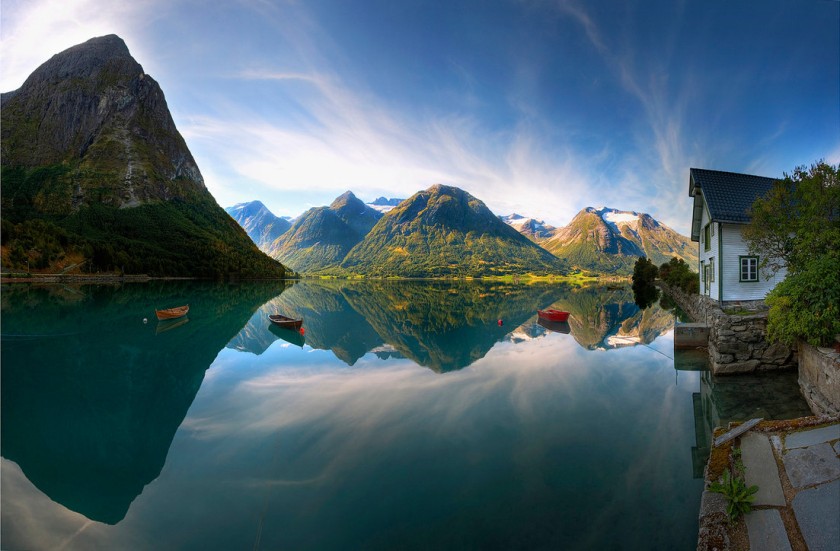
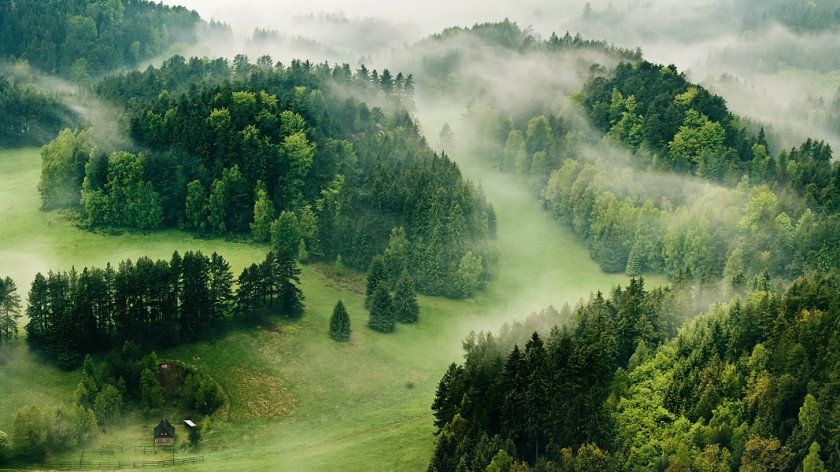
Even without aurora, twilight landscapes repay the same discipline. Blue hour after sunset can be quieter and more precise than the fireworks of golden hour. Reflections in lakes and tidal pools extend color into the lower frame so you are not stuck with a dark, empty foreground. If wind ruins the mirror, switch to texture: ripples become pattern rather than failure. Fog and mist behave similarly—they erase distance cues and force you to compose with tone instead of detail.
Safety and ethics matter more at night. Stay on durable surfaces. Know your exit in the dark. Do not trespass for a reflection. The photograph should not cost someone else’s sleep, a fragile shoreline, or your own orientation in cold country.
Waterfalls, coasts, mountains: classic subjects, fresh attention
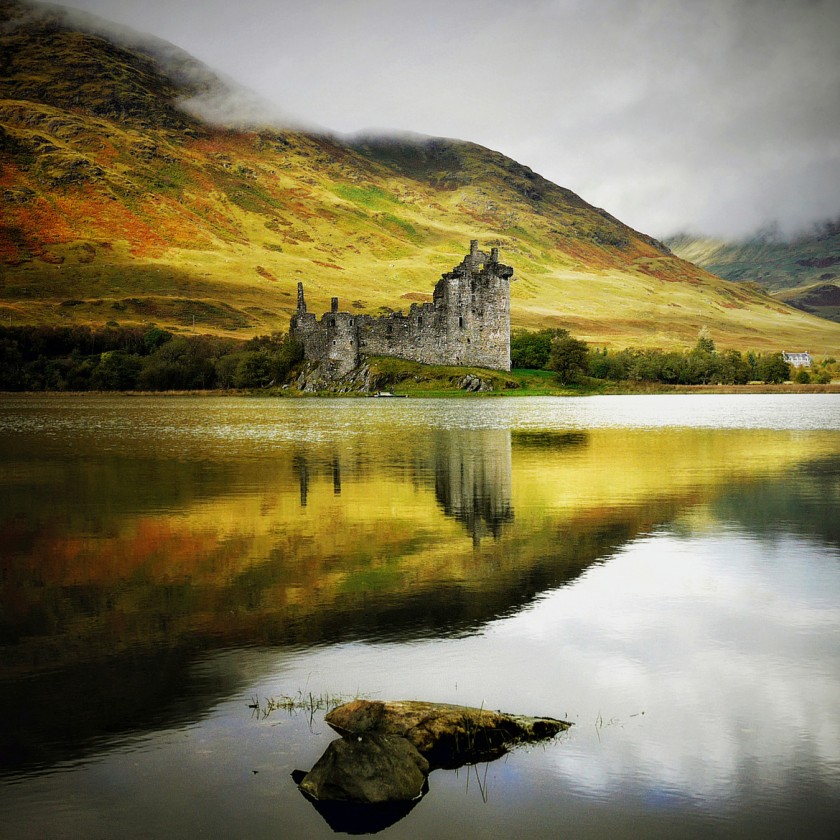
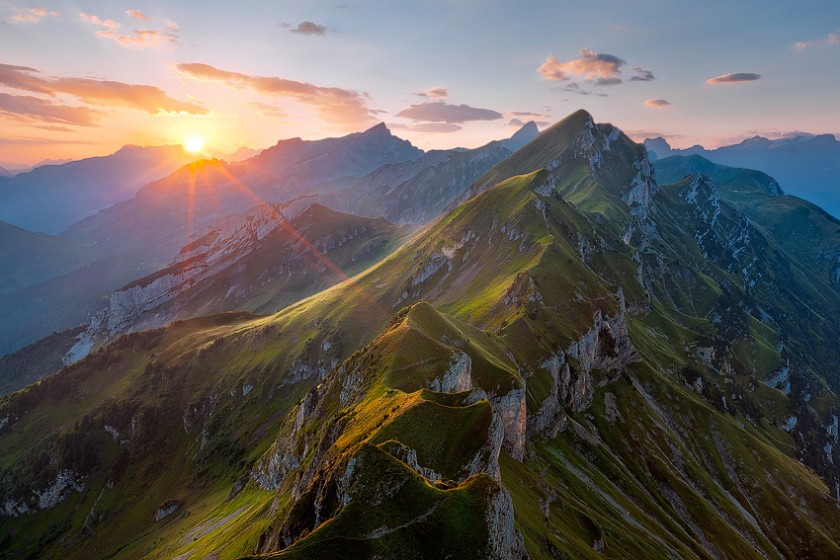
Certain motifs return because they reward craft: falling water that can be frozen sharp or softened into silk; coastlines where tide redraws the foreground every hour; mountains that change personality with cloud caps and alpenglow. Familiarity is not the enemy. Cliché arrives when the photographer stops looking—when the tripod goes down in the same worn pad of dirt and the frame copies last year’s postcard.
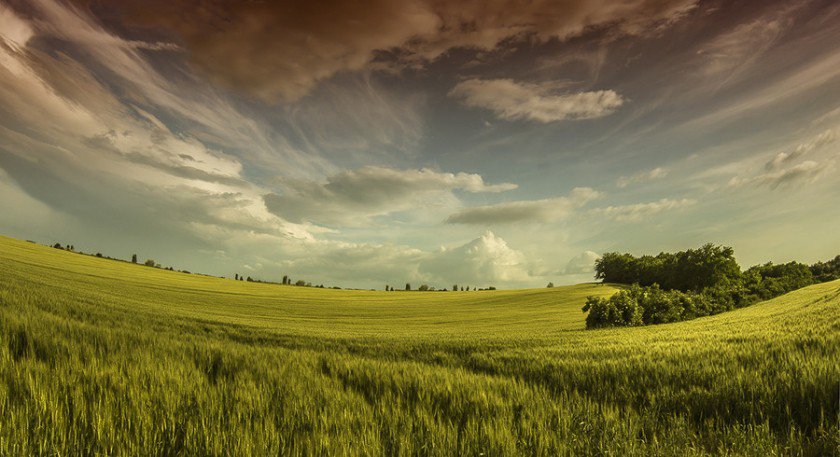
Fresh attention can be small. Move three steps for a better leading line of wet rock. Wait for a cloud shadow to slide across a ridge. Use a longer lens to isolate a single snow cornice instead of compressing an entire range into a wide-angle souvenir. Or go wider on purpose and let weather occupy two-thirds of the frame. Charming landscape photographs are rarely the ones that include the most geography. They are the ones that choose a relationship between land and light and then protect that relationship in the crop.
Vertical frames deserve equal respect. A tall composition can climb a cliff, drop through a waterfall, or stack sky over a narrow valley in ways a horizontal postcard cannot. If your camera defaults to landscape orientation, force a few portrait sessions on purpose. Aspect ratio is a creative decision, not a habit.
Field habits that improve almost any landscape
- Arrive early, stay late. The minutes around sunrise and sunset still earn their reputation.
- Build a foreground. Rock, grass, ice, or water texture keeps wide scenes from collapsing into a distant postcard.
- Watch the histogram. Protect highlights in bright skies; recover shadow later if needed.
- Carry a polarizer and a neutral-density option when water and glare are part of the plan.
- Respect closures and fragile ground. The photograph is not worth a damaged meadow or a dangerous cliff edge.
- Note the wind. It shapes clouds, ruins reflections, and decides whether a long exposure of water will look silky or restless.
Editing should support the hour you actually saw. Pushing saturation until desert rock looks radioactive rarely ages well. Gentle contrast, careful color temperature, and clean horizons usually outlast trendy presets. If you stitch panoramas, keep the join lines honest; if you blend exposures, keep the light direction consistent so the scene still feels like one moment.
Print a favorite small. Landscapes that only work as glowing phone wallpapers often fail on paper, where dynamic range is stricter. A print will teach you whether your blacks are empty or rich, whether your sky has texture, and whether the foreground was strong enough to survive without motion.
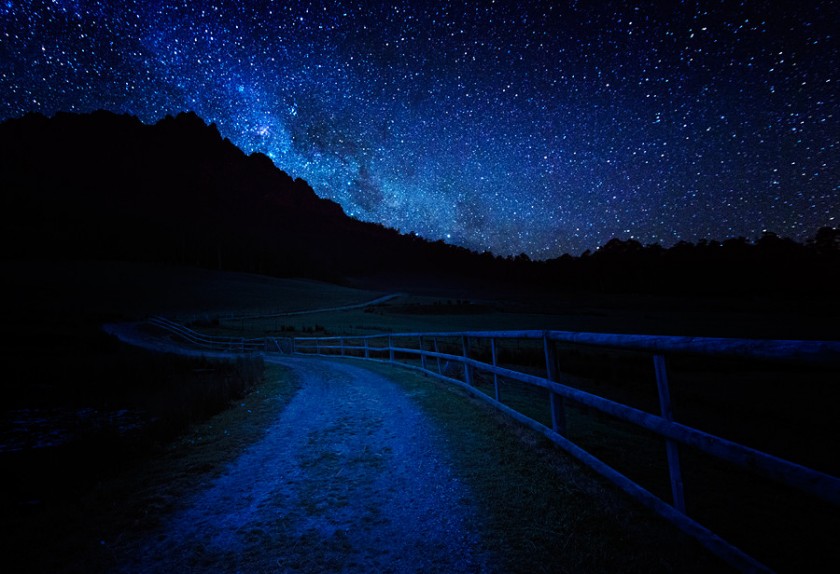
How to look at this set
Scroll once for pleasure. Scroll again with a pencil and note which frames hold you: color storm, silhouette economy, night reflection, vertical intimacy, horizontal breath. Those preferences are a map of your own eye. The next time you stand outside with a camera, chase one preference hard for an hour instead of sampling every possible subject. Landscape photography rewards that kind of narrow devotion—one kind of light, one kind of ground, one honest frame that still feels like weather when the trip is over.

Comments
Continue reading
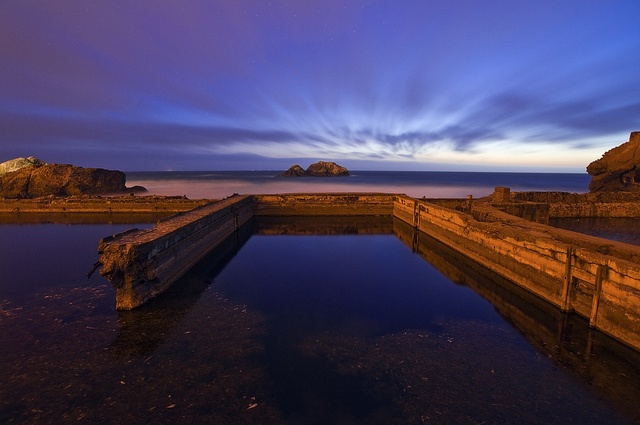
David Shield Landscape Photos: Blue Hour, Reflections, and Honest Color
Eighteen landscape photographs by David Shield—coastal twilight, alpine mirrors, and light-handed color that preserves place over spectacle.
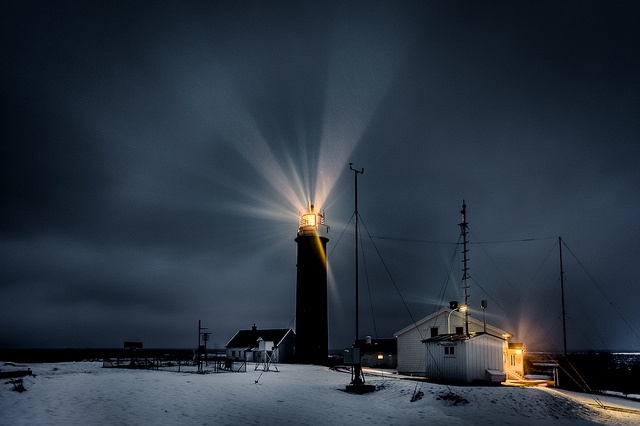
10 Norwegian Landscape Photographs by Tore Heggelund
Lighthouses, skerries, winter mountains, and storm light—ten atmospheric landscape photographs by Norway-based photographer Tore Heggelund.
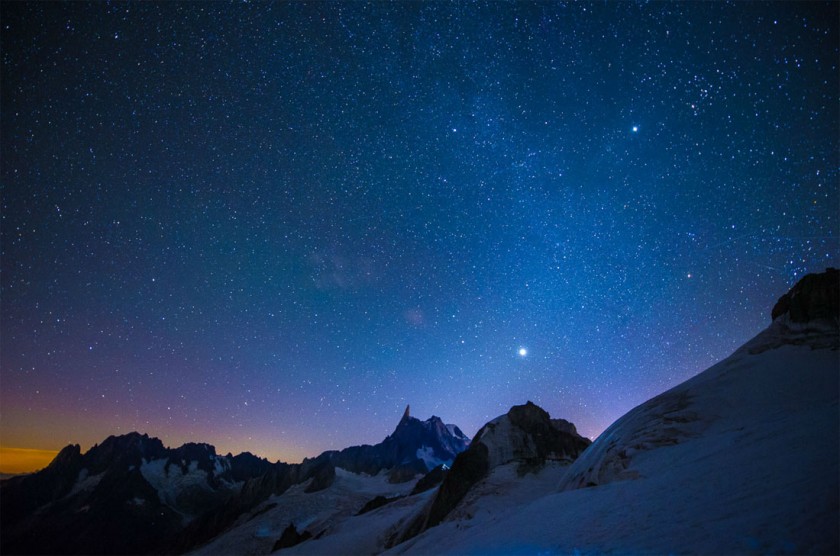
15 Winter Landscape Photos: Alpine Light, Snow, and Mountain Craft
Fifteen Alpine winter landscape frames—plus practical notes on cold light, snow exposure, storm weather, and field craft for mountain photography.