
Brilliant Examples of Recycled Art: Tape, Disks, Junk Mosaics, and Paper Collage
A gallery of recycled artworks—photo mosaics, cassette portraits, floppy-disk canvases, found-object icons, and paper collages—showing how scrap materials become likeness and form.
Recycled art begins with a stubborn question: what if the scraps we throw away still hold a picture? Magazines, cassette tape, floppy disks, plastic toys, eggshells, and cable ends were never meant to be paint, yet artists keep proving they can carry likeness, mood, and argument. The works gathered here treat waste as a palette—sorted by color, texture, and memory—and rebuild famous faces, quiet portraits, and small sculptures from materials that already lived one life.
What makes the best recycled pieces convincing is not virtue signaling. It is craft. From across a room you should recognize a person or form; up close you should discover buttons for teeth, labels for skin, or magnetic ribbon for hair. That double reading—image first, inventory second—is the pleasure of this medium.
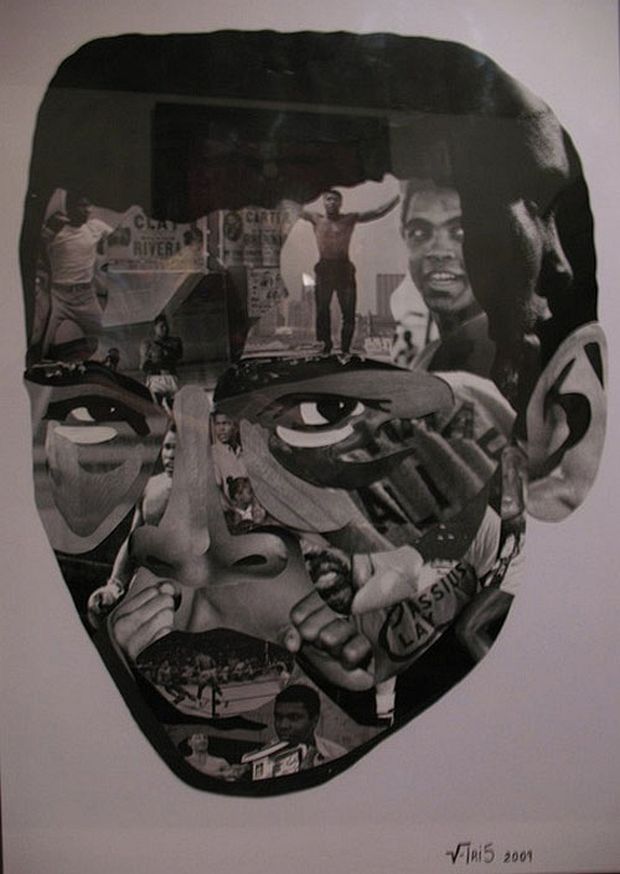
A photo-mosaic of Muhammad Ali turns archival fight stills, posters, and candid frames into the shading of one monumental face. Dark clippings thicken the hair and jaw; lighter prints open the cheeks and eyes. Text fragments such as fight billings become accidental texture rather than captions. The method recycles paper history into a new likeness: Ali’s stare holds, while the “pixels” remain tiny records of his own career.
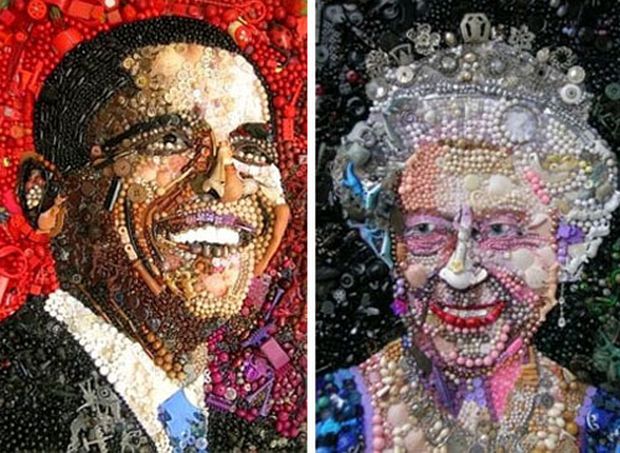
Side-by-side found-object portraits of Barack Obama and Queen Elizabeth II show how buttons, beads, toys, and costume jewelry can behave like paint chips. Flesh tones arrive as beige plastics; crowns and hair sparkle with silver and pearl scrap. A red field behind Obama and a nearly black field behind the Queen keep the two compositions distinct while sharing one scavenger’s logic: sort the junk drawer by hue, then place each piece as if it were a brushstroke.
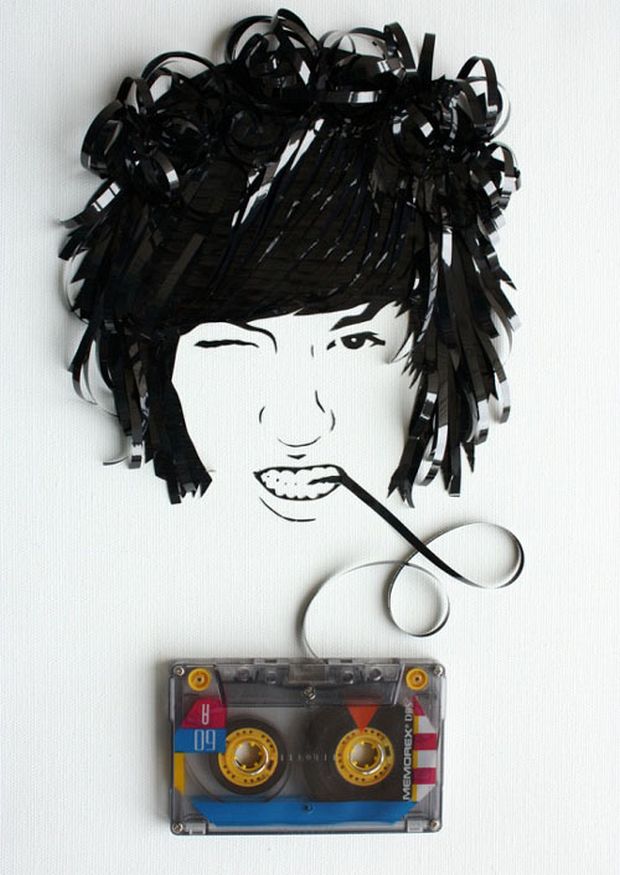
Cassette tape is a favorite recycled medium because it arrives with a ready-made origin story. Here a Memorex shell sits at the bottom while its black ribbon climbs into a drawn face—winking, teeth catching the tape as if the portrait were chewing sound. The hair is pure sculpture: coiled, layered, glossy. Obsolete media becomes both subject and tool, a joke about memory that still reads as careful draftsmanship.
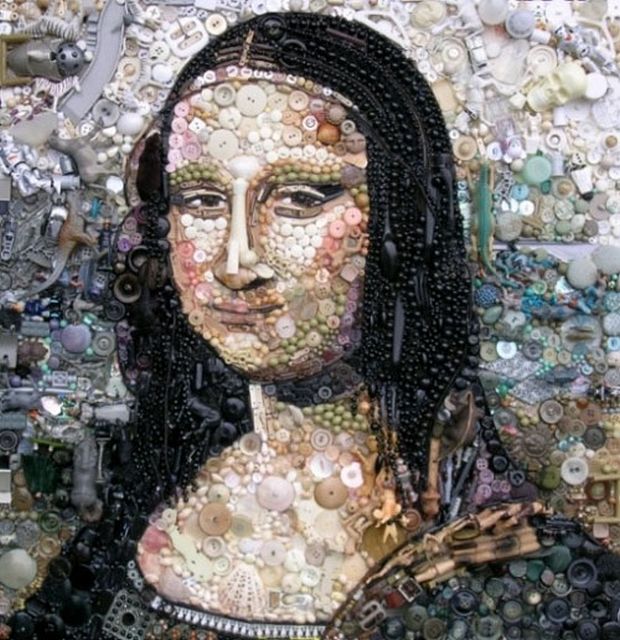
A Mona Lisa assembled from buttons, beads, toy animals, gears, and plastic odds rewards distance and nearness differently. From afar the famous smile settles into place; at arm’s length a dinosaur or skull pops out of the landscape behind her. Recycled mosaic thrives on that hide-and-seek. Color matching does the heavy lifting—cream buttons for skin, black plastics for hair—while eccentric objects keep the homage from feeling merely dutiful.
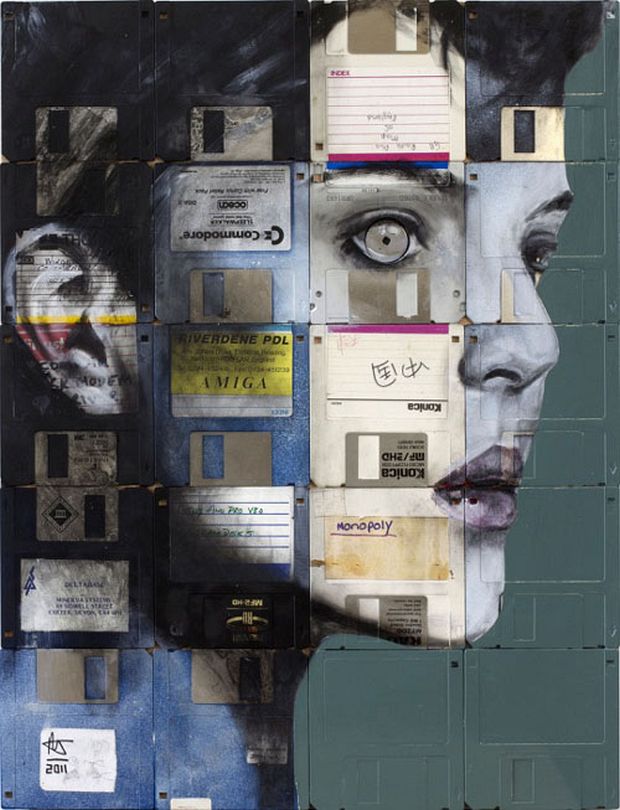
Floppy disks make a stubborn canvas: square, labeled, full of metal shutters and brand marks. In this close-up, a woman’s eye lands on a disk hub so the mechanical center becomes pupil. Amiga, Commodore, and handwritten titles peek through paint, reminding you that the substrate once carried games and files. Recycled tech art often works this way—letting the object’s past leak into the portrait instead of sanding it away.
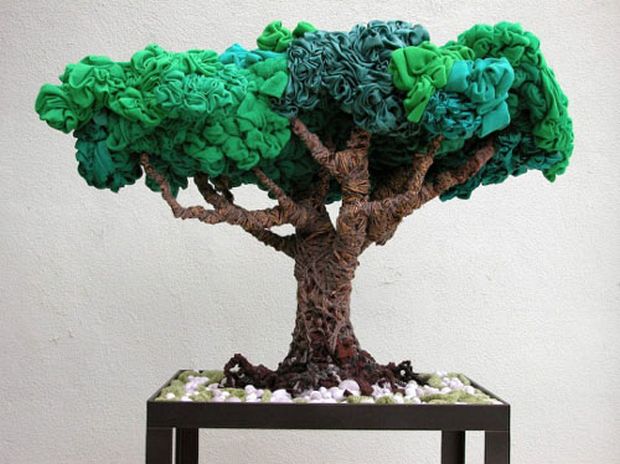
Not every recycled work is a celebrity face. A bonsai-like tree with crumpled fabric foliage and a braided, paper-or-cloth trunk shows how scrap textiles can mimic bark and canopy. White pebbles and mossy tufts at the base complete a tabletop landscape. Soft materials demand different skills than plastic mosaics: volume, density, and color gradation replace hard edges. The result feels handmade and quiet rather than pop-icon loud.
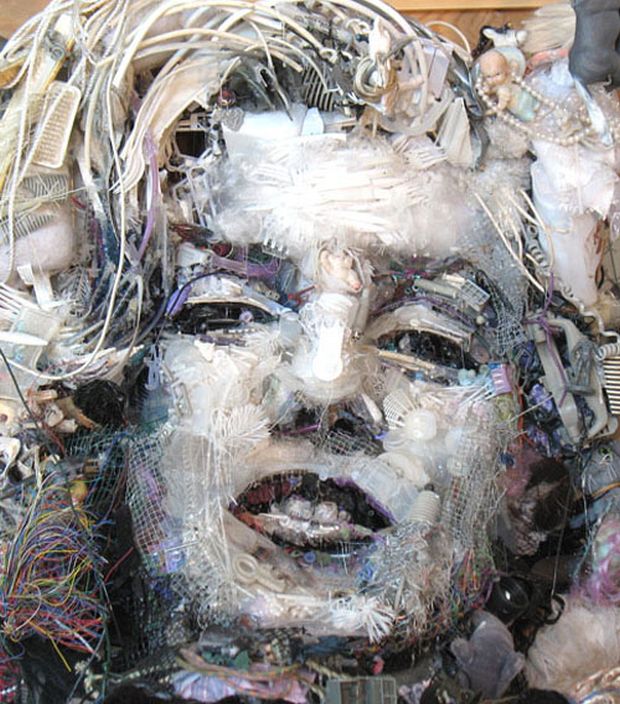
Junk assemblage portraits push recycling into sculpture. Wires become hair; plastic forks and mesh suggest skin grain; dark components sink into eye sockets; a spoon handle can stand in for a nose bridge. The face only appears after dozens of decisions about value and shadow. These pieces argue that consumer debris already contains human features—we just have to sort hard enough to find them.
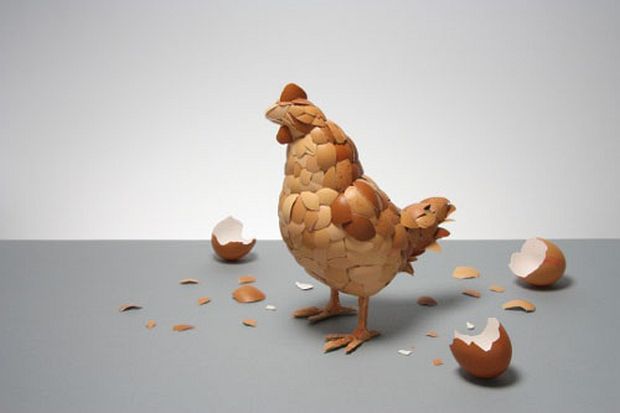
An eggshell chicken is almost too literal to work, yet the overlapping brown shards read as feathers with surprising conviction. Broken halves scattered at the feet underline the material source without needing a caption. Food waste rarely looks noble; here it becomes a tidy studio animal. The piece is a reminder that recycled art can be witty without collapsing into novelty if the craftsmanship holds.
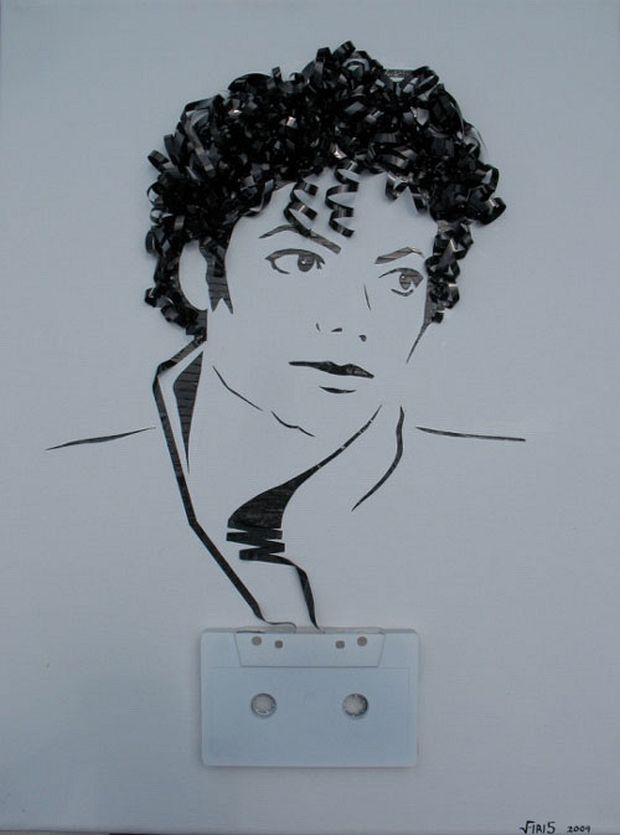
Another cassette construction builds Michael Jackson’s curls from piled ribbon while thin strips sketch eyes, nose, and mouth. The white shell at the bottom anchors the metaphor: music storage unspooled into the singer’s silhouette. Compared with looser tape portraits, this one emphasizes volume in the hair and restraint in the facial lines. Recycled media art often circles musicians and athletes because the material and the fame already share a soundtrack in public memory.
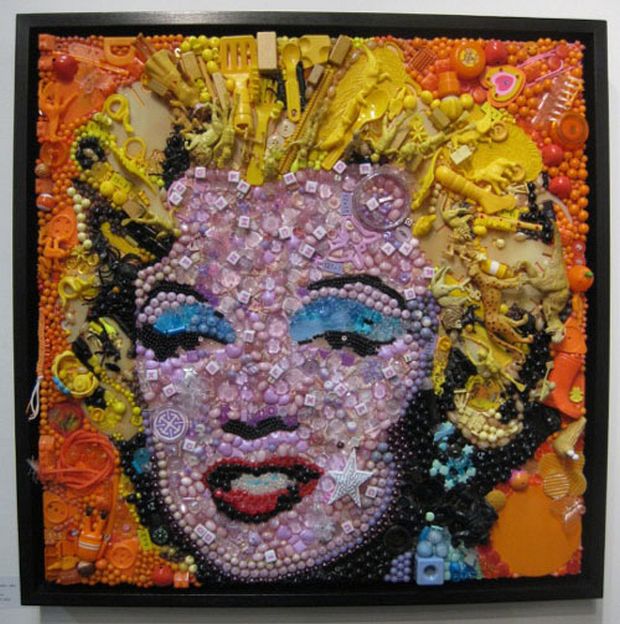
Marilyn Monroe rendered in yellow kitchen utensils, toy soldiers, beads, and turquoise eyeshadow scraps is pure color sorting as glamour. Red plastics form the mouth; gold and yellow scrap build the blonde halo; orange backgrounds flare like studio lights. Pop icons suit found-object mosaics because their silhouettes are already iconic enough to survive being rebuilt from trash. Recognition arrives first; the inventory of junk arrives as a second punchline.
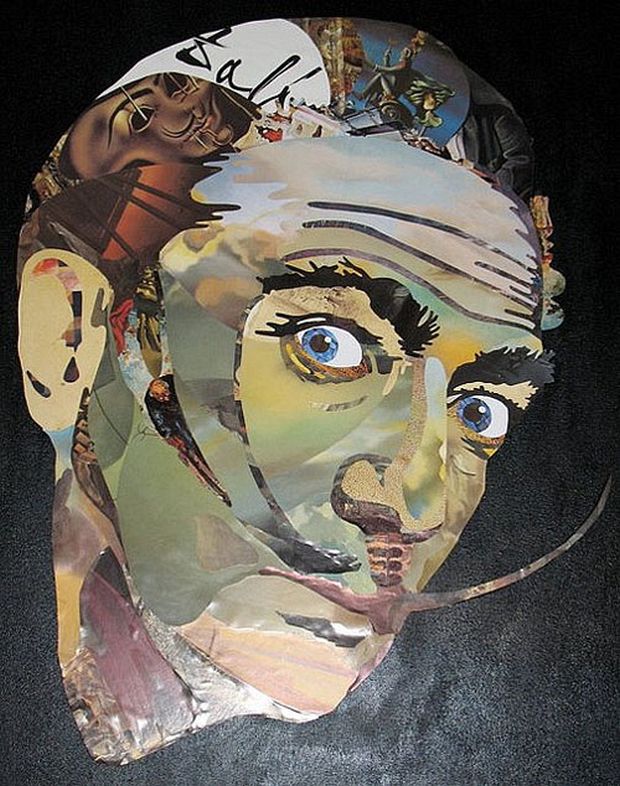
A Salvador Dalí collage recycles printed fragments—landscapes, figures, typography—into the surrealist’s wide eyes and upturned mustache. A scrap bearing his name crowns the forehead like a badge. Using pieces that echo Dalí’s own visual world makes the homage feel circular: the artist is rebuilt from the residue of image culture he helped invent. Paper collage remains one of the most accessible recycled practices, needing scissors, glue, and patience more than rare materials.
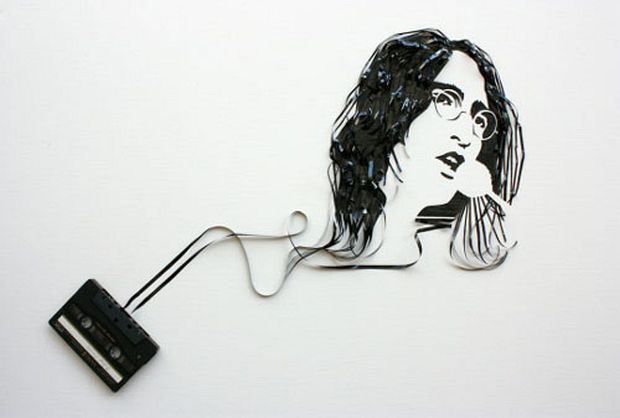
John Lennon’s round glasses and microphone resolve from the same black ribbon language. Negative space does as much work as the tape: the pale ground becomes skin while thin lines catch the frames and facial shadows. Trails leading from the cassette keep the source visible, so the portrait never pretends to be ink. Recycled art that shows its origin object tends to stay honest—and more memorable.
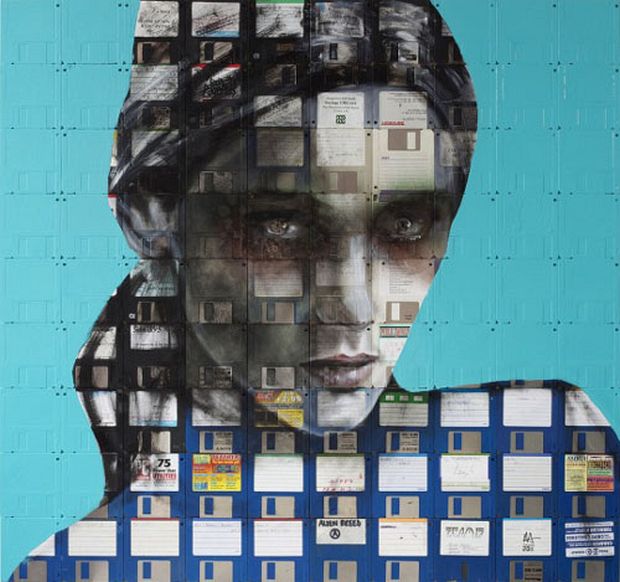
A larger floppy-disk grid carries a full bust portrait against a field of teal shells. Labels for utilities and games survive under translucent paint, turning the background into a soft archive. Where the close-up disk piece dramatizes a single mechanical eye, this composition treats the whole grid as atmosphere. Recycled substrates change how we read a face: technology becomes landscape, and the person seems to emerge from obsolete storage.
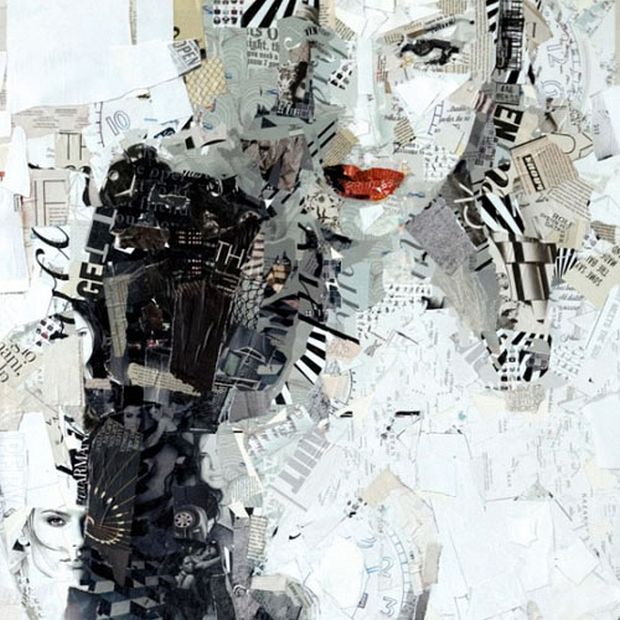
Torn magazine and newsprint scraps build a quieter woman’s face, mostly gray and white until a glossy red mouth interrupts. Typography and miniature photo fragments hide in the skin tones. Collage like this teaches value control: dark scraps deepen an eye socket, pale columns of print open a cheek. Recycled paper is abundant, free, and endlessly varied—ideal for artists who want texture without buying new pigment.
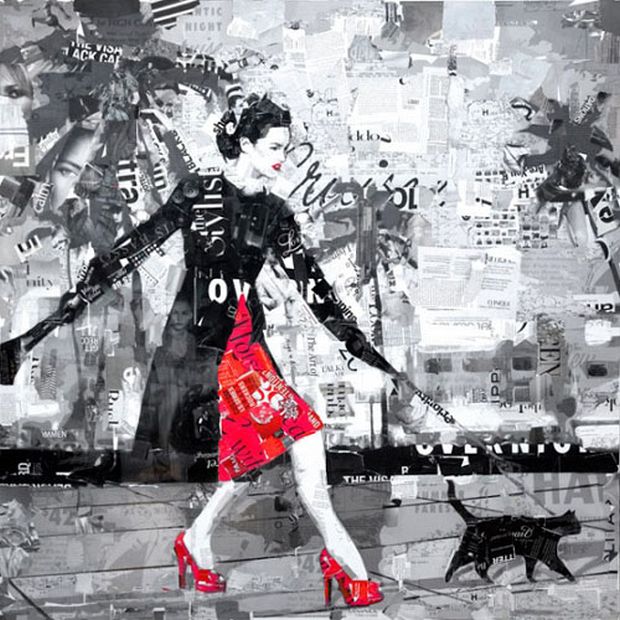
A fashion-forward figure walking a leashed black cat pushes collage into narrative. Red clippings pick out skirt, shoes, and lips against a black-and-white street of headlines and partial faces. Horizontal strips underfoot suggest pavement. The piece shows that recycled print can do more than portraiture: it can stage a tiny scene, complete with attitude and motion, while every surface still admits it was once advertising or news.
Across these works, the materials differ—tape, disks, plastics, shells, fabric, paper—but the shared discipline is the same. Sort carefully, commit to likeness or form, and leave enough of the scrap’s identity visible that the second life remains legible. If you want to try the approach yourself, start with one limited palette: a bag of similar buttons, a single cassette, or a stack of gray newsprint. Constraint forces the decisions that make recycled art look intentional rather than merely thrifty.

Comments
Continue reading
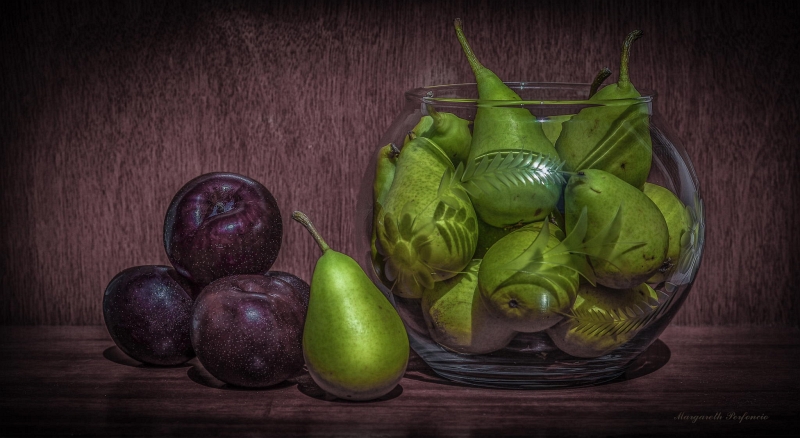
Still-Life Photography by Margareth Perfoncio
São Paulo photographer Margareth Perfoncio’s still lifes of food and flowers—Old Master light, dark wood, and tables that feel inevitable.

Meaningful Love Quotes for Inspiration (and Ink)
Meaningful love quotes that still feel true — short lines for tattoos, gifts, and everyday reminders, with placement and wording tips.
Christina Hess’s Animals From History: Costumed Pets as Playful Portraits
Illustrator Christina Hess reimagines historical icons as ornate animal portraits—Elvis Petme and friends—mixing puns, costume detail, and soft history lessons.