
Mike Hollingshead’s Storm Photography: Supercells Over Tornado Alley
How Nebraska storm chaser Mike Hollingshead turns supercells into landscape portraits—field craft, structure, and twilight light on the plains.
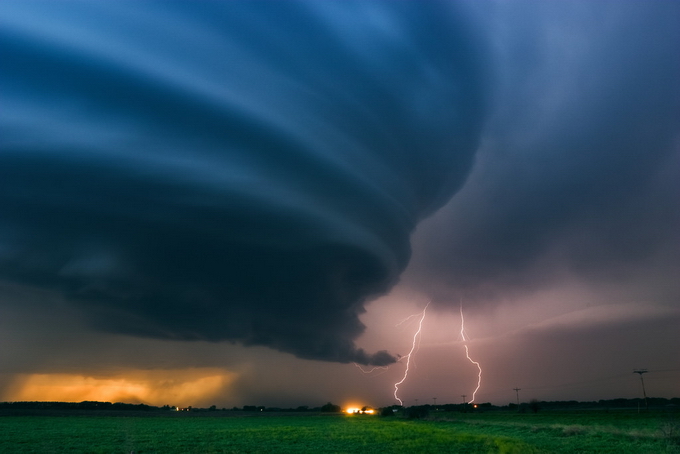
Mike Hollingshead grew up watching the sky over Nebraska do violent, beautiful things. As a child he stared at storms and tornadoes the way other kids stare at fireworks. In 1999 he began photographing them. By 2002 he had bought a still camera specifically to chase better frames. A few years later he left a corn-mill job and committed to the road—an American landscape photographer and storm chaser whose specialty became the rotating architecture of supercells across Tornado Alley.
His website, Extreme Instability, became the archive for that obsession: stills, video, and later the uncanny animated loops he built from single photographs. The cover image here—a Nebraska twilight supercell—is the kind of frame that made his name: a storm standing like a sculpture over flat land, lit from the side, dangerous and strangely calm at the same time.
From fascination to fieldwork
Storm chasing is often sold as adrenaline. Hollingshead’s better images suggest something quieter and more exacting: pattern recognition under pressure. Supercells—thunderstorms organized around a mesocyclone, a deep rotating updraft—are among the most photogenic and hazardous weather systems on the Great Plains. They can produce large hail, damaging winds, and tornadoes. They also produce cloud structure that looks almost designed: stacked shelves, crisp inflow bands, anvil tops catching sunset, rain curtains that act like curtains in a theater.
Based in Blair, Nebraska, Hollingshead has long worked the Midwest circuit—Iowa, South Dakota, Nebraska, and neighboring storm country—often logging enormous seasonal mileage. Profiles from the early 2010s described tens of thousands of miles in a year, night driving to save lodging costs, and the blunt truth that finding a supercell is easier than finding a great one. The photogenic storm is a moving target. Position wrong and you get whiteout rain. Position late and the light dies. Position too close and craft becomes survival.
That field reality shapes the photographs. Horizon lines stay low so the sky can dominate. Foregrounds are often empty pasture, gravel road, or a single fence line—enough scale reference to prove the cloud is enormous, not enough clutter to compete. Color comes from atmosphere: greenish cores, peach twilight, the steel blue of rain-cooled air. Hollingshead’s best frames feel less like “gotcha” disaster pictures and more like landscape portraits in which the subject happens to be unstable air.
Reading a supercell like a structure
People who do not chase storms still recognize Hollingshead’s work because the forms are so graphic. A mature supercell can look like an alien city floating over farmland. Meteorologists read those shapes for clues about intensity and evolution; photographers read them for silhouette, rim light, and separation between rain-wrapped chaos and clean inflow.
Hollingshead’s archive emphasizes that structural beauty. Lightning becomes a brief calligraphy across dark bases. Tornadoes, when they appear, are treated as part of a larger system rather than isolated monsters. Even without motion, you can sense rotation—the way cloud filaments seem to spiral toward a center. That familiarity with storm anatomy later allowed him to create GIF animations and cinemagraph-like loops from single stills, manipulating cloud texture in ways that convinced meteorologists because the motion followed real storm logic.
The craft lesson for any landscape photographer is transferable: learn the subject’s behavior. Sunset over mountains rewards waiting for side light. Supercells reward understanding inflow, outflow, hail cores, and the dangerous temptation to “get closer.” Hollingshead’s images succeed partly because they look made from knowledge, not only nerve.
Ethics, risk, and the myth of the chase
Storm photography sits on a moral edge. The same systems that produce gallery-worthy light also destroy homes. Responsible chasing means prioritizing safety, heeding warnings, and resisting the urge to treat other people’s emergencies as content. Hollingshead’s public reputation has long rested on striking weather imagery used in books, magazines, and media—his work has appeared on a National Geographic cover and in film and television contexts—while the day-to-day work remains driving, waiting, and deciding when not to shoot.
There is also an authorship problem familiar to many photographers of spectacular weather: images circulate without credit. Hollingshead has dealt with unauthorized email forwards and mislabeling of his storm photographs, and has used watermarking to protect attribution. In a culture that loves viral skies, credit is part of the craft conversation. Looking at a Nebraska supercell and knowing who stood on that road matters.
For viewers, the ethical move is simpler: enjoy the beauty without confusing it for permission to recreate the chase casually. These photographs are the product of experience, local knowledge, and repeated exposure to conditions that can turn lethal in minutes. Admiration can stop at the print.
What the Nebraska twilight frame teaches
The surviving image on this page is a useful case study. Twilight is the storm photographer’s favorite accomplice. Low sun rakes texture across cloud bases, separates the cell from the background sky, and turns ordinary plains into a stage with one actor. A supercell at midday can look gray and closed; the same structure near sunset can look monumental.
Compositionally, notice the balance between storm mass and negative space. Too much empty sky and the cloud floats without weight. Too little and the frame feels cramped, as if the photographer flinched. Hollingshead often leaves room for the storm to breathe—and for the viewer to feel small. That smallness is not a gimmick. It is accurate meteorology translated into visual proportion.
If you shoot landscape weather of any kind—not only tornadoes—borrow three habits from this tradition:
- Arrive with a forecast mindset, then revise on what you see.
- Use foreground sparingly as scale, not as decoration.
- Prefer side light and clear air on one flank of the storm over shooting into opaque rain.
Why these snapshots still stop people
Digital cameras and dashcams have made severe weather imagery common. Hollingshead’s strongest photographs still cut through because they combine rarity of viewpoint with clarity of form. They are not blurry phone grabs from a highway shoulder. They are composed landscapes in which instability becomes subject, light becomes character, and the Great Plains become a studio with no roof.
In 2008 he co-authored Adventures in Tornado Alley: The Storm Chasers with Eric Nguyen, extending the still image into narrative. The book and the ongoing Extreme Instability archive belong to the same project: documenting a seasonal American theater that most people experience only as a warning on a phone screen.
Stand again with that Nebraska twilight supercell. Ask what the photograph withholds—sound, wind, the decision to leave—and what it gives: a readable sky, a precise moment, proof that weather can be both hazard and architecture. Hollingshead’s work keeps returning to that double truth, frame after frame, mile after mile.

Comments
Continue reading
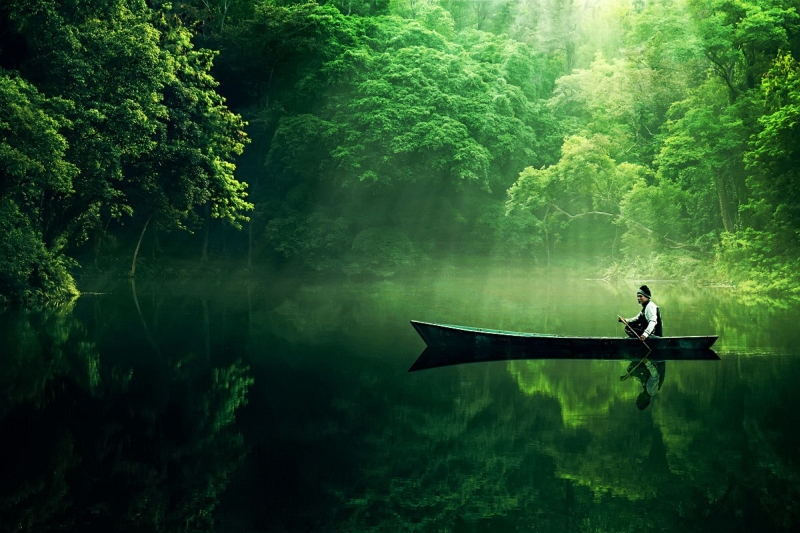
Dramatic Photo Art by Sukron Ma’mun (Ipoenk Graphic)
Cirebon, Indonesia photographer Sukron Ma’mun uses theatrical natural light to frame village life, play, and place in lyrical photo art.

Bird’s-Eye Views: Florian Beaudenon’s Instant Life
Paris photographer Florian Beaudenon’s Instant Life series captures people in their rooms from above—intimate, collaborative overhead portraits of everyday joy.
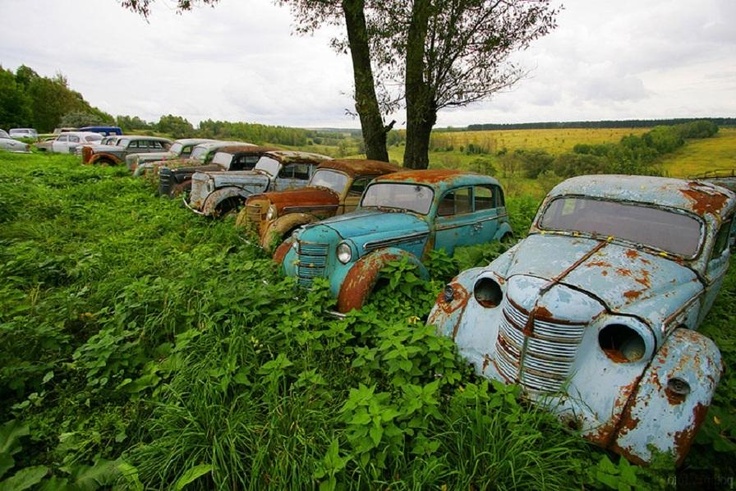
Abandoned Cars Reclaimed by Nature: Rust, Growth, and Quiet Ruin
When neglected vehicles are left outdoors long enough, rust, moss, and trees rewrite them into strange still lifes—sad, photogenic, and slowly returning to the ground.