
Kyle Thompson’s Surreal Self-Portraits in Empty Places
Chicago-area photographer Kyle Thompson stages brief, uncanny stories in abandoned houses and forests—self-portraits where solitude becomes both method and subject.
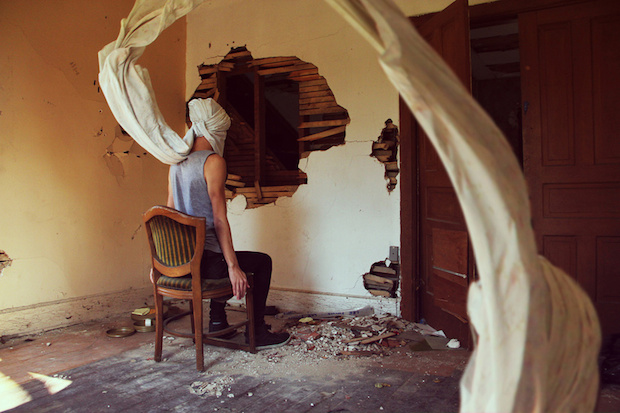
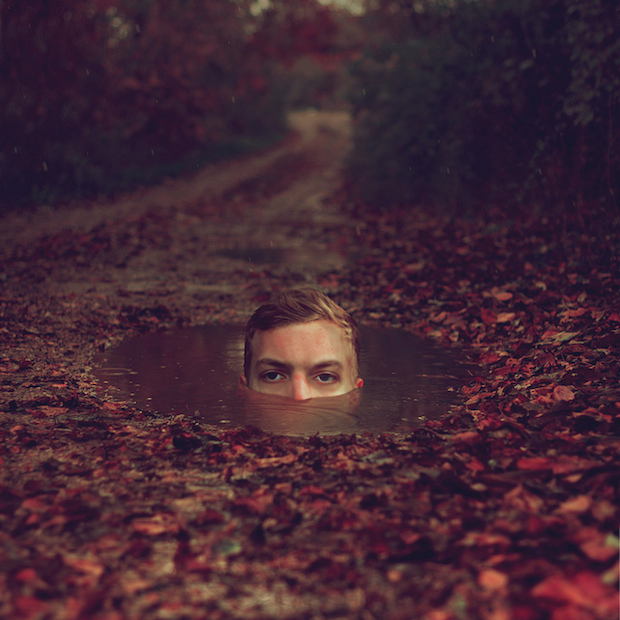
Kyle Thompson builds photographs the way some people write unfinished short stories: a setting appears, a body enters, a strange event almost happens, and then the shutter ends the plot before explanation can spoil it. Based in the Chicago area when these images first circulated widely, he came to serious picture-making through abandoned houses near home and then through empty forests that felt more honest than tidy suburbs. The result is a body of surreal self-portraits in which, as one early description put it, a nonexistent storyline lives only for a split moment.
From broken windows to a method
Thompson’s origin story is practically a field guide. Born in 1992, he began photographing in earnest around nineteen, self-taught, using nearby vacant homes as both subject and studio. Drive the countryside, watch for overgrown lawns and cracked glass, enter carefully, and listen to what leftover rooms still insist. Abandoned houses, he has said, freeze a moment in time the way photographs do. They also let a young photographer reconstruct a life without meeting its former inhabitants—an empathy exercise conducted through dust and architecture.
Self-portraiture arrived as logistics before it became signature. Alone in a house, who else is available? The self-timer and remote turn solitude into crew. That necessity shaped aesthetics: figures often face away or hide features, not only from shyness but because anonymity widens the viewer’s entry point. You can occupy the body in the frame more easily when the face is not a celebrity of one person’s biography. Anxiety and social withdrawal, often mentioned in early profiles of his practice, sit underneath the pictures without needing diary captions. The work translates pressure into place.

Locations that behave like characters
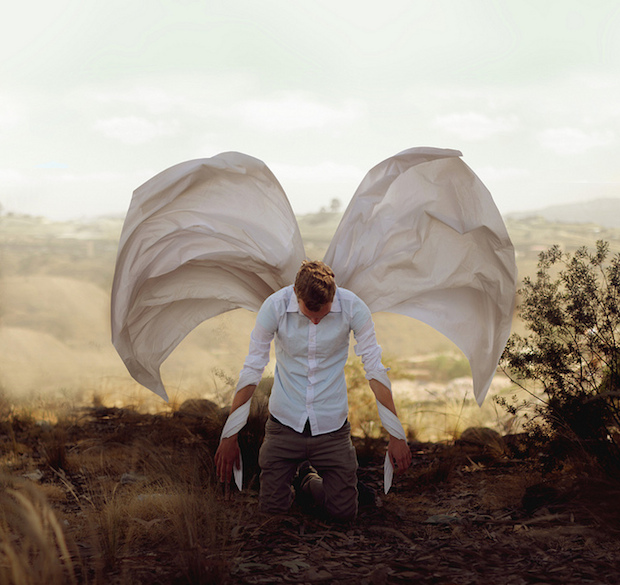
Empty forests, rivers, flooded rooms, peeling interiors—Thompson treats place as collaborator rather than backdrop. Suburbs, in his telling, feel constructed and false; the unkempt elsewhere feels truer. That preference produces a visual grammar of liminal zones: spaces between habitation and ruin, between land and water, between safety and the slightly dangerous. The surreal does not require alien planets. It requires ordinary sites asked to host impossible stillness.
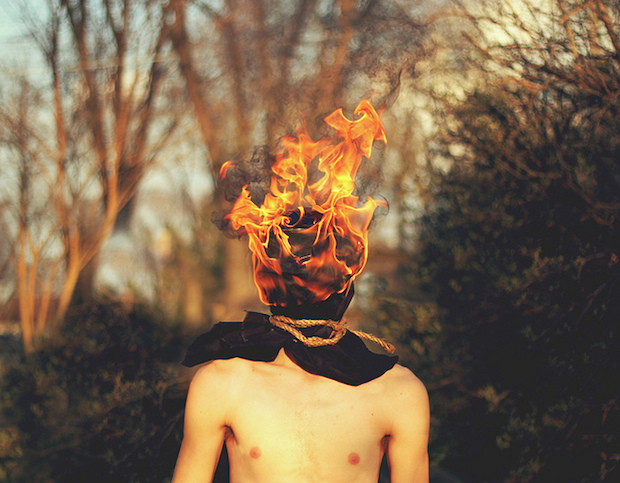
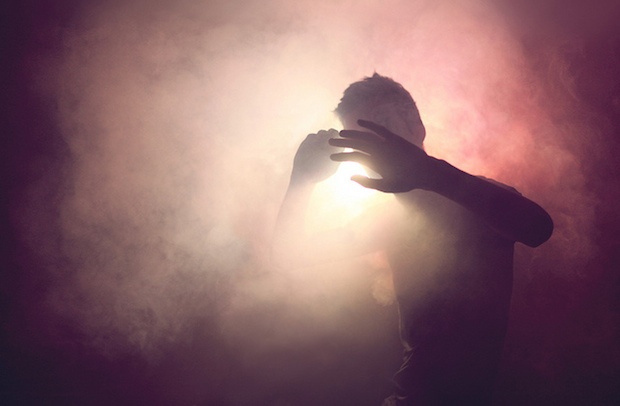
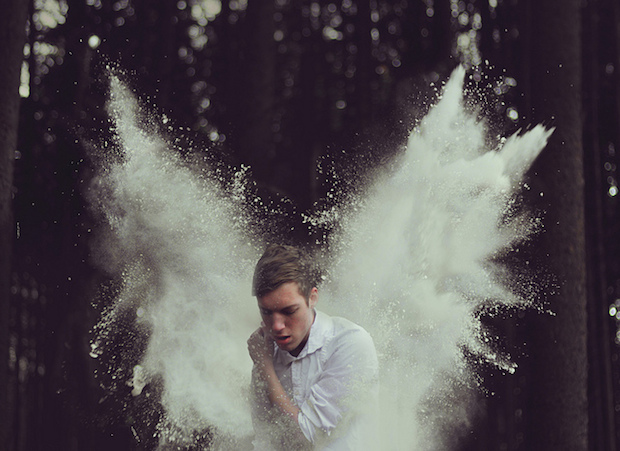
Texture does heavy narrative work. Cracked plaster, wet leaves, cold water, smoke, flour dust, the grain of old wood—these materials carry mood before any prop stunt arrives. Muted palettes of moss, fog, and dust keep the dream from tipping into carnival. When something dramatic does occur—fire, immersion, enclosure—the surrounding quiet makes the event feel earned rather than decorative. You believe the danger because the quiet was already credible.
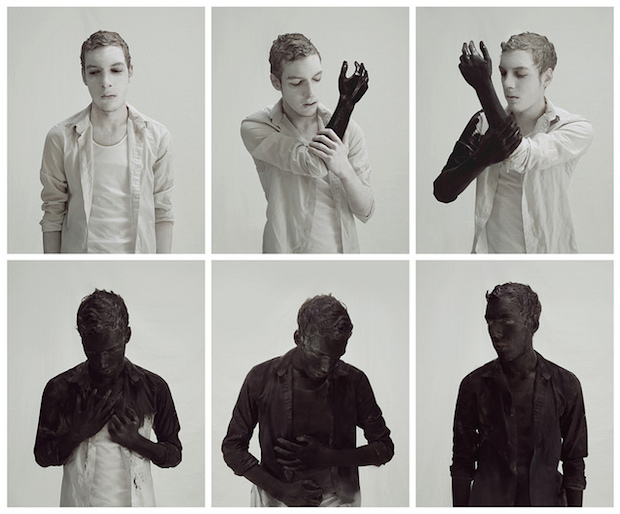
Surreal conceptual photography, defined by restraint
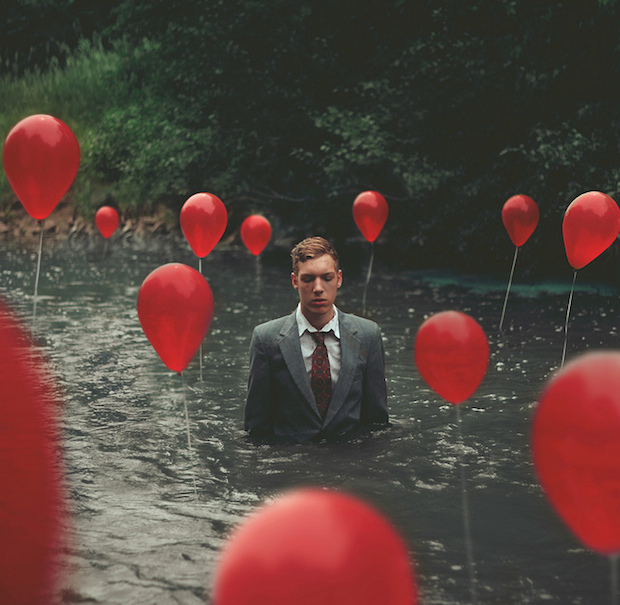
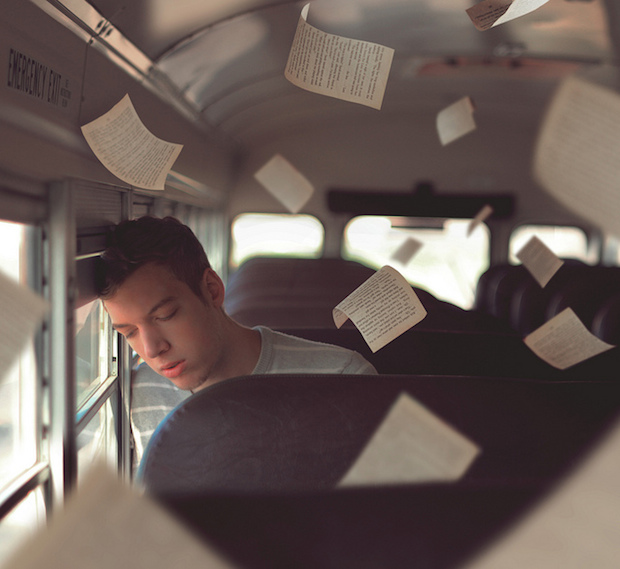
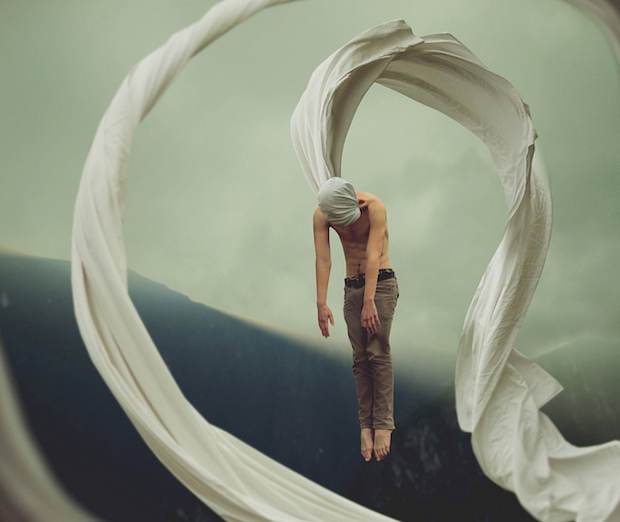
Thompson has described his style as surreal conceptual photography: inventing a world in order to depict a concept. The important word is depict. These are not puzzles with single answers. Isolation, anxiety, transformation, the thinness of suburban normality—concepts arrive as sensations. A body half-submerged, a room that feels underwater even when dry, a figure sealed into a gesture of waiting: the concept is the weather of the picture.
Craft supports that weather. Wide views can make a person small enough to feel swallowed. Soft overcast light removes glamorous sparkle and leaves honesty. Occasional long exposure adds a blur that reads as memory rather than mistake. Practical effects—smoke, dust, water—keep the uncanny tethered to physics. Even when later viewers assume heavy compositing, much of the charge comes from being willing to put a body into an uncomfortable real situation and time the shutter alone. That bodily risk is part of the contract with the viewer. The dream has a pulse because someone was cold, damp, or patient enough to wait for the timer.
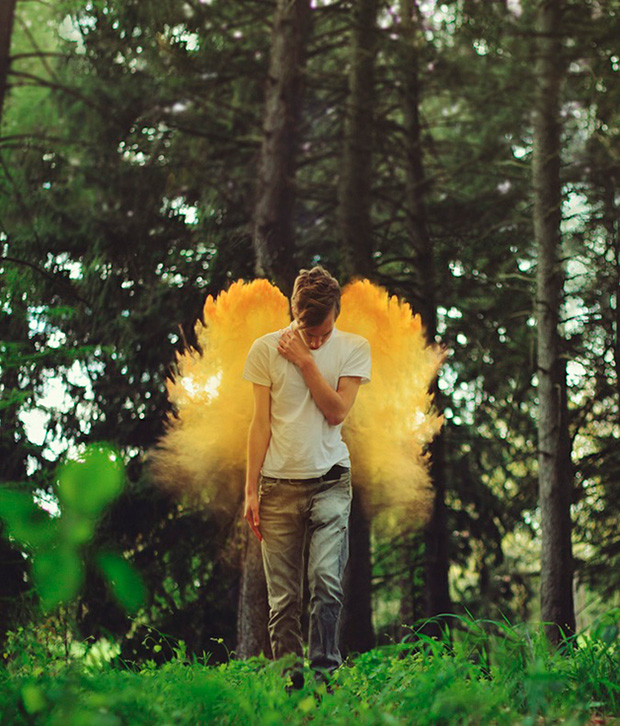
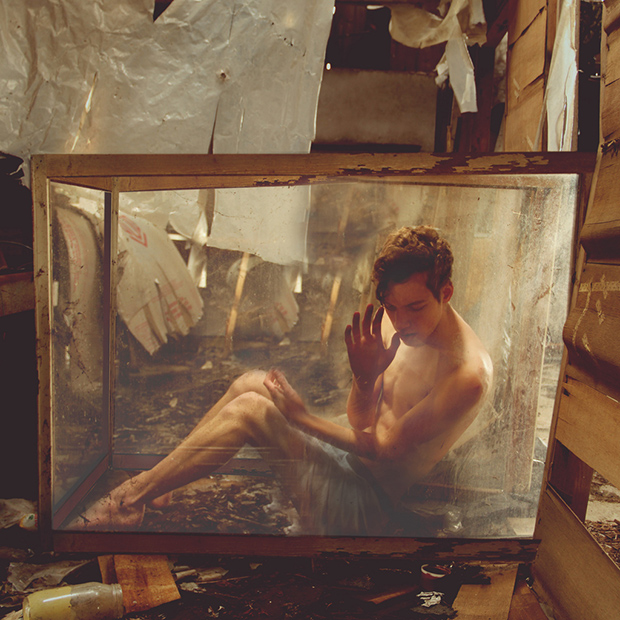
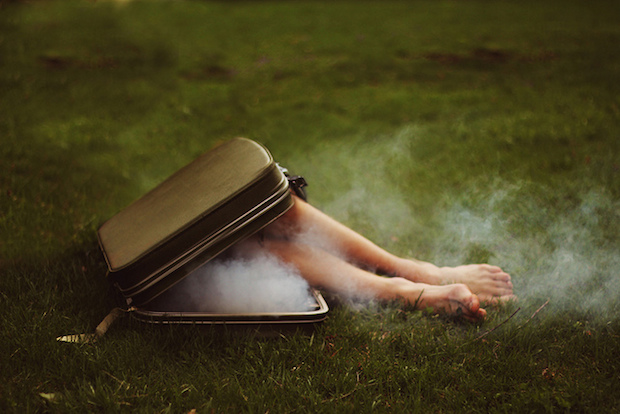
How the internet met the work
Thompson’s early attention arrived through online sharing—Reddit threads and image blogs that could move a quiet Midwestern self-portrait into thousands of feeds overnight. That distribution history matters because the pictures already looked like they belonged to the scroll era’s hunger for uncanny stillness, yet they were made with patience more than with trend forecasting. The viral loop did not invent the solitude; it amplified a solitude already practiced in empty rooms.
For viewers in 2014 encountering a feature like this one, the invitation was simple: enter the surreal world and stay long enough for the nonexistent storyline to flicker. Do not demand a moral. Demand a precise feeling. If the image works, you will carry a residual chill or tenderness into the next ordinary hallway you walk through—proof that a split-second fiction can outlast the click that delivered it. Popularity also created a risk of imitation without method. Copying a prop is easy; copying the willingness to spend hours alone in a ruin is not.
A way to look at one Thompson frame
Start with the room or clearing before you invent a myth. Name three textures. Find the light source and ask whether it flatters or withholds. Only then look at the body’s posture: protective, floating, collapsed, alert. Ask what emotion would choose that posture in that place. Finally, resist the urge to “solve” the prop. A jar, a mirror, a sheet of water—these are pressure points, not crossword clues. The photograph is finished when the pressure is felt, not when the riddle is answered.
Compare two images from the set and notice what stays constant. Recurring solitude is obvious; more interesting is the consistent respect for emptiness. Thompson does not fill every corner. Negative space is narrative. Abandoned architecture already contains ghosts of use; the self-portrait adds a living temporary ghost who refuses to settle into ownership. That refusal keeps the pictures from becoming lifestyle ruins photography. The house is not aestheticized for comfort. It is used as a temporary theater for an inner weather system.

Why solitude photographs travel
Many people who will never crawl through a Midwestern ruin still recognize the emotional floor plan: rooms that feel too quiet, landscapes that refuse company, a self watched from outside itself. Thompson’s surrealism is portable because it stages interior states with exterior tools. The abandoned house becomes a model of the mind under stress—still furnished with traces, no longer safely inhabited.
That is also why the work rewards slow looking in an era of fast surprise. The first glance gets the uncanny. The second glance gets the craft of waiting alone with a timer. The third glance gets the ethics of using empty places without turning them into theme parks. Somewhere between those glances, the nonexistent storyline finishes its brief life—and leaves you wondering which empty place near you has been waiting for a story that only lasts as long as a shutter click.

Comments
Continue reading
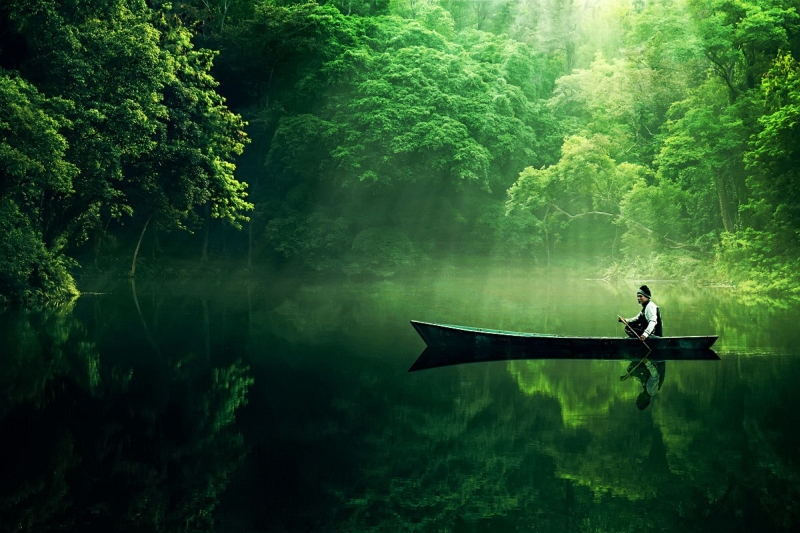
Dramatic Photo Art by Sukron Ma’mun (Ipoenk Graphic)
Cirebon, Indonesia photographer Sukron Ma’mun uses theatrical natural light to frame village life, play, and place in lyrical photo art.

Bird’s-Eye Views: Florian Beaudenon’s Instant Life
Paris photographer Florian Beaudenon’s Instant Life series captures people in their rooms from above—intimate, collaborative overhead portraits of everyday joy.
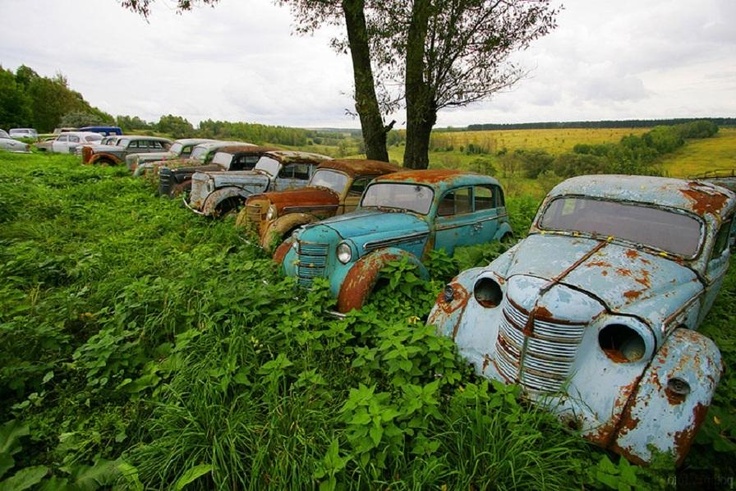
Abandoned Cars Reclaimed by Nature: Rust, Growth, and Quiet Ruin
When neglected vehicles are left outdoors long enough, rust, moss, and trees rewrite them into strange still lifes—sad, photogenic, and slowly returning to the ground.