
Big Ben Through Different Photographers’ Lenses
Photographing London’s clock tower—viewpoints, weather, craft tips, and how varied photographers keep a famous landmark looking new.
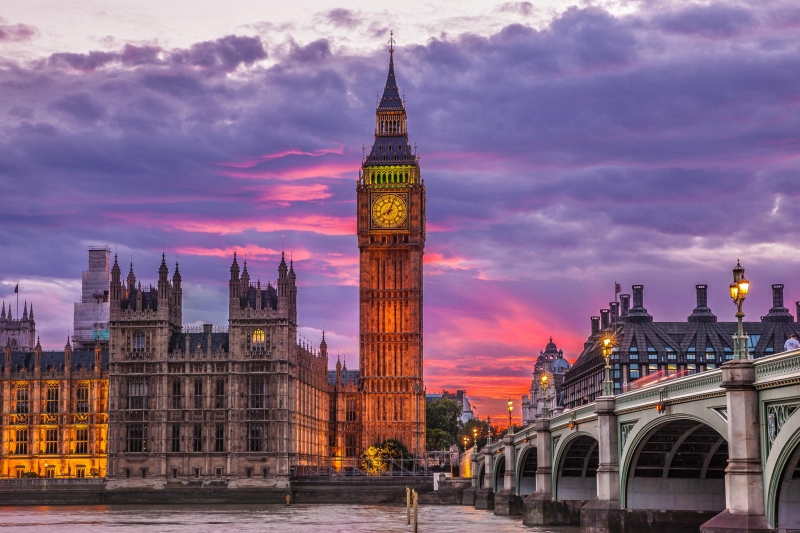
Big Ben is one of the world’s most photographed landmarks, and one of the most persistently misnamed. Many visitors point at the clock tower and call the whole structure Big Ben. Strictly speaking, Big Ben is the Great Bell inside the tower at the north end of the Palace of Westminster in London. The tower itself has carried different official names over time; what matters to photographers is simpler: a vertical landmark of Gothic Revival stone, four clock faces, river light, and a skyline that changes personality with weather and hour.
This gallery-minded look at Big Ben gathers how different photographers—amateurs and professionals alike—have approached the same subject. One frame here comes from Arturas Kerdokas; the wider set of viewpoints discussed below reflects the kind of variety once shared across photographer communities, including work associated with names such as Nils Erik Palm, Sus Bogaerts, Nataliya Zemnaya, Carlos F. Turienzo, Jo Williams, Rosetta N. M., Roland Shainidze, Chris Muir, Hegel Jorge, Christophe Pfeilstücker, Romain Matteï, Amar Rai, Paolo Trofa, Andrew Vaughan, Nada Leva, Sean Molin, Christian Meermann, Christian Stogner, Heikki Alho, Sergio Otero, Adam Stephenson, and Pedro Jarque. The lesson is not that there is one correct Big Ben photograph. It is that a famous silhouette still rewards craft.
Photograph: Arturas Kerdokas
Why the tower keeps drawing cameras
Landmarks fail photographers when they become stickers. Big Ben resists that fate because it sits in a rich visual neighborhood: the Thames, Westminster Bridge, the Houses of Parliament, street traffic, and skies that can go from soft grey to theatrical sunset in a single evening. The clock faces give the structure a human scale of time; the vertical rise gives it graphic power in both wide cityscapes and tight architectural studies.
Familiarity is part of the challenge. Almost everyone has seen a postcard version. The photographers who make interesting frames usually add a second idea: weather as drama, reflection as geometry, long exposure as motion contrast, or a foreground that places the viewer in London rather than in a studio cutout. Big Ben becomes less a logo and more a participant in a scene.
Classic viewpoints and what they teach
From Westminster Bridge and the near south bank, the tower often shares the frame with river traffic and bridge structure. These angles are crowded for a reason—they deliver the recognizable combination of clock, stone, and water. The craft question becomes timing and exclusion: wait for a break in tour groups, use a longer focal length to compress elements, or embrace the crowd as part of the city’s energy.
From farther along the Thames, telephoto compression can stack the tower against other Westminster architecture and turn haze into atmosphere. Wide lenses from closer positions exaggerate height and pull in more sky; they also demand careful verticals if you want the tower to feel upright rather than falling backward. A little keystone correction in post is common; getting level in camera still saves the file.
Night and blue hour change the subject entirely. Illuminated faces and warm stone against a deepening sky are the classic romance shot. Long exposures smooth the river and streak traffic into ribbons, which many photographers use to contrast the tower’s stillness with the city’s movement. Rain adds reflections on pavement; fog softens edges until the tower becomes almost spectral. Neither condition is a problem. Both are opportunities if your gear is weather-ready.
What different photographers tend to emphasize
Look across a set of Big Ben photographs by different makers and patterns appear. Some chase clean symmetry and architectural precision—straight verticals, balanced clock faces, minimal distraction. Others chase mood: storm light, saturated dusk, or monochrome grain that turns the landmark into a graphic shape. Street-oriented shooters may keep buses, umbrellas, or silhouettes in the foreground so the tower anchors a human story rather than floating alone.
Color workers often lean into the gold of floodlighting against blue twilight. Black-and-white workers lean into contrast between carved stone and sky. Detail shooters ignore the full tower and isolate a clock face, a finial, or a patch of Gothic ornament. All of those approaches are valid. The dullest Big Ben photographs are usually the ones that refuse to choose—neither a strong wide story nor a committed detail, just a middling record of “I was there.”
That variety is why multi-photographer collections remain useful. One person proves the bridge reflection works. Another proves a side street crop can feel fresher than the postcard. A third shows that bad weather can outrank perfect sunshine. Studying several eyes on one subject is a faster education than repeating your own first angle forever.
Practical craft for a crowded icon
Arrive with a plan and a backup plan. If the classic bridge view is packed, walk for a different relationship between tower and river. If midday sun flattens the stone, look for shadow patterns or wait for side light. Polarizers can help manage glare on water; they can also deepen skies—use them consciously so the image does not look unnatural.
Exposure is often a compromise between bright sky and darker stone. Bracket when the dynamic range is wide, especially at dusk. For night work, a tripod (where permitted and practical) keeps the tower sharp while water and traffic move. Watch ISO: modern cameras handle higher sensitivities well, but noise on large stone textures can look unpleasant if you push too far without need.
Compositionally, give the tower room to breathe or deliberately crowd it. Dead-center placement can work for formal symmetry; off-center placement often feels more contemporary when balanced with bridge lines, river banks, or negative sky. Include a scale cue—a person, a boat, a lamppost—when you want viewers to feel height rather than just recognize the shape.
Respect, access, and honesty
Westminster is a working political and tourist landscape. Obey barriers, be courteous on bridges, and do not block emergency or pedestrian flow for a shot. Drone rules in central London are restrictive for good reason; assume you need proper permissions rather than improvising. The best Big Ben photographs still come from public vantage points and patience, not from risky shortcuts.
Be honest in editing. Heavy sky replacements and extreme distortions can turn a landmark into fiction. Local contrast and careful color grading can clarify what you saw; inventing a sky you never stood under usually ages poorly. If you convert to black and white, commit to tonal structure—make the clock faces and silhouette read, not just desaturate a weak color file.
Seeing Big Ben again
The reason photographers keep returning is the same reason first-time visitors raise their phones: the tower concentrates London’s sense of history into a single readable form. The reason the photographs differ is that London never presents that form the same way twice. Tide, cloud, season, and crowd density rewrite the scene hourly.
If you only make one frame, make it at a time of day you chose on purpose. If you make many, vary distance and weather until the set shows decisions rather than repetition. Big Ben will still be recognizable in all of them. Your job is to make sure the photograph is recognizable as yours—whether you are standing where Arturas Kerdokas stood for a clean classic view, or hunting a quieter angle the postcards ignored.
Next time the clock faces catch the light, ask one question before you press the shutter: am I collecting a landmark, or am I making a picture of London with the landmark inside it? The second answer is usually the one worth keeping.

Comments
Continue reading
Julian Calverley’s London Panoramics: Winter Cityscapes in Wide View
UK photographer Julian Calverley stitches high-resolution London panoramics where Thames light, winter air, and skyline landmarks share one continuous frame.
Dramatic Photo Art by Sukron Ma’mun (Ipoenk Graphic)
Cirebon, Indonesia photographer Sukron Ma’mun uses theatrical natural light to frame village life, play, and place in lyrical photo art.

Bird’s-Eye Views: Florian Beaudenon’s Instant Life
Paris photographer Florian Beaudenon’s Instant Life series captures people in their rooms from above—intimate, collaborative overhead portraits of everyday joy.