
Bar Refaeli on Maxim Australia, September 2012
Bar Refaeli’s September 2012 Maxim Australia cover and gallery—black-bikini newsstand glamour from the Hot 100 season, kept as a period piece.
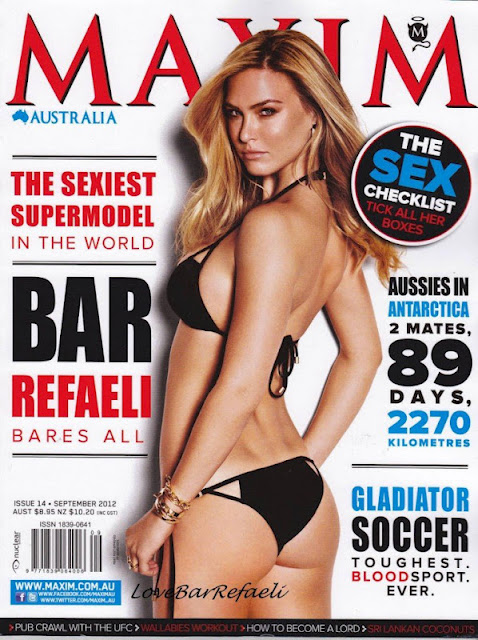
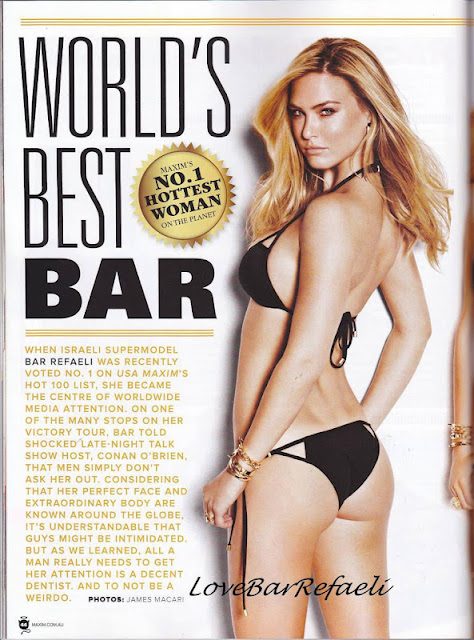
In September 2012, Maxim Australia put Bar Refaeli on the cover in a black bikini—an image built for newsstand heat and for the magazine’s annual Hot 100 mythology. The Israeli model was twenty-seven, already a global fashion and swimsuit name, and freshly associated with Maxim’s ranking chatter that year. The cover did not invent her fame. It packaged it for a men’s magazine month that trades on summer bodies, celebrity proximity, and simple, high-contrast photography.
This page stays with that 2012 Maxim Australia moment: cover logic, editorial gallery rhythm, and the way those pictures moved through style blogs once the issue was out. It is a period fashion-and-celebrity note, not a later biography rewrite and not a net-worth sidebar in disguise.
Maxim’s September job
Maxim covers in the early 2010s rarely hid their pitch. The promise was direct: a recognizable woman, swimwear or lingerie vocabulary, and photography that reads at arm’s length in a shop. September issues often ride late-summer energy—beach light, bare skin, and ranking lists that magazines use as seasonal events. Placing Refaeli on the Australian edition’s cover aligned celebrity casting with that calendar.
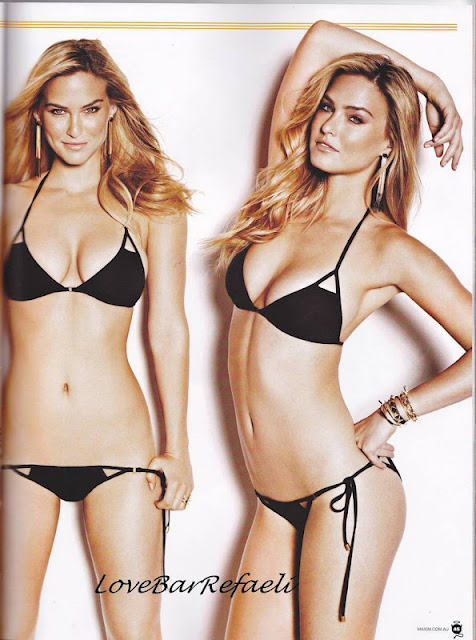
The black bikini is not a neutral costume in this context. It is Maxim shorthand: minimal wardrobe, maximum silhouette, high contrast against skin and backdrop. Cover typography and logo placement depend on a clear central figure. Refaeli’s established swimsuit-era visibility—built across campaigns and earlier magazine work—made her an efficient choice. Readers did not need a paragraph to know who they were looking at.
Men’s magazines of that period also used covers as ranking theater. Maxim’s Hot 100 culture turned ordering desire into an annual product. Whether a given territorial edition leaned harder on the list or on the interview package, the visual argument stayed similar: here is the face the brand wants associated with “hottest” language that year. Refaeli’s 2012 association with the top of that conversation made the Australian cover feel like confirmation rather than discovery.
Territorial editions matter in that confirmation. Maxim Australia was not inventing a separate star system so much as localizing a global men’s-magazine language—same swimsuit grammar, same ranking heat, different newsstand and different preview blogs. For international readers discovering the set online, the “Australia” label still anchors the pictures to a specific September 2012 product, not to an undated collage.
The gallery as a sequence
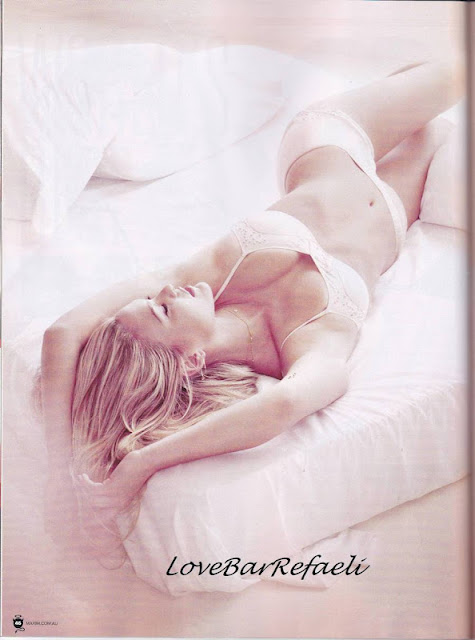
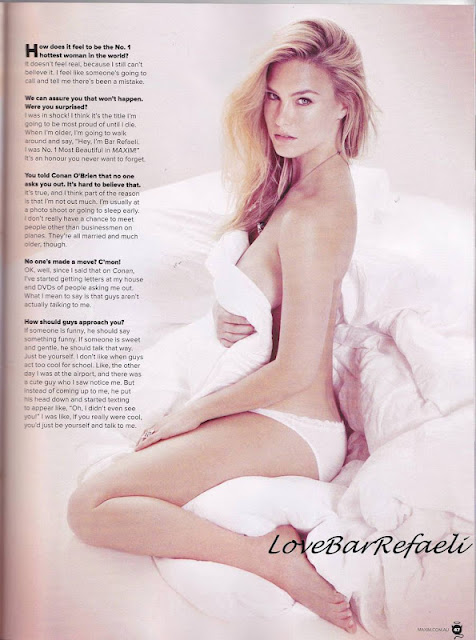
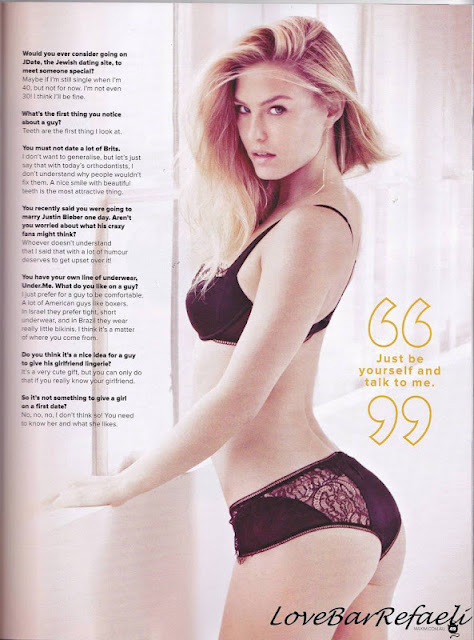
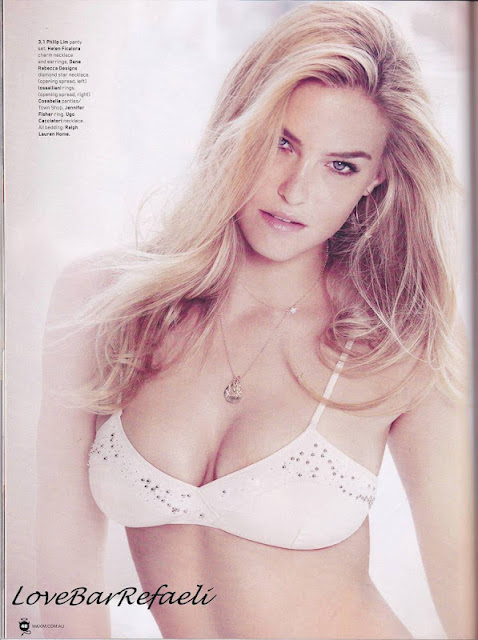
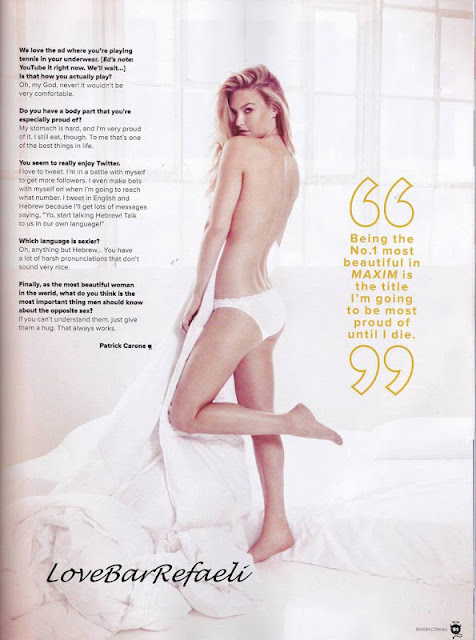
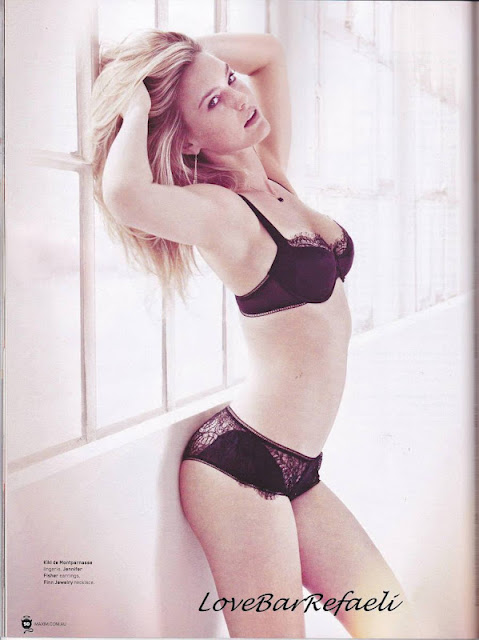
Inside and around the cover, the published stills work like a short fashion film on pause. Pose changes, slight wardrobe or styling shifts, and repeated emphasis on body line and eye contact. Credits circulating with the set pointed to photographer James Macari—professional magazine light, not snapshot candidness. The point of such a gallery is cumulative: each frame sells the same idea with a different angle.
Look at how the images manage space. Backgrounds stay simple enough that skin, fabric, and face carry the frame. That spareness is commercial. Maxim readers were not being asked to decode a conceptual art set. They were being asked to linger. Soft focus edges, warm skin tones, and clean contrasts belong to a specific early-2010s retouching and lighting fashion—glossy without pretending to be couture documentary.
Compared with a European GQ awards feature from the same era, Maxim’s visual contract is less about sequined evening power and more about beach-and-body immediacy. Both are constructed glamour. They simply sell different rooms of the same celebrity house. Refaeli could do both in 2012 without changing her public identity; the magazines changed the costume language around her.
Sequence also teaches brand pacing. A cover needs instant recognition. Interior frames can afford smaller variations—a turned shoulder, a different crop, a shift from standing to seated—so the issue feels generous without abandoning the cover’s thesis. When those interiors later appear as a blog grid, the pacing flattens into a strip of equals. Reading them as a magazine sequence restores some of the original hierarchy: cover as billboard, gallery as extended argument.
Celebrity context without the gossip pile-on
Press around Refaeli in those years often dragged in relationship headlines and tabloid shortcuts. A Maxim cover gallery does not require that noise to make sense. What it requires is her professional position: international model, frequent lingerie and swim face, comfortable in commercial sensuality that magazines could print without explaining. The Australian issue borrowed that comfort.
Interview pages in Maxim packages typically mixed career talk with lifestyle prompts—travel, habits, flirtation-friendly Q&As shaped for the brand voice. Even when fragments of those conversations traveled through celebrity blogs, the photographs did more lasting work. Images outlived paragraphs. That is why galleries like this one still circulate as “Maxim Australia 2012” sets long after the interview text has faded from casual memory.
Keeping the year attached matters. Swimwear aesthetics shift. Retouching tastes shift. Ranking-list culture shifts. A September 2012 Maxim Australia cover is a dated artifact of how men’s magazines wanted to present Refaeli at that exact commercial peak—not a timeless statement about modeling, and not a modern news item pretending to break today.
It is also worth separating ranking mythology from craft. Hot 100 language is marketing theater. James Macari’s lighting and the magazine’s styling choices are craft. Both operated together on the newsstand, but a viewer can still prefer the craft reading: how the bikini reads as graphic shape, how skin tone is tuned, how eye contact is staged for a men’s-magazine lens that expects confidence without complication.
Circulation: from issue to blog grid
After the issue appeared, fashion and celebrity sites mirrored the strongest stills. Outbound “via” chains were normal: one blog credited another, which credited Maxim, which credited the photographer. For many viewers, the cover story arrived only as a grid of JPEGs. That distribution pattern is part of the historical object. These files were meant to travel.
What should not travel with them is invented biography filler—net-worth lists, fabricated quotes, or career summaries that yank the page into a different decade. The useful context is narrow: Maxim Australia, September 2012, Bar Refaeli, black-bikini cover language, James Macari’s camera in the credit cloud, Hot 100–season timing. That is enough to read the gallery honestly.
Preserving local media paths keeps the gallery usable as an archive page rather than a link farm. The pictures are the story. The magazine date is the caption. Everything else is optional atmosphere.
What the set still shows
Scroll the frames for craft, not just celebrity. Notice how often the composition centers the torso and face as a single graphic unit. Notice the limited prop distraction. Notice the repeatable pose vocabulary—standing power, seated ease, glance-to-camera confidence—that men’s magazine editors trusted in 2012.
Ask a simple question of each still: what would disappear if the bikini were a different color, or if the crop moved six inches? That question reveals how tightly Maxim’s cover grammar depends on silhouette and contrast. The set is not subtle, and it was never meant to be. It was a commercial season marker: a famous model, a territorial Maxim cover, and swimwear that photographed like a logo.
Years later, the pictures remain useful as a clean sample of that genre at full volume—summer ranking culture, newsstand clarity, and a star who already knew how to hold a men’s-magazine lens. September 2012 stays on the caption line where it belongs.

Comments
Continue reading
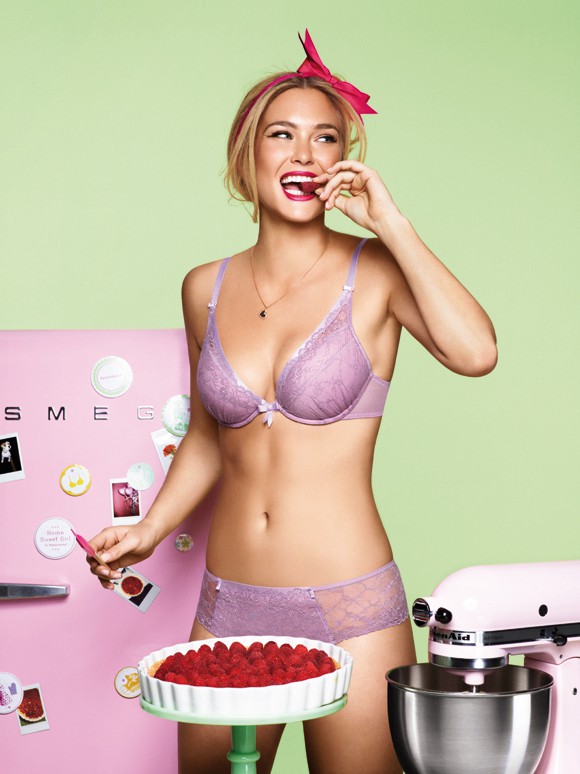
Bar Refaeli for Passionata Lingerie, Spring/Summer 2013
Bar Refaeli as Passionata’s Spring/Summer 2013 face—a retro housewife-pinup lingerie campaign from early-2010s fashion advertising.
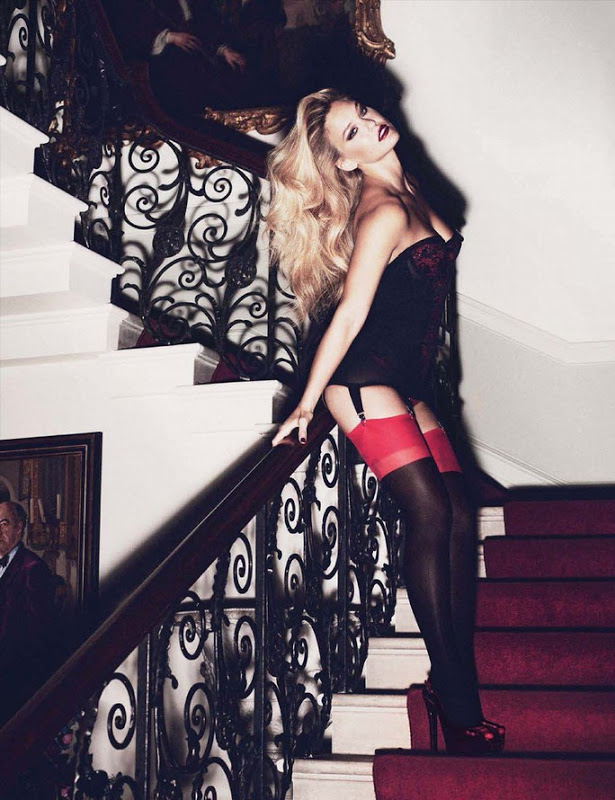
Bar Refaeli for GQ Germany, December 2012
Bar Refaeli as a December 2012 GQ Germany star—period editorial context for the awards-season feature and fashion photographs.
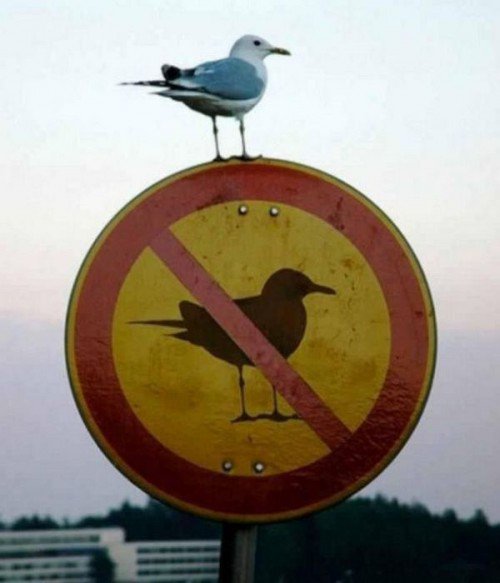
Funny Animal Signs That Warn People (While Animals Ignore Them)
From a seagull on a no-birds disc to classic zoo and park ironies—why animal warning signs get funny, and what the rules are still for.