
Above San Francisco: Aerial Cityscapes by Harriman, Shainblum, and Donahue
Toby Harriman, Michael Shainblum, and Marc Donahue’s Above San Francisco project lifts the Bay Area into fog, bridge lines, and rare aerial views of the city.
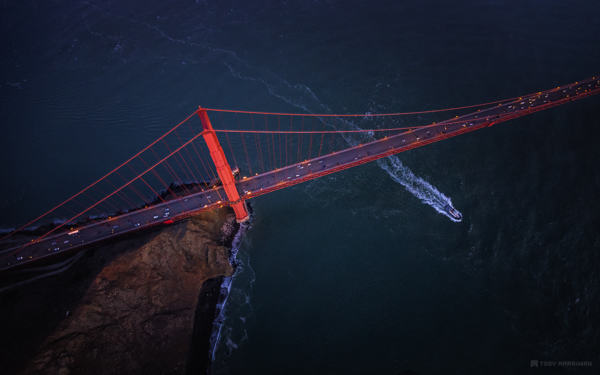
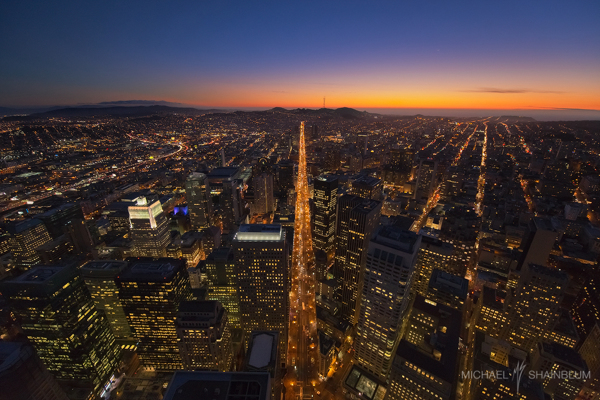
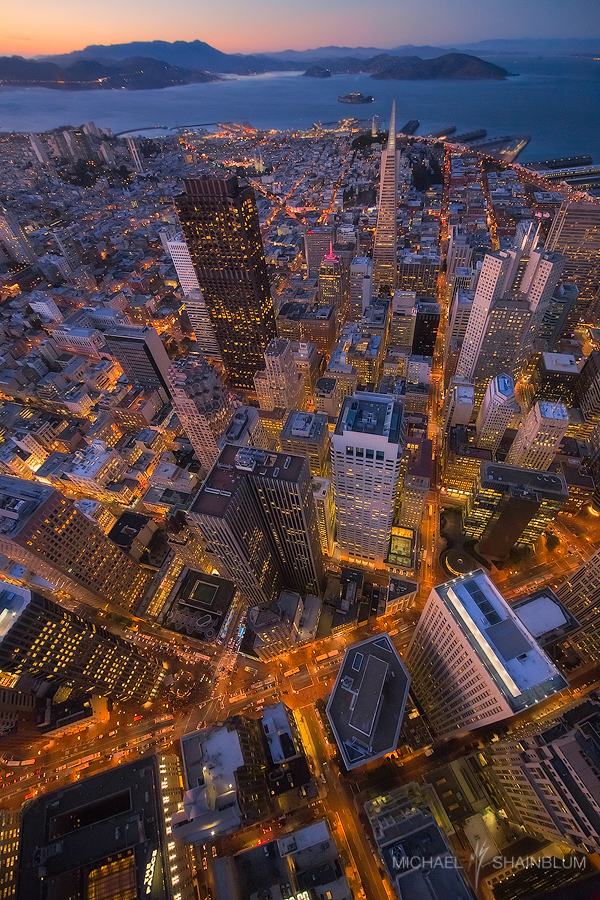
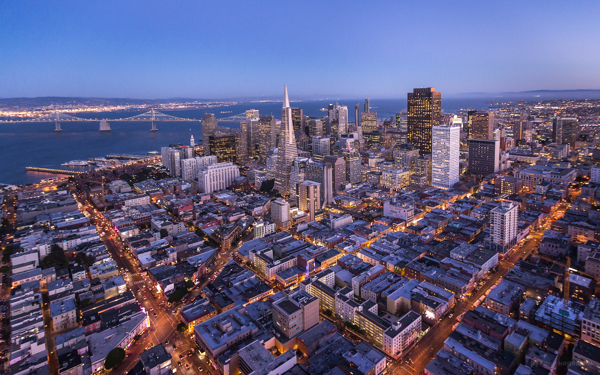
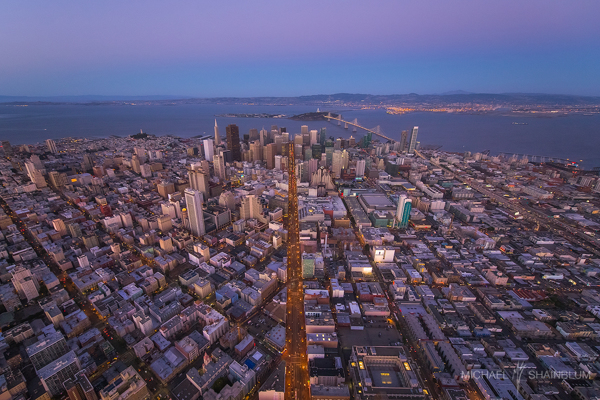
San Francisco is a city most people meet from the street: hills, cable cars, fog at eye level. Photographers Toby Harriman, Michael Shainblum, and Marc Donahue took a different route. Their project Above San Francisco lifts the viewpoint into open air above the Bay, where bridges become lines drawn through cloud and the downtown grid reads like a circuit board set beside water.
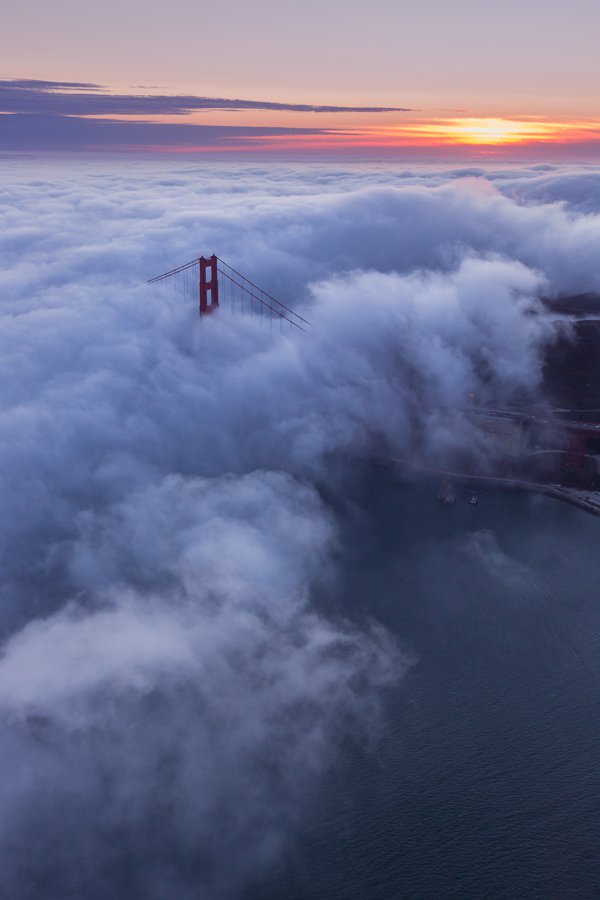
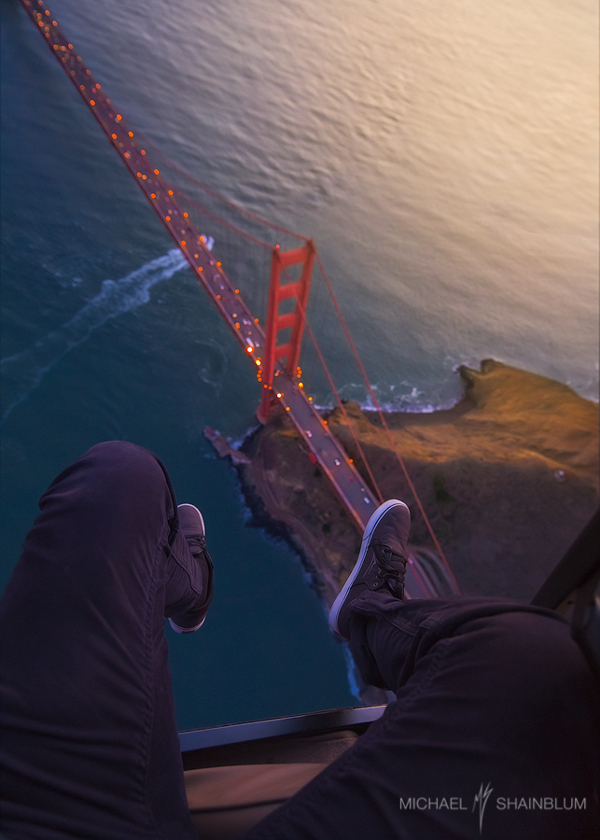
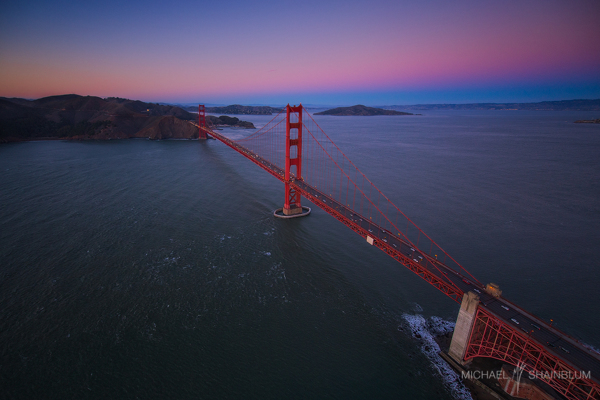
From that height, familiar landmarks stop behaving like postcard stickers. The Golden Gate is no longer a red icon at the end of a tourist walk; it is a span negotiating wind, fog banks, and the dark water below. The experience the trio described is less about a single trophy shot and more about the feeling of floating in a place that usually pins you to sidewalks and traffic lights.
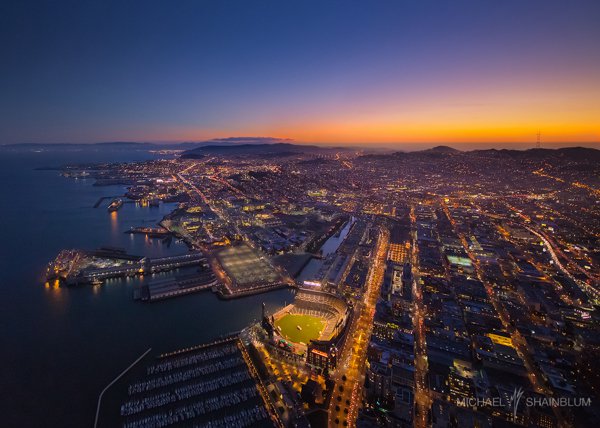
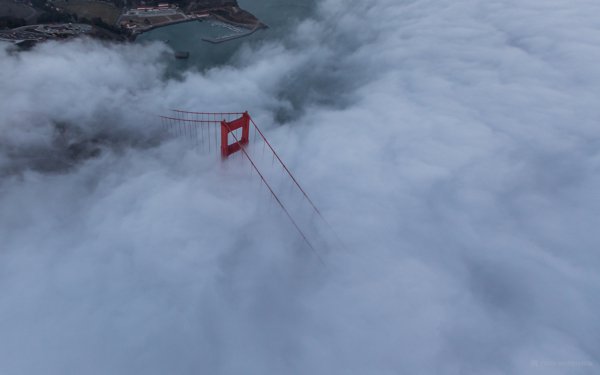
Aerial cityscape work demands timing as much as gear. San Francisco’s marine layer can erase a skyline in minutes or part just enough to reveal a tower tip like a rumor. The photographers chase those openings—moments when cloud softens the hard edges of steel without hiding the structure entirely. A bridge half buried in white becomes more dramatic than a bridge in clear noon light, because the viewer has to complete the picture.
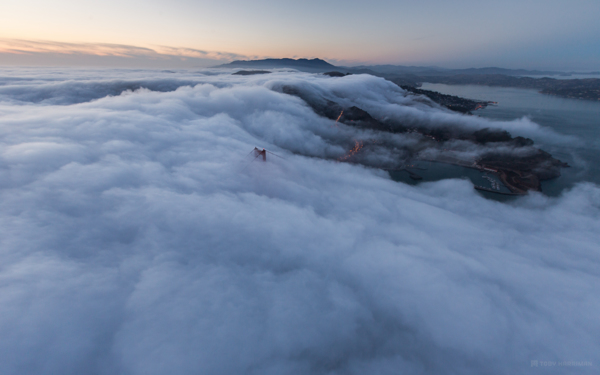
Why the Bay reads differently from above
At street level, San Francisco is fragmented: neighborhoods stacked on slopes, microclimates that change between blocks, water that appears and disappears depending on which hill you climb. From above, those fragments resolve into one geography. You see how the peninsula meets the Pacific, how shipping lanes cut the Bay, how freeways braid toward bridges. The city’s famous density becomes pattern rather than congestion.
That pattern is what makes Above San Francisco feel like more than a flight diary. The images treat infrastructure as composition. Towers become vertical marks. Roads become curves. Fog becomes negative space that edits the frame the way a darkroom dodge once did. When the marine layer wraps a bridge, the photograph stops being documentation and starts being atmosphere with an address.
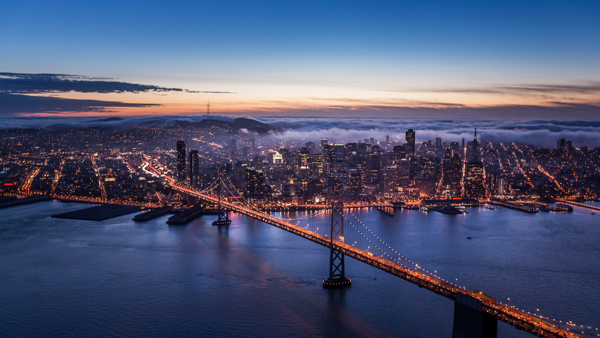
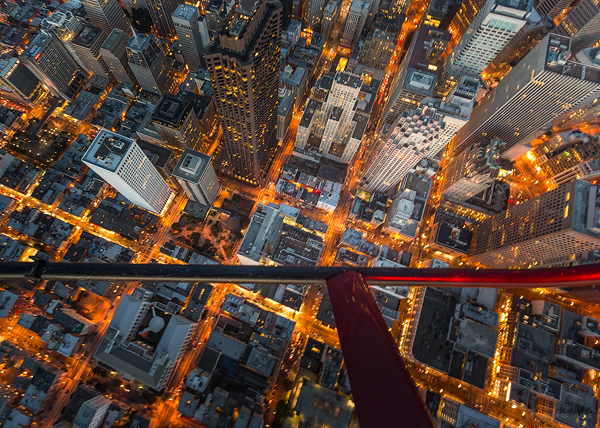
Different altitudes change the story. Slightly lower passes emphasize height and vertigo—the sense that a wrong step does not exist because there is no ground under the camera, only air. Higher passes flatten the city into map logic: blocks, parks, and shoreline in one glance. Harriman, Shainblum, and Donahue move between those modes so the set does not feel like one repeated trick. You get intimacy with towers and distance with the whole Bay at once.
Light, fog, and the bridge as subject
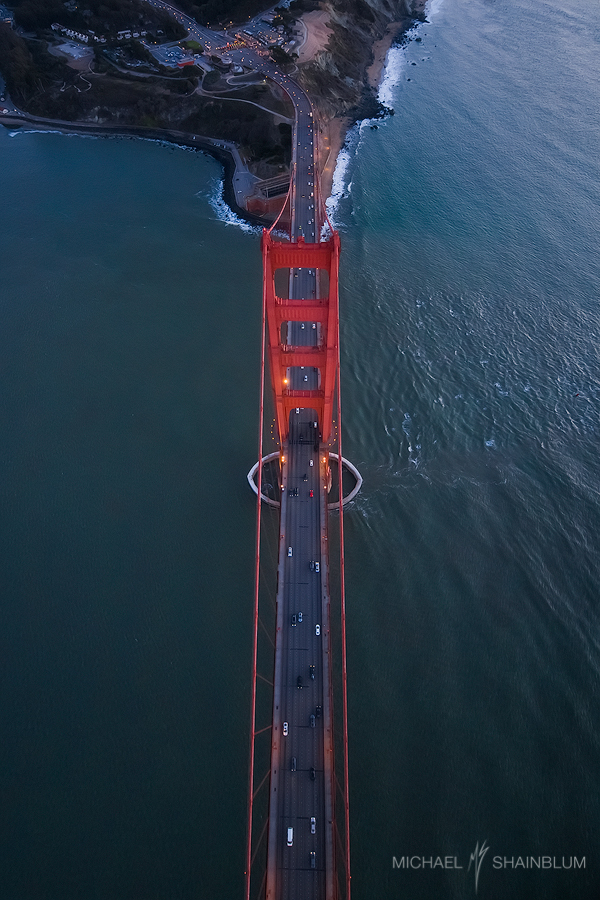
The Golden Gate Bridge is the project’s gravitational center for good reason. It is long enough to create leading lines, tall enough to pierce cloud, and colored boldly enough to survive fog’s desaturation. From above, the towers can look like masts sticking through a white sea. Cars, when visible, shrink into beads on a string. The water below turns from shoreline amenity into a deep field that reminds you how much of the Bay Area is not land at all.
Soft light helps. Harsh midday sun can make metal glare and flatten fog into a bright mess. Overcast or late-day conditions keep tonal ranges manageable and let orange paint sit against cooler grays. The photographers lean into that palette: warm structure, cool atmosphere, dark water. It is a combination San Francisco offers often, but rarely with this unobstructed angle.
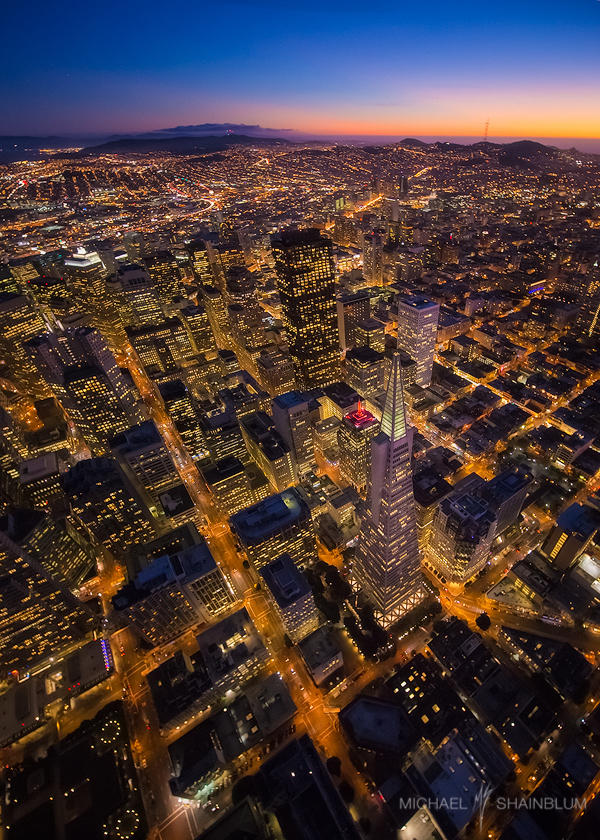
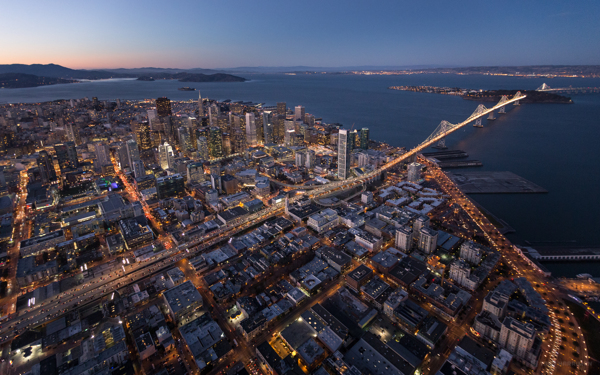
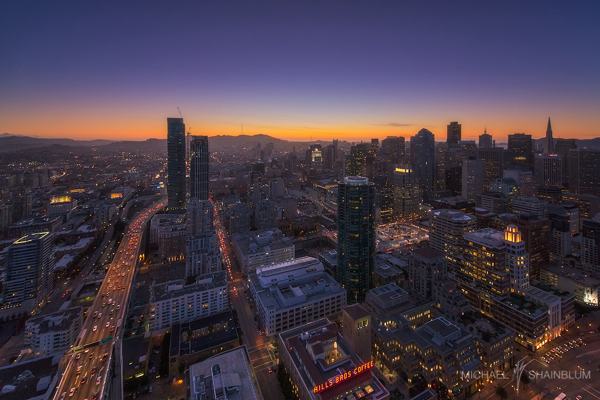
Beyond the bridge, the downtown cluster and waterfront supply a second grammar. Glass façades catch sky. Shadows between high-rises carve canyons. From a plane or helicopter, those canyons become stripes. You notice how much of the city’s identity is vertical ambition pressed against a finite peninsula—growth upward because outward is ocean, bay, and fault-line geography.
Craft behind the thrill
Aerial photography looks effortless in a finished gallery and is usually the opposite in practice. Vibration, wind, cold air at altitude, limited passes, and rapidly changing weather all shrink the window for a clean frame. Collaboration helps. Three photographers can divide attention—one watching the bridge line, one tracking cloud movement, one managing exposure when brightness flips as the aircraft turns toward open sun.
Safety and legality sit under the romance. Flights over dense urban airspace are planned, not improvised. The images in Above San Francisco come from that disciplined access: enough freedom to find unexpected angles, enough structure to keep the work repeatable across a shoot day. The resulting set feels adventurous because the viewpoint is rare, not because the process was careless.
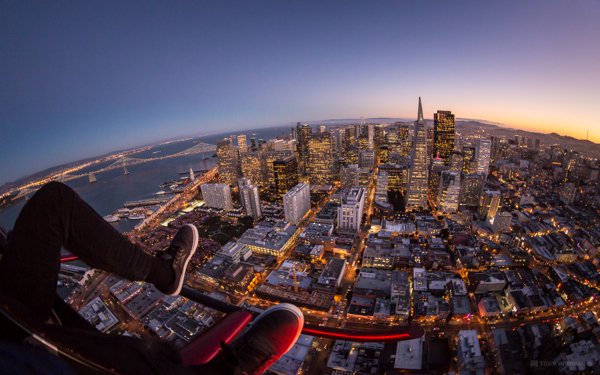
Compositionally, many frames use the classic aerial tools: strong diagonals, centered monuments softened by asymmetric cloud, and depth created by layered haze. Vertigo shots tip the horizon or lean into drop-away space so the viewer feels height in the stomach, not only in the mind. Quieter frames settle into horizontal calm—water, fog, and a thin structural line—so the series can breathe between dramatic peaks.
What the project leaves you with
Above San Francisco does not invent a new city. It reorders the one people think they already know. After enough frames of fog-wrapped spans and rooftop geometry, the street-level version of San Francisco feels incomplete—like knowing a novel only by its cover quotes. The Bay’s scale becomes personal. The bridge’s fame becomes structural again. The fog, so often treated as a local joke or inconvenience, becomes the project’s co-author.
Looking through the set is also a reminder that cities have altitudes of meaning. Tourists collect hills and piers. Residents collect neighborhoods and bus lines. Aerial photographers collect relationships: land to water, steel to cloud, density to emptiness. Harriman, Shainblum, and Donahue’s collaboration sits in that last category. Their San Francisco is not smaller because it is seen from far away; it is larger because the frame finally fits the geography that contains it.
If you live with these images for a few minutes, you may find yourself craving the opposite view next—standing on a deck in the Marina or on a trail in the Presidio, looking up toward where the cameras once were. That rebound is part of the project’s power. Above San Francisco does not replace the ground; it makes the ground feel connected to a wider weather system and a longer bridge of steel. The city remains walkable. It just no longer feels flat.

Comments
Continue reading
Funny Animal Signs That Warn People (While Animals Ignore Them)
From a seagull on a no-birds disc to classic zoo and park ironies—why animal warning signs get funny, and what the rules are still for.
How to Find Local Amenities on Vacation: Mechanics, Haircuts & More
Locate trustworthy local services and everyday spots while traveling or settling in—using publications, reviews, map apps, neighbor tips, and low-pressure exploration.
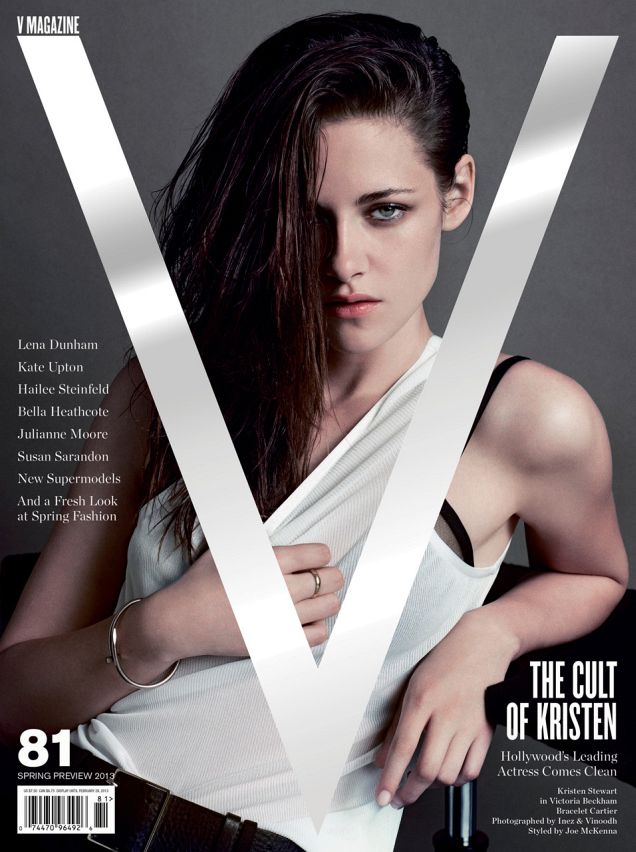
Kristen Stewart for V Magazine, Spring Preview 2013
V81’s Wild at Heart cover story—Kristen Stewart shot by Inez & Vinoodh, styled by Joe McKenna, in pale minimal spring glamour.