
Marcus Møller Bitsch: Surreal Frames from a Daily 365 Practice
Self-taught Danish photographer Marcus Møller Bitsch built a surreal, in-camera voice through a year-long 365 project—then carried that eye from Aarhus toward travel bases including Brisbane.
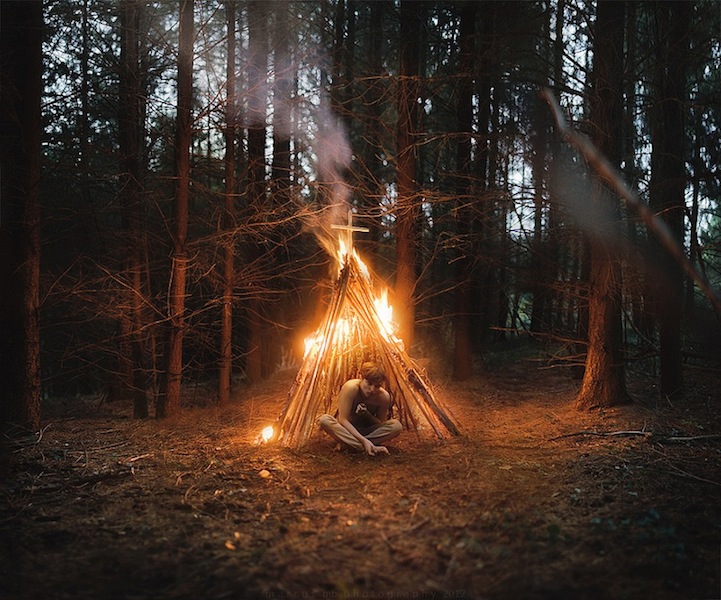
Marcus Møller Bitsch grew up in Aarhus, Denmark, where coasts, forests, and long Nordic seasons were ordinary weather rather than special effects. Before photography claimed most of his attention, drawing did. Pencils and markers let a curious, playful mind invent scenes on paper, and that habit of arranging a world—not only noticing one—still shows in his pictures. Even when the setting is real water, a real room, or a real stretch of road, the frame often behaves like a sketch that learned how to hold light.
He came to the camera seriously as a teenager. A knee injury interrupted watersports and freediving, and the empty hours needed another demanding practice. His answer was a year with rules: the “365” project of 2012–2013, one photograph every day while he finished high school. Daily projects sound romantic in retrospect and feel stubborn in the moment. Some days are dull. Some ideas fail in the edit. Over months, though, the constraint cooks a personal grammar—favorite distances from the subject, favorite color temperatures, favorite ways of placing a body inside a landscape.
By the time this gallery circulated widely, Bitsch was about twenty-one, self-taught, and already living with the consequences of that habit. After school he left Denmark for an extended travel stretch that included Australia—Brisbane among his bases—along with New Zealand and parts of Asia. He spoke in that period of a book project meant to gather adventures, dreams, development, and movement into one longer narrative. The images collected here sit on the hinge between Aarhus beginnings and that outward motion.
Surreal pictures built in front of the lens
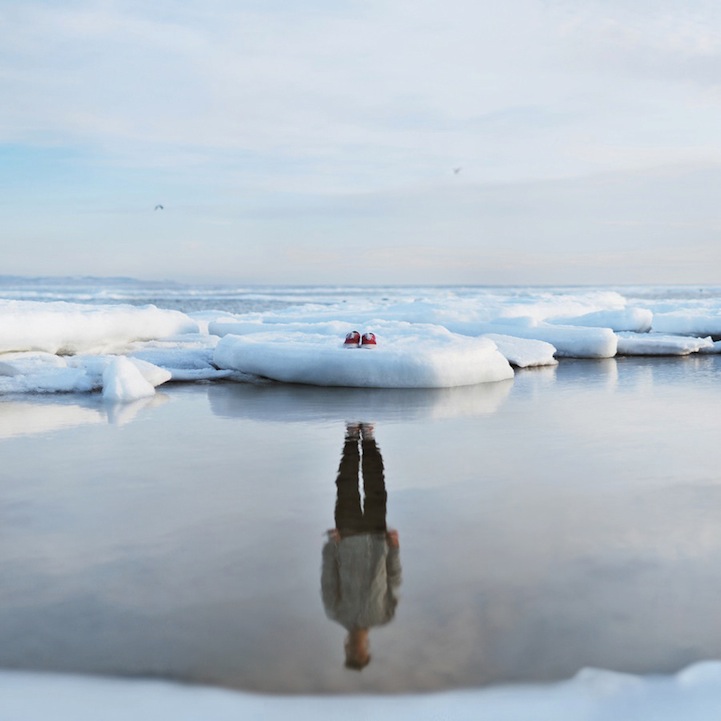
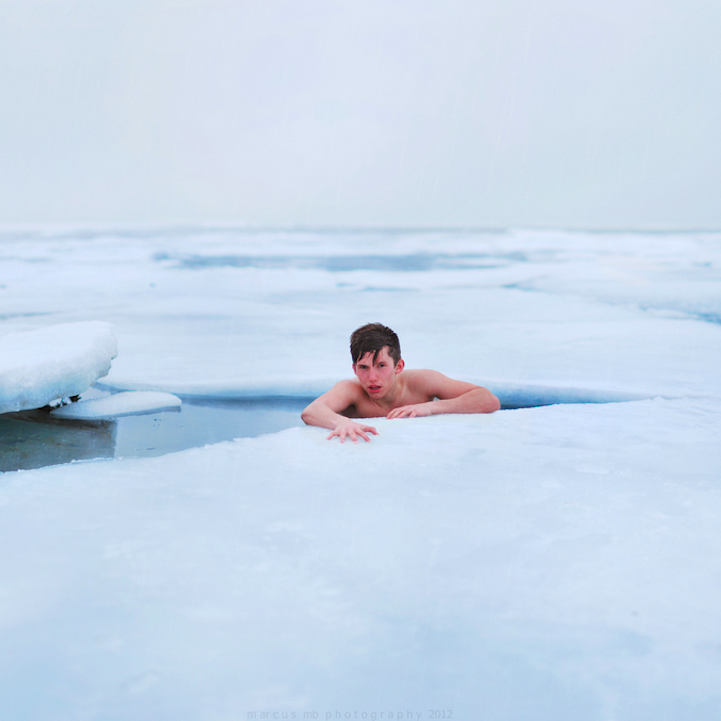
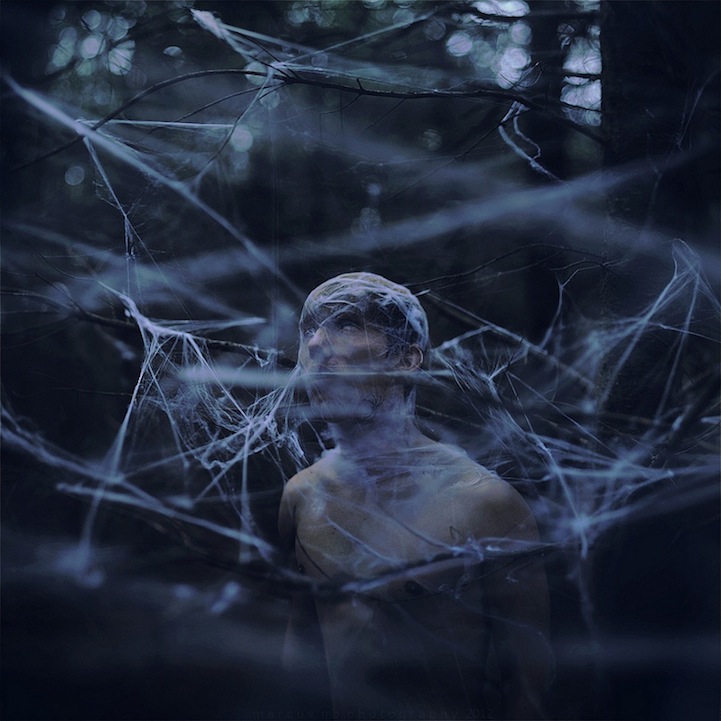
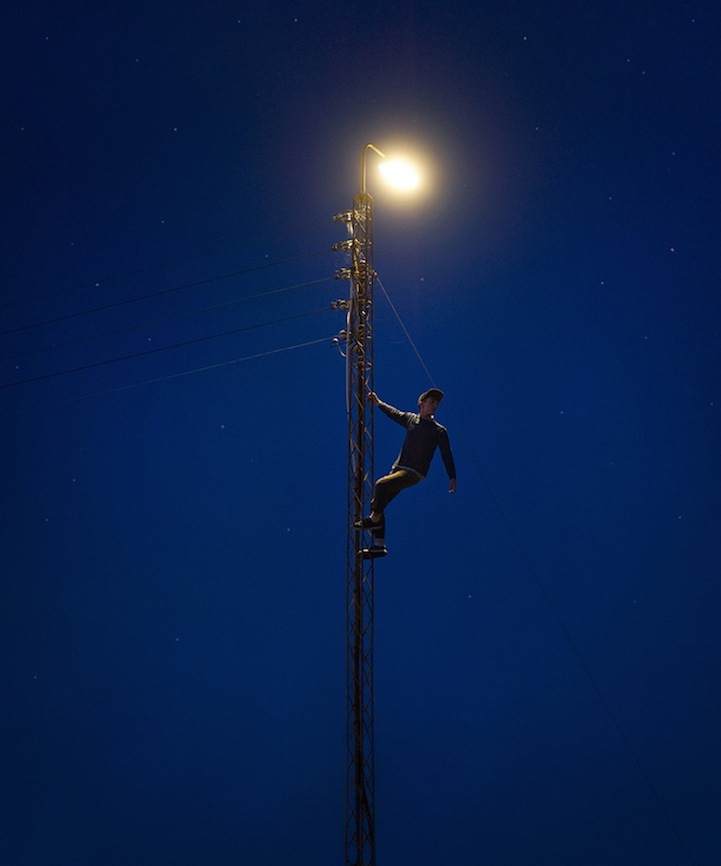
What made Marcus Møller Bitsch’s early work travel so easily on inspiration blogs is legibility. You do not need a paragraph of theory to feel the premise. A figure half submerged, a room staged like a quiet theater, an object that should not sit beside a horizon line—these ideas read in a single glance and deepen on a second look. The mood is surreal, yet the method has often been practical and physical: timing, props, location, and patience. Heavy digital collage is not the main engine. That choice ages well. Retouching fashions rotate; a well-staged frame keeps its spine.
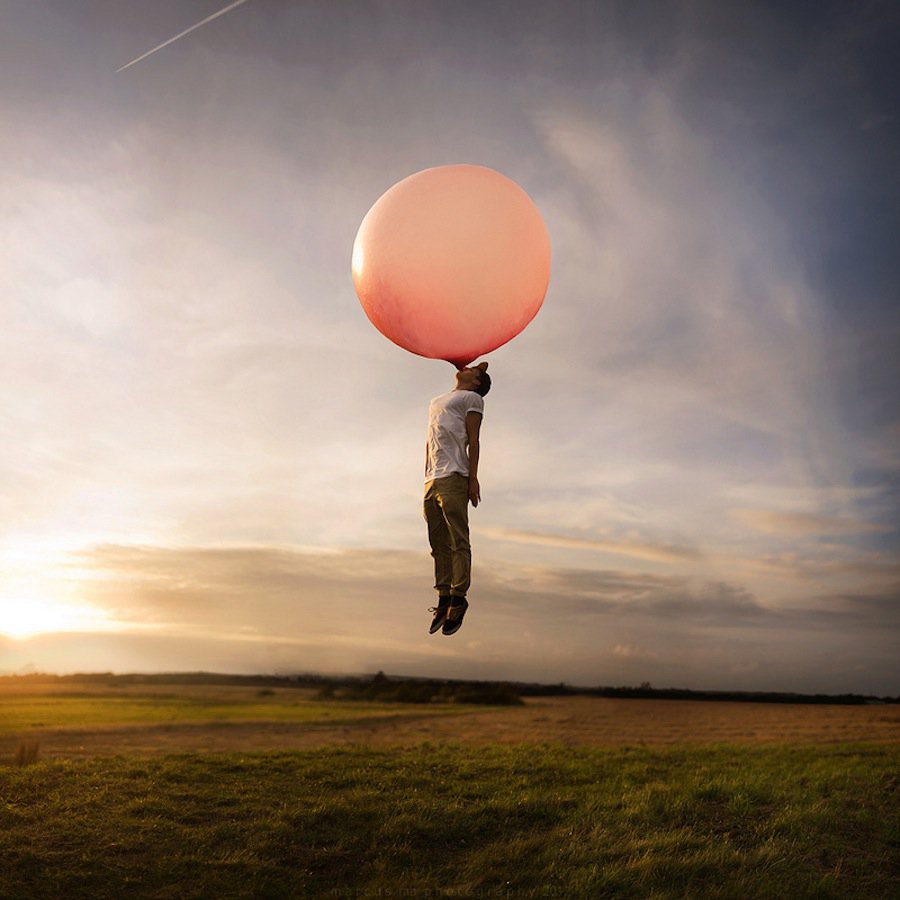
Color across the set tends to be saturated but coherent. Blues, greens, and skin tones share a family resemblance instead of fighting for attention. Composition favors clean geometry—horizons, door frames, pool edges, the hard cut of a shadow—so the eye knows where to land. Negative space is allowed to work. Many frames include a human presence, frequently Bitsch himself, used less as celebrity selfie and more as scale figure or narrative hinge. The body completes the idea the way a drawn character completes a page.
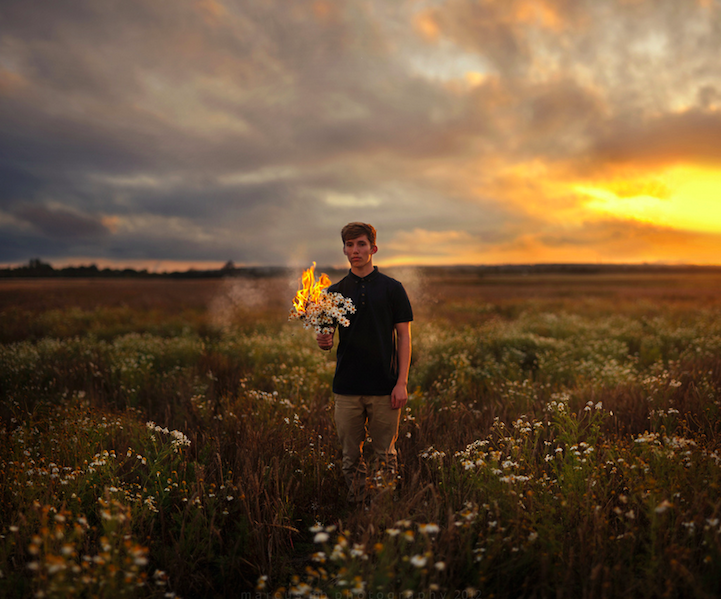
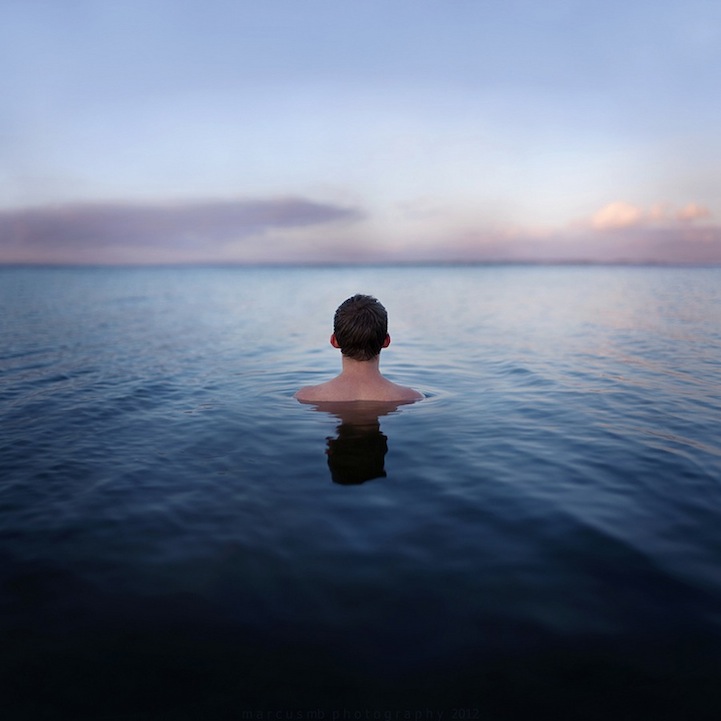
Why the 365 year still matters to viewers
365 projects collapse for predictable reasons: travel days with “nothing worth shooting,” perfectionism that skips a date and never recovers, boredom with one’s own motifs. Bitsch’s year held because the brief was practice first and prestige second. That mindset remains useful even if you never attempt a full calendar. A shorter constraint—one staged self-portrait each week, one object-and-landscape pairing each Sunday—still forces attention. You learn what you notice when noticing is mandatory rather than optional.
Self-portraiture inside such a project is a practical tool as much as a style choice. The model always shows up. You can rehearse light at dawn, test a prop twice, and keep the experiment private until it works. In Bitsch’s case the recurring self also becomes a character moving through chapters: Danish cold, brighter Australian light, rented rooms, unfamiliar water. Continuity of face makes change of place readable without captions.
There is a second lesson for anyone building a visual voice early: publish enough to see patterns, then edit ruthlessly. A year of daily frames produces a mountain of almosts. The gallery you meet online is the sharpened tip of that mountain—the frames where geometry, gesture, and color finally agreed.

From Aarhus nature to travel as a studio
Nature around Aarhus rewards photographers who wait: mist, low sun, wet surfaces, the calm of cold water. You can feel that patience later even when the light abroad is harder and brighter. Brisbane is not Aarhus, yet the compositional calm remains—Bitsch rarely rushes to fill every corner. Travel changes the cast of props and textures: motel geometry, rental-car interiors, new pools, new horizons. The book impulse of that period makes sense when you look closely. These frames already behave like chapters rather than isolated trophies.
It helps to separate travel photography as tourism from travel as a studio without walls. The stronger images here do not merely prove he was elsewhere. They use elsewhere as raw material for the same concerns he had at home: how a person fits a rectangle, how an ordinary object becomes a symbol, how stillness can feel louder than action. That continuity is why a mixed gallery—Danish quiet beside brighter travel light—still feels like one author.
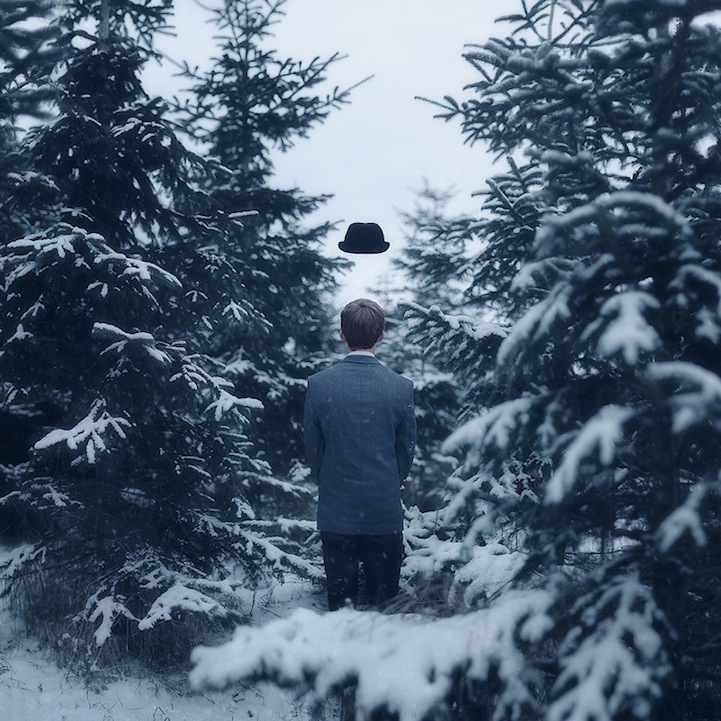
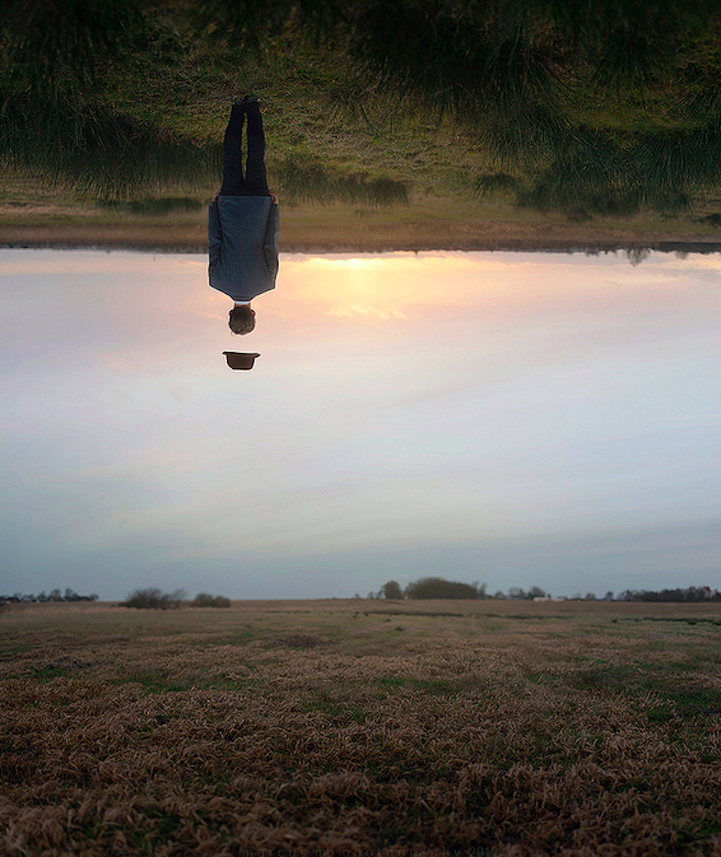
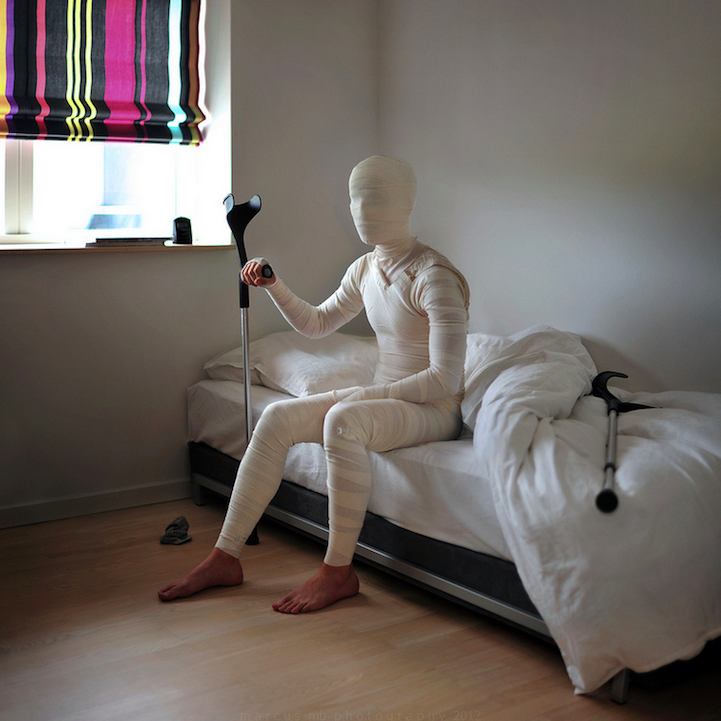
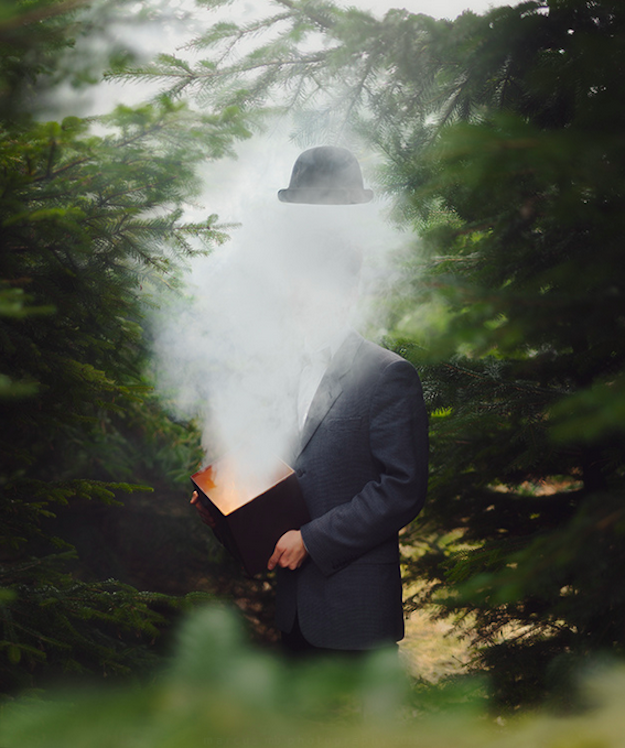
How to look so the gallery teaches you something
Instead of asking only whether a picture is impressive, ask what rule it quietly follows:
- Where is the hinge? Find the element that turns scenery into story—usually a person, a mirrored surface, or an unexpected object.
- What is left out? Notice cropped edges and empty zones. Restraint is part of the style.
- Is the oddness earned in-camera? Arrangement and timing usually age better than heavy composite tricks.
- Would it survive grayscale? Strong geometry and gesture often do; weak pictures hide in color alone.
- What would you need to rebuild it? Name the prop, the hour, the standing position, and one risk. If you cannot, you are still only browsing.
Those questions keep the set useful for photographers who want to learn rather than only scroll. Marcus Møller Bitsch’s early body of work is a clear case of a young maker building a recognizable voice with patience, a hard constraint, and a willingness to step into the frame when the idea needs a human axis.
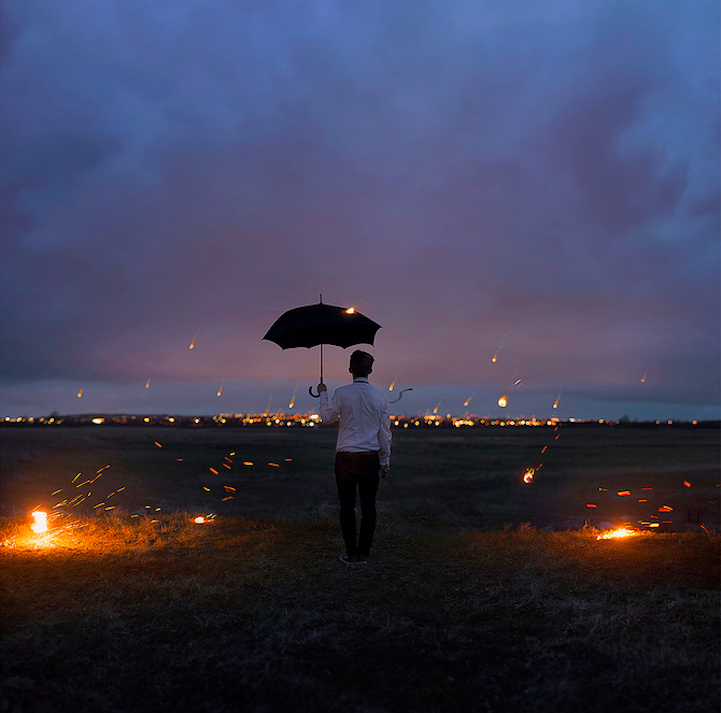
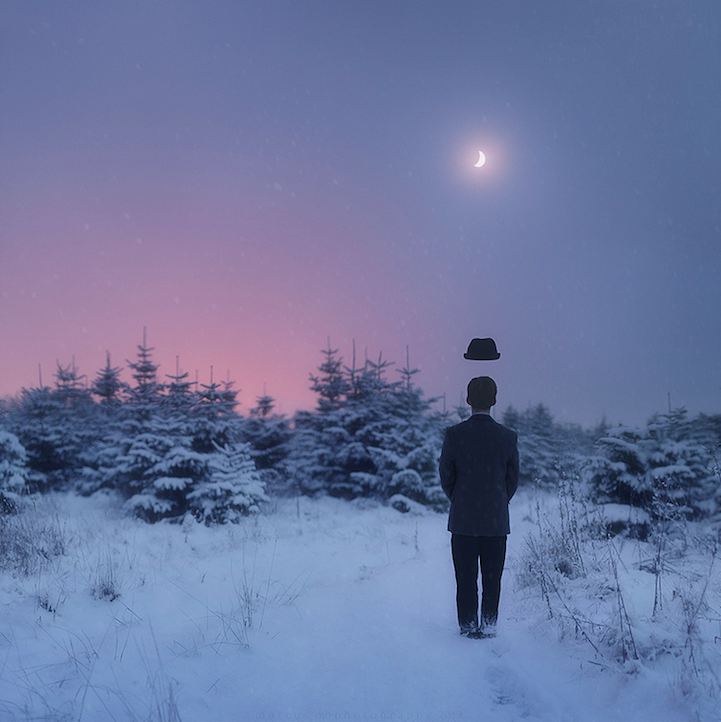
Choose the one image that still bothers you in a good way—the frame you cannot summarize with a single adjective—and try to rebuild its setup near home with props you already own. You will learn quickly whether the spark was the exotic location or the decision. For Bitsch, the decision usually arrived first; place only finished what the idea already required.

Comments
Continue reading

Dramatic Photo Art by Sukron Ma’mun (Ipoenk Graphic)
Cirebon, Indonesia photographer Sukron Ma’mun uses theatrical natural light to frame village life, play, and place in lyrical photo art.

Bird’s-Eye Views: Florian Beaudenon’s Instant Life
Paris photographer Florian Beaudenon’s Instant Life series captures people in their rooms from above—intimate, collaborative overhead portraits of everyday joy.
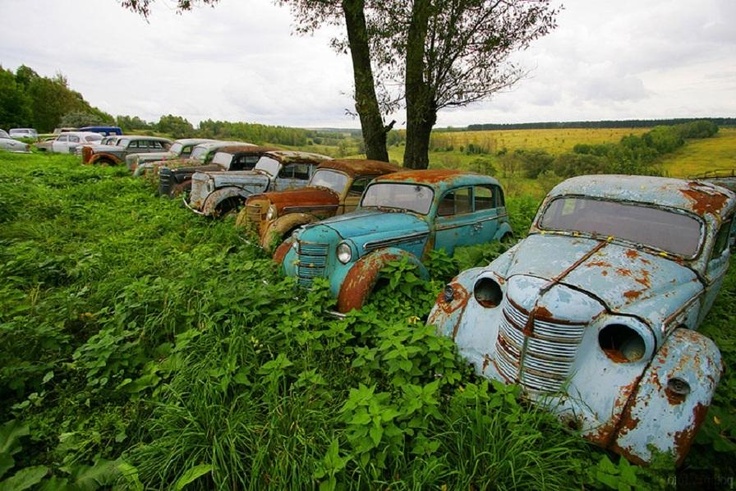
Abandoned Cars Reclaimed by Nature: Rust, Growth, and Quiet Ruin
When neglected vehicles are left outdoors long enough, rust, moss, and trees rewrite them into strange still lifes—sad, photogenic, and slowly returning to the ground.