
15 Perfectly Timed Animal Photos: Predator, Prey, and the Decisive Second
Fifteen wildlife frames—from salmon-run bears to ospreys, puffins, and savanna hunts—where shutter timing freezes predator and prey in one readable instant.
Wildlife photography rewards patience, but the frames people remember are rarely the patient ones. They are the fractions of a second when a jaw closes, a wing beats once more, or a fish clears the surface just as talons arrive. The fifteen photographs below belong to that category: predator and prey locked into one readable instant, frozen hard enough that you can study what the animals themselves never get to review.
Most of these pictures come from hunting sequences—bears at falls, raptors over water, reptiles on sand, mammals on grass. That is not cruelty as spectacle; it is ecology made visible. Timing is the craft. Focus, shutter speed, and position are the tools. What follows is a walk through each frame for what it shows about animal behavior and about the photographer’s decision to press the shutter then, not a heartbeat earlier or later.
1. Brown bear, salmon, and the leap that continues
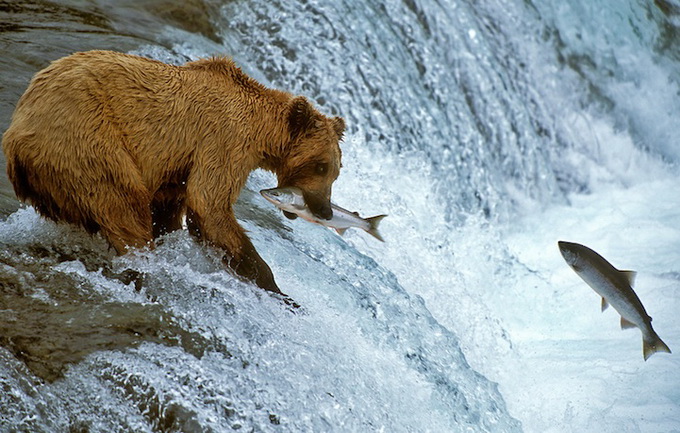
A wet brown bear stands in whitewater with a silver salmon already clamped across its jaws. At the same instant, another fish arcs upward through spray in the lower right, still fighting the fall. The photograph holds success and attempt in one plane: the meal secured, the next jump unfinished. Foam and blue water soften behind sharp fur and fin, so the eye reads the story before it notices the technical difficulty of freezing two subjects against chaos. Falls like this are classic salmon-run stages; the perfect timing is not only the catch but the second fish still in the air.
2. Alligator and the mid-gulp fish
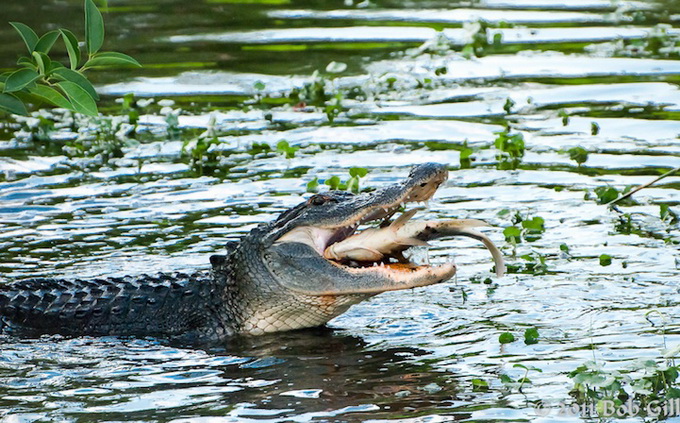
An American alligator rises from dark water with jaws hinged open and a silvery fish curved across the pink interior of the mouth. Duckweed and floating green clutter the surface; overhanging leaves blur at the edge. Teeth and wet scales catch daylight while ripples radiate from the strike. The moment is neither fully before nor fully after the swallow—it is the awkward, graphic middle. Credit often goes to Bob Gill for frames in this vein: close enough to see osteoderm texture, far enough to keep the water’s surface as context. Timing here means waiting for the head lift when the prey is still readable as a whole fish.
3. Pond heron lifting with a rodent
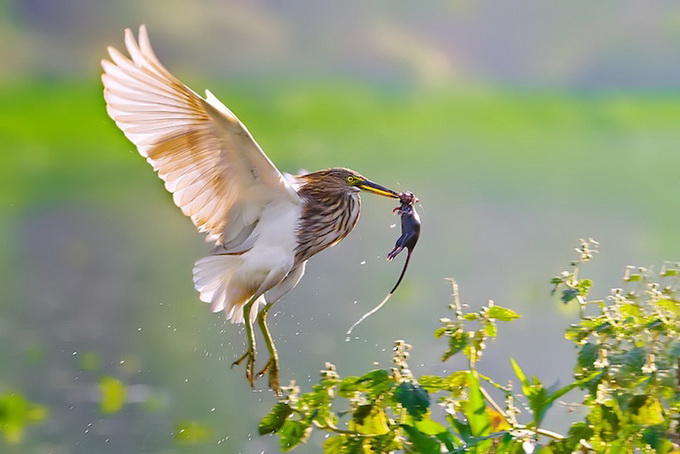
White wings flare upward as a streaked brown heron launches from leafy bank cover, a small rodent clenched in the beak and a thin tail hanging like a line. Water droplets hang in air around the takeoff. Soft lime and yellow bokeh erase the far field so the flight becomes a single event. Herons hunt with long stillness; photographs of them succeed when the stillness ends. The decisive frame is not the stalk but the first beat after the grab—prey secured, body committed to air, background already irrelevant.
4. Snake and chameleon on dry sand
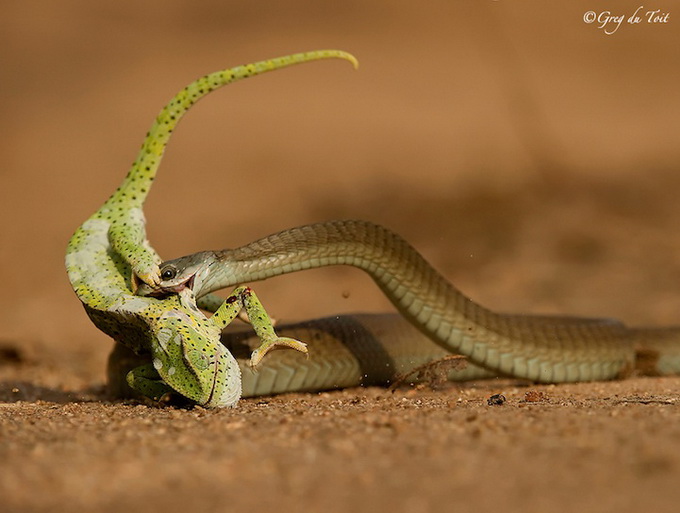
On reddish soil, a slender tan snake has locked onto a lime-green chameleon’s head. The chameleon’s prehensile tail coils in an S; one foot splays as sand grains kick up at the contact point. Warm, shallow-focus background turns the struggle into a stage. Watermarks associated with Greg du Toit appear on related African work of this kind. Camouflage failed this time—the green body reads as a signal against dust—and the timing freezes the first solid bite, when outcome is clear but the thrash is still unfinished.
5. Bald eagle carrying a mallard
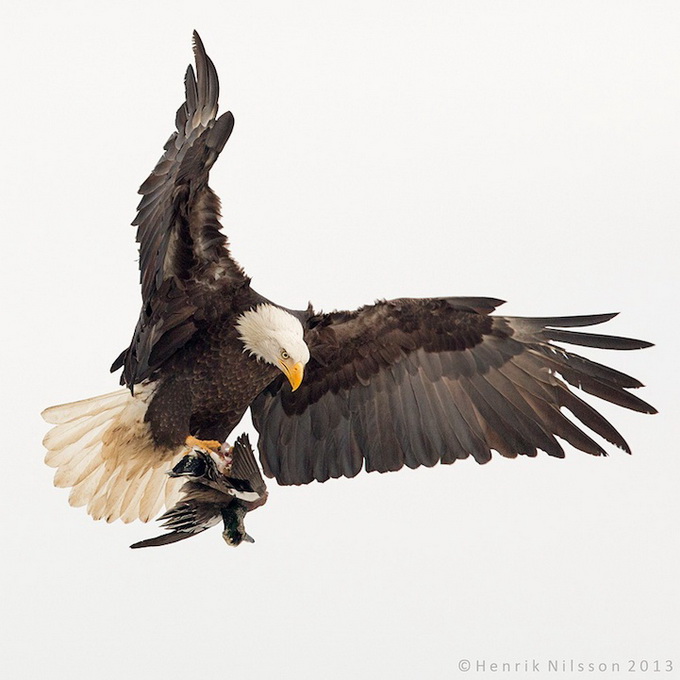
Against a blank pale sky, a bald eagle flies with white head lowered toward a mallard gripped in yellow talons. One wing arches high; the duck’s green head and chaotic wing angles contrast with the eagle’s controlled span. Isolation of subject—no shoreline, no trees—turns the pair into a diagram of power and mass. Henrik Nilsson’s credit on similar 2013 frames underlines how clean backgrounds make timing readable: you see the grip, the wing set, and the weight of the load without environmental clutter competing for attention.
6. Water snake swallowing a fish
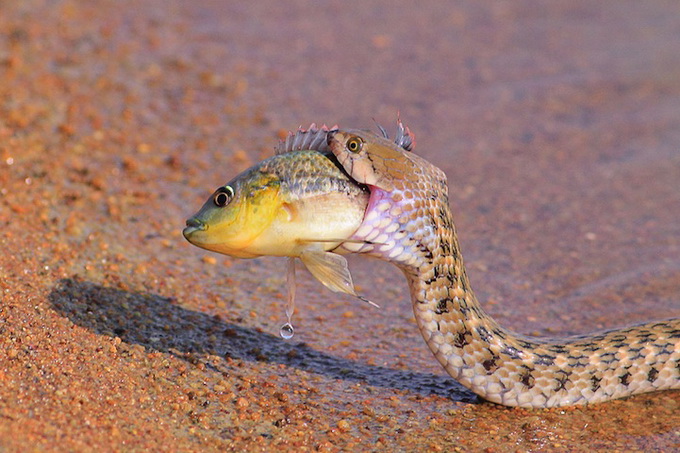
On coarse wet sand, a checkered water snake forces a yellow-green fish sideways into an astonishingly wide gape. Pale skin stretches between scales; a single water droplet hangs from a fin, proof that the lift from water was only moments ago. Shadow falls crisp on the bank. Jaw mechanics are the biological marvel; the droplet is the photographic one. Perfect timing here means catching the swallow mid-process—fish still identifiable, snake still working—rather than a finished lump under skin.
7. Hoopoe with a caterpillar
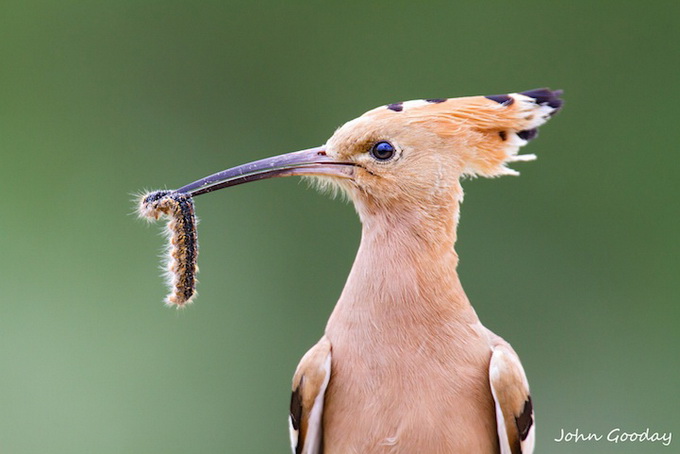
A cinnamon-breasted hoopoe faces left in profile, crest folded, black-and-white wing tips peeking in, a fuzzy dark caterpillar held at the tip of the long curved bill. Olive bokeh fills the rest. John Gooday’s name appears on related credits. Compared with the louder kills elsewhere in this set, this frame is quiet success: prey intact, eye sharp, background emptied. Timing for insectivores is often about the transfer from ground to beak before the morsel drops or is crushed beyond recognition. Here the caterpillar’s hairs remain readable—proof of a clean capture.
8. Great gray owl and the mouse in snow
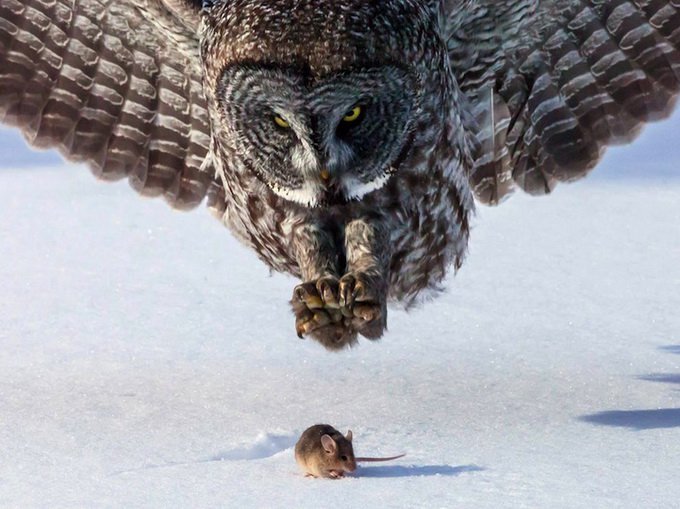
A great gray owl fills the upper frame, yellow eyes locked forward, facial discs and white “mustache” clear, wings barred and open, feathered legs thrusting talons toward a tiny mouse on bright snow. Cool blue-gray blur behind keeps winter simple. The photograph sits one instant before contact—the most tense kind of timing, when both animals are still separate subjects. Low angle and head-on approach make the owl monumental; the mouse looks almost unaware. Shutter speed freezes feathers without softening the snow’s glare.
9. Osprey clearing the water with a fish
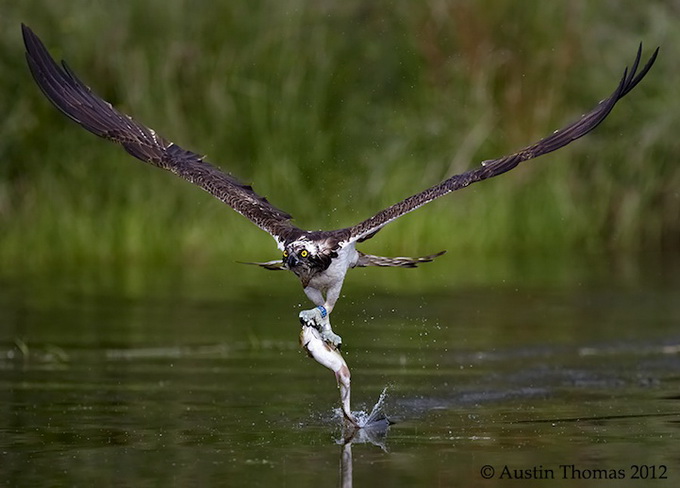
An osprey flies straight at the lens, wings in a high V, yellow eyes sharp, a silver fish still trailing a wake as its tail kisses the surface. Reflection doubles the catch; marsh green softens behind dark water. A blue leg band marks this bird as studied as well as photographed—Austin Thomas’s 2012 credit appears on related files. Ospreys often rotate fish head-forward for flight; catching the exit splash proves the dive just ended. Timing equals the instant when bird, fish, and water still share one physical connection.
10. Pelican pouch mid-swallow
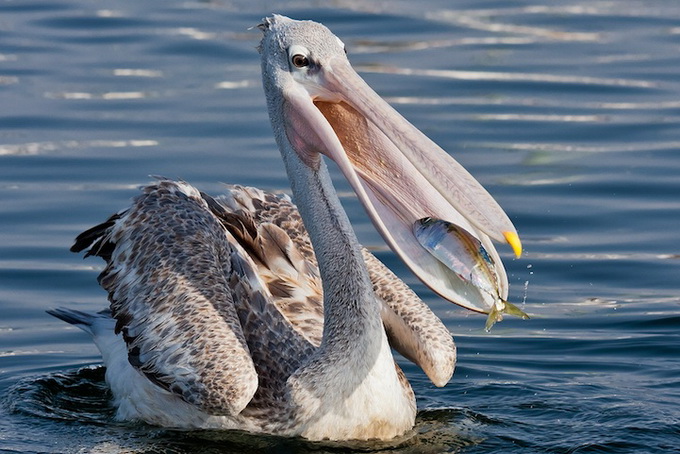
A pelican floats on blue-gray water with the lower mandible stretched into a translucent pouch, a whole silvery fish standing vertical inside it. Droplets hang at the rim. The upper beak’s hook and the bird’s sidelong eye complete a portrait of feeding anatomy in use. Pelicans can look almost comic until you see the pouch working; then the design becomes serious. The perfect frame is the open pouch with prey still whole—after the scoop, before the gulp that hides everything.
11. Atlantic puffin loaded with sand eels
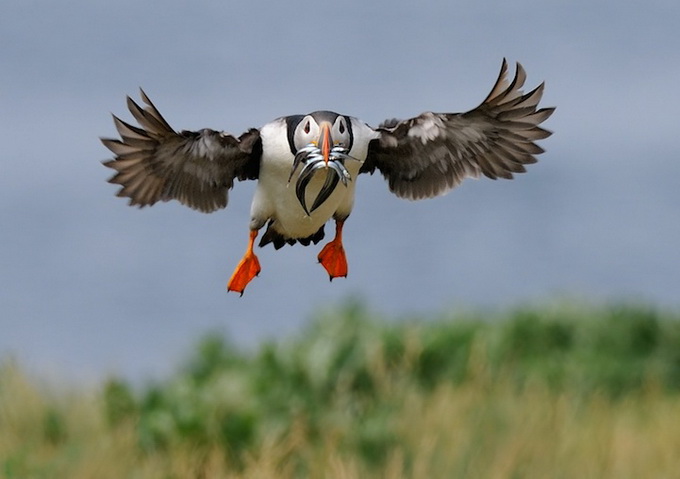
Head-on, an Atlantic puffin flies toward the camera with a colorful beak stacked with multiple thin silver fish, orange feet dangling, wings extended against a soft cliff-meadow blur and overcast sky. Wingtip blur hints at continuous flapping. Colony returns with full bills are iconic precisely because they are hard to catch clean: focus on the face, fish still aligned, bird centered. Timing here is arrival theater—the load displayed before the burrow swallows the story.
12. Leopard seal and Gentoo penguin underwater
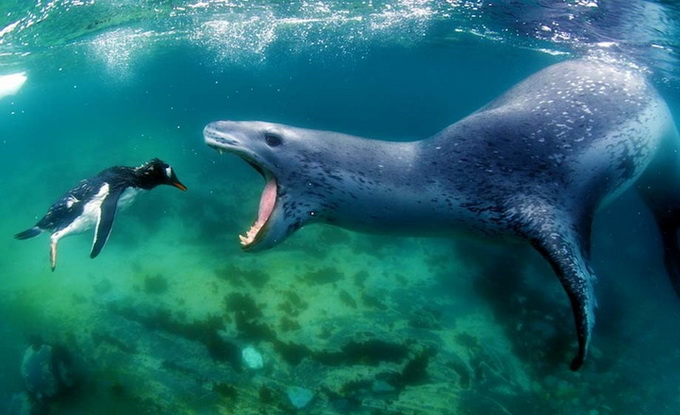
Under turquoise water, a spotted leopard seal opens a vast pink mouth toward a Gentoo penguin marked by its white eye patch and orange-red bill. Surface light and bubbles sit above; dark bottom texture below. Scale difference does the narrative work. Antarctic underwater hunting is fast and three-dimensional; a side-profile wide view that holds both animals sharp is rare. The frame sits before contact—the seal committed, the penguin still separate—so viewers feel the next inch without seeing the finish.
13. Red-tailed hawk with a squirrel
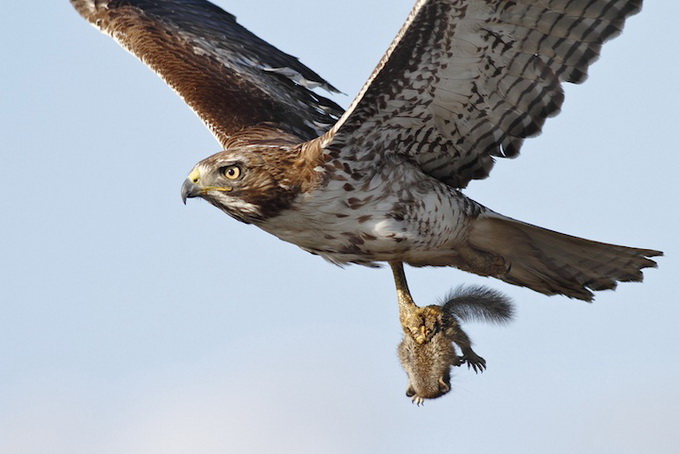
Against pale blue sky, a red-tailed hawk banks with banded underwings spread and a gray-brown squirrel clutched in one foot. Yellow eye and hooked beak stay intent; the squirrel’s bushy tail hangs as dead weight. Urban and suburban edges produce these scenes as often as wilderness, which is part of why they startle: familiar birds, sudden prey. Timing means catching level flight after the snatch, when both animals are fully airborne and identifiable, not a blur in a tree crown.
14. Lion on Cape buffalo
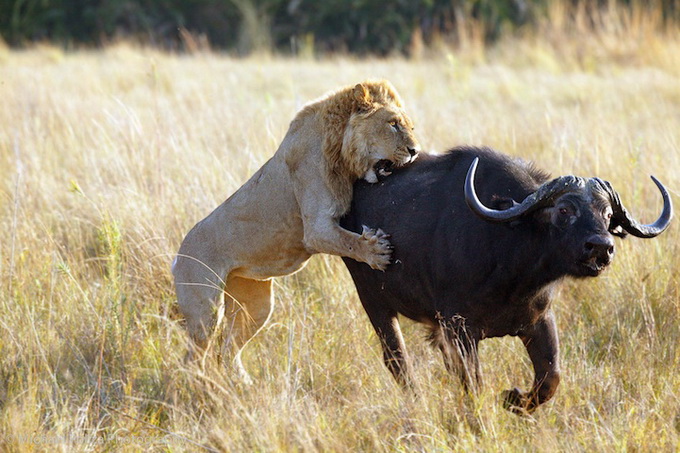
In dry yellow grass, a maned male lion rears against a dark Cape buffalo, claws in the hide, mouth open on the shoulder while the buffalo’s eye and sweeping horns fill the near frame. Soft distant trees keep the savanna as setting, not subject. Credits linked with Michael Poliza appear on related African files. Buffalo hunts are chaotic and dangerous for photographers as well as predators; a readable contact moment—weight committed, bite visible, horns still in play—is the difference between a usable frame and a smear of dust.
15. Zebra and spotted hyenas
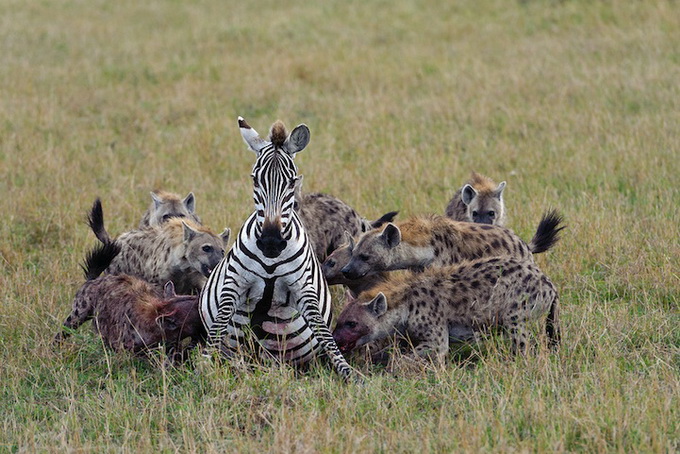
A plains zebra sits upright facing the camera while a cluster of spotted hyenas works its hindquarters on open grass. Ears forward, stripes sharp, wounds visible—the posture is strangely formal against the feeding pack. This is the hardest image in the set to look at, and the most honest about what “perfectly timed” can mean: not triumph, but a transitional second when life and death still share one body. Soft grassland behind refuses distraction. Timing here is documentary courage more than athletic freeze.
What the set teaches about shutter choice
Across falls, wetlands, snow, reef shallows, and savanna, the shared skill is anticipation. Photographers who make these files learn animal rhythms—when a heron will lift, when an osprey will clear water, when a lion commits weight—then position themselves where that rhythm becomes geometry. Fast shutters help, but they do not invent the moment. Distance and ethics matter too: long glass, respect for space, and refusal to bait animals for drama separate serious wildlife work from spectacle farming.
If you return to only three frames, take the bear with the leaping salmon (two actions at once), the owl above the mouse (one instant before contact), and the osprey still attached to the waterline (exit splash as proof). Study where focus sits, how much background is allowed to speak, and whether prey remains identifiable. Then go outside with a slower checklist: know the species, know the light, and wait for the second that rearranges the scene instead of merely filling the memory card.

Comments
Continue reading
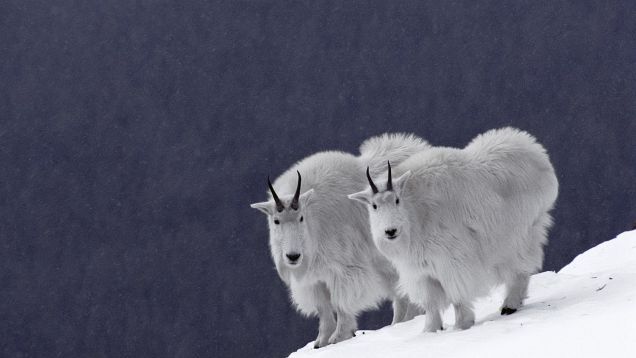
Amazing Animal Photos #2: Thirteen Frames of Timing and Temperament
From mountain goats and polar sparring to flamingo strides and elephant family lines—thirteen animal photographs that hinge on contact, motion, and stillness.
Funny Animal Signs That Warn People (While Animals Ignore Them)
From a seagull on a no-birds disc to classic zoo and park ironies—why animal warning signs get funny, and what the rules are still for.
How to Find Local Amenities on Vacation: Mechanics, Haircuts & More
Locate trustworthy local services and everyday spots while traveling or settling in—using publications, reviews, map apps, neighbor tips, and low-pressure exploration.