
Potholes: Davide Luciano and Claudia Ficca’s Street Tableaux
Photographers Davide Luciano and Claudia Ficca stage witty, in-camera scenes inside real potholes across New York, LA, Toronto, and Montreal.
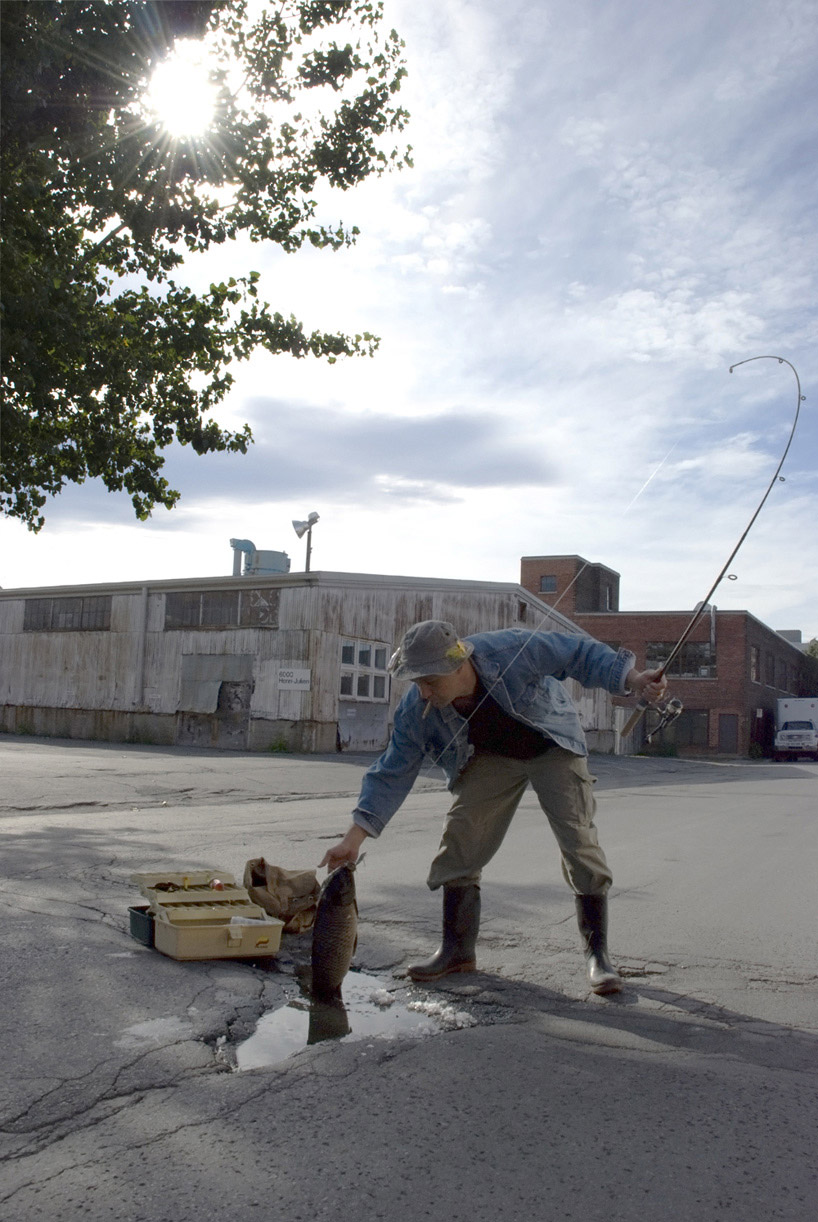
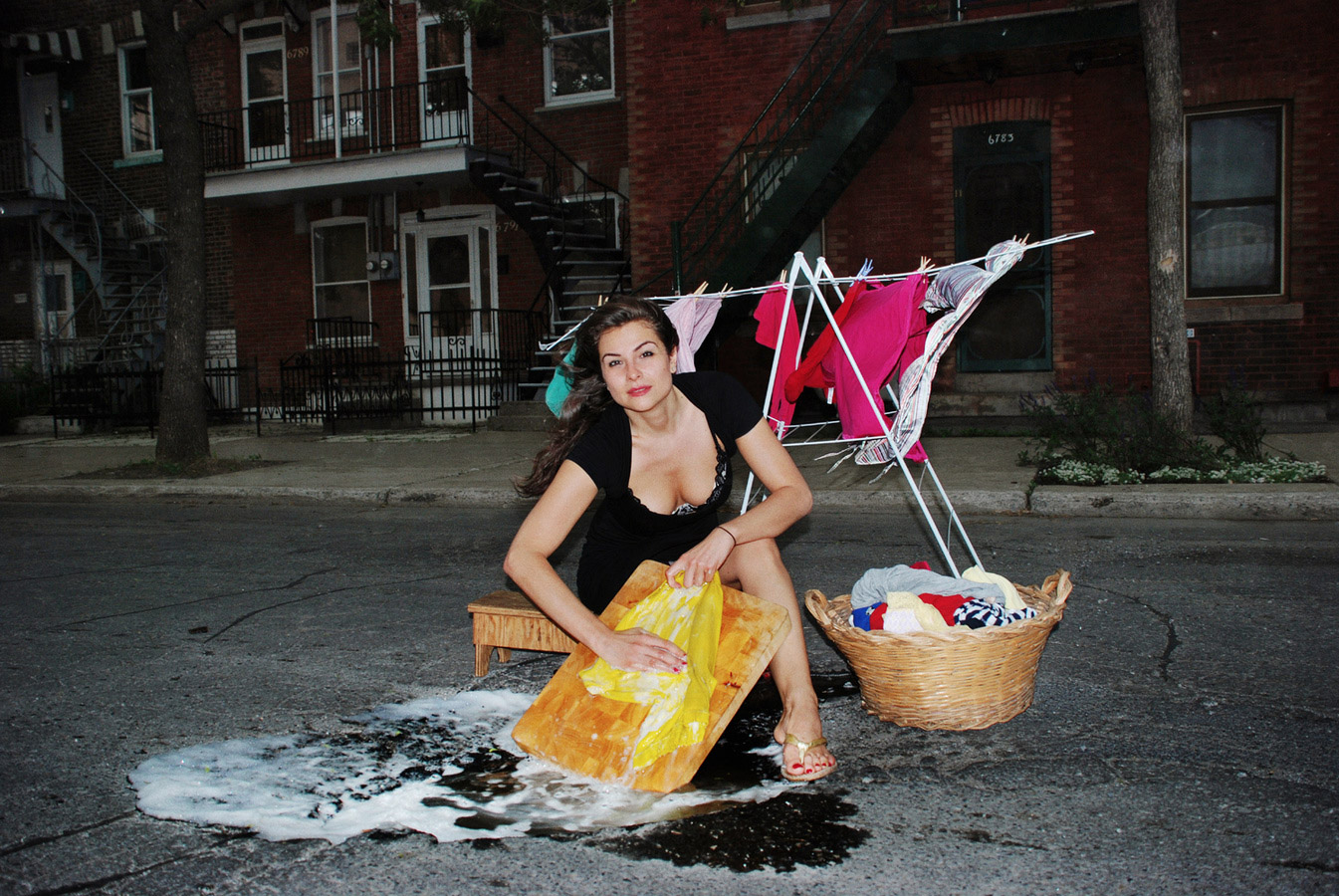
Davide Luciano and Claudia Ficca treat potholes as ready-made stages. Where most drivers see only damage and delay, the photographer couple builds miniature scenes inside the broken asphalt: laundry day, leisure, rescue fantasies, and other tongue-in-cheek tableaux that make a civic nuisance look briefly enchanted.
Their series Potholes grew from a familiar urban irritation. After hitting a crater-sized hole—accounts of the project often place the spark in Montreal, with a painful repair bill attached—they joked about what else might happen in such a hole. A woman washing laundry was an early mental image. The joke refused to stay verbal. Props, friends, and careful timing turned it into an ongoing photographic practice across cities that share the same cracked pavement problem.
Cities as shared material
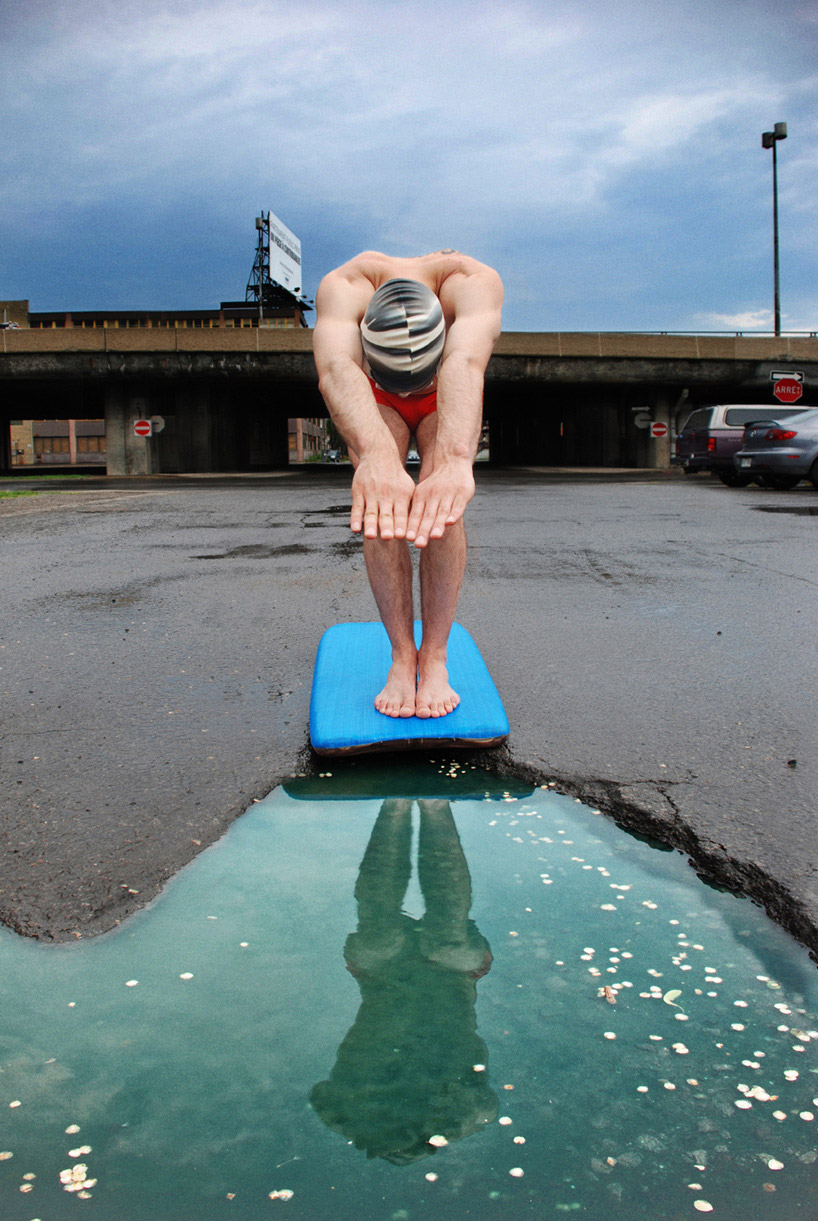
The project travels. Luciano and Ficca have worked with holes in New York City, Los Angeles, Toronto, and Montreal—places where winter freeze-thaw, heavy traffic, and deferred maintenance keep supplying fresh craters. The pothole becomes a universal prop: ugly enough to recognize instantly, deep enough to hold a scene, public enough to feel like commentary without a caption lecture.
Because the backdrop is real street, each photograph keeps a documentary edge. You can still see tire-stained asphalt, lane paint, and the ordinary mess of curb life. Surrealism arrives through scale and situation, not through digital sky replacement. A tiny narrative sits inside a civic failure, and the failure remains visible.
That dual visibility is why the series travels well online and in exhibitions. Viewers in cities that never appear in the frame still recognize the hole. Infrastructure anxiety is a shared language. Luciano and Ficca simply translate it into comedy without erasing the original problem.
Comedy with a straight face
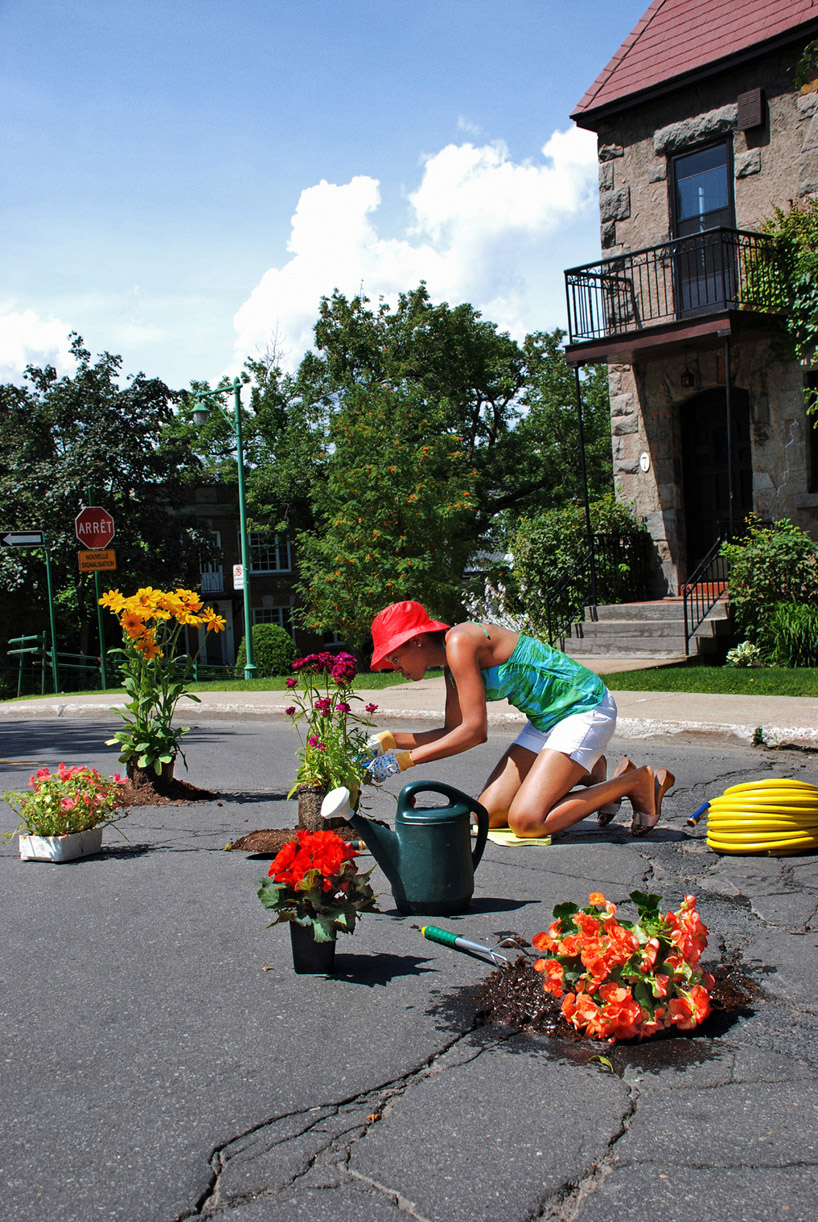
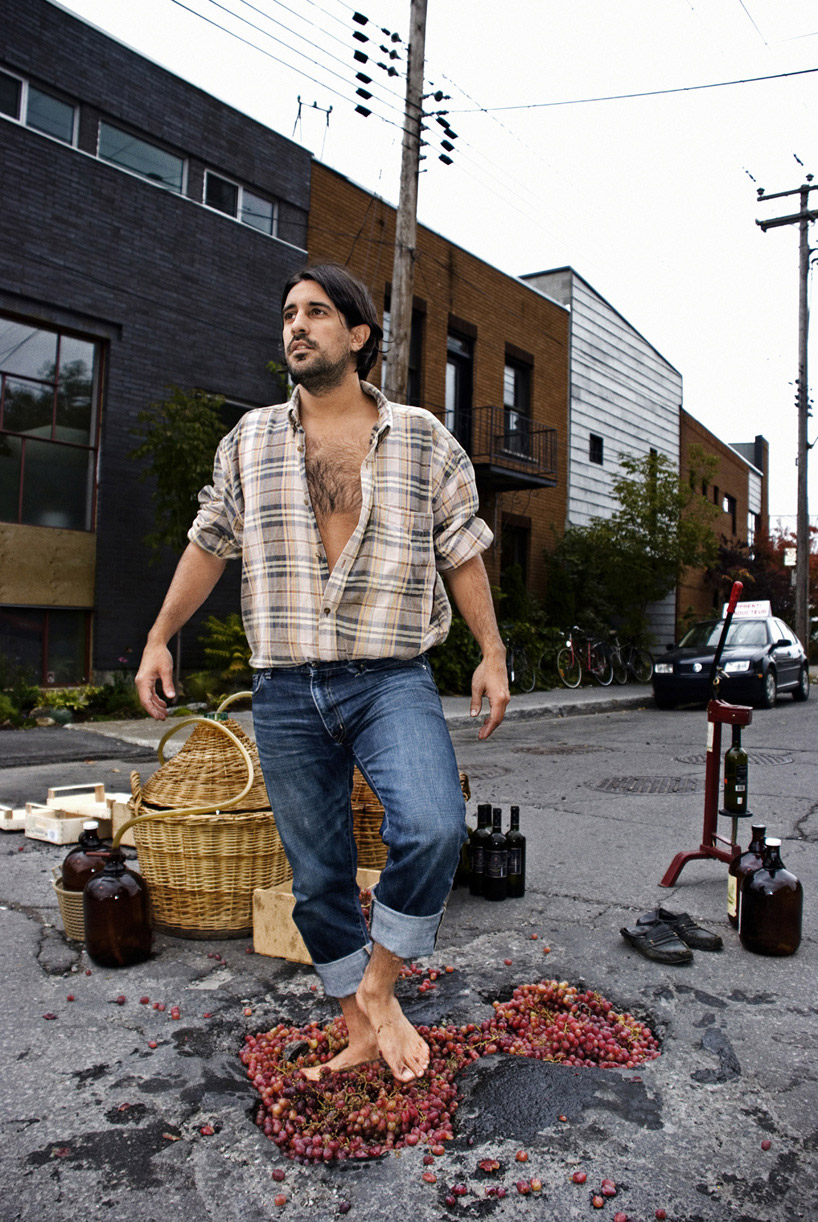
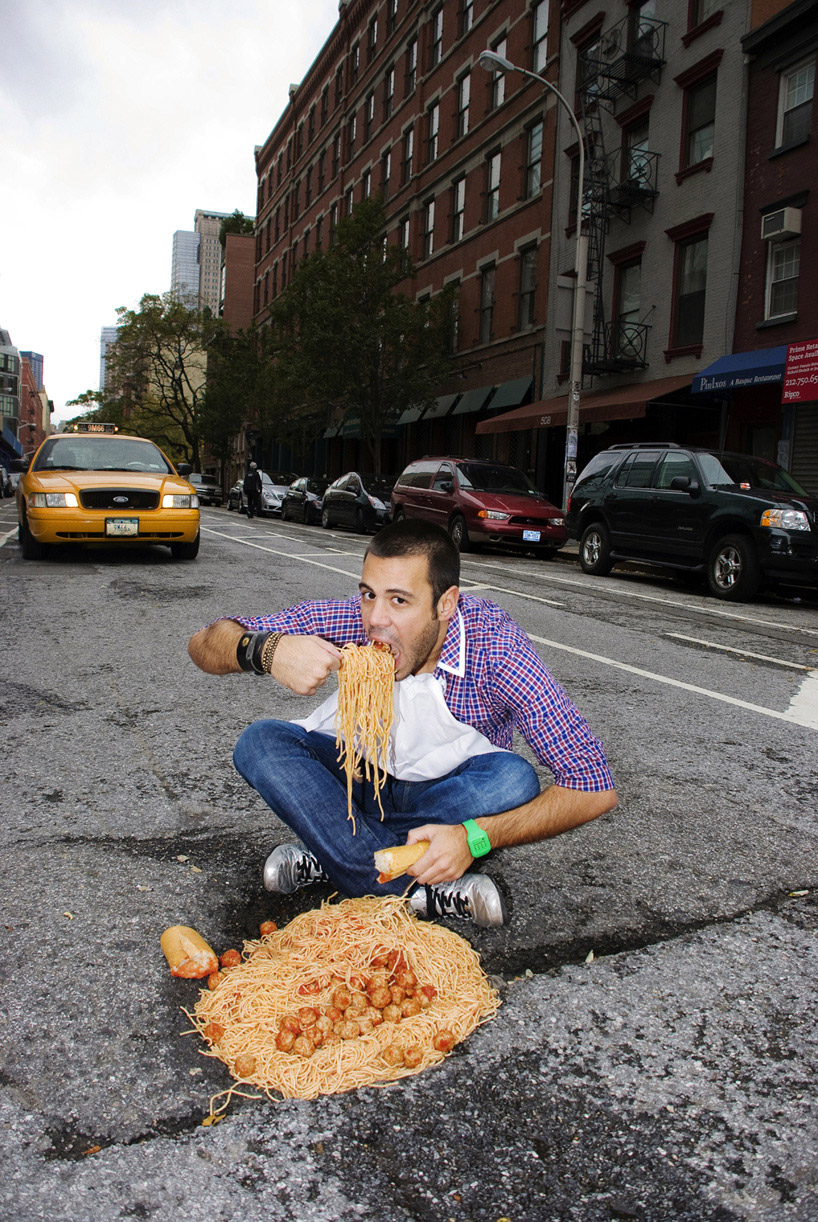
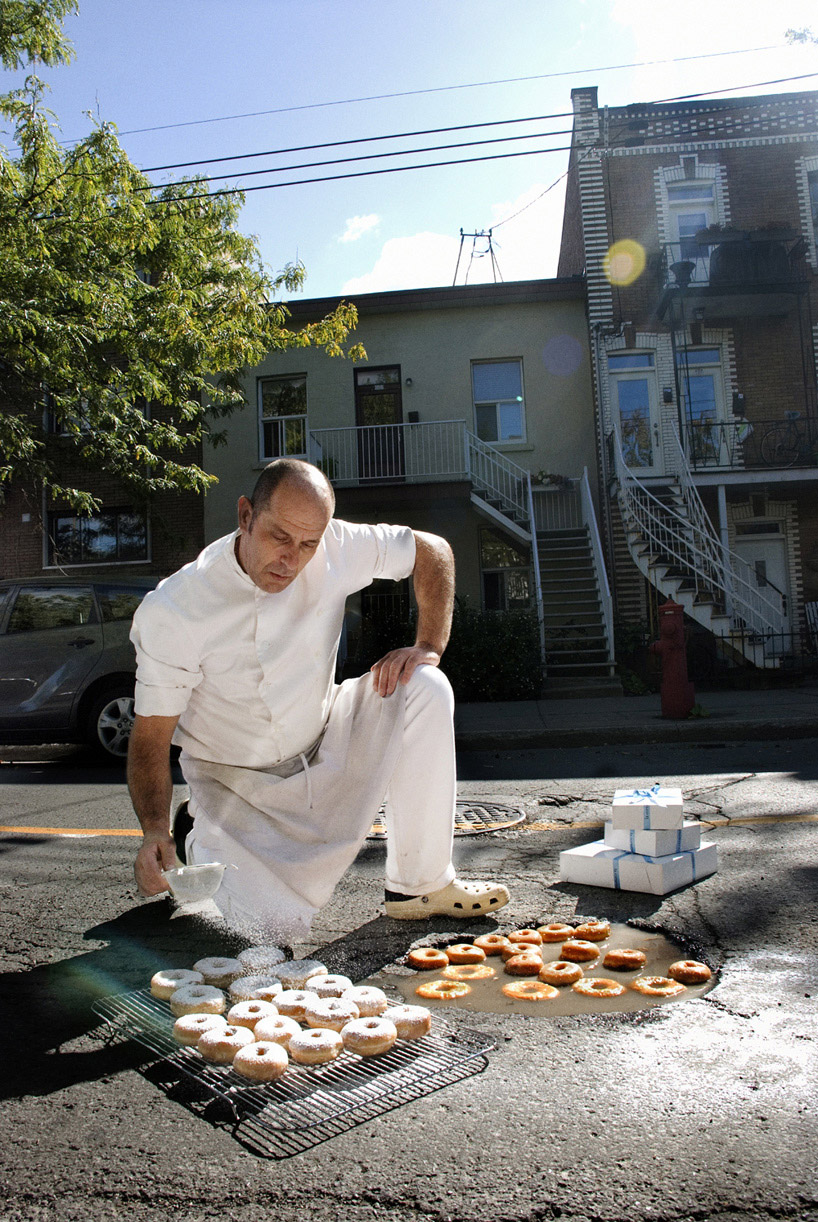
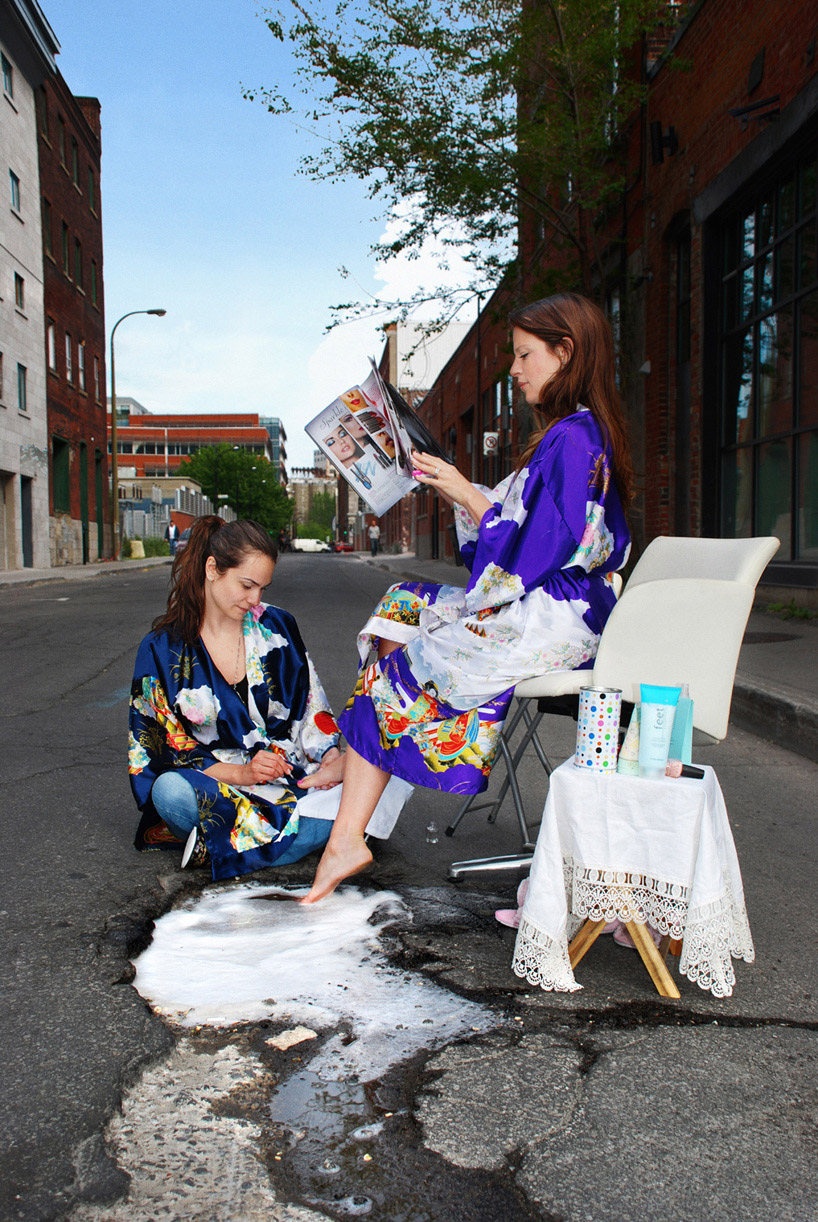
The humor works because the staging is earnest. Models commit. Props are chosen for silhouette and story—laundry, toys, tools, body parts that are clearly props, beach-rescue echoes, domestic chores displaced onto the roadway. The camera angle often looks down into the hole or frames it so the street becomes a proscenium. You get the pleasure of miniatures and the sting of recognition at once.
Luciano and Ficca have described the series as transforming bad into good: a useless hazard temporarily reassigned as a playground for invention. That does not romanticize neglected infrastructure so much as refuse to let frustration be the only available response. The photos laugh without pretending the holes should stay.
Commitment is the difference between a meme and a photograph that holds up on a gallery wall. If the model looks embarrassed, the spell breaks. If the model treats the crater as a real workplace or playground for the duration of the shot, the viewer grants the fiction. The couple’s direction keeps that contract intact frame after frame.
No Photoshop, little time
A crucial production fact: the scenes are built and shot on location, typically during live traffic conditions, with careful pre-planning so the team can work in roughly ten minutes from setup to departure. That constraint shapes the aesthetic. Everything must be portable, readable at a glance, and quick to stabilize. Rocks might brace a prop. Friends and family often help. The photograph has to succeed in-camera because the street will not wait for a second lighting truck.
Ficca has emphasized that the objects are props and that the images are not composites in the usual digital-fantasy sense. The magic trick is logistics plus imagination. When a prosthetic arm balances long enough for a frame, or a stuffed animal holds its place in a puddle of shadow, the “surreal” effect is physical theater compressed into a still.
New York shoots, Luciano has noted, were among the hardest because of traffic density and narrow streets. Pre-production becomes half the art: who carries which bag, where the model stands first, which prop goes down last, who watches for cars. The finished picture looks playful; the minutes behind it look like a pit crew.

Reading the series as urban satire
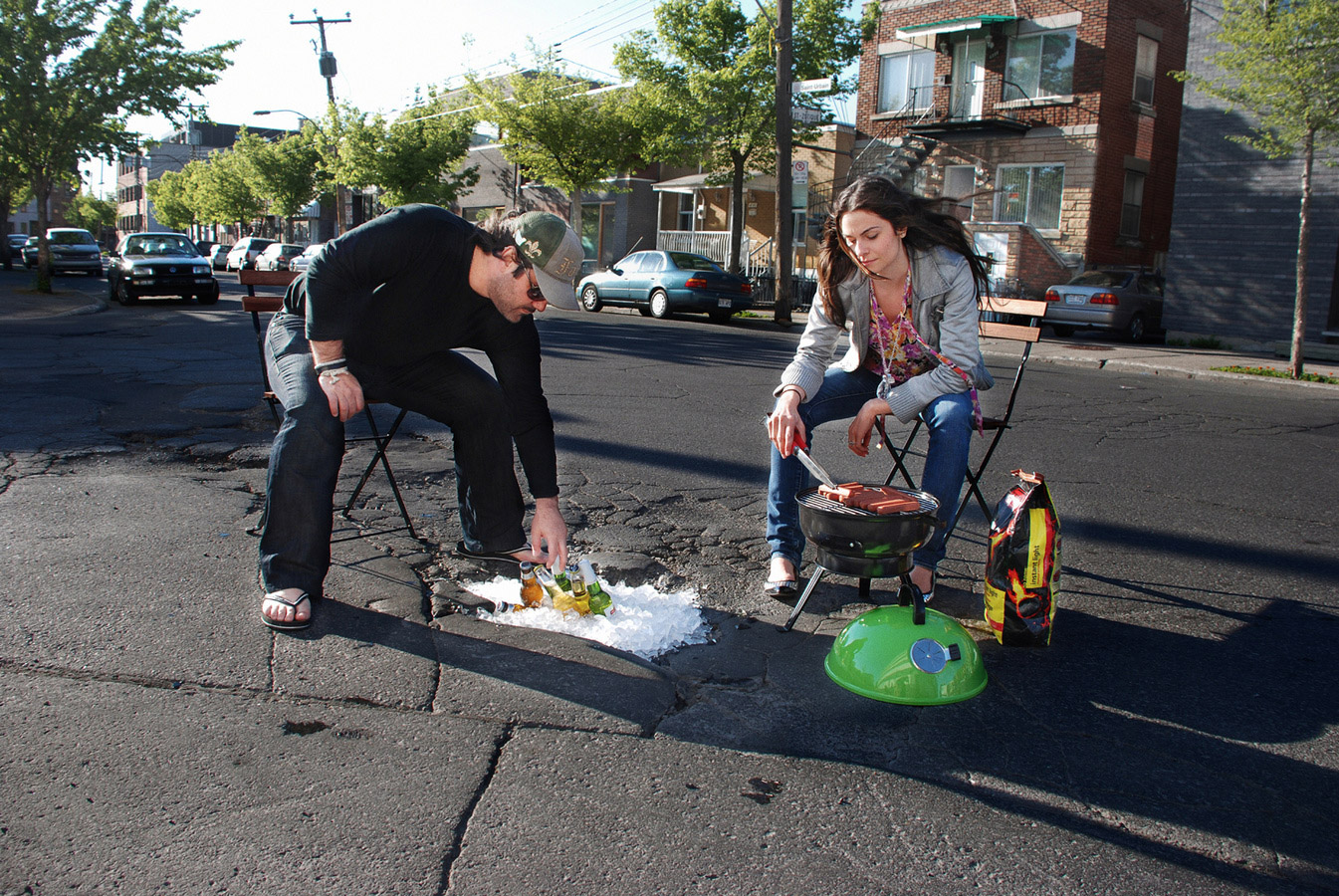
On one level, these are simply delightful pictures—clever, shareable, light on their feet. On another, they are a soft satire of how cities manage (or fail to manage) the ground under wheels and feet. A pothole is bureaucracy made visible. Filling it is expensive, contested, and endlessly postponed. By temporarily “using” the hole, Luciano and Ficca expose how long it has been available as unused negative space.
The work also plays with scale and care. Domestic acts—washing, playing, resting—look absurd when dropped into traffic space, which is exactly why they land. Private life and public infrastructure collide. The collision is funny until you remember you have swerved around the same kind of crater on the way to work.
There is a second satirical edge aimed at photography itself. Street photography often hunts decisive moments that already exist. This series invents decisive moments inside a flaw everyone else tries to avoid. The camera does not merely witness the city; it briefly reassigns the city’s failures as sets. That is intervention as much as documentation.
Collaboration as method
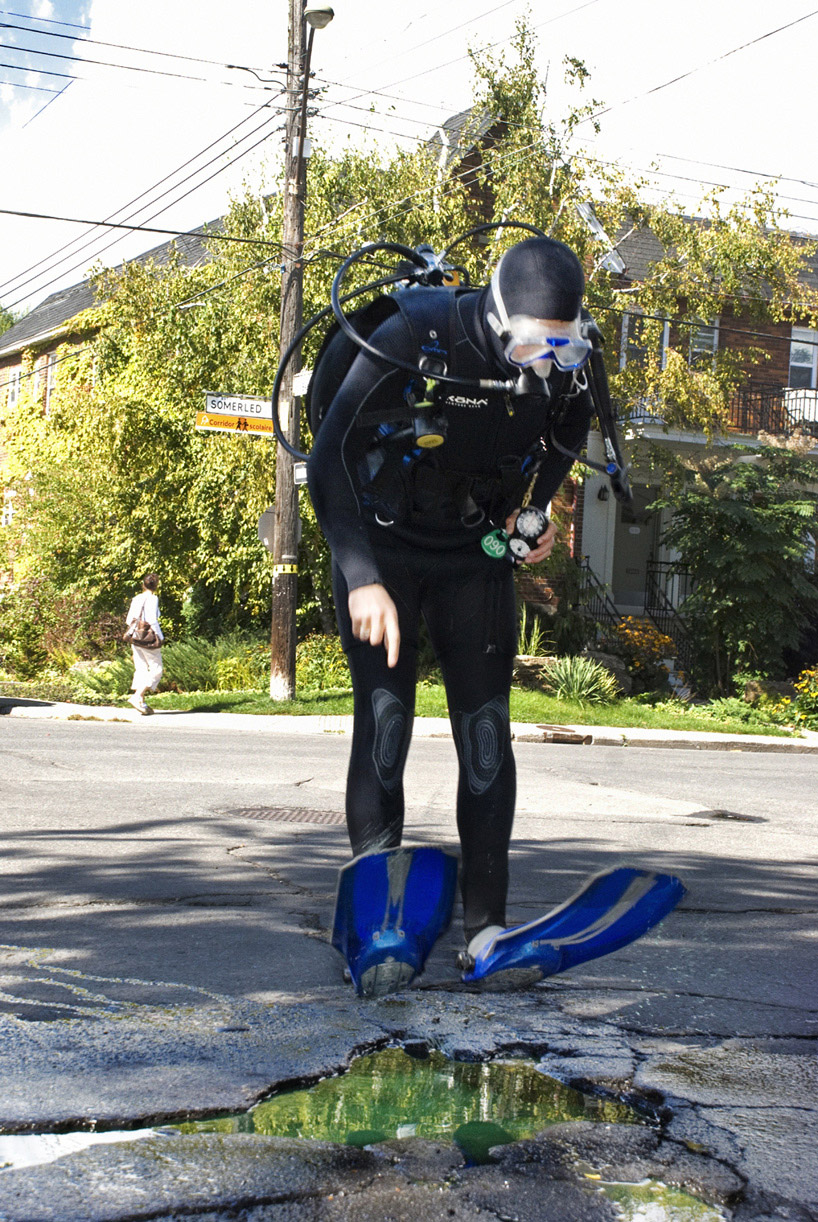
Luciano and Ficca work as a couple and as a crew. Ideas bounce between them; execution depends on trust and speed. Early on they used themselves as models; later, a wider circle of participants expanded the cast. That social engine matters. The series is not a lone genius myth. It is a portable production company that can arrive at a hole, build a world, and leave before the light—or the traffic officer—changes the terms.
Their broader practices in photography and image-making support the project’s polish. Composition stays disciplined even when the premise is silly. Color, gesture, and the geometry of the crater are considered. The joke never excuses a lazy frame.
Collaboration also explains the tonal consistency across cities. Different asphalt, same sensibility: deadpan wonder, careful color, and a refusal to sneer at the viewer. The photos invite you in on the joke rather than scolding you for living in a place with bad roads. That generosity keeps the satire from curdling into smugness.
Props, water, and the problem of belief
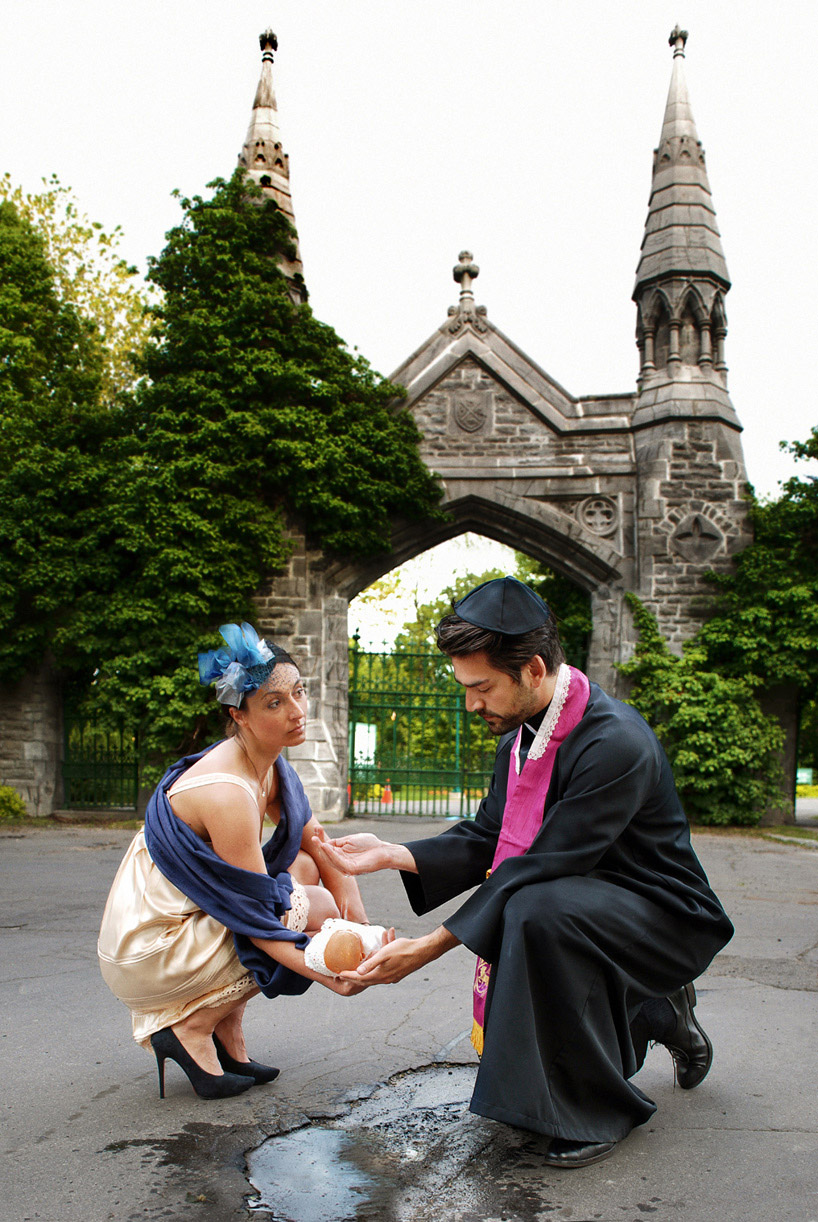
Many of the strongest frames depend on a prop that looks almost too specific: a washbasin, a toy, a fake limb, a piece of leisure gear that should not exist in a traffic lane. Specificity is what triggers belief. Vague “stuff in a hole” would read as litter. A clearly chosen object reads as intention, and intention is what lets the brain accept the miniature narrative.
Water and wet asphalt help. Reflections deepen the crater visually and make domestic washing scenes feel weirdly plausible. Dusty holes lean toward desert or excavation jokes. The couple reads each crater the way a location scout reads a warehouse: what story does this shape already suggest, and what prop will complete it in under ten minutes?
What to notice while scrolling the gallery
Look first at the hole’s shape—the irregular shoreline of broken asphalt—and how the scene nestles into it. Then notice eyelines and hand gestures; they sell the fiction in seconds. Finally, scan the edges of the frame for ordinary city evidence: manhole textures, wet pavement, a curb’s scuff marks. Those details keep the fantasy honest.
Ask a simple question of each image: if the city had filled this hole on schedule, what comedy would we have lost—and what smoother morning would we have gained? The series thrives in that unresolved space between delight and complaint.
Also watch for repeating compositional habits: the crater as bowl, the street as horizon, the human figure scaled to the damage. Once you see that grammar, you can appreciate how small variations—prop color, gesture, depth of hole—keep the series from becoming a single gag repeated forever.
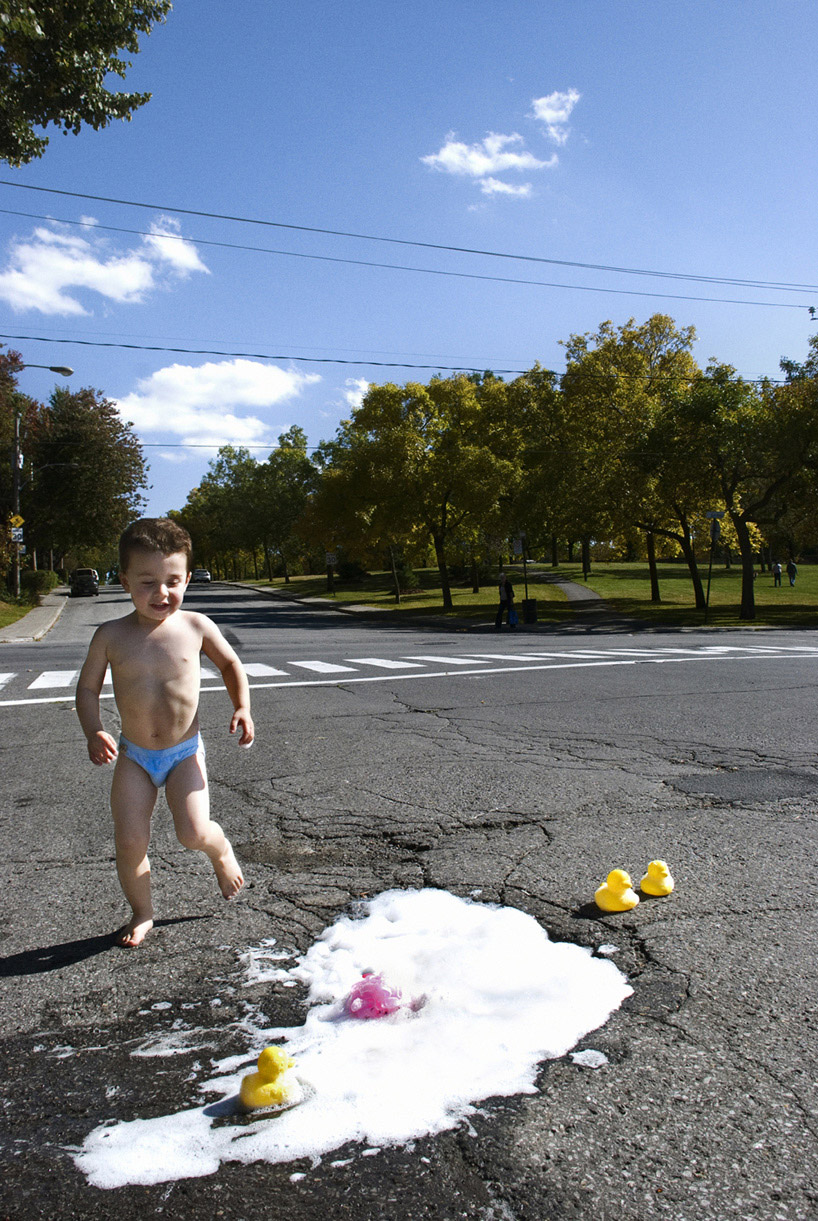
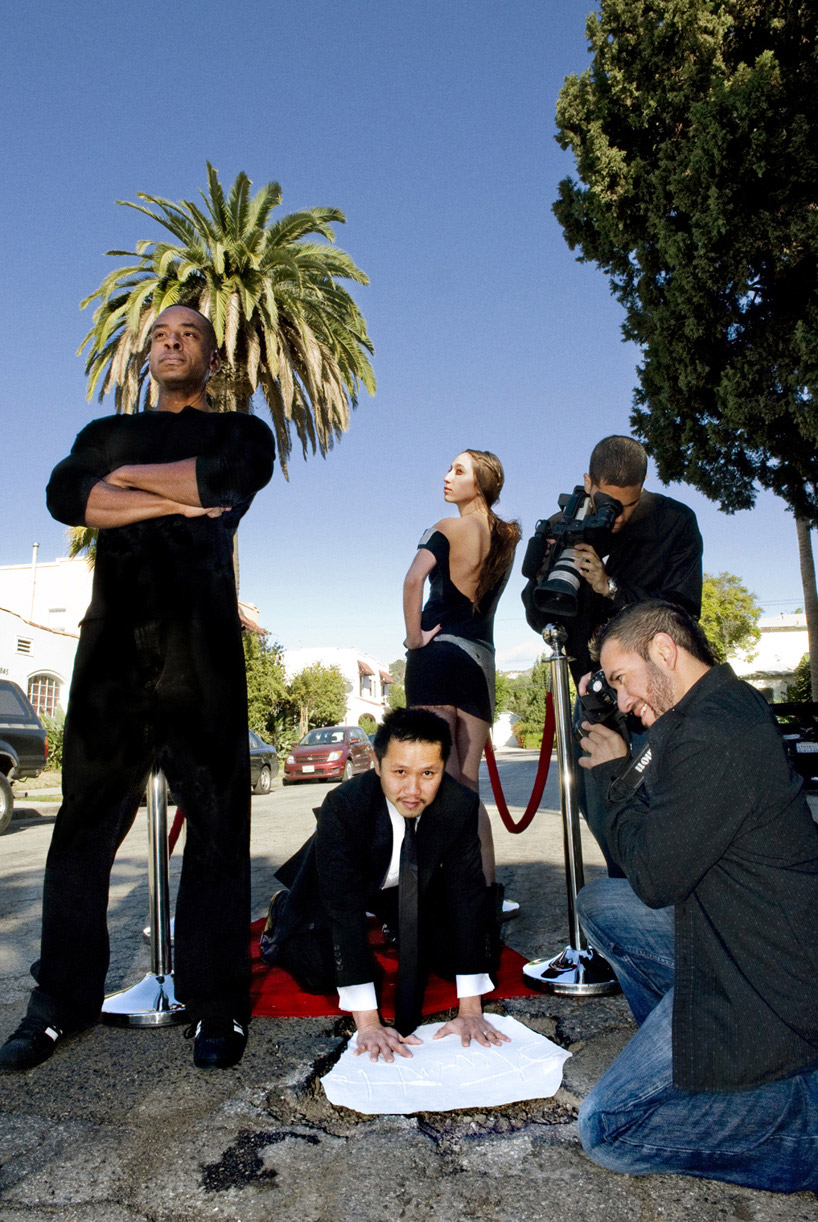

Somewhere in one of those ten-minute windows—props braced, model settled, cars still moving—the shutter catches a complete little world before the street reclaims the hole as hazard again. That narrow interval is the real medium of Potholes: not asphalt alone, and not comedy alone, but the brief permission a city accidentally grants when it leaves a crater open long enough for artists to climb inside.

Comments
Continue reading

Dramatic Photo Art by Sukron Ma’mun (Ipoenk Graphic)
Cirebon, Indonesia photographer Sukron Ma’mun uses theatrical natural light to frame village life, play, and place in lyrical photo art.

Bird’s-Eye Views: Florian Beaudenon’s Instant Life
Paris photographer Florian Beaudenon’s Instant Life series captures people in their rooms from above—intimate, collaborative overhead portraits of everyday joy.
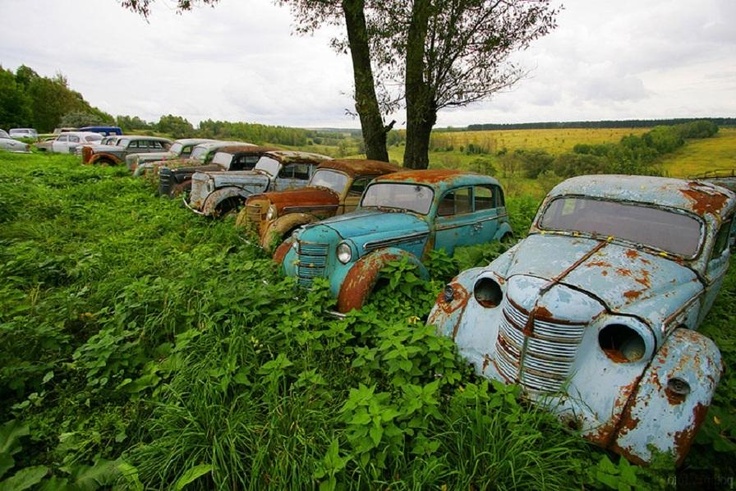
Abandoned Cars Reclaimed by Nature: Rust, Growth, and Quiet Ruin
When neglected vehicles are left outdoors long enough, rust, moss, and trees rewrite them into strange still lifes—sad, photogenic, and slowly returning to the ground.