
10 Small Garden Design Ideas That Make a Tiny Yard Feel Like a Room
Ten compact-garden strategies: deck dining, bold furniture against green screens, outdoor cinema, cottage paths, built-in lounges, layered lighting, courtyard mirrors, and indoor–outdoor flow.
A small backyard is not a failed large garden. It is a room with a sky for a ceiling, and the best designs treat it that way: one clear purpose per zone, plants that earn their footprint, and materials that make the space feel finished rather than leftover. The ten ideas below draw from compact decks, courtyards, and patio gardens that punch above their square footage. Steal one strategy or combine several—just resist the urge to fill every inch at once.
Start with sun and shade maps for a full day, note where neighbors can see in, and decide whether you want dining, lounging, play, or quiet first. Everything else follows that decision.
1. Turn the deck into an outdoor dining room
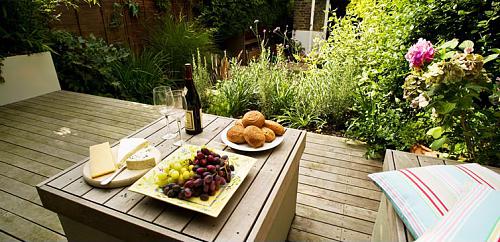
Light wood decking, a low table, and planting that wraps the edges can make even a modest platform feel like a private café. Keep furniture low and horizontal so foliage, not table legs, defines the skyline. Soft cushions in quiet stripes help the seating read as intentional without competing with flowers.
Plant in layers: groundcover or low shrubs near the boards, mid-height flowering shrubs for color, and taller screening at the boundary. The goal is dappled enclosure—enough green that brick walls and neighboring roofs disappear—while still leaving space to walk a plate from the kitchen door. A small garden succeeds when meals outdoors feel ordinary, not like a special production.
2. Use bold furniture against a green screen
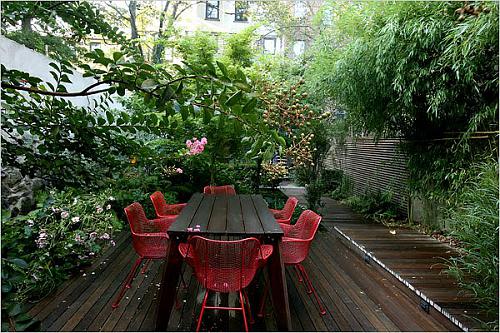
When planting is mostly green, one strong furniture color becomes the design. A dark deck and long table with vivid chairs—red mesh against deep foliage—create a focal point without needing more hardscape. Bamboo or similarly tall, narrow plants along a fence buy privacy upward instead of outward, which is the right trade in a narrow city plot.
Overhanging branches act as a living canopy. If you already have a tree, prune for clearance above heads and leave the rest; if you do not, a large container tree at one corner can suggest the same shelter. Keep the path beside the table clear. Circulation is what stops a small dining garden from feeling like a crowded photo set.
3. Claim a corner for garden cinema
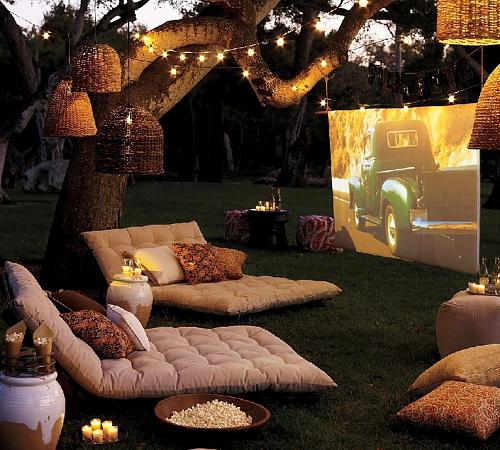
Entertainment does not require a permanent structure. A white screen or taut sheet, floor loungers with pillows, and layered light—string lights in a tree, woven lanterns, candles on low tables—turn a lawn strip into a night room. The planting can stay simple; atmosphere does the heavy lifting.
Choose a wall or dense hedge as the projection backdrop so stray light does not spill into neighbors’ windows. Store the screen when you are done so daytime lawn still works for play. Outdoor cinema nights are seasonal by nature, which makes them perfect for small gardens: high impact, low permanent footprint.
4. Build a cottage path with destinations
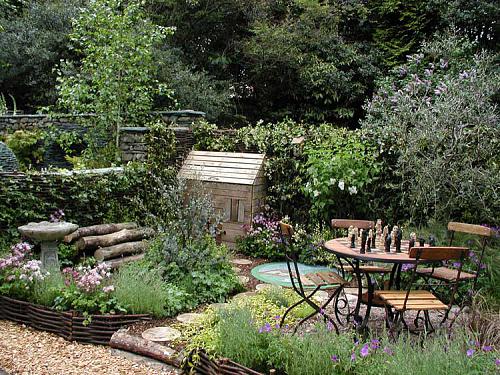
Rustic materials stretch perceived size because the eye travels. Log-slice stepping stones, woven wattle edging, a birdbath, and a tiny shed or playhouse give a compact plot a sequence of stops. A round table with a chess set says the space is for lingering, not only for crossing.
Mix heights carefully: a slender birch or similar light-canopy tree, mid shrubs, and low blooms in lavender and pink. Leave wood-chip or gravel underfoot between beds so maintenance stays realistic. Cottage style can tip into clutter; edit so each object has a job—habitat, water for birds, shade, or a place to sit.
5. Go bright with built-in seating and a shade sail
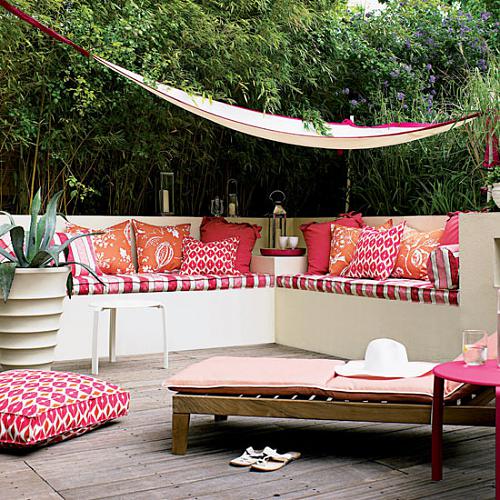
Built-in masonry or rendered benches hug the perimeter and free the center of the patio. Dress them with long cushions and a bold pillow palette—coral, magenta, orange—then add a fabric shade sail for daytime comfort. One sculptural pot, such as an agave in a tall white planter, is enough architecture among the greens.
This approach suits hot, sunny yards where loose furniture would bake. Keep the plant wall dense behind the seating for privacy, and use a small side table in a punchy color as a movable accent. Flip-flops on the deck are not a styling joke; they are a reminder that the best small gardens are used daily, not reserved for guests.
6. Layer lighting on a multi-level deck
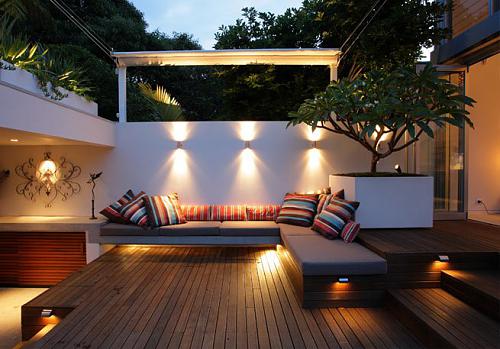
After dark, light does more for a small garden than another shrub. Wall sconces that wash white surfaces, under-bench LED strips, and recessed step lights make levels readable and safe while creating a resort mood on a modest footprint. An L-shaped built-in bench against a clean wall becomes the evening living room.
Place one specimen tree in a large rectangular planter as a living lamp post—something with an open canopy that casts patterned shadows. Raised beds along the edge keep soil off the boards and plants at a comfortable height. If you have glass doors to the house, match deck tones to interior floors so the transition feels continuous when lights come on.
7. Stretch a brick courtyard with mirrors and zones
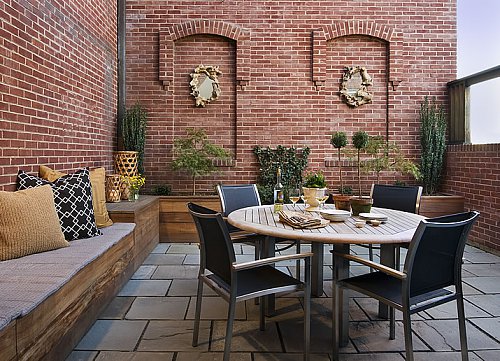
High brick walls can feel like a well or like a jewel box. Niches with mirrors bounce light and suggest depth; tall slender evergreens and climbers pull the eye upward. Built-in wood bench seating along one wall plus a round dining table in the remaining floor plate creates two uses without two full furniture sets fighting for space.
Planter boxes that match the bench timber unify the palette. Soften mustard and geometric pillows against gray cushions so the hardscape stays warm. This is classic small-courtyard thinking: vertical interest, reflective surfaces, and furniture that lives on the perimeter so the stone floor stays open.
8. Furnish an outdoor living room in white
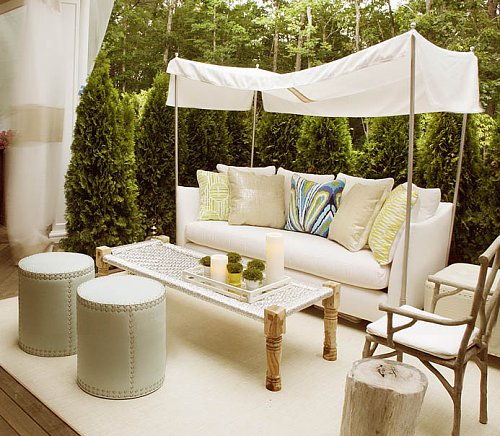
Pale upholstery and a simple canopy frame make a sofa feel like architecture. Set it on a large outdoor rug over decking, add poufs and a low coffee table with candles and moss bowls, and back the whole arrangement with a row of narrow evergreens for privacy. The light palette visually expands the footprint; blue and green pillows keep it from looking sterile.
Choose performance fabrics rated for outdoor use, and plan storage for cushions in wet seasons. A branch-wood armchair or stump side table adds texture so the white scheme does not flatten. This idea works best where you already have a quiet view or a planted screen—otherwise the living-room illusion collapses into a parking-pad sofa.
9. Grow a tree through the deck
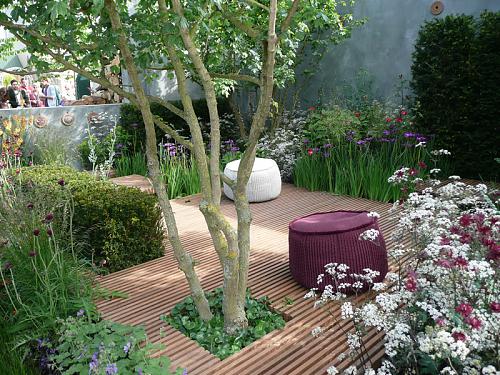
Hardscape that makes room for a living trunk is one of the smartest small-garden moves. A square cutout in the decking lets a multi-stem tree rise through the boards, surrounded by low planting so the opening never looks like a hole. Soft knitted poufs in white and burgundy become flexible seating that can migrate with the shade.
Surround the deck with layered borders—structure hedges, iris or similar vertical blooms, airy white flower heads—so the timber platform feels embedded in a garden rather than floating on a slab. Leave enough soil volume and watering access around the trunk; a beautiful detail fails if the tree declines. Texture contrast between knit fabric, wood grain, and petals is what keeps a tiny plan interesting for years.
10. Open the house with indoor–outdoor flow
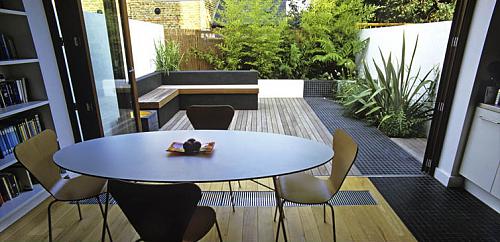
When bifold or wide sliding doors stack aside, a minimal terrace becomes an extension of the dining room. Match deck plank direction and tone to the interior floor, keep walls white to bounce light, and use an L-shaped built-in bench so outdoor seating does not block the opening. One architectural plant in a raised bed—phormium, yucca, or similar—beats a clutter of tiny pots.
Bamboo or a tall green screen beyond the back wall softens neighboring buildings without eating the terrace. Dark grating or a contrasting mat can mark a secondary zone, such as a grill pad, while the main boards stay clear for walking plates outside. This is the idea that multiplies square footage without buying land: the garden works hardest when the threshold disappears.
Choosing what fits your plot
If your yard is long and narrow, prioritize vertical screening and a single dining or lounge axis. If it is a high-walled courtyard, lean on mirrors, built-ins, and pale surfaces. If you already have a decent tree, design around it—cinema lights, deck cutouts, or canopy seating—before you invent new structures. Hot climates need shade sails and tough foliage; cool, damp climates need durable timber finishes and furniture that can dry quickly.
Budget in this order: drainage and soil, privacy planting or fencing, one good hardscape surface, then furniture and lighting. Cheap chairs on a muddy slab will never feel like a room; a simple deck with one excellent bench often will. Plant fewer species in larger groups so maintenance stays honest. Watering, weeding, and cushion storage are design decisions too.
Walk your space at dusk before you buy anything. Notice where you naturally pause with a cup of coffee and where you only pass through. Put the strongest idea—dining table, built-in lounge, cottage path, or open doors—on that pause point. A small garden does not need ten features; it needs one clear invitation to stay outside longer than you planned.

Comments
Continue reading
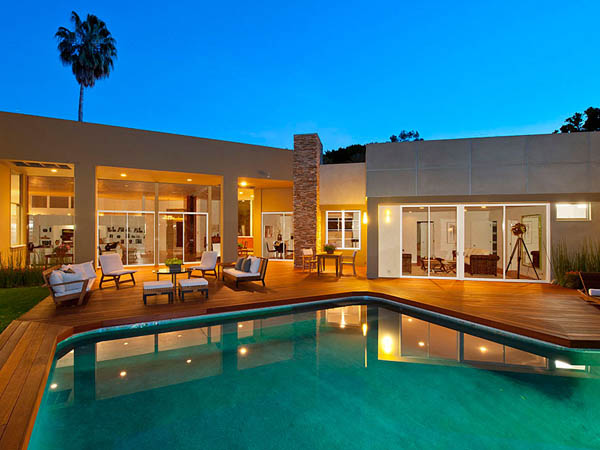
Beverly Hills Villa by William Stephenson
A renovated 1956 William Stephenson villa in Beverly Hills—four bedrooms, five baths, gallery hall, garden pool—documented from its early-2010s listing era.

Coco Privé Maldives: Guz Wilkinson’s Exclusive-Use Private Island
Inside Coco Privé on Kuda Hithi—Palm Residence, five villas, and tropical-modern architecture by Singapore’s Guz Wilkinson.
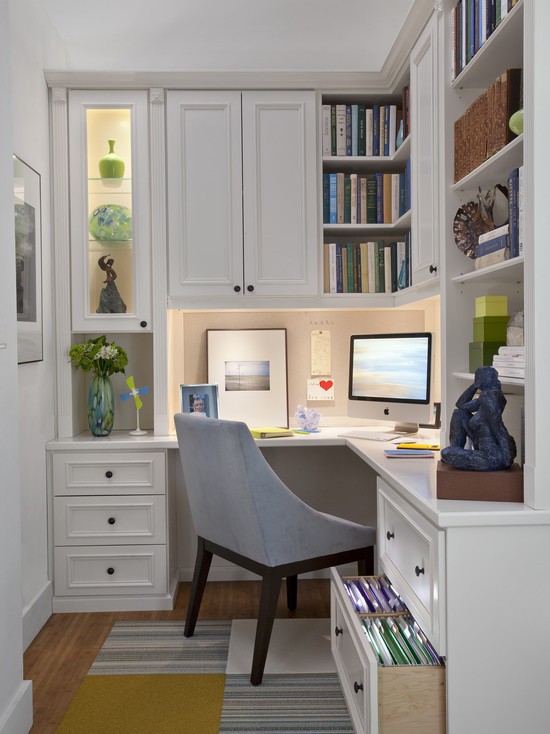
Neatly Designed Home Office Ideas That Actually Work
Practical home-office design: desk placement, light, storage, seating, and visual boundaries—so the room looks calm and supports real work.