
What Inspires Our Desire to Create
Creativity is a basic human urge—not a club. How song, craft, weaving, and woodworking help people find a channel and keep making.
The desire to create is not a luxury hobby bolted onto modern life. It is one of the oldest habits humans have: turning emptiness into form, silence into song, raw material into something that can be held, worn, told, or shared. Cultures survive by making. People recover from hard seasons by making. Even when nobody is watching, the urge to assemble, invent, decorate, or explain keeps showing up—sometimes as art, sometimes as a better spreadsheet, sometimes as dinner that tastes like care.
Creativity gets sorted into clubs—artists over here, scientists over there, “not creative” people nowhere—as if imagination were a membership card. That sorting is mostly fiction. Desire to create shows up mathematically, spiritually, physically, intellectually, and quietly in kitchens and garages. The channel changes; the pressure to bring something into being does not.
Creation as a living cycle
Making anything costs energy, and energy on a living planet moves in cycles. Growth and decay are not opposites so much as partners. Compost feeds soil. Old stories feed new ones. A finished project frees attention for the next attempt. Even endings—jobs that close, tools that break, drafts that fail—clear space for another start.
At the most basic biological level, reproduction is a creative act: life continuing itself. Once safety and food are less desperate, human creativity expands past survival into emotional, mental, and playful worlds. We decorate shelters. We invent games. We argue about meaning. We build tools that build other tools. The desire does not disappear when life gets comfortable; it often gets louder, because more of the day is available for curiosity.
That is why “I am not creative” usually means “I have not found my medium yet,” not “I lack the spark.” Desire can be dormant, discouraged, or crowded out by exhaustion. It is rarely absent.
Begin with the body: song, dance, storytelling
Some of the oldest creative channels need almost no equipment. Song, dance, and storytelling are portable arts. They started in ceremony and still appear wherever people gather to mark a birth, a season, a win, or a hard night. Rhythm and narrative let emotion leave the private mind and become shared weather in a room.
For beginners, that low barrier matters. You can hum before you can sight-read. You can move before you can choreograph. You can tell a true five-minute story before you write a novel. Gathering with others often unlocks more than solitary effort, because attention becomes mutual fuel. A singing circle, a kitchen dance while cooking, a night of traded anecdotes—these are not lesser creativity. They are foundational practice.
Celebration and making also braid together. Food and drink accompany many creative gatherings not as decoration but as another craft: seasoning, timing, hospitality. If you feel blocked at a desk, try a social form first. Creativity is frequently contagious in the best sense.
Hands and pattern: beadwork
Beadwork shows how natural materials—seeds, shells, glass, stone—become adornment through patience and pattern. Many pieces start with little more than beads, needle, and thread. The motions resemble sewing: pierce, pull, repeat, watch a motif emerge. Color choices become composition. Symmetry and asymmetry become decisions you can feel in your fingers.
Jewelry is an accessible entry, but beaded surfaces can also become small tapestries of their own. The pleasure is dual: useful beauty you can wear, and meditative repetition that quiets overthinking. When creativity feels abstract and intimidating, beadwork returns it to countable actions. One bead is progress. A row is a chapter.
Threads under tension: weaving and related crafts
Weaving can look intimidating if you picture a full wooden loom on day one. It does not have to begin there. Backstrap weaving uses the body as counterweight, keeping warp threads taut while weft moves through. Children’s potholder looms are weaving in miniature. Macramé turns rope into structure through knots alone—wall hangings, bags, plant hangers, jewelry—again with a short supply list and a long runway for invention.
Textile crafts teach a useful creative lesson: constraints are not the enemy of desire. Limited materials force clearer choices. A simple grid becomes a playground once you accept its rules. Many people who claim they “cannot draw” thrive in fiber arts because the language is tactile rather than representational. You are composing with tension, color, and repeatable gesture.
Form from wood: carving and making things that last
Woodworking is another primal channel, ranging from a pocket knife and a stick to lathes and fine joinery. Whittling trains hand-eye patience: remove what does not belong until a shape appears. Functional pieces—spoons, bowls, simple boxes—teach respect for grain and tool. Figurative carving—animals, faces, small sculptures—lets imagination sit in three dimensions.
Start simple if you are new. Soft wood, basic safety habits, and small goals beat ambitious first projects that stall. The creative reward is concrete: an object that exists outside your head. That externality matters. Desire to create often intensifies when imagination can meet resistance from real material and still leave a mark.
How inspiration actually shows up
Inspiration is frequently miscast as lightning. More often it is appetite plus exposure. You see a pattern on a jacket and want to try beads. You hear a harmony and want to hum along. You watch someone carve and suddenly notice every fallen branch as potential. Desire follows attention. If your days contain only consumption—feeds, errands, other people’s finished work—your creative hunger can feel mysteriously low. Change the diet of input and the urge often returns.
Practical ways people rekindle the desire without waiting for a muse:
- Borrow a tradition. Learn one indigenous or folk technique with respect and curiosity—song forms, weaving methods, carving styles—then adapt within your means.
- Make with others. Shared sessions reduce perfectionism because the point becomes presence, not a portfolio piece.
- Shrink the unit. One stanza, one bracelet, one carved spoon. Finished small beats abandoned large.
- Pair senses. Cook while listening to music; sketch while walking; tell stories while repairing something. Cross-wiring wakes dormant channels.
- Accept ugly first drafts. Desire thrives on permission. Mastery arrives later, if at all; making arrives now.
Creativity beyond “art class” labels
Scientific curiosity is creative. So is debugging a process at work, designing a fairer chore chart, inventing a family ritual, or teaching a child a game you half remember. Spiritual practice can be creative when it builds meaning through symbol, silence, or service. Intellectual play—essays, arguments, maps of ideas—is creation with language as material.
The categories help when they point you toward tools. They hurt when they decide who is allowed to want. If your desire arrives as gardening, coding, embroidery, beat-making, or careful letter-writing, treat it as legitimate. The planet does not require your medium to match a gallery wall. It requires that some of us keep turning void into form so culture can keep evolving instead of merely repeating.
Finding your channel without forcing a brand
You do not need a public identity as “a creative.” You need a practice you will return to when life gets loud. Try seasons of experiment: a month of song, a month of fiber, a month of wood or clay. Notice which activities leave you more awake afterward. That afterglow is data. Desire prefers the paths that refill attention rather than drain it.
Also notice what you make for love versus what you make for applause. Both can coexist, but the desire that keeps civilizations inspired usually begins privately—someone humming, knotting, carving, or telling a story because the alternative was emptiness. From there, communities form. Skills deepen. Cultures inherit techniques the way they inherit recipes.
If you are searching for what inspires the desire to create, start closer than a grand theory. Look at your hands, your voice, your memory of play. Pick one humble craft with a short materials list. Make something imperfect before the week ends. The force that builds worlds out of nothing does not always announce itself with trumpets. Sometimes it sounds like thread pulling through a bead, or a knife shaping wood, or friends singing badly on purpose until the room feels newly alive.

Comments
Continue reading
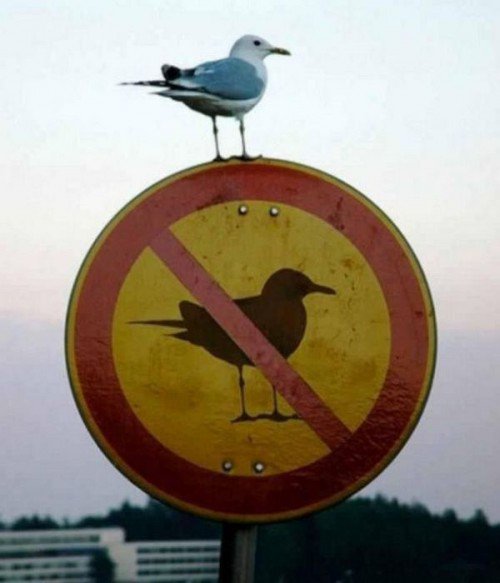
Funny Animal Signs That Warn People (While Animals Ignore Them)
From a seagull on a no-birds disc to classic zoo and park ironies—why animal warning signs get funny, and what the rules are still for.

How to Find Local Amenities on Vacation: Mechanics, Haircuts & More
Locate trustworthy local services and everyday spots while traveling or settling in—using publications, reviews, map apps, neighbor tips, and low-pressure exploration.

Kristen Stewart for V Magazine, Spring Preview 2013
V81’s Wild at Heart cover story—Kristen Stewart shot by Inez & Vinoodh, styled by Joe McKenna, in pale minimal spring glamour.