
Wedding Head Table Design Ideas
Design the couple’s head table as one long composition—layout, linens, chairs, floral runners, candlelight, and backdrops—with seventeen photo ideas for banquet and sweetheart setups.
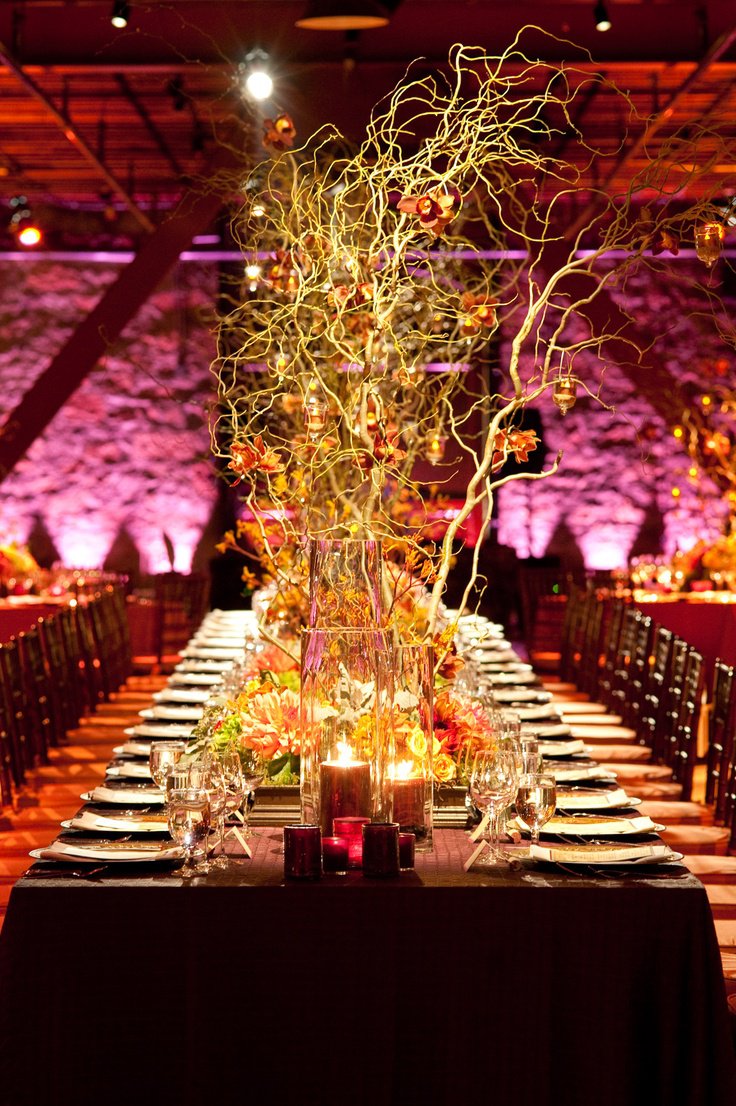
When guests enter a reception, their eyes go to the table where the couple sits. That head table sets the visual temperature for the room: formal or relaxed, candlelit or brightly lit, floral-heavy or spare. Designing it well means treating a long rectangle as a single composition—seating plan, linens, chairs, runner, light, and backdrop—rather than piling pretty objects until the surface disappears. This guide is about that elevated dinner stage for the couple and wedding party. Cake toppers belong on the dessert display; escort cards belong at the entrance. The head table has a different job.
Begin with people and traffic, not Pinterest. Count how many will sit there, whether both long sides are used, and whether the couple faces the room or sits with their backs to a wall, window, or band. Leave aisle width for servers carrying plates, for photographers walking the length of the table, and for anyone standing to give a toast. Tall centerpieces look cinematic in still photos and fail if they erase faces during speeches. Decide early among a classic banquet facing guests, a sweetheart table for two, a U-shape that pulls the party closer to the dance floor, or a king’s table running through the center of the room.
#1
Dramatic vertical elements earn their place when the architecture can hold them. Curly willow or tall branches create a canopy over a long table, especially when hanging votives and low floral bases keep sightlines open across the seats. Dark linens absorb glare; warm overhead spots make glassware flash; colored wall wash adds mood without crowding the cloth. When the center run is already theatrical, keep plates and napkin folds quiet so the silhouette stays readable from the door.
#2
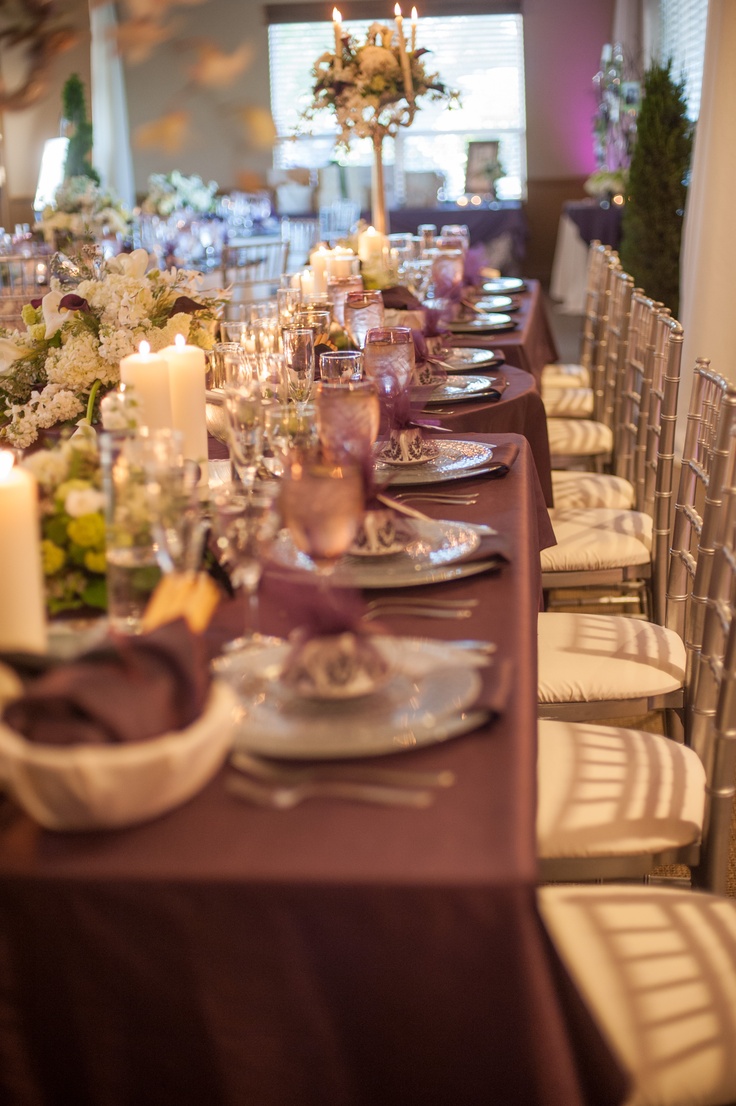
A deep plum or purple cloth with silver chairs and white florals is a dependable formal formula. Repeat low arrangements and candles down the runner so the table has rhythm from end to end instead of one overloaded middle. Metallic chargers and tinted goblets lock the palette. Hotel ballrooms and evening dinners reward this “one color family, layered textures” approach because it photographs richly without needing novelty shapes.
#3
#4
Linens, chairs, and how the table meets the floor
Floor-length cloths hide rental hardware and make a banquet feel intentional. Matte weaves, soft satins, and subtle patterns usually beat high-shine fabrics that hot-spot under lighting. If the venue’s wood tables are beautiful, a runner alone can finish the look—protect the surface from wax and water. Chair choice changes elevation before a single stem arrives: Chiavari, cross-back, ghost, or upholstered banquet seats each signal a different night. Mismatched chairs can work in eclectic rooms if finishes relate; random mixes in a formal ballroom usually look unfinished.
One-sided seating facing the room is ideal for photography and toast choreography. Two-sided seating feels more like a dinner among friends and harder for the crowd to read as a stage. Sweetheart tables give the couple a quieter pocket but can feel stranded if placed far from guests or under weak light. A king’s table through the room integrates the couple into the guest landscape—strong in barns and lofts, trickier when speeches need a clear “front.” Sketch the path from kitchen to head table before you fall in love with a floral sketch that blocks service.
#5
#6
#7
Build a runner, not a single mountain of flowers
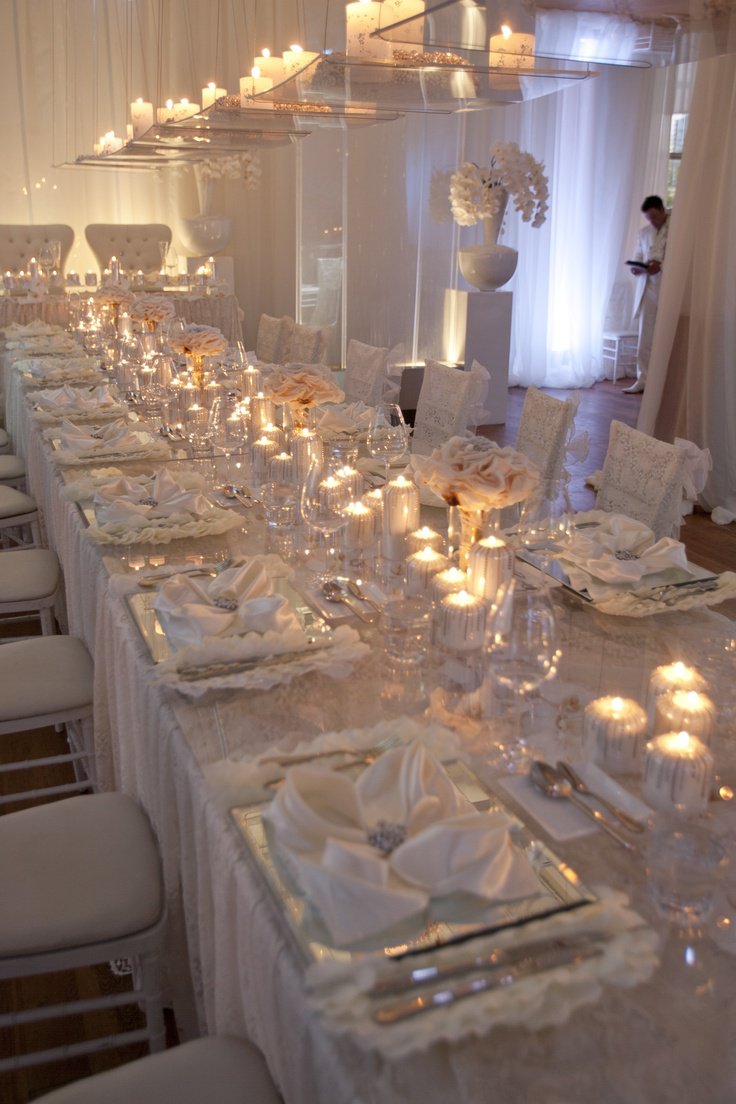
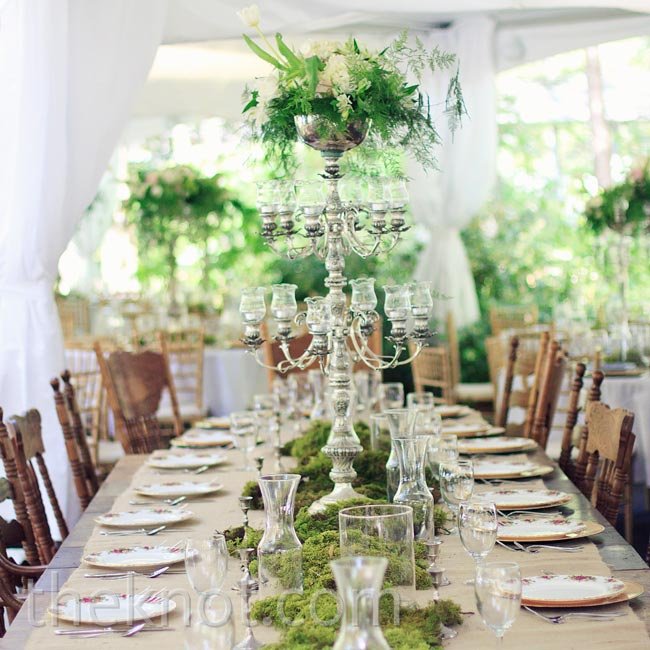
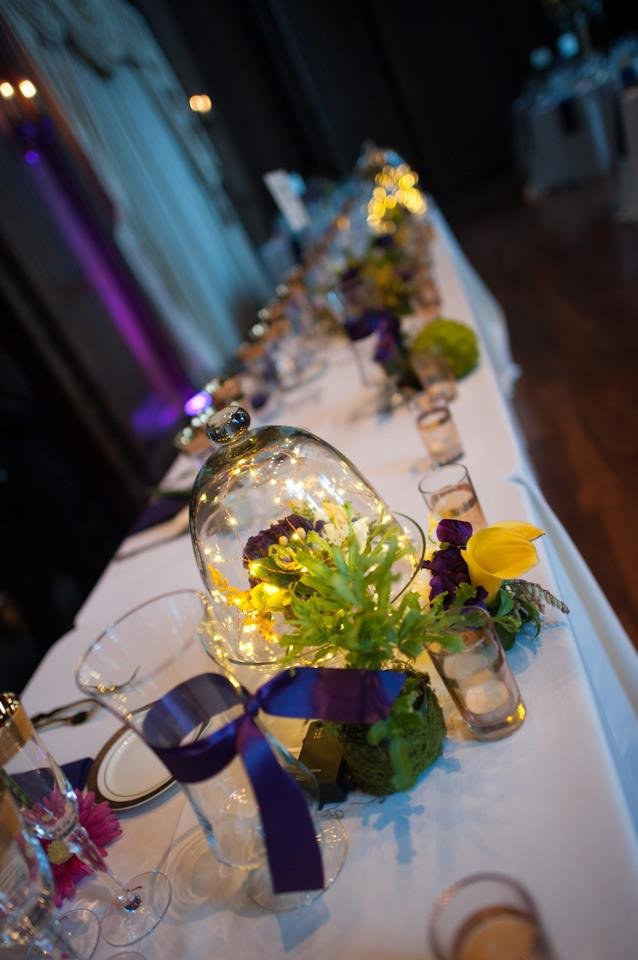
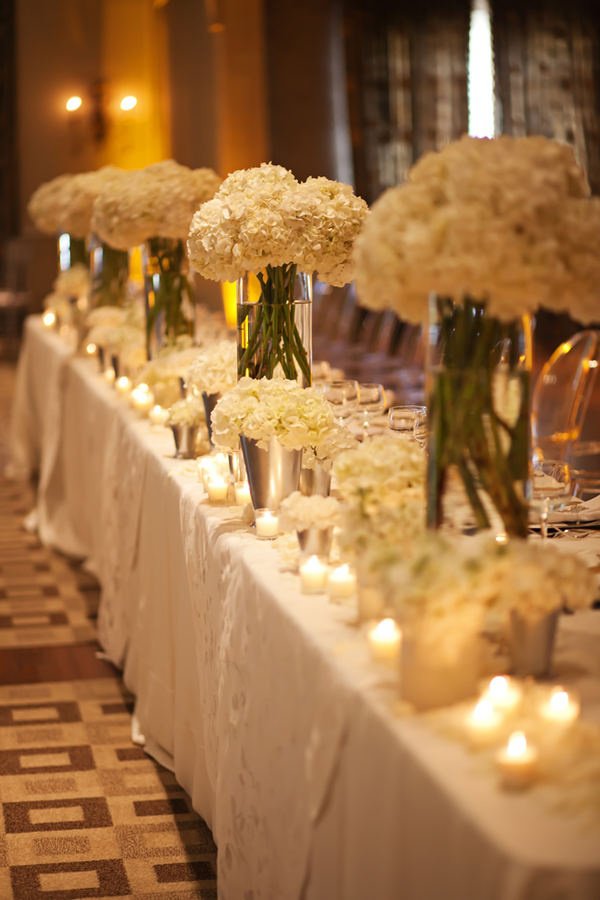
On a head table, florals almost always work better as a continuous line than as one towering center mound. Alternate low arrangements with votive clusters or pillars so the eye travels the full length. Keep blooms below chin height wherever people talk across the cloth. Save tall drama for the ends, a wall behind the couple, or a separate backdrop—never for the middle of a toast sightline. Greenery-heavy runners suit barns and gardens; tight white and blush clusters suit formal indoor spaces. Match density to guest tables so the head table feels elevated, not like a different wedding.
Candles need drip management: hurricanes, stable pillars, and LED options where sleeves, veils, or drafts make open flame risky. Never place flame where hanging greenery or hair can catch. Unscented candles compete less with dinner. Odd-numbered groupings of lights usually look more natural than a rigid grid. If the room’s house lighting is cold, warmer candlelight does more for atmosphere than another tray of objects.
#8
#9
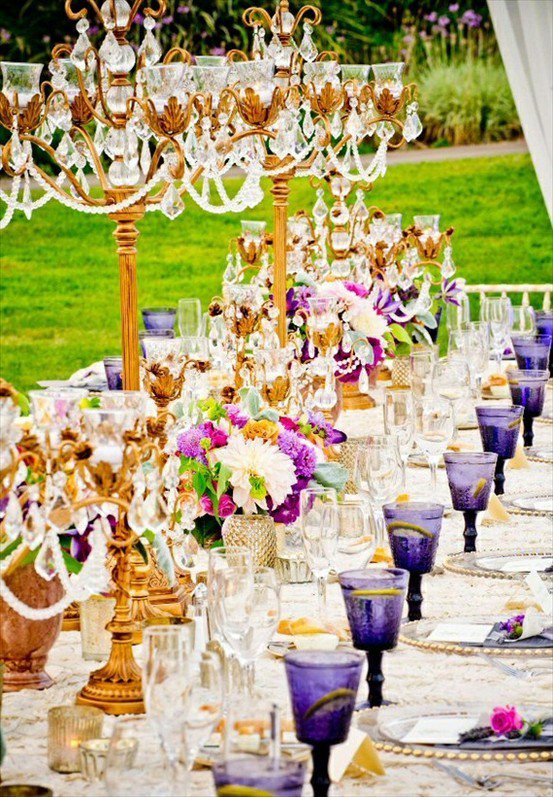
#10
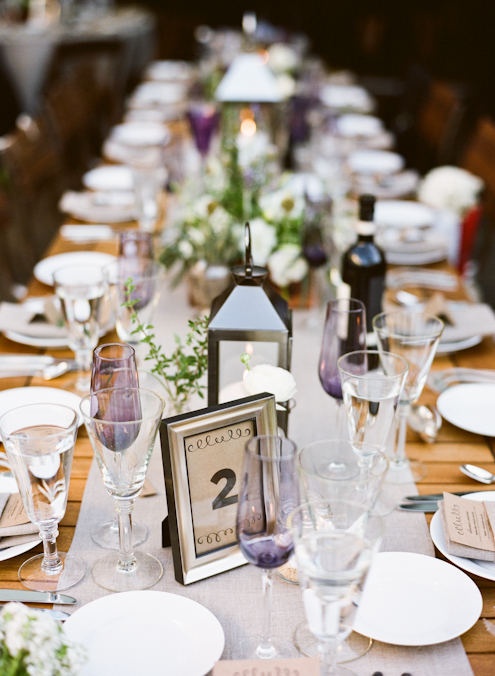
What sits behind the couple matters as much as the cloth
Pipe-and-drape, a floral wall, string lights, windows, or clean architecture all become part of every reception photo. Clear visual clutter: exit signs, service doors, stacked chairs, and drink stations ruin careful tablescapes. Ask about uplighting and whether you can spotlight the couple’s seats without bleaching faces. Coordinate place settings with guest tables—chargers, napkin folds, and glassware counts should feel related even if your florals are richer. Small upgrades read as intentional; large gaps look like the wedding party attended a different event.
Personal notes—monogrammed napkins, a shared favor—work when they do not fight the runner for elbow room. Keep water carafes and bread plates in planned zones so servers are not improvising between candlesticks. If kids sit near the head table, avoid fragile towers within reach. Assign one person on the timeline to reset candles and wipe spills before speeches begin so the table still looks composed when cameras turn that way again.
#11
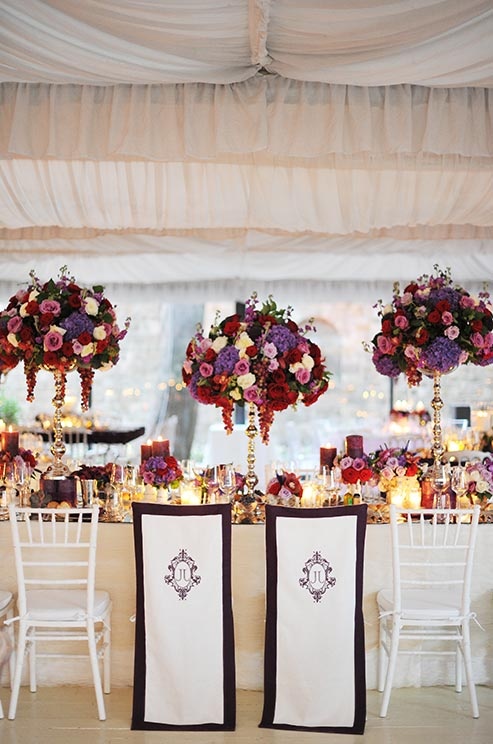
#12
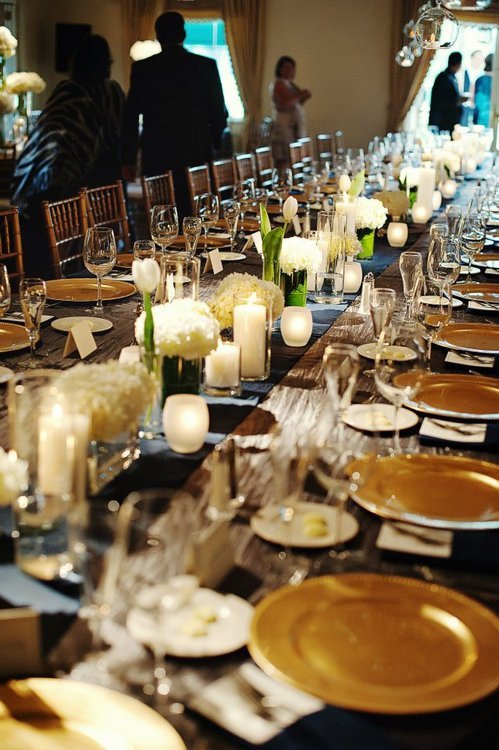
#13
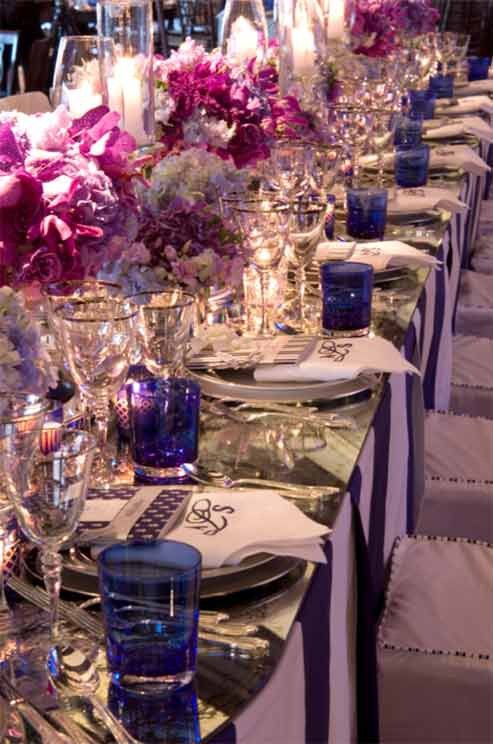
Scale design to ceilings, tents, and weather
Lofts with beams can carry tall branches and industrial candlesticks. Low-ceiling banquet rooms need flatter runners and stronger linen color for presence. Outdoor head tables need weighted vessels, wind-safe flame choices, and a plan for sun that wilts blooms or melts soft favors before dinner. In tents, watch poles and string-light glare in photos taken from the guest side. Budget where cameras linger: investing more floral budget at the head table often outperforms spreading a thin upgrade across every round. Still keep guest tables coherent so the room beyond the couple does not look abandoned. When money is tight, prioritize chairs, linens, and candlelight—those three alone can elevate a simple flower formula.
#14
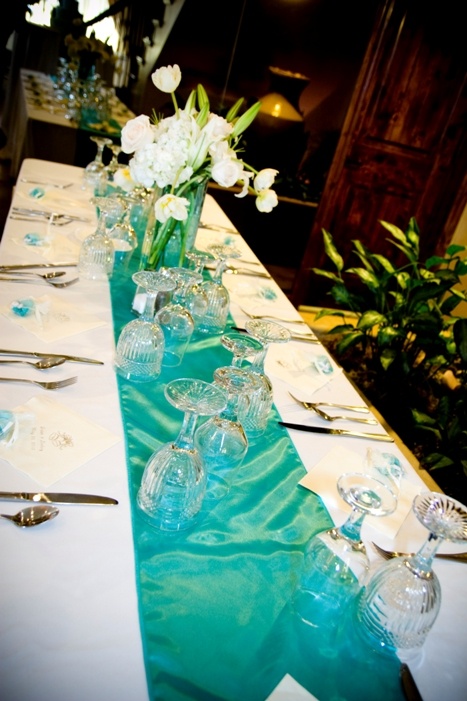
#15
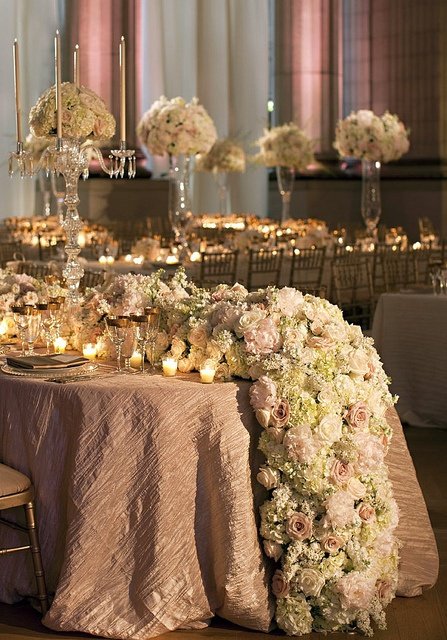
#16
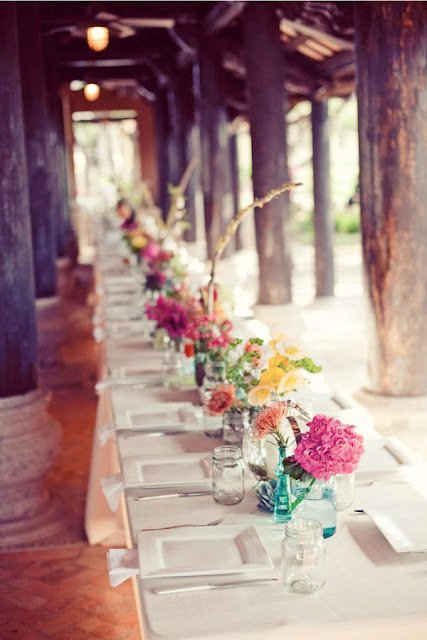
#17
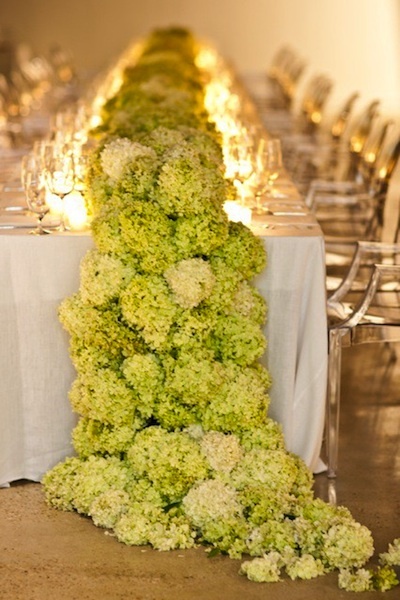
Which structure fits the night: a long banquet facing the room, a quiet sweetheart table, or a king’s table woven through the guests? Choose that first, then borrow a palette and runner rhythm from one of the photos—linens, chairs, low florals, and candlelight in a single continuous line. When faces stay visible for toasts and the table still looks rich from the entrance, the head table has finished its work.

Comments
Continue reading
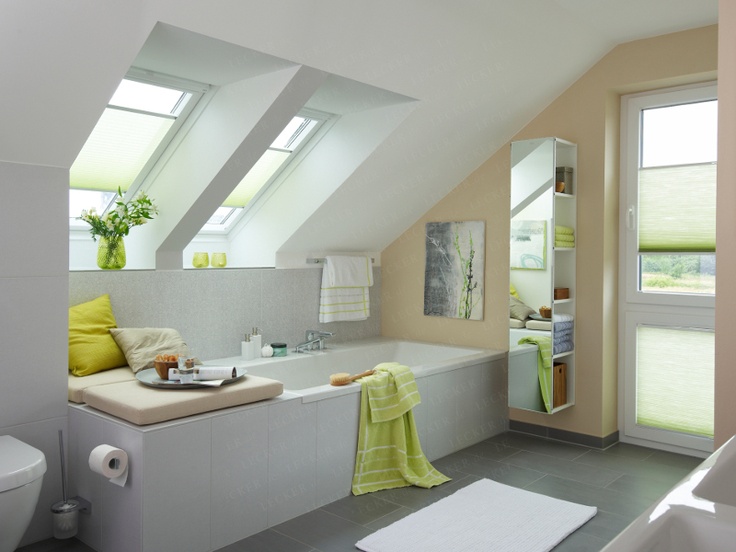
Attic Bathroom Design Ideas: Light, Layout, and Roof-Friendly Fixtures
Design ideas for converting an attic into an extra bathroom—working with slopes, skylights, wet-zone materials, eaves storage, and fixture placement.
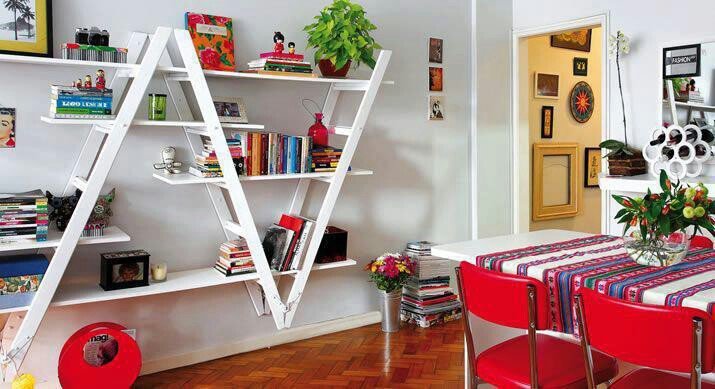
Ladder Shelving Repurpose Ideas: DIY Bookcases, Dividers & More
Turn an old ladder into shelving, a room divider, towel rack, or narrow desk—practical DIY steps, safety checks, and styling tips with photo ideas.
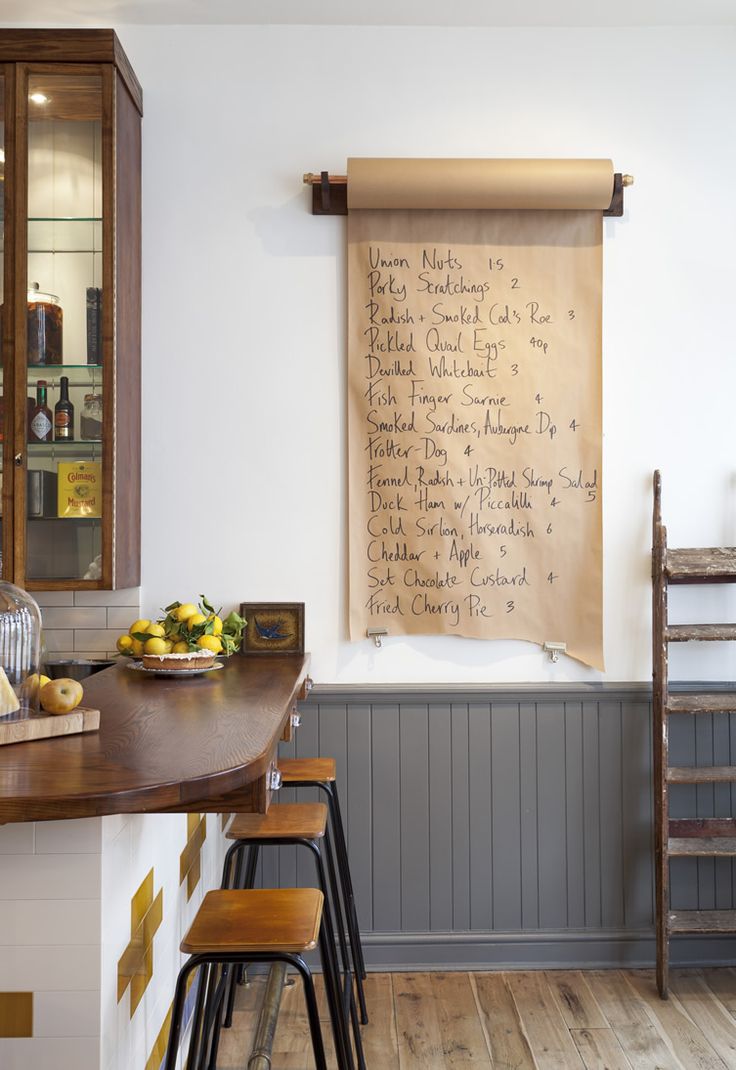
Cool Home Lifehacks That Actually Save Time
Practical household tricks—kraft-paper lists, safer nailing, fridge bottle stops, mint-tin drawers, phone stands—using things you already own.