
Travel Scenes: Nathan Ashker’s Asia to America Without a Plane
A travel-photography look at Nathan Ashker’s overland Asia-to-America journey, with Malaysia’s KL-to-Penang stretch as a mid-route chapter.
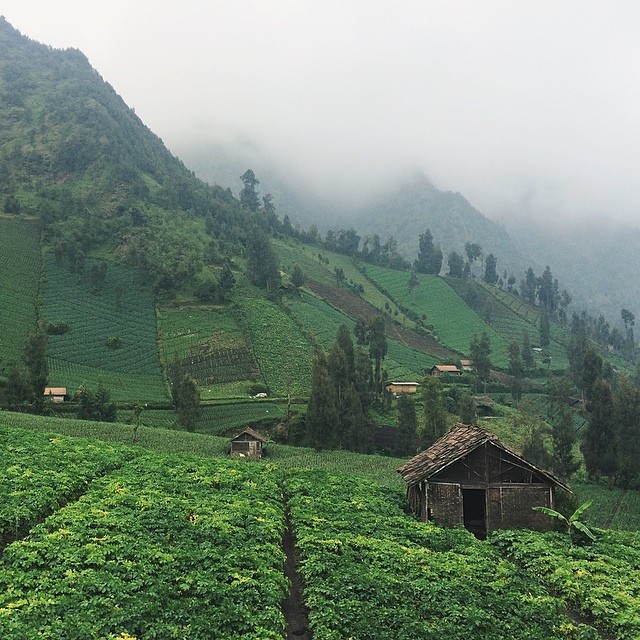
Some travel stories are written in itineraries. Others are written in frames: food stalls, ferry light, street corners, the pause before a next border. In 2014, photographer and traveler Nathan Ashker was mid-journey on a project that later took book form as #AsiaToAmerica: Without a Plane—a roughly six-month land passage through many countries from Indonesia toward the United States, documented heavily on Instagram under @nashker and the hashtag #asiatoamerica. Midway through that arc he was in Kuala Lumpur, Malaysia, with Penang ahead, still moving continent to continent without boarding a flight.
That constraint is the photographic subject as much as any landmark. Without planes, distance becomes sequential: buses, trains, boats, waiting rooms, nights that do not reset with jet lag so much as accumulate. The camera stays close to ordinary texture—meals, faces, weather, the small theater of getting from here to there. This feature returns to that visual journal idea: how a land journey from Asia toward America teaches a different kind of travel photograph, and why those scenes still reward slow looking.
A route measured in surfaces, not airports
Flight collapses geography into a cabin and a clock. Overland travel refuses that collapse. Between Kuala Lumpur and Penang alone, a traveler might choose the ETS train to Butterworth and a short ferry into George Town, or a long-distance bus, or a slower mix of local legs. Each option rearranges what the camera can see: palm belts and rail platforms, terminal fluorescent light, ferry spray, the compressed social space of shared seats. Ashker’s larger project stretched that logic across roughly eighteen countries. The point was not speed. The point was continuity—the same person carrying the same daily noticing across changing languages and street economies.
For photography, continuity matters. Airport transit photos tend to look alike worldwide: glass, logos, identical chairs. Overland transit photos keep regional grain. A Malaysian night market and a later Central Asian roadside stop do not share a corporate template. The photographer who stays on the ground collects difference without needing to invent drama. The drama is already in the logistics.
What a visual travel journal actually does
Following a traveler’s feed is not the same as reading a guidebook. A visual journal answers different questions: What did the light do at dinner? How crowded was the sidewalk? What did hands look like while working? Where did the trip feel glamorous, and where did it feel merely possible? Ashker’s published work and social documentation leaned into that diary mode—food, people, street life—rather than a checklist of monuments.
That approach still offers a useful method for anyone shooting travel now:
- Shoot the in-between: stations, sidewalks, laundry lines, open shops at odd hours.
- Keep one consistent focal habit—street distance, food close-ups, portraits with consent—so the journey reads as one authorial path.
- Prefer specificity over postcard adjectives. Name the dish, the ferry, the neighborhood when you can.
- Accept imperfect weather and imperfect composition; overland days are rarely studio days.
The image above belongs to that family of scenes: a square frame, dense with the kind of local detail that does not need a caption to feel placed. It is not a substitute for standing in Kuala Lumpur or Penang yourself. It is evidence of a traveler looking hard enough to bring a fragment home.
Asia to America without a plane: why the constraint still fascinates
In an era of cheap flights, choosing not to fly can sound like stunt travel. Ashker’s framing was closer to experiment and documentation: what does the world look like if you refuse the shortcut? The later book title makes the rule explicit. Rules help photographs because they create a series. Every border crossed by land becomes part of one argument about distance, privilege, paperwork, and patience.
There are practical lessons inside the romance. Overland routes demand more time and often more improvisation. Visas, ferry schedules, and local holidays interrupt neat maps. The photographer learns to treat delay as material. A six-hour wait can yield better frames than a famous square visited for twelve minutes. America, as destination, stops being a single arrival gate and becomes a long approach—Asia’s cities and coasts giving way to other continents’ transit cultures before any U.S. skyline appears.
That long approach also changes ethics. Moving slowly through places makes it harder to treat people as backdrop. You buy food, ask directions, share cars. Portraiture, if it happens, tends to grow from contact rather than from a telephoto snatch. Travel photography worth keeping usually grows from that contact.
Reading Malaysia in the middle of a larger arc
Kuala Lumpur and Penang occupy a charged middle in a journey that began farther south and aimed eventually west and north toward the Americas. KL offers vertical density, heat, and a modern transit logic that can feel both global and intensely local. Penang—especially George Town—offers heritage streets, food culture that travelers obsess over for good reason, and a maritime edge that reminds you the peninsula is not only highways. Photographing the pair as a sequence teaches contrast: capital velocity versus island-and-port pacing, glass towers versus shophouse rhythm.
For a visual journal, the Malaysia chapter is valuable precisely because it is not the finale. Mid-journey photographs often feel freer. The traveler is no longer proving the departure and not yet performing the arrival. Attention settles on markets, rain, and the next ticket. Those are the scenes that age well on a page like this: less trophy, more weather.
How to look at travel scenes like these
Whether you are scrolling a contemporary feed or sitting with a printed travel book, try a slower checklist:
- Where is the light coming from, and is it travel light or tourist flash?
- Is the frame about a landmark, or about a person’s ordinary labor and leisure?
- What would disappear if the photographer had flown past this stretch?
- Does the caption claim adventure while the picture shows waiting? Trust the picture.
Ashker’s Asia-to-America work belongs to a wider tradition of ground-level documentary travel—Instagram-era in distribution, older in impulse. The impulse is to prove that distance still has texture. Planes are useful. They are also erasers. A land journey writes the erased miles back into the record, one street plate and one shared meal at a time.
Keep the image, keep the route idea, and if you build your own visual journal, borrow the constraint that fits your life: one city without taxis, one border by train only, one week shooting only food and hands. The continent can wait. The scene in front of you cannot.

Comments
Continue reading

Dramatic Photo Art by Sukron Ma’mun (Ipoenk Graphic)
Cirebon, Indonesia photographer Sukron Ma’mun uses theatrical natural light to frame village life, play, and place in lyrical photo art.

Bird’s-Eye Views: Florian Beaudenon’s Instant Life
Paris photographer Florian Beaudenon’s Instant Life series captures people in their rooms from above—intimate, collaborative overhead portraits of everyday joy.
Abandoned Cars Reclaimed by Nature: Rust, Growth, and Quiet Ruin
When neglected vehicles are left outdoors long enough, rust, moss, and trees rewrite them into strange still lifes—sad, photogenic, and slowly returning to the ground.