
A Thousand Stories by Dewan Irawan
Tangerang, Banten photographer Dewan Irawan frames Indonesian countryside life—people, labor, and landscape—as quiet chapters you can read one image at a time.
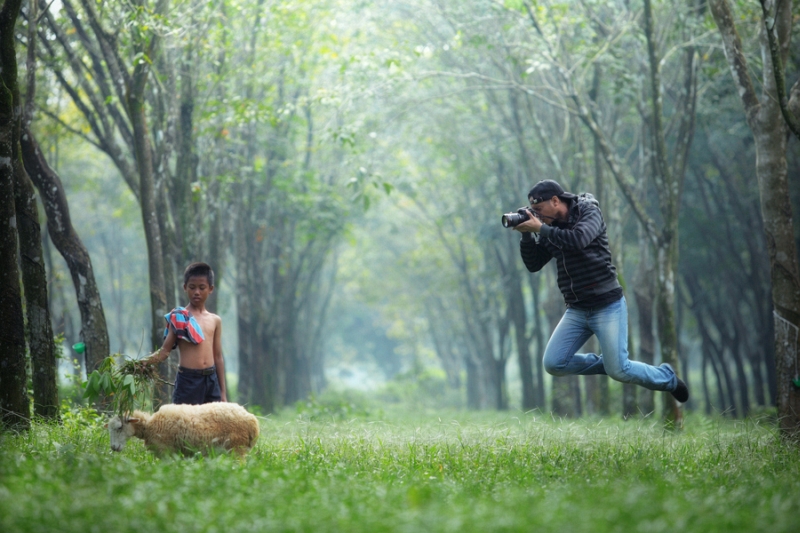
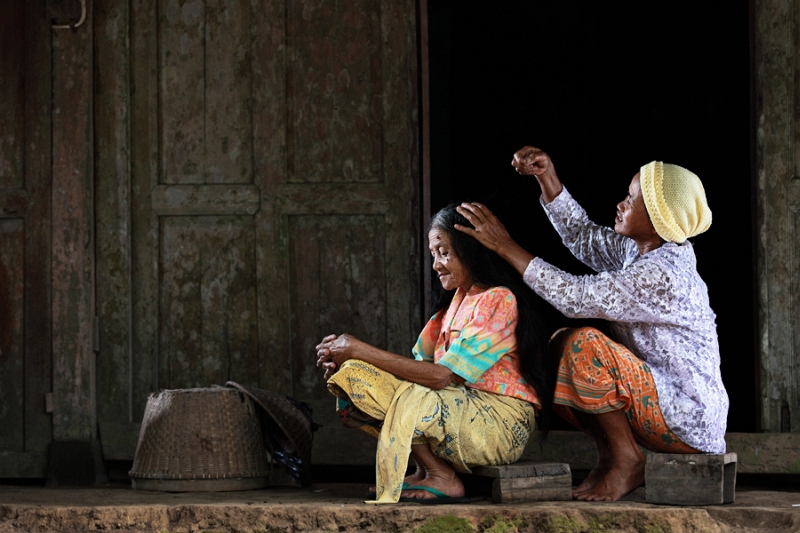
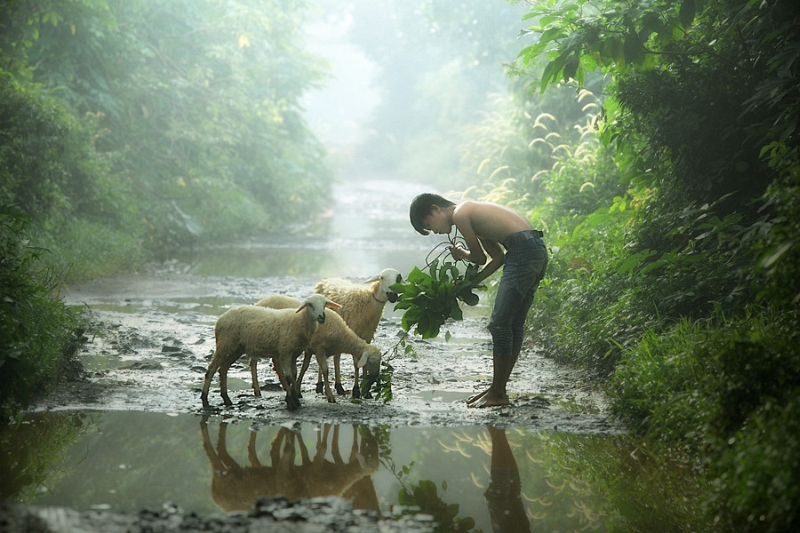
Tangerang, Banten–based photographer Dewan Irawan turns everyday Indonesia into a sequence of quiet stories. His frames favor countryside light, working hands, children at play, elders at rest, and landscapes that feel lived in rather than visited. People and nature share the same sentence. The pictures do not shout; they ask you to stay long enough to notice gesture, weather, and the small dignity of ordinary time.
Call the body of work a thousand stories if you like—the phrase fits because each image behaves like a short chapter. You do not need a caption to sense labor, patience, humor, or hush. What follows is a closer look at how those chapters are built, and a gallery of photographs that let the stories speak for themselves.
Place as character
Irawan works from a home base in the Tangerang area of Banten, on Java’s northwest edge, yet the photographs feel wider than a single district. Rice fields, paths, water, trees, and village edges recur as co-actors. The land is not a backdrop pasted behind a model; it shapes how bodies stand and how light arrives. Humidity softens edges. Afternoon sun hardens silhouettes. Morning mist turns distance into layers.
That approach resists postcard Indonesia. Tourist icons can dominate foreign feeds: temples on loop, beaches as product shots, ceremonies cropped for maximum exoticism. Irawan’s stronger instinct is local rhythm—people who belong to the scene because they work it, walk it, or wait inside it. Beauty appears, but it is earned through weather and routine rather than through spectacle alone. A path matters because someone uses it daily. A tree matters because it offers shade at the right hour.
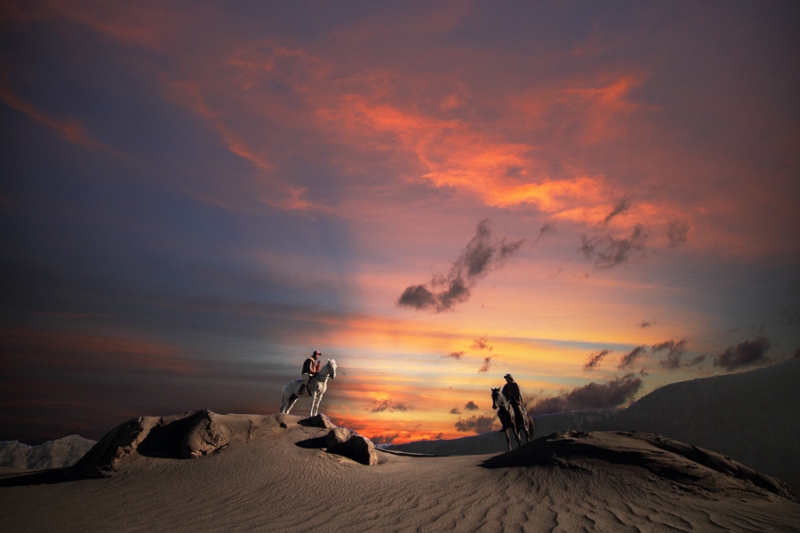
Color grading and careful finishing often deepen that mood. Skies can feel painterly; greens can glow without turning plastic. The polish serves atmosphere, not fantasy for its own sake. You still believe the dust on ankles, the weight of a basket, the slightly uneven line of a handmade fence. When finishing erases those truths, rural photography becomes wallpaper. When it protects them, the image keeps its pulse.
People without performance
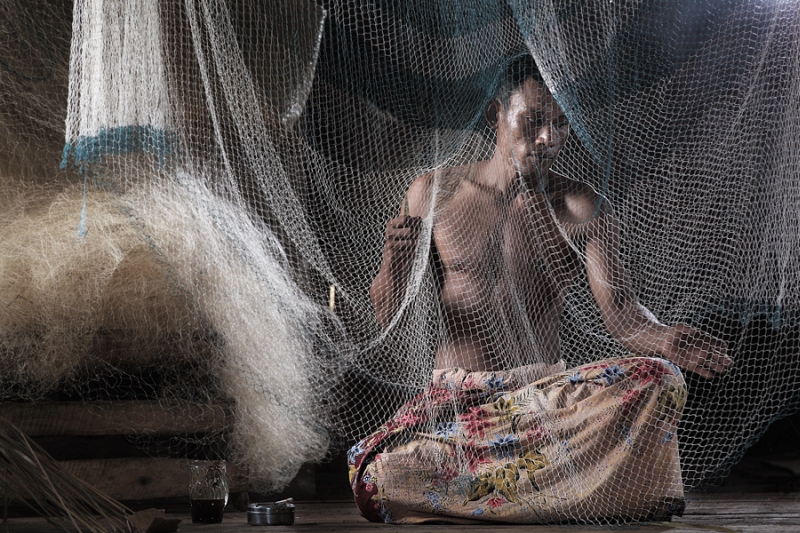
Children, elders, and rural laborers appear often in his widely shared work. Faces are present, but the pictures rarely feel like forced portraits for a catalog. A glance sideways, a task mid-motion, a pause under a tree can carry more story than a posed smile aimed at the lens. The camera seems to wait for a natural beat rather than invent one. That waiting is craft: knowing when not to click is part of knowing when to click.
The ethical stake is real. When photographers treat rural life as costume, subjects become props for someone else’s mood board. Irawan’s better frames suggest acquaintance—someone who knows how long a chore takes, how light falls at that hour, how a path is used after rain. Even when a scene is carefully arranged, the arrangement aims at harmony between human and landscape rather than at novelty shock. Harmony here does not mean blandness. It means the person and the place agree on the same tempo.
Watch hands if you want a shortcut into his storytelling. Hands holding tools, guiding animals, steadying a child, resting on knees after work—these details refuse abstraction. They keep the photographs attached to labor and care. Faces matter, but hands often tell you what the day has been.
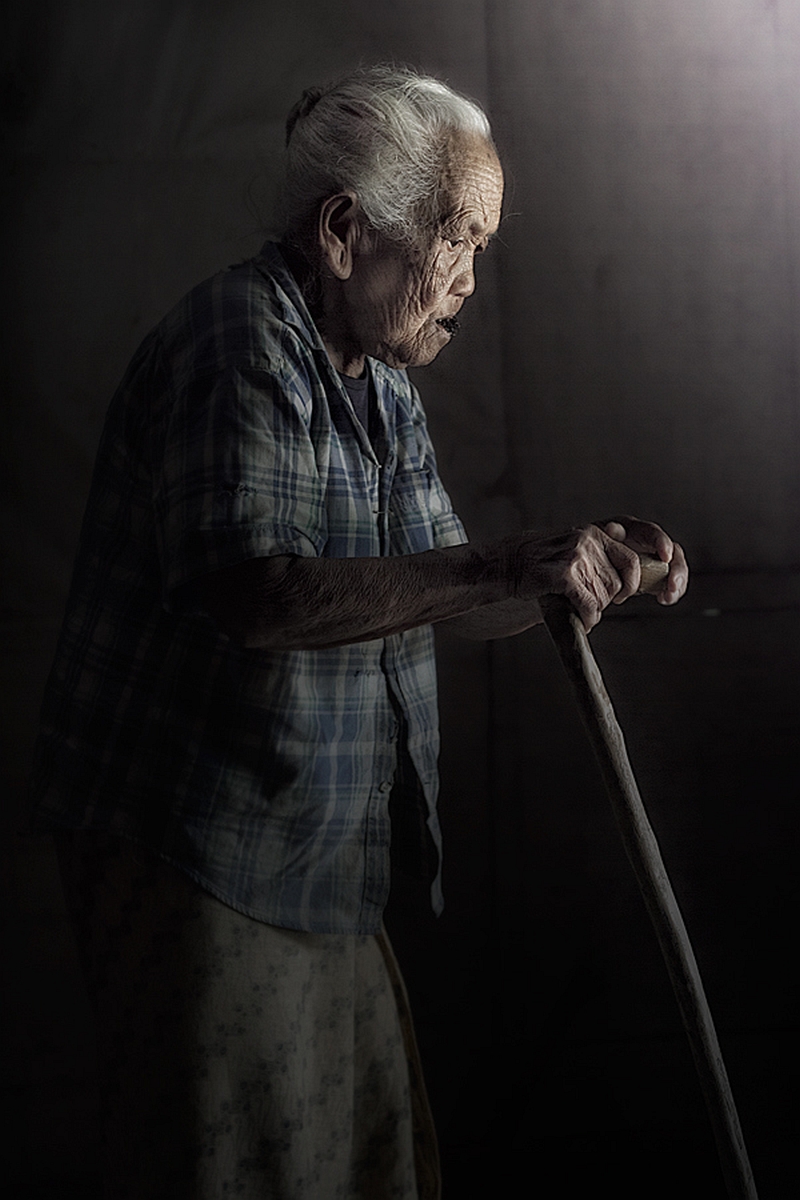
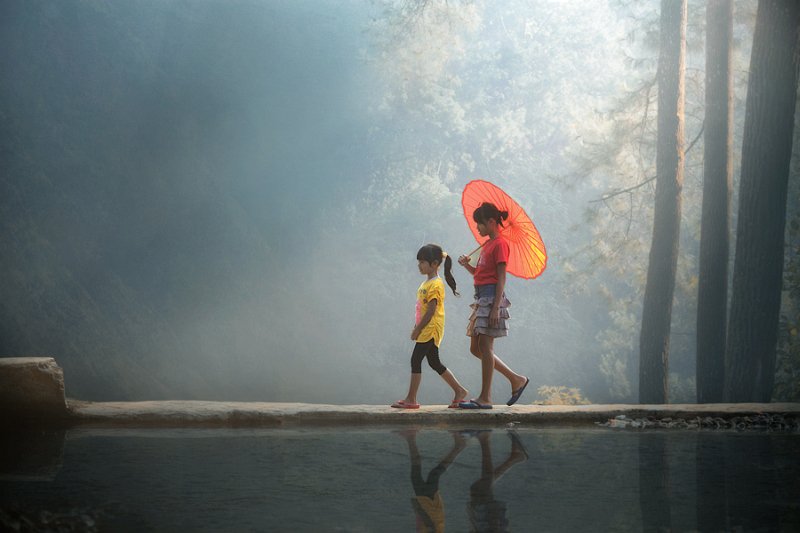
Composition that reads like a short story
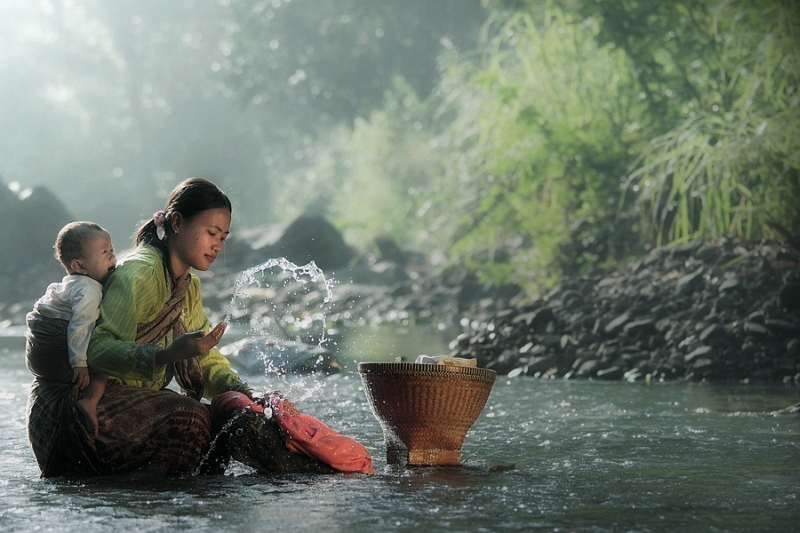
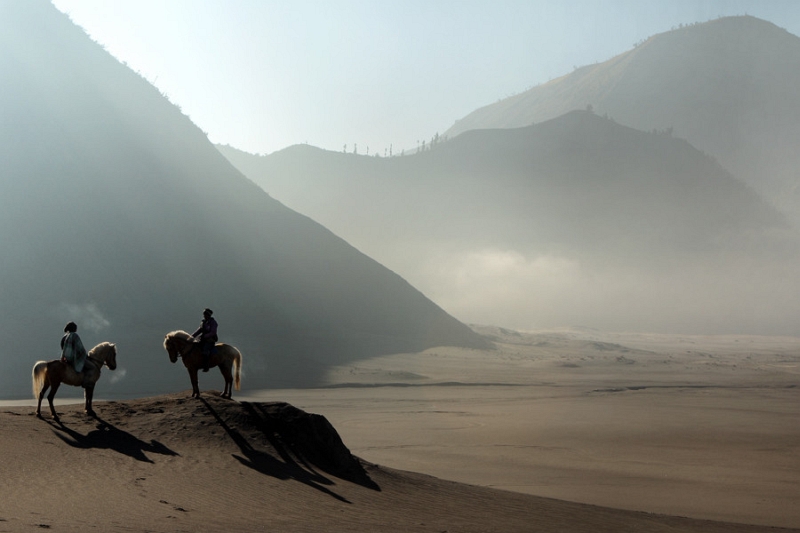
Look at how figures sit in the frame. Often there is breathing room—sky, field, water—so the person is not crushed by the edges. Sometimes a path, shoreline, or row of trees leads the eye like a sentence toward a verb: walking, carrying, watching, waiting. Negative space becomes narrative space. Emptiness is not a mistake; it is the pause between clauses.
Contrast does quiet work too. A bright shirt against deep green. A small human scale against a wide horizon. Soft mist against a sharper silhouette. These are classic tools, used with consistency rather than gimmick. Over time the style becomes recognizable: calm, luminous, slightly heightened, still tethered to real weather. Recognition is useful for an artist’s body of work; it is also a risk if every frame repeats the same formula. Irawan’s stronger images vary distance and intimacy enough to keep the formula from hardening.
Because many photographs travel as standalone shares online, each one must complete its thought alone. That is where the “thousand stories” idea earns its keep. You can enter anywhere in the sequence and still leave with a full mood—morning labor, afternoon play, evening hush—without needing a caption essay. A good single frame is a closed short story. A good series is a shelf of them.
Vertical frames in the set change the reader’s body language. You lean into height: tree, figure, sky stacked. Horizontal frames invite wandering: path, field, distant weather. Switching between them is a pacing tool, like alternating chapter lengths in a novel.
Culture, craft, and the finished print
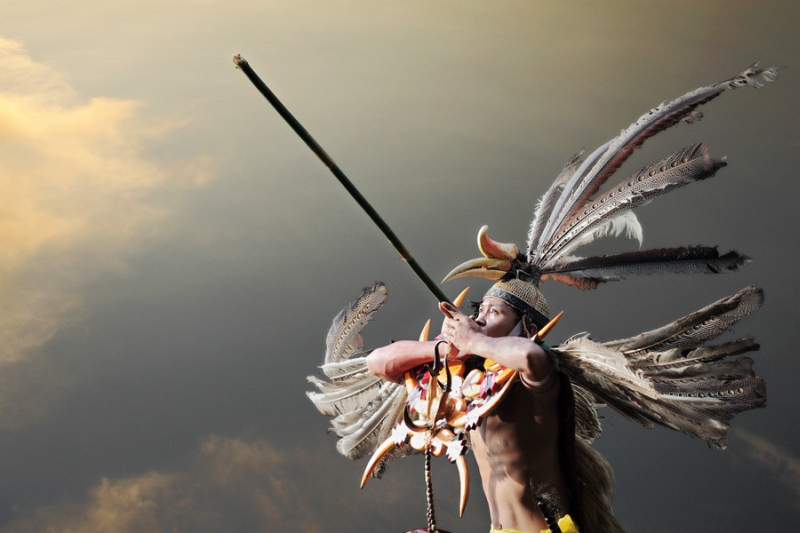
Accounts of Irawan’s practice often note careful staging followed by precise post-production. That combination can sound commercial, yet in his strongest work the finish supports cultural and natural themes instead of erasing them. Cloth patterns stay readable. Hands stay busy. The land keeps texture. Skin retains the weather it earned. The photograph may be heightened, but it should still answer to the place that made it possible.
For viewers outside Indonesia, the images can function as a soft introduction to rural atmospheres many travelers never see beyond a highway window. For viewers inside the country, they can feel like recognition—familiar light made newly attentive. Either way, the artist framing holds: this is authorship with a point of view, not anonymous stock scenery scraped from a hard drive.
His presence on photography platforms over the years helped the work travel internationally while remaining rooted in local subjects. That tension—global feed, local story—is common now. Irawan’s contribution is how peacefully the images hold it. They do not beg for virality with shock. They earn shares by offering calm that still feels specific.
Reading the gallery like chapters
Move through the photographs in order once, then return to a favorite. On the first pass, collect atmosphere. On the second, collect evidence: where the horizon sits, how much sky he allows, whether the figure faces into the wind or away from it. Those micro-choices are the writerly part of the photography.
Compare an image with a distant figure to one with a closer face. Notice how respect for human scale travels across both. The wide shot does not shrink people into decoration; the closer shot does not strip away place. Continuity of attention is the signature more than any single filter preset.
If a frame feels “magical,” ask what ordinary fact produces the magic—time of day, weather after rain, a child’s unselfconscious stance, the geometry of a path. Naming the ordinary fact keeps appreciation from floating into vague praise. It also trains your own eye if you photograph.
What makers can borrow
Arrive early enough for weather to change its mind. Stay long enough for ordinary motion to reappear after the awkwardness of a stranger with a camera fades. Leave room in the frame. Let finishing amplify what was already true on location. Prefer one clear relationship—person to land, child to elder, worker to tool—over a clutter of competing subjects.
Most of all, resist the urge to explain everything in the caption. Irawan’s strongest images already contain their verbs. Your job as a viewer is not to solve them like puzzles; it is to give them the minutes they were built to hold.
A thousand stories is not a claim of census. It is a way of saying that rural Indonesia, seen with patience, keeps offering new chapters—and that Dewan Irawan’s camera has learned how to open them without slamming the cover shut on the people who live inside the light.

Comments
Continue reading

Dramatic Photo Art by Sukron Ma’mun (Ipoenk Graphic)
Cirebon, Indonesia photographer Sukron Ma’mun uses theatrical natural light to frame village life, play, and place in lyrical photo art.

Bird’s-Eye Views: Florian Beaudenon’s Instant Life
Paris photographer Florian Beaudenon’s Instant Life series captures people in their rooms from above—intimate, collaborative overhead portraits of everyday joy.
Abandoned Cars Reclaimed by Nature: Rust, Growth, and Quiet Ruin
When neglected vehicles are left outdoors long enough, rust, moss, and trees rewrite them into strange still lifes—sad, photogenic, and slowly returning to the ground.