
Slinkachu’s Fly: Little People in Brooklyn
Slinkachu’s miniature flight scene at Brooklyn Bridge Park—Little People street installations, photographed and left behind for whoever looks down.
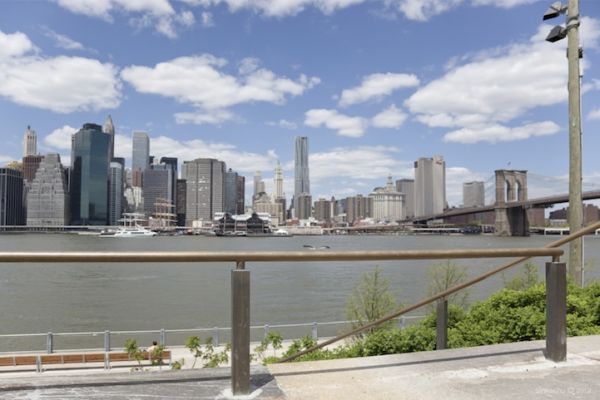
Look down. That is the quiet instruction inside Slinkachu’s best work. The London-based artist has spent years placing remodeled train-set figures into real city grit—curbs, cracks, railings, park edges—then photographing the scenes before leaving the tiny cast to chance. At walking speed the pieces vanish. Up close, they become whole dramas about scale, loneliness, and the joke of trying to feel large in a large place.
Around 2012, one New York scene traveled widely under titles that pointed to flight: a miniature figure straining toward lift-off against the openness of Brooklyn Bridge Park. Shared from the Little People trail and mirrored across blogs that season, the images did what Slinkachu’s project always does—make a public landscape feel briefly private. What follows gathers that work in the artist’s own terms: miniature people, abandoned in situ, held durable only by the photograph.
Who Slinkachu is working as
Slinkachu is not a muralist covering walls. His practice sits between street intervention, sculpture, and photography. Since 2006 he has painted and modified tiny commercial figures—often Preiser-style model people—sometimes adding clay details or changing arm and leg positions, then staging them against trash, insects, puddles, or monumental architecture. The street half of the project is about surprise: a pedestrian who notices becomes a temporary co-owner of the joke. The camera half is about fixing that joke before weather, shoes, or sanitation crews erase it.
He has described the scenes as reflections of urban melancholy—feeling small among millions—while insisting humor stay in the mix. Titles matter. They tip a viewer from “cute miniatures” toward a specific emotional pitch: aspiration, failure, branding, romance, boredom. Flight pieces live in that register. A figure straining upward beside open water and sky reads differently than the same figure trapped under a bottle cap or lost beside a drain.
Why Brooklyn suits the flight fantasy
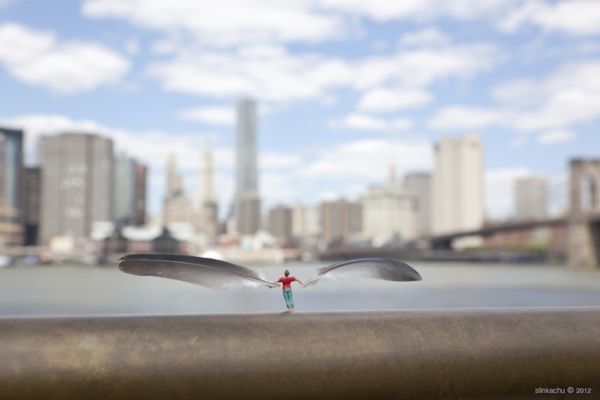
New York—and Brooklyn Bridge Park in particular—offers Slinkachu a stage that is already theatrical: bridges, water, tourists, joggers, and the constant sense that something bigger is happening just beyond the frame. Planting a centimeter-tall person in that landscape is almost unfair. The park’s openness makes the figure’s ambition look both heroic and ridiculous. That double feeling is the point.
Tags pointing to Brooklyn and New York are not decoration. The work is not a studio diorama pretending to be a city. It is the city, temporarily colonized by plastic people who behave as if they belong there. When the photographs circulate, viewers who never stood on that path still recognize the emotional geography: wanting out, wanting up, wanting a private myth inside a public park. Flight, staged at that address, borrows the bridge’s vertical longing without needing a superhero cape.
How to look at the pictures
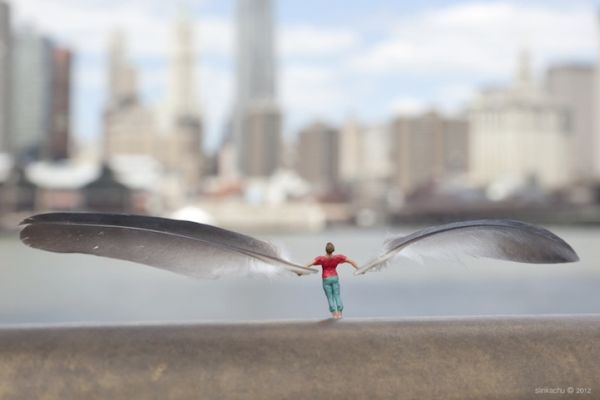
Slinkachu’s photographs reward two distances. First, the wide or mid view that shows how small the intervention really is against concrete and landscape. Second, the close crop that restores the figures to “normal” size inside the print, so their gestures read as human again. Many published images pair those distances—establishing shot and detail—so the viewer feels the trick twice.
When you move through the set here, notice:
- Props and found matter — litter, plants, insects, or hardware that become architecture at miniature scale
- Body language — arms lifted, heads tilted, figures clustered or alone
- Horizon and emptiness — how much sky or water the camera allows, and what that does to longing
- Color — painted clothing against dull urban neutrals; the tiny note of chroma that pulls the eye
- Threat of the next footstep — the sense that the scene is temporary even while you look
The craft is meticulous and slightly absurd. Hours of modeling and painting end up subordinated to a crack in asphalt. That imbalance is the satire: our own dramas are huge to us and nearly invisible to the crowd.
Installation that expects to be abandoned
Unlike gallery sculpture meant to be conserved under glass, these street setups are designed to be left behind. Some passersby never see them. Some photograph them. Some kick them without noticing. That vulnerability is part of the piece’s honesty: the city is allowed to win. The artist’s durable object is often the photograph and, later, the print edition or book page—not the plastic figure forever frozen on site.
In 2012 Slinkachu’s wider practice was also visible through Global Model Village—book and related exhibitions that gathered international “little people” scenes into a traveling argument about shared urban feeling, with shows that season in London and New York. The Brooklyn flight images sit comfortably in that era: local sidewalk poetry that joins a global series about being tiny on purpose. Whether a viewer meets the work as a park surprise or as a blog post, the same contract holds—look carefully, then accept that the sculpture may already be gone.
What the “fly” idea is doing emotionally
Flight, in miniature, is almost always tragicomic. A tiny person cannot clear a curb the way a bird clears a bridge cable. So the gesture becomes symbolic. It can read as childhood make-believe, midlife restlessness, immigrant hope, or simply the daily wish to leave a job, a borough, a mood. Because the figures are anonymous, viewers borrow them easily. You do not need a caption explaining who “he” is. He is whoever is looking.
That empathy engine is why the work shares so well without collapsing into empty cuteness. You can enjoy the craftsmanship in five seconds, then notice, on a slower pass, that the joke has a bruise. The sky in the background is real. The wings are not. Between those facts, the photograph holds a very human pause.
Process notes without spoiling the magic
Part of the pleasure is technical. Figures arrive unfinished; Slinkachu paints, reposes, and sometimes rebuilds them. Props come from model shops, online railway suppliers, found litter, even insects when the scene demands it. Placement is guerrilla: no plaque, no velvet rope. Documentation is careful—macro attention married to environmental context—so the final image can travel farther than the sidewalk ever will.
None of that process is meant to turn the work into a tutorial. It simply underlines that the “accidental” wonder is authored. The flight fantasy looks spontaneous because the authorship was thorough.
Read it as street art, not only as cute props
It is tempting to flatten this practice into adorable miniatures for the internet. The stronger reading follows Slinkachu’s dual brief: surprise people into noticing their surroundings, and stage little narratives about modern solitude with a wink still attached. The Brooklyn flight work is a clean example of both. The park asks for looking up. The sculpture asks for looking down. Between those two directions, the photograph holds still.
If these frames are your first meeting with the Little People Project, let them be an entry, not a complete map. Follow the wider trail—London streets, other cities, the books that collect years of abandonments. The cast never grows tall. The cities do not shrink. The tension between those facts is the ongoing work, and the wish to fly is only one of its clearest sentences.

Comments
Continue reading

Still-Life Photography by Margareth Perfoncio
São Paulo photographer Margareth Perfoncio’s still lifes of food and flowers—Old Master light, dark wood, and tables that feel inevitable.
Meaningful Love Quotes for Inspiration (and Ink)
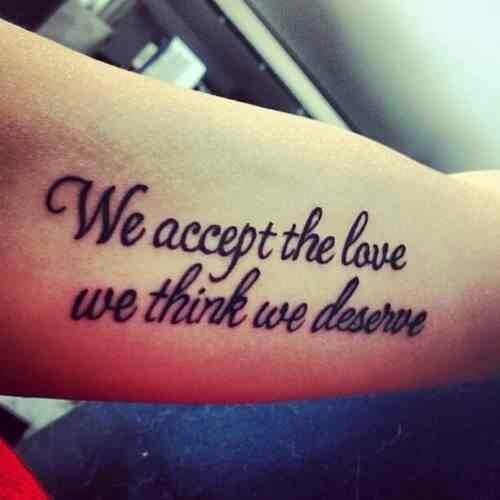
Meaningful love quotes that still feel true — short lines for tattoos, gifts, and everyday reminders, with placement and wording tips.

Christina Hess’s Animals From History: Costumed Pets as Playful Portraits
Illustrator Christina Hess reimagines historical icons as ornate animal portraits—Elvis Petme and friends—mixing puns, costume detail, and soft history lessons.