
Annie Leibovitz’s “The Custom of the Country” for Vogue
Natalia Vodianova as Edith Wharton at The Mount—Leibovitz and Coddington’s September 2012 Vogue story, and the actors and writers who filled the frame.
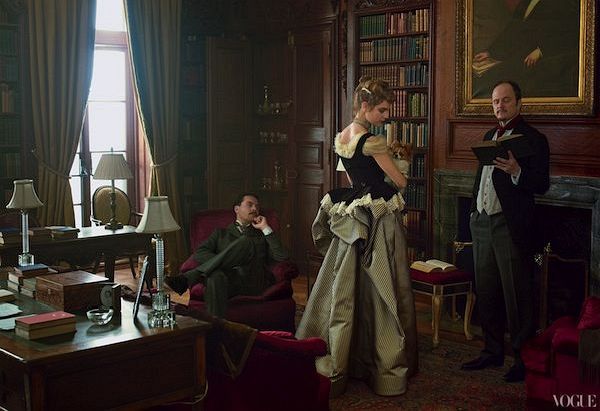
For the September 2012 issue of American Vogue, Annie Leibovitz photographed “The Custom of the Country,” a fashion story that treats Edith Wharton’s world as a living set. Styled by Grace Coddington, the editorial casts Natalia Vodianova as Wharton and gathers actors, writers, and artists into a temporary salon — not a dry costume parade, but a staged social atmosphere shot with Leibovitz’s appetite for tableau and encounter.
Wharton, the title, and The Mount
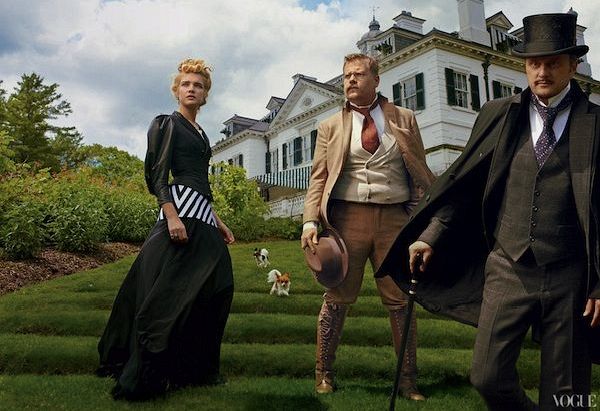
The story takes its name from Wharton’s 1913 novel The Custom of the Country, a book alert to ambition, manners, and the bargains people make for status. Vogue’s feature does not attempt a page-by-page illustration of that plot. It borrows the title’s social charge and places Vodianova-as-Wharton inside the geography that mattered to the author: The Mount, Wharton’s estate in Lenox, Massachusetts, where she lived in the early 1900s and hosted the kind of artistic company the editorial reimagines.
Location does heavy lifting. Interiors, grounds, and period wardrobe cues turn fashion into a temporary historical fiction. You read clothes as character and rooms as argument: who belongs, who performs belonging, who watches. The Mount is not a generic “period house.” It is a specific American literary landmark, which gives the spread a gravity that studio seamless paper cannot fake.
Colm Tóibín’s accompanying text in the issue framed the Wharton world for magazine readers; the photographs do a parallel job without needing captions to narrate every beat. Image and literary prestige lean on each other — a classic September-issue partnership.
Leibovitz and Coddington’s kind of storytelling
Leibovitz’s editorial work often builds meaning through grouping — who stands with whom, who is centered, who is caught mid-gesture. Coddington’s fashion direction supplies the tactile half: fabrics that can survive a narrative reading, silhouettes that suggest era without becoming museum labels. Together they make a spread that can be browsed as beauty and studied as casting.
Vodianova’s role is the hinge. As Wharton, she is both fashion subject and historical proxy. The camera needs her to hold presence while a rotating circle of guests fills out the myth of an artistic household. That is harder than a solo beauty story: the model must share oxygen with novelists and actors without disappearing into the furniture.
Leibovitz has long specialized in cultural casting — putting public figures into roles that are half portrait, half fiction. Here the fiction is Wharton’s circle, and the portrait is contemporary fame learning how to stand still in borrowed century clothes. The tension between those modes is the editorial’s real subject.
The guest list as meaning
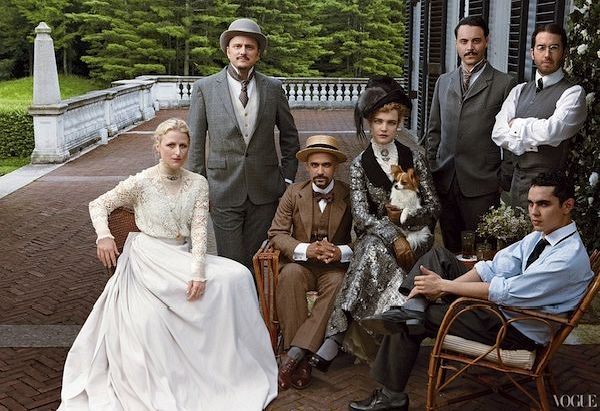
The published circle around Vodianova included Elijah Wood, Juno Temple, Mamie Gummer, Jack Huston, Max Minghella, and James Corden on the screen-and-stage side, and Jeffrey Eugenides, Junot Díaz, and Jonathan Safran Foer among the writers, with artist Nate Lowman also in the mix. The cast is not random celebrity garnish. It stages a modern echo of Wharton’s intellectual company — people whose public work already concerns story, performance, and cultural status.
Eugenides, in contemporary coverage of the shoot, compared the experience to a period drama with no lines: costume and posture as the whole script. He spoke about reading Henry James and feeling his way into that adjacency while wrestling with studs and vintage shirts — small practical details that make the historical fantasy tactile. Foer and others described Leibovitz’s on-set manner as casually precise: friendly, exacting, built for long tableau days rather than frantic snap shooting.
Actors such as Temple, Wood, Huston, Minghella, Gummer, and Corden bring face recognition and body training; writers bring a different kind of public aura. Mixing those types keeps the salon from collapsing into a single industry party. You get a cross-section of cultural labor, which is closer to Wharton’s mixed company than a cast of only models would be.
Fashion as historical fiction
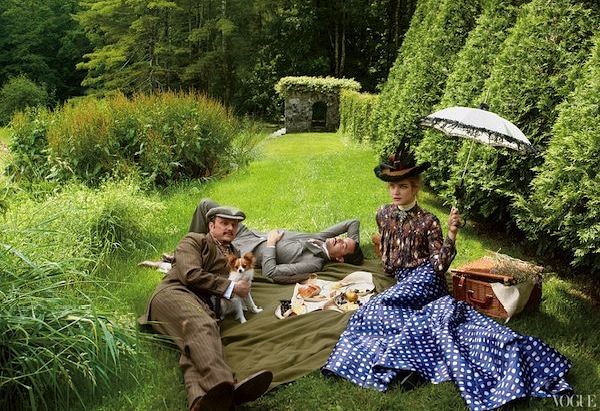
Editorials like this walk a line between accuracy and atmosphere. Exact replication of 1900s dress is less important than a coherent visual dialect: structure, formality, the weight of social clothing. Pieces made for the story and carefully chosen wardrobe — including formal dresses and tailored suits reported in coverage — create a world that feels continuous from frame to frame. Jewelry, boots, gloves, and tailoring become punctuation.
Because the feature ran in a major September issue — traditionally a high-stakes fashion month showcase — production values and page count mattered. Accounts described a substantial multi-page story shot over roughly two days at The Mount. That length lets Leibovitz vary distance: wide social arrangements, closer confrontations, quieter portraits that still belong to the same invented weekend.
September issues sell fantasy with authority. This one sells a specifically American literary fantasy: East Coast estate culture, artistic guests, a woman of letters at the center. Fashion becomes the ticket into that fantasy, not the only subject of it.
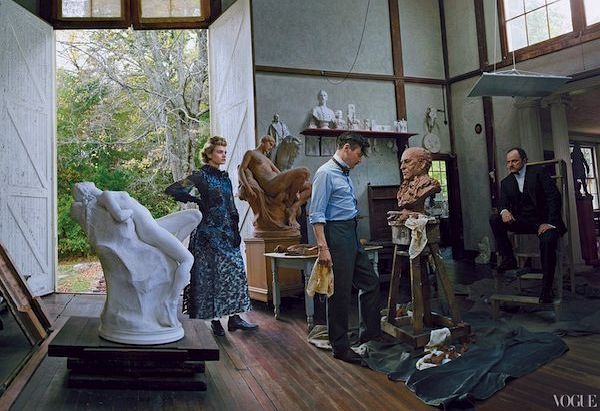
How to look at the pictures
Start with architecture and light before you inventory labels. Ask who commands the frame and who supports it. Notice how often the editorial treats conversation as a pose — the social art Wharton’s fiction dissected, restaged as fashion narrative.
Then look at Vodianova’s isolation versus inclusion. In some frames she is clearly the authorial center; in others she is one node in a network. That oscillation is the story’s quiet theme: the celebrated host and the circulating company, each needing the other for the myth to work.
Watch hands and eyelines. Leibovitz often builds group pictures on small interpersonal vectors — a glance, a lean, a shared cigarette of attention — that keep large casts from freezing into yearbook rows. The Mount’s rooms give those vectors walls and windows to bounce against.
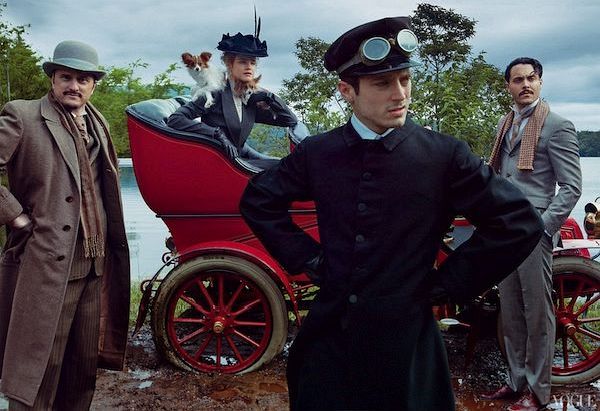
Why the 2012 date still matters
The shoot belongs to a specific magazine moment: early-2010s Vogue, Leibovitz’s long relationship with large cast narratives, Coddington’s narrative styling, and a culture industry happy to put novelists inside fashion pages. It is not breaking news. It is a dated artifact that still teaches how fashion photography borrows literature’s prestige and returns it as image.
For readers who come via the photographs alone, the caption list is a map. For readers who know Wharton, the map has an extra layer: The Mount as real place, the novel title as borrowed weather, the modern faces as stand-ins for a vanished circle. Either path leads to the same looking practice — slow down, count the relationships in the frame, let the clothes finish the sentence.
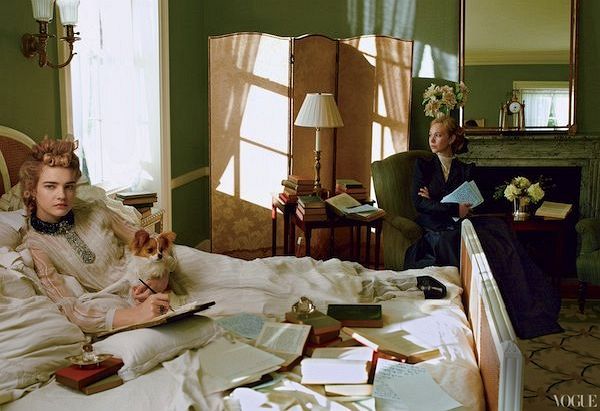
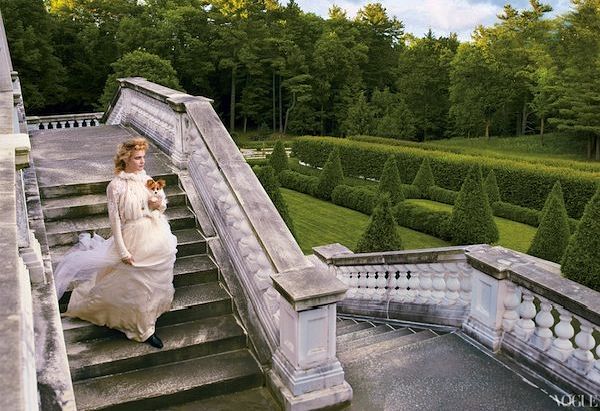
Keep the names attached as you scroll: Vodianova, Leibovitz, Coddington, The Mount, Eugenides, Díaz, Foer, Wood, Temple, Gummer, Huston, Minghella, Corden, Lowman. The clothes will change with every reread of fashion history. The idea — literature’s social world rebuilt for the camera — is what the editorial still stages cleanly.

Comments
Continue reading

Dramatic Photo Art by Sukron Ma’mun (Ipoenk Graphic)
Cirebon, Indonesia photographer Sukron Ma’mun uses theatrical natural light to frame village life, play, and place in lyrical photo art.
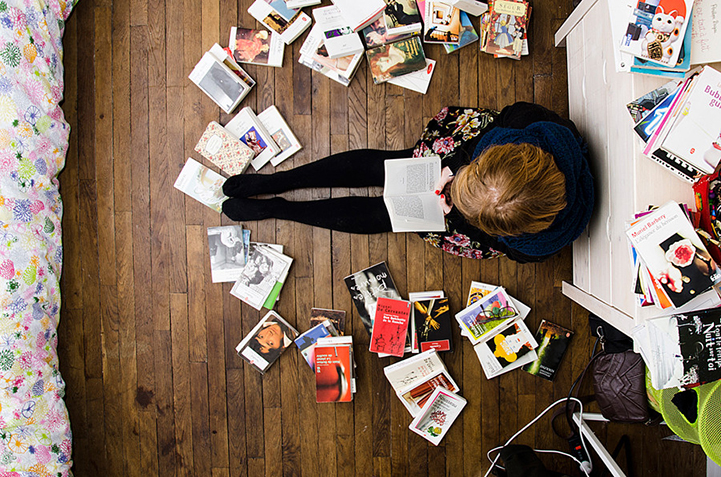
Bird’s-Eye Views: Florian Beaudenon’s Instant Life
Paris photographer Florian Beaudenon’s Instant Life series captures people in their rooms from above—intimate, collaborative overhead portraits of everyday joy.
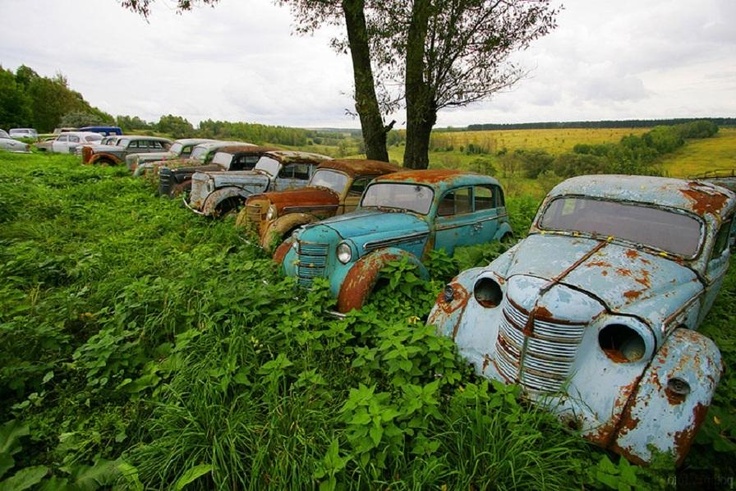
Abandoned Cars Reclaimed by Nature: Rust, Growth, and Quiet Ruin
When neglected vehicles are left outdoors long enough, rust, moss, and trees rewrite them into strange still lifes—sad, photogenic, and slowly returning to the ground.