
Pretty Altar Alternatives for Beach Weddings
Beach ceremony focal points that work with sand and wind—arches, driftwood, florals, and low altar alternatives, with a practical setup checklist.
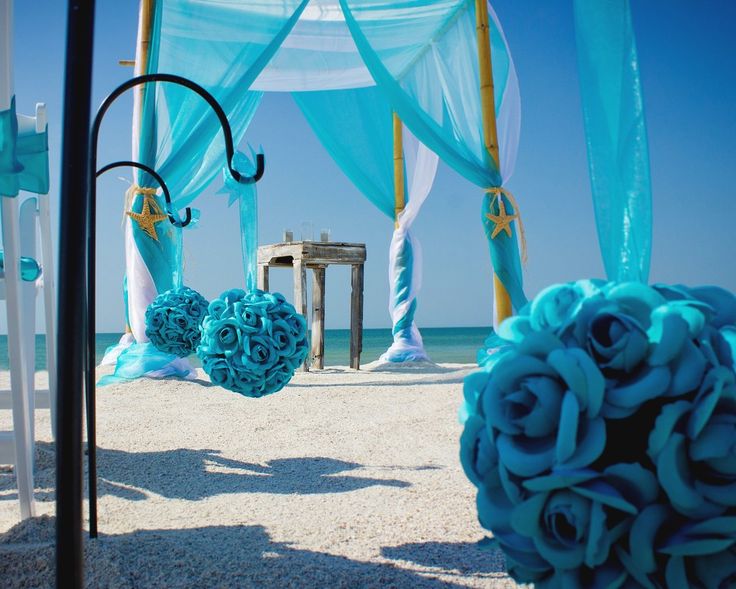
A beach wedding already has a stage: open sky, horizon line, and the sound of water. That does not mean the ceremony needs no focal point. Guests still need somewhere to look; the couple still needs a clear place to stand; photographs still need a structure that reads as “here is the vow.” An altar—or an altar alternative—supplies that. On sand, the best versions respect the landscape instead of fighting it. Heavy indoor chapels rarely translate. Light frames, natural materials, and restrained florals usually do.
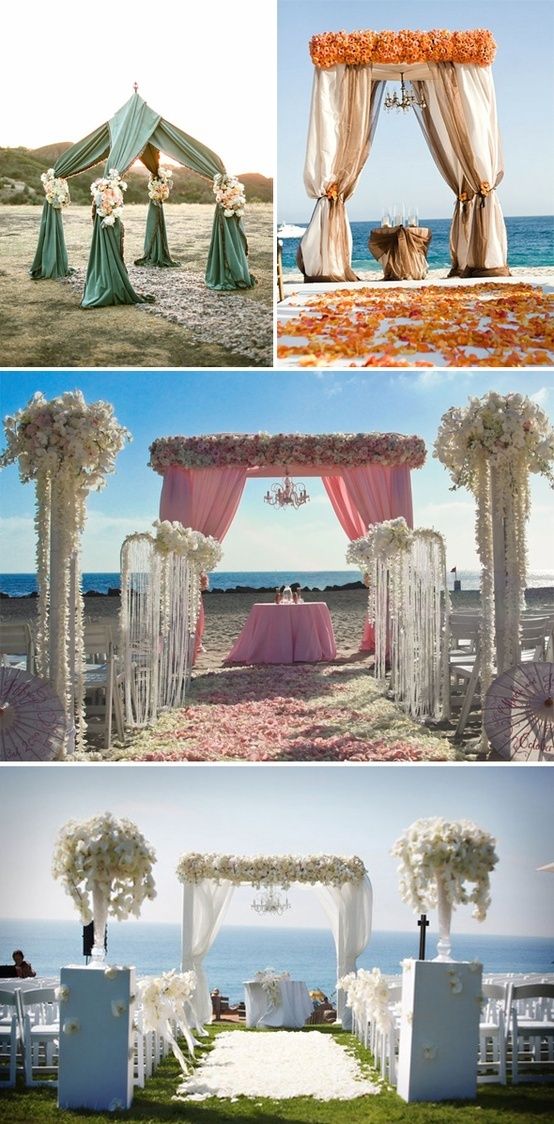
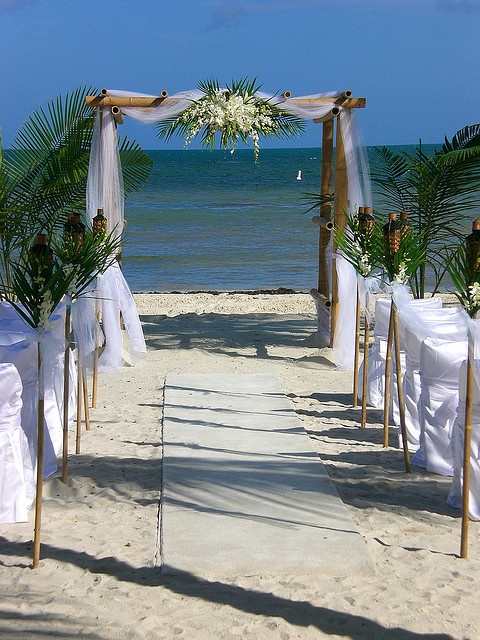
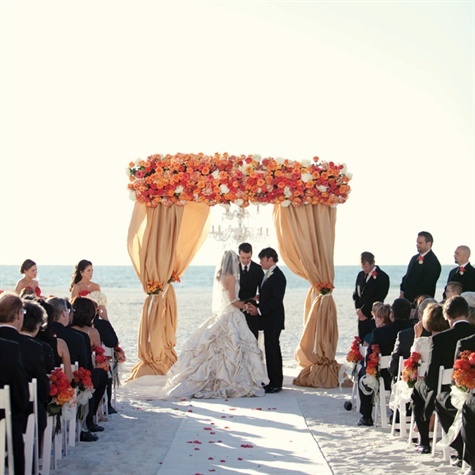
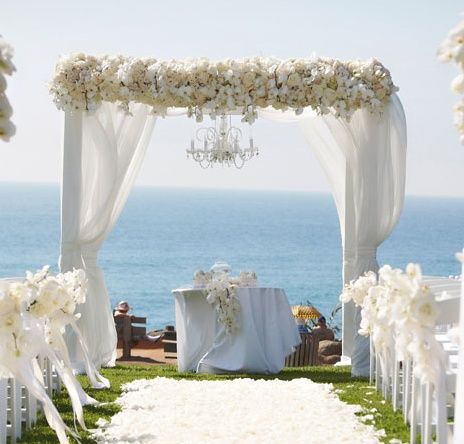
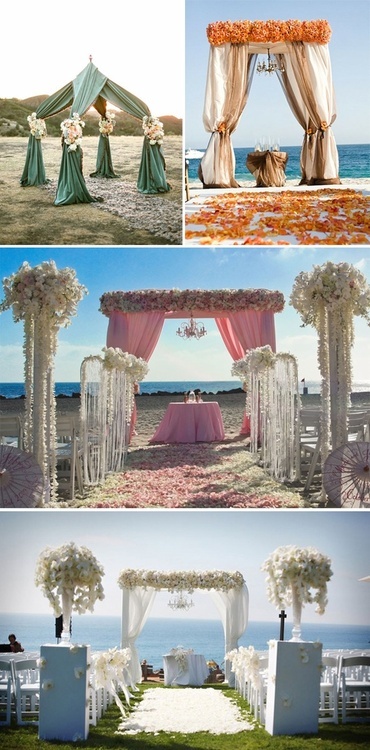
Think of the altar as a ceremony marker, not as a second venue. If the ocean is dramatic, your structure can be quieter. If the beach is flat and open, a taller silhouette helps gather the eye. Either way, plan for wind, tide, permits, and how the piece will be anchored. Pretty ideas fail when they tip over mid-vows. The gallery below shows a range of silhouettes—arches, florals, textiles, driftwood, and low ground altars—so you can match scale to guest count and shoreline.
Open arches and simple frames
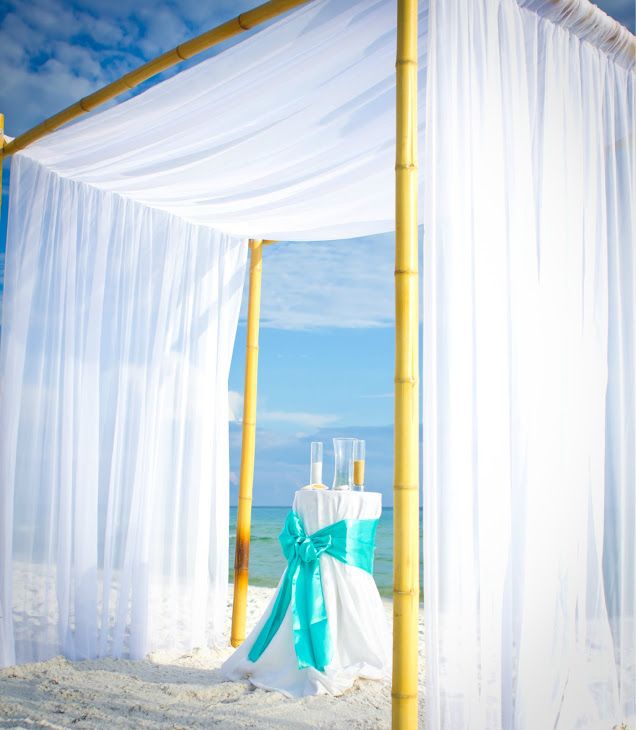
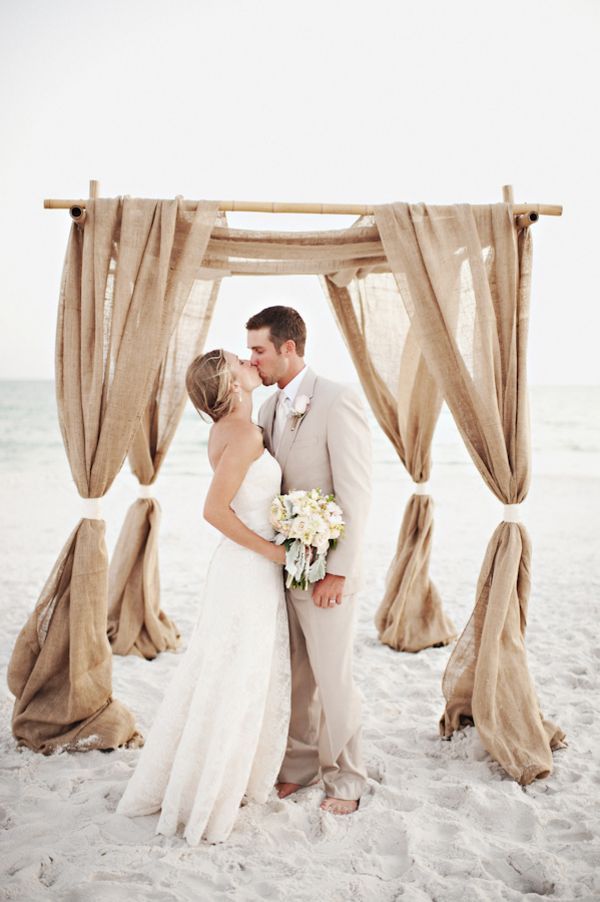
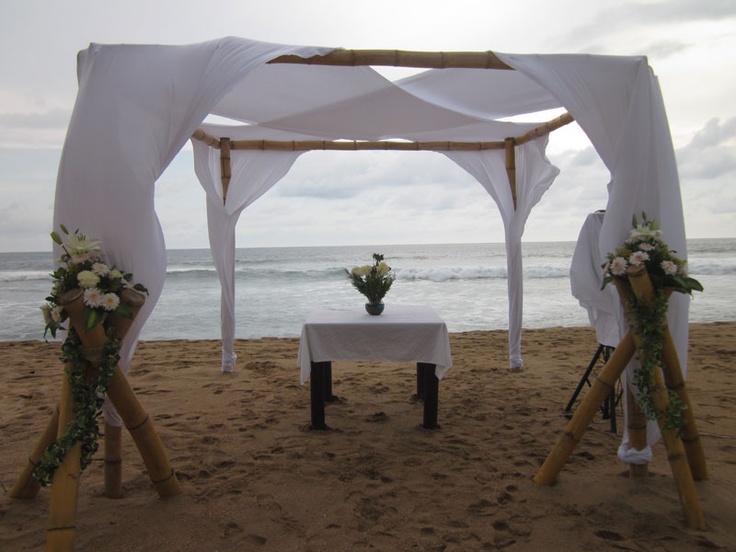
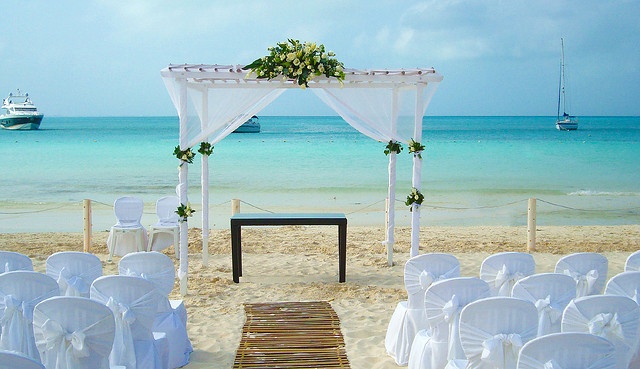
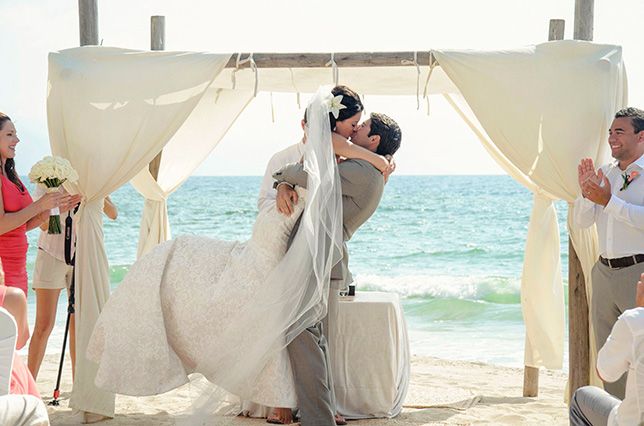
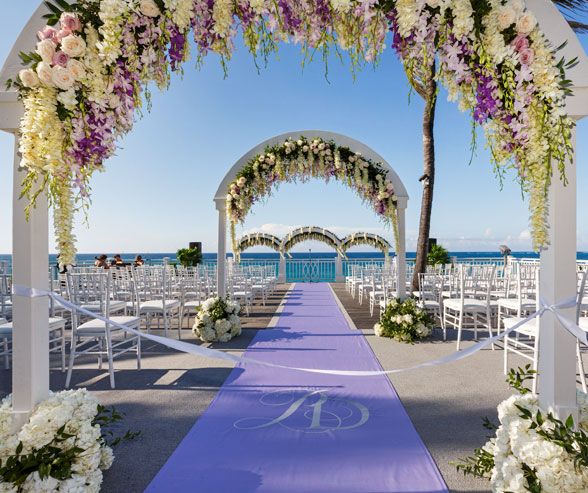
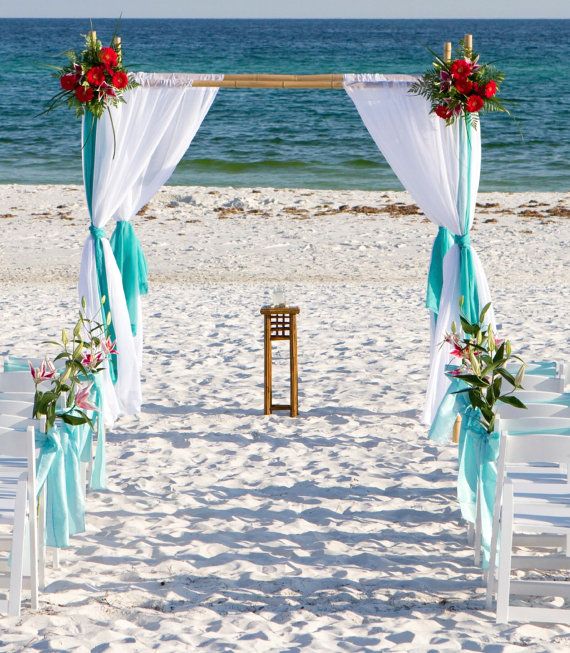
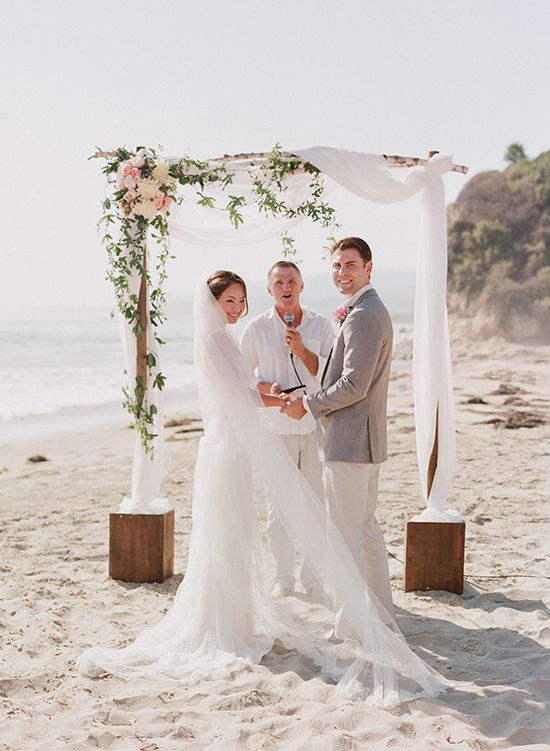
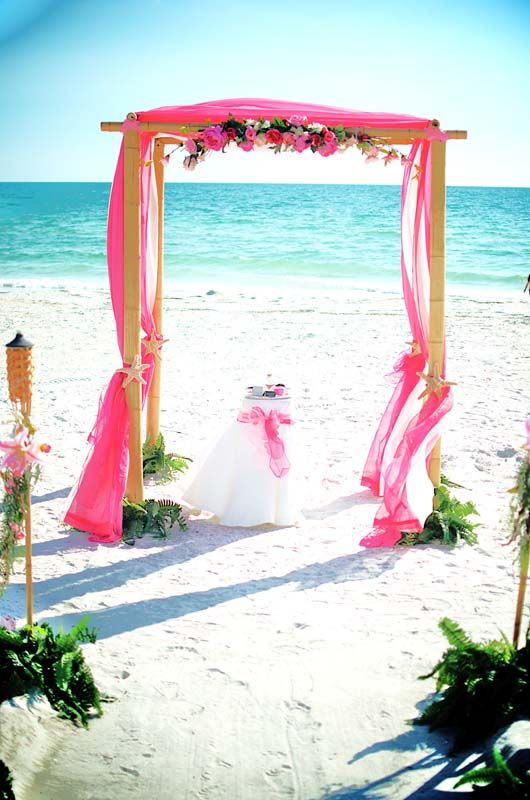
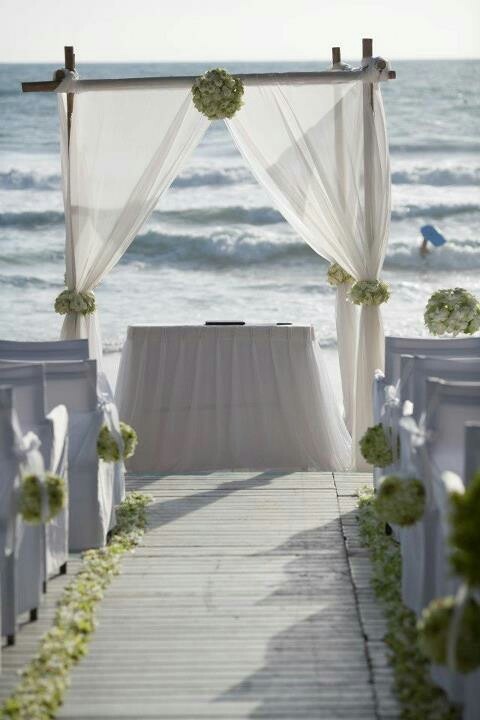
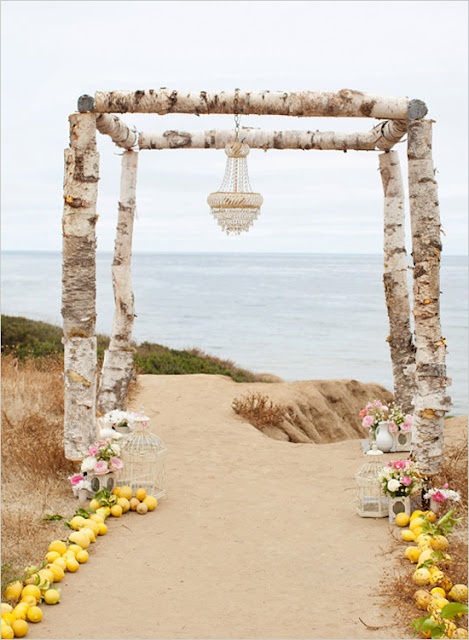
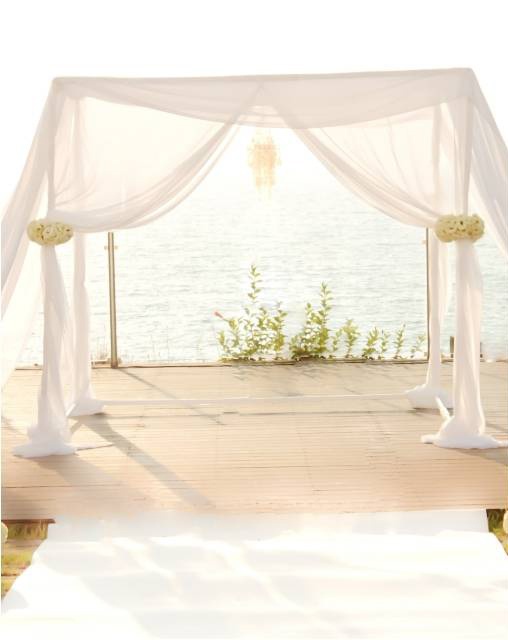
A freestanding arch remains the most familiar beach altar alternative. Wood, bamboo, or metal tubes create a doorway the couple can stand inside or just in front of. Keep proportions honest: too narrow and shoulders look cramped; too tall and the structure can catch wind like a sail. Soft fabric draping works when it is secured at multiple points and when the fabric is light enough to move without wrapping anyone’s face. Many couples skip fabric entirely and let the frame stand bare, then add a concentrated floral spray at the top corners or along one side for asymmetry.
Circle or hexagon frames give a contemporary outline without needing heavy construction. They photograph cleanly against water and sky, especially at golden hour. If you love a geometric look, test the piece on site before the wedding day. Sand is uneven; what looks centered on a lawn can lean on a beach unless the base is leveled or weighted. Ask your rental or builder how the feet behave in soft sand versus a raised platform. A platform solves leveling but introduces its own look—decide whether you want the ceremony to feel grounded in the beach or slightly elevated above it.
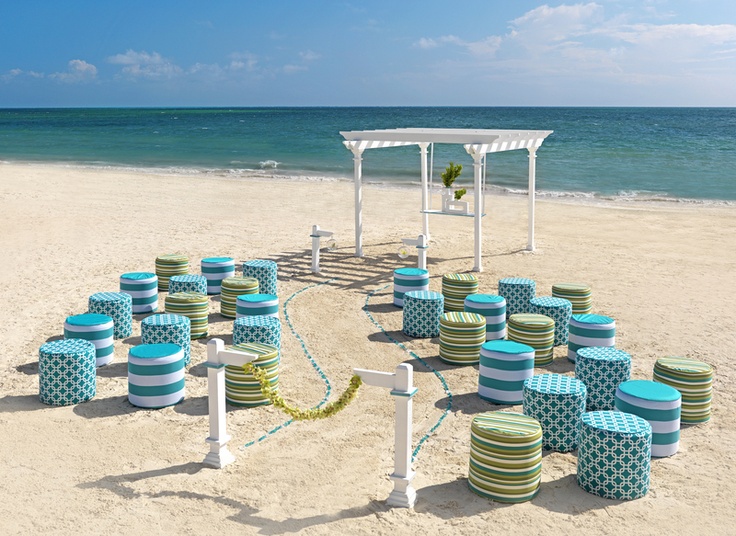
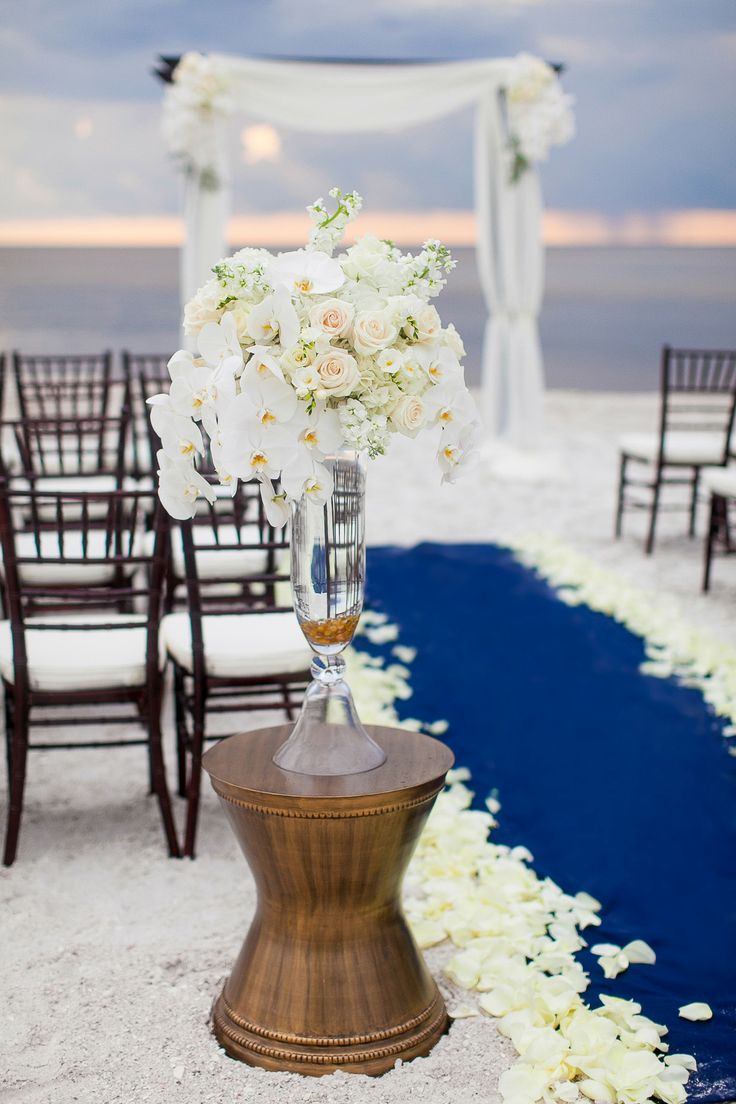
Driftwood, branches, and found-nature structures
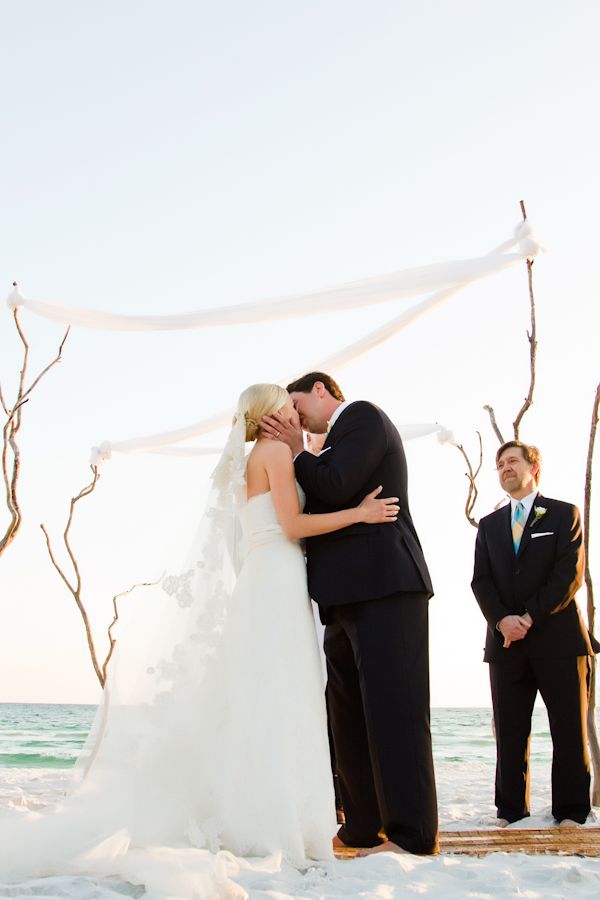
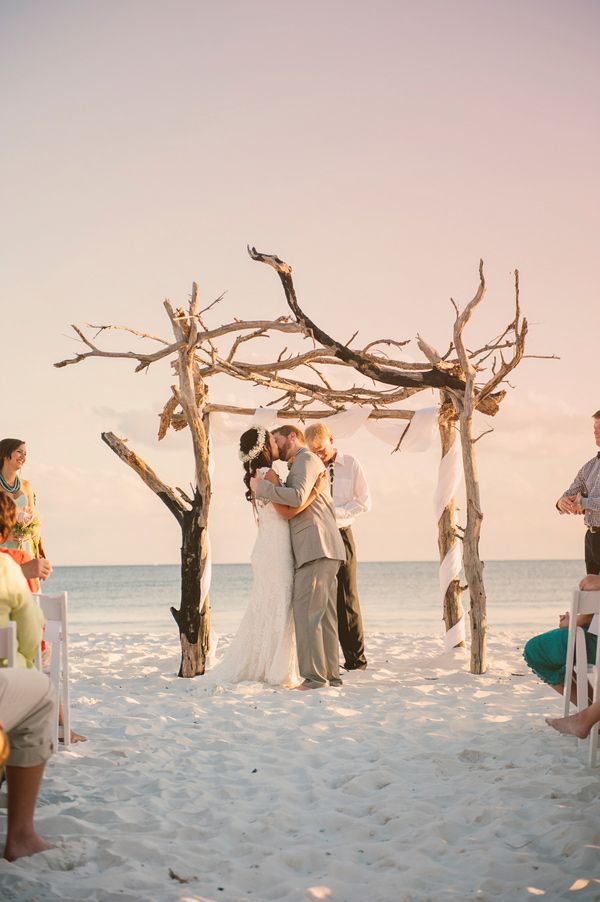
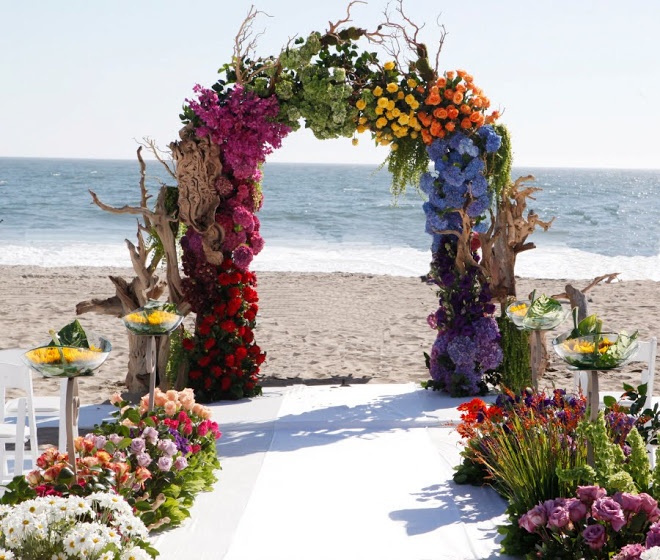
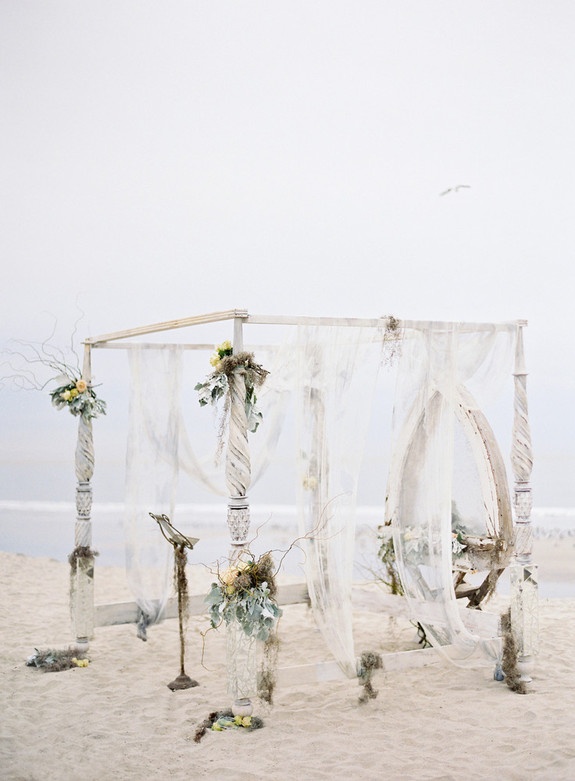
Driftwood arches suit coastal settings because the material already belongs there. Look for sturdy pieces with enough mass to hold floral ties, or build a deliberate frame and wrap it so it reads intentional rather than scavenged. Branches and leafy poles can form an informal canopy when local rules allow cutting or when you bring in farmed greenery. The goal is a structure that feels collected, not cluttered. Avoid piling every beach souvenir onto the frame; one strong material story photographs better than a collage of ideas.
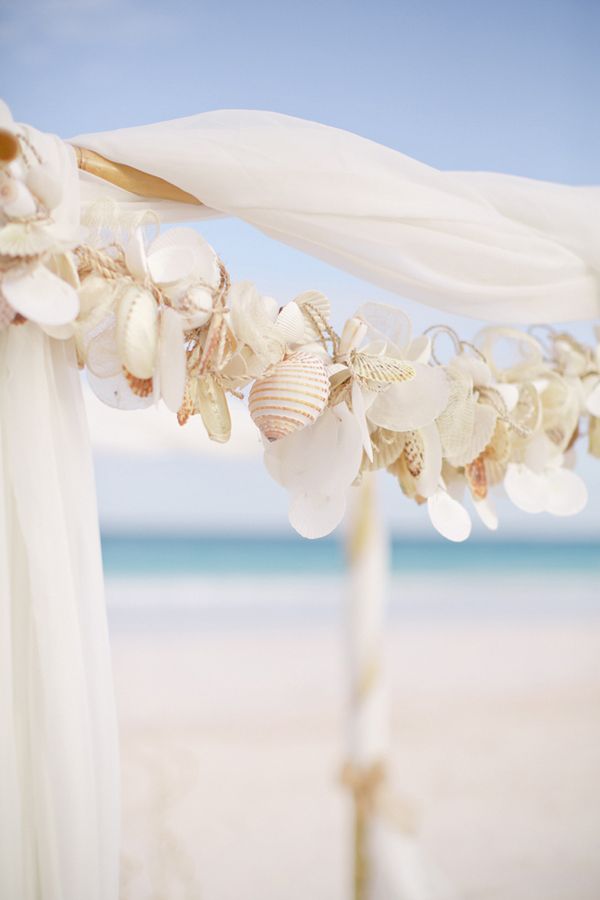
Low arrangements of shells, ethical coral alternatives, stones, and lanterns can replace a tall altar altogether. Place them in a shallow arc or rectangle so the couple still has a clear “front.” This approach works especially well for intimate ceremonies where a large arch would overwhelm the guest count. It also reduces wind risk. Tradeoff: distant guests may need a stronger visual cue—perhaps a runner, a pair of tall candles in hurricane glass, or a single statement floral pedestal. If your guest list is large, combine a low ground altar with a subtle backdrop so people in the back row still understand where to look.
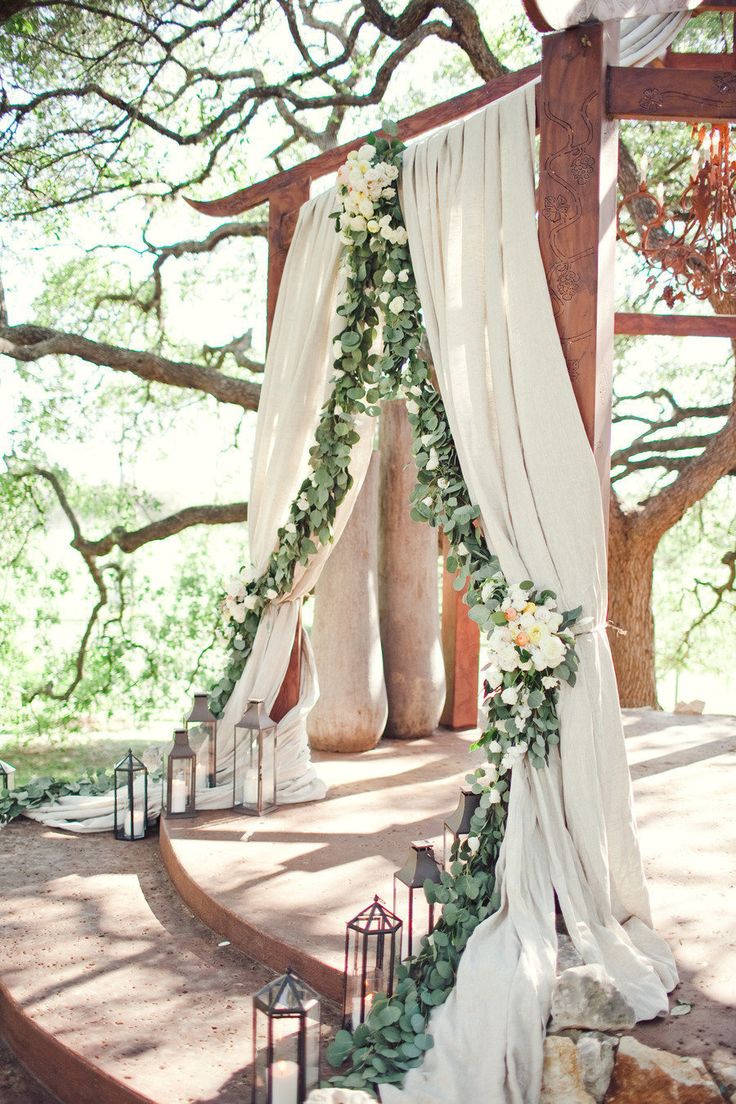
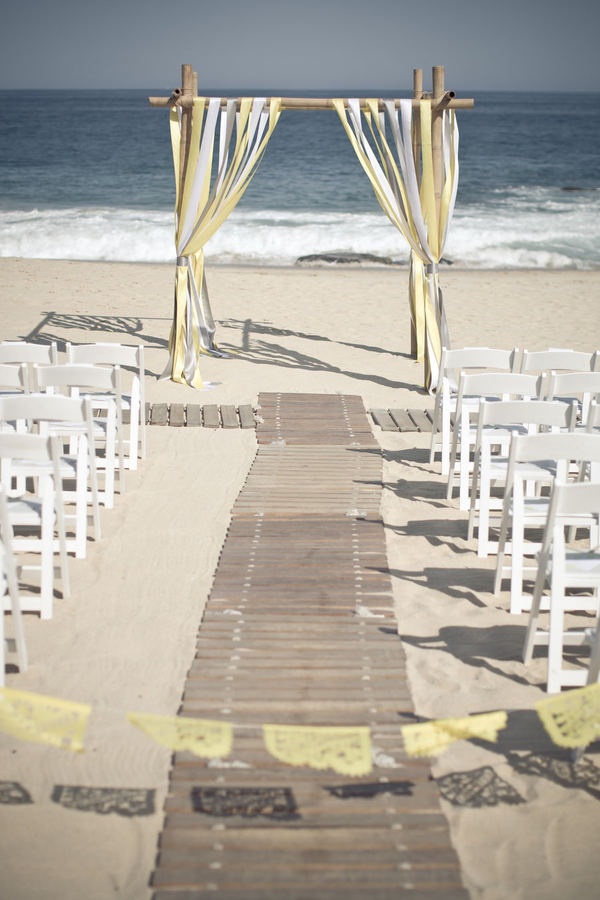
Floral walls, hanging installs, and soft verticals
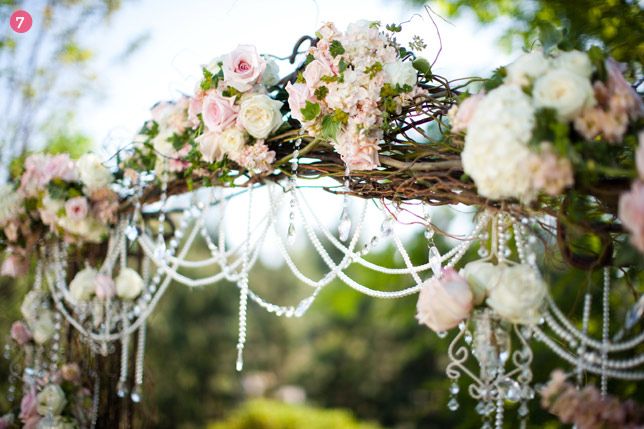
When you want color without a heavy frame, a floral panel or hanging vine install can act as a living backdrop. On a beach, keep the engineering boring and the flowers interesting: secure scaffolding, sand anchors, or weighted bases matter more than the camera angle. Choose blooms that tolerate heat and breeze, or lean on hardy greenery with a few statement flowers that can be refreshed if they wilt. Tropical leaves can read coastal without needing a literal seashell theme.
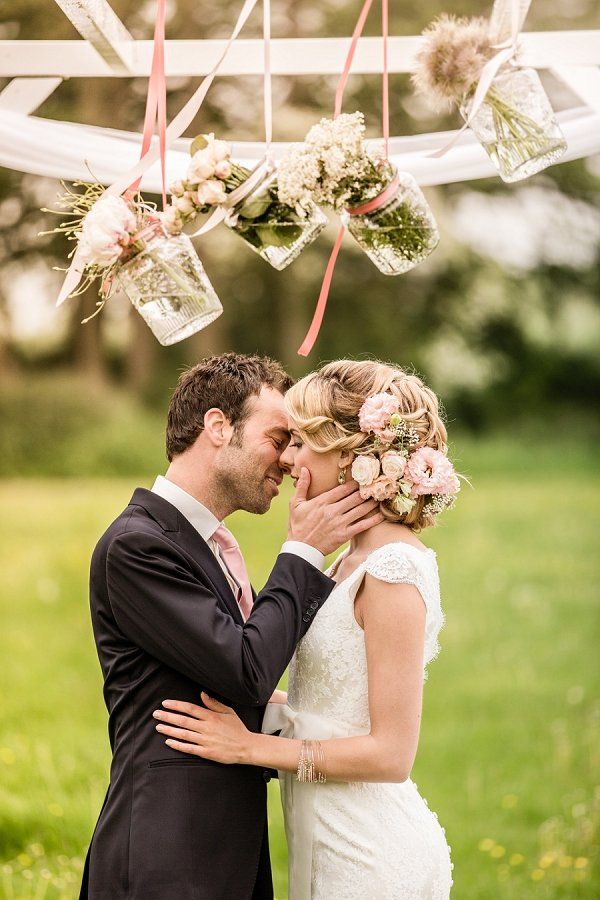
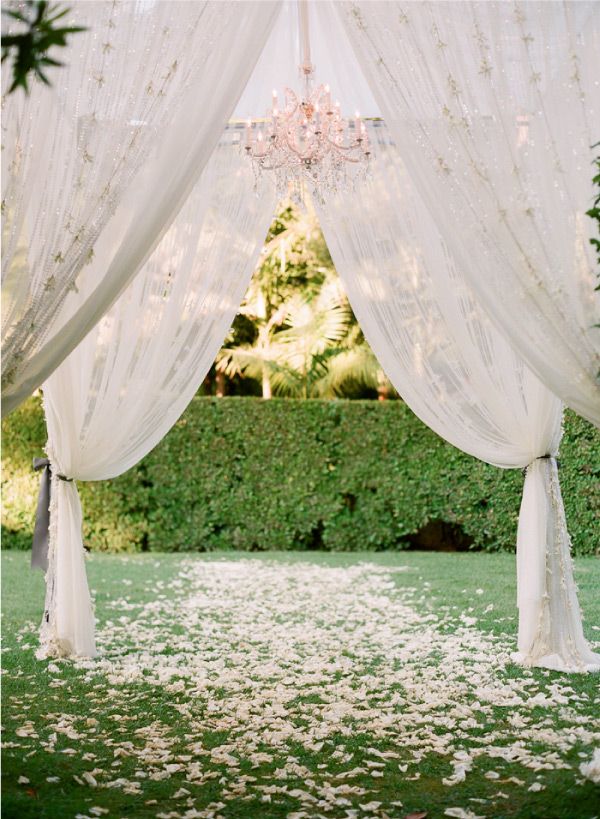
Hanging florals from a simple crossbar create depth without blocking the ocean view entirely. Leave negative space so the water remains visible through or beside the greenery. Guests seated on either side should still see faces. If your photographer needs silhouette shots at sunset, confirm the structure does not cast odd shadows across the couple’s features. Also confirm load limits: hanging installs look effortless and are often the heaviest option on the list.
Textile, rope, and nautical cues
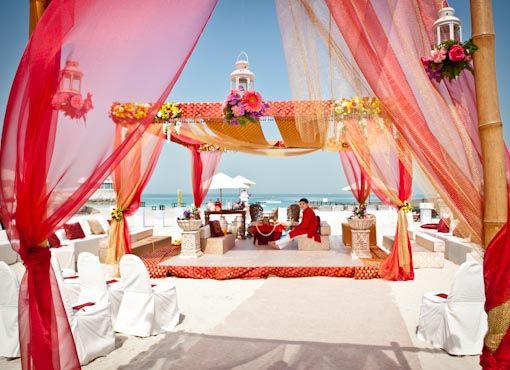
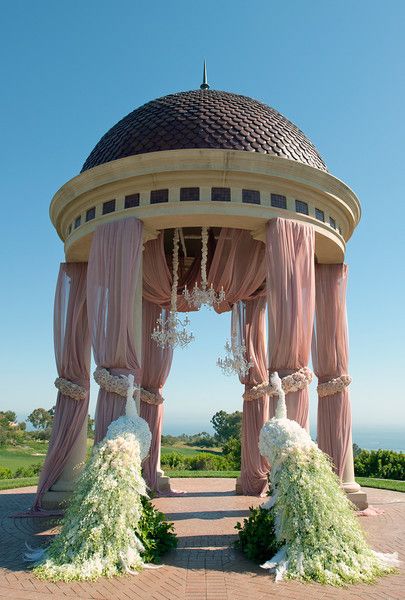
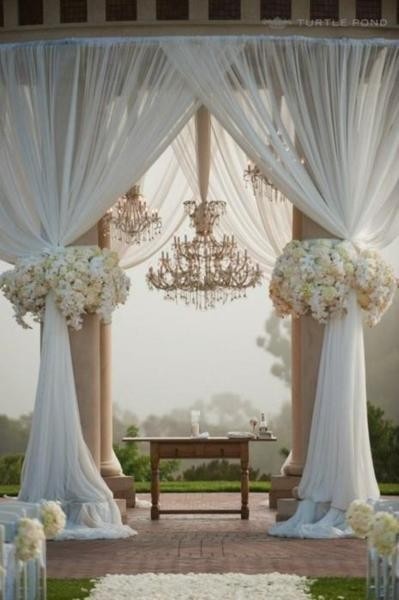
Sailcloth, linen panels, rope details, and macramé can nod to the coast without turning the ceremony into a theme park. Use one strong textile idea rather than stacking every nautical motif. A single draped panel between poles can be enough. Rope-wrapped posts photograph well and feel tactile up close. Keep colors tied to your palette: ivory and sand for quiet elegance; soft blues or blush if you want a clearer design statement.
Chairs, aisle markers, and the altar should speak the same visual language. If the altar is rustic driftwood, aisle shells and simple white blooms will feel coherent. If the altar is sleek metal with orchids, mismatched rustic lanterns may fight it. Consistency beats quantity on a beach, where light and water already provide drama. When in doubt, remove one element. Empty sand in the frame is not a design failure; it is often what makes the ceremony feel open.
Orientation, light, and guest comfort
Decide whether guests face the water, sit with water to one side, or look inland with the ocean behind the couple. Facing the water is romantic for photographs and harsh for eyes when the sun is low. Side-facing layouts often spare guests from squinting while still keeping water in wide shots. Walk the site at the planned ceremony time. Note glare, shade, and where wind typically comes from. Place musicians and the officiant where sound will travel; open beaches swallow voices quickly, so a small sound plan matters as much as florals.
Comfort details support the altar more than people admit. Provide a stable standing surface if heels will sink. Offer a light throw for evening wind. Keep a clear aisle so processions do not weave around guy lines. The altar should be the visual climax, not an obstacle course.
Practical checklist before you commit
- Check venue and local rules for structures, stakes, open flame, and floral debris.
- Ask how the piece will be anchored in sand or on a platform.
- Plan setup and teardown around tide and wind forecasts.
- Confirm the couple’s standing marks with your officiant and photographer.
- Decide guest orientation relative to sun and water.
- Budget for a rehearsal install if the design is complex.
- Assign one person to watch guy lines and fabric during the ceremony.
Browse the set for a silhouette that matches your guest count and shoreline, then reverse-engineer the engineering. The prettiest beach altar is the one that still stands when the breeze picks up and the photographer asks you to take one more step forward.

Comments
Continue reading
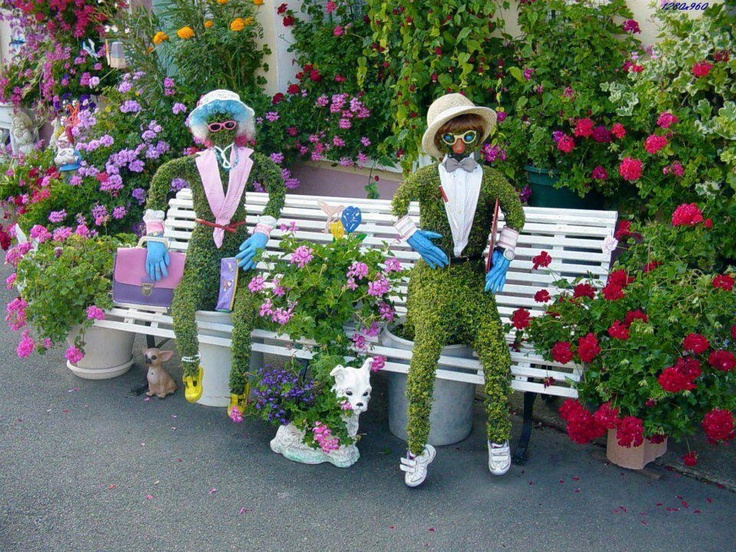
Garden Decoration Beyond Beds: Lace, Mosaiculture, and Upcycled Yard Art
From dressed topiary and floral cyclists to license-plate dragonflies and lace between trees—garden decorations that give a yard a voice.
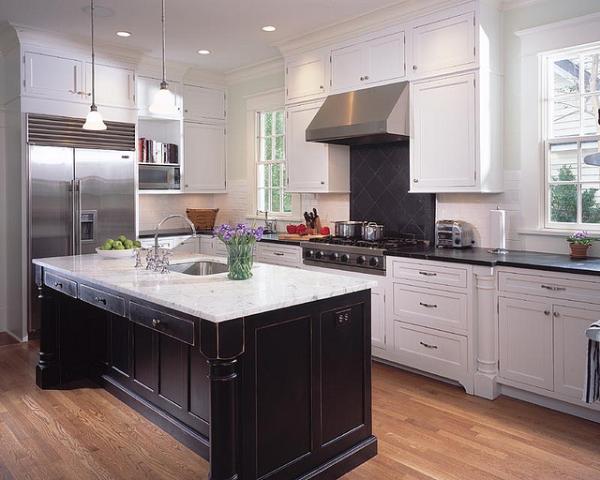
Kitchen Design Ideas: Layout, Storage, Light, and Finishes That Work
Practical kitchen design ideas—work zones, cabinetry, lighting, and durable finishes—so inspiration translates into rooms that cook and gather well.
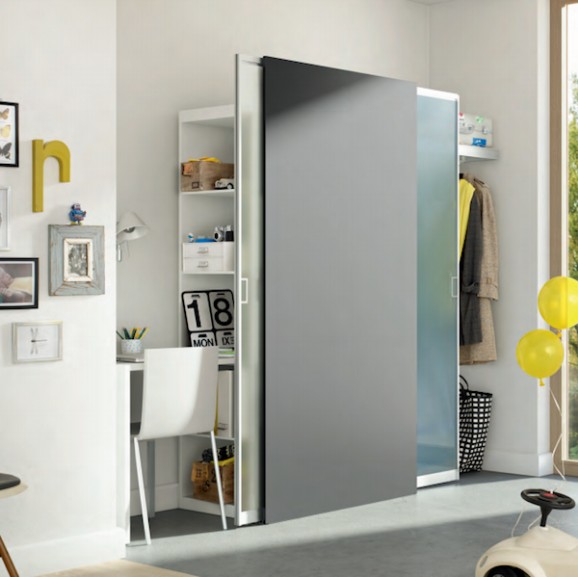
25 Cool Room Partition Ideas That Actually Divide Space
From frosted sliders and pallet screens to book towers and branch walls—twenty-five ways to carve rooms without building solid walls.