
Peter Pink’s Potato Protest Installations
Berlin artist Peter Pink casts potatoes and cucumbers in pink sunglasses as ephemeral street protests—food art that spoofs crowds, commerce, and authority.
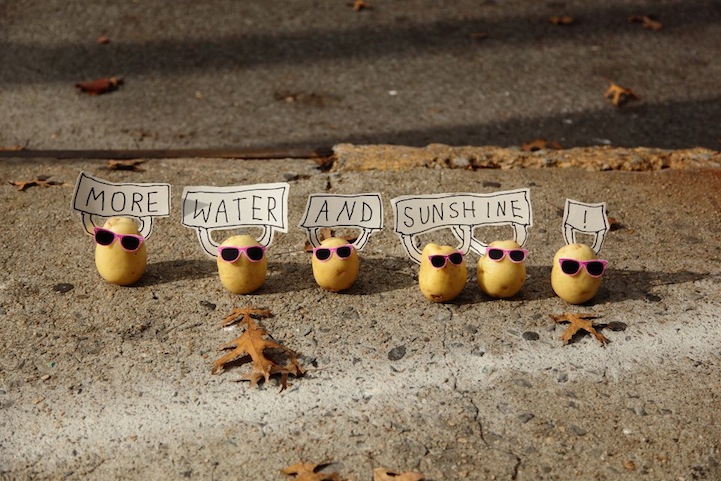
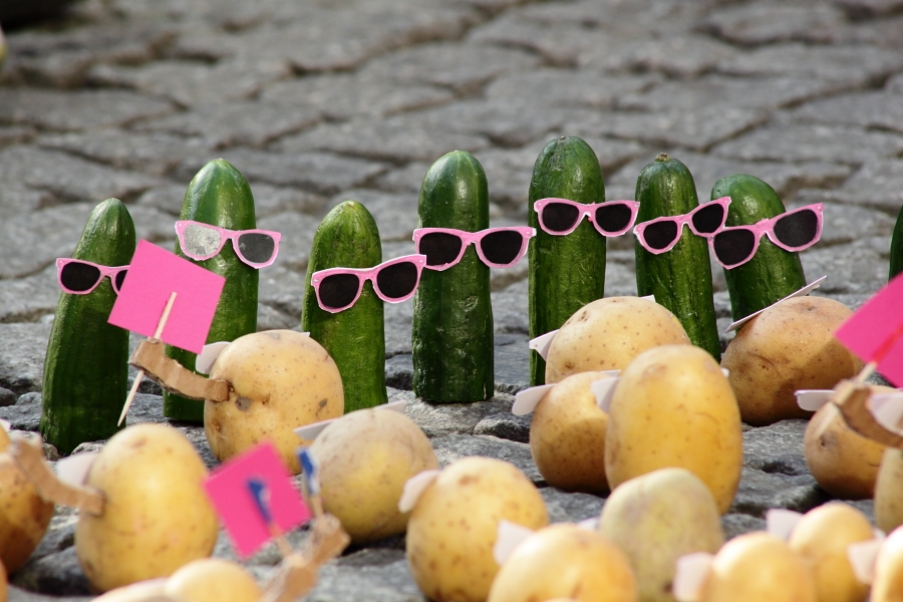
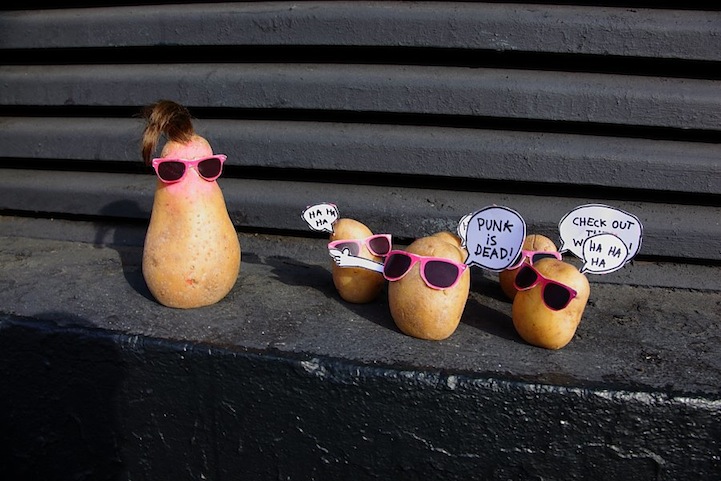
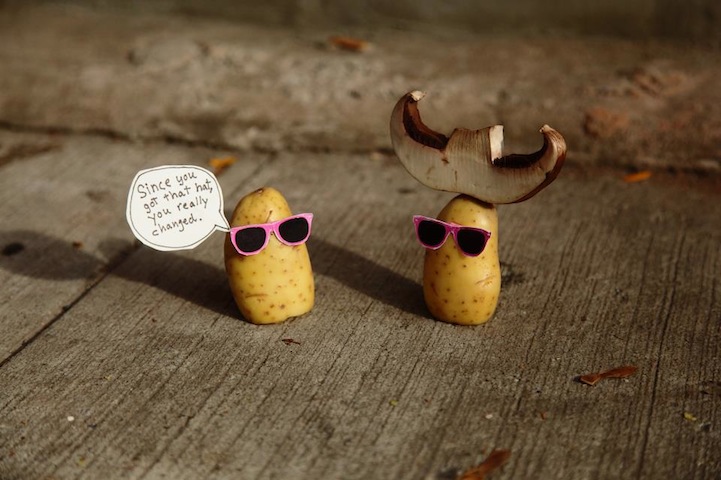
Peter Pink stages vegetables as if they had opinions. Potatoes and cucumbers wear hot-pink sunglasses, hold tiny signs, sunbathe, assemble, and argue in public space. The setups look silly at first glance—which is exactly how they get past your defenses—then linger as caricatures of protest, policing, tourism, and appetite.
Pink, a German artist and self-described “nonsense maker” associated with Berlin’s street and intervention scene, works where food art meets urban theater. The sculptures are temporary. Produce softens. Crowds disperse. What remains are photographs and the memory of walking past a curb that briefly looked like a political cartoon made of groceries.
Peter Pink: One morning I had the idea of protesting potatoes. I already was using the sunglasses. So I put the sunglasses on the potatoes and I really liked how the different organic forms of the potatoes made it as if they were different characters or personas. Each potato had a different expression, if it was skinny or fat, or grumpy or weird. So that was the beginning. Then I just became curious about what other foods could represent other characters. After a while food became interesting in itself because you are working with lots of different textures and forms and it’s all natural. I also like that food is alive and that it changes form quite fast, so the art can only be momentary.
Characters grown, not cast
A potato already has a face if you are willing to see one. Knobs become noses. Dents become scowls. Elongated tubers look weary; round ones look stubborn. Pink’s insight was to treat those accidents of form as casting. Sunglasses unify the cast in a signature pink while still letting each vegetable keep a private expression. Identity arrives through shape first, costume second.
That casting logic is why the installations reward close looking. In a cluster of a dozen potatoes, no two share the same posture. One leans as if mid-chant. Another hangs back like it was dragged along by friends. A third sits low and wide, immovable, the vegetable equivalent of someone who brought a folding chair to a rally. Pink does not sculpt those personalities out of clay; he selects them from a crate and recognizes them.
Cucumbers enter the drama as a second tribe. In interviews, Pink has linked the pairing to German slang and social caricature: potatoes as stand-ins for people, cucumbers nodding toward other street roles—sometimes read as authorities in older green uniforms. Whether or not a passerby knows the linguistic joke, the visual split is clear. Two kinds of produce face each other across a tiny conflict, and suddenly a sidewalk looks like a news photograph shrunk to kitchen scale.
Protest as a portable set
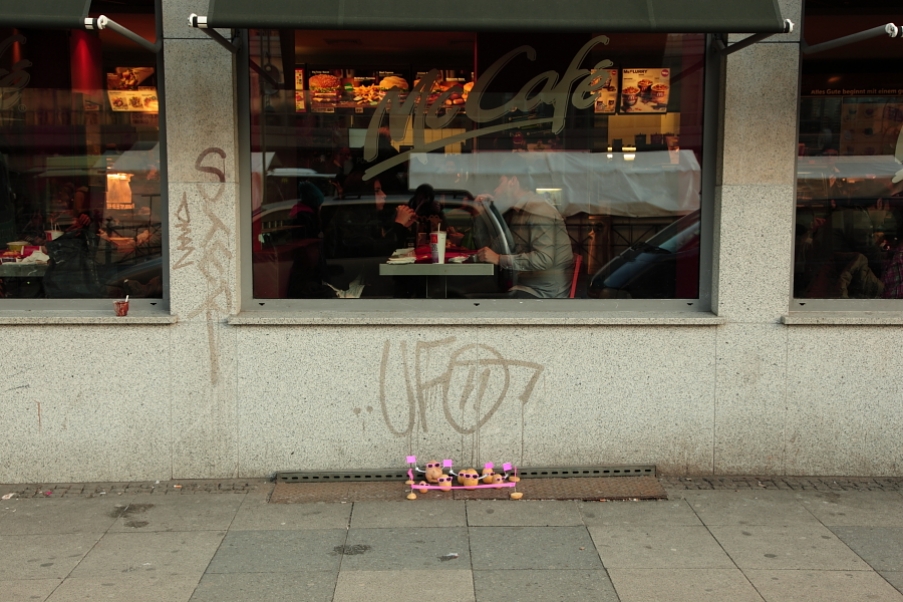
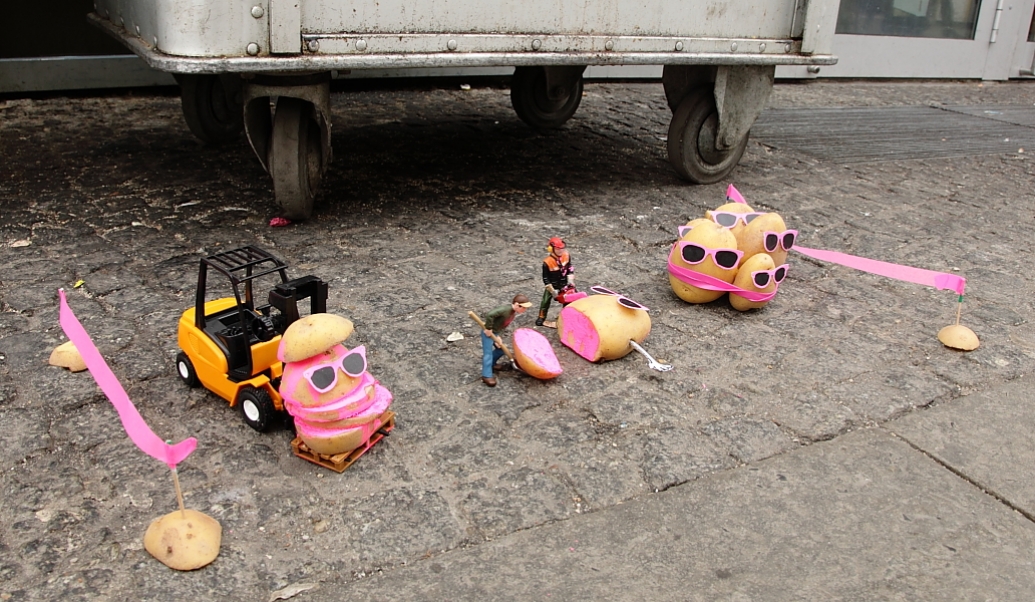
The best-known thread of the work sends potatoes into protest mode—picket-adjacent props, clustered bodies, the grammar of demonstration without human speakers. Placing those scenes near everyday food commerce, including fast-food façades in some documentations of the project, sharpens the joke. Consumer culture becomes both stage and subject. The vegetables look like they have walked out of the supply chain to complain about it.
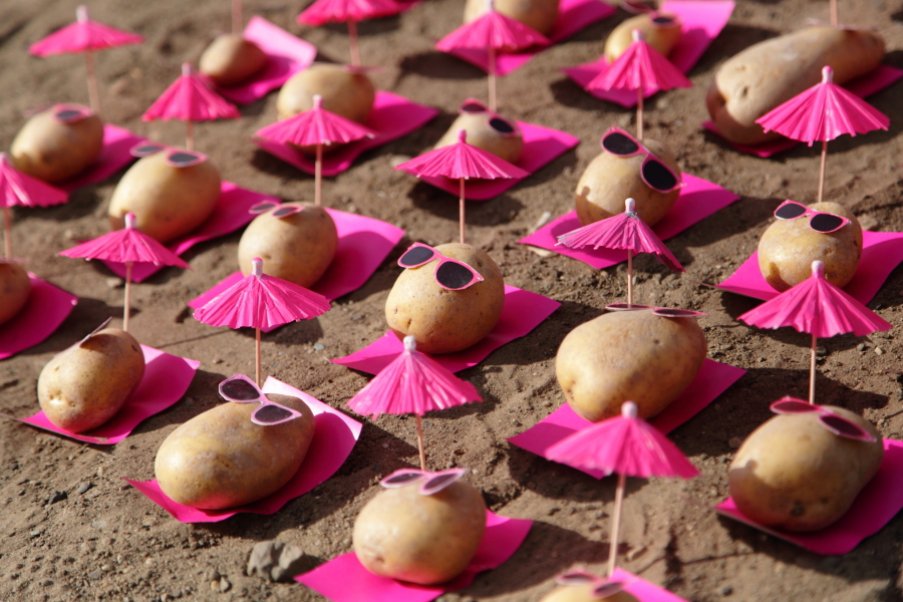
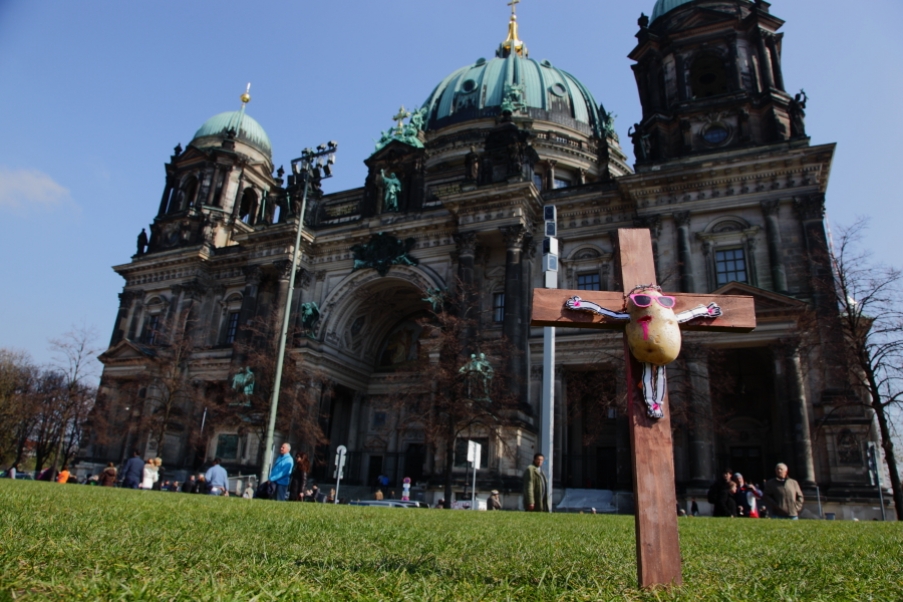
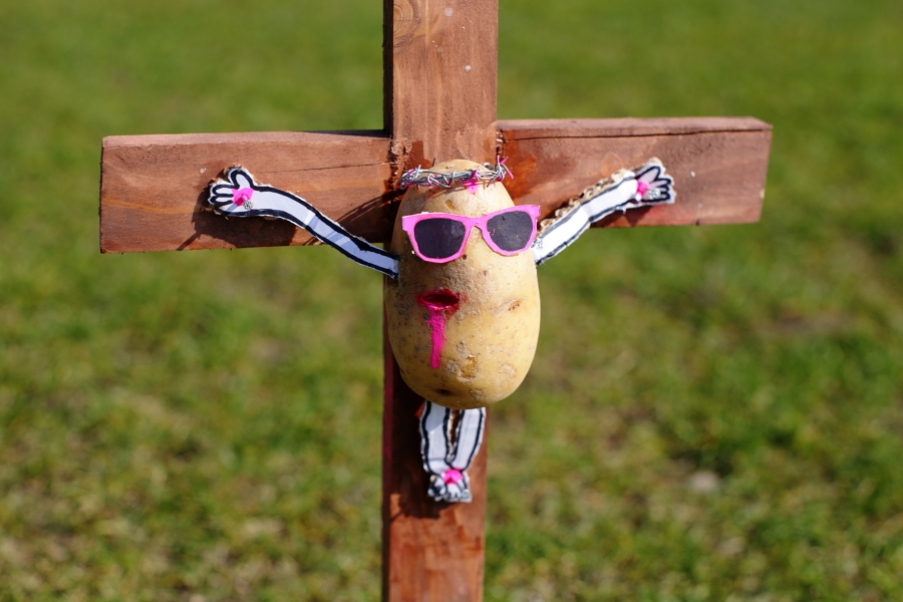
Other tableaux widen the repertoire: sunbathing, confrontations with gourds, assemblies that echo armies, even images that borrow the solemn geometry of historical or religious scenes. Pink is not building a single slogan campaign. He is building a repertory company of produce that can reenact human seriousness until seriousness looks absurd.
That repertory approach matters for how the photos read as a series. One image alone can feel like a one-liner. Several images together reveal a method: find a human formation people already understand—march, standoff, leisure line on a beach—then cast it with food until the formation’s theatricality becomes visible. We realize how much of public life already looks staged. Pink simply changes the actors.
Why pink sunglasses matter
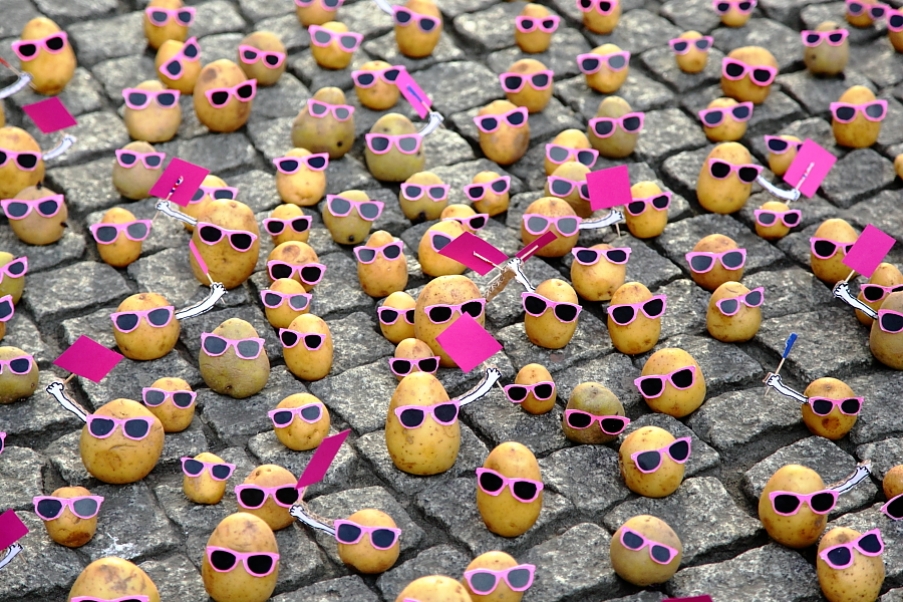
Color is branding and punchline at once. Hot-pink lenses make the work legible from across a street and impossible to mistake for accidental litter. They also flatten the vegetables into a shared subculture—protest crew, tourist pack, or gang of loafers—depending on the scene. Recognition value matters in public intervention: if people do not stop, the piece barely exists.
The sunglasses also protect the metaphor. Without them, a potato on a ledge is compost-adjacent. With them, the potato has attitude. Attitude is what lets Pink talk about mass behavior—crowds, policing, consumption—without lecturing. Humor carries the critique into places where a pamphlet would be ignored.
There is also a fashion joke embedded in the accessory. Sunglasses promise coolness, anonymity, and celebrity distance. Putting them on a root vegetable collapses that promise into slapstick. The cooler the shades look, the funnier the potato becomes—and the more the human desire to look untouchable gets gently mocked.
Ephemeral materials, lasting photos
Food art always races the clock. Skins wrinkle. Cuts darken. Heat wilts a demonstration faster than any police line. Pink has said he likes that aliveness—the fact that the work can only be momentary. The installations are events as much as objects. Photography is not an afterthought; it is how the temporary becomes shareable.
That ephemerality also ties the vegetables back to the humans they parody. Bodies change. Movements crest and fade. A protest is a shape in time. By choosing materials that spoil, Pink builds decay into the concept instead of fighting it with resin and permanence.
Texture becomes part of the clock. A fresh potato has a tight skin and a solid stance. A day later, soft spots change the “expression.” Cucumbers lose their firm line. The sunglasses stay crisp while the faces sag, which is its own quiet joke about accessories outlasting the bodies that wear them. Viewers of the photographs catch one chosen minute; the street version of the piece kept aging after the shutter closed.
Street theater without a ticket
These pieces ask for an audience reaction the way a busker asks for a pause. Someone laughs. Someone photographs. Someone steps around carefully, unsure whether touching is allowed. The city supplies the backdrop—curbs, plazas, shopfronts—so the work inherits whatever politics already live in that location. A joke outside a chain restaurant is not the same joke as a joke on a quiet residential corner, even if the potatoes look identical.
Pink’s practice sits beside street art without depending on spray paint. The medium is arrangement and permission-of-the-moment. Because the materials are ordinary, the disruption feels gentle. Because the scenes mimic human conflict, the gentle surface still has bite.
Ordinary materials also change the economics of spectacle. You do not need a gallery crate or a bronze foundry to put a crowd in the street. You need a bag of produce, a bag of sunglasses, and the nerve to occupy a few square feet of public attention. That accessibility is part of the politics: commentary that can appear overnight and vanish by evening, leaving only stories and images.
Consumer culture, tourism, and other mass habits
Across coverage of Pink’s interventions, themes of consumer society, tourists, and mass phenomena keep returning. The potato protests make those themes concrete. Food is what we buy without thinking, what advertising dresses up, what cities route through chains and markets. When the food itself appears to refuse the script—posing, picketing, loafing in shades—the script becomes visible.
Tourism is a related target. Groups move through cities in coordinated packs, collecting images. Pink’s vegetables do a parody version of that packing behavior: lined up, accessorized, oriented toward a shared pose. Passersby who photograph the potatoes complete the loop. They become tourists of a tourist joke, which is either uncomfortable or delightful depending on your mood.
None of this requires the work to abandon playfulness. Pink’s “nonsense maker” label is a shield against heavy-handed reading and an invitation to enjoy the surface. The best public jokes do both jobs: they entertain the person who wants only a smile, and they reward the person who wants a second thought on the walk home.
How to read the series without overexplaining it
Start with character. Which potato looks like a leader, which looks reluctant, which looks like it showed up for the snacks? Then read the formation: lines, clusters, face-offs. Finally, read the site: what human behavior normally happens here, and how does the produce parody it?
It is fair to enjoy the work as pure nonsense. Pink invites that reading. It is also fair to notice consumer critique, immigrant slang jokes, and media images of protest folded into the comedy. The installations hold both levels because the sunglasses keep everything slightly cartoonish while the staging stays precise.
If you return to the images later, try a third pass focused only on spacing. How close are the bodies? Who faces whom? Where is the empty ground that functions like a street or a no-man’s-land? Composition, not captioning, carries most of Pink’s storytelling. The vegetables are funny; the blocking is serious.
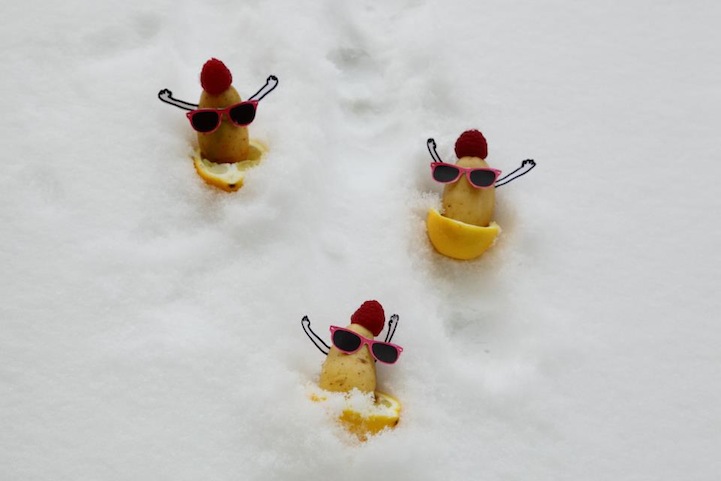
Look again at a single potato in the first frame of a walkout scene: sunglasses crooked, body leaning as if mid-chant, skin already suggesting it will not last the afternoon. That one figure contains the whole method—found form, pink signature, public stage, and a joke that spoils on purpose while the photograph keeps arguing with the street.

Comments
Continue reading
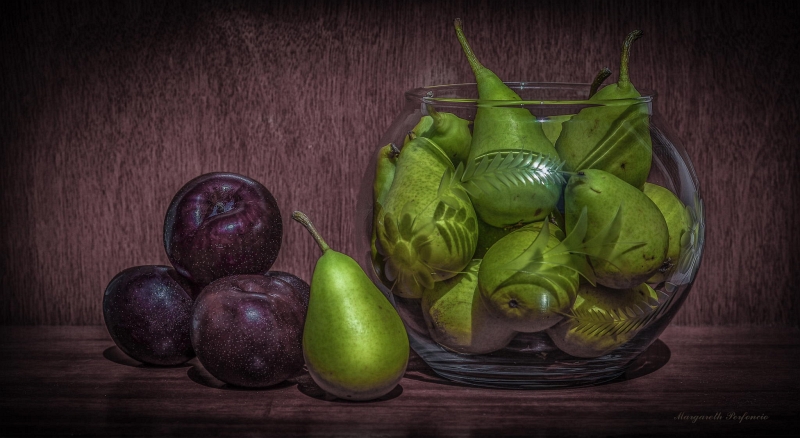
Still-Life Photography by Margareth Perfoncio
São Paulo photographer Margareth Perfoncio’s still lifes of food and flowers—Old Master light, dark wood, and tables that feel inevitable.
Meaningful Love Quotes for Inspiration (and Ink)
Meaningful love quotes that still feel true — short lines for tattoos, gifts, and everyday reminders, with placement and wording tips.
Christina Hess’s Animals From History: Costumed Pets as Playful Portraits
Illustrator Christina Hess reimagines historical icons as ornate animal portraits—Elvis Petme and friends—mixing puns, costume detail, and soft history lessons.