
Playful Daily Doodles by Ann Jaafar
Malaysian artist Ann Jaafar turns leftovers, lunch plates, and everyday scraps into tiny characters—gentle ink doodles that make ordinary objects feel alive.
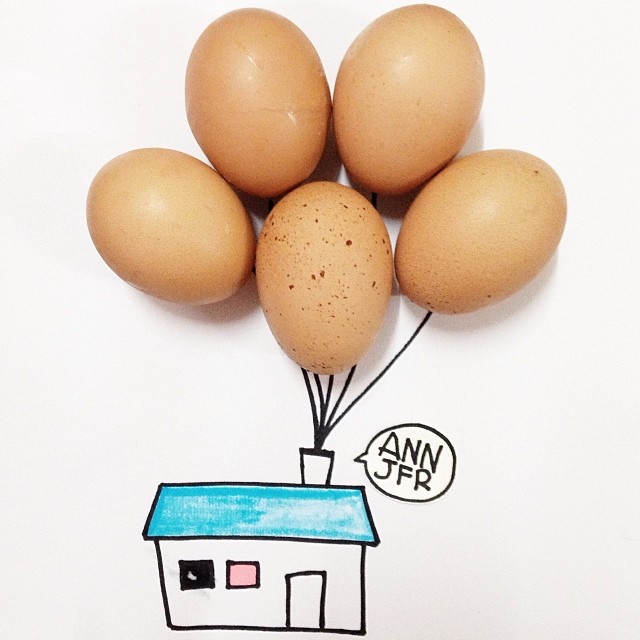
Everyday objects do not usually ask to be characters. A banana peel, a bowl of soup, a scrap of fruit skin—most of us throw them away or eat past them without a second glance. Malaysian artist Ann Jaafar treats those leftovers and lunch plates as stage sets. With a few lines of ink and a tilt of imagination, ordinary food becomes a tiny cast of personalities. The joke is gentle; the craft is sharp. You finish looking and suddenly notice your own table differently.
When this body of work first circulated widely in the early 2010s, Ann was studying actuarial science and drawing on the side. Numbers filled the day; doodles filled the margins. Friends nudged her onto Instagram under the handle annjfr, and the feed that followed felt less like a portfolio dump and more like a private sketchbook left open on the table. The premise stayed consistent: notice what is already in front of you, then give it a face, a gesture, or a punchline. That student-era habit—drawing to escape the weight of formulas—still explains the tone. The work is relief made visible.
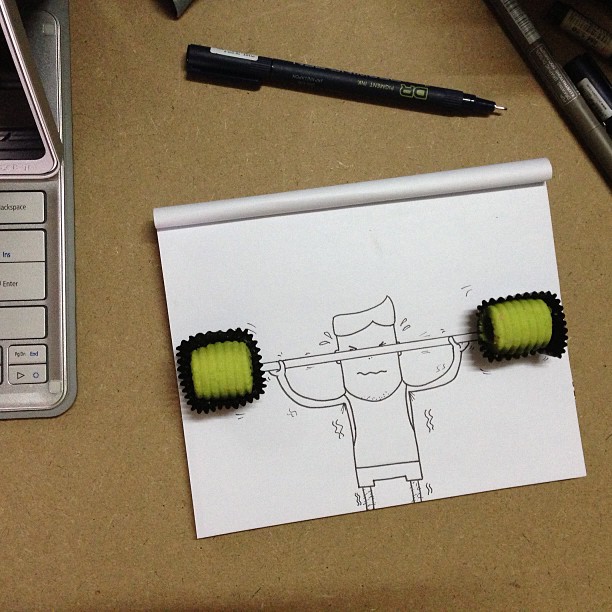
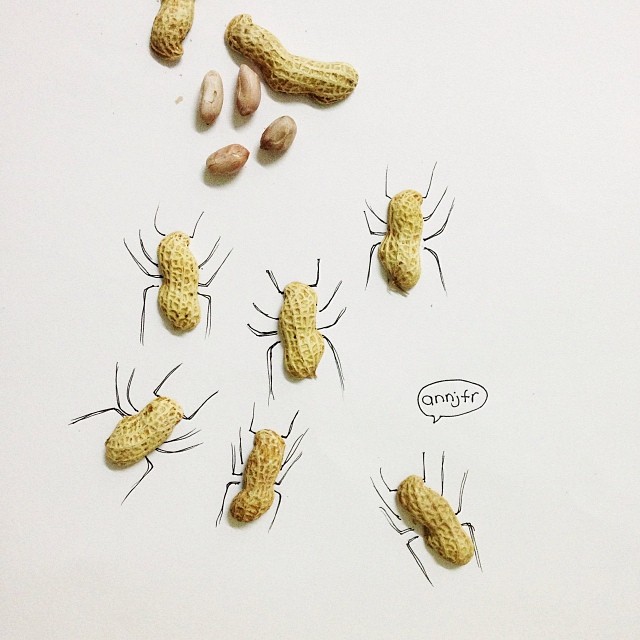
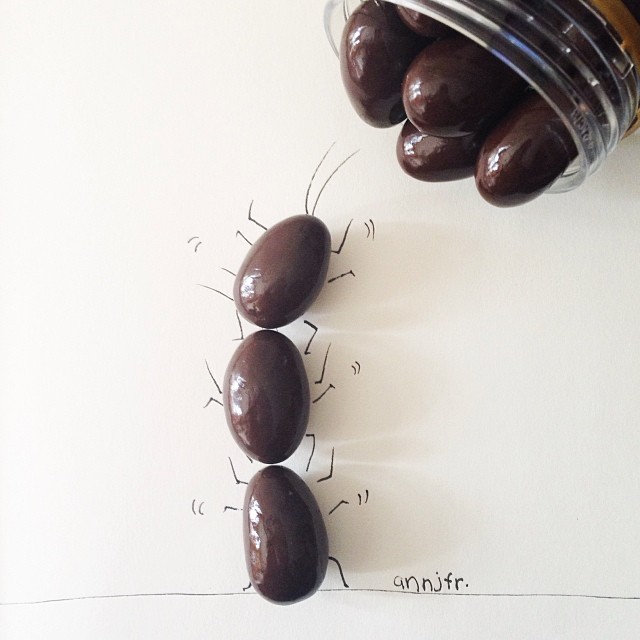
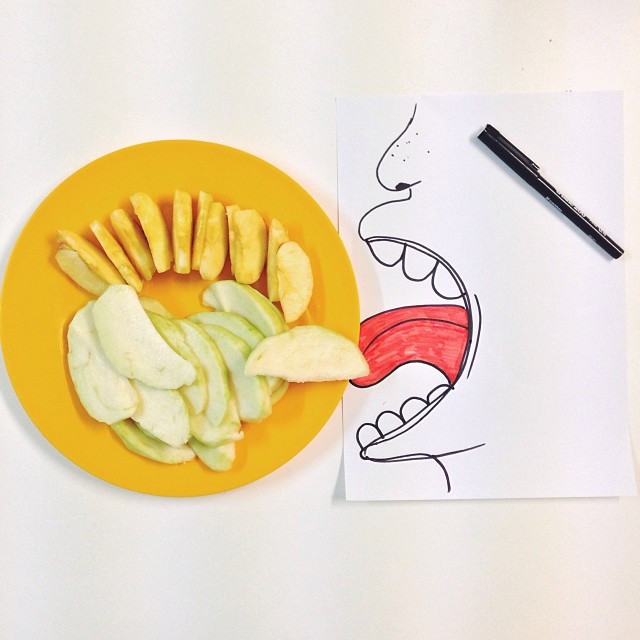
Blending illustration with real objects was already a popular internet pastime by then. What set Ann apart was restraint. She does not bury the object under layers of digital effect. She partners with it. A plate of rice, a piece of fruit, a snack still in its packaging—each keeps its texture and color. The drawing rides on top like a caption that happens to be visual. That is why the photos feel warm instead of gimmicky. You can still believe someone was about to eat lunch.
Why food and scraps make good co-stars
Her own framing of the practice has stayed modest. Little things that pass unnoticed for most people can feel large for someone else. That line is not a slogan so much as a working method. If you take it seriously, you start scanning the day for triggers: the way a peel curls, how chopsticks lean, how a drink leaves a ring on the table. The doodle is the proof that attention happened. Inspiration is no longer a rare visit from a muse; it is a decision to look twice.
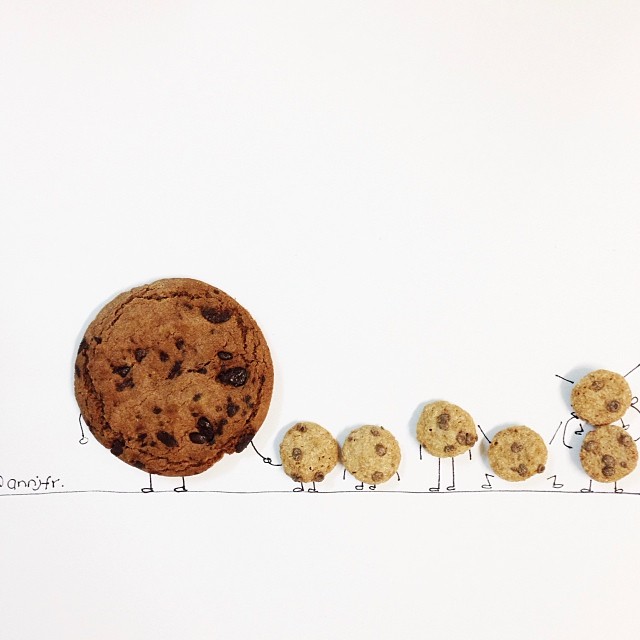
Humor in her pieces often leans on English and Malay wordplay—puns that sit lightly on the image rather than explaining it to death. Even when a caption is not present, the drawings speak in the same tone: friendly, slightly shy, never mean. Faces on food could easily tip into uncanny; Ann keeps them in the zone of stickers you would actually want on a notebook. The cuteness is intentional, but it is not empty. There is usually a small narrative spark—someone climbing, waving, waiting, celebrating—as if the meal had a private life before you arrived.
That narrative quality is easy to miss if you scroll too fast. Pause on a single image and ask what happened one second before the photo. Was the rice a mountain or a mattress? Is the fruit a character or a landscape feature? Ann’s best doodles leave both readings open, which is why they reward revisiting.
Looking through the gallery
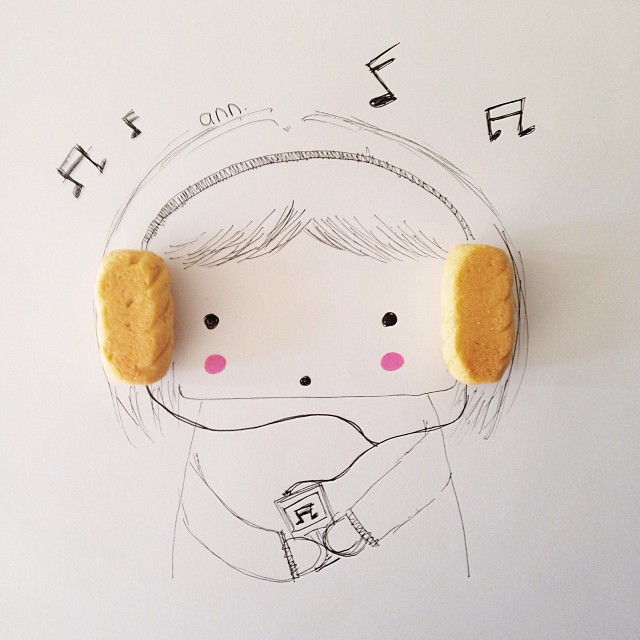
The set of images attached to this feature rewards slow scrolling. Some pieces treat a meal as landscape—tiny figures climbing a mound of rice or paddling through broth. Others turn a single item into a portrait: a fruit becomes a head, a wrapper becomes a costume, a utensil becomes a prop. The best ones feel inevitable after you see them. Of course that peel was waiting to be a character. How did you miss it?
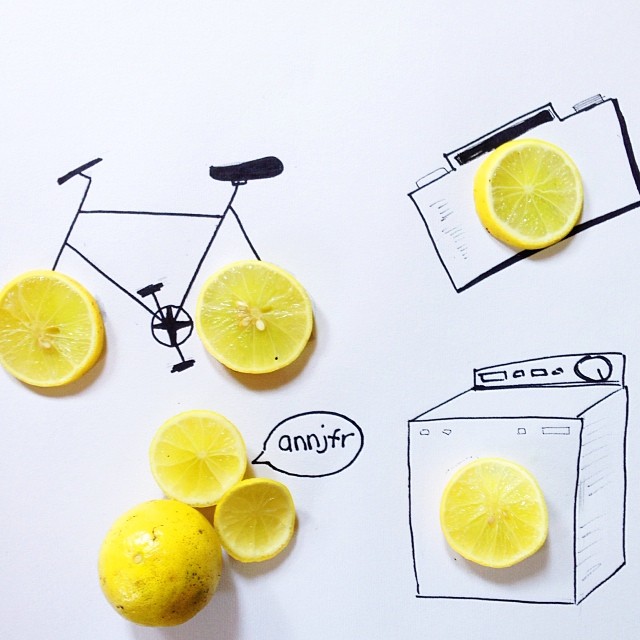
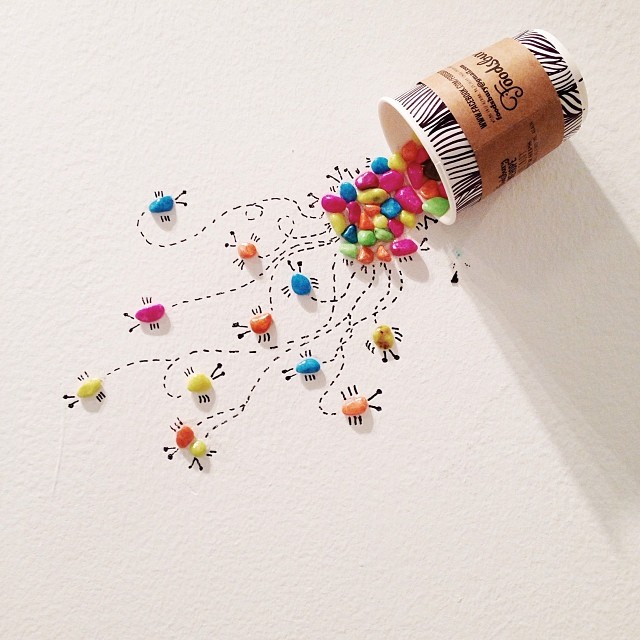
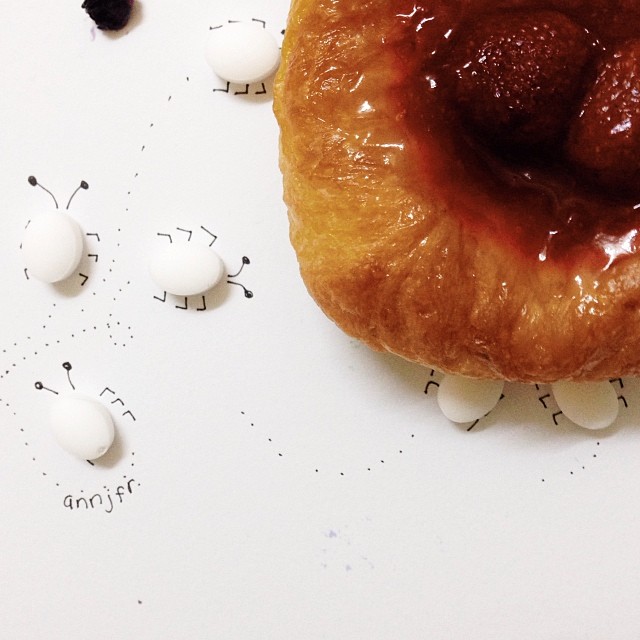
Composition matters as much as the gag. Ann usually photographs the object cleanly, with enough empty space for the ink to breathe. Lighting stays domestic—window light, table light—not studio drama. That choice keeps the magic inside the ordinary. You are not looking at an advertising set. You are looking at someone’s kitchen, briefly promoted to theater. The photograph is part of the drawing, not a neutral backdrop.
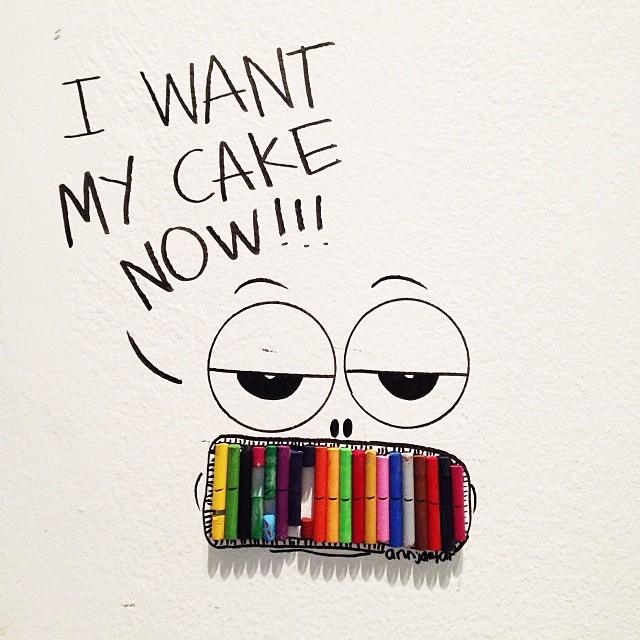
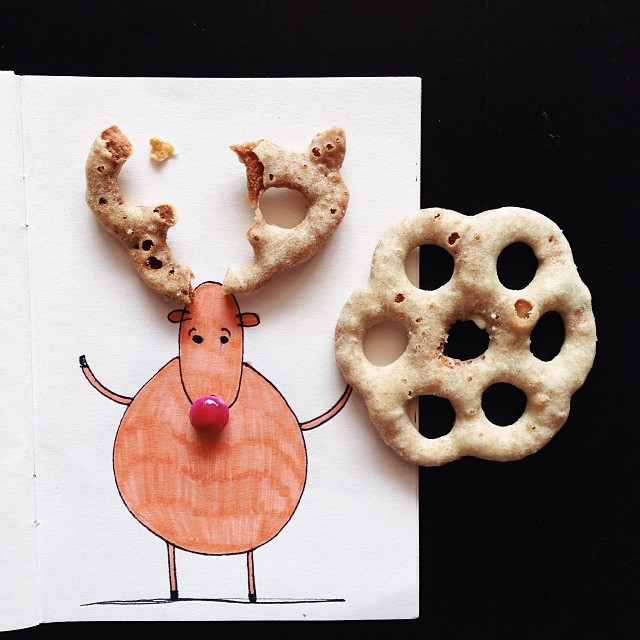
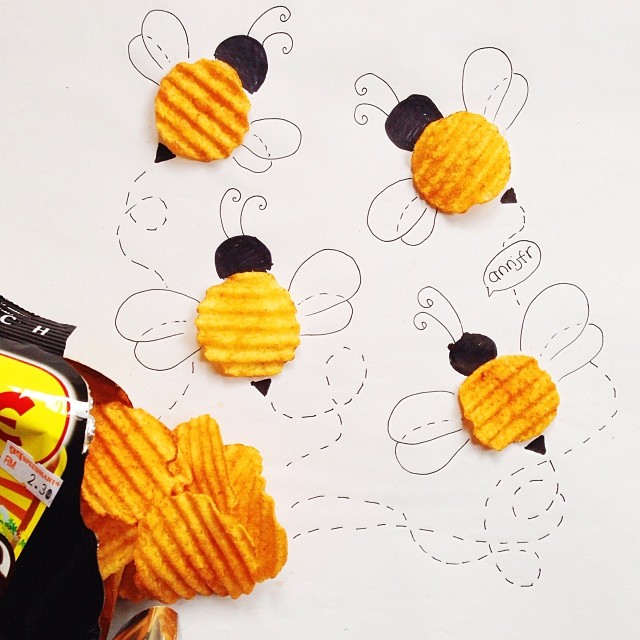
Scale games are another quiet strength. A small doodle can make a snack look monumental; a larger figure can shrink a plate into a playground. Either way, the viewer’s eye moves between the real surface and the drawn mark, and that flicker is the entertainment. You are constantly reminded that two realities are sharing one photograph. Illustration blogs loved that double vision because it photographed well and explained itself without a paragraph of theory.
A practice, not a one-off stunt
Daily doodling is easy to start and hard to sustain. The calendar does not care whether you feel inspired. Ann’s early work shows what happens when the habit sticks: themes recur, line confidence grows, and the artist’s voice becomes recognizable even when the props change. You begin to recognize her hand the way you recognize a friend’s handwriting on an envelope. Consistency turns a cute trick into a body of work.
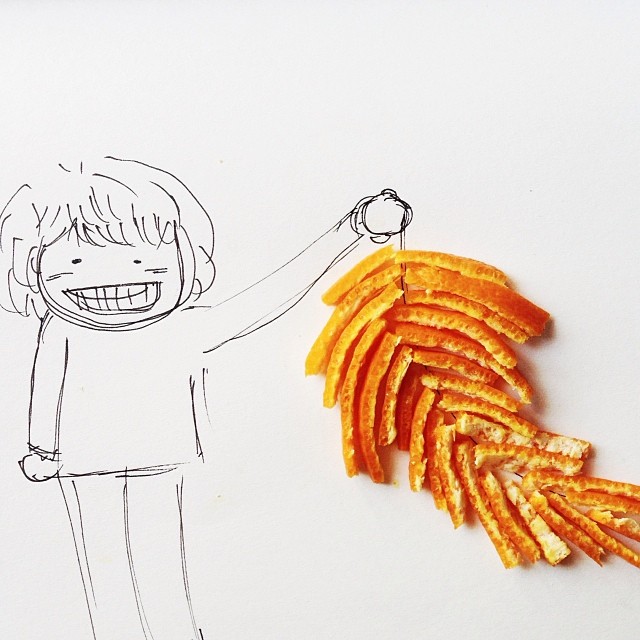
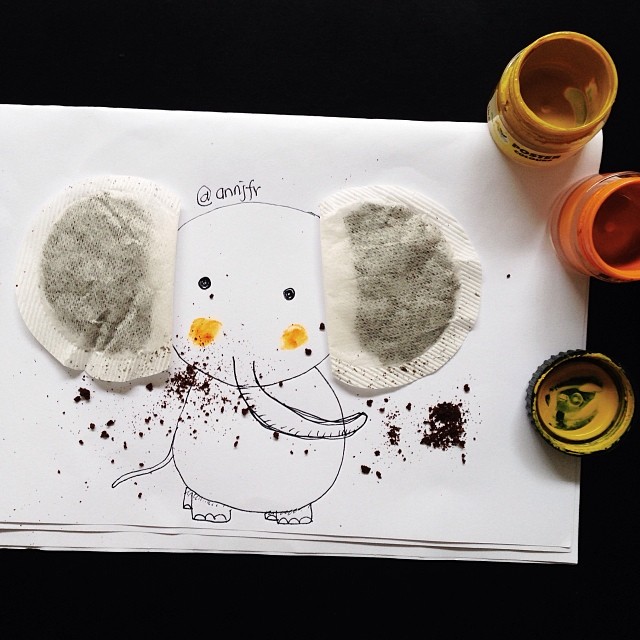
Over time her practice widened beyond tabletop photos—stickers, prints, public appearances, collaborations, and illustrated books that carry the same whimsical economy of line. She has also kept a careful boundary between the work and personal spectacle, preferring the art to be the recognizable face. That choice fits the doodles: they are about looking outward at objects, not staging a personal brand as the subject. Privacy becomes part of the aesthetic logic.
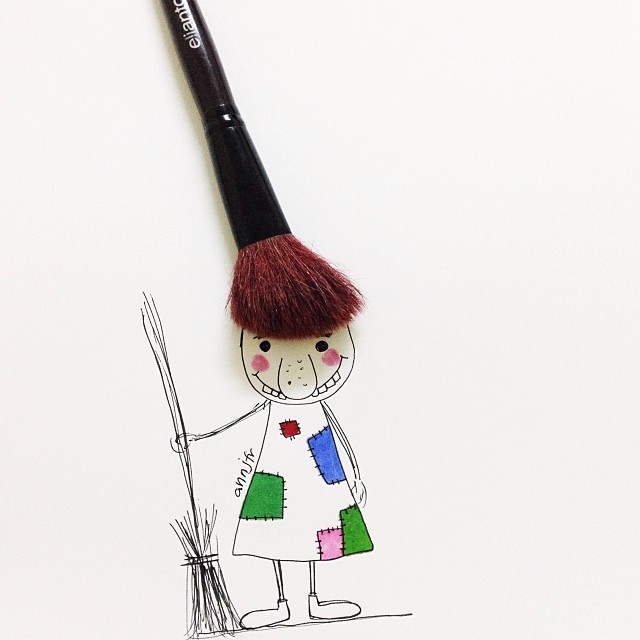
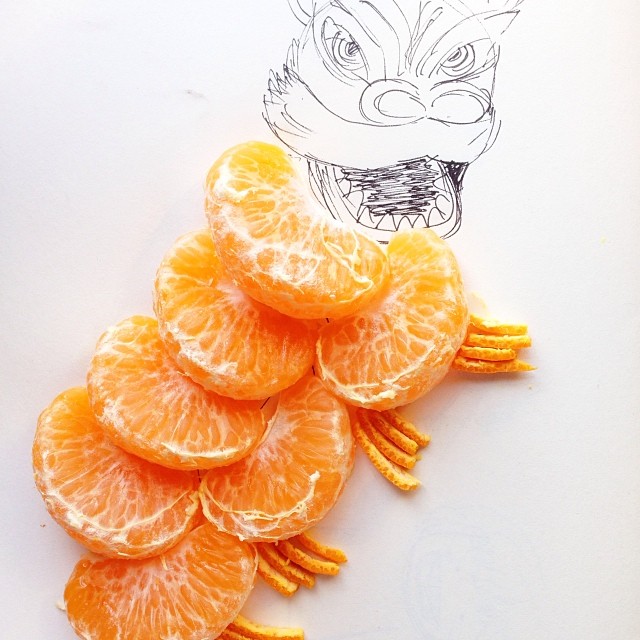
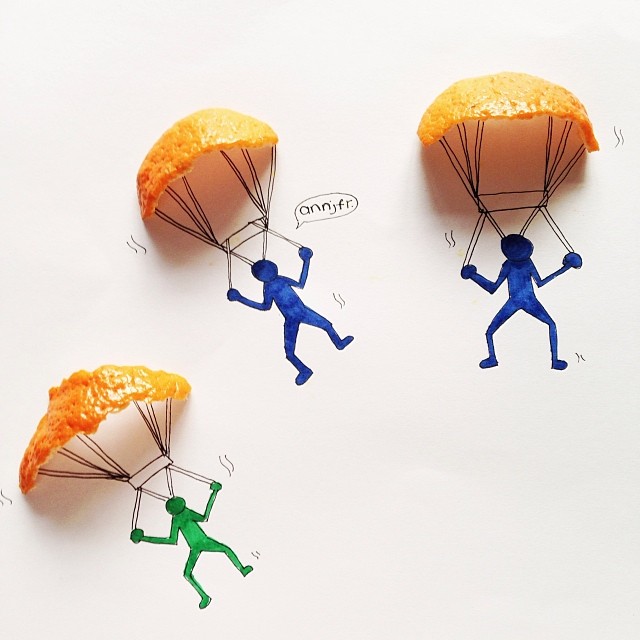
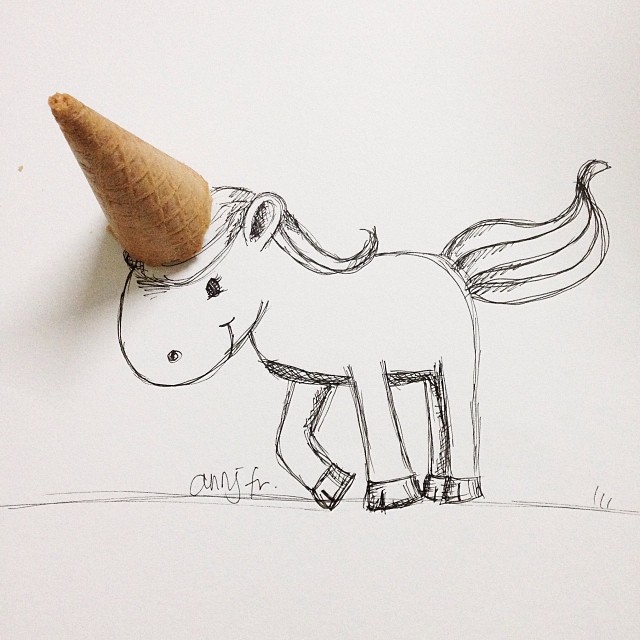
Later projects—public installations, merchandise, and book illustration—show how a simple daily habit can scale without losing its voice. The line stays economical. The humor stays kind. The objects still feel borrowed from a real kitchen rather than invented in a branding workshop. That continuity is rarer than viral moments suggest.
What designers and doodlers can steal
If you draw, the lesson is not “copy food faces.” It is: lower the bar for inspiration and raise the bar for noticing. Carry a pen. Photograph the object before you decorate it. Leave some of the real world visible so the drawing has something honest to argue with. Keep the line simple enough that the joke lands in one glance. Then make another tomorrow. A series teaches more than a single perfect piece.
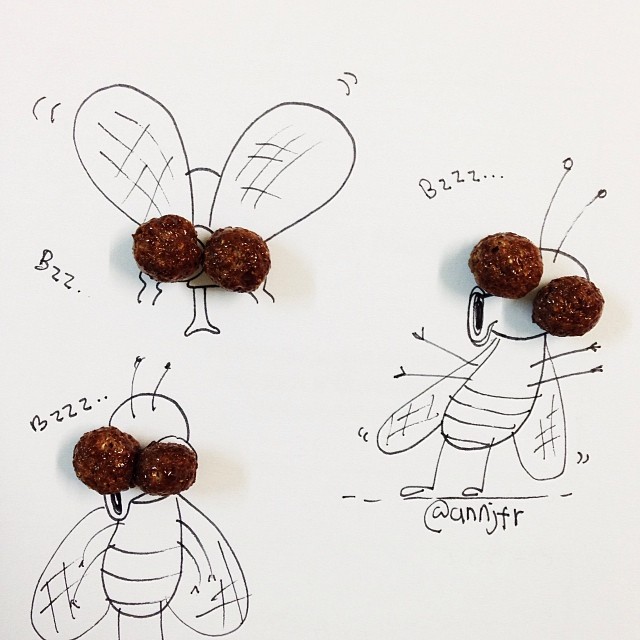
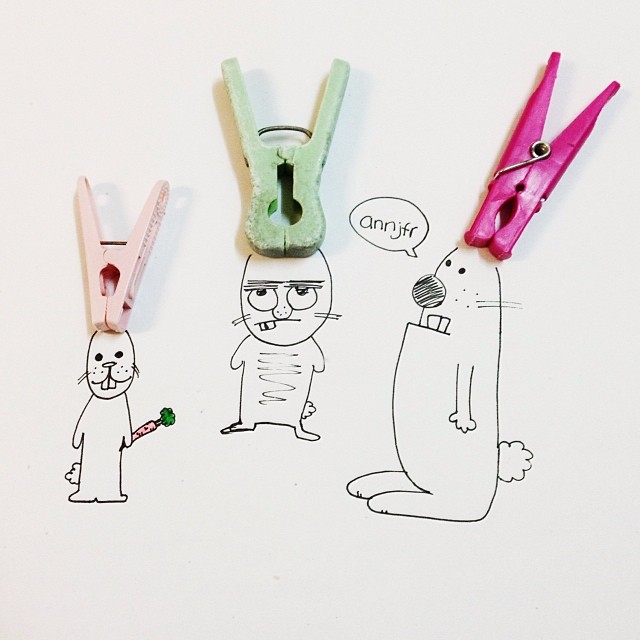
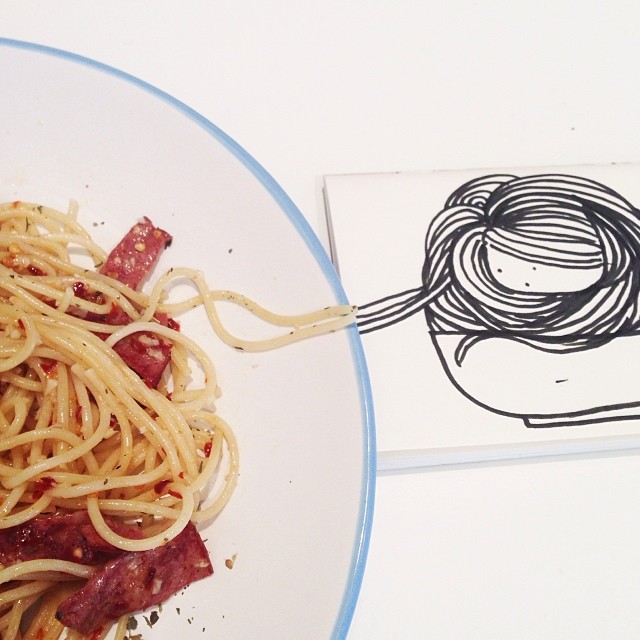
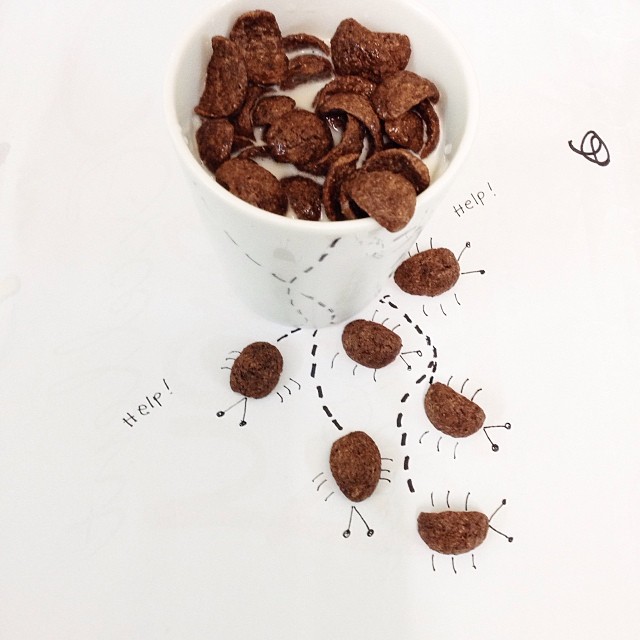
For viewers, the gallery is a reminder that creativity does not always need a blank canvas and a dramatic concept. Sometimes it needs a kitchen table and five spare minutes. Ann Jaafar’s doodles do not demand that you become an artist overnight. They ask a smaller, better question: what on your plate tonight is already halfway to a story?

Comments
Continue reading
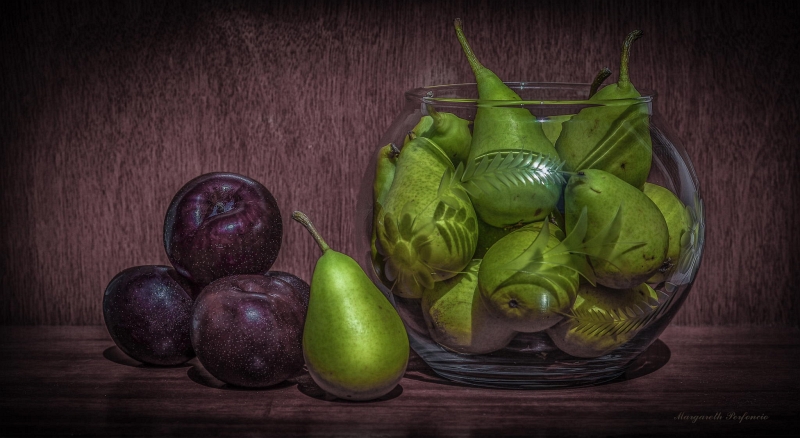
Still-Life Photography by Margareth Perfoncio
São Paulo photographer Margareth Perfoncio’s still lifes of food and flowers—Old Master light, dark wood, and tables that feel inevitable.
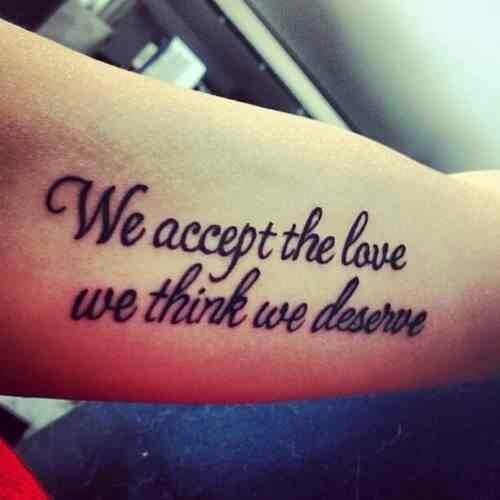
Meaningful Love Quotes for Inspiration (and Ink)
Meaningful love quotes that still feel true — short lines for tattoos, gifts, and everyday reminders, with placement and wording tips.
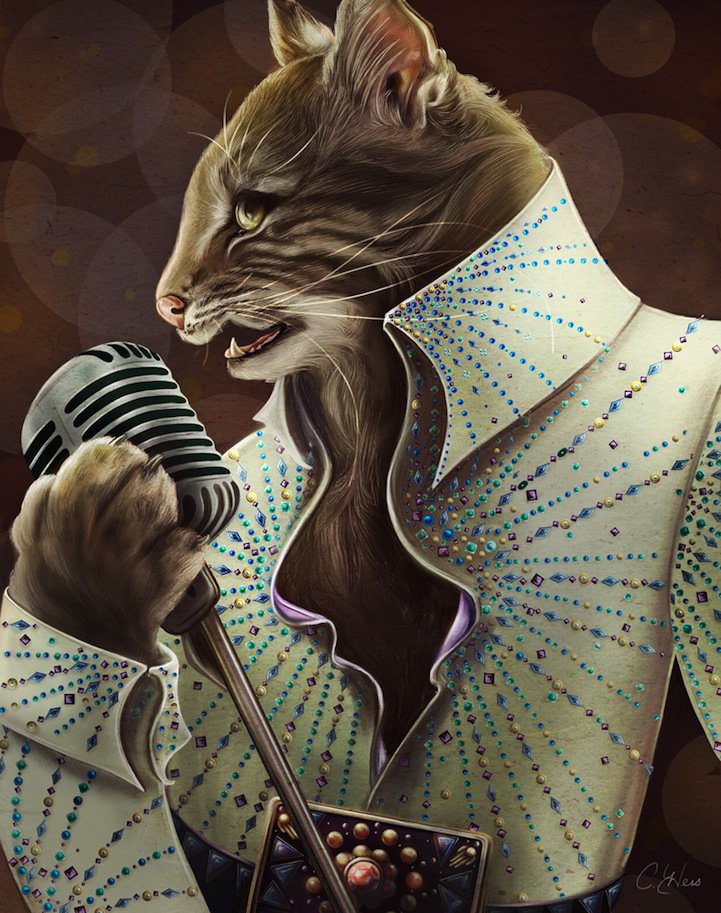
Christina Hess’s Animals From History: Costumed Pets as Playful Portraits
Illustrator Christina Hess reimagines historical icons as ornate animal portraits—Elvis Petme and friends—mixing puns, costume detail, and soft history lessons.