
One Face, Ten Moods by Dilka Bear
Dilka Bear’s One Face, Ten Moods turns a single likeness into a keyboard of feeling—dreamlike portraits where identity holds and emotion shifts.
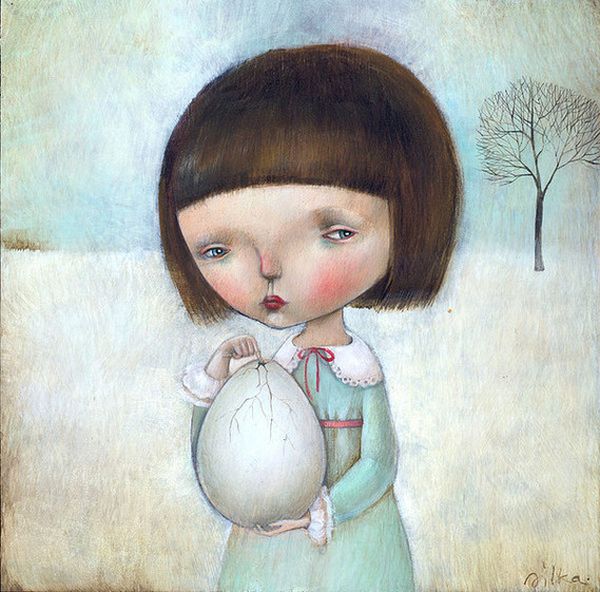
Dilka Bear—born Dilyara Nassyrova in Almaty, Kazakhstan, and long based in Trieste, Italy—builds worlds in faces. Her paintings and illustrations often center young girls whose expressions seem to hold weather systems behind the eyes: hush, mischief, ache, wonder, a private joke the viewer is almost invited into. The project known as One Face, Ten Moods distills that gift into a lucid exercise. One likeness becomes a keyboard of feeling. Same features, shifted climate.
When the series circulated on Behance and illustration blogs in the early 2010s, it read as both portfolio flex and teaching tool. The constraint is simple enough to explain to a student: hold the face, change the mood. The execution is not simple. Dilka Bear’s line, color, and surreal accents keep each variation from collapsing into a sticker-pack of emoji. You sense narrative pressure—tiny stories implied by a tilt of the mouth or a cooler cast of light—without needing captions.
Who Dilka Bear is
Before she became known in pop-surreal and contemporary illustration circles, Dilka Bear studied architecture at the Almaty University of Arts and worked as an illustrator and graphic designer for agencies and magazines in Kazakhstan. In 2005 she moved to Italy, where painting took the center of her practice. That biography matters for reading the work: architectural training leaves habits of structure and spatial calm; commercial illustration leaves habits of clarity and communicative faces. Put together, you get dream logic that still reads at thumbnail size.
Critics and galleries often place her near European pop surrealism—kinship with dreamlike figurative painters who borrow fairy-tale atmosphere without becoming pure pastiche. Influences cited around her work range from Bruegel and Bosch to Italian Renaissance attention and contemporary names such as Marion Peck and Ray Caesar, plus the emotional weather of Grimm-type tales. You do not need the checklist to feel the result: girls who look half-mythic and half-next-door, rendered with patient surfaces and soft menace or soft mercy depending on the piece.
She has exhibited internationally and published with Italian presses; the point for this page is narrower. One Face, Ten Moods is an early, shareable demonstration of how she thinks in expression—an entry door for viewers who meet her first through a single viral grid rather than a full gallery show.
What the project is doing
Series built on one face are common in illustration education because they force control. Can you keep identity stable while emotion moves? Can you avoid turning “sad” into a cartoon tear and “happy” into a rictus? Dilka Bear’s answer is atmospheric. Mood arrives through palette temperature, eyelid weight, the tension or rest in the mouth, and the quiet surreal props or backgrounds that sometimes orbit her figures. The face remains recognizable; the world around it—or the psychological weather inside it—changes.
That is why the project feels larger than a technical drill. Each mood suggests a different afternoon in the same girl’s life, or ten sisters who share a bone structure, or one person rehearsing selves the way actors rehearse masks. Viewers on early design blogs often invented micro-stories for the panels. The work invites that without demanding it. You can enjoy the craft silently, or you can narrate.
Importantly, the series does not treat emotion as costume jewelry. Even the brighter moods keep Dilka Bear’s characteristic dreaminess. Cheer is not loud. Melancholy is not theatrical. The register stays intimate, which is harder than it looks when you are designing for a grid that will be scrolled past quickly.
Looking closely
Spend time with the eyes. In much of Dilka Bear’s figurative work, eyes act like mirrors and portals at once—reflecting an interior weather more than documenting a literal room. In a ten-mood set, watch how little needs to move for the person to change. A fractionally heavier lid can convert composure into fatigue. A warmer cheek can turn reserve into invitation.
Then look at edges and paint handling. Whether working in acrylics or mixed media approaches across her broader practice, she tends toward surfaces that feel tended rather than dashed. Soft transitions keep the surreal from becoming slapstick. When odd details appear in related works—plants, creatures, symbolic objects—they usually behave like dream logic, not gag props.
Finally, notice identity continuity. A weaker series would cheat by redesigning the face each time and calling it range. Here the pleasure is fidelity. You believe it is one person because the bone structure and feature relationships hold while the emotional lighting changes. That fidelity is the project’s quiet rigor.
Why it still matters for artists
For illustrators, character designers, and portrait painters, One Face, Ten Moods remains a useful prompt precisely because it looks effortless and is not. Try the exercise yourself with a single reference head: ten emotional states, no change of model, no escape into different hairstyles as a crutch. You will discover how quickly “different mood” becomes “different person” if structure slips.
The series also models restraint in concept. Many portfolios overbuild lore. Dilka Bear shows that a clear constraint plus strong drawing can carry a whole project title. In the Behance era especially, that kind of modular, readable set traveled well—easy to feature, easy to remember, easy to credit.
For viewers who collect contemporary figurative work, the piece functions as a compact introduction to her sensibility before you meet larger paintings: girls as emotional landscapes, fairy-tale hush without antique pastiche, surrealism as mood rather than shock.
Context without hype
It is worth saying what this page is not. It is not a sales funnel for prints, not a fake “top galleries” list, and not a claim that one series summarizes a whole career. Dilka Bear’s practice extends through exhibitions, books, and later projects that deepen the dream vocabulary. One Face, Ten Moods is a crystalline node in that path—memorable because the idea is clean and the hand is sure.
If you encounter the work only as a cropped social image, seek the fuller set when you can. Grids compress; sequences breathe. Moving from one mood to the next is part of the meaning. The face becomes a clock of feeling, ticking through states we all recognize and rarely stage so carefully.
Keep Dilka Bear’s name attached when you share the images. Attribution is not a courtesy sticker; it is how a viewer’s first meeting with an artist becomes a real introduction rather than an orphaned aesthetic. The moods are hers. The face is hers. The imagination that makes ten interiors from one exterior is the point of returning to the work years later—and finding it still quietly exact.

Comments
Continue reading
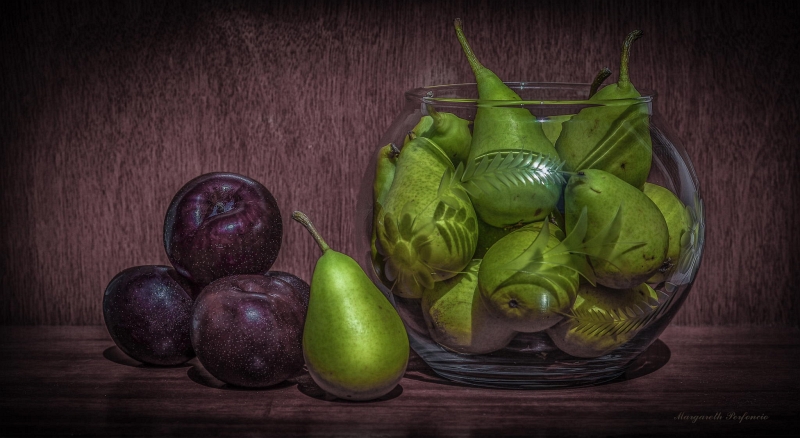
Still-Life Photography by Margareth Perfoncio
São Paulo photographer Margareth Perfoncio’s still lifes of food and flowers—Old Master light, dark wood, and tables that feel inevitable.

Meaningful Love Quotes for Inspiration (and Ink)
Meaningful love quotes that still feel true — short lines for tattoos, gifts, and everyday reminders, with placement and wording tips.
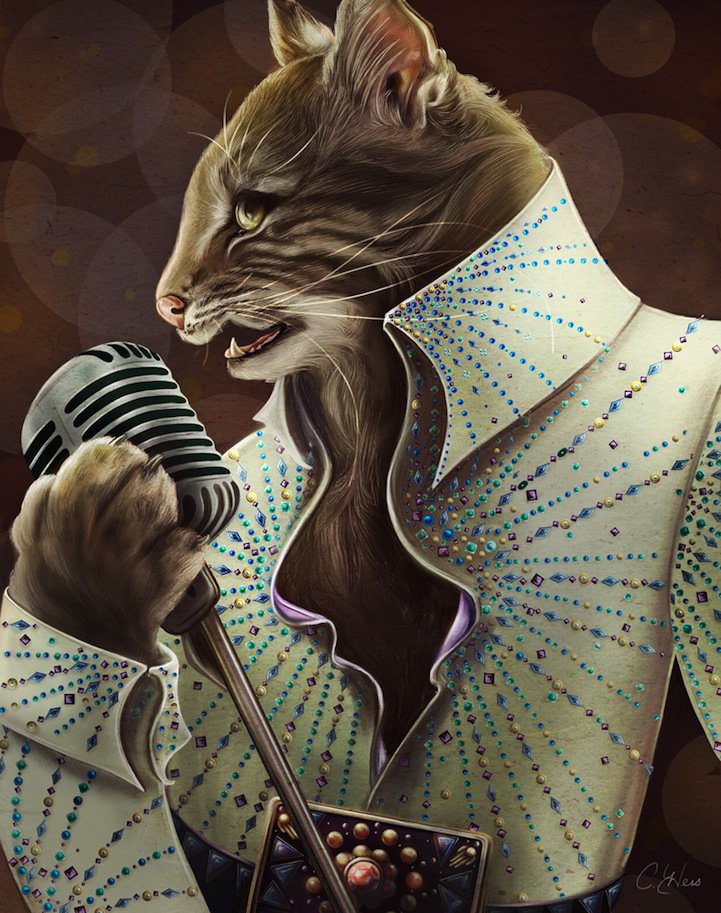
Christina Hess’s Animals From History: Costumed Pets as Playful Portraits
Illustrator Christina Hess reimagines historical icons as ornate animal portraits—Elvis Petme and friends—mixing puns, costume detail, and soft history lessons.