
Olek’s Crochet on San Francisco’s Doggie Diner Heads
In 2013, artist Olek wrapped John Law’s iconic Doggie Diner heads in crochet—yarn, civic mascots, and a roaming San Francisco installation.
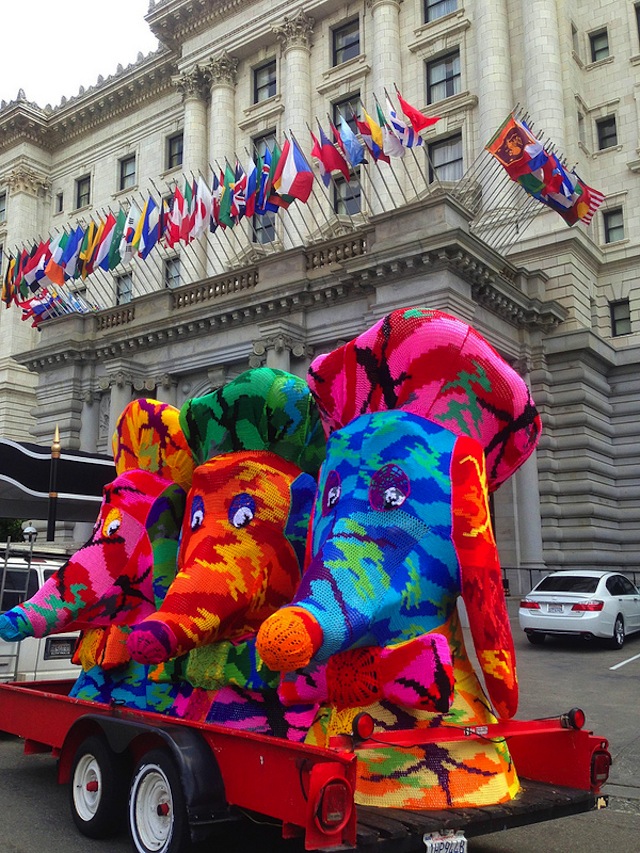
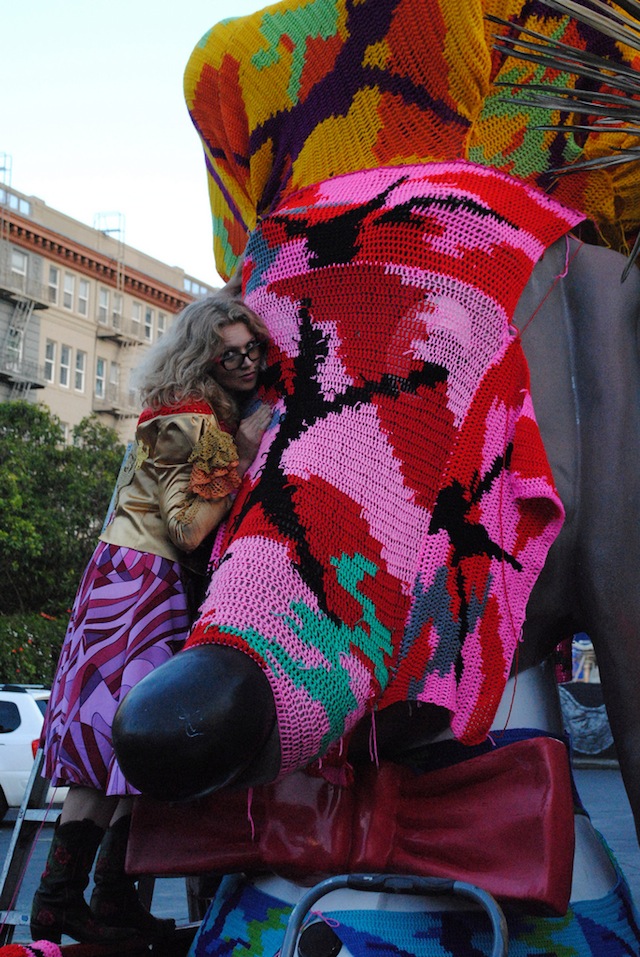
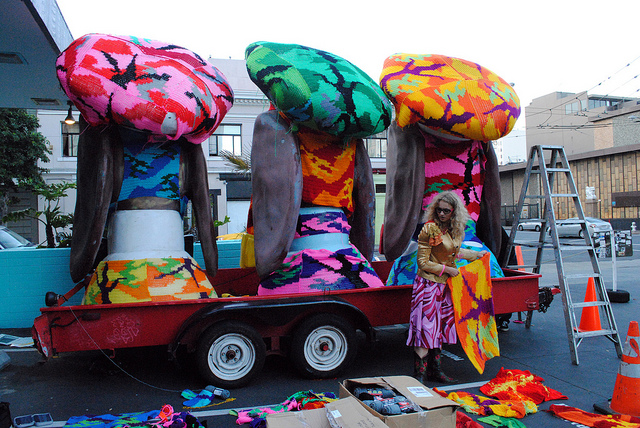
After the crocheted locomotive in Poland, artist Olek kept working in yarn at architectural scale. In August 2013 she arrived in San Francisco—invited into the orbit of local artist and prankster John Law—to cover the giant fiberglass Doggie Diner heads in her signature crochet. The heads, once restaurant mascots and later Bay Area folk icons, became temporary soft sculptures: cartoon dogs wrapped in color, pattern, and handwork dense enough to read from across a street.
Olek has described crochet installations as a way to comment on the economic and social realities of the communities she has lived in, and to bring color, energy, and surprise into everyday space. The San Francisco visit fits that brief exactly. Instead of a white-cube pedestal, the “canvas” was a trio of beloved public objects with their own local mythology—already famous, already mobile, already slightly uncanny before a single stitch landed.
The dogs before the yarn
Doggie Diner was a Bay Area fast-food chain whose rooftop dachshund heads—chef hats, bow ties, wide cartoon eyes—became more famous than many of the meals underneath them. After the chain faded, a small set of surviving heads lived on as mobile mascots and civic characters. John Law and fellow Cacophony Society members helped keep three of them in circulation for charity events, parades, and art mischief. Locals know the pack by affectionate nicknames; together they have been called everything from roadside leftovers to a holy trinity of dogdom.
By 2013 the heads were already San Francisco characters in their own right: photogenic, slightly eerie, and endlessly recontextualizable. Their painted eyes follow you. Their bow ties read as costume even before anyone adds fabric. Wrapping them in crochet did not invent their fame. It temporarily reclothed it, the way a parade float gets a new theme for a single weekend.
Law’s stewardship is part of the story. Without someone who treats the dogs as living civic props rather than scrap fiberglass, an international crochet artist would have had nothing iconic and portable to cover. The collaboration is half craft, half custodianship.
Olek’s method at street scale
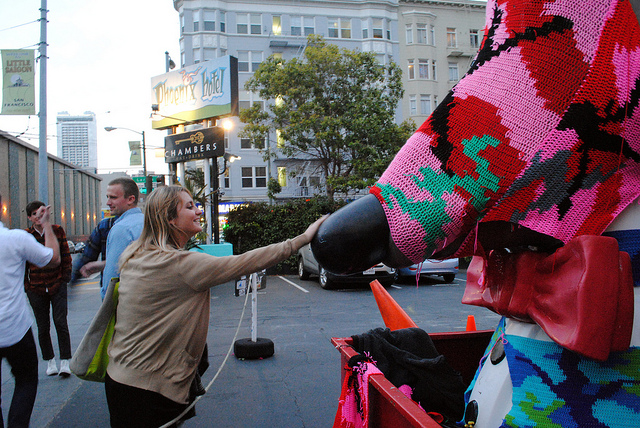
Olek (often presented as a one-name artist; Polish-born and long based in New York) builds crochet as architecture and costume at once. The work is labor-intensive, patterned, and unapologetically bright. Covering an object completely changes how people approach it: what was hard fiberglass becomes tactile rumor; what was a fixed landmark becomes a soft event. Passersby lean closer. Cameras come out. The joke and the craft arrive together.
For the Doggie Diner project, that transformation mattered because the heads already carried nostalgia. Crochet added a second layer of care—handmade time wrapped around industrial mold. Viewers who knew the dogs as bare fiberglass suddenly met them as yarn animals. People who had never heard of the diner still understood the image: giant cartoon dogs wearing sweaters too ambitious for any living pet.
John Law’s invitation framed the collaboration as a hunt for an available San Francisco icon. The Golden Gate Bridge was not on the itinerary; the dogs were. That choice kept the piece local, portable, and funny. Ambition without logistics is just a wish list. Ambition with three fiberglass heads on wheels is a week of public art.
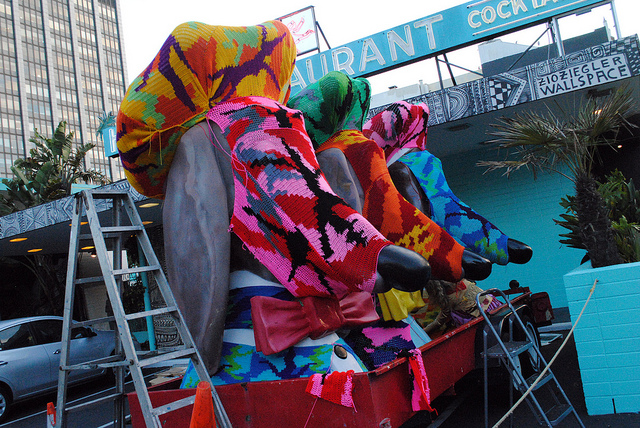
Law and Olek later moved the covered heads around the city, including appearances near places like City Hall and the Phoenix Hotel in the Tenderloin, so the installation behaved less like a static display and more like a traveling parade float. Photographers including Ken Duffy documented the roam. The yarn was not only a skin; it was a reason to take the dogs on another civic tour.
Public art that refuses to sit still
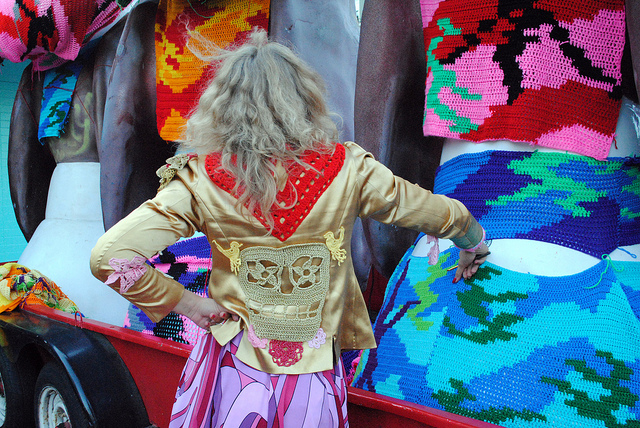
Many crochet-bombing gestures are anonymous overnight hits on statues and railings. Olek’s San Francisco dogs were more collaborative and more visible: an invited artist, a known caretaker of the mascots, photographers documenting the process, and days of work rather than a midnight drop. SFist and Laughing Squid covered the visit as it happened—arrival at the airport with the dogs as greeting party, work sessions at the Phoenix Hotel, finished heads parked for portraits outside familiar buildings.
That publicity loop fits Olek’s larger practice. The yarn is the medium; the city is the amplifier. Economic and social commentary in her work often arrives through presence and labor rather than through a wall text. Handmade softness on a public icon can read as tenderness, protest, celebration, or all three depending on who is looking. In San Francisco, the dominant register was delight mixed with recognition: “those are our dogs—why are they wearing that?”
Mobility also kept the piece from becoming precious. A crocheted dog that only sits in one courtyard is a sculpture. A crocheted dog that turns up at City Hall is a character making rounds. Olek’s color met Law’s long-running street theater, and the city supplied the audience for free.
Continuity with the locomotive and beyond
The Poland locomotive piece had already shown Olek’s appetite for covering machines and monuments until they became unfamiliar again. San Francisco’s dogs were smaller than a train and more mobile, but the logic matched: choose an object with public memory, wrap it until the memory updates, then let people photograph the collision of craft and icon.
Scale shifts, theme stays. A locomotive wrapped in crochet becomes a soft industrial ghost. A diner mascot wrapped in crochet becomes a civic pet in costume. Both projects ask viewers to reconsider what “serious” public sculpture has to look like. Yarn is not a punchline if the labor is visible and the object already means something to a city.
For crochet artists and street-art watchers, the SF heads are a useful case study in collaboration. Law’s stewardship of the mascots made the project possible; Olek’s technique made it unforgettable; the city’s appetite for odd civic characters made it travel. Without any one of those pieces, the week would have been a private studio experiment instead of a temporary landmark.
Looking at the photographs
In the images from the visit, notice how pattern fights silhouette. The dogs’ chef hats and bow ties still read through the stitches; the yarn does not erase the cartoon, it rebrands it. Color blocks turn fiberglass into something closer to costume design. Group shots emphasize plurality—three heads, three wraps, one roaming pack—while close frames show the density of labor in every square inch.
That density is the quiet thesis of Olek’s installations. Surprise is easy; sustained handmade coverage is not. San Francisco got both: familiar mascots made strange for a week, then returned to their long career as Bay Area characters. The crochet came off eventually. The story of yarn meeting Doggie Diner did not—and neither did the dogs’ habit of showing up wherever the city needed a weird, beloved witness.

Comments
Continue reading
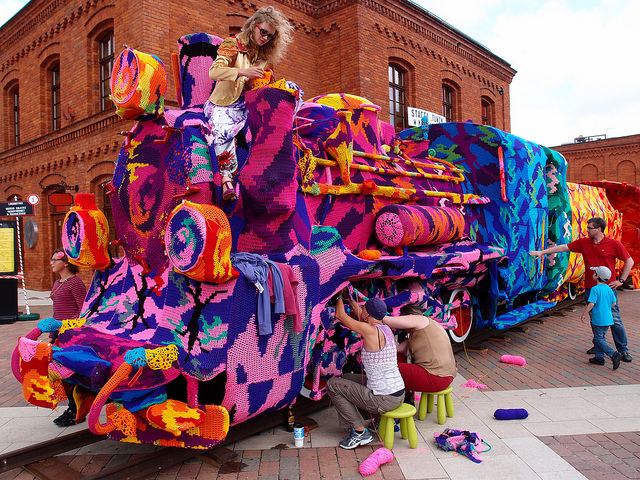
Olek’s Crocheted Locomotive in Łódź, Poland
In July 2013, artist Olek wrapped a four-car locomotive in technicolor crochet—a homecoming yarn-bomb she nicknamed Deadly Romance.
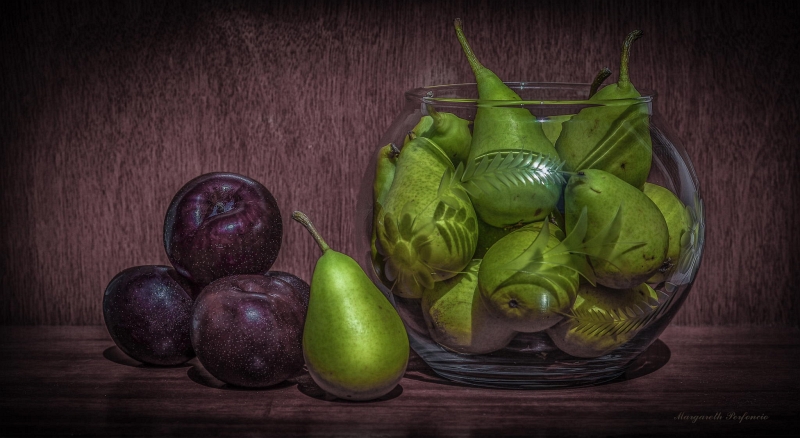
Still-Life Photography by Margareth Perfoncio
São Paulo photographer Margareth Perfoncio’s still lifes of food and flowers—Old Master light, dark wood, and tables that feel inevitable.
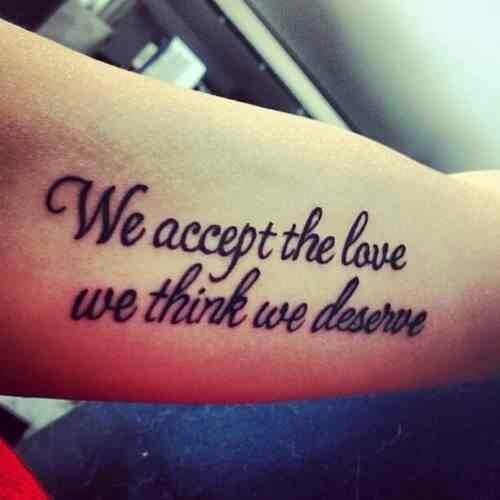
Meaningful Love Quotes for Inspiration (and Ink)
Meaningful love quotes that still feel true — short lines for tattoos, gifts, and everyday reminders, with placement and wording tips.