
William Kass’s Minimize: Tiny Figures in Food Landscapes
Brazilian photographer-architect William Kass builds edible tabletop worlds—cauliflower palms, watermelon caves, film remakes—then photographs miniature people before the props melt.
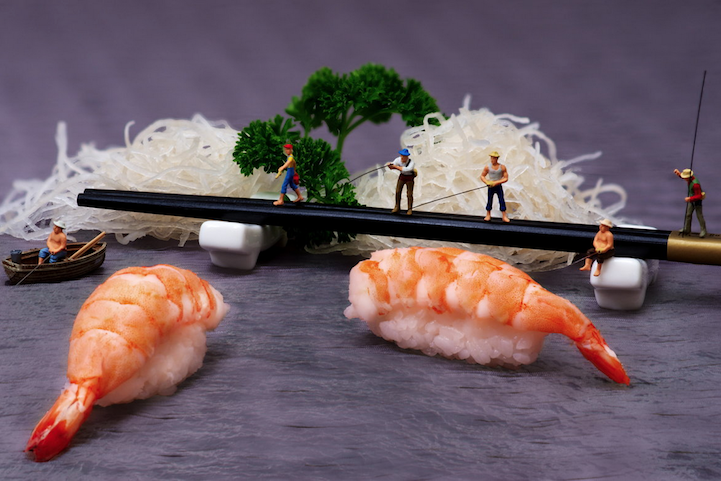
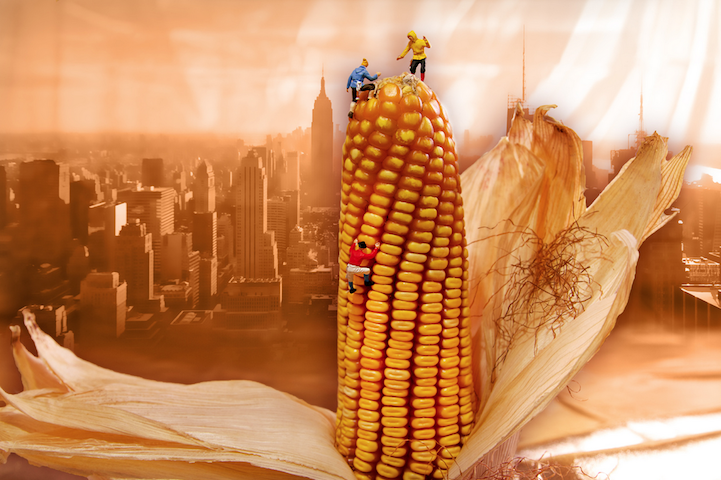
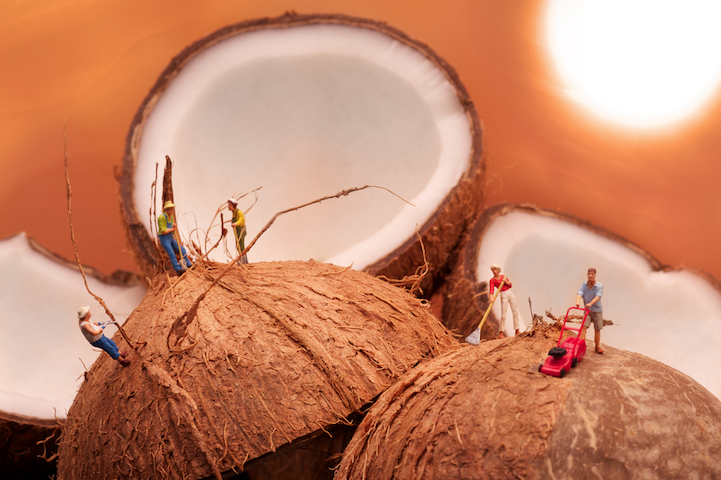
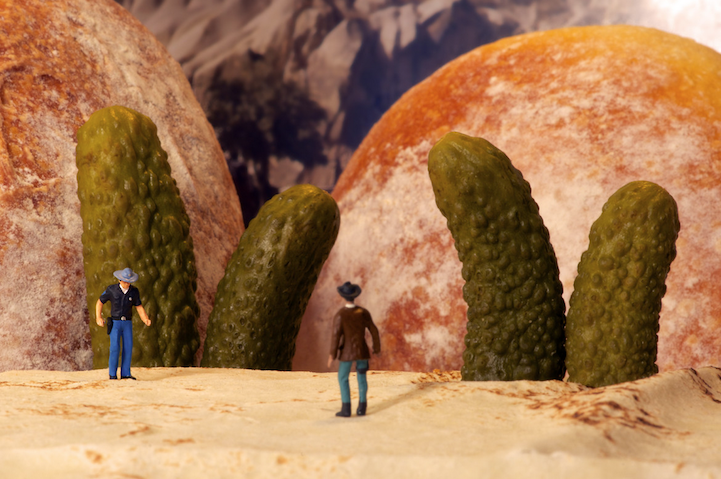
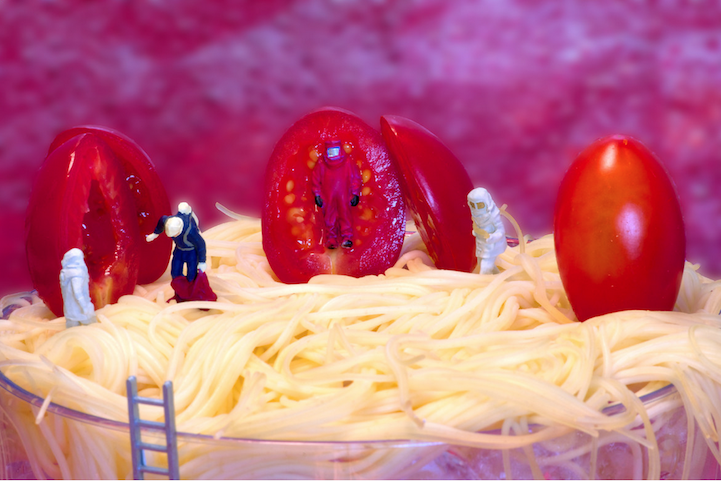
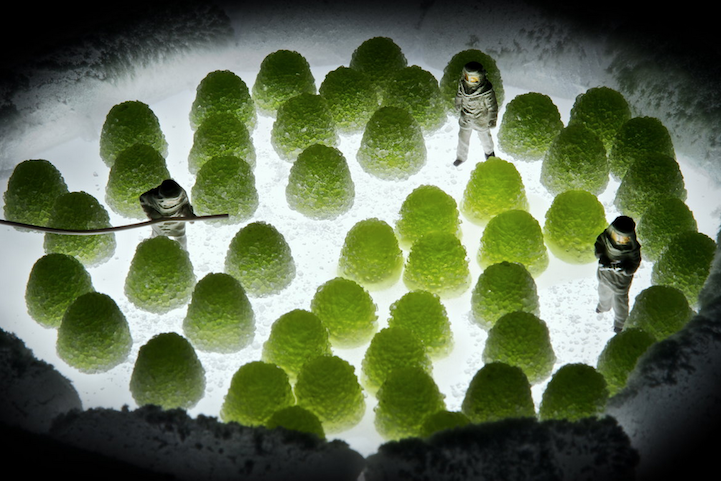
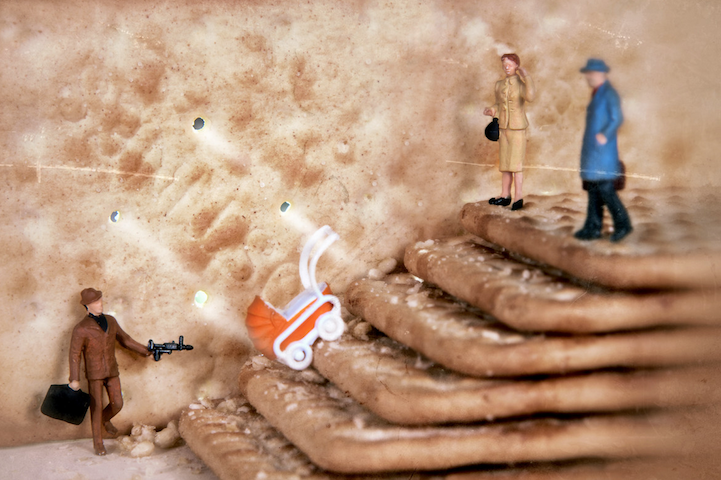
Brazilian photographer and architect William Kass titled his early-2010s studio series Minimize, then filled it with cauliflower “palm trees,” corn cob towers, cracker beaches, cereal shorelines, potato-stick forests, watermelon caves, and other grocery-store landscapes. Tiny figurines walk through those edible and household sets as if ordinary people had been shrunk into a second world built from lunch ingredients and desk objects. The pictures are whimsical first, then oddly precise: composition, light, and shadow are studied the way an architect studies a model, only the materials spoil, melt, or wilt if the shoot runs long.
Kass began the project in 2013 as a personal studio practice aimed at both art and advertising markets. He has described wanting to use architectural skill to place humans inside a surreal macro world—drawing attention to small daily details by turning foods and ordinary objects into scenery. The dolls are bought ready-made. The worlds are built by hand. The camera’s job is to make the scale lie convincingly.
Food and objects as architecture
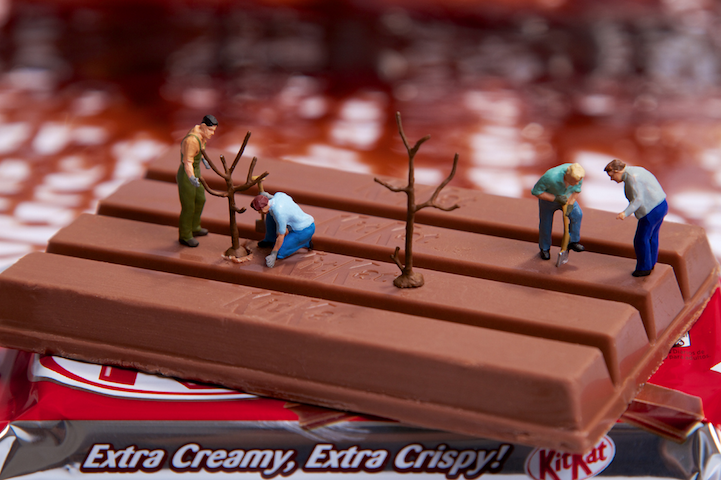
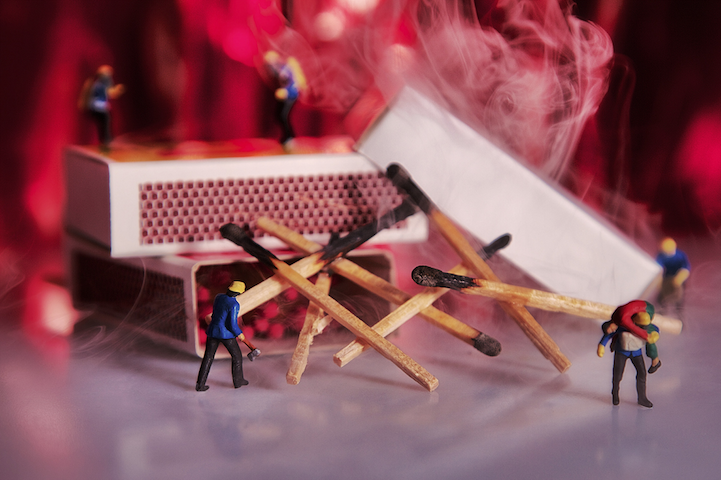
Where some miniature photographers invent office cities from staplers and paper clips, Minimize leans hard into appetite and texture. A cauliflower floret can behave like tropical canopy. A watermelon interior can suggest alien geology. Crackers and cereal can become boardwalks, dunes, or floating platforms. Potato sticks can stand in for timber or reeds. The joke is immediate because everyone knows the ingredient; the craft is slower because the ingredient has to hold a pose under lights.
Kass’s architecture background shows in the way scenes are engineered rather than merely decorated. Tiny figures need paths, edges, and destinations. A set that only looks cute from overhead collapses when the lens drops to eye level with the dolls. Successful frames treat food topography as site planning: where the ground is stable, where a cliff appears, where a “building” rises, where negative space keeps the story readable.
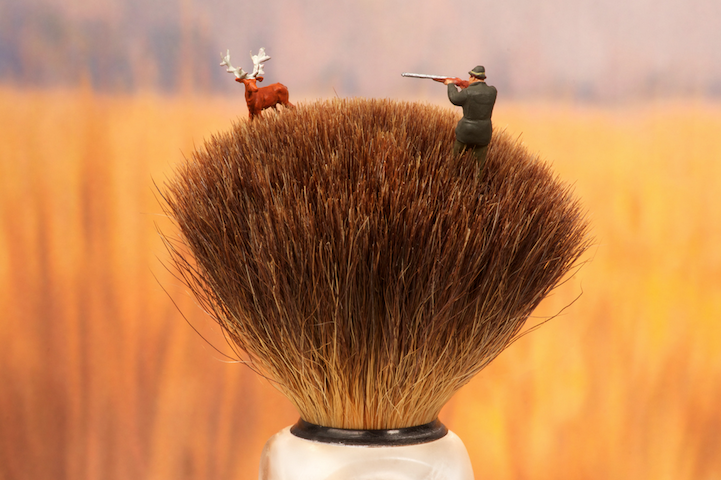
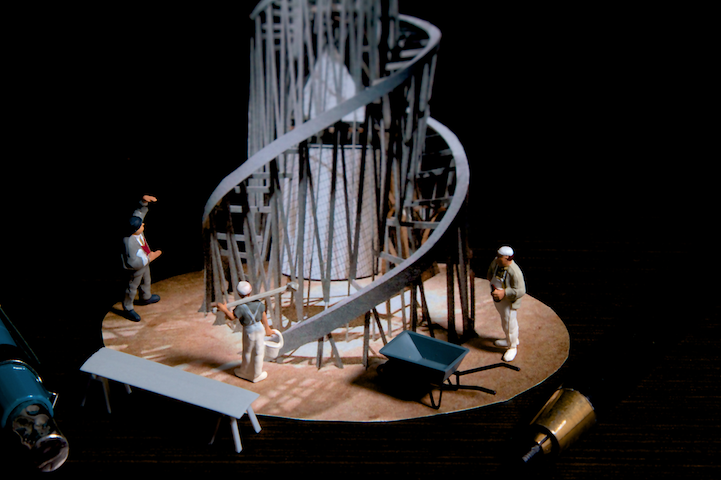
Household objects join the pantry props. Shaving brushes become savannah grass. Ice-cream cones become icebergs. Wine corks become stations or towers. The project’s range matters: it is not only “tiny people on snacks,” and not only “tiny people on tools.” It is a flexible tabletop cinema where anything at arm’s length can audition for landscape.
Movie memories at toy scale
Several images in the series remake film situations rather than inventing brand-new plots. Period coverage of Minimize repeatedly points to cinematic references such as Titanic, Forrest Gump, 2001: A Space Odyssey, and The Untouchables. The pleasure is recognition under absurd materials: wafer cones and melting ice cream standing in for North Atlantic disaster weather, or a food texture standing in for a famous movie beat you already know by heart.
Those remakes are useful for understanding Kass’s sense of humor. He is not parodying cinema with digital effects. He is rebuilding a remembered frame with perishable props and plastic citizens, then photographing the reconstruction before physics ruins it. In interviews he noted that the Titanic setup demanded lighting rehearsal in advance because real ice cream collapses fast. That detail is the project in miniature: playfulness with a production clock.
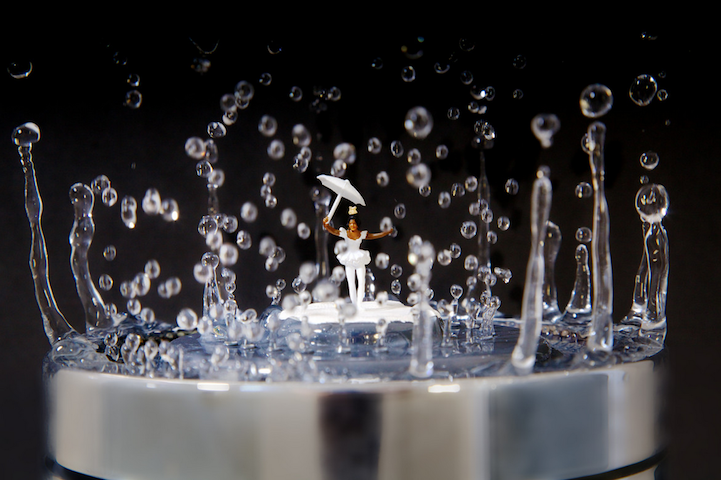
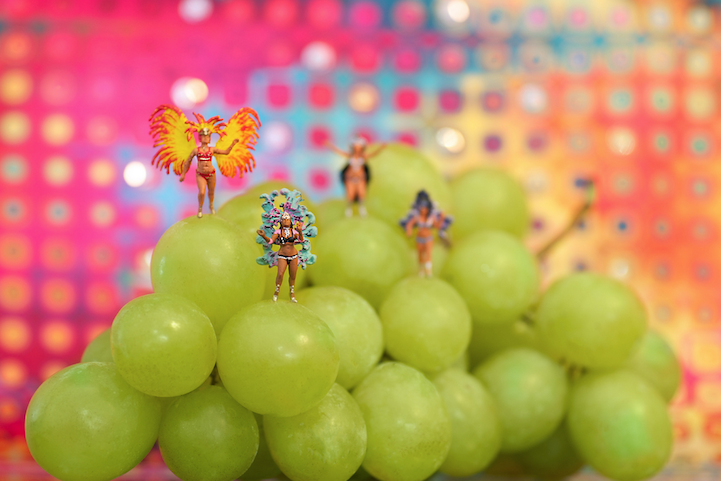
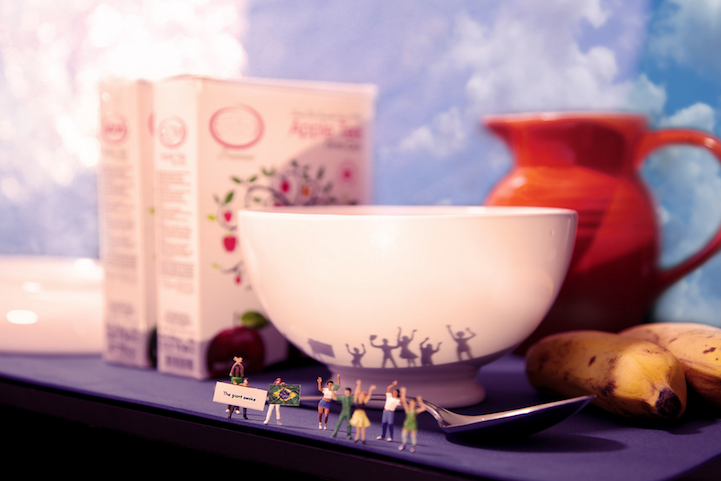
Other scenes stay closer to everyday life or carnival fantasy—spring-break plateaus, samba energy on fruit, neighbors around a coconut, a ballerina idea staged with a shower head. Film homage and daily-life comedy share the same grammar: one clear action for the figures, one dominant material for the world, lighting that sells depth instead of revealing the kitchen table underneath.
Studio discipline behind the whimsy
Kass has said a single miniature marvel can take up to three days to complete in a home office turned studio. That timeline includes arranging, lighting studies, and the patience required when food behaves badly. Freshness is not a lifestyle slogan here; it is a technical constraint. Wilted greens flatten a jungle. Soft crackers collapse a cliff. Melted dairy destroys a horizon line.
Practical habits visible across the series include:
- Eye-level camera height. Shoot too high and you get toys on a plate. Lower the lens and the figures become citizens.
- One dominant material. A scene usually lets one food or object own the landscape so the brain accepts the scale lie quickly.
- Readable human verbs. Climbing, waiting, dancing, escaping, gathering—action must survive tiny plastic faces.
- Controlled shine. Highlights on wet fruit, ice cream, or glazed surfaces carve volume the way rock faces need raking light outdoors.
- Selective mess. A few crumbs sell realism; a debris field sells only chaos.
Because the work is physical, it also refuses a certain kind of digital shortcut. You can imagine Photoshop helpers after the fact, but the core illusion is arranged before the shutter. That handmade limit connects Minimize to other early-2010s miniature internet favorites while keeping Kass’s voice specific: Brazilian carnival warmth in some frames, quiet architectural clarity in others, and a recurring appetite for food as terrain.
Photography, not poster graphics
If you land on this page after browsing flat minimal movie posters, keep the medium straight. William Kass is solving a photographic problem: depth of field, tabletop lighting, perishable sets, and the believable placement of physical miniatures in real materials. He is not reducing a film to a logo-like illustration on a flat color field. The “minimal” in Minimize points to scale and focus—small figures, distilled situations—not to vector simplicity.
That difference changes how you should look. Ask where the light is coming from. Ask which surface would feel sticky, cold, or brittle under tiny feet. Ask how long the set could have survived before the shoot. Those questions belong to studio photography. They are the wrong questions for a graphic poster series, and the right ones here.
A quick viewing checklist
- Name the human action before you name the snack.
- Find the one material doing most of the landscape work.
- Decide whether the scene is film homage or daily-life comedy.
- Notice whether the camera sits near the dolls’ eye line.
- Imagine the production clock: what would melt, wilt, or tip first?
Use that checklist on the gallery above and the pictures stop being only cute. They become small productions—brief, perishable, carefully lit worlds that Kass built so ordinary food could briefly behave like a planet.

Comments
Continue reading

Dramatic Photo Art by Sukron Ma’mun (Ipoenk Graphic)
Cirebon, Indonesia photographer Sukron Ma’mun uses theatrical natural light to frame village life, play, and place in lyrical photo art.
Bird’s-Eye Views: Florian Beaudenon’s Instant Life
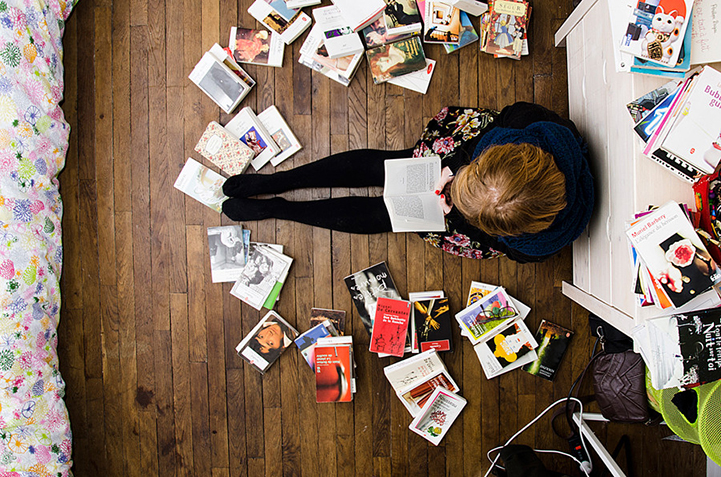
Paris photographer Florian Beaudenon’s Instant Life series captures people in their rooms from above—intimate, collaborative overhead portraits of everyday joy.
Abandoned Cars Reclaimed by Nature: Rust, Growth, and Quiet Ruin
When neglected vehicles are left outdoors long enough, rust, moss, and trees rewrite them into strange still lifes—sad, photogenic, and slowly returning to the ground.