
Milky Pin-ups by Jaroslav Wieczorkiewicz: Milk Dresses and Retro Glamour
London-based photographer Jaroslav Wieczorkiewicz’s AurumLight series turns high-speed milk splashes into pin-up garments—process, 1940s–50s references, and the limited 2014 calendar.
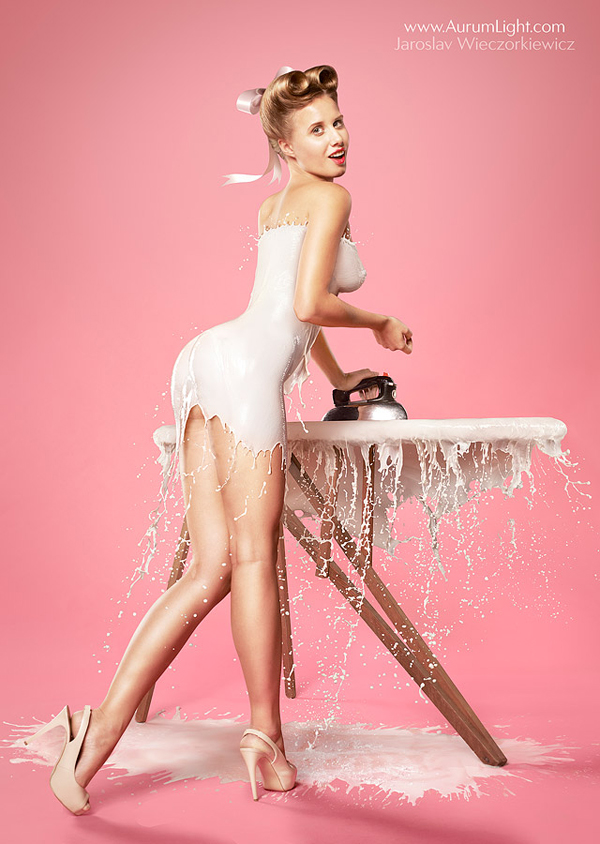
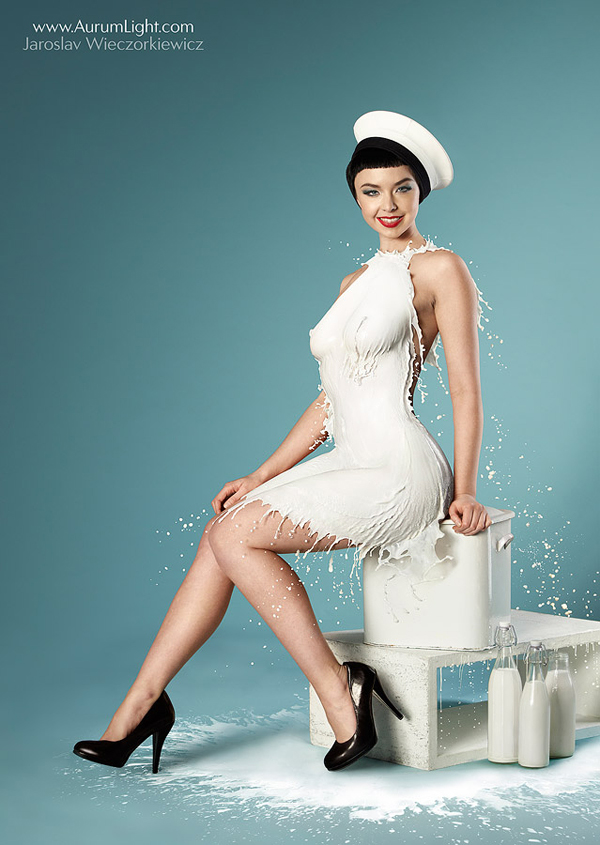
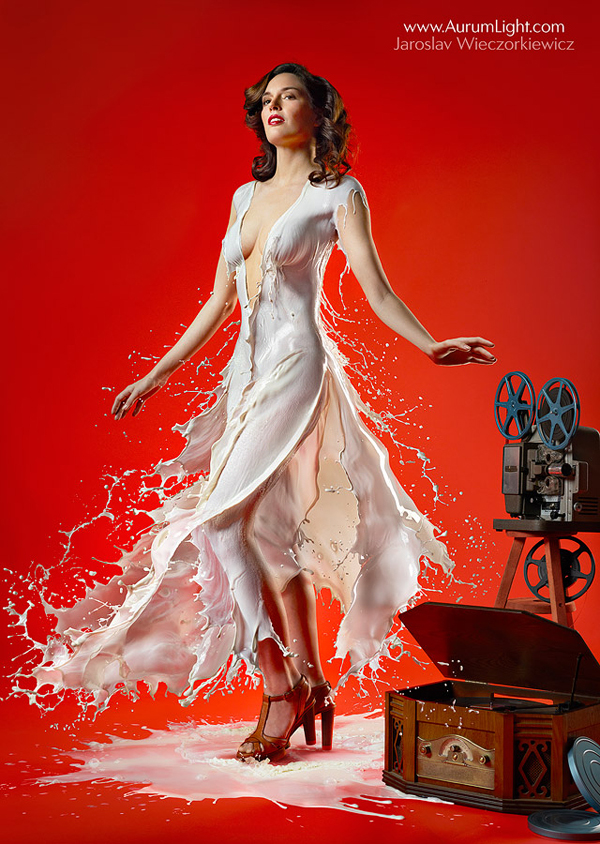
Jaroslav Wieczorkiewicz’s “Milky Pin-ups” series turns a studio problem into a period fantasy: models appear to wear dresses made of milk, frozen mid-splash and shaped into garments that nod to mid-century pin-up painting. The London-based Polish photographer—trained in fine arts and architecture, working through his AurumLight Studio—built the project as conceptual photography first and as a limited 2014 calendar afterward. The images on this page belong to that body of work, and the credit stays with him.
Wieczorkiewicz has described the approach in compact terms—milk, frozen in time, morphed into high fashion. That line is a useful key. You are not looking at fabric soaked for a wet-look editorial. You are looking at high-speed liquid capture combined with careful digital assembly, aimed at the silhouette language of 1940s and 1950s pin-up illustration. The pleasure is double: glamorous surface for casual viewers, process puzzle for photographers.
Artist and studio
Before the milk calendars circulated widely online, AurumLight had already positioned itself around conceptual photography, advertising, and limited calendar editions. Wieczorkiewicz’s path into the medium is part of the story he and period profiles told: fine-art and architecture training first, then a studio practice that treated commercial and personal projects as related problem sets. Architecture shows up less as buildings in the frame and more as process discipline—complex tasks broken into controllable stages, then rebuilt into something that looks inevitable.
Liquid dress-making is exactly that kind of problem. Milk does not drape on cue. It has to be thrown, timed, photographed in volume, and edited into coherence. In interviews around the pin-ups release, Wieczorkiewicz noted that the studio’s milk calendar work for 2013 had been well received, and that the 2014 edition would push a clearer pin-up brief. Workshops followed in the same period—sessions across Europe and Australia in which he discussed methodology—because the technique invited questions. Viewers wanted to know how much was in-camera and how much was composite craft.
Keeping the artist’s name attached matters. Internet image culture often strips authorship from striking photographs until they become anonymous “wow” tiles. “Milky Pin-ups” is Jaroslav Wieczorkiewicz / AurumLight work: a authored series with a calendar endpoint, not a random milk-splash meme.
Pin-up references, not costume cosplay
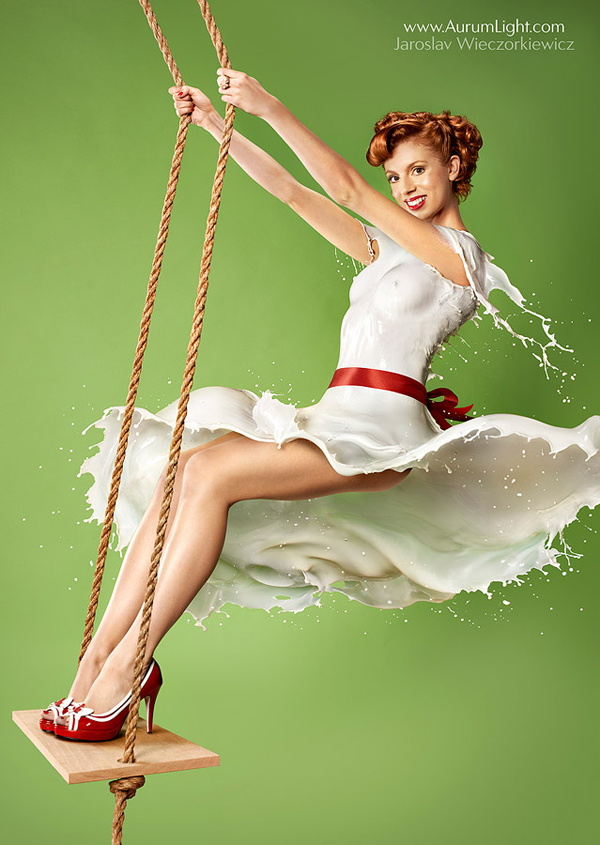
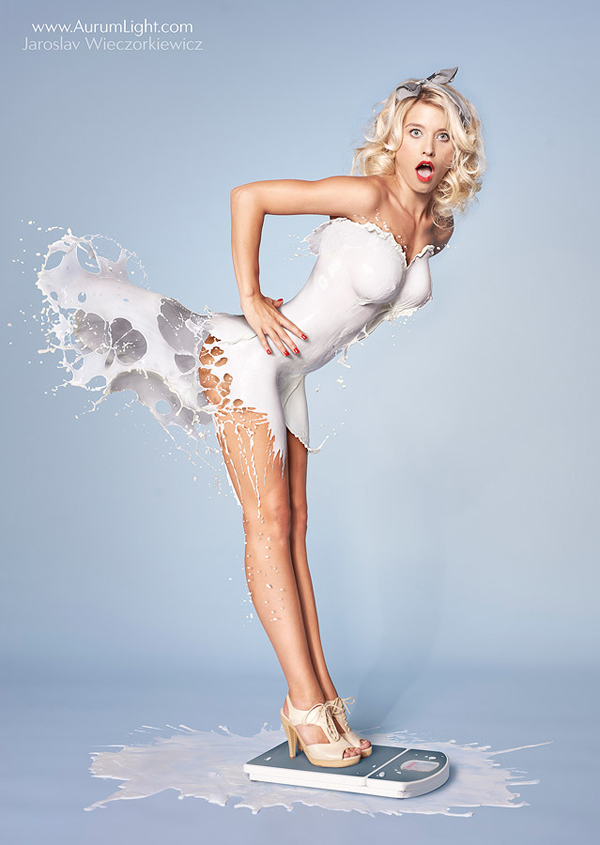
Classic American pin-up art—especially the painted world associated with Gil Elvgren, and the wider Vargas-era glamour of calendar illustration—depends on readable poses, playful situations, and clothing that behaves like a character. Skirts flare. Fabric catches mid-motion. The joke is often timing: wind, surprise, a gesture frozen before it resolves. Color is saturated; mood is teasing without needing a plot.
Wieczorkiewicz’s series borrows that timing and replaces cloth with milk. The homage is structural. Poses and compositions echo vintage references closely enough that genre fans can spot the lineage; color and skin lighting push the frames into a contemporary studio clarity. It is not a museum copy of a single painting. It is a photographic rhyme with a whole calendar tradition.
That choice also keeps the work from collapsing into novelty alone. Plenty of high-speed liquid photos exist as technical demos—fruit in water, paint collisions, glass shatter studies. “Milky Pin-ups” ties the demo to a cultural costume so the technique serves a mood instead of only proving shutter speed. Retro glamour gives the milk a job: modesty, flourish, comedy, elegance—roles cloth usually plays in pin-up pictures.
How the images were made
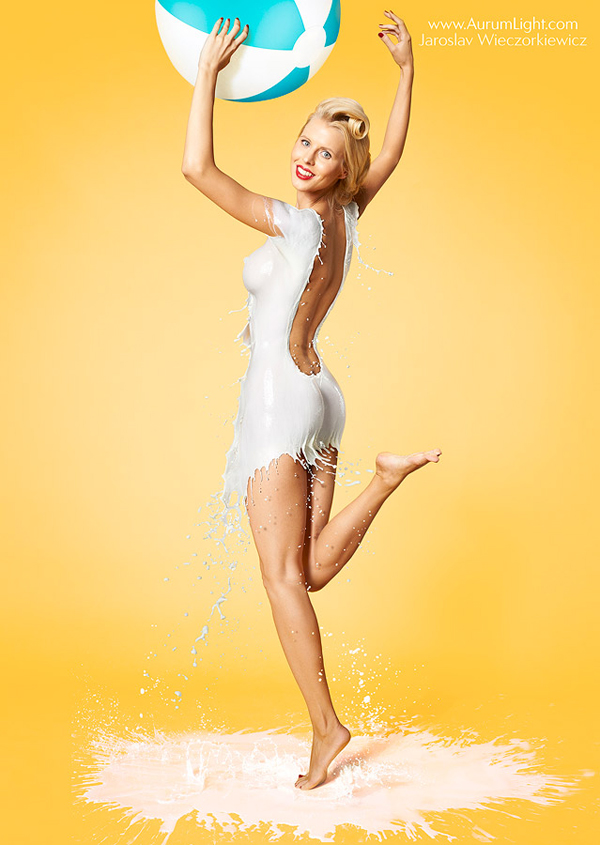
Accounts of the process, including Wieczorkiewicz’s explanations to photography press such as The Phoblographer, describe a labor-intensive shoot. Milk is splashed onto and around models while cameras catch droplets in sharp focus. Hundreds of frames become raw material. Selected splashes are then digitally merged so that scattered liquid reads as straps, skirts, bodices, or ornamental bursts—garments that could not hang in a wardrobe yet feel tailored in the final composite.
Several craft demands sit under that simple summary. Lighting must freeze white liquid without obliterating skin tones; milk is a bright, scattering subject that can blow highlights if the exposure is careless. Posing must leave room for the “dress” to be built later; arms and torso need graphic clarity so the composite has landmarks. Retouching must sell continuity: a milk garment should feel like one event, not a scrapbook of unrelated splashes. Hair, hands, and facial expression still have to carry pin-up attitude while the wardrobe is partly imaginary.
Backstage material that AurumLight shared around the release underlined the same point—the finished calendar page is the tip of a method. For photographers, the series is as much a workflow case study as a set of glamorous pictures. For everyone else, knowing the labor prevents a lazy reading that the images are “just Photoshop.” They are Photoshop in conversation with disciplined capture.
The 2014 Milky Pin-ups calendar
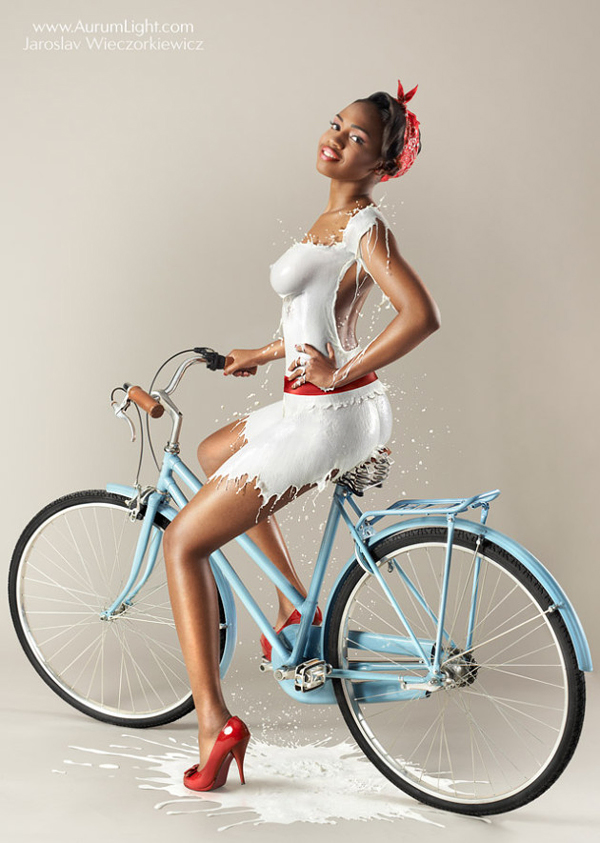
AurumLight released the “Milky PinUps” 2014 calendar as a limited run—studio notes from the period put the edition at one hundred A3 copies, sold directly with postage options and, soon enough, a sold-out notice. Shipping talk in late 2013 pointed to November availability, matching the usual calendar retail season. Scarcity is part of the project’s story: conceptual series first, collectible print object second.
Calendars are an old delivery system for pin-up art. By returning to that format with a liquid-photography twist, Wieczorkiewicz closed a loop between subject and object. The images look like they belong on a wall grid of months; for a short window, they were exactly that. Limited editions also fit AurumLight’s wider habit of treating calendars as authored objects rather than throwaway promo merchandise.
What to notice when you look
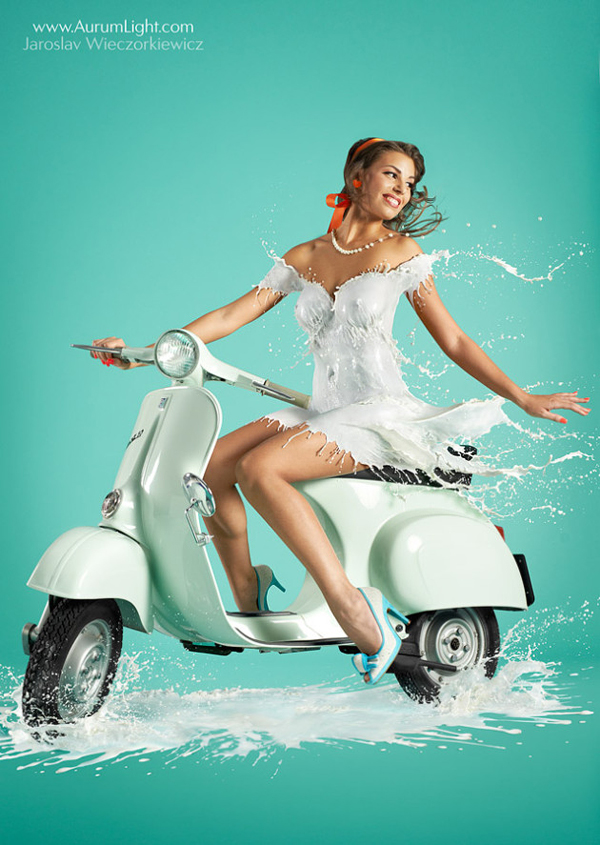
Start with silhouette. Can you still read a dress logic—strap, waist, flare—even though the material is milk? That readability is the composite’s success. Next, look at droplet edge quality. Crisp beads sell the high-speed claim; mushy white haze would collapse the illusion into smoke or fog. Then check the relationship between face, hands, and “fabric.” Pin-up tradition lives in gesture. If the hands perform and the milk answers, the homage lands.
Also notice restraint. The strongest frames do not drown the figure in liquid for shock value. They allocate splash where clothing would do narrative work. Negative space around the body keeps the photographs closer to illustration than to chaos studies. Color temperature and skin retouching stay in a beauty-photography register; the weirdness is reserved for the garment, which is where the concept needs it.
Compare two frames in the set the way you would compare two Elvgren prints: what is the implied second before and after the freeze? A successful pin-up implies motion even when still. Milk, paradoxically, helps—because liquid always looks like it was going somewhere.
Where the series sits in photo culture
Early-2010s internet culture loved process reveals—behind-the-scenes posts, workshop tours, “how was this shot?” features. “Milky Pin-ups” thrived in that climate because it rewarded both casual scrolling and technical curiosity. Art and photography blogs circulated the images as modern pin-up reinvention; craft sites asked about capture and retouch. Both readings are fair. Wieczorkiewicz authored a glamorous surface and a transparent method conversation at once.
The series also sits in a longer line of photographers who treat unlikely materials as wardrobe or set design—paint, powder, projection, practical effects—then finish the illusion in post. What distinguishes this project is the specific marriage of material (milk), genre (pin-up), and delivery (calendar). Remove any one leg and the work becomes a different animal.
Credit remains straightforward: Jaroslav Wieczorkiewicz, AurumLight Studio, London. The milk is a material. The pin-up is a reference library. The authorship is the decision to marry them under calendar discipline and high-speed control. If one frame stops you, ask what the garment is doing that cloth usually does, and how milk renegotiates that job. Follow that question back to the photographer who staged it—that is where “Milky Pin-ups” still lives.

Comments
Continue reading
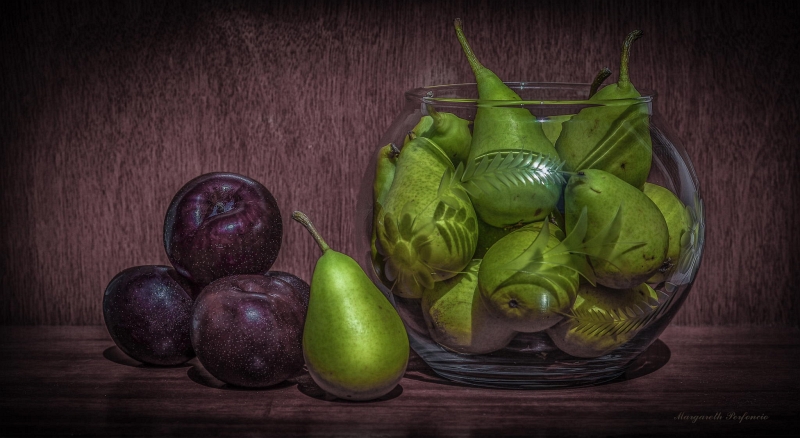
Still-Life Photography by Margareth Perfoncio
São Paulo photographer Margareth Perfoncio’s still lifes of food and flowers—Old Master light, dark wood, and tables that feel inevitable.

Meaningful Love Quotes for Inspiration (and Ink)
Meaningful love quotes that still feel true — short lines for tattoos, gifts, and everyday reminders, with placement and wording tips.
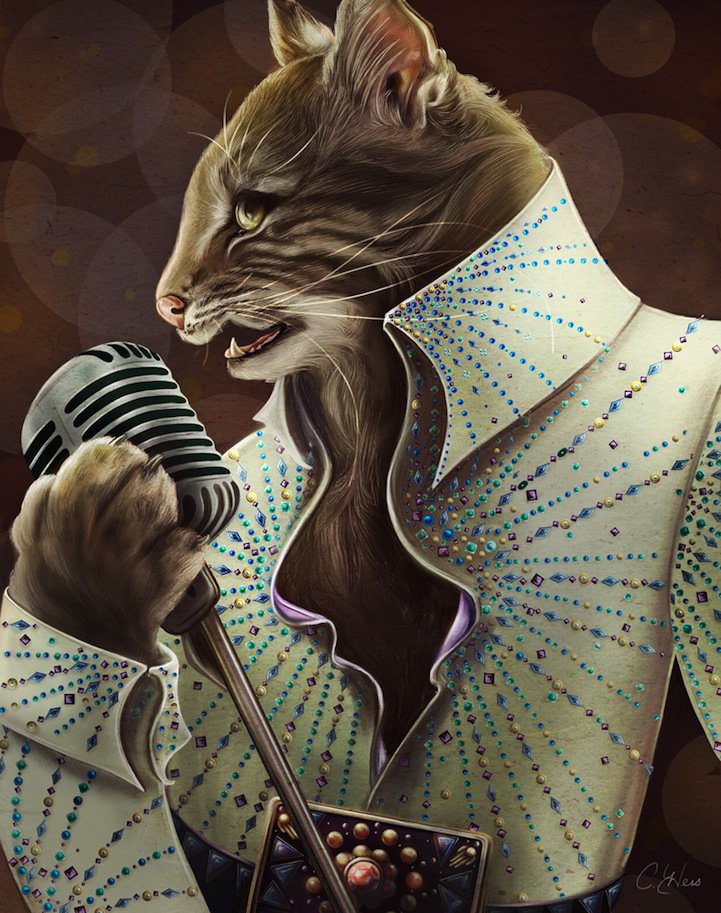
Christina Hess’s Animals From History: Costumed Pets as Playful Portraits
Illustrator Christina Hess reimagines historical icons as ornate animal portraits—Elvis Petme and friends—mixing puns, costume detail, and soft history lessons.