
Toddler and Puppy Naptime Photos: Jessica Shyba’s Beau and Theo
A warm look at Jessica Shyba’s naptime photos of toddler Beau and rescue puppy Theo—how the Santa Cruz series began, why sleep pictures travel, and what they show about early friendship.
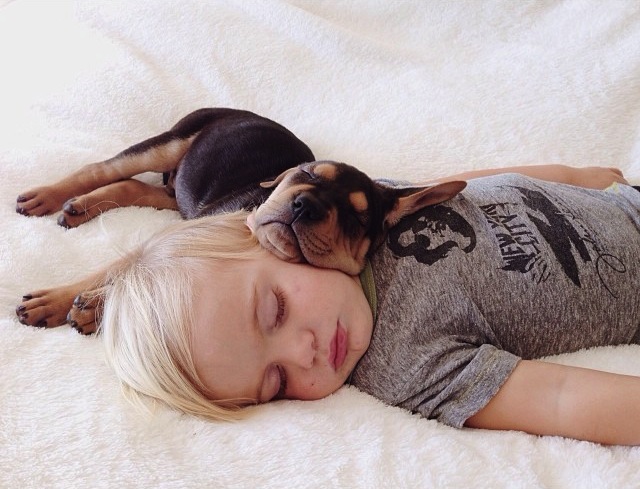
Naptime is usually a negotiation. Blankets get kicked off, stuffed animals migrate to the floor, and a toddler’s breathing finally slows only after one more story. In late 2013, Santa Cruz mother and photographer Jessica Shyba discovered that the quietest version of that ritual involved a second body in the bed: a newly adopted puppy named Theo, who treated her toddler son Beau’s naps as a standing invitation.
The pictures she posted under the handle mommasgonecity—soft light, tangled limbs, a small boy and a smaller dog sharing the same pillow geography—traveled far beyond her family blog. They feel less like a staged “cute animals” campaign and more like a diary of trust. This gallery feature lingers with that naptime bond: how it began, why the photographs work, and what they still say about friendship before either friend can explain it in words.
A shelter puppy and a toddler who already knew how to share a lap
Shyba has described meeting Theo at the Santa Cruz SPCA as a family decision with an instant spark. The puppy—later identified in coverage as a mix with shepherd and labrador lineage, once tagged with a shelter nickname—was shy with adults yet bounded toward Beau. That first contact mattered. Adoption stories often lean on destiny language; here the evidence is simpler. A child offered warmth. A dog accepted it. The household rearranged around both.
Beau was roughly twenty-three months old when the nap routine settled. Theo was still a young puppy measured in weeks. Scale is part of the tenderness: neither figure is fully grown into the roles adults assign them. Beau is not yet a “big kid.” Theo is not yet a composed family dog. They meet in a middle zone of learning—how to sleep, how to be gentle, how to claim space without pushing the other away.
Shyba’s method was practical rather than cinematic. After Beau drifted off, she brought Theo into the room. The puppy, she said, would plop onto Beau and stay for hours. Photographing that arrangement did not require props or studio lighting. It required noticing. The camera recorded what the household already practiced: two young animals—one human, one canine—finding the same quiet.
Why naptime photographs hit harder than playtime ones
Play photos shout. Nap photos whisper. In a feed crowded with jump cuts and bright toys, images of sleep ask viewers to slow down. Closed eyes remove performance. You cannot coach a convincing fake nap from a toddler and a puppy at once; the stillness has to be earned. That authenticity is why these frames travel. People recognize the rarity of two restless beings agreeing to rest together.
Compositionally, the pictures favor intimacy over spectacle. Faces nest close. Hands and paws occupy the same rectangle. Soft bedding becomes a landscape of folds. Light tends to be indoor and forgiving—window glow, lamp warmth, the muted palette of a child’s room. Nothing competes with the relationship. When a photo series succeeds on cuteness alone, it fades quickly. When it succeeds on proximity and trust, it lingers.
There is also a gentle comedy of logistics. Puppies seek contact because littermates once piled together for heat. Toddlers seek contact because caregivers are their first climate. Put those instincts in one crib-sized world and you get accidental choreography: a muzzle on a shoulder, a cheek on a flank, a shared exhale. Shyba did not invent that choreography. She framed it.
Family photography without turning children into products
Parents who shoot their kids online walk a thin line. Attention can become pressure; affection can harden into content strategy. The Theo and Beau pictures stayed persuasive because they looked like leftovers from real life rather than a brand kit. Clothes are ordinary. Rooms look lived in. The dog is not groomed into a show-ring silhouette. The boy is allowed to be messy with sleep—hair flattened, mouth soft, body abandoned to gravity.
That approach teaches a useful lesson for anyone photographing family animals. Chase the recurring ritual, not the perfect outfit. Shoot when everyone is too tired to perform. Prefer natural light. Keep editing mild. If a dog and a child already share a habit—doorway greetings, couch Sundays, post-bath towel forts—document that habit across days instead of inventing a one-off scene. Series beat stunts.
Shyba’s wider household context also matters without needing to invent private details. She was a mother of young children balancing ordinary chaos with a camera phone and a blogger’s impulse to keep a record. The nap pictures became public; the caregiving behind them remained private work. Readers who only see the viral frame still sense the labor underneath: someone had to settle the toddler, admit the puppy, wait, and click without waking either.
What the images teach about early friendship
Adults narrate friendship with language—loyalty, kindness, boundaries. Toddlers and puppies rehearse those ideas physically. Beau cannot lecture Theo about gentle mouths. Theo cannot explain attachment theory. They practice instead: leaning, matching breath, tolerating a stray elbow, returning to the same warm spot. Photography freezes the syllabus.
Viewers often project a story onto the pair—best friends forever, soulmates in miniature. Projection is fine as long as it stays soft. The more grounded reading is developmental. A toddler learns that another creature can be safe nearby. A puppy learns that a human child can be a source of calm rather than only of yanking and noise. Both lessons are fragile and worth protecting. The camera’s job is witness, not mythmaking.
Scale contrasts deepen the emotion without sentimentality. A human hand looks large against a puppy ear; a puppy spine looks small against a toddler torso. Those comparisons remind adults how temporary this chapter is. Beau will grow. Theo will grow. The perfect overlap of sizes will pass. Catching it on a quiet afternoon is the whole point of family photography.
Looking at the picture with care
Spend a moment with the frame above before scrolling past. Notice where weight settles—who is pillow, who is passenger. Notice whether the dog’s body curves protectively or sprawls with puppy abandon. Notice the child’s face: not a posed smile, but the unguarded architecture of sleep. Those details are the essay. Captions can only underline them.
If you keep animals and small children in the same home, safety remains the quiet companion to cuteness. Supervision matters. Soft bedding, open airways, and respectful handling are not mood killers; they are how tender scenes stay possible. The loveliest nap photo is still a document of a monitored moment, not a permission slip to leave infants and pets unsupervised.
For photographers, a short practice list helps more than gear upgrades:
- Wait for genuine stillness instead of forcing eye contact.
- Use a quiet shutter habit and soft footsteps.
- Shoot slightly wider at first, then crop for intimacy if needed.
- Return on multiple days so one lucky frame becomes a true series.
- Stop when either subject wakes unsettled—trust outranks the shot.
Online culture in the early 2010s rewarded exactly this kind of domestic wonder. Hashtags gathered strangers around Beau and Theo as if the pair were public mascots of gentleness. The healthier takeaway is smaller. Somewhere in an ordinary room, a child and a dog negotiated a truce with the afternoon. A mother noticed. The rest of us borrowed a little of that quiet.
Look once more at the shared pillow. The story does not need a speech about innocence. It already has a plot: two young sleepers, one household, and a camera patient enough to wait until both agreed that rest could be communal. Jessica Shyba’s gift was recognizing that agreement as worthy of keeping. Beau and Theo supplied the rest—warmth, trust, and the kind of nap that makes a whole room softer.

Comments
Continue reading
Dramatic Photo Art by Sukron Ma’mun (Ipoenk Graphic)
Cirebon, Indonesia photographer Sukron Ma’mun uses theatrical natural light to frame village life, play, and place in lyrical photo art.
Bird’s-Eye Views: Florian Beaudenon’s Instant Life
Paris photographer Florian Beaudenon’s Instant Life series captures people in their rooms from above—intimate, collaborative overhead portraits of everyday joy.
Abandoned Cars Reclaimed by Nature: Rust, Growth, and Quiet Ruin
When neglected vehicles are left outdoors long enough, rust, moss, and trees rewrite them into strange still lifes—sad, photogenic, and slowly returning to the ground.