
Little Girl, Stylish Paper Dresses: Fashion by Mayhem with Angie Keiser
Angie Keiser and her daughter Mayhem build runway-worthy gowns from construction paper, tissue, and tape—Fashion by Mayhem’s handmade couture in photographs.
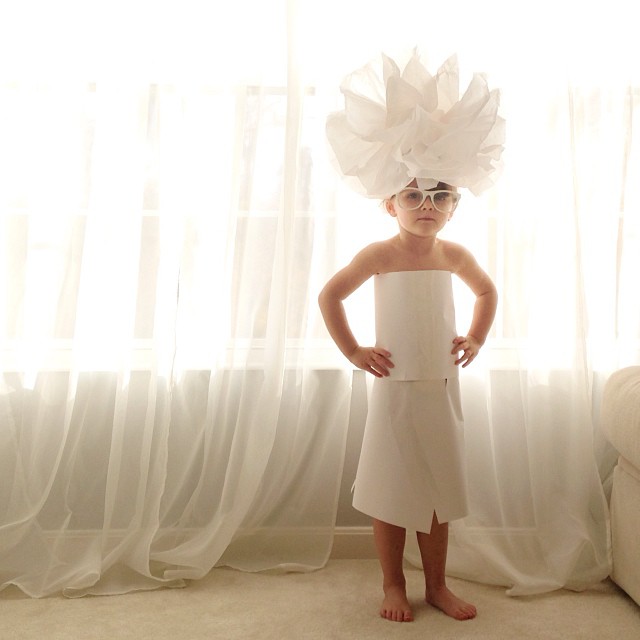
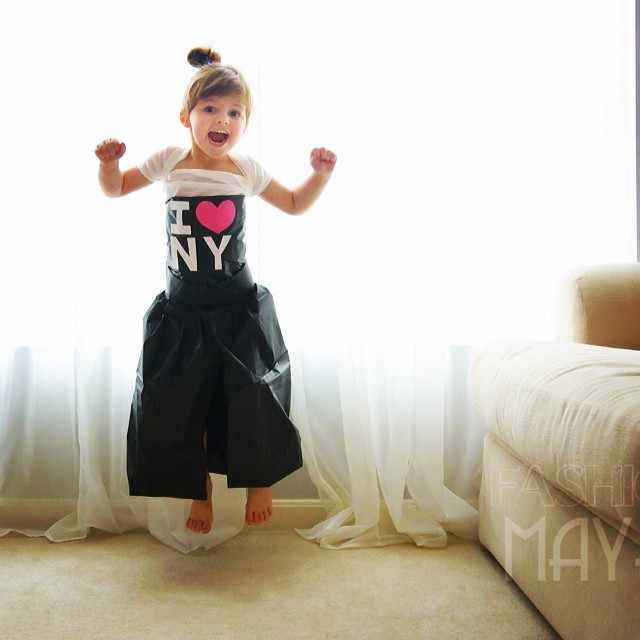
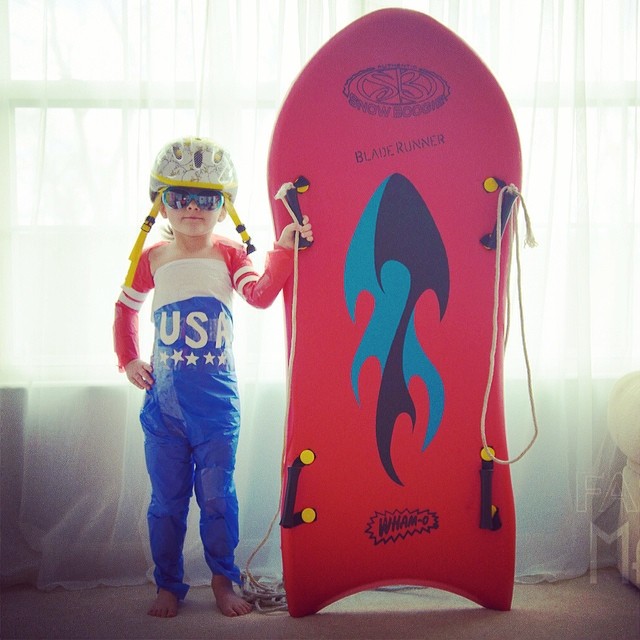
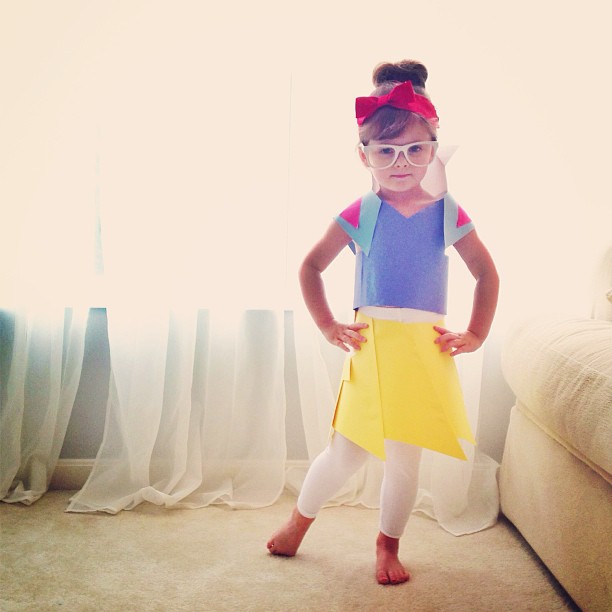
Some of the most ambitious fashion experiments of the early 2010s never touched a sewing machine. In Cincinnati, photographer Angie Keiser and her young daughter—known online as Mayhem—began building elaborate gowns from construction paper, tissue, wrapping paper, gift bags, tape, and whatever pliable scraps the house already held. The project followers came to call Fashion by Mayhem turned a living-room craft table into a runway, and a four-year-old into the confident model of her own designs.
This page collects that mother-and-daughter paper couture: stylish silhouettes, bold color blocking, and the slightly miraculous look of haute structure made from materials that usually wrap birthday presents. The dresses are temporary. The photographs keep them permanent. What follows is less a shopping guide than a look at how constraint, collaboration, and a camera can invent a wardrobe out of the recycling bin.
From dress-up box to paper atelier
Angie Keiser has told the origin story with affection and a hint of parental self-defense. Mayhem loved fashion early—scarves, sheets, and borrowed clothes vanished into imaginative outfits until Angie suggested they make a dress from paper instead of raiding the closet. One gown led to another the next day, then another. Within months the habit had become a practice: design, build, photograph, share. The feed shifted from ordinary childhood snapshots toward a recognizable series of looks, each one a small event in the household calendar.
Ideas were shared roughly evenly, but Mayhem’s construction skills surprised viewers who assumed an adult did all the hard parts. Angie noted that her daughter could estimate how many sheets a skirt needed, cut pieces, and tape complex forms with real independence. That collaboration is visible in the finished looks. The silhouettes feel playful and child-led, yet the proportions and finishes show a photographer’s eye for line, color, and how fabric—even paper fabric—reads on a body under light.
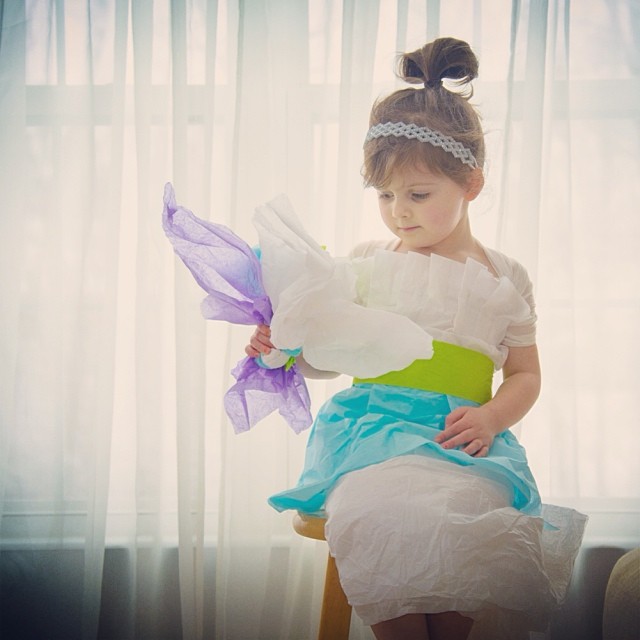
Materials stayed humble on purpose. The pair made a household rule: build from supplies already on hand, with exceptions mainly for tape and glue. Construction paper provided structure and color. Tissue and wrapping paper added drape and pattern. Gift bags became bodices or panels. Clear packing tape held seams that would never survive a washing machine—and did not need to. The constraint forced invention. Limited stock meant each dress solved a new problem with what the cupboard offered that week, which is why the gallery never looks like a single factory style repeated in different hues.
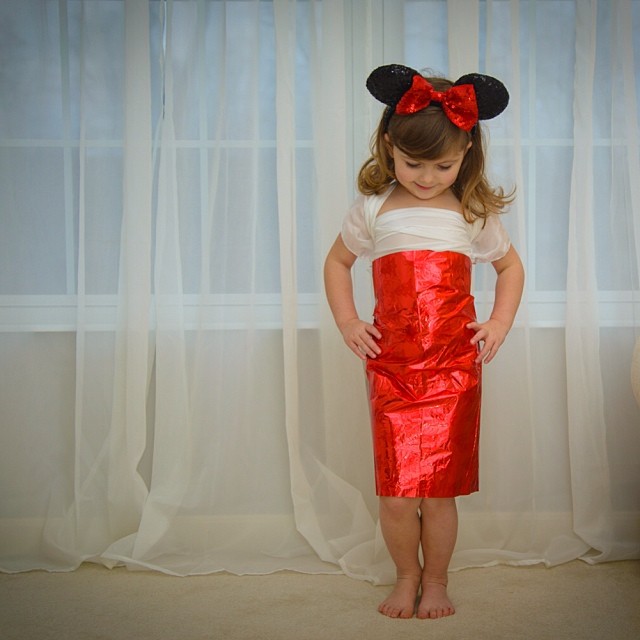
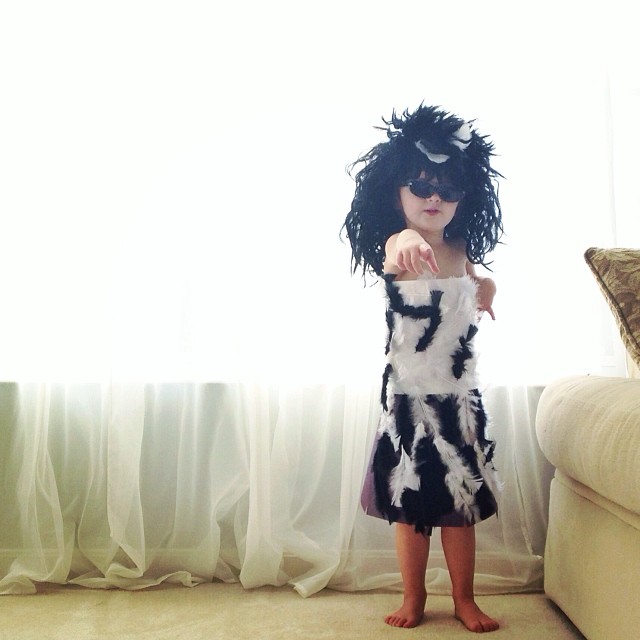
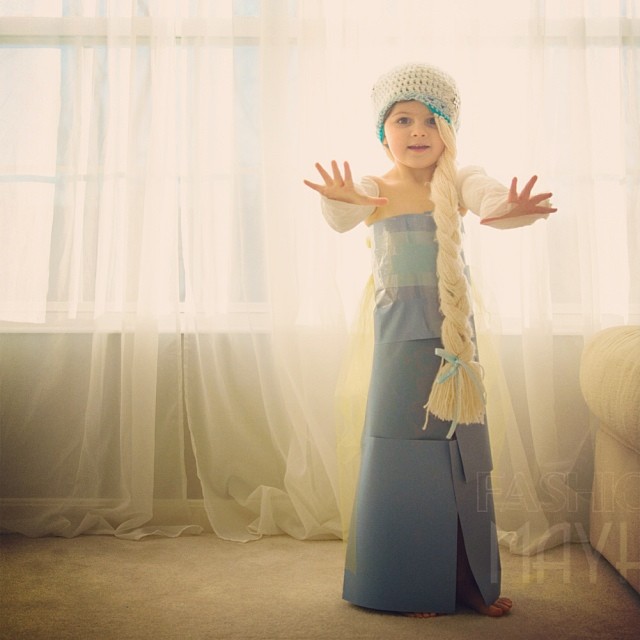
Why paper works as “fabric”
Paper is stiff until you learn its tricks. Layering softens a silhouette. Accordion folds create volume. Fringed edges suggest fringe. Tissue bunched and taped can mimic tulle’s cloud without the cost. Wrapping paper’s printed motifs become ready-made textiles—florals, geometrics, metallic sheen—that would take hours to paint by hand. Aluminum foil and tulle occasionally joined the mix when the house offered them. The craft is part engineering, part collage, part costume shop improvisation.
Because paper tears and creases, the photographs matter as much as the garments. Angie’s professional camera sense turns a fragile costume into a fashion editorial: clean backgrounds, flattering light, poses that show skirt swing and neckline detail. Viewers who never see the tape seams still feel the ambition of the cut. That is the dual craft of Fashion by Mayhem—make something ephemeral, then shoot it as if it belongs on a magazine page. Without the photograph, the dress is a rainy-day project. With it, the dress enters a public conversation about creativity and childhood agency.
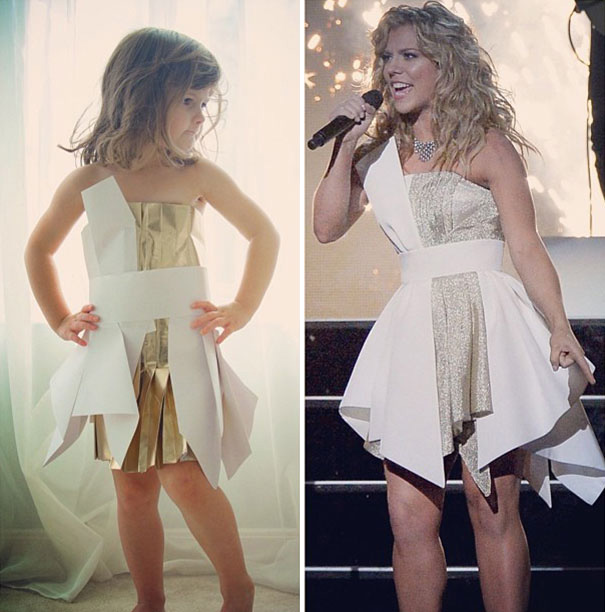
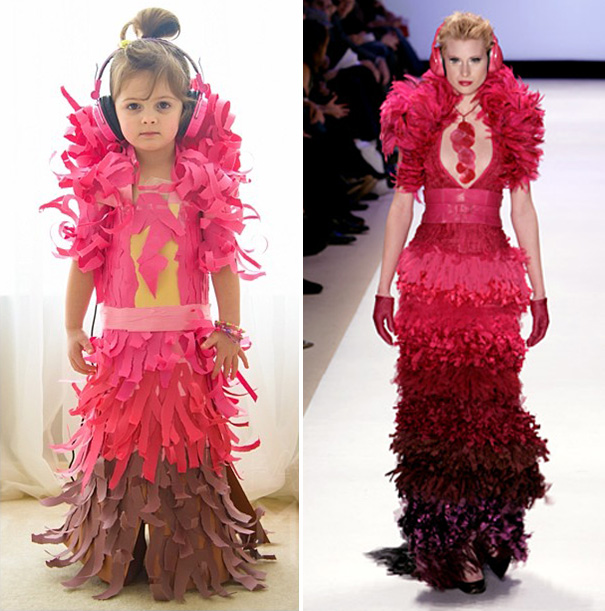
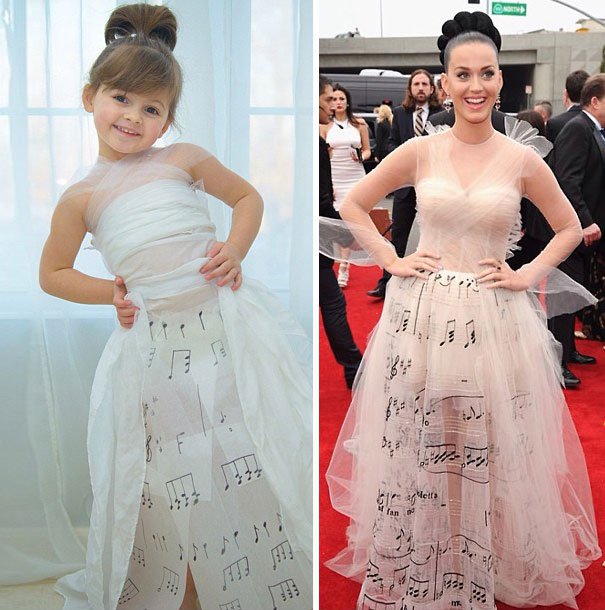
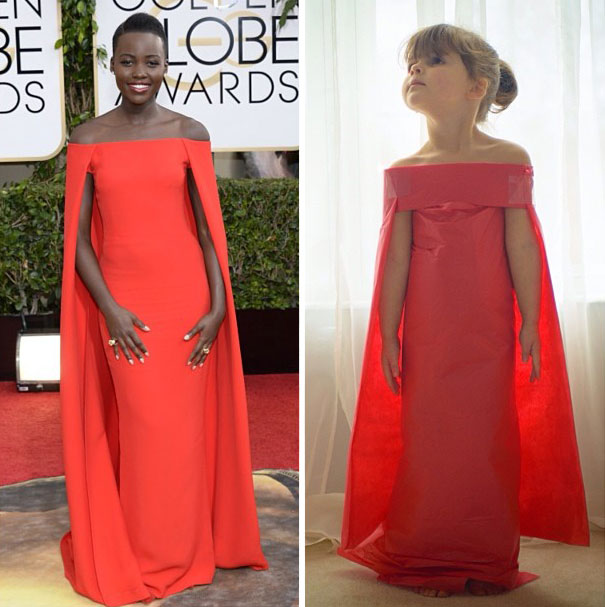
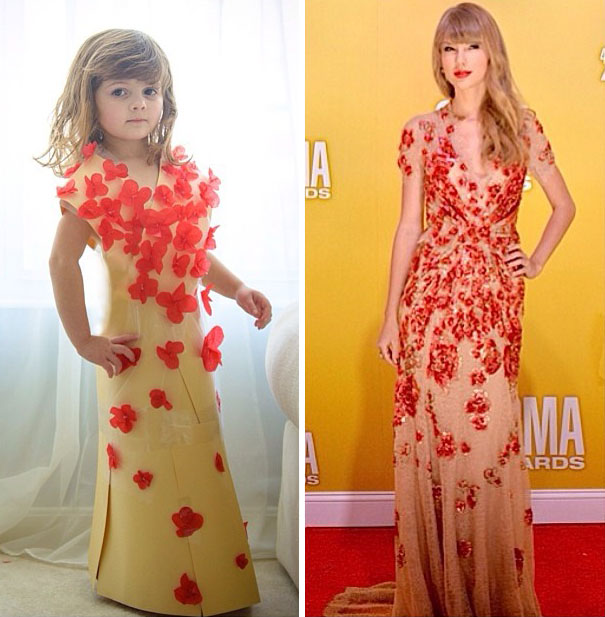
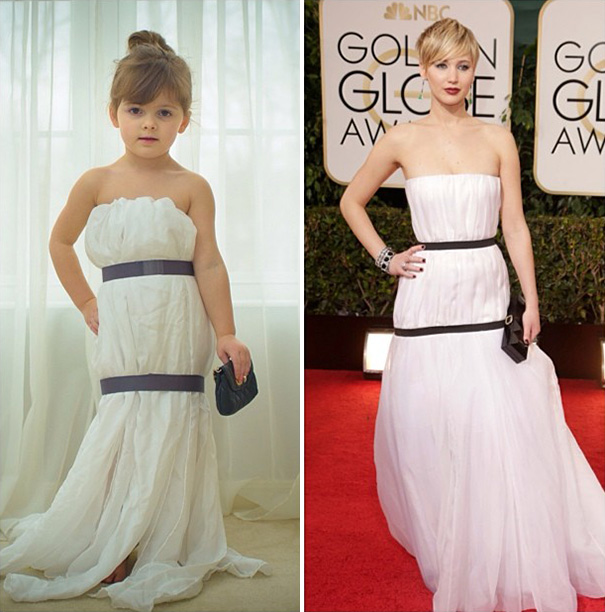
Red-carpet inspiration was part of the fun. Mother and daughter studied glamorous gowns and translated them into paper approximations: trains, peplums, color-blocked bodices, dramatic sleeves. The results were never exact copies, and that was the point. Translation taught looking. Mayhem learned how a waistline sits, how a skirt needs width to move, how color contrast makes a silhouette pop from across a room—or across a phone screen. Fashion literacy arrived through scissors rather than through a mall rack.
A small runway with a big audience
Shared on Instagram under Angie’s account @2sisters_angie, the dresses found an audience hungry for creativity that felt handmade and joyful. Parents saw a model for collaborative making. Design fans saw inventive use of cheap materials. Kids saw permission: you do not need a store costume to look spectacular. The hashtag and later Fashion by Mayhem site helped gather the looks into a recognizable body of work with a tone that stayed warm rather than precious.
Around early 2014—the period this gallery reflects—coverage in parenting and culture outlets amplified the project. Viewers debated how much a preschooler could build alone; Angie’s answers stayed grounded: Mayhem did more than skeptics expected, and the photographs celebrated process as much as polish. Later collaborations, including high-profile paper recreations of iconic Met Gala looks with Vogue, grew from the same mother-daughter studio. Those later moments belong to the project’s afterlife; the images here show the daily practice that made the afterlife possible—ordinary afternoons, extraordinary patience, and a child who asked for one more dress.
What lasts is not virality. It is the record of attention. Hours of cutting and taping teach patience. Posing teaches confidence. Looking at fashion together teaches visual literacy. A paper dress falls apart; a shared afternoon does not. In that sense Fashion by Mayhem is parenting documentation as much as it is craft entertainment.
How to read the looks—and try a version at home
Browse the gallery like a fashion editor on a budget. Ask where volume comes from—layered skirts, flared hems, stacked tissue. Track color stories: monochrome drama versus candy contrast. Spot red-carpet echoes without needing the celebrity name attached. Notice how often Mayhem’s posture sells the dress: chin up, hand on hip, a slight turn that shows skirt architecture. The model is part of the design system.
Also notice seams and edges. Tape lines are part of the aesthetic, not failures. They remind you the garment is a sculpture you can wear for an hour. That honesty is refreshing in a culture of seamless digital fashion. These dresses confess their making, and the confession is charming rather than careless.
For families who want to try a version at home, start smaller than a ball gown. A paper vest, a cape, or a simple A-line skirt teaches the same skills: measure with eyes, cut generously, reinforce stress points, photograph before the first tear. Keep scissors supervised. Celebrate the process more than perfection. Angie and Mayhem’s rule about using what you already own is still the best creative constraint on the list—it turns shopping into noticing, and noticing into design.
- Pick a silhouette: A-line, cape, peplum, or simple sheath.
- Choose a hero material: one strong color or print, then supporting sheets.
- Reinforce joins: tape on the inside where movement stresses seams.
- Photograph early: paper looks freshest before the third twirl.
- Save scraps: tomorrow’s bodice may be today’s leftover panels.
Mayhem’s paper wardrobe proves style is not only purchased. It can be cut, taped, worn once, and remembered forever in a photograph—especially when a mother and daughter decide the living room is runway enough, and the only ticket required is a free afternoon and a roll of clear tape.

Comments
Continue reading
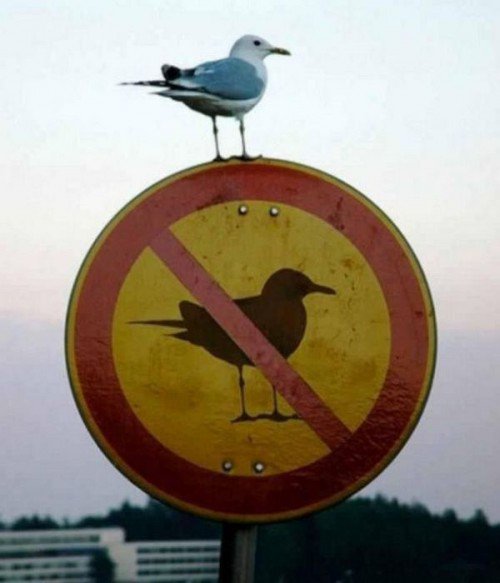
Funny Animal Signs That Warn People (While Animals Ignore Them)
From a seagull on a no-birds disc to classic zoo and park ironies—why animal warning signs get funny, and what the rules are still for.
How to Find Local Amenities on Vacation: Mechanics, Haircuts & More
Locate trustworthy local services and everyday spots while traveling or settling in—using publications, reviews, map apps, neighbor tips, and low-pressure exploration.
Kristen Stewart for V Magazine, Spring Preview 2013
V81’s Wild at Heart cover story—Kristen Stewart shot by Inez & Vinoodh, styled by Joe McKenna, in pale minimal spring glamour.