
Puddle Reflections: Winter Streets Doubled in Rainwater
After rain, shallow puddles become street-level mirrors—a #puddlegram gallery of winter and city reflections from photographers who shoot low and wait for still water.
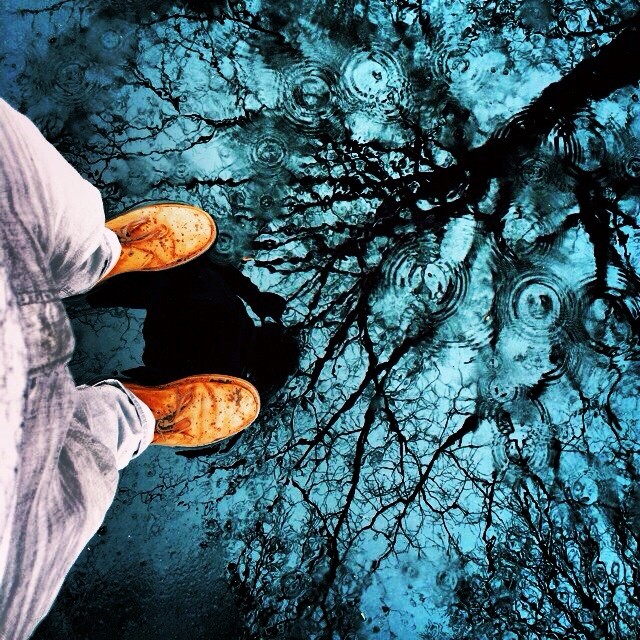
Rain turns ordinary pavement into a second sky. Photographers have always chased reflections in lakes and glass towers, but a shallow puddle after winter weather offers something more intimate: a portable mirror at shoe level. Lean over it and architecture folds into watercolor. Tip the camera a few degrees and a tower fits inside a palm-sized pool. In the early 2010s that small trick became a recognizable Instagram genre under tags such as #puddlegram, where city walkers and travel shooters shared frames that stacked a real scene above its inverted twin.
Winter sharpens the habit. Snow softens visual noise; cold rain leaves clean, dark water; low sun slides across façades and lights the mirror from a flattering angle. The puddle is not scenery by itself. It is a tool that rewards a low stance, still air, and the willingness to look slightly ridiculous while you crouch in the street. The gallery below gathers reflections from photographers who treated rainwater as a collaborator. Names are preserved as they circulated with these images; the pictures remain the point.
Why puddles work as a composition engine
A successful puddle photograph usually solves three problems at once. Surface quality comes first: still water gives a readable mirror, while ripples can help or ruin depending on whether you want abstraction. Subject choice comes next: a strong vertical—tower, tree, neon sign, person—gives the reflection something worth repeating. Frame balance finishes the job. Decide how much “real” world versus “mirrored” world belongs in the rectangle. A strict fifty-fifty split can feel diagrammatic; a thin strip of sky above a deep reflection can feel cinematic.
Phone cameras of that era already handled the genre well enough when contrast was manageable—overcast brightness, blue hour, or soft morning. Dynamic range limits actually helped discipline. Instead of fighting noon glare, shooters waited for kinder light. Looking mattered more than gear, which is why the motif spread so quickly among casual Instagrammers and dedicated street photographers alike.
David Ephraim Beck
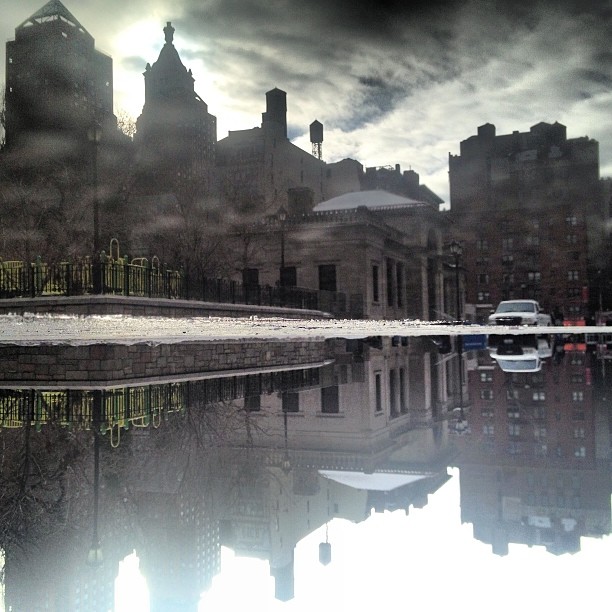
Beck’s contribution shows how a puddle can turn a familiar urban slice into something momentarily unreal. The reflection does not merely copy; it compresses and softens, so hard edges become graphic shapes. That softness is useful in winter cities where gray weather can otherwise flatten a scene into uniform gloom.
Get low or go home
Most puddlegrams fail because the photographer stands too high. From standing height you mostly get foreshortened asphalt and a messy oval of water. Drop to knee height—or lower—and the mirror expands. Suddenly distant verticals fit inside a temporary sea. The camera becomes a periscope aimed at a miniature world that will vanish when a bus wakes the surface.
Safety and etiquette travel with the technique. Crouching at a curb means watching traffic. Blocking a sidewalk for ten minutes of perfect stillness is a different hobby than stealing one careful frame between pedestrians. The best images in this tradition feel snatched from a pause the city briefly allowed.
Haekal Ryan
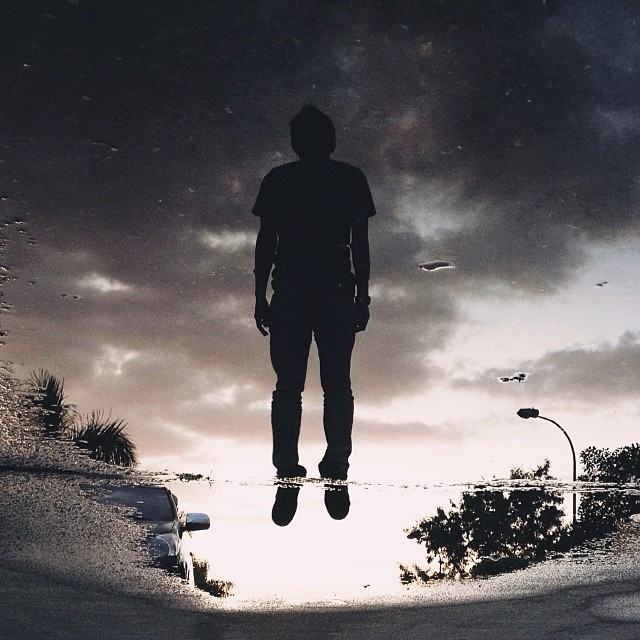
Irie
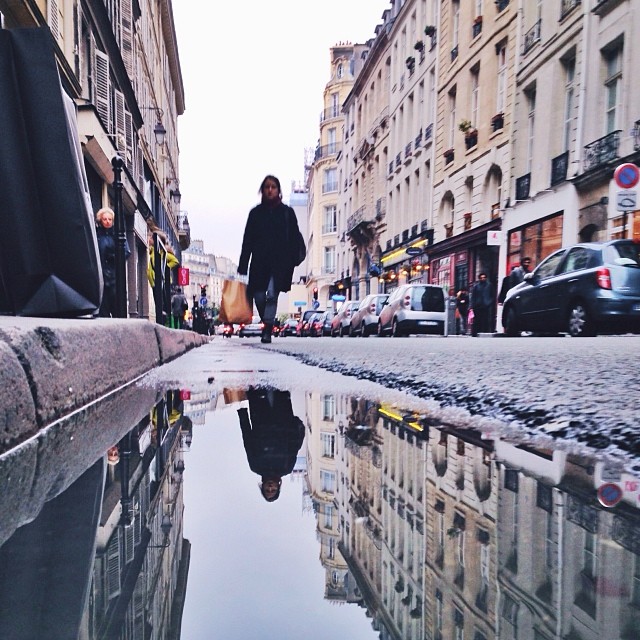
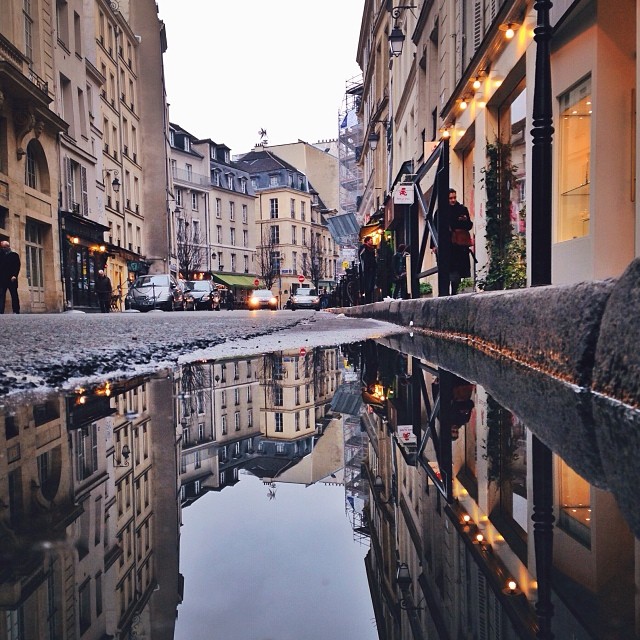
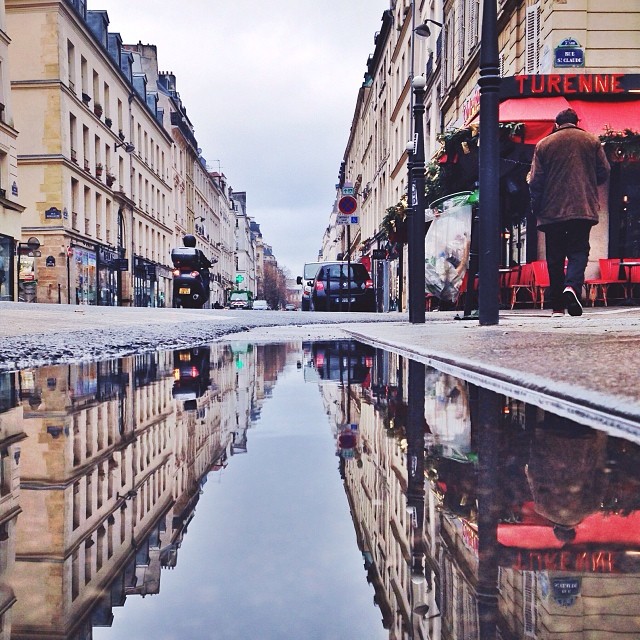
Irie’s sequence is a reminder that one photographer can treat the puddle as a series, not a one-off trick. Repeating the motif trains the eye: you start noticing which sidewalks hold water after rain, which corners catch neon, which hours give color without glare. Series thinking turns luck into a route.
Travel eyes on wet ground
Travel photographers adopted puddle reflections because they solve a classic problem: how to make a famous skyline feel personal. Everyone has the postcard angle. Fewer people have the version that lives only while a rain pocket lasts. The image becomes a timestamp of weather as much as place—proof you were there when the street briefly cooperated.
Paeders
James Roach
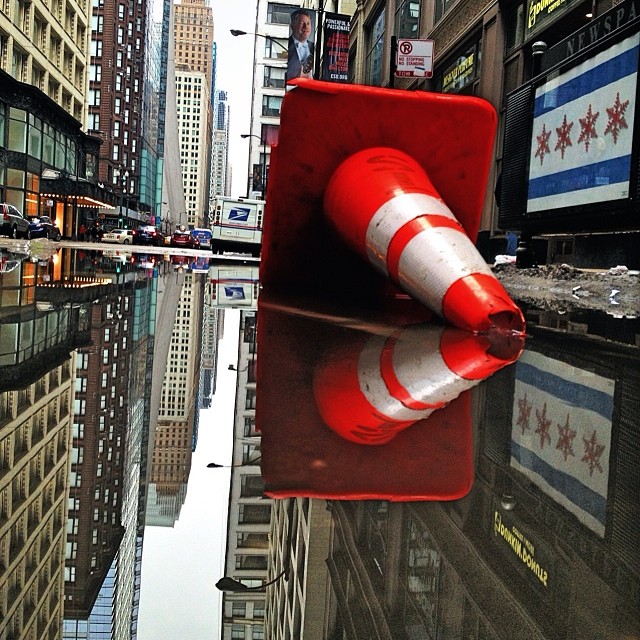
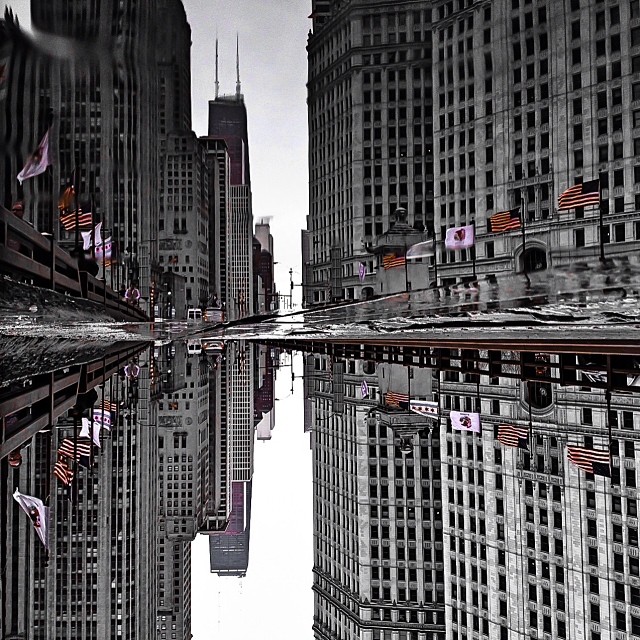
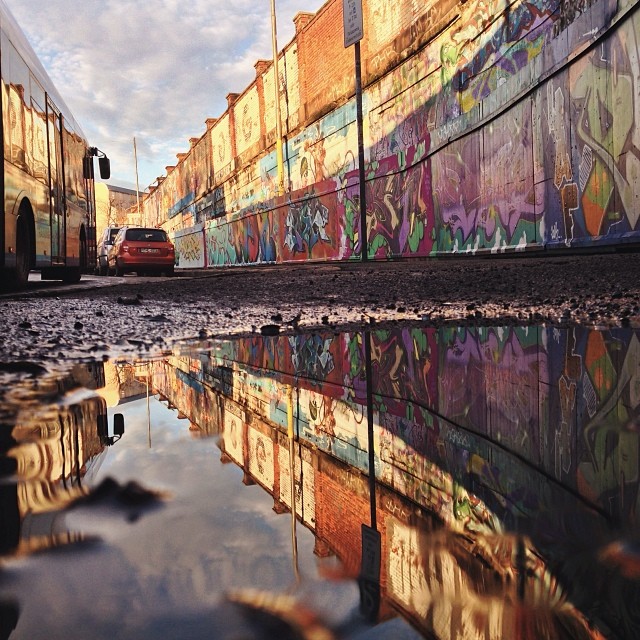
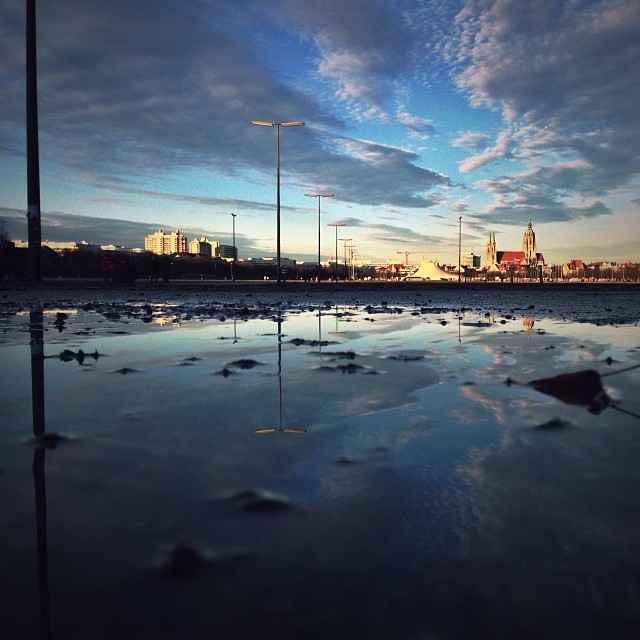
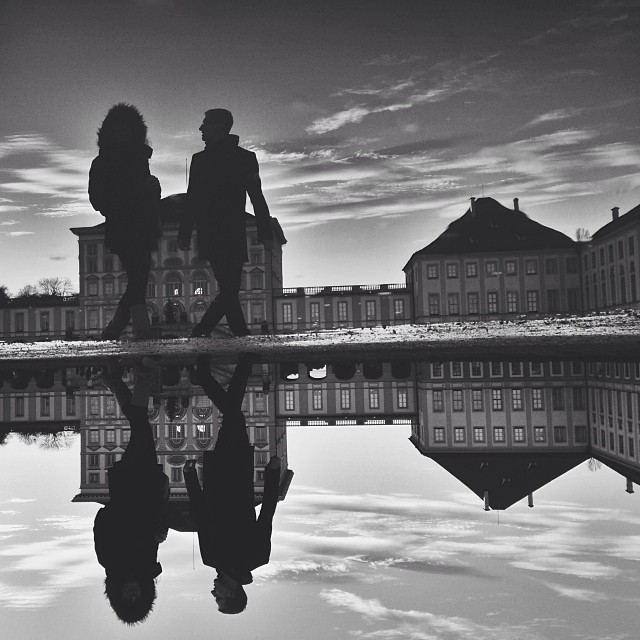
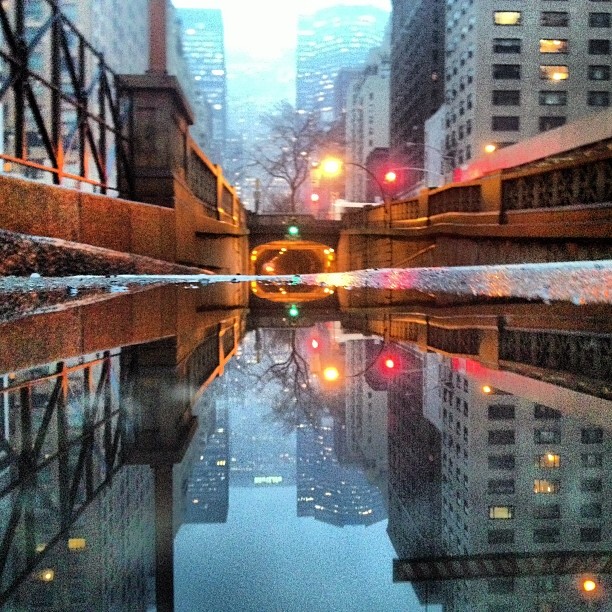
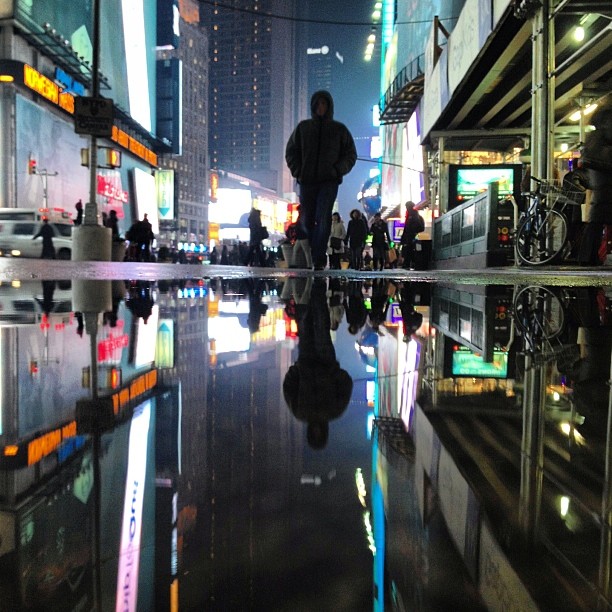
Roach’s frames show how color weather matters. Warm lamps against cool blue dusk make the reflection feel thicker, almost liquid neon. In winter that contrast appears often: early darkness, shop lights, wet asphalt. The puddle becomes a second exposure of the city’s night shift, a reminder that “golden hour” is not the only flattering clock.
Melissa
The Wild Traveller
Dense cities as puddle laboratories
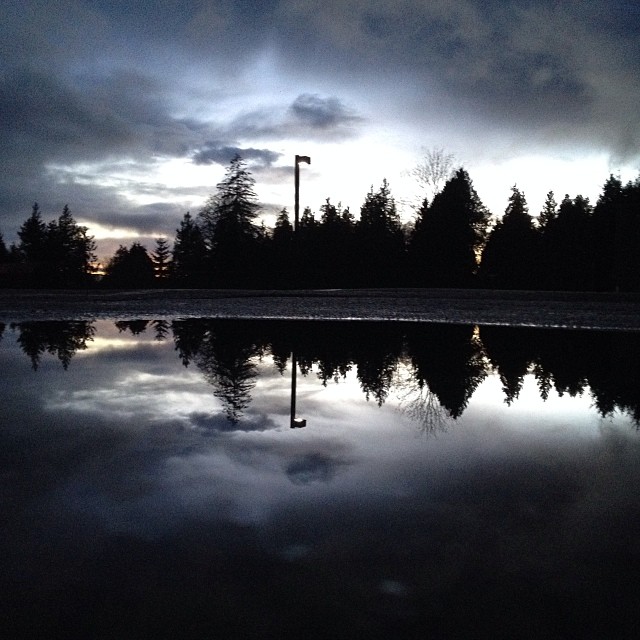
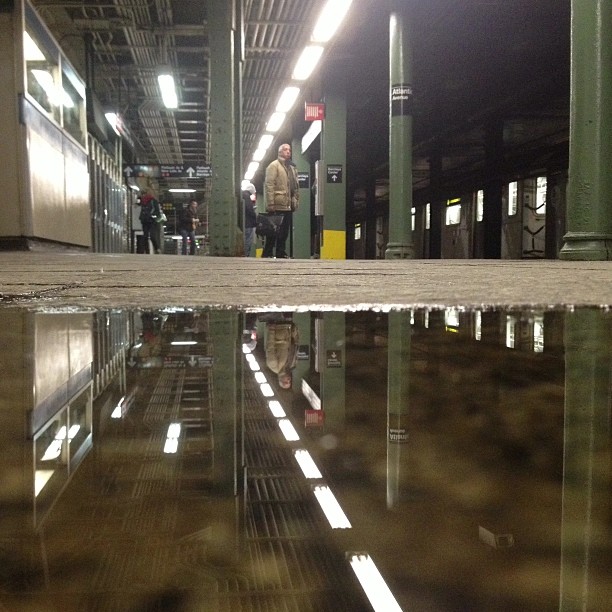
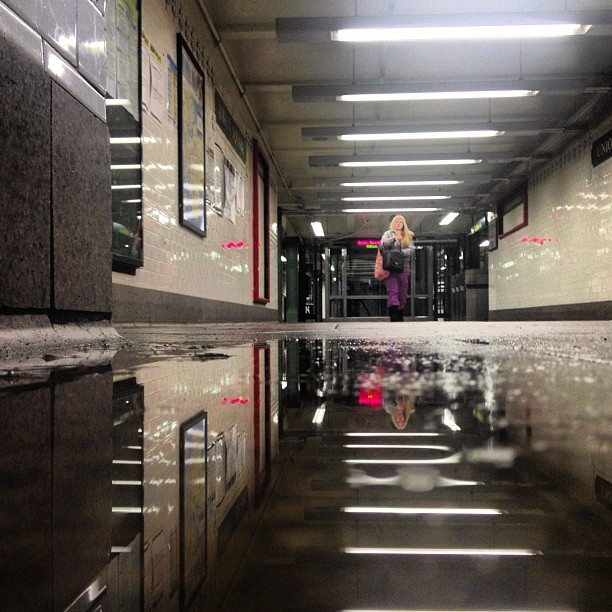
Dense cities are laboratories for the genre. More glass, more lights, more vertical subjects—and more chance someone walks through your mirror mid-shot. That risk is part of the craft. Wait for a gap in foot traffic, or accept a silhouette that adds scale. Either choice can work if it is intentional rather than accidental blur.
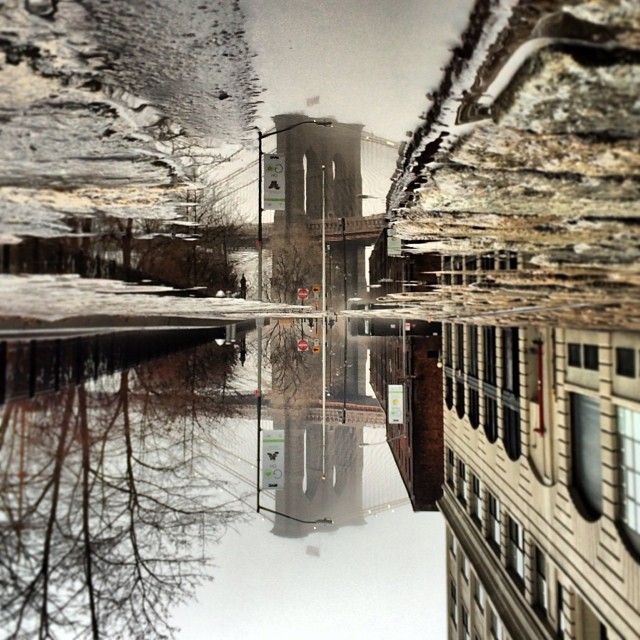
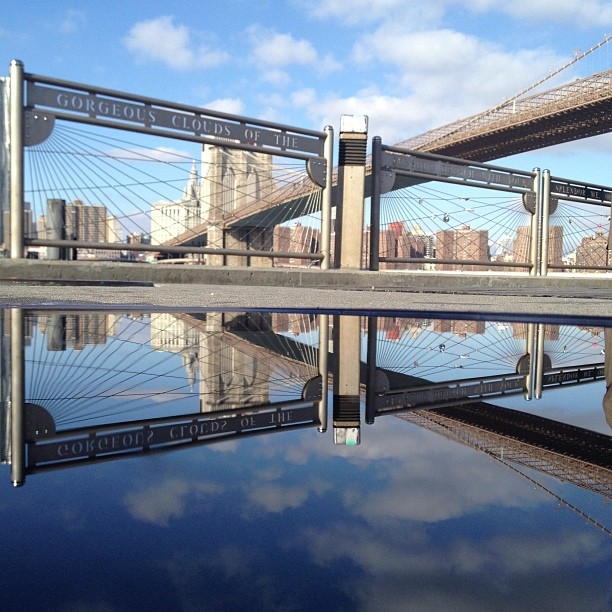
A classic puddlegram move flips orientation so the reflection becomes the “upright” world. Viewers lose gravity for a second, then recover it with delight. Used once, the inversion is a punchline. Used across a body of work, it becomes a way of asking which version of the street feels more true on a wet night.
Vantagepointnyc
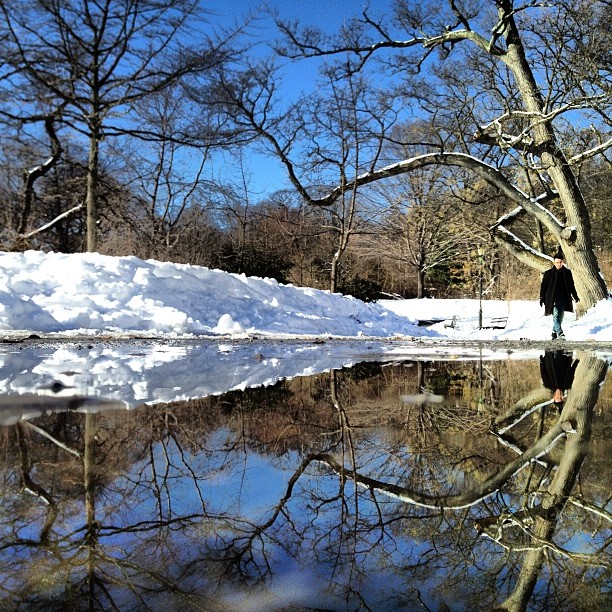
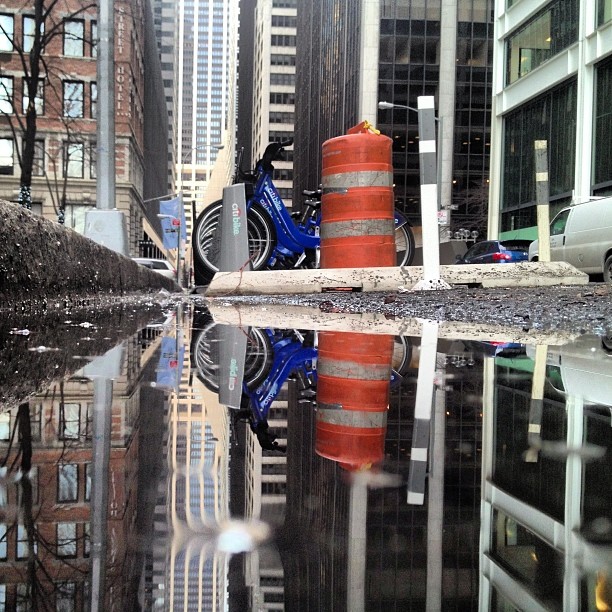
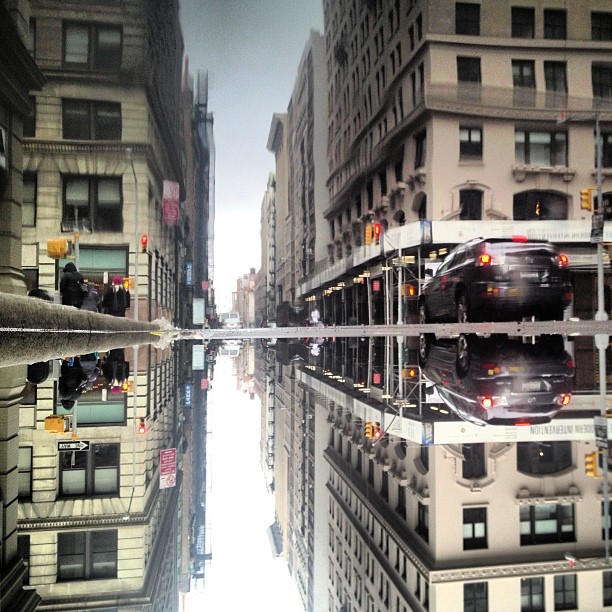
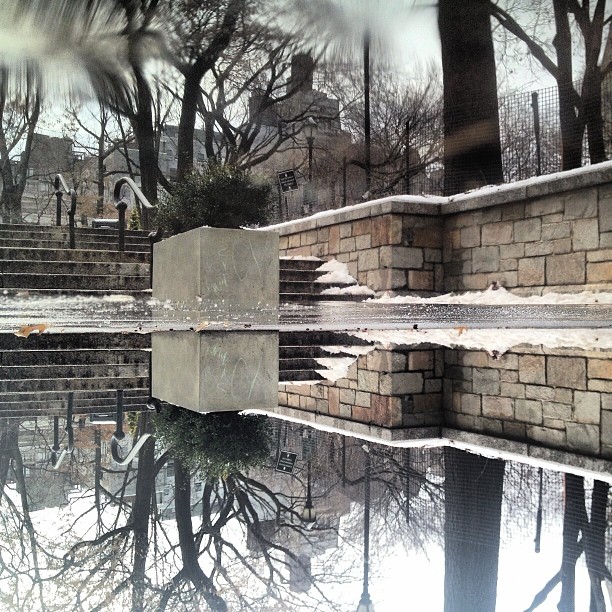
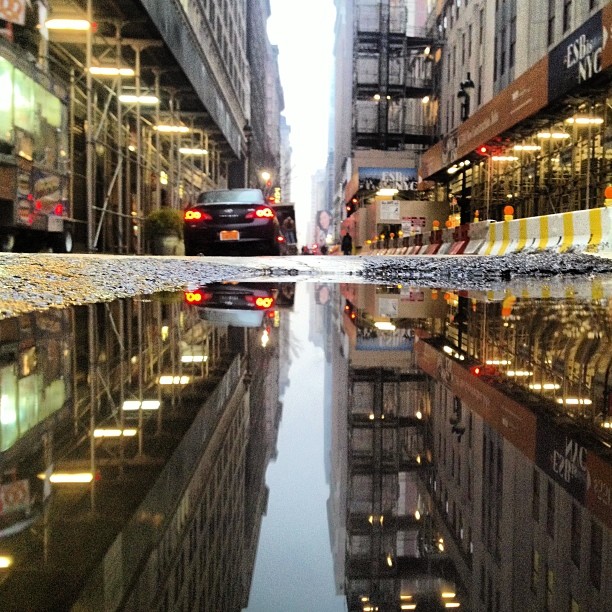
A longer run from one account teaches more than a single viral shot. You see which angles get revisited, how weather changes the same block, and when the photographer decides the mirror is stronger than the façade above it. Repetition is not redundancy here; it is fieldwork.
vtechvisual
Joe Della Vedova
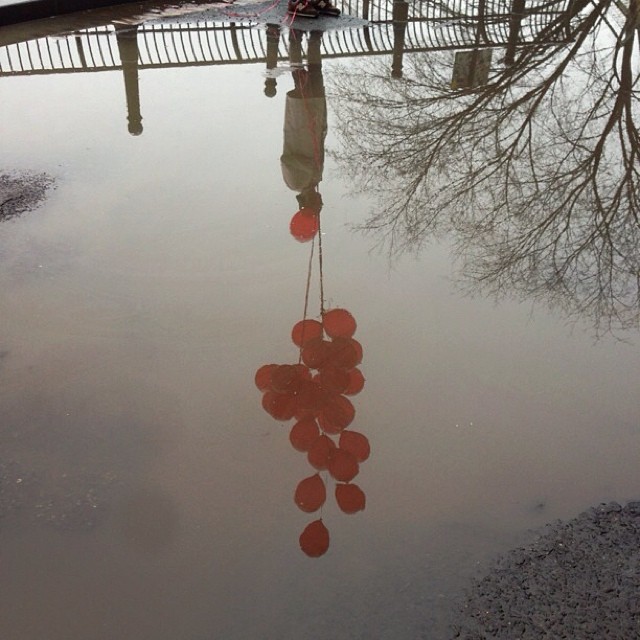
Christopher Ferris and Sébastien Pélegrin also belonged to the same conversation around these posts—walkers who treated rain as a cue to look down as often as up. Social platforms made the motif contagious; the craft underneath is older than any hashtag. Mirrors in the street have always been available to anyone willing to kneel.
Field checklist for the next wet day
- Find still water with a clean edge—avoid oily sheen unless you want abstraction on purpose.
- Get low until the reflection claims most of the frame.
- Anchor the composition with one strong vertical subject.
- Watch for wind and footsteps; wait five seconds longer than feels comfortable.
- Shoot a version with the reflection upright and another with the real world upright; keep the stronger story.
- Leave before the light dies or the courtesy of passersby runs out.
Puddle photography is humble equipment work with a high curiosity requirement. The images in this set succeed when the mirror feels discovered, not decorated—when winter rain briefly hands the street a second sky, and someone is ready enough to catch it before tires rewrite the surface.

Comments
Continue reading

A Cup of Coffee for Winter: Cozy Mugs, Spices, and Slow Gatherings
Vanilla, caramel, cinnamon, knit socks, and candlelight—a photo essay on winter coffee, friend gatherings, and the small heat that makes cold days bearable.
15 Winter Landscape Photos: Alpine Light, Snow, and Mountain Craft
Fifteen Alpine winter landscape frames—plus practical notes on cold light, snow exposure, storm weather, and field craft for mountain photography.
Frosty Winter Cityscapes From Quebec to Kyoto
Snow remakes streets and skylines—winter city photographs from Quebec, Reykjavik, New York, Amsterdam, Paris, and more, plus how to look at cold urban light.