
Imaginative Fine Art Photography by Trini Schultz
California-based Trini Schultz blends painting instincts with digital composite craft, building painterly surreal photographs where nature, fabric, and dream logic share the frame.
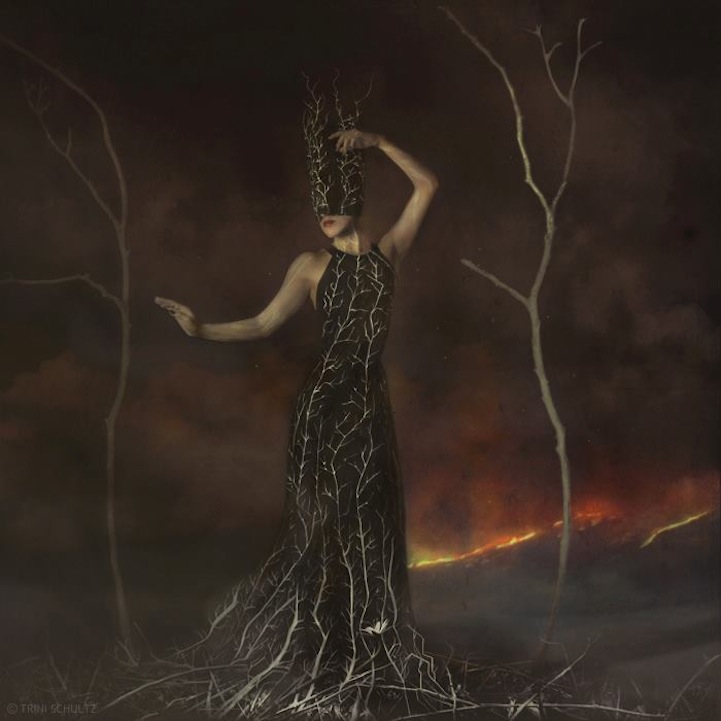
Trini Schultz builds photographs that behave like remembered paintings. Soft atmosphere, dream logic, and carefully staged figures settle into frames that feel less like documents of a moment and more like scenes retrieved from sleep. Based in California and born in Peru, she works as a self-taught fine art photographer whose practice grew out of drawing, painting, and a childhood spent watching her grandfather paint. The camera arrived later; the painter’s eye never left.
Her imaginative fine art photography sits at the intersection of traditional image-making and digital composition. Adobe Photoshop is not a secret seasoning sprinkled at the end. For surreal and painterly work, editing is structural: skies expand, fabrics transform, nature and the human form trade attributes, and color becomes narrative weather. The result is a body of images that read as series rather than one-off tricks—coherent moods returning across different setups.
From grandfather’s studio to the first camera
Schultz has described growing up with an appreciation for art sparked by her grandfather’s painting. Family encouragement pushed drawing and painting early. Photography intrigued her, but the decisive object was a Pentax K1000 given by her father when she was sixteen. Commercial art study in college included black-and-white photography and film development—grounding that still shows in how she thinks about tonal range and hand-finished feeling, even when the workflow is digital.
After her second child was born, she ran a photography business making black-and-white prints in a home-built darkroom and hand-coloring them. Hand coloring is a useful clue to her later digital style: she was already treating the photograph as a surface that could accept further emotional decisions after the shutter clicked. When film materials became harder to source and digital tools matured, she shifted without abandoning that impulse. Her husband taught her Photoshop basics; she taught herself the rest. The hybrid look follows naturally—darkroom patience and painterly longing inside a contemporary composite toolkit.
What “painterly” means in her frames
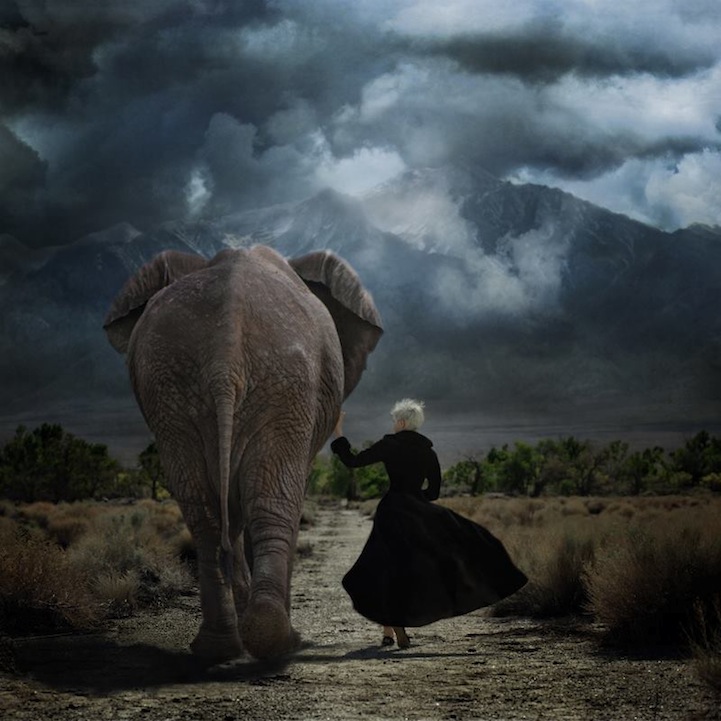
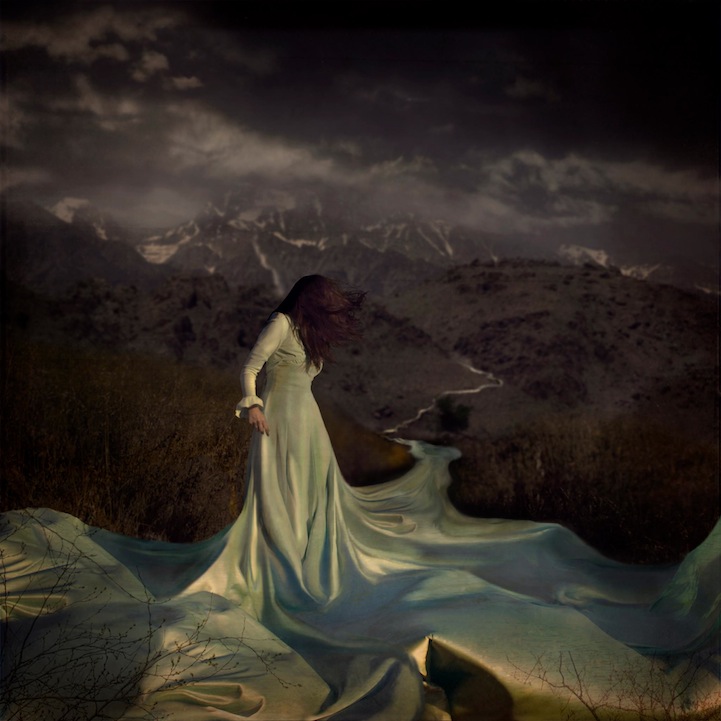
Call a photograph painterly and you risk vague praise. In Schultz’s case the word points to concrete choices. Light softens into gradients more common in studio painting than in hard flash reportage. Edges sometimes dissolve. Color can feel glazed rather than merely corrected. Figures occupy space the way subjects occupy a canvas—arranged for symbolic weight, not only for likeness. A dress may behave like smoke or water; a landscape may feel closer to a stage flat than to a travel postcard.
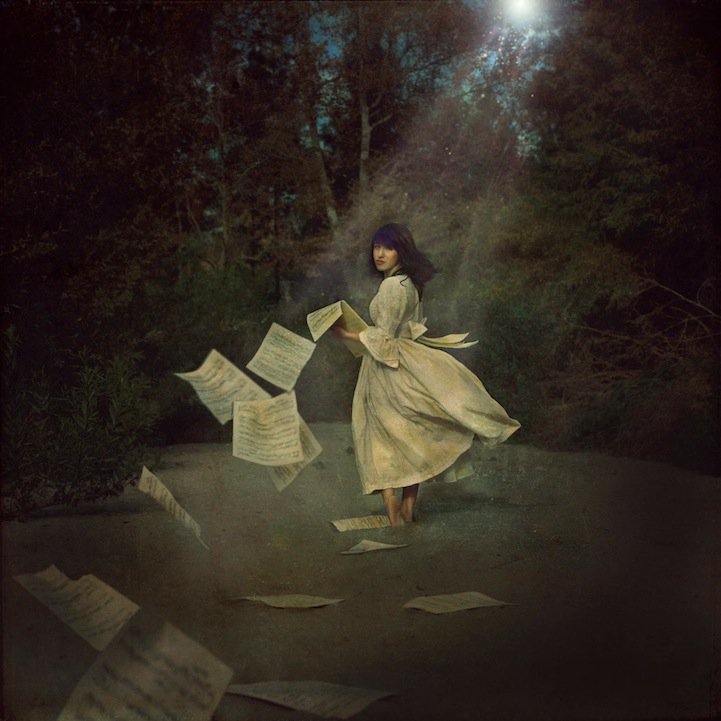
She has said she loves the style of old master paintings and learned from her grandfather’s art books without needing a single favorite painter. That broad appetite shows up as atmosphere rather than pastiche. You rarely feel she is copying a specific canvas; you feel she wants photography to hold the emotional density painting once monopolized. Surrealism, in her usage, is less about shock collage and more about dream continuity—scenes that seem mid-story, already carrying private history.
Recurring qualities across the selections often associated with her surreal fine art work:
- Dream continuity — frames that feel mid-story rather than posed for a catalog.
- Nature as co-character — landscape, weather, and organic forms interacting with the body.
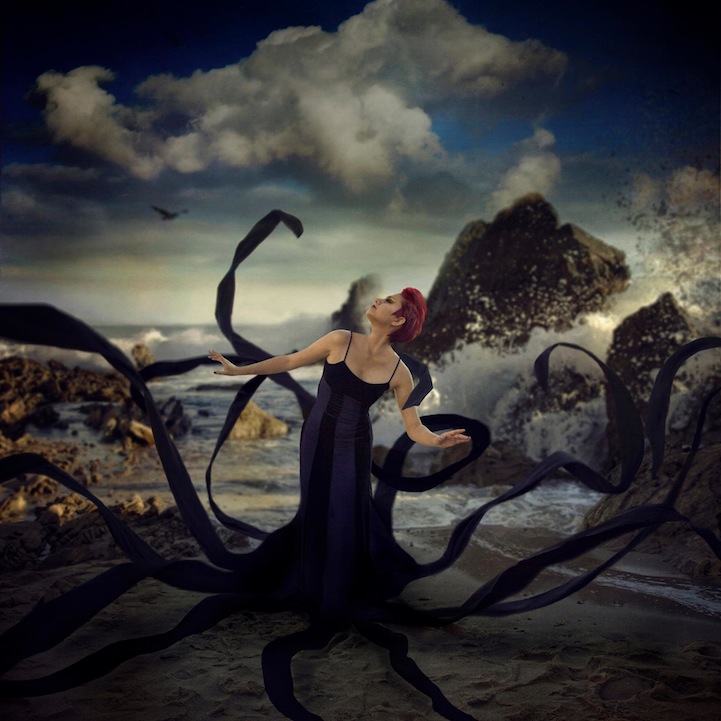
- Fabric and form distortion — dresses and silhouettes that behave like smoke, water, or wind made solid.
- Emotional quiet — drama without shouting; mystery without gore or cheap shock.
- Composite craft — added elements used to complete a psychological space, not to show off software.
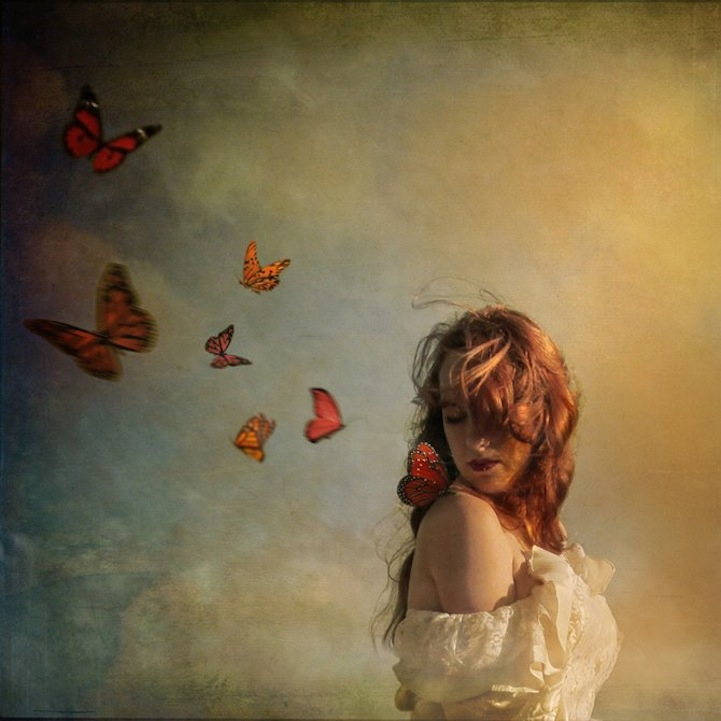
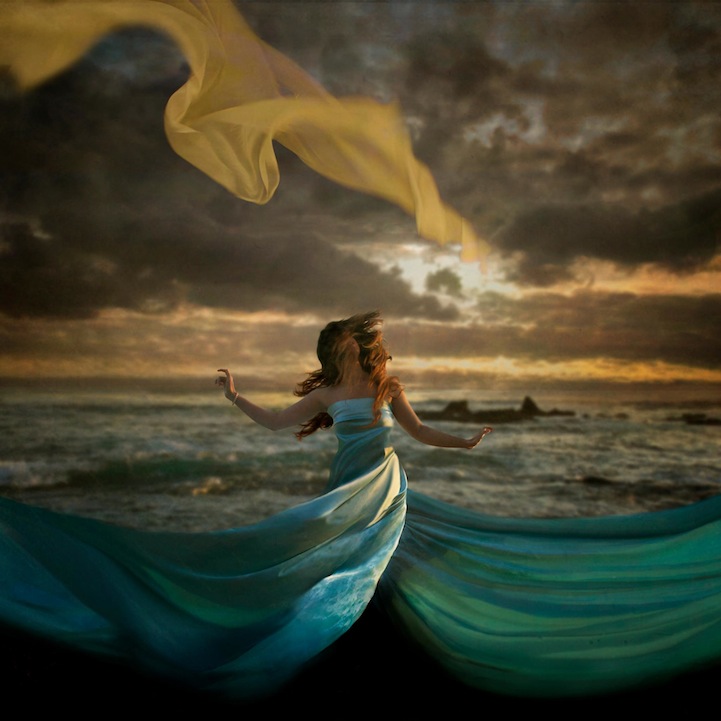
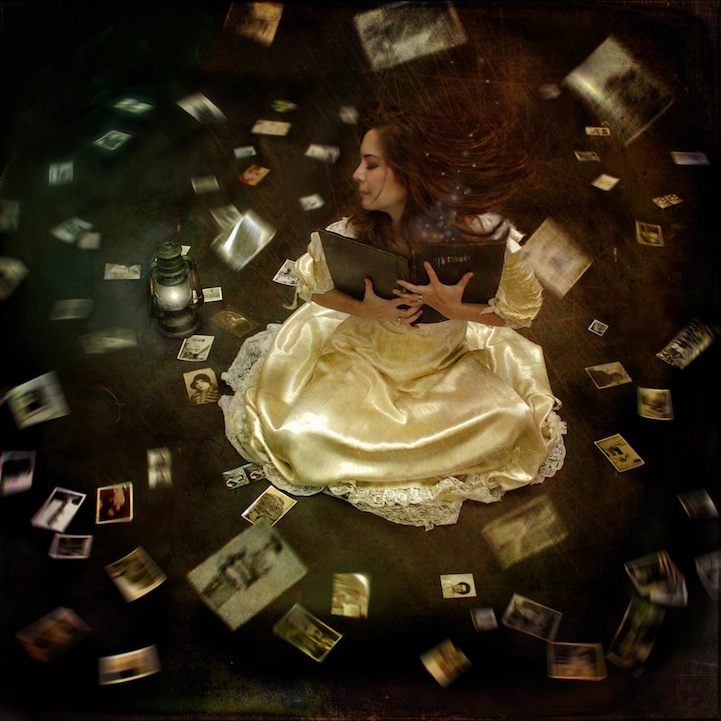
Humans, nature, and the surreal bargain
Some of Schultz’s best-known imaginative strands place the female form inside forceful natural spaces—or reshape the form until it seems continuous with wind, river, or smoke. The pictures are not wildlife photography and not fashion editorials, though they borrow glamour’s attention to dress and posture. They ask what happens when a body becomes part of a weather system, or when landscape starts to behave like costume.
That bargain is where fine art photography earns the word imaginative. Straight documentation would stop at what the lens saw in one second. Schultz’s process continues until the second matches an interior image. Photoshop, in her own account, can do heavy lifting or light finishing depending on the piece. Either way, the edit serves the dream-like feel rather than announcing itself as a tutorial. Viewers who only notice “effects” miss the quieter achievement: coherence. The invented parts belong to the same emotional climate as the photographed parts.
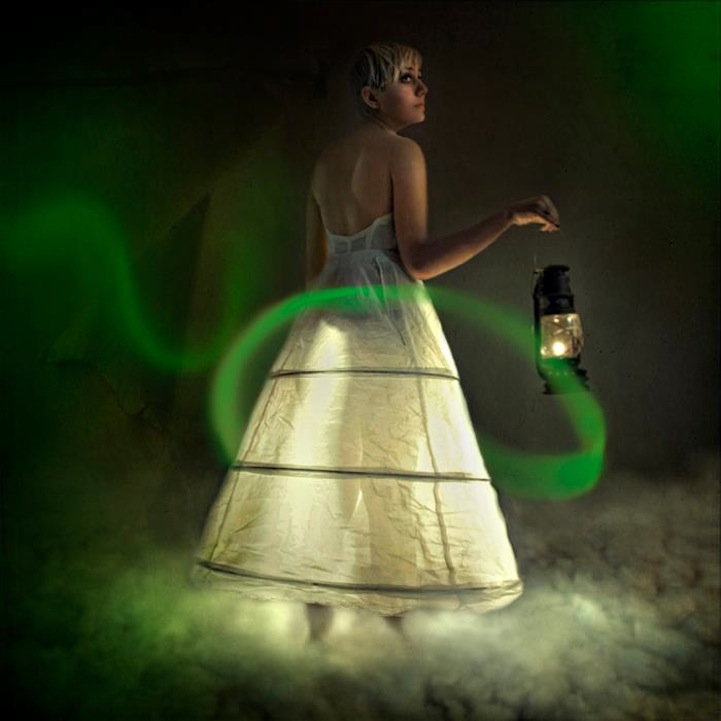
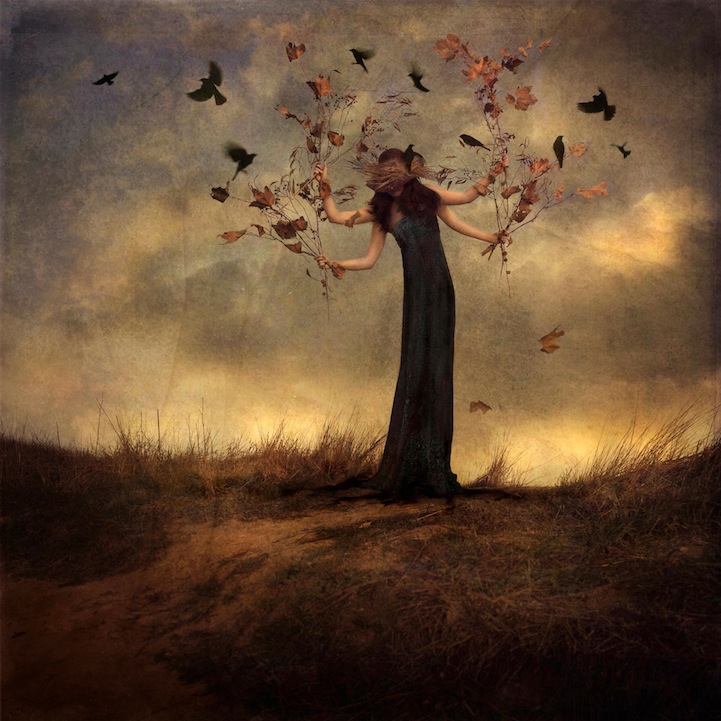
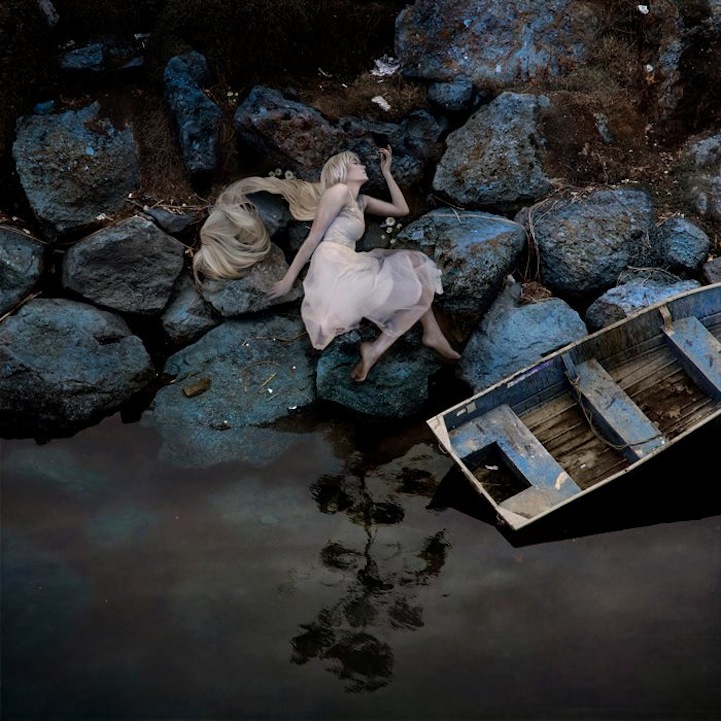
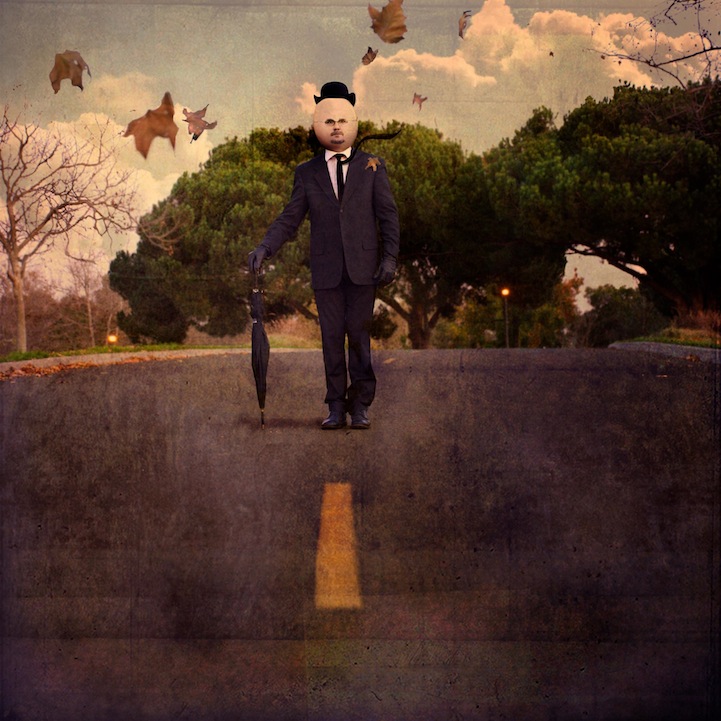
How to look without rushing the mood
These images punish skim-speed. Try a slower sequence when you move through the gallery below:
- Name the emotional temperature before you name the props—lonely, tender, uncanny, serene?
- Track the largest shape — often a dress, a silhouette, or a landform that organizes the frame.
- Find the seam between real and invented — where does photographed fact end and composite suggestion begin?
- Read color as story — cool blues, muted earth, or heightened accents may be doing narrative work.
- Ask what would remain if the figure left — does the environment still feel haunted or charged?
That last question separates decorative surrealism from Schultz’s stronger pictures. When the world around the figure still feels charged, the photograph is building a place, not only decorating a model. Place-building is what makes a series feel like a world you could re-enter.
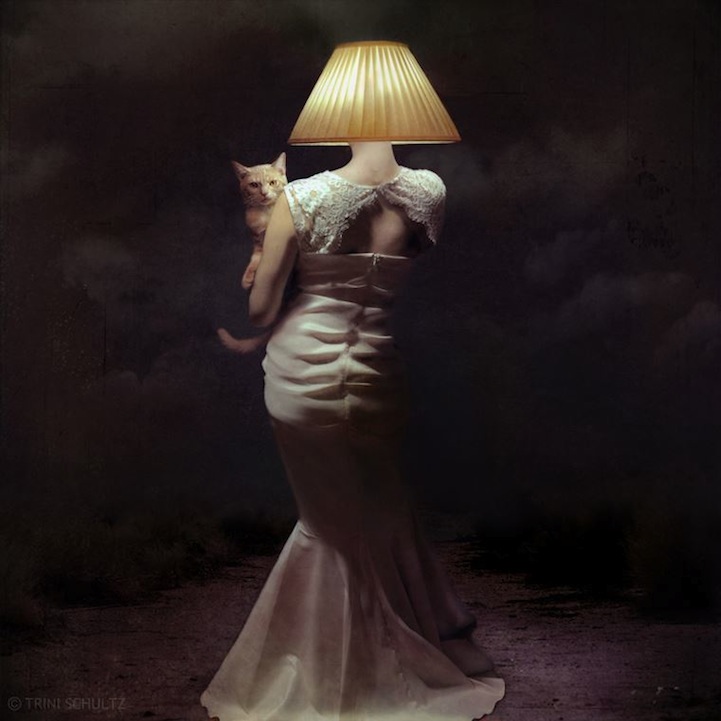
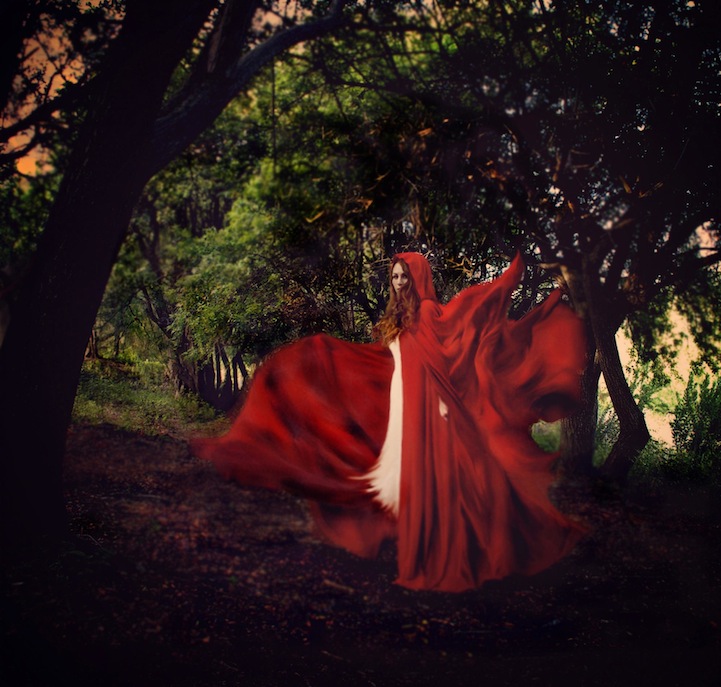
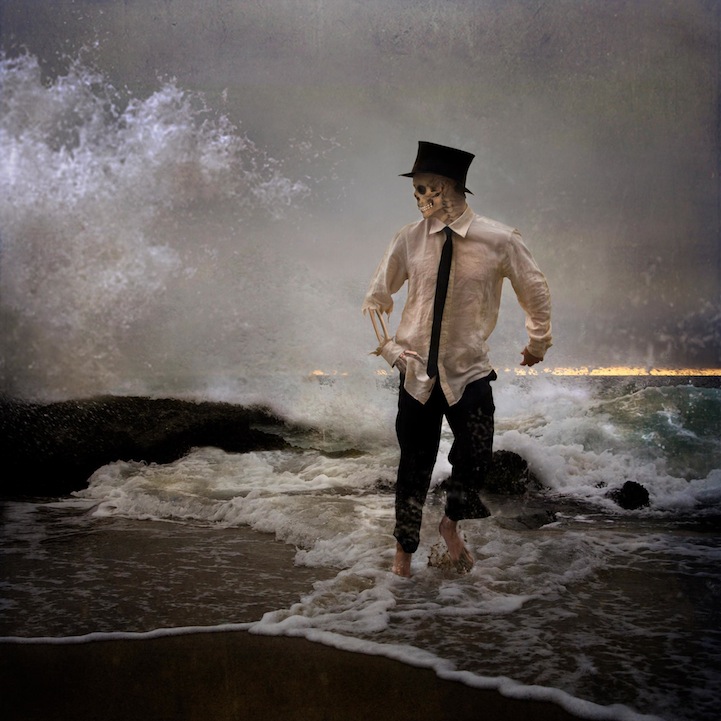
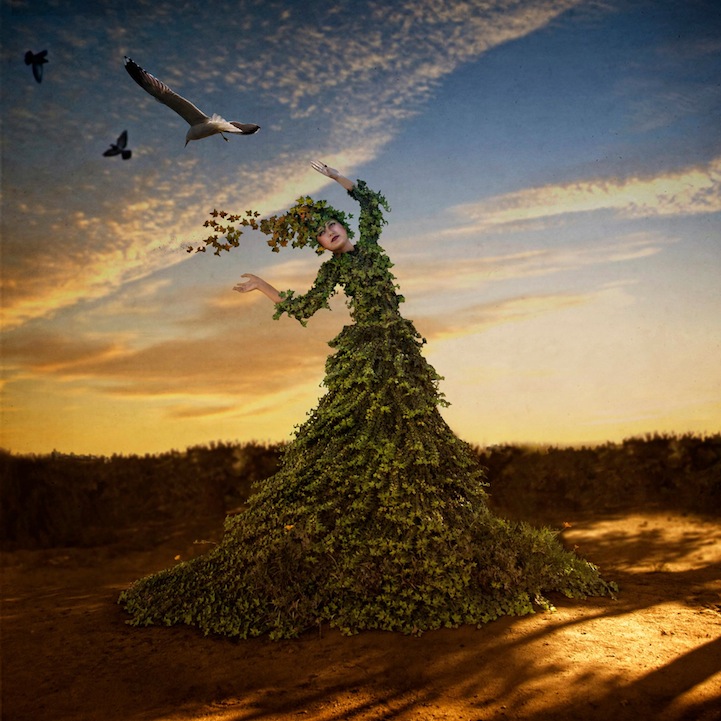
Series thinking, memory, and later interests
Schultz has spoken about creating several series of painterly-like images, and about enjoying colorizing and inventing surreal scenes inside old family black-and-white photographs. That side practice clarifies her priorities: memory, intervention, and emotional continuity across time. Historical colorization, she notes, demands skill and patience—another reminder that her digital work is labor, not a filter preset. Animals appear in some pictures, and she has expressed interest in continuing that thread. Across these directions, the through-line remains imaginative fine art photography: images that prefer dream grammar over news grammar.
Early-2010s inspiration blogs often reduced such work to a short bio blurb and a scroll of thumbnails. The images can survive that treatment because they communicate mood quickly. A fuller look should still keep the same topic the URL promises—Trini Schultz’s imaginative fine art photography—while giving the painterly method and personal lineage enough space to explain why the pictures feel related to one another.
Checklist for photographers chasing a similar atmosphere
You do not need Schultz’s biography to borrow her discipline. You do need intention before the shutter and patience after it:
- Decide the emotional weather before you light the set or choose a location.
- Shoot plates that can survive recombination—clean edges, flexible skies, usable fabric motion.
- Edit toward painting’s patience: fewer hard contrasts unless the story needs them.
- Let nature participate as character, not only as backdrop or bokeh wallpaper.
- Stop when the dream holds; extra effects often wake the viewer up and break the spell.
Trini Schultz’s imaginative fine art photography earns attention because it treats Photoshop as a studio continuation of the darkroom and the sketchbook. Move through the selection with that lineage in mind: look once for beauty, again for the invented weather, and a third time for the childhood painter still guiding how a photograph can feel like a canvas that learned how to dream.

Comments
Continue reading
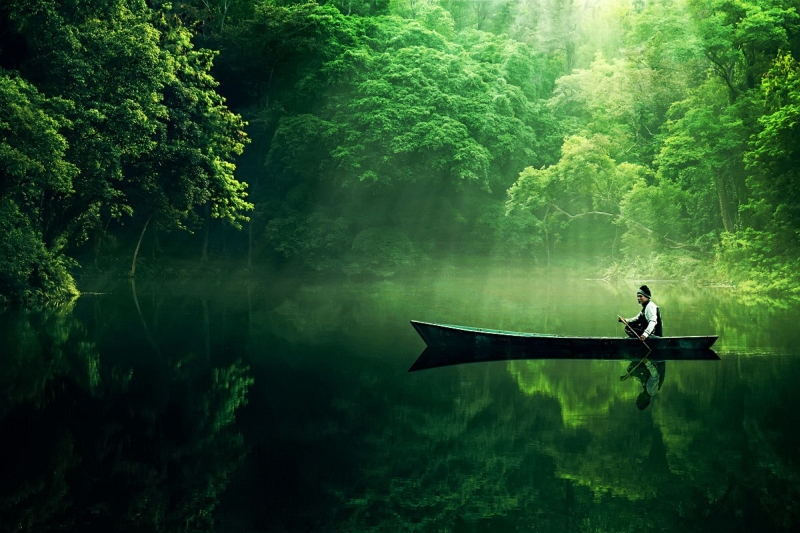
Dramatic Photo Art by Sukron Ma’mun (Ipoenk Graphic)
Cirebon, Indonesia photographer Sukron Ma’mun uses theatrical natural light to frame village life, play, and place in lyrical photo art.
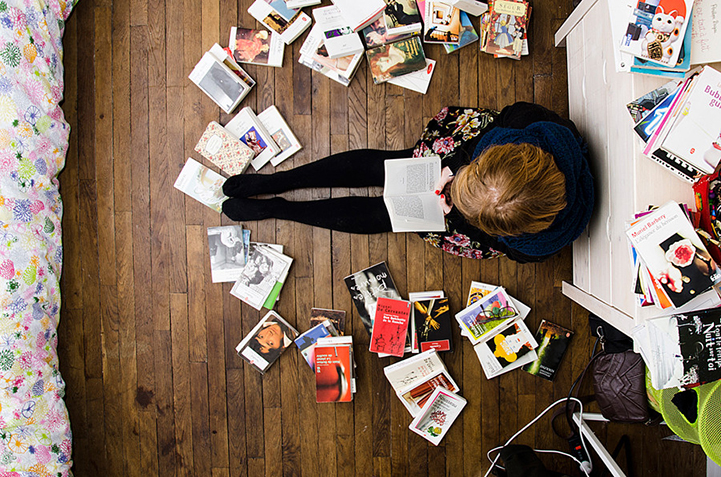
Bird’s-Eye Views: Florian Beaudenon’s Instant Life
Paris photographer Florian Beaudenon’s Instant Life series captures people in their rooms from above—intimate, collaborative overhead portraits of everyday joy.
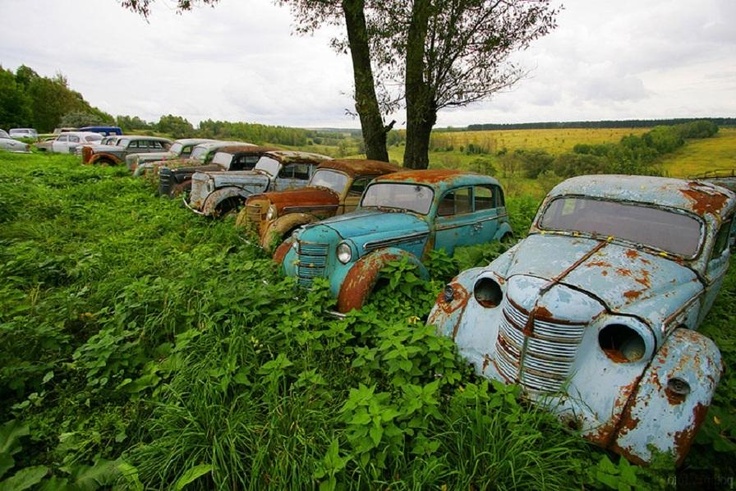
Abandoned Cars Reclaimed by Nature: Rust, Growth, and Quiet Ruin
When neglected vehicles are left outdoors long enough, rust, moss, and trees rewrite them into strange still lifes—sad, photogenic, and slowly returning to the ground.