
Handmade Detachable Collars: Fit, Fabric, and Finish
From Peter Pan curves to lace bibs—how to choose or sew a handmade detachable collar that sits flat, closes securely, and refreshes the clothes you already own.
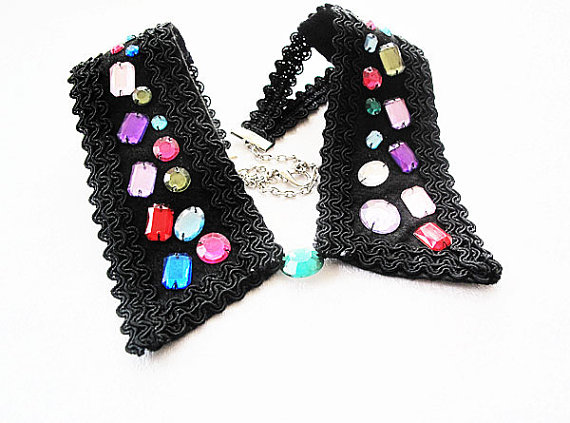
A detachable collar is a small garment with a large job: it changes the neckline of whatever you already own without forcing you to sew a new dress. Worn over a crew sweater, a simple blouse, or a plain shift, a handmade collar can read vintage, romantic, graphic, or quietly formal—depending on fabric, width, and closure. The examples in this gallery come from the handmade work associated with maker Aynur Dereli and show how lace, embroidery, and structured edges turn a collar into wearable jewelry. The practical question is how to choose or sew one that stays put, flatters the face, and survives real wear.
Why detachable collars keep returning
Fashion history cycles through collars because necks are high-visibility. A Peter Pan curve softens a severe jacket. A pointed collar sharpens a round face. A lace bib collar adds occasion to a black tee. Detachable versions flourished whenever wardrobes needed variety on a budget: Victorian and Edwardian dressmakers swapped collars for laundry and status; mid-century separates used crisp white collars over knits; contemporary makers revive the idea with crochet, tulle embroidery, beading, and wirework traditions.
Handmade collars matter because fit and finish are personal. Ready-made costume collars often sit too high, gap at the back, or use stiff plastic that scratches. A sewn or embroidered collar can match your neck circumference, preferred depth, and the weight of the garments you actually wear. That is the DIY criteria lens: measure first, romanticize second.
Silhouette families and what they do to an outfit
Most handmade detachable collars fall into a few readable shapes:
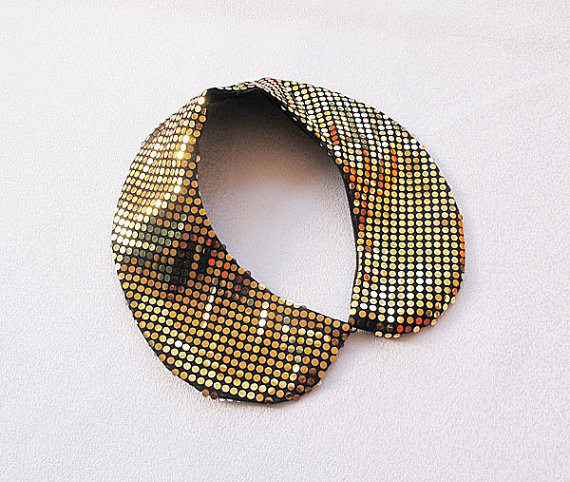
- Peter Pan / rounded: soft, youthful or vintage-literary; best over high crew necks and button-front shirts.
- Pointed / shirt-collar: sharper, more tailored; works with blazers and minimal dresses.
- Bib / bertha-inspired: wider coverage across the upper chest; dramatic with scoop necks; can overwhelm tiny frames if too deep.
- Necklace-collar hybrids: narrow bands with dangling lace or beads; behave more like jewelry and need secure closures.
Width and stand height change everything. A collar that sits almost flat on the shoulder reads romantic. A collar with a short stand lifts the face and photographs cleanly. Too much stand on a short neck feels costume-heavy. Hold a paper mockup to your throat in a mirror before cutting fashion fabric.
Color logic is simple. Ivory and soft white collars brighten most complexions and pair with navy, black, and jewel tones. Black lace collars add evening contrast over light knits. Colored embroidery should pick up one existing hue in your wardrobe so the collar looks intentional rather than orphaned.
Materials that behave on the body
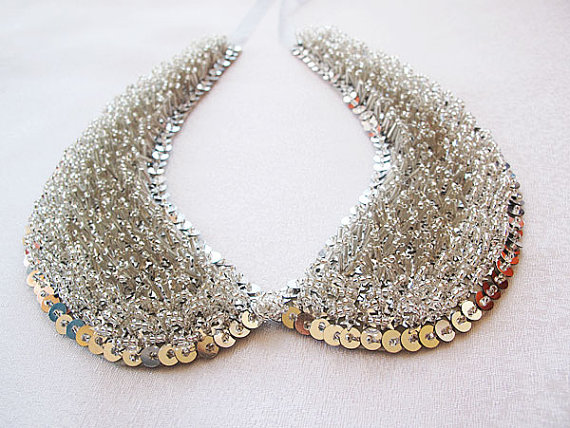
Lace, embroidered tulle, fine cotton lawn, linen, and lightweight wool felt are common bases. Whatever you choose, ask how it will sit against skin and knitwear. Scratchy metallic threads belong on the outer face, not the under-collar. If your design uses traditional Turkish wire-breaking embroidery or similar metal-thread work—techniques associated with makers such as Aynur Dereli in accessory contexts—stabilize the ground fabric on a hoop and plan a soft underlayer so wire ends never touch the neck.
Interfacing is the quiet hero. A light woven or weft insertion interfacing in the collar stand (and sometimes the fall) keeps lace from collapsing into a limp ruffle. Do not over-stabilize soft lace collars meant to drape; do stabilize pointed collars that must hold a crisp edge. Always test interfacing on a scrap: some adhesives show through sheer grounds.
Closures decide whether the collar is wearable or merely photogenic. Options include:
- Small buttons and loops at the back
- Hooks and eyes (flat, for lace)
- Narrow ribbon ties (romantic, adjustable, can look casual)
- Hidden snaps on a fabric placket
Place closures where your hair will not catch. If you wear collars over turtlenecks, choose a slightly larger neck circumference and a flatter construction so the collar does not ride up.
Measuring and drafting without drama
Measure the base of your neck where the collar will sit, then decide ease: typically 1–2 cm so the collar can open and close without choking. Measure how far down the chest you want the front points or rounded lobes to fall. Transfer those numbers to a paper pattern folded on the center front. True the neckline curve so it matches the garment neckline you wear most—crew, scoop, or V. A collar drafted for a scoop will gap oddly on a high crew.
If you are adapting a ready pattern, make a muslin from scrap cotton first. Check back gaping, front lift when you look down, and whether the collar stays centered when you shrug. Adjust by deepening or shallowing the neck curve, not by yanking the closure tighter.
For crochet or embroidered collars built without a paper pattern, still measure. Work to a finished inner circumference, then block the piece flat before sewing on ties or buttons. Blocking is not optional for lace: it sets motifs and prevents the collar from twisting after the first wear.
Sewing and finishing criteria
A clean construction sequence for fabric collars: interface pieces; sew outer and under collar right sides together, leaving the neck edge open if your method bags the collar; clip curves; turn and press; understitch the under collar so the outer edge rolls slightly under; attach ties or closures; optionally hand-fell a soft neck binding for comfort. For lace appliquéd onto tulle, trim bulk carefully and use fine thread that matches the dominant motif color.
Press with a press cloth. Embroidery and synthetic lace can melt or shine under direct iron heat. Store finished collars flat or hung on a padded hanger inside a breathable bag; crushing a wired or heavily embroidered collar in a drawer is how motifs warp.
Care depends on fiber. Many embroidered collars prefer spot cleaning. If machine washing is essential, choose washable cotton lace from the start and skip metal threads. Label your own work mentally: “gallery collar” versus “weekday collar.” That honesty prevents heartbreak.
Styling tests that save returns and remakes
Before you call a handmade collar finished—or before you commit hours to a complex embroidered piece—run four outfit tests:
- Wear it over a black crewneck and a white button-down. If it only works on one, the contrast may be too narrow.
- Check profile in a mirror. Collars that look balanced from the front can shoot upward at the back.
- Sit, drive, and put on a coat. Note rubbing points and whether the closure digs.
- Photograph in daylight. Sheer lace can disappear on camera if it matches your skin too closely; a slightly denser motif or underlayer may be needed.
Those tests are more useful than collecting inspiration tabs. The images here already prove how varied handmade collars can look. Your job is to translate that variety into measurements, fabric behavior, and closures that match your neck and your closet.
If you sew only one improvement into your next collar, make it the neck curve and the understitching. Pretty motifs get the compliments; a curve that sits quietly against the body is what makes a detachable collar feel like fashion instead of costume.

Comments
Continue reading
Funny Animal Signs That Warn People (While Animals Ignore Them)
From a seagull on a no-birds disc to classic zoo and park ironies—why animal warning signs get funny, and what the rules are still for.
How to Find Local Amenities on Vacation: Mechanics, Haircuts & More
Locate trustworthy local services and everyday spots while traveling or settling in—using publications, reviews, map apps, neighbor tips, and low-pressure exploration.
Kristen Stewart for V Magazine, Spring Preview 2013
V81’s Wild at Heart cover story—Kristen Stewart shot by Inez & Vinoodh, styled by Joe McKenna, in pale minimal spring glamour.