
Handimals by Guido Daniele: Animals Painted on Living Hands
Milan-based artist Guido Daniele paints hyper-real animals onto models’ hands—Handimals that fuse trompe-l’œil craft with a quiet call to protect wildlife.
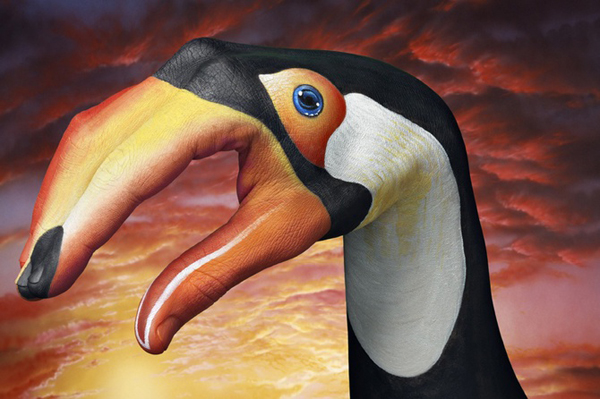
A hand is an ordinary tool until someone asks it to become a habitat. In the Handimals series by Italian artist Guido Daniele, fingers fold into beaks, palms stretch into flanks, and knuckles turn into the architecture of a face. The animals look alive enough to startle, yet they never pretend to be taxidermy or digital tricks. They are painted on living skin, held still for a photograph, and then washed away—leaving only the image and the idea that protection can begin with attention.
Guido Daniele was born in Soverato, Calabria, in 1950 and has long lived and worked in Milan. He trained at Brera’s artistic high school and graduated from the Brera School of Arts with a focus on sculpture in 1972, then spent formative years in India studying traditional thanka painting in Dharamsala. Those early paths—European academic craft, hyper-realistic illustration for publishing and advertising, large trompe-l’œil backdrops, and, from 1990 onward, body painting for fashion and commercial work—meet in Handimals, a project he began researching around 2000. The series made his name internationally not because it is a gimmick, but because it is unusually disciplined: anatomy, light, and empathy have to agree on the same small surface.
What you are actually looking at
Each finished Handimal is a collaboration between painter, model, and camera. Daniele paints with makeup colors—often described in interviews as water-based powders in the spirit of traditional Japanese stage makeup—chosen because ordinary art pigments can be harsh on skin. The palette has to cover, blend, and photograph cleanly without glue-heavy formulas that would trap heat or crack. Sessions are long. He has spoken of completing even complex pieces in a single day, typically across six to ten hours, because the paint only holds for a limited window before photography must happen. There is no leisurely studio pace of “I’ll fix it tomorrow.” The animal has to arrive before the day ends.
That time pressure sharpens the craft. Hair direction on a mammal, the wet sheen in an eye, the soft edge where a muzzle meets shadow—all of these must be decided while a person keeps a pose that already strains the wrist. The hand is not a flat board. It flexes, reddens, and changes temperature. Daniele’s hyper-realism has to negotiate those shifts rather than ignore them. When the painting works, viewers stop seeing “paint on fingers” and start reading species: the alert tension of a predator, the soft bulk of a grazing animal, the fragile geometry of a bird’s head.
Photography is not an afterthought. Once the paint is complete, the image is fixed in large-scale photographs that circulate in exhibitions and publications. The ephemeral body work becomes a durable public record. That duality matters for how the series is received: gallery visitors encounter stillness and scale; they do not smell the makeup or feel the model’s fatigue. Respectful looking means remembering both layers—the living labor and the finished print.
Why the hand, not the full body
Daniele’s broader practice includes full-body painting, yet Handimals concentrates the drama into the most familiar human tool. Hands gesture, work, harm, and help. Placing an animal on a hand collapses those meanings into one picture. In interviews, Daniele has framed the project with a simple phrase that travels well across languages: animals on the hands mean “give a hand to the animal.” The pun is gentle, not coy. It asks for agency without scolding the viewer into paralysis.
The series has often been linked to wildlife advocacy and partnerships with conservation-minded organizations. That context keeps the work from floating as pure spectacle. A painted tiger can still be dazzling; it is more durable when it also reminds you that the real animal is vulnerable to habitat loss and indifference. The editorial task, then, is not to treat Handimals as viral body-paint content, but as persuasion through beauty— persuasion that assumes the audience can hold wonder and responsibility at once.
There is also a formal reason the hand works so well. Fingers supply ridges, valleys, and joints that already resemble bones and beaks. A bent thumb can become a jaw. Spread fingers can become plumage or mane. Daniele does not fight the anatomy; he recruits it. That is closer to classical trompe-l’œil than to costume makeup. The illusion succeeds because the underlying structure was already half-animal in silhouette.
Technique without the myth of magic
It is tempting to describe Handimals as if the paint simply “transforms” people into creatures. A more accurate description is slower. Underpainting establishes mass. Midtones build fur or feather direction. Highlights and wet edges finish the eye so the animal seems to look back. Edges are softened where skin turns away from light and sharpened where a feature must read from across a room. Color temperature shifts keep a brown coat from looking flat and a white bird from looking chalky.
Because the canvas sweats and moves, Daniele’s advertising and illustration background matters. Commercial deadlines teach economy: decide what the camera will read at exhibition distance, then spend the remaining hours on the details that survive enlargement. A Handimal that looks convincing in a thumbnail may fail on a wall if the eye is dull or the silhouette is ambiguous. The reverse is also true: a wall-scale success can look almost impossible in a small web image, which is why the series rewards slow looking rather than a two-second scroll.
Models are not props. Their comfort, skin health, and ability to hold a pose shape what is possible. Editorial coverage that treats Handimals with respect keeps that human presence visible. The animal is painted; the person is not erased. When a photograph crops tightly to claws or a beak, the viewer still knows a living wrist is underneath. That knowledge is part of the ethics of the image.
Where Handimals sit in visual culture
Body painting has many homes: fashion weeks, festivals, advertising campaigns, and fine-art exhibitions. Daniele’s work has traveled across those rooms. Commercial projects helped fund and publicize the technique; museum and observation-deck exhibitions—such as the mid-2010s presentation of Handimals photographs at Rockefeller Center’s Top of the Rock—brought the series to audiences who might never follow body-art subcultures. The photographs function as both documentation and artworks in their own right.
Comparisons to digital animal filters miss the point. Software can paste fur onto a hand in seconds. Daniele’s process insists on hours of attention, physical risk of smudging, and irreversible commitment to a day’s weather of skin. The resulting image carries that labor as a kind of quiet gravity. You are not looking at a shortcut. You are looking at care made visible as craft.
Viewers coming from wildlife photography may notice another difference. Field photographs of animals often emphasize distance, environment, and luck. Handimals reverse the terms: the animal is intimate, staged, and entirely dependent on human cooperation. That intimacy can feel tender or unsettling, depending on the species and the pose. Either reaction is useful. Tenderness invites protection; unease reminds us that wildness does not belong on our terms alone.
A way to look without reducing the work
If you encounter a Handimal image online or in print, try a three-step viewing habit:
- Name the animal before you analyze the paint. Does the silhouette read immediately?
- Find the joints of the hand—wrist, knuckles, fingernails—and notice how each is recruited or hidden.
- Ask what emotion the eye carries. Predators, prey, and birds do different rhetorical work; Daniele’s best pieces match expression to species without cartooning.
That habit slows the reflex to call the work “amazing” and move on. Amazement is fair. So is curiosity about method, model, and message. The series earns both.
Guido Daniele’s website and exhibition history remain the best places to see how the Handimals vocabulary expanded over years—more species, more ambitious lighting, more explicit ties to conservation. The single image on this page is only an entry point. What it already shows is the essential claim of the project: that a hand can hold an animal carefully enough for us to recognize both the creature and our responsibility toward it. When the paint washes off, that recognition is what remains—and the open question is whether recognition turns into action, or only into another saved photograph.

Comments
Continue reading
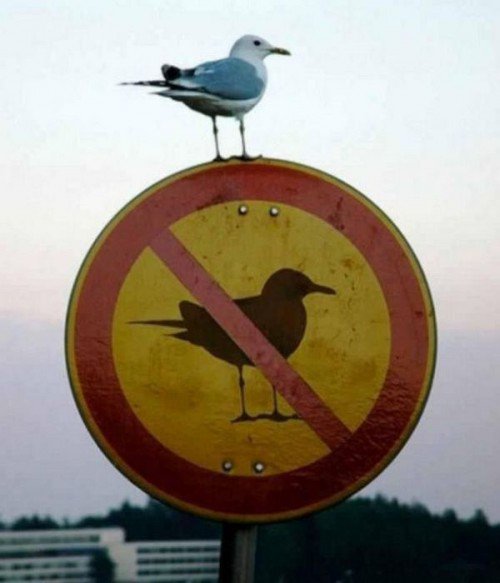
Funny Animal Signs That Warn People (While Animals Ignore Them)
From a seagull on a no-birds disc to classic zoo and park ironies—why animal warning signs get funny, and what the rules are still for.
How to Find Local Amenities on Vacation: Mechanics, Haircuts & More
Locate trustworthy local services and everyday spots while traveling or settling in—using publications, reviews, map apps, neighbor tips, and low-pressure exploration.
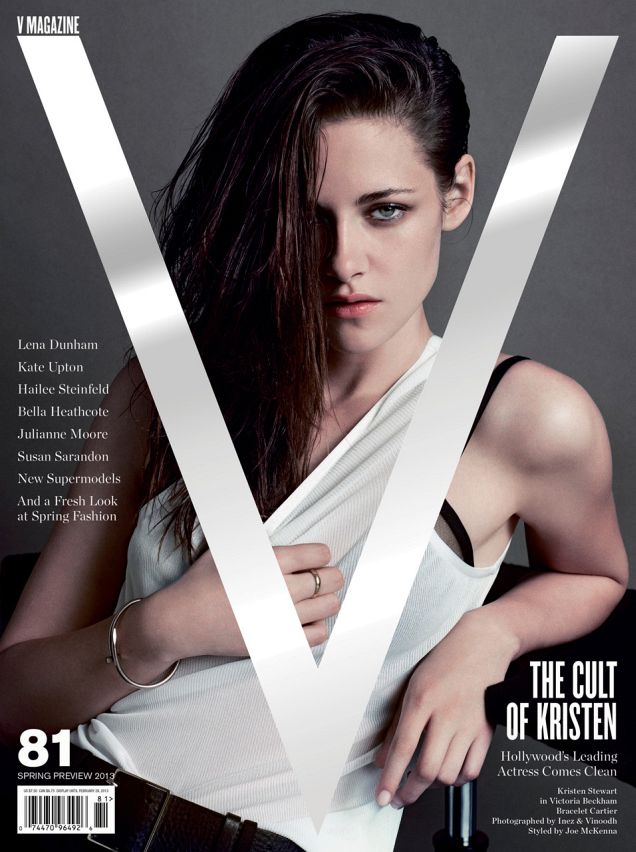
Kristen Stewart for V Magazine, Spring Preview 2013
V81’s Wild at Heart cover story—Kristen Stewart shot by Inez & Vinoodh, styled by Joe McKenna, in pale minimal spring glamour.