
Great Aerial Photography by Klaus Leidorf
German aerial archaeologist Klaus Leidorf photographs farms, industry, and land patterns from a Cessna—work he calls aerial archaeology, between survey and abstract art.
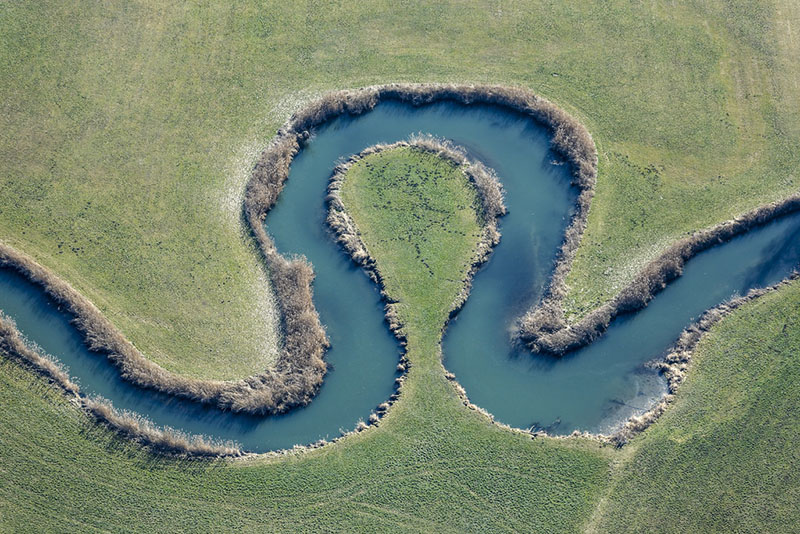
Some photographers chase decisive moments at street level. Klaus Leidorf works from a few hundred meters up, flying a Cessna 172 and aiming a camera at the patterns people carve into land. He calls much of this practice aerial archaeology: part documentation of sites and landscapes, part visual hunt for forms that only appear when the ground becomes a diagram. Farms, beaches, industrial yards, rivers, and temporary human arrangements turn into compositions that feel halfway between survey and abstract art.
Leidorf, a German aerial archaeologist and photographer born in 1956, trained in theology and in pre- and early history before moving into heritage work and then into the cockpit. Since the late 1980s he has photographed extensively over Bavaria and beyond, building an archive measured in thousands of frames. The pictures gathered here show why his name travels in both archaeology and fine-art photography circles—and why spelling it correctly matters when you go looking for more of the work.
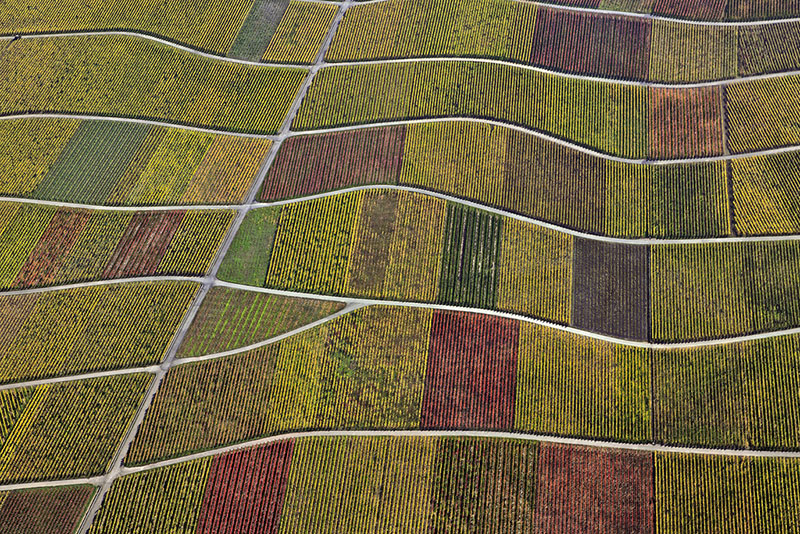
What “aerial archaeology” means in his work
In the scientific sense, aerial archaeology uses airborne views to find and record archaeological features—crop marks, earthworks, buried structures that announce themselves through subtle differences in vegetation or soil. Leidorf’s professional path includes that documentary tradition: discovering and recording sites, lecturing at universities, and publishing in archaeological contexts. He also founded a specialist publishing house for archaeological literature, a reminder that his career is not only gallery-facing.
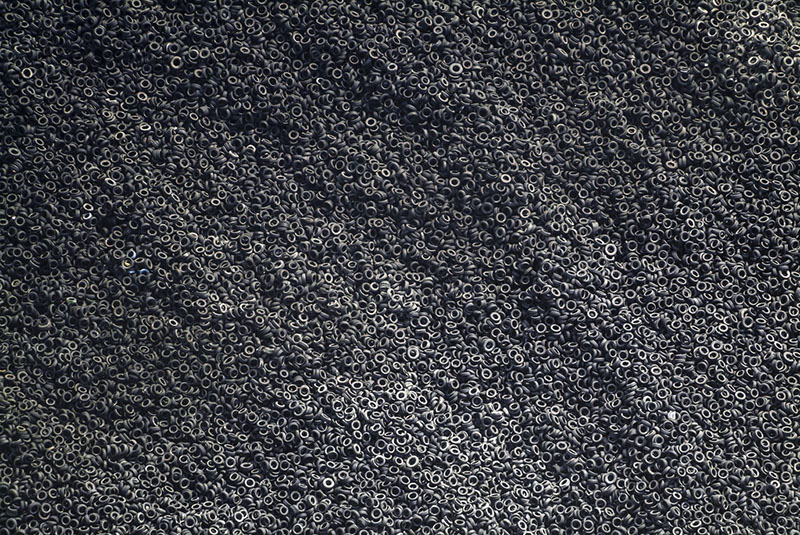
In the artistic sense he shares with wider audiences, “aerial archaeology” also names a way of looking. From above, tire stacks, hay bales, parking geometries, river bends, and industrial storage become readable as design whether or not anyone intended beauty. The camera does not invent the shapes; altitude and framing isolate them. That double meaning—heritage method and aesthetic method—is central to how his work is usually introduced in features that circulate beyond specialist journals.
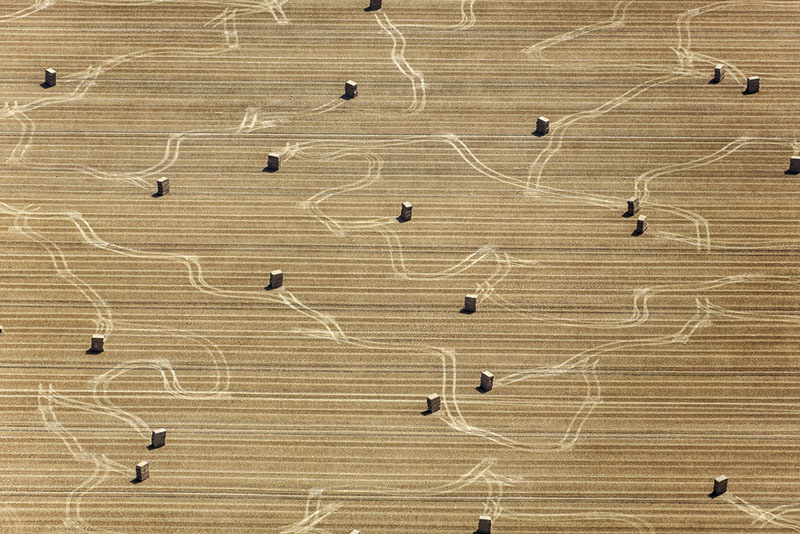
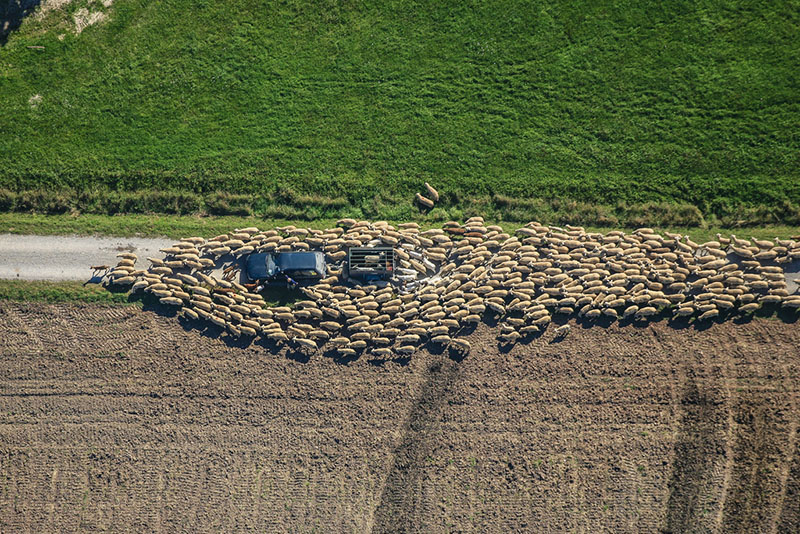
Viewers sometimes ask whether a given image is “art” or “documentation.” In Leidorf’s practice the better question is what the frame reveals. A beautiful composition can still be evidence of land use; a dry archaeological record can still contain startling form. Holding both readings at once is part of the work’s intelligence.
The cockpit as studio
Leidorf’s working method is famously physical. He pilots the small aircraft and photographs from the window, often described as steering with his knees at key moments so both hands can manage the camera. Image-stabilized digital bodies—Canon EOS 5D-class cameras appear in period write-ups of his practice—help freeze detail from a moving platform: texture in fields, the curve of a path, even small objects when light and distance cooperate.
Flight paths are not random sightseeing. Light angle, season, and weather change what the ground reveals. Low sun lengthens shadows that outline relief; certain seasons make agricultural patterns louder; snow and floodwater redraw contrast. Morning and late-day flights often reward form; midday sun can flatten the same subject into a less readable map. The best frames feel inevitable after the fact, but they depend on being above the right place when the land is legible.
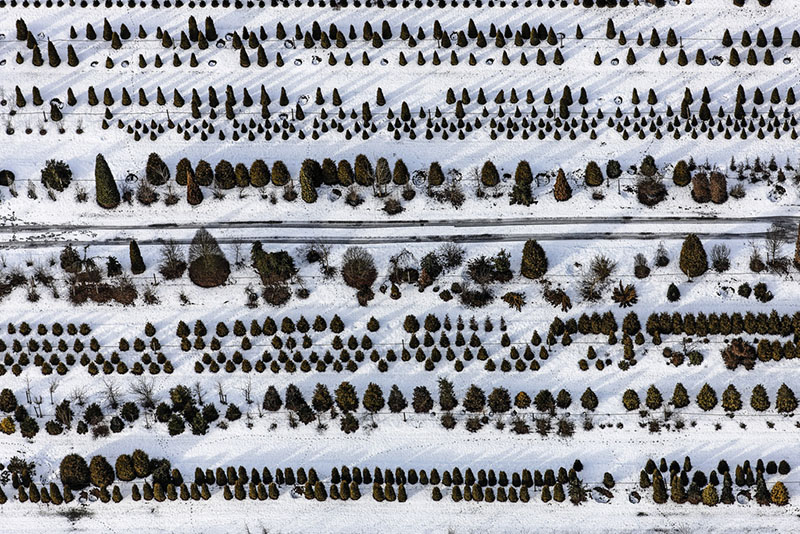
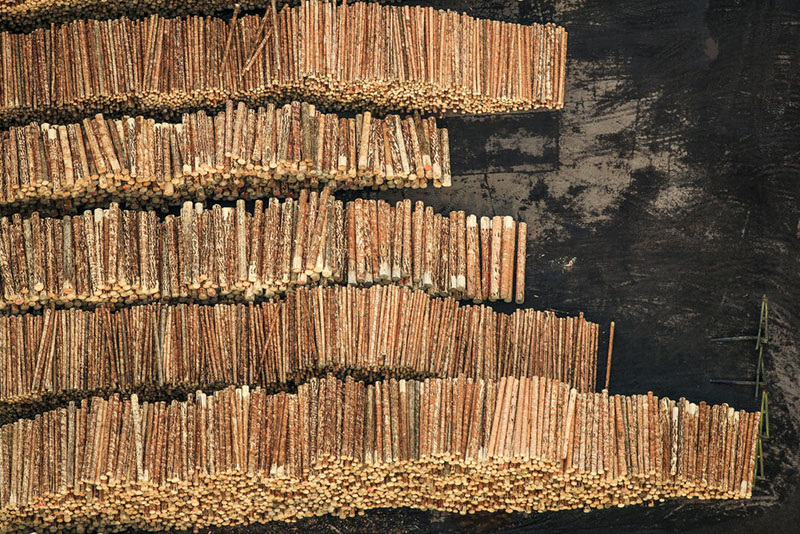
Unlike drone photography that can hover and reframe endlessly, manned aerial work of this kind is bound to flight rules, fuel, weather windows, and the geometry of a pass. That constraint sharpens decision-making: you see, you commit, you move on. The resulting pictures often carry a sense of discovered order rather than studio arrangement.
Subjects: beauty, banality, and unease
Looking across a Leidorf sequence, subject matter swings between pastoral calm and industrial bluntness. Ordered vineyards and river meanders can look lyrical. Storage lots, scrap, construction, and dense infrastructure can look unsettling once their scale is honest. That range is the point. The work is not a postcard series of pretty Germany from above; it is a survey of how thoroughly human systems overwrite terrain—and how strangely composed those systems can appear without a horizon line to reassure the eye.
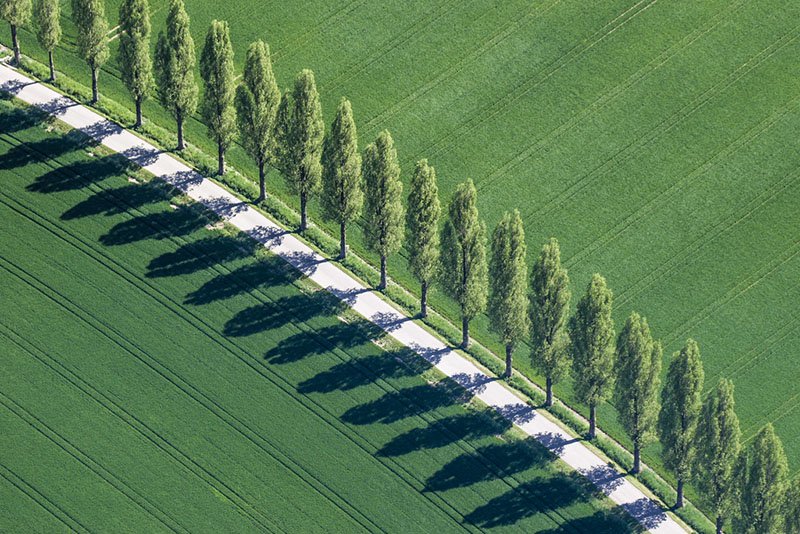
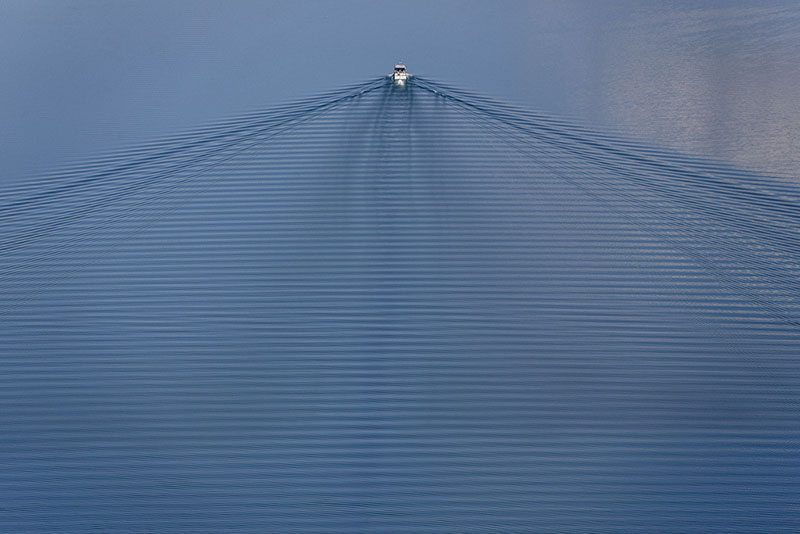
Remove the horizon and you also remove easy orientation. Viewers sometimes need a second to decide what they are seeing: water or roof, field or fabric, toy or truck. That brief confusion is part of the pleasure. Scale markers—a vehicle, a wake, a tree shadow—arrive like punch lines. When no marker appears, the image edges toward pure abstraction while remaining stubbornly factual: someone made those marks on real ground.
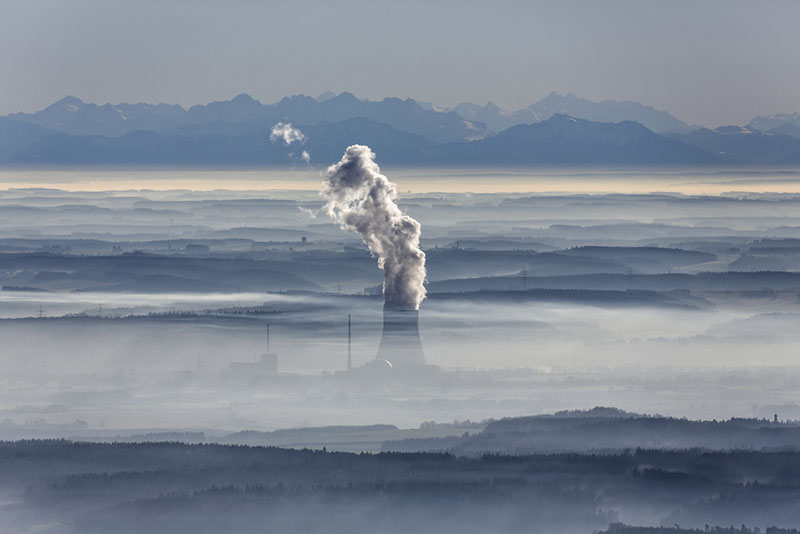
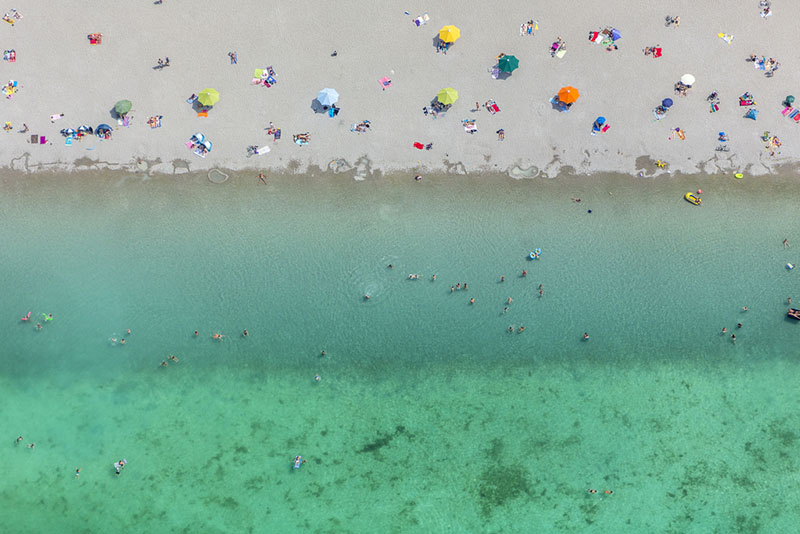
Color does quiet work in these frames. Agricultural greens against turned soil, winter monochrome, the sudden signal of painted metal, the glare of water—each palette tells you something about season and use. Leidorf’s eye for when color becomes structure (bands, blocks, gradients) is as important as his eye for line.
Archive, time, and changing land
Because Leidorf has flown for decades, the archive also functions as a time machine for landscape change. Growth of settlements, shifts in agriculture, industrial expansion, and renaturation projects become comparable when the same regions are revisited. Separate from the single “wow” frame, that longitudinal habit connects his art images to the documentary discipline of aerial archaeology: the land is evidence, and photographs are dated witnesses.
He has also photographed historically charged corridors such as the former inner-German border zone across multiple years, treating the Green Belt as both scar and ecological corridor. Even when a gallery selection emphasizes formal beauty, the underlying practice remains attentive to what human borders and economies do to ground. Beauty here is not an escape from politics of land; it is sometimes the bait that gets you to look longer at what land use actually is.
How to look at these frames
Start with mass and repetition: rows, stacks, curves, grids. Then hunt for the interruption—the one element that breaks the pattern and gives the picture a subject. Notice whether the frame feels tight enough that land becomes nearly abstract while remaining factual. Ask what the photo would lose if it included more sky; Leidorf’s strongest images often answer by cropping sky away.
Compare two neighboring images in a set. One may soothe; the next may feel like evidence of waste or pressure on land. That emotional swing is not a failure of taste consistency—it is the honest range of a pilot who photographs whatever the route and light make visible. If you photograph landscapes yourself, try one practical exercise inspired by his approach: pick a subject you know from the ground, then seek any elevated or mapped view that reveals its plan. Even without an airplane, the habit of asking “what is the pattern from above?” changes how you compose.
Return to the first image in this set after reading the others. The same frame often gains weight once you have seen how Leidorf treats industry, water, and fields as equal candidates for attention. Klaus Leidorf’s aerial photographs earn that second look because they keep both promises in aerial archaeology: they record the ground with a specialist’s seriousness, and they return ordinary human landscapes as strange, memorable pictures.

Comments
Continue reading

Dramatic Photo Art by Sukron Ma’mun (Ipoenk Graphic)
Cirebon, Indonesia photographer Sukron Ma’mun uses theatrical natural light to frame village life, play, and place in lyrical photo art.

Bird’s-Eye Views: Florian Beaudenon’s Instant Life
Paris photographer Florian Beaudenon’s Instant Life series captures people in their rooms from above—intimate, collaborative overhead portraits of everyday joy.
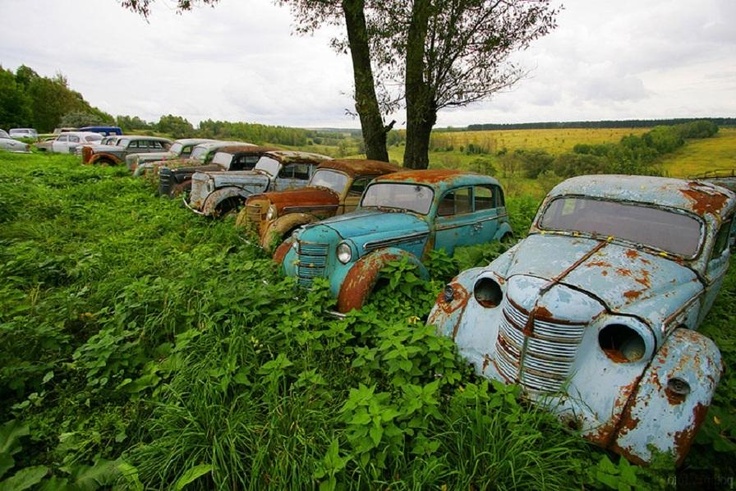
Abandoned Cars Reclaimed by Nature: Rust, Growth, and Quiet Ruin
When neglected vehicles are left outdoors long enough, rust, moss, and trees rewrite them into strange still lifes—sad, photogenic, and slowly returning to the ground.