
When a Wind Turbine Doubles as Modern Apartments
Rotterdam’s Dutch Windwheel concept stacked rotating visitor cabins, apartments, and a quiet turbine into one circular landmark—what the speculative design still teaches about living with generation.
Most wind turbines are machines you live near, not inside. A mid-2010s concept for Rotterdam flipped that assumption: a circular landmark that would harvest wind while hosting apartments, hotel rooms, commercial space, and a visitor ride around its rim. Marketed as the Dutch Windwheel, the proposal asked a city famous for ports and pragmatic engineering to imagine a wind icon you could also call home.
The idea arrived as speculative architecture with a serious sustainability brief—not a finished tower you could tour the next morning. That distinction matters. Conceptual buildings often get treated like overnight news. This one is better read as a design essay in steel, glass, and systems thinking: what if tourism, housing, and clean power shared one silhouette?
Two rings, many jobs
In the widely circulated scheme, the structure reads as paired leaning rings on a waterside or wetland setting, rising on the order of 174 meters. The outer ring carries rotating cabins—dozens of pods on a circuit, closer to a panoramic wheel than a conventional balcony run—so short-term visitors can take in Rotterdam and its harbor. The inner ring holds longer-term life: roughly 72 apartments, a large hotel program (often cited around 160 rooms), commercial floors, and elevated dining or viewing space.
At the center sits the energy idea that gives the project its name. Instead of a classic bladed turbine spinning through residential floors, the concept leaned on a “silent” electrostatic approach associated with research from Delft—sometimes discussed as EWICON technology—where charged droplets and a tubular framework convert wind without the usual mechanical rotor. The promise was less noise, less vibration, and a turbine that could coexist with sleep schedules and hotel stays.
Supporting systems rounded out the pitch: solar surfaces, a climate-minded facade, rainwater capture, water loops tied to surrounding wetlands, and biogas from on-site waste. The building was meant to demonstrate Dutch clean technology as much as to house people—a continuous showcase as much as a residence.
Why apartments and turbines usually refuse each other
Ordinary wind farms and ordinary housing fight over sound, flicker, shadow, maintenance access, and public acceptance. Putting dwellings on the same object as generation forces designers to solve those conflicts in the floor plan. A bladeless or low-motion converter is attractive precisely because it reduces the most visceral objections: who wants a bedroom beside a roaring nacelle?
The ring geometry also does rhetorical work. A circle is readable from a distance as an icon—closer to a Ferris wheel or a monumental O than to a stick-and-blade farm machine. For a waterfront city competing for attention, silhouette is strategy. The Windwheel’s renderings sell a floating, almost ceremonial presence: foundations and wetlands arranged so the form appears to hover, tourism and residency stacked in concentric logic.
Economically, the mixed program is the wager. Hotel and ride revenue subsidize experimentation; apartments anchor everyday use; commercial base floors keep the plinth active. Whether those numbers would ever close is a separate question from whether the diagram is instructive. As a teaching object, it argues that sustainability branding fails when it is only cladding. Systems have to be visible in the massing.
Living small, living clever—without changing the subject
Coverage of “futuristic apartments” often drifts into a grab bag of tiny angular flats, folding furniture, and rotating walls. Those tactics belong to a real conversation about dense urban living, but they are not the same story as a turbine-housing hybrid. The Windwheel’s more interesting domestic claim is programmatic: long-term residents, hotel guests, and day visitors share one engineered organism, with waste and water treated as resources rather than afterthoughts.
That said, the broader eco-apartment trend helps explain why the concept felt timely in 2015. Cities were hungry for landmarks that looked like climate solutions. Green roofs, courtyards, and daylight strategies elsewhere showed that residential comfort and environmental performance could share a vocabulary. The Windwheel simply scaled that vocabulary into an infrastructural cartoon—almost too clear, which is why it spread so easily through design blogs.
What it does not do is replace quieter, buildable work: retrofit efficiency, district heat, ordinary mid-rise timber, and policy. Spectacle concepts are catalysts and conversation pieces. They are rarely the only path to better housing.
Partners, iterations, and the long life of a concept
The proposal was associated with a Rotterdam consortium including firms such as BLOC, DoepelStrijkers, and Meysters, later joined in public updates by engineering and construction partners as the idea evolved. Subsequent “2.0” talk emphasized circular materials, regional sourcing, and refined climate-water-energy systems while keeping the big diagram: attraction cabins, inner living program, advanced generation.
Years after the first splashy renders, the project continued to appear in technology and architecture press as a prototype for low-emission, partly self-powered buildings—sometimes with new technical partners attached to electrospray or facade-integrated generation ideas. That longevity is typical of ambitious concepts: the image outruns the groundbreaking. For readers, the useful stance is neither cynicism nor boosterism. Treat it as a design brief made visible.
Ask practical questions the renders invite. How do you evacuate a ring. How do you maintain generation equipment beside bedrooms. How do you price apartments in a tourist magnet. How much net energy remains after the ride and hotel loads. Good concepts survive those questions; weak ones dissolve into pure marketing.
What the images still teach
Even as speculation, the Windwheel clarifies a desire: housing that does more than consume. Glass-and-steel rings, rotating cabins, and a quiet turbine at the heart make the desire photogenic. Strip away the gloss and you still have a checklist cities keep failing—pair density with generation, make water loops local, turn waste into fuel, give visitors a reason to fund the experiment without turning residents into props.
If you are evaluating other “futuristic modern apartments,” use the same checklist. Is the green claim structural or decorative? Does the energy story respect acoustic comfort? Does mixed use actually cross-subsidize performance, or only fill a brochure? Can the form be maintained for decades, not only photographed once?
Rotterdam may or may not ever host a full-scale Windwheel. The lasting usefulness of the proposal is sharper than a groundbreaking date: it forces a concrete picture of a wind turbine that doubles as modern apartments—and asks whether we are willing to design living space as infrastructure, not only as floor area for rent.

Comments
Continue reading
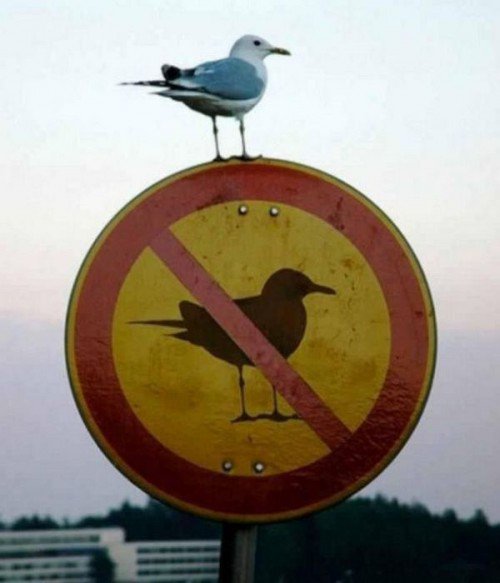
Funny Animal Signs That Warn People (While Animals Ignore Them)
From a seagull on a no-birds disc to classic zoo and park ironies—why animal warning signs get funny, and what the rules are still for.
How to Find Local Amenities on Vacation: Mechanics, Haircuts & More
Locate trustworthy local services and everyday spots while traveling or settling in—using publications, reviews, map apps, neighbor tips, and low-pressure exploration.
Kristen Stewart for V Magazine, Spring Preview 2013
V81’s Wild at Heart cover story—Kristen Stewart shot by Inez & Vinoodh, styled by Joe McKenna, in pale minimal spring glamour.