
Fairy-Tale Canopy Beds: Sheer Coronas, Forest Frames, and Gilded Drapery
A romantic bedroom collection spanning ivory sheer daybeds, branch-like metal canopies, and French silk drapes—plus fabric, height, and practical hanging notes.
A romantic bedroom without some form of canopy often feels unfinished—not because every room needs fabric overhead, but because a canopy turns a bed from furniture into a place with edges, light, and privacy. Fairy-tale canopy beds come in several dialects. Some are soft and sheer. Some look like they grew from a forest. Some belong in paneled rooms with chandeliers. This collection walks through those moods so you can shop (or DIY) inside one clear story instead of mixing three incompatible fantasies.
Sheer corona canopies for soft, adult romance
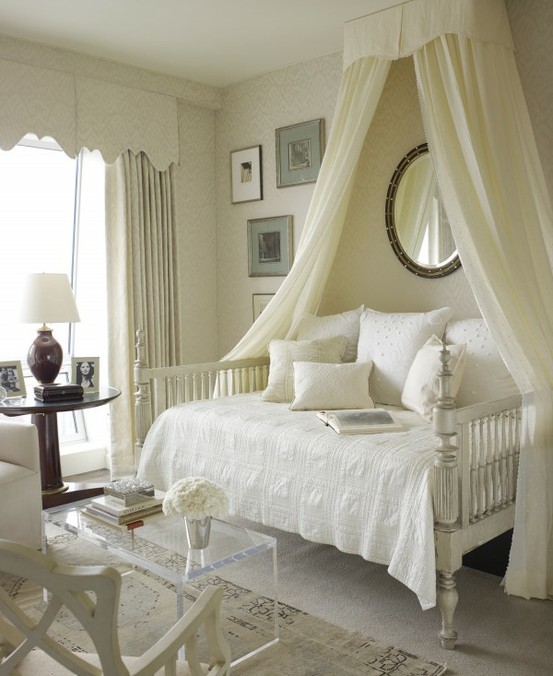
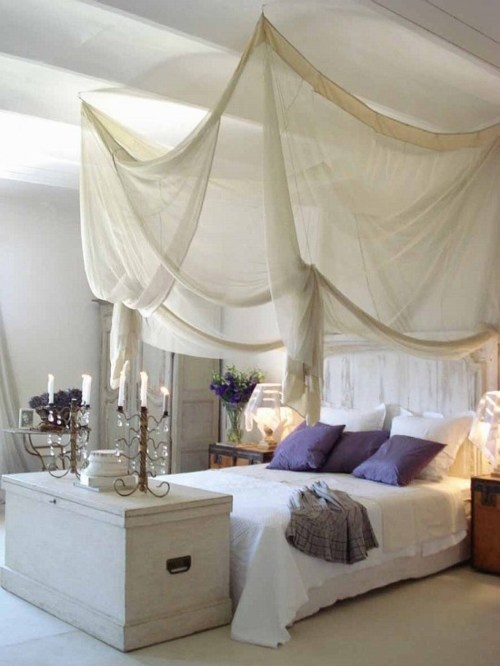
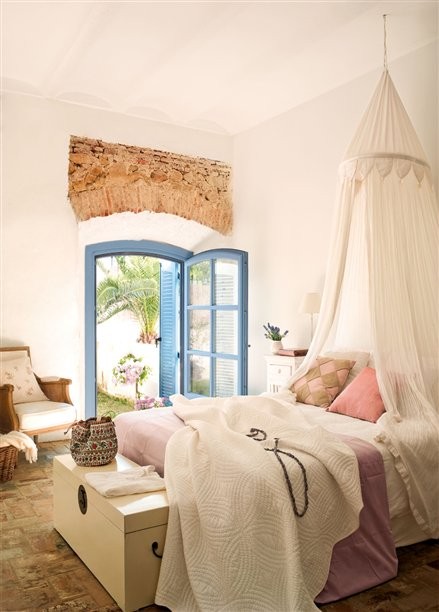
Not every fairy-tale bed needs turrets and carved posts. A distressed cream spindle daybed with a fabric-covered box mounted near the ceiling, sheer ivory fabric falling in soft wings, and a stack of textured white pillows—cable knit beside smooth cotton beside dotted weave—can feel magical without tipping into costume. A round dark-framed mirror, pale patterned wallpaper, floor-length curtains with a scalloped valance, and a burgundy ceramic lamp keep the room quiet so the canopy does the storytelling.
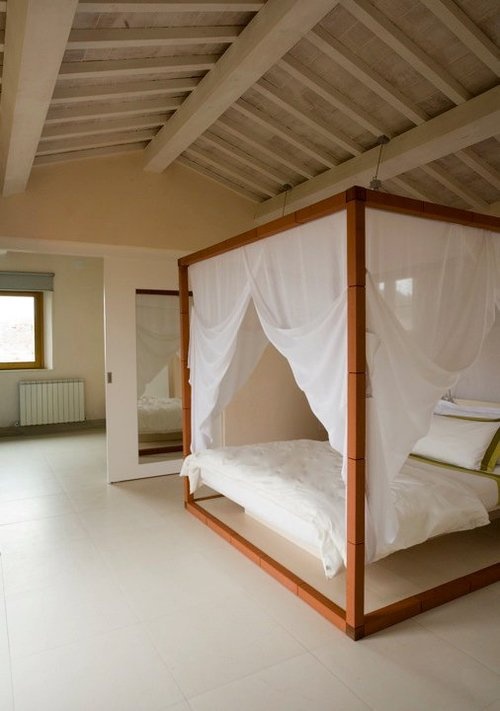
Sheer fabric is the practical romantic choice. It filters morning light instead of trapping heat, photographs as a soft glow, and still reads as enclosure when you sit with a book open on the quilt. If your ceiling is low, a corona or half-canopy often works better than a full four-poster frame: you get the fairy-tale gesture without posts crowding walkways or closet doors.
Acrylic or Lucite tables and pale rugs can sit beside this look without spoiling it. Modern clear surfaces keep the palette airy; the romance stays in the drapery and spindle wood, not in every object pretending to be antique.
Forest frames: when the bed itself is the story
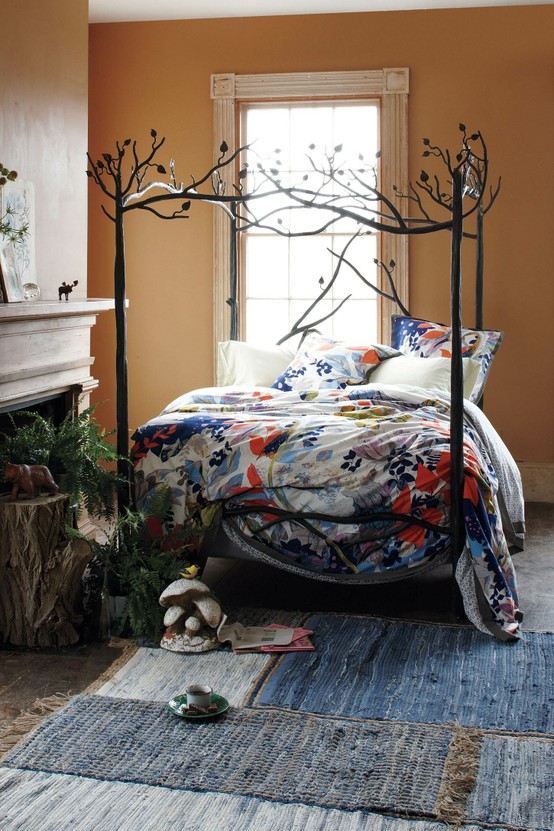
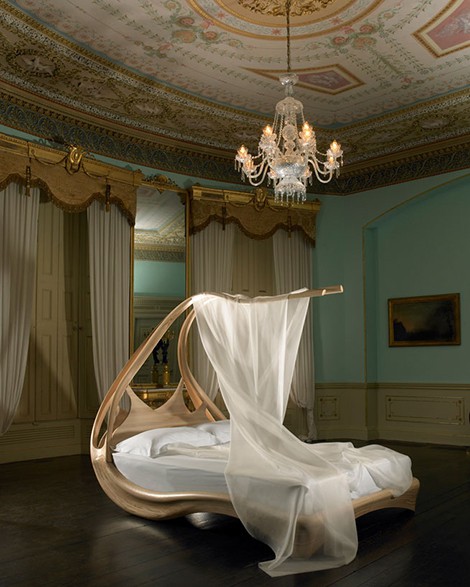
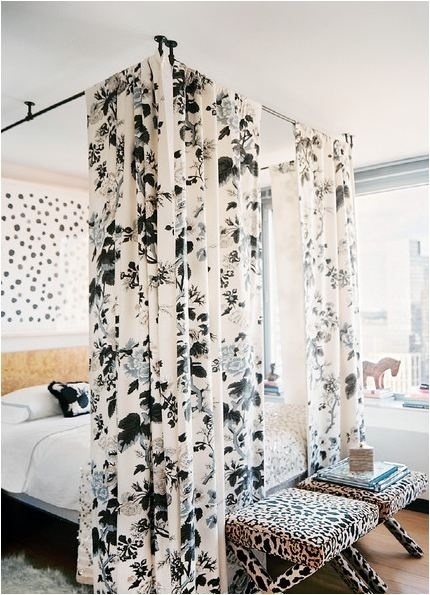
Some canopies skip fabric entirely. A dark metal frame shaped like gnarled branches, leaf details along the rails, and bold botanical bedding in cobalt, orange, and cream against terracotta walls creates a woodland fairy-tale that feels lived-in rather than formal. Fireplace mantel, fern, stump stool, a whimsical mushroom cluster on a blue patchwork rug—these props work because the bed already looks like it grew in place.
This style suits rooms that already lean rustic or eclectic. Pair organic metalwork with bold textiles, not with stiff hotel white. The magic here is texture and asymmetry, not perfection. An open magazine on the floor and a coffee cup on the rug do more for the mood than matching crystal lamps. If you rent and cannot drill the ceiling, a freestanding branch canopy still delivers the fairy-tale vertical line without landlord conflict.
Gilded drapery for courtly fantasy
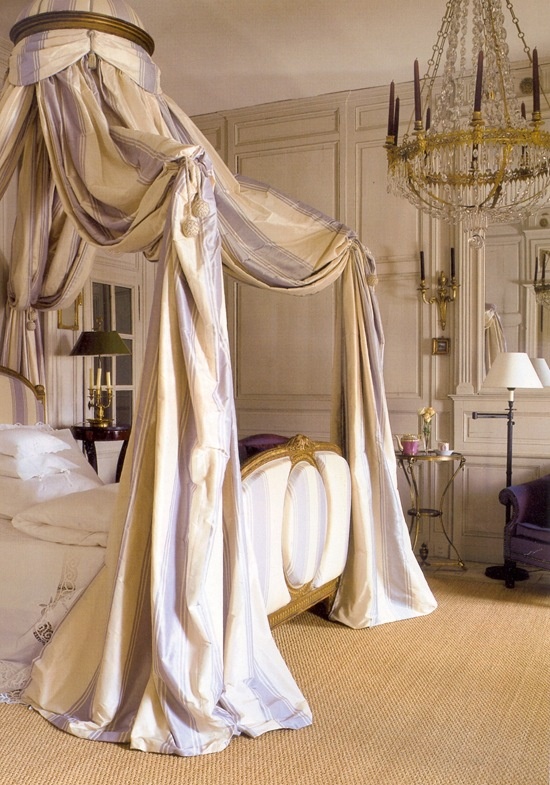
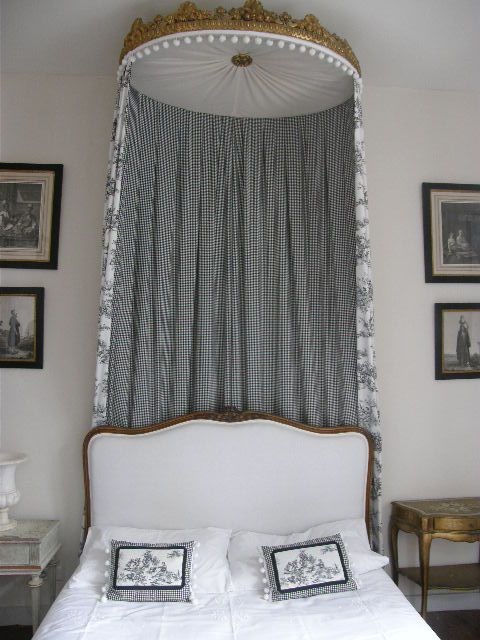
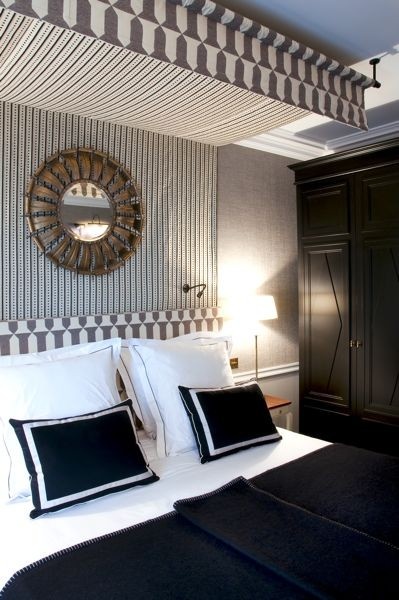
At the other end of the spectrum sits the classic European canopy: a circular gold corona, heavy cream-and-lavender striped silk gathered with tassels and pooling on the floor, upholstered headboard and footboard in matching fabric, crystal chandelier above. Boiserie walls, a deep purple armchair, and a small tea table complete a lit-à-la-polonaise mood—romance as palace bedtime rather than cottage dream.
Heavy drapery needs height and square footage. In a small room it can feel smothering; in a tall paneled room it feels intentional. If you love the look but live in a modern apartment, borrow one idea at a time: striped fabric, a modest corona, tassel tiebacks—without committing to full gilt frames. A natural-fiber rug under all that sheen keeps the room grounded so the fairy-tale does not float away into costume-drama territory.
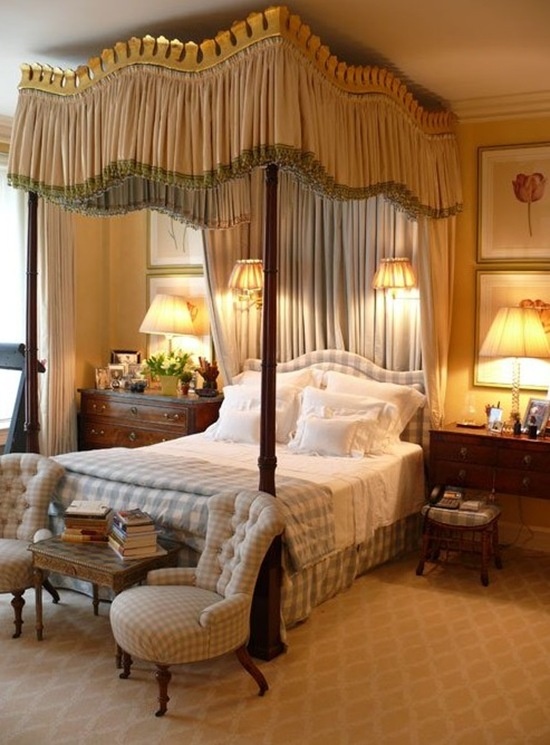
Four jobs a canopy actually does
Fairy-tale is the feeling; structure is why the feeling lasts through ordinary Tuesdays:
- Enclosure: fabric or branches create a private zone inside a larger room—useful in open lofts, shared apartments, and guest rooms that need a sense of arrival.
- Vertical drama: the eye travels up; even a simple bed looks more intentional under a defined overhead plane.
- Light control: sheers soften morning sun; heavier panels create evening cocooning and can help with drafty windows when lined.
- Seasonal mood: swap lightweight muslin in summer for velvet or lined cotton in winter without changing the frame or the rest of the room.
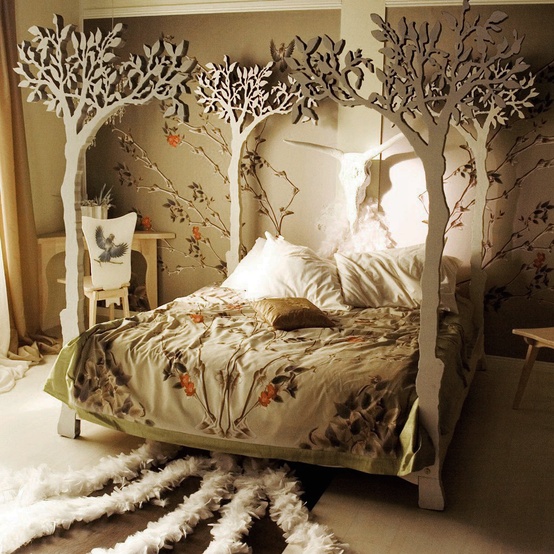
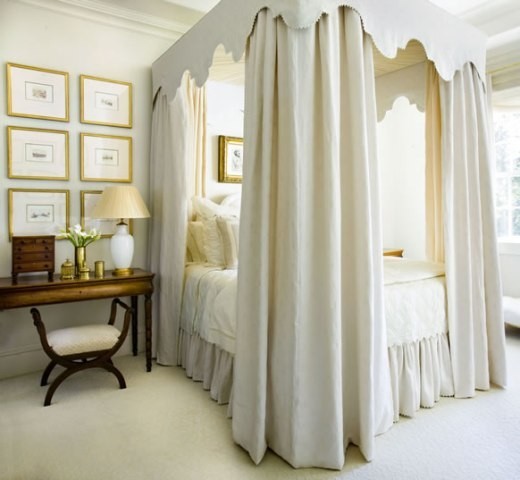
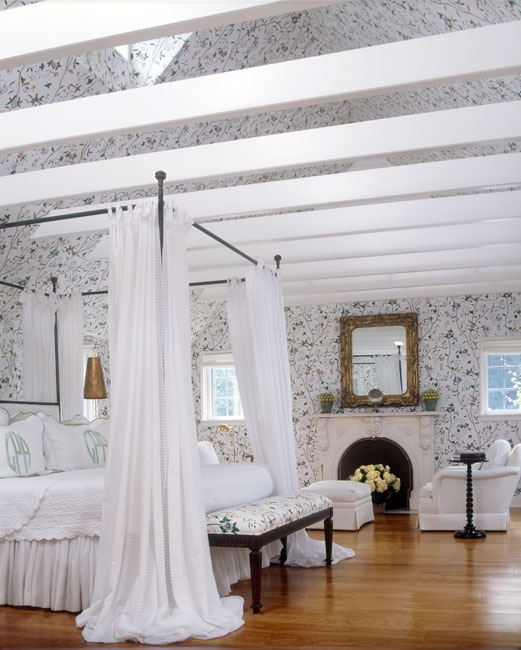
Choosing fabric, frame, and color together
Pick the mood first, then the materials. Mixing dialects is how fairy-tale rooms start to look confused:
- Ivory sheers + painted wood: soft, calm, guest-ready romance.
- Branch metal + bold prints: storybook woodland without forced pastels.
- Gilt + striped silk: formal fairy-tale; needs tall ceilings and breathing room.
- White iron + lace or muslin: cottage and vintage bridal energy.
- Dark wood + linen: quieter romance for modern farmhouse or Scandinavian-leaning rooms.
Color temperature matters as much as silhouette. All-white rooms with sheer canopies feel airy and cool; terracotta, plum, or warm grey walls make the same canopy feel more intimate. A single accent—burgundy lamp base, purple chair, cobalt floral duvet—keeps monochrome schemes from going flat without competing with the overhead fabric.

Bedding and pillows under a canopy
Once fabric hangs overhead, the bed surface should not shout. Under sheer ivory, layered white textures look intentional. Under branch metal, a bold duvet can carry pattern because the frame is already graphic. Under heavy striped silk, crisp white linens usually calm the composition so the drapery remains the star.
Pillow count is a comfort decision disguised as styling. Too many decorative pillows and the canopy zone becomes a display you dismantle every night. Keep a small stack you actually rearrange in thirty seconds. Fairy-tale bedrooms that nobody wants to remake in the morning stop feeling romantic very quickly.


Practical notes before you hang fabric
Canopies fail for boring reasons: weak ceiling anchors, dusty fabric that never comes down, posts that block closets, and blackout panels that turn the bed into a cave. Before you buy or DIY:
- Confirm ceiling joists or use a freestanding frame if rental rules forbid drilling.
- Choose washable or easily steamed fabric for anything that hangs near pillows and faces.
- Leave walking clearance at the foot and sides; pooling fabric looks lush until you trip at midnight.
- If you share the bed with pets or restless sleepers, avoid long side panels that get yanked nightly.
- Test one week with temporary sheers before committing to heavy silk or custom upholstery.
- Dust and vacuum the canopy zone on a schedule—overhead fabric collects more than you think.
How to use this gallery without buying three beds
Save three images that share a mood—not three that only share the word “canopy.” One sheer ivory daybed, one branch frame, and one gilded drape will confuse a shopping list and a paint sample. Once you lock a dialect (soft, woodland, or courtly), shop frame and fabric inside that dialect. Fairy-tale bedrooms work when the canopy leads and everything else supports it—not when every surface tries to be magical at once.
If you only change one thing this season, start with a ceiling-mounted sheer corona over the bed you already own. Live with it for a week of mornings and evenings. Notice whether you sleep better, whether the room photographs softer, whether guests pause when they walk in. If the answer is yes, escalate later to branch metal or striped silk. If the answer is no, you learned it with muslin instead of a palace budget—and that is still a useful fairy-tale ending.

Comments
Continue reading
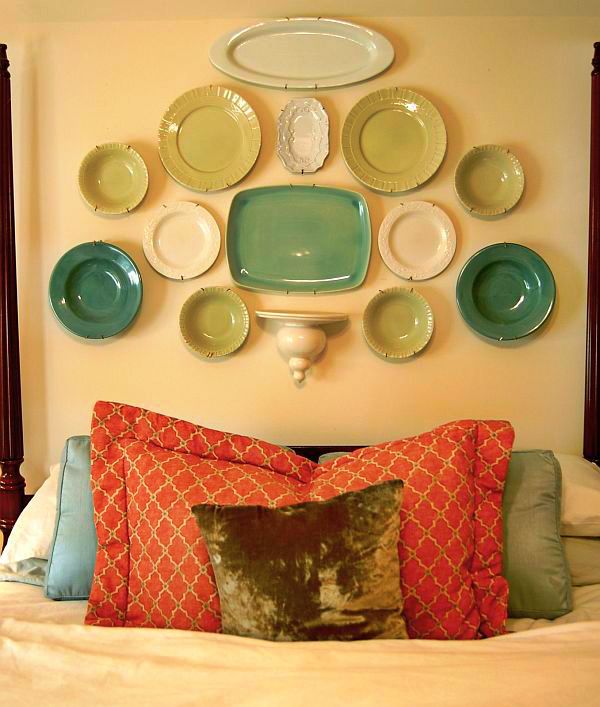
DIY Headboard Ideas: Plates, Slats, Metal, Signs, and More
Build or arrange a custom headboard—from wood slats and upholstery to plate galleries, reclaimed signs, metal cutouts, and book grids—with mounting and sizing tips.
Unique Modern Bedroom Designs to Steal From
A gallery of distinctive bedrooms—bed silhouettes, wall treatments, layered light, and quiet storage—framed as principles you can adapt, not props to copy.
Beautiful Canopy Bed Designs for Romantic, Dramatic Bedrooms
Canopy bed ideas covering open frames vs drapery, scale, materials, styling, fabric care, and how to choose a room-defining bed.