
Brock Davis: Clever iPhone Photos of Everyday Objects
How the Minneapolis artist turns produce, tools, and scraps into visual one-liners—scale tricks, spare backgrounds, and mobile-camera spontaneity from the early 2010s.
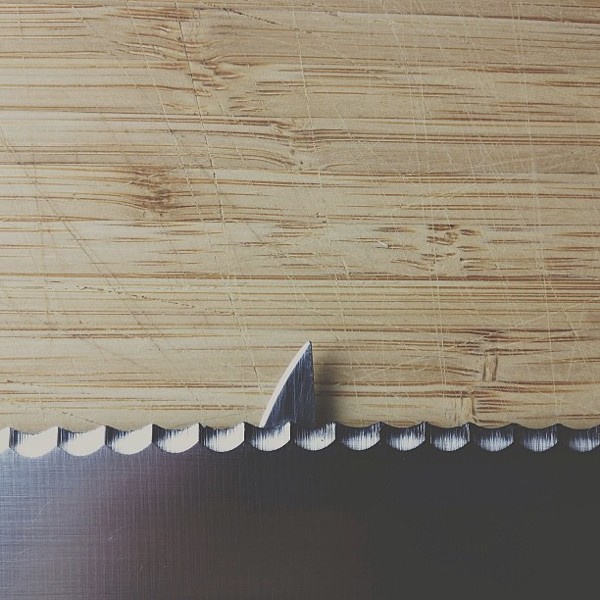
Brock Davis has a talent for making the ordinary look briefly impossible. A dotted butterfly seems to lift from a watermelon. A knife tip becomes a shark fin. A scrap of food turns into landscape. The pictures look casual—often shot on an iPhone—but the jokes are precise: scale, silhouette, and a deadpan sense of timing.
Around 2013, when many of the photographs circulating in design blogs and Instagram roundups were made, Davis was already known as a Minneapolis-based multidisciplinary artist and advertising creative director. He treated the phone camera less as a documentary tool and more as a pocket studio for conceptual one-liners. The handful of frames here sit in that era: bright, spare, and built from objects you could find in a kitchen drawer or a grocery bag.
Why everyday objects work as punchlines
Humor in still photography rarely comes from captions. It comes from recognition delayed by a beat. You see fruit, then wings; you see a utensil, then an animal. Davis’s best pieces depend on that half-second of double vision. The object stays itself—watermelon, bread knife, cauliflower—while also becoming something else through arrangement, cropping, and a few well-placed marks or props.
He has described ordinary things—spider webs, gum, produce—as carrying creative potential most people walk past. That stance matters more than any particular gag. Once you accept that a pear or a cotton ball can host a scene, the world becomes a prop closet. The skill is knowing when to stop: one clear idea per frame, usually against a quiet background so the concept does not compete with clutter.
Food appears often because everyone already looks at it closely. We know the textures of bread crust, the curve of a grape, the green of parsley. When those familiar surfaces are asked to play tree, dog, or landscape, the joke lands without explanation. The same logic applies to tools and toys: a Wiffle ball can suggest a helmet; a cassette tape can become architecture. Familiarity is the setup; the twist is the punchline.
iPhone as constraint, not compromise
Davis has said he wanted conceptual photos that kept the immediacy of mobile photography—the opposite of a heavy studio ritual. Friends were posting kids and pets; he wondered whether the same device could carry ideas. The phone’s limits helped. Small sensor, fixed focal habits, ambient light, and the urge to finish quickly pushed him toward setups that could be built and shot before the joke went cold.
Instagram, in that early-2010s window, rewarded exactly that cadence: a clean square, a readable thumbnail, a concept that survived compression. Davis’s frames often look designed for that feed—centered subjects, simple grounds, high graphic contrast. The modest claim that he was “just experimenting” with an iPhone undersells the craft, but it does describe the ethic: stay light on your feet, execute, share, move on.
That ethic connects to his earlier “Make Something Cool Every Day” discipline—a year-long practice of daily making that trained spontaneity. Mobile photography fitted the same muscle. When an idea arrives while you cook or commute, the camera is already in your pocket. Waiting for perfect gear is how good visual jokes expire.
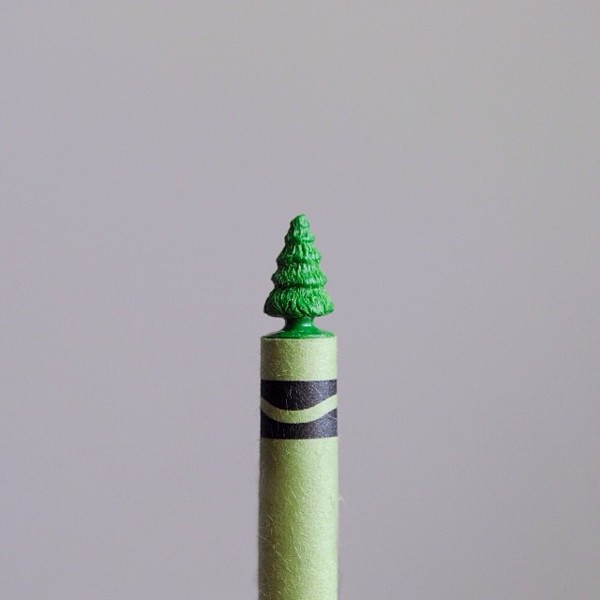
Visual grammar: scale, silhouette, and negative space
Look at a Davis photograph the way you would look at a logo. Edges matter. A knife blade reads as a fin because the silhouette is clean and the surrounding space is empty enough to sell the ocean. A butterfly “escaping” fruit works because the dots and the cut edges rhyme. He edits reality with scissors, markers, googly eyes, and careful placement until the metaphor is legible at a glance.
Scale tricks are central. Miniatures and forced perspective turn crackers into mountains or mashed potatoes into lakes. The camera height is chosen so the viewer’s eye accepts the fiction without needing a special-effects budget. Ambient, simple backgrounds keep the eye on the idea—Davis has noted that he prefers not to let busy elements fight the concept.
Colour is usually honest rather than heavily graded. Produce stays produce-coloured; paper stays paper-white. The surrealism is structural, not filtered. That honesty is why the work photographs well across blogs and magazines: the joke survives reprinting, compression, and thumbnail size.
Advertising brain, art-school play
Davis’s day job in advertising shows in the economy of the frames. An ad creative learns to land a message in one look; these photos behave the same way. There is rarely a narrative arc inside the image—just a completed thought. At the same time, the playfulness feels closer to sketchbook mischief than to campaign decks: gummy bears as rugs, gravy as topography, stealth eggs for Easter hunts.
That mix—professional clarity plus kid-like tinkering—explains why the work traveled so easily between Instagram, design sites, and later museum-adjacent moments (including attention from wider art audiences in the mid-2010s). The photos do not require a thesis to enjoy, yet they reward a second look at craft: how little material was needed, how exact the placement had to be.
He has worked across graphic design, illustration, stop-motion, and photography. The everyday-object series is not a side hobby bolted onto a career; it is the same curiosity expressed with the tools at hand. When the tool is a phone, the curiosity shrinks to pocket scale without shrinking the idea.
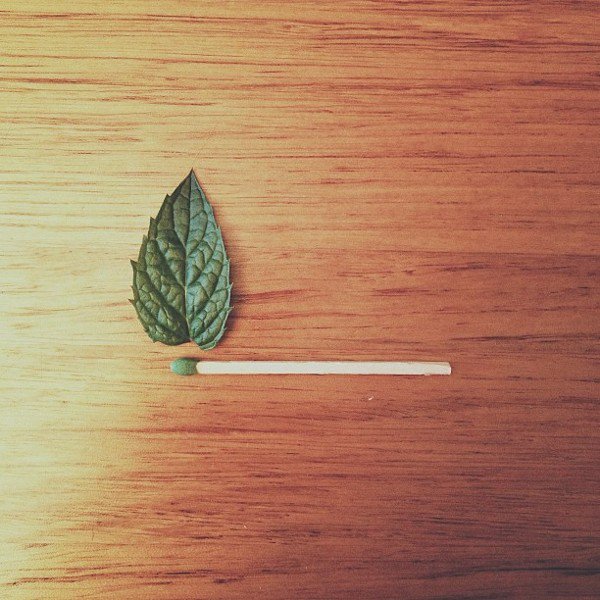
How to look at these shots—and how to try your own
Start by naming what you see twice: the literal object, then the thing it pretends to be. Notice what was added (ink dots, a cut, a prop eye) and what was withheld (extra props, busy tables, dramatic lighting). The restraint is the technique.
If you want to experiment in the same spirit, set three rules:
- One idea per frame.
- Use only what is already in the room or the fridge.
- Shoot quickly under ordinary light, then stop adjusting.
Those rules will not make you Brock Davis, but they will train the same muscle he describes: noticing creative potential in things you already handle daily. A cauliflower is still a cauliflower until someone decides it might also be a cloud, a brain, or a hillside—and then proves it with a single, well-framed photograph.
Keep a bowl of fruit on the counter for a week after looking at these frames. Notice how often your eye tries to invent a second reading—wings, faces, tiny landscapes. That itch to misread the ordinary is the same itch Davis follows with an iPhone. The photographs simply get there first, and leave the rest of us slightly more alert in the kitchen.

Comments
Continue reading

Dramatic Photo Art by Sukron Ma’mun (Ipoenk Graphic)
Cirebon, Indonesia photographer Sukron Ma’mun uses theatrical natural light to frame village life, play, and place in lyrical photo art.

Bird’s-Eye Views: Florian Beaudenon’s Instant Life
Paris photographer Florian Beaudenon’s Instant Life series captures people in their rooms from above—intimate, collaborative overhead portraits of everyday joy.

Abandoned Cars Reclaimed by Nature: Rust, Growth, and Quiet Ruin
When neglected vehicles are left outdoors long enough, rust, moss, and trees rewrite them into strange still lifes—sad, photogenic, and slowly returning to the ground.