
Book Sculptures That Bring Stories to Life by Jodi Harvey-Brown
Delta, Pennsylvania artist Jodi Harvey-Brown folds and carves discarded books into ships, seas, and literary scenes—paper waves still printed with the stories inside.
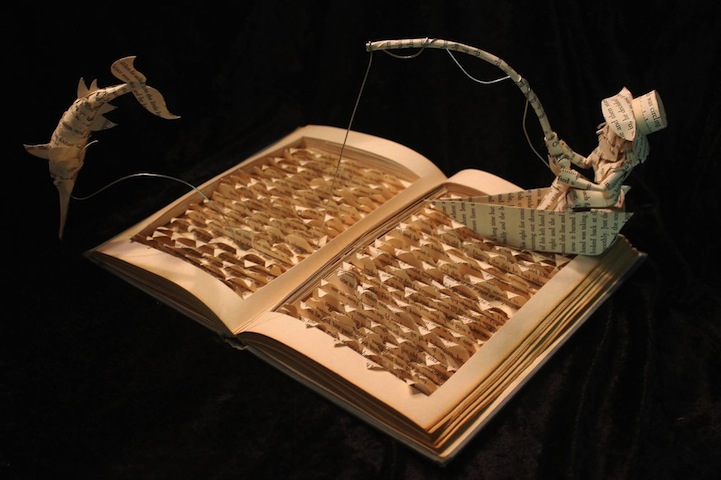
Open a novel and the action usually stays flat on the page. In the studio of Delta, Pennsylvania–based artist Jodi Harvey-Brown, stories climb out. She cuts, folds, curls, and assembles the printed leaves of discarded books until fishermen, ships, and waves stand in real space—still wearing the very text that once described them.
Harvey-Brown has said book sculpture is her way of making stories come alive. Characters familiar from childhood shelves—Harry Potter among wizards, Bambi in the forest, Tom Sawyer and Huckleberry Finn on the river—have risen from her pages alongside maritime dramas and other literary scenes. The pieces look delicate; the craft behind them is patient, structural, and deeply tied to a love of reading.
From a crushed secondhand book to a practice
The origin story she has shared is almost too fitting. Faced with a box of used books in a secondhand shop, she could not leave them behind. One volume at the bottom of the box was crushed; folding its damaged pages led to a habit she never put down. Each new sculpture grew more complicated than the last. Drawing had been her first love—sparked early, she has recalled, by a grandfather’s gift of artist’s pencils—and hand-illustrated figures sometimes join the folded paper when a scene needs a face or a gesture the folds alone cannot supply.
Encouragement to show the work in an artist community helped confirm that altered books could be art, not only craft-table curiosity. That beginning matters because it explains the material ethic. These are not blank sheets pretending to be literature. They are books that already lived one life on a shelf—sometimes yellowed, spotted, or out of circulation—given a second life as sculpture. Harvey-Brown has noted protecting finished pieces with a UV finish so they can last for years, and she has taken commissions and gallery presentations as photographs of the work traveled online and into exhibitions in the United States and abroad.
Working under names linked to wet-canvas communities and later under her own art site, she has treated sold pieces as living designs: some can be recreated, some carry show histories worth asking about, and customized commissions remain part of how collectors meet the work. The through-line is not mass production; it is hand labor measured in hours of cutting and curling.
How a page becomes a wave
Look closely at a sea scene and the method reveals itself in layers. The book opens flat; a recessed “pool” is carved or built into the block of pages so the drama sits inside a frame of remaining margins. Waves are not painted—they are scores of triangular folds and curls arranged in rhythmic rows, printed serif letters riding every whitecap. A boat may be rolled and creased into a pointed hull; a figure in a brimmed hat holds a rod of tightly wound paper; a fishing line of fine thread arcs toward a marlin mid-leap, fins and bill shaped so text follows the body’s curve.
The result is both illustration and relief sculpture. Light matters: against a dark ground, shadows pool between paper crests and the fight between fisherman and fish reads as motion frozen mid-struggle. You do not need the spine title to recognize Hemingway’s contest in The Old Man and the Sea; the composition argues for it. Still, part of the pleasure is knowing the water is made of sentences—that the storm is typography rearranged into weather.
Scale tricks help the drama. Keep the human figure small relative to the fish and the odds feel literary rather than decorative. Stretch the line across the gutter and the open book stops being a pedestal; it becomes the width of the sea. Viewers who lean in to read a fragment of print often find themselves reading the sculpture twice: once as image, once as remnant of a novel.
Ships that refuse to stay in chapter illustrations
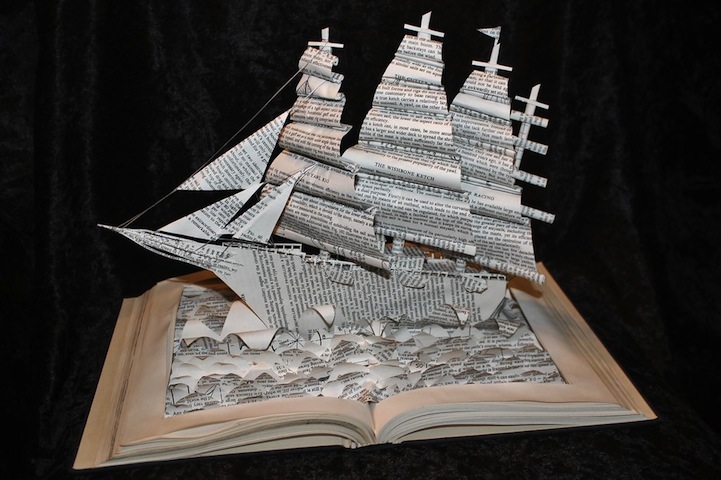
Tall ships are a natural subject for paper: sails want to be sheets. In one piece, a multi-masted vessel heels through a carved sea of curled pages, square sails and jibs cut from leaves that still show nautical headings and figure diagrams. Rigging of fine thread ties masts to hull; the book’s gutter becomes a harbor the ship is leaving. Angle the bow off-center and the sculpture suggests departure rather than a static model kit parked for display.
Engineering hides inside the romance. Masts need internal support—thin wire or wood wrapped so paper remains the visible skin. Sails must curve as if wind-filled without collapsing under their own softness. Waves must be dense enough to hold the hull visually, sparse enough that shadows still articulate each crest. When those balances work, a photograph against black cloth can look almost unreal; in person, the cream of aged paper and the slight tremor of a free edge remind you everything is handmade.
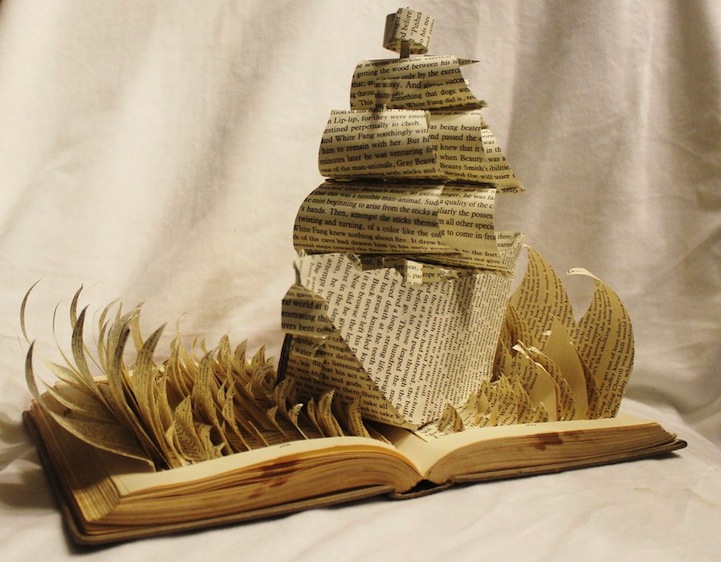
Another galleon rises through spray built from tapered strips, a crow’s nest perched on the center mast, warm light catching every tier of sail. Up close, character names from Jack London’s White Fang—including White Fang, Gray Beaver, and Beauty Smith—appear across hull and canvas. The mismatch is part of the altered-book tradition: the physical novel supplies material, while the sculpted subject may follow a different story’s imagery, or the artist’s commission brief. What stays constant is the insistence that printed language remain visible. Erasing the text would turn the work into generic paper craft; keeping it insists the object was once read.
Literature’s familiar faces
Beyond maritime set pieces, Harvey-Brown’s portfolio has included beloved figures stepping into three dimensions. Harry Potter rising from a wizarding volume, Bambi from a storybook forest, Tom Sawyer and Huckleberry Finn from adventures along the Mississippi—these choices connect with viewers who arrive already carrying the narrative. You recognize the character, then notice the engineering: how a fold becomes a sleeve, how a curl becomes a wave or a trail of magic, how the open book acts as both stage and caption.
Scenes drawn from other classics—calm outings and stormy struggles alike—benefit from the same translation. Motion is a recurring ambition: not a diorama of posed dolls, but a suggestion that the page turned and the moment escaped. That is why waves recur, why sails belly outward, why a fishing line is never slack. Stillness would make the paper look merely arranged; implied movement makes it feel narrated.
Recognition is also why the work photographed so well and spread across design and paper-arts sites in the early 2010s. A scroll-stopping image still has to reward zooming in. Edges of letters, diagrams labeled “Fig.,” age spots on cream paper—those details convert a clever idea into a handmade object with history in its fibers.
What to notice when you look
Start at the horizon of the page block: where does the untouched margin end and the excavated scene begin? Follow one wave row and see how consistent the fold angle stays. Trace a fishing line or a shroud of rigging and ask how the piece would travel—these sculptures are sturdy enough for display when finished and sealed, yet they reward careful handling. Consider the book’s second life: a volume headed for discard becomes a unique object that can be discussed, collected, and, in many cases, reimagined for a new commission without pretending to be a factory duplicate.
Harvey-Brown’s sculptures argue, quietly, that reading is already a three-dimensional act in the mind. She simply externalizes the pictures many of us build while turning pages. When a marlin clears a paper sea, or a ship heels out of a gutter full of type, the novel has not been destroyed so much as translated—into a form you can walk around, photograph, and remember with your eyes as well as your memory of the plot.

Comments
Continue reading
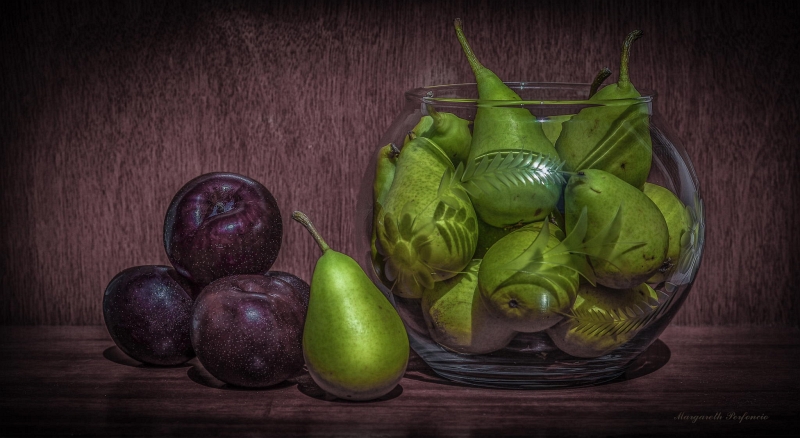
Still-Life Photography by Margareth Perfoncio
São Paulo photographer Margareth Perfoncio’s still lifes of food and flowers—Old Master light, dark wood, and tables that feel inevitable.
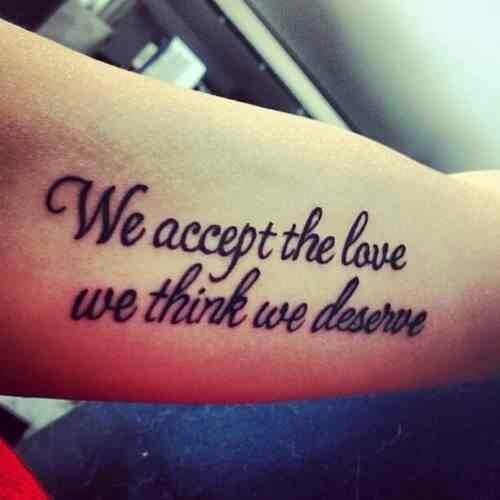
Meaningful Love Quotes for Inspiration (and Ink)
Meaningful love quotes that still feel true — short lines for tattoos, gifts, and everyday reminders, with placement and wording tips.
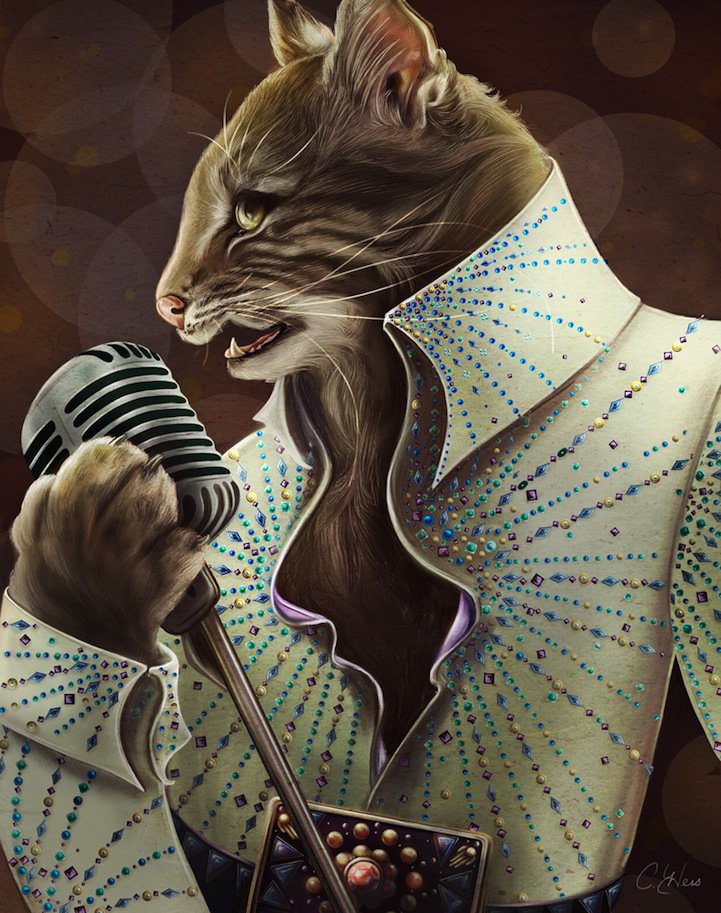
Christina Hess’s Animals From History: Costumed Pets as Playful Portraits
Illustrator Christina Hess reimagines historical icons as ornate animal portraits—Elvis Petme and friends—mixing puns, costume detail, and soft history lessons.